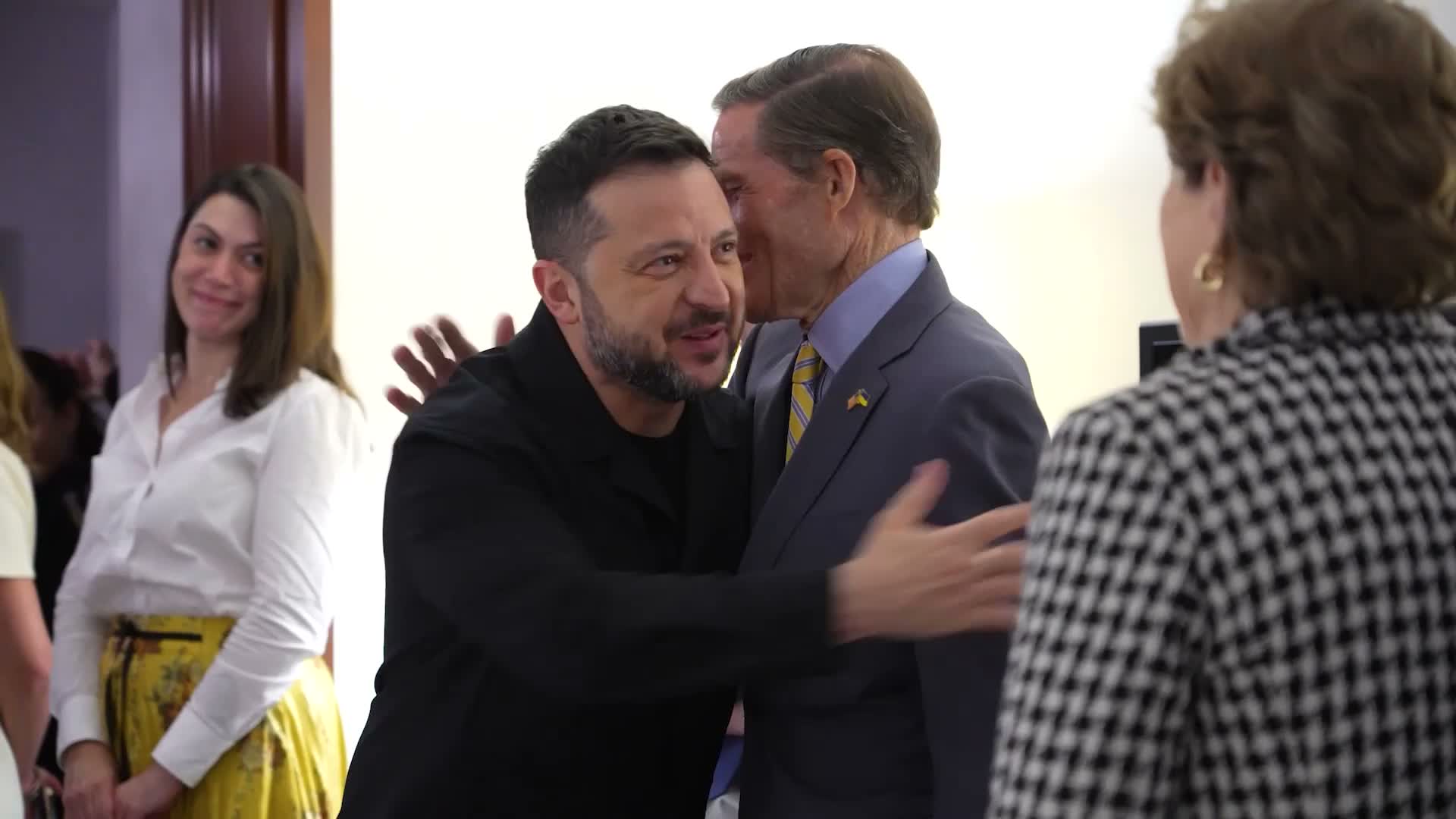
NEW YORK — Ukrainian President Volodymyr Zelenskyy warned Tuesday that Russia was preparing what he called a new “massive attack” against Ukraine, citing Ukrainian intelligence in a Telegram post after meeting British Prime Minister Andy Burnham on the sidelines of the United Nations General Assembly.
“There’s intelligence right now that Russia is preparing a new massive attack against Ukraine,” Zelenskyy wrote, according to Reuters. The statement is a warning from the Ukrainian government, not independent confirmation that an attack has been ordered or is imminent. No timing or target list was made public, and no public Russian response was reported in the source material available for this article.
Zelenskyy said Kyiv remained in constant communication with allies over securing new anti-aircraft defenses. He also rejected any suggestion of easing sanctions against Russia “when Ukrainians live every day under the threat of missile and drone attacks.” The two demands—more defensive equipment and continued economic pressure—place the warning squarely inside the diplomatic contest playing out in New York.
What is known—and what is not
The verified fact is that Zelenskyy issued the warning and attributed it to intelligence held by Ukraine. Reuters reported the statement and the surrounding military and diplomatic context. The underlying intelligence has not been released publicly, so its sourcing, confidence level and indicators cannot be independently assessed from the available record.
That distinction matters. Governments at war routinely protect intelligence that could expose collection methods or reveal what they know about an adversary’s planning. But secrecy also prevents outsiders from testing a warning before events either validate or disprove it. Responsible reporting therefore has to preserve both truths: Ukraine may have serious indications of an attack, and the public evidence does not yet establish when, where or whether it will occur.
There are no verified casualty claims attached to this warning because the predicted attack has not been publicly confirmed as having taken place. Any claim that assigns a target, launch window or likely toll would go beyond the known facts.
Why this matters
The warning matters first because air defense is a problem of time and scarcity. An alert that arrives before launch can help defenders redistribute systems, protect critical sites and place crews on higher readiness. Yet dispersing defenses toward every possible target can also thin coverage. Without public details, Kyiv’s allies must decide whether to treat the warning as a request for immediate reinforcement, a strategic signal or both.
Second, the warning links battlefield protection to sanctions policy. Zelenskyy’s argument is that economic pressure should not be negotiated away while the threat of missile and drone attack remains routine. That is a political intervention as much as a security assessment: he is trying to shape the terms under which allies discuss diplomacy, ceasefires and relief for Moscow.
Third, it arrives as the air war is changing. Reuters reported that Russian forces have shifted from attacks concentrated mainly overnight toward barrages spread throughout the day. That before-and-after change matters more than the clock. A predominantly overnight threat gives defenders and civilians a rough rhythm; attacks at varied hours demand sustained readiness, complicate maintenance and keep air-defense crews under pressure for longer stretches.
A changing drone problem
Russia has also deployed jet-powered drones in recent months, Reuters reported. Their higher operating altitudes can help them evade some air-defense systems and force Ukraine to match a comparatively low-cost attacking platform with scarcer defensive capacity. The issue is not simply speed. A mixed wave of drones and missiles can require defenders to identify different flight profiles, choose which threats merit the most capable interceptors and preserve enough ammunition for later attacks.
The evolution from mainly overnight barrages to pressure across the day is a shift from episodic attack toward persistent strain. Even without a publicly confirmed new offensive, that pattern raises the cost of readiness: radars must watch longer, crews rotate under less predictable conditions and civilian warning systems must remain credible after repeated alerts. Russia benefits if Ukraine spends expensive defensive resources or leaves gaps elsewhere. Ukraine benefits if early warning and allied resupply allow it to keep the exchange from becoming strategically favorable to Moscow.
This is why Zelenskyy’s request is framed around “anti-aircraft defences” rather than a generic appeal for weapons. The category covers the immediate task of detecting and defeating aerial threats, but the underlying contest is logistical. A defense network must have enough sensors, launchers, crews and interceptors not merely for one night, but for repeated and differently timed waves.
The UNGA diplomacy behind the warning
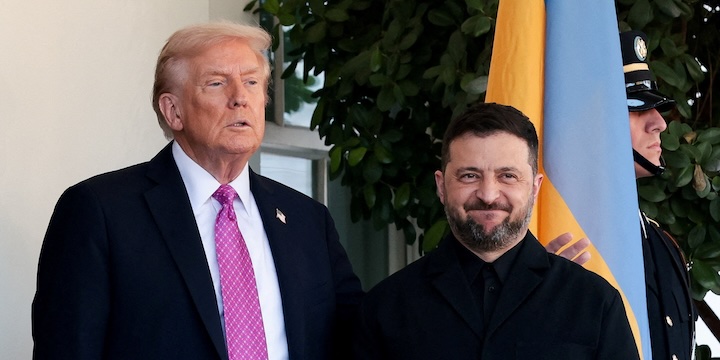
Zelenskyy used his New York meetings to connect air defense, sanctions and negotiations. He discussed efforts to end the war with U.S. President Donald Trump, including a possible bilateral ceasefire covering energy-related targets. Such an arrangement could create a limited zone of restraint without resolving the wider conflict, but it would depend on reciprocal conduct and a way to establish responsibility when strikes occur.
In a Wall Street Journal interview in New York, Zelenskyy said Russian President Vladimir Putin was “neither winning nor losing” the war. That assessment is consistent with the diplomatic message he is advancing: Russia has not achieved a decisive outcome, but neither has battlefield pressure disappeared. The risk, from Kyiv’s perspective, is that allies misread stalemate as stability and reduce support before a durable settlement exists.
The meeting with Burnham adds a European dimension. Britain is a major political supporter of Ukraine, and the UNGA setting gives Zelenskyy a concentrated opportunity to seek commitments from leaders who are simultaneously weighing military aid, sanctions and ceasefire proposals. The warning makes delay harder to defend politically: if allies accept the intelligence assessment, the request for air defenses becomes urgent rather than aspirational.
How we got here
Large Russian strike waves have been a recurring feature of the war, using drones and missiles to force difficult defensive choices across a broad country. The historical parallel is not that every warning precedes an identical attack. It is that mass-strike campaigns can be used to overwhelm limited defenses, test newly protected routes and impose economic costs even when many incoming weapons are intercepted.
The current phase adds two important pressures. Russian troops are advancing slowly in the eastern Donetsk region, according to Reuters, while Ukrainian forces are striking Russian oil-industry targets as far as 3,000 kilometers from the border. Those fronts are linked politically even when their military mechanics differ. Moscow can use aerial attacks to sustain pressure on Ukrainian territory; Kyiv can use long-range strikes to raise the cost of the war inside Russia and threaten energy infrastructure.
The 3,000-kilometer reach is the clearest figure in the available reporting. It shows that the contest is no longer confined to the immediate front or neighboring regions. A target that far from the border sits deep within Russia, expanding the geography that Moscow must defend. At the same time, deep Ukrainian strikes can intensify Russian arguments for retaliation and complicate proposals for an energy ceasefire.
Who benefits, who loses—and what critics will question
Ukraine benefits if the warning accelerates deliveries of air-defense equipment and keeps sanctions relief off the diplomatic table. European and American advocates of sustained support also gain a concrete argument: prevention is cheaper and politically safer than responding after a major strike. Defense suppliers and states with available systems gain leverage because demand is urgent and supply is constrained.
Russia could benefit if the warning causes Ukraine to disperse defenses too widely, consume resources prematurely or elevate public anxiety without yielding new allied support. Moscow also gains if disagreement over the intelligence becomes another point of friction inside the coalition backing Kyiv.
Ukrainian civilians face the clearest downside. Even an unfulfilled warning carries disruption; a realized attack brings the risk of infrastructure damage and renewed pressure on daily life. Allies also face trade-offs. Systems moved to Ukraine are systems not held elsewhere, while delayed decisions can leave Kyiv more exposed.
Critics will reasonably ask whether Zelenskyy is using a classified warning to strengthen his negotiating position at the most visible diplomatic gathering of the year. The timing plainly increases its political impact. But political usefulness does not make the intelligence false, just as an intelligence claim does not become proven because it serves an urgent policy case. The right test is what evidence emerges, how specific allied governments treat the warning and whether observable Russian operations change.
Sanctions and air defense are one strategy
Zelenskyy’s statement treats sanctions and air defense as complementary. Defensive systems reduce the immediate effect of attacks; sanctions are intended to constrain the capacity and resources behind a prolonged war. One works at the moment of interception, the other over a longer economic horizon. Neither guarantees a change in Russian behavior on its own.
The argument against easing sanctions is strongest if Russia is preparing escalation. It is weaker if the warning remains uncorroborated and sanctions relief could secure verifiable restraint. That is why any trade between pressure and ceasefire terms would need measurable conditions. A declaration without monitoring would leave both sides able to allege violations and would give allies little basis for deciding whether relief had been earned.
An energy-target ceasefire could be a practical test precisely because its scope is narrower than a comprehensive peace. The important questions would be what counts as an energy-related target, whether ports and oil transport are included, how dual-use facilities are treated and what happens after a disputed strike. The reporting available here does not show that those terms have been agreed.
What happens next: three scenarios
A major attack materializes. If Russia launches a large wave, attention will turn to the targets selected, the mix of missiles and drones, and whether Ukraine’s defensive network was able to adapt. Allies would face immediate pressure to accelerate interceptor and system deliveries. The warning would gain credibility, but questions would remain about whether enough actionable detail was shared in time.
Persistent barrages continue without one defining strike. This may be the strategically harder case. A steady series of attacks across the day can drain attention and resources without producing a single moment that unlocks a major political response. Ukraine would then need sustained replenishment rather than a one-time emergency package, while allies would have to resist treating the absence of one spectacular event as evidence that the danger passed.
Diplomacy narrows the target set. A reciprocal agreement on energy-related sites could reduce one avenue of escalation while leaving the wider war intact. Success would depend on clear definitions, monitoring and consequences for violations. Even then, air defense would remain essential because a limited ceasefire would not address every missile or drone target.
The forward test
The next useful evidence will not be rhetoric alone. Watch for allied announcements on air-defense transfers, changes in Russian launch patterns, official statements responding to the allegation and any concrete terms attached to the proposed energy ceasefire. The absence of a public Russian reply does not validate Ukraine’s warning; nor does it refute it.
Zelenskyy’s message from New York is ultimately a warning against confusing an unresolved war with a stable one. His claim remains an attributed intelligence assessment, not a confirmed forecast. But the military context gives it weight: attack timing has become less predictable, drone technology is changing, pressure continues in Donetsk and Ukraine’s own long-range campaign reaches far into Russia. The policy question for allies is whether to act before certainty arrives or risk discovering that certainty only after the attack.
Source: Reuters, “Zelenskiy says Russia planning new mass attack on Ukraine,” September 22, 2026. Direct warning and sanctions quotation credited to Volodymyr Zelenskyy via Telegram. This article is a fixed September 22, 2026 reporting snapshot. The timing, targets and scale of any attack remain unconfirmed; no public Russian response was reported in the cited material.