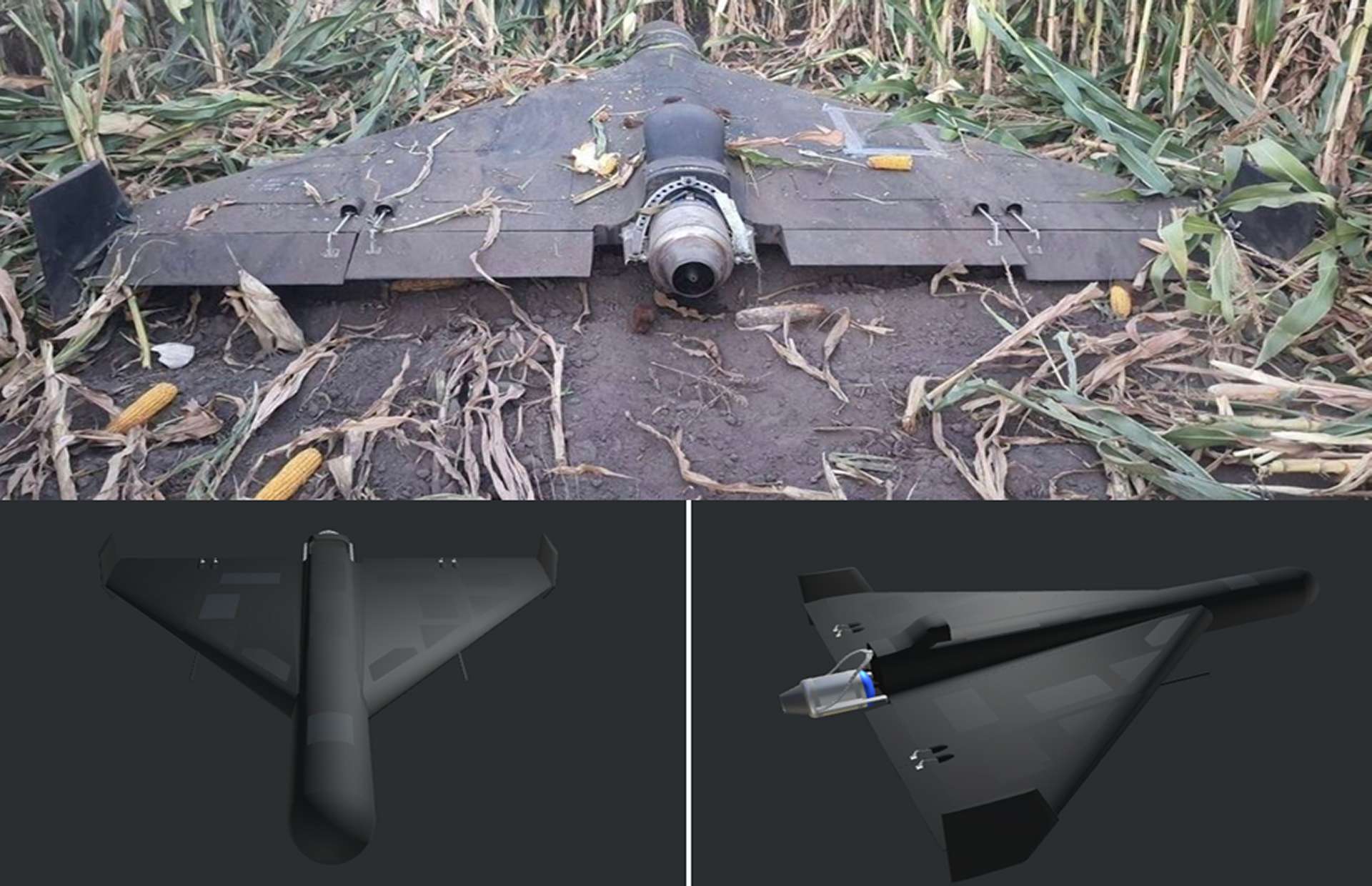
Russia’s growing use of jet-powered Geran attack drones is forcing Ukraine to defend a threat that travels faster, flies higher and offers far less warning than the propeller-driven Shaheds that shaped the first years of the air war. Reuters reported from the Kyiv region on September 22 that Russia has widely used the new Shahed-type Geran-3, Geran-4 and Geran-5 family since the summer, with hundreds crashing into Kyiv and other Ukrainian cities in recent weeks after evading air defenses.
The military consequence is immediate: defenses designed around slower targets now have less time to detect, classify and engage. The civilian consequence is visible in the mounting official casualty counts. According to Ukraine’s prime minister, Sergii Koretskyi, Russia launched 2,100 jet-powered attack drones and 136 missiles in the first three weeks of September, killing 288 people, including four children. Moscow denies targeting civilians.
This is more than the arrival of another airframe. It is an operational shift in which a weapon that sits between a low-cost one-way drone and a cruise missile is being used at sustained volume. Ukraine’s overall interception system remains effective by its own published totals, but the jet-powered subset is harder to stop—and its expanding share of each salvo changes what even a strong percentage means on the ground.
Seconds, not minutes, for the mobile crews
A Ukrainian mobile air-defense operator identified by Reuters as Vasyl, call sign Racoon, described the difference in altitude and warning time. Older propeller-driven Shaheds commonly flew at about 1 to 1.5 kilometers, putting them within reach of shoulder-fired portable missiles and giving crews minutes to prepare. The jet-powered drones, he said, have been observed at four, five and even seven kilometers—above the practical reach of those weapons. His reaction window has contracted from minutes to seconds.
Tech Times reported speeds of roughly 400 to 650 kilometers per hour. Ukrainian Air Force spokesman Yuriy Ihnat said the targets appear on radar “like a cruise missile.” They are also no longer confined mainly to nighttime attacks: Reuters reported that Russia now launches them around the clock.
Dr. Marina Miron, a military-technology expert at King’s College London, told Reuters that the jet-powered drones are much faster than the previous generation and therefore much more difficult to intercept. The speed is only one part of the problem. Altitude removes some of the cheapest weapons from the engagement, while continuous launches stretch crews, sensors and aircraft across the day rather than concentrating the burden into predictable overnight windows.
The scale changed in three months
The monthly totals show how quickly a specialized weapon became routine. BBC Verify’s analysis of Ukrainian Air Force data, summarized by NewsATW, found that Russia launched upgraded Geran drones every day throughout August—the first sustained daily use of the weapon. Ukraine’s military told the BBC that the monthly count rose from 350 in June to 1,600 in July and 2,800 in August. On five August nights, jet-powered drones outnumbered the older models.
A separate earlier comparison points in the same direction. Defence Blog, citing Militarnyi, reported that Colonel Alexander Zaruba of Ukraine’s State Research Institute put the 2026 total at about 1,400 jet-powered drones since January, compared with roughly 180 recorded throughout 2025—nearly an eightfold increase. The later summer monthly figures are not directly interchangeable with that earlier year-to-date count, but both describe acceleration rather than a one-off trial.
The Geran family is derived from Iranian-origin Shahed designs. Russia’s use of propeller-driven Shahed-136 drones began in 2022, followed by domestic production under the Geran name. Jet-powered Geran-3 variants then appeared in larger formations. By August 2026, daily launches made them part of the operational baseline rather than an occasional high-speed addition. Ukrainian military intelligence says some of the turbojet engines are sourced from China; that is Kyiv’s assessment, not an independently established supply-chain finding.
Interception remains high overall—but the mix is getting harder
Ihnat has put Ukraine’s overall interception rate at roughly 88% to 90%, while saying the rate is lower against jet-powered drones. The gap becomes clearer when salvo composition changes. On the night of September 2–3, Ukraine said Russia launched 163 aerial weapons, about half of them jet-powered, and that 135 were destroyed—an 83% interception rate. In a separate salvo in which jet-powered drones were the majority, the reported shoot-down rate fell to 65%.
Ukrainian officials said the September 2–3 attacks killed at least five people and injured 67 across 13 regions. President Volodymyr Zelenskyy said attacks on September 1 killed at least 12 people and injured more than 20. Moscow denies targeting civilians.
Percentages can obscure what the operational system is experiencing. An 88% success rate against 100 incoming weapons leaves 12 reaching their target area. The same rate against 1,000 leaves 120. If the harder-to-intercept category rises from a minority to most of a salvo, the number getting through can increase even when defenders improve in absolute terms. That is why a falling rate against a rapidly growing jet-powered share matters more than any single night’s total.
Analysis: the economics now sit between a drone and a cruise missile
Jet propulsion blurs a category that once made the defensive calculation simpler. A propeller-driven one-way drone could be challenged by mobile gun teams or portable missiles; a cruise missile required more capable sensors and interceptors. The jet Geran is more expensive than the older drone, but it preserves the mass-launch logic while demanding faster and often more costly defensive responses.
That gives Russia a relative advantage even without making the weapon invulnerable. If altitude and speed push Ukraine toward combat aircraft, larger surface-to-air systems or new interceptor missiles, every launch can impose costs beyond the drone itself: aircraft hours, pilot workload, runway activity, radar coverage and scarce missile stocks. The attacker does not need every drone to arrive. It needs enough to force expensive engagements, expose gaps and allow a portion of the salvo through.
Ukraine bears the interception-economy pressure. Civilians and infrastructure bear the consequences of the leakage, especially as autumn moves toward winter. European governments face a related production debate: whether air-defense output can rise fast enough to replace Ukrainian expenditure while also filling their own inventories. Zelenskyy has urged faster European production because the constraint is no longer simply how many launchers partners can pledge; it is how steadily they can supply interceptors for a high-volume campaign.
Ukraine’s response: aircraft now, dedicated interceptors next
Zelenskyy said Ukraine is relying on combat aircraft to shoot down the jet-powered drones and called the campaign a “horror” over Kyiv’s skies. That response can be effective, but it also transfers the problem to a finite fleet. More hours in the air mean more maintenance, fuel, crew rotations and risk, while pilots used for drone interception are not available for other missions.
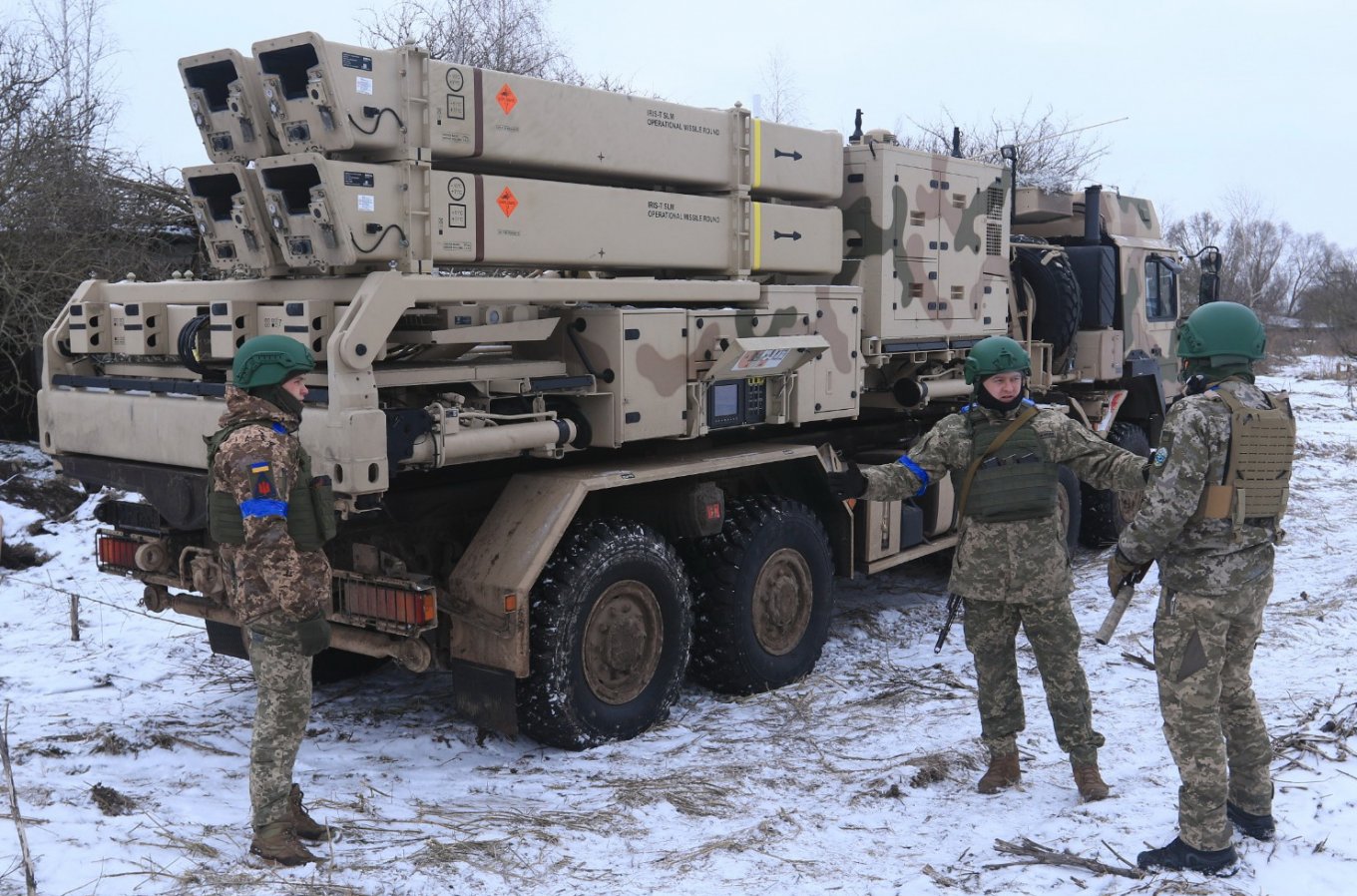
Four Ukrainian companies are developing interceptor missiles, with the defense ministry directing rapid production of thousands, according to Reuters and RocketNews. The aim is to create a lower-cost layer fast enough to meet the jet threat without spending premium surface-to-air missiles on every target. SOFX’s review of the emerging Shahed threat similarly frames the problem as a test of whether defenses can adapt their mix as the attacker adapts speed, altitude and volume.
The program’s central test will not be a prototype interception. It will be repeatable production, integration with existing sensors and enough rounds in the field to cover multiple regions. If that layer arrives slowly, Ukraine is likely to keep leaning on aircraft and may seek additional Western air-defense systems and ammunition. If it scales, it could restore some of the cost advantage that mobile teams held against the older Shaheds.
The winter and diplomatic stakes
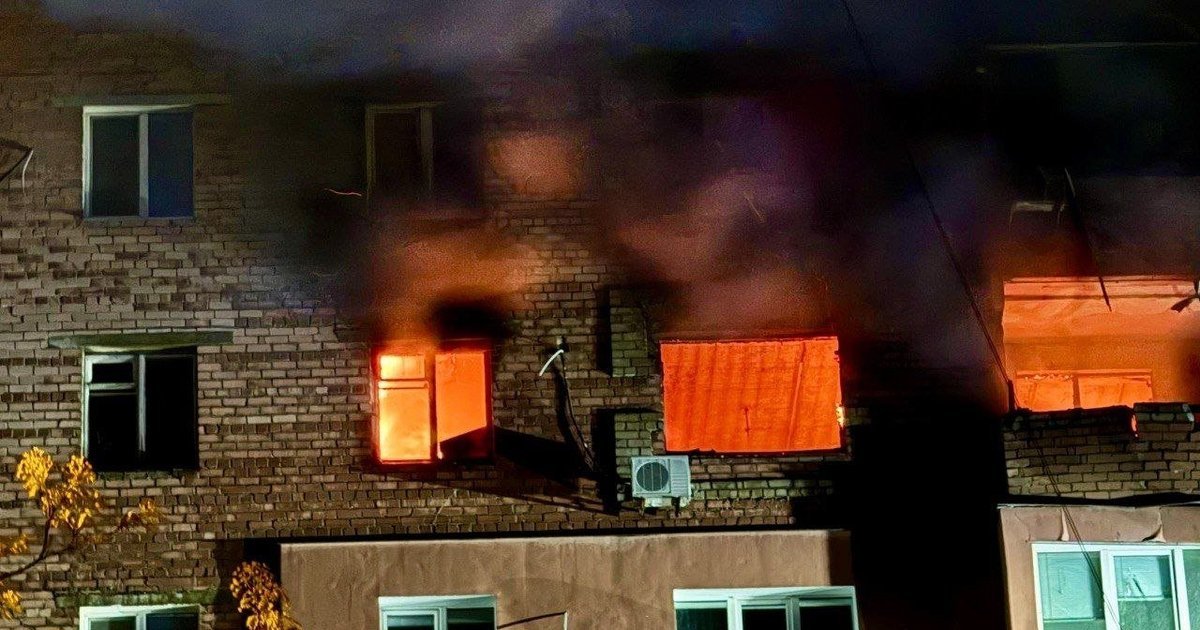
The drone shift is unfolding alongside attacks on energy and industrial infrastructure. Signal Post News has separately reported on the September 22 overnight strikes on industrial sites in Dnipropetrovsk and critical infrastructure in Chernihiv region. Ukrainian officials said those attacks killed three people in Dnipro and cut electricity to nearly 100,000 consumers in Chernihiv region. Moscow denies targeting civilians.
At the same time, Zelenskyy has proposed a reciprocal halt to attacks on energy facilities as diplomacy moves through the United Nations. The jet-drone campaign complicates that offer. A narrow energy truce could reduce pressure on heating and electricity systems without ending attacks on other targets. Conversely, continued high-volume drone launches would make the practical value and verification of any partial agreement central to the talks.
The beneficiaries and losers are therefore not limited to military units. Russia gains a way to press Ukraine’s defenses at scale and potentially raise the cost of every engagement. Ukraine’s air-defense network loses some of the low-cost options that worked against slower drones. Civilians face shorter warning times and greater exposure if more aircraft penetrate. European producers face pressure to turn political commitments into manufacturing capacity before winter demand peaks.
What happens next
Five indicators will show whether Ukraine can rebalance the contest: how quickly its interceptor-missile programs reach mass production; whether the jet-powered share of Russian salvos continues to rise; whether combat-aircraft interception hours become a material strain; whether Kyiv requests and receives additional Western systems; and whether an energy-truce framework changes targeting before the winter heating season.
The most favorable scenario for Ukraine is a layered response in which new interceptors take the routine burden, aircraft remain a flexible reserve and larger air-defense missiles are saved for the fastest or most dangerous targets. The unfavorable scenario is sustained volume without an affordable new layer: more flight hours, more expensive interceptors and more targets reaching cities and infrastructure even if the majority are still destroyed.
The broader conclusion is that Russia has changed the tempo, not merely the model number. The propeller Shahed campaign made mass one-way attacks a regular feature of the war. Domestic Geran production expanded that campaign. Daily jet-powered launches now compress the defender’s decisions and make each percentage point of interception more consequential. Ukraine’s answer will depend less on a single breakthrough than on whether it can produce, supply and coordinate a new defensive layer at the same industrial scale.
Sources and reporting notes
- Reuters, September 22, 2026: field reporting from the Kyiv region, mobile-crew account, official launch figures, air-defense response and expert assessment
- Defence Blog / Militarnyi: earlier 2026 and 2025 jet-powered-drone totals
- Tech Times: speed range, salvo composition and interception pressure
- RocketNews: daily launch pattern and Ukrainian interceptor development
- SOFX: technical and air-defense context
- NewsATW, citing BBC Verify: daily August use and Ukrainian Air Force launch data
Reporting cutoff: September 22, 2026. Russian launch totals, interception rates, casualty figures and equipment-origin assessments are attributed to the Ukrainian officials or organizations that supplied them. Moscow denies targeting civilians. Operational and economic judgments are identified as analysis.