The overnight barrage sent 188 drones — 86 of them jet-powered — alongside ballistic and cruise missiles toward Kyiv and its surrounding grid, killing seven people nationwide and forcing the capital's first emergency electricity cuts since spring.
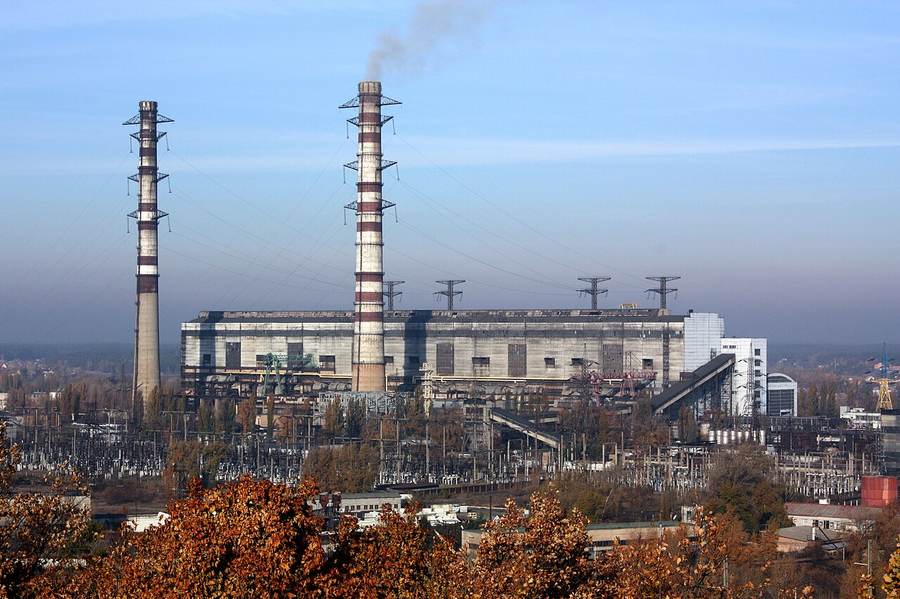
Russia opened the cold-weather phase of its air campaign with the most consequential kind of strike: not one designed simply to make a loud impact, but one aimed at the machinery that keeps a capital functioning. From the evening of September 29 into the morning of September 30, Ukrainian officials said Moscow launched 188 Shahed-type, Gerbera and decoy drones, including 86 jet-powered aircraft, together with ballistic and cruise missiles. The principal direction was Kyiv and Kyiv Oblast, where power generation and transmission facilities were hit.
Seven people were killed nationwide in Reuters' later count. The dead included a child recovered from beneath a collapsed home in the Kyiv region and three people in Kyiv, among them a utility worker killed at a warehouse. At least 14 people were reported injured across 11 regions in one official accounting. The BBC earlier reported at least six dead and 33 injured, a difference that reflects casualty reporting changing through the day rather than two compatible final totals.
The strike moved quickly from military event to public emergency. Ukrenergo imposed emergency power cuts in Kyiv and three surrounding regions — the capital's first such measure since spring. Evening outages also affected Chernihiv and Zhytomyr oblasts. Some trams and trolleybuses stopped. Water pressure fell. Mayor Vitali Klitschko said debris was found at a Western embassy. Poland and Romania scrambled aircraft as the barrage pushed air-defence vigilance across NATO's eastern flank.
Why this matters
A damaged power plant can be repaired; an exposed strategy is harder to dismiss. This attack indicates that Russia's winter campaign against Ukraine's energy infrastructure is beginning not with sporadic probing but with a combined saturation strike. Prime Minister Sergii Koretskyi described the shift plainly: “Russia has escalated to massive strikes on energy infrastructure.” He said attacks had been nearly daily since summer, but that no combined strike of this scale had occurred since the end of the previous heating season.
The significance lies in the interaction of scale, timing and target selection. Nearly 190 drones and missiles force defenders to allocate scarce interceptors across fast and slow targets while also protecting cities, bases and substations. Emergency cuts are more than a household inconvenience: they are a visible grid-stress indicator, evidence that operators had to shed demand or isolate vulnerable sections before damage cascaded. And the approach of freezing nights converts every hour of lost generation into pressure on heat, water, transport, hospitals and communications.
For Moscow, that pressure has a political logic. A winter grid campaign can impose costs far beyond the battlefield, test Ukraine's social resilience and strengthen Russia's bargaining position ahead of any negotiations. That is analysis, not proof of a specific Kremlin timetable. Russia says it struck facilities supporting Ukraine's armed forces and military production; Ukraine says civilian energy infrastructure was the main target. Both claims belong in the record, but the civilian consequences are measurable regardless of the stated rationale.
What was hit — and what each side says
President Volodymyr Zelenskyy said nearly 190 attack drones and ballistic missiles were used and that “the main target was energy infrastructure in the capital and the Kyiv region.” He renewed his appeal for additional air-defence support. Ukraine's Air Force said five missiles and 155 drones were shot down or suppressed, while impacts were recorded at 18 locations.
Russia's defence ministry called the operation a “massive strike” against a Kyiv communications centre, energy-system facilities and port infrastructure at Izmail in the Odesa region. Its list included the Kyivska substation, the Kyiv hydroelectric plant, an energy-storage facility and the Trypillya Thermal Power Plant. Reuters said it could not independently verify Moscow's detailed target claims. Centrenergo, Trypillya's operator, confirmed the plant had been damaged and was assessing the extent.
One person was also reported killed in Russia's Bryansk region. That death does not change the imbalance of this particular attack, but it is part of the same cross-border war and belongs in a complete accounting.
The numbers behind the saturation tactic
Nearly 190 targets compress the defender's choices
The raw interception figure — 155 drones neutralized out of 188 launched — can sound like a straightforward success rate. Operationally, it is not that simple. Decoys consume radar attention. Shahed-type drones approach at lower speed and altitude. Jet-powered drones close distance faster, shorten warning time and can make mobile gun teams less effective. Ballistic missiles demand a different, much scarcer class of interceptor. The attacker benefits when all of those problems arrive together.
The 86 jet-powered drones are therefore not a footnote. They represented almost 46% of the drone wave. If a defender has only minutes rather than tens of minutes to classify, track and engage an incoming aircraft, each battery covers fewer decision cycles during the same attack. Even a high overall interception count can leave enough surviving weapons to damage a small number of high-value nodes.
Emergency cuts reveal more than the damage list
Ukraine does not need every turbine or substation destroyed to suffer disruption. A synchronized grid must keep generation and demand balanced while moving power across transmission corridors. Operators may cut customers to prevent overload, protect equipment or create room to reroute supply. That is why Ukrenergo emergency outages in Kyiv matter analytically: they show that the system's safety margin was under immediate pressure, even before a complete public damage assessment.
A new weapon aimed at the grid between the plants
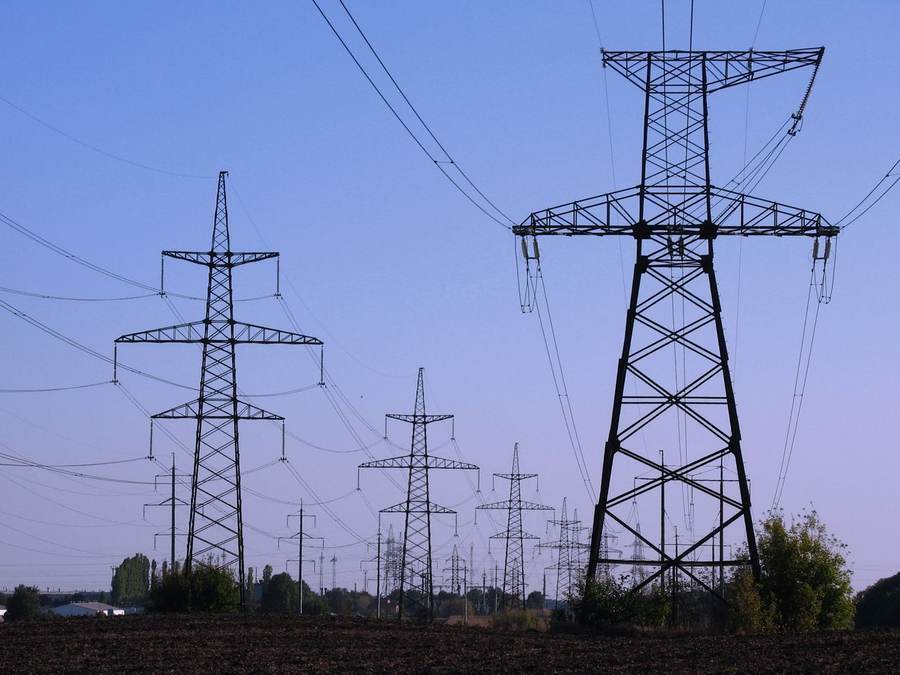
The most important technical development may be smaller than the barrage. Presidential adviser Serhii “Flash” Beskrestnov said Russia used, for the first documented time, a jet-powered drone fitted with a shaped-charge cutting warhead engineered to destroy high-voltage pylons and steel bridge structures. He described a 40-kilogram main charge accompanied by four modules.
If independently confirmed and deployed at scale, the design would shift part of the campaign from striking large, hardened sites to cutting the network that connects them. A thermal plant is conspicuous and can attract layers of defence. A long transmission corridor contains many exposed towers. Destroying selected pylons can strand available generation on the wrong side of a damaged line, and repairs require specialized steel, cranes, crews and secure access.
That is the strategic meaning of the shaped-charge drone warhead for pylons: Russia may be looking for a cheaper way to create grid disconnections without expending a ballistic or cruise missile on every target. The claim comes from a Ukrainian presidential adviser and should be treated as an attributed battlefield assessment until independent technical examination is published.
How the winter energy campaign evolved
Russia's 2022–23 campaign established the model: repeated waves against generation and transmission, timed to cold weather, with civilian disruption extending the military reach of each strike. Ukraine responded with improvised repairs, scheduled blackouts, imported equipment and more dispersed backup power. The grid survived, but survival came at high financial and human cost.
In the 2024–25 campaign, attacks again damaged power and heating systems, while Ukraine became more practiced at rapid restoration and demand management. The contest moved toward adaptation: Russia varied routes and weapons; Ukraine dispersed generation, fortified sites and improved interception. Neither side found a permanent solution. By summer 2026, according to Koretskyi, attacks on energy infrastructure were nearly daily, suggesting reconnaissance and attrition continued before the first major combined wave.
The overnight attack is therefore not a return to an old playbook unchanged. More jet-powered drones alter the interception problem, while the alleged pylon-cutting warhead extends the target set. The question is whether Ukraine's hardening and repair capacity has kept pace with the economics of mass-produced drones.
Who gains — and who bears the cost
Russia's pressure logic ahead of talks
Russia benefits if recurring outages convince Ukrainians and their partners that another winter of grid attacks is unavoidable. That can create pressure for concessions, divert Ukrainian air defences away from the front and force Kyiv to spend scarce resources on repairs rather than weapons. Strikes on Izmail and other logistics infrastructure also widen the burden from households to export revenue and military supply.
Ukrainian civilians and front-line logistics lose first
Civilians bear the immediate cost through deaths, cold homes, interrupted transport and reduced water pressure. Front-line logistics suffer more quietly. Railways, repair depots, communications nodes and drone-production workshops all depend on stable electricity, even when they possess generators. Fueling thousands of backup systems is itself a supply problem.
Critics of the pace and scale of Western air-defence support will point to the mixed wave as evidence that Ukraine needs more systems and a deeper interceptor stock. The counterargument is that no air-defence architecture can economically fire its most expensive missiles at every cheap drone. Both positions have force. More aid can reduce damage; it cannot substitute for grid hardening, electronic warfare and cheaper counter-drone methods.
The war is pressing against neighboring airspace
Poland and Romania scrambled jets during the attack, a precaution that illustrates how quickly a strike aimed at Ukraine can impose costs on NATO. Every large wave requires neighboring states to track routes, protect airspace and prepare for debris or navigation errors. A mistaken crossing could create an escalation crisis even when neither side intends one.
Moldova faces a different version of the same risk. It is not a NATO member, has limited air-defence capacity and sits beside the Odesa region and routes toward the Black Sea. Its exposure is both physical and political: debris or an airspace violation can test a small state's institutions while pro-Russian actors contest its alignment. The wider concern is not that this attack automatically expands the war, but that mass launches multiply the opportunities for accident, misidentification and coercion.
What happens next
Scenario one: hardening absorbs the first winter waves
Ukraine's best near-term outcome is that repairs, spare transformers, distributed generation and protected substations keep outages local and temporary. In that scenario, emergency cuts are painful but controlled, and Russia must spend larger salvos for diminishing disruption. The decisive measures will be mundane: connected backup systems, repair stocks, physical barriers and disciplined demand reduction.
Scenario two: pylon attacks create regional islands
If the shaped-charge warhead works as described and appears in volume, Russia could target transmission corridors repeatedly. That would force Ukraine to defend thousands of kilometers of exposed infrastructure and could leave regions electrically isolated even when generating plants remain operable. Restoration time, not headline damage, would become the key metric.
Scenario three: nuclear plants face grid-disconnection risk
Ukraine relies heavily on nuclear generation. Nuclear plants need stable external grid connections for safe operation even when reactors shut down, and transmission failures can force units offline or increase reliance on backup power. There is no evidence in the reporting reviewed here that this attack caused a nuclear emergency. The forward risk is systemic: repeated strikes on substations and high-voltage lines can weaken the network around nuclear facilities without striking a reactor.
Scenario four: allies change the air-defence equation
Zelenskyy's latest air-defence appeal will sharpen decisions in Washington and European capitals over interceptors, launchers and permission to replenish stocks quickly. The most useful package may be layered rather than glamorous: high-end ballistic-missile defence for the hardest targets, cheaper systems for drones, electronic-warfare support and financing for grid protection. Delay would leave Ukraine rationing both electricity and interceptors as temperatures fall.
The overnight strike was the heaviest combined energy attack since spring, but its real importance will be measured over weeks. If it remains an outlier, Ukraine's grid can recover. If it becomes the opening cadence of a winter campaign, the contest will turn on whether repairs, air defence and distributed power can move faster than Russia's expanding drone inventory.
Sources
- Reuters: Russia's account of the overnight targets and independent-verification caveat
- Reuters via Devdiscourse: casualties, emergency cuts and the winter-grid campaign
- UNN via Europe Says: Ukraine Air Force breakdown of 188 drones and interceptions
- Kyiv Independent: Beskrestnov's shaped-charge warhead assessment
- Wikimedia image source: Trypillya Thermal Power Plant
- Wikimedia image source: 330-kilovolt pylons in Ukraine
Reporting note: Fatality and injury totals changed during the day; this article uses Reuters' later seven-death national count and separately identifies the BBC's earlier figure. Claims by Russia and Ukraine are attributed. Strategic judgments and scenarios are Signal Post News analysis.