
Zelenskyy India Russian oil trade pressure became a central part of Kyiv’s UN General Assembly message on Tuesday. In an interview with The Wall Street Journal, Ukrainian President Volodymyr Zelenskyy said Moscow’s ability to finance the war depends heavily on energy commerce with India and, at times, Turkey and China.
“Russia is basing its economy on India. Sometimes Turkey and China. And it’s obvious if these guys stop their energy trade with Russia, then it will have to stop fighting the war,” Zelenskyy said in the interview, according to reports by ANI and The Daily Jagran. He added: “If America, China and India put pressure on Russia, then it will no longer be able to fight the war in Ukraine” and “if China will pressure, like they have to... and India, it is enough to stop them.”
The claim is both an economic argument and a diplomatic wager. Russia’s war effort is not financed by one market alone, and oil revenue is only one part of the state’s fiscal capacity. But the biggest Asian and Turkish buyers give Moscow outlets for barrels displaced by Western sanctions. Zelenskyy’s case is that closing, or sharply narrowing, those outlets would force the Kremlin to choose between funding the war and preserving the wider economy.
Why this matters: a ‘peace through tariffs’ off-ramp
Zelenskyy is handing Trump an economic, non-escalatory option. Rather than make the argument only through requests for long-range weapons, Kyiv is presenting a “peace through tariffs” route: use access to the American market to make buying Russian energy more expensive for third countries. That fits Trump’s preference for tariffs and allows Washington to claim escalation against revenue rather than Russian territory.
The sanctions debate has consequently shifted. Earlier Western measures concentrated on freezing Russian assets, restricting technology and capping the price of seaborne oil. The new pressure campaign aims more directly at the cash flow itself by threatening the customers who keep Russian exports moving. Publicly naming India raises the political price of discounted crude because New Delhi must now weigh refinery margins and energy security against a much larger trade relationship with the United States.
The mechanism already exists. The newly signed Lindsey O. Graham Sanctioning Russia and Iran Act allows the U.S. president to impose targeted tariffs of up to 100% on the largest importers of Russian crude oil and natural gas. The phrase Lindsey Graham sanctions act tariffs India describes authority, not an automatic new 100% duty. Trump still has to decide whether, when and against whom to use it.
The UNGA meetings joined sanctions, air defense and an energy ceasefire
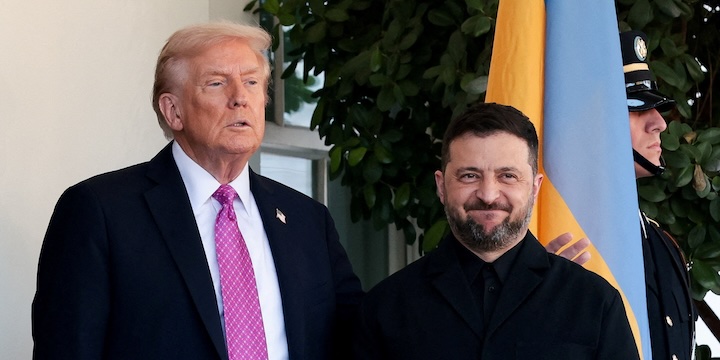
Earlier Tuesday, Zelenskyy met Trump on the UNGA sidelines. Their discussion linked three tracks: a proposed Ukraine energy ceasefire proposal, a Ukrainian request for a winter package of military equipment including Patriot air-defense systems, and the question of whether Trump will use the Graham Act against buyers of Russian energy.
In Trump’s UNGA speech, according to Indian outlets reporting his remarks, the president called China and India “the primary funders of the ongoing war” because of their Russian oil purchases. He said the new tariff powers would be used “if necessary.” Because those quotations are carried here through secondary reporting, they should be understood as attributed accounts rather than a transcript independently authenticated by Signal Post News.
Zelenskyy also met British Prime Minister Keir Starmer. A UK government readout said they discussed the difficult winter ahead, the energy-ceasefire proposal and the Graham bill, and agreed on continued sanctions pressure to bring Vladimir Putin to meaningful talks. That diplomatic track is important: the tariff threat is being presented as leverage toward negotiation, not as an end in itself.
India imports Russian oil in 2026: lower, but still dominant
India’s imports of Russian oil fell 16.5% month on month in August to about 2.1 million barrels per day, according to Reuters data carried by ANI’s IndianEconomicObserver report. Russia nevertheless remained India’s largest oil supplier. Preliminary Kpler data cited in the same report estimated September imports at about 1.9 million barrels per day.
The decline matters, but so does the level. A reduction of roughly 200,000 barrels per day from August to the September estimate would be about 9.5%. Yet 1.9 million barrels per day is still an immense flow. In the context of Russian oil exports to India barrels per day, the September estimate signals moderation, not disengagement. India, China and Turkey together buy the bulk of Russia’s displaced seaborne crude, which is why even a partial shift in their purchasing behavior can affect Moscow’s discounts, shipping costs and tax receipts.
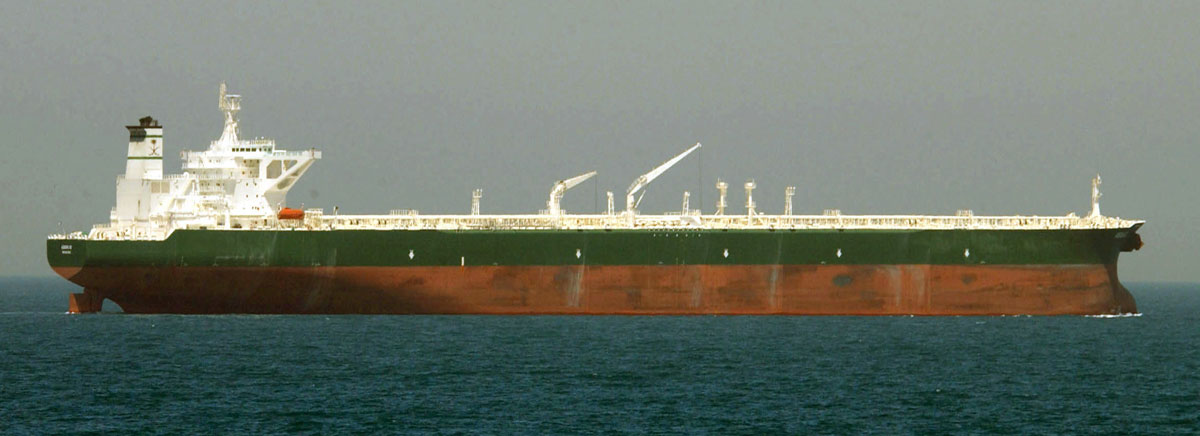
India became Russia’s biggest oil customer after Western sanctions redirected barrels away from Europe. The trade offered refiners discounted feedstock and gave Moscow a deep market. India later stepped up purchases after U.S.–Iran tensions produced a blockade in the Strait of Hormuz, making Russian supply more valuable as a hedge against disruption elsewhere. New Delhi’s defense is straightforward: it must secure affordable energy for 1.4 billion people in a volatile market.
Washington has already imposed India 50 percent tariffs Russian oil pressure: a 25% reciprocal tariff plus another 25% linked to India’s Russian oil trade, effective August 27, 2026. The Graham Act gives Trump a larger weapon, but deploying it would test whether tariff pain changes India’s energy choices or instead hardens resistance and pushes trade further outside U.S. influence.
Carrot and stick for India; a harder lever in China
The Zelenskyy WSJ interview UNGA message named India as an economic pillar for Russia. In a separate Fox News interview, however, Zelenskyy struck a softer note: “I think India is mostly with us,” he said, while acknowledging “we have these questions with energy.” He added, “I think President Trump can manage it.” Those comments, also carried through secondary reporting, place Washington in the role of enforcer while leaving Kyiv room to preserve its relationship with New Delhi.
That is not a contradiction so much as a coordinated diplomatic dual track. The public accusation increases the cost of inaction; the reassurance gives India a route to change course without appearing to surrender to Ukrainian pressure. The carrot and the stick point at the same target.
China is different. Zelenskyy said that “with China it’s more difficult because today, it’s not in their interests not to support Russia.” Beijing has greater economic scale, deeper strategic competition with Washington and more room to absorb pressure. The scheduled Trump Xi summit trade talks during Xi’s September 23–25 state visit put trade, rare earths and energy on the agenda, but they do not guarantee that Russian oil will become the decisive issue.
Turkey is the third hinge. As a NATO member that has armed Ukraine, mediated talks and maintained economic ties with Russia, Ankara has built influence by balancing both sides. Pressing Turkey too hard could reduce an important channel to Moscow; applying too little pressure leaves another outlet for Russian energy. That makes Turkey useful precisely because it is not fully aligned with either camp.
Who gains, who loses—and the supply shock risk
If the strategy works, Ukraine gains by weakening the fiscal base behind Russia’s military campaign without immediately widening the battlefield. Washington gains leverage over both Moscow and major importers. Gulf producers and U.S. exporters could gain market share if Indian, Chinese and Turkish buyers reroute toward non-Russian barrels.
The losses would be concentrated but significant. Russia’s budget would face lower export volumes, steeper discounts or both. Indian refiners would lose some of the margin created by discounted Russian crude. Smaller Chinese “teapot” refiners, often more willing to handle sanctioned or discounted oil, could face higher compliance and financing costs.
The critics’ case is that cutting more than 2 million barrels a day of Russian crude from Indian and Chinese markets cannot be treated as a bookkeeping adjustment. If replacement barrels do not arrive quickly, global supply could tighten and prices could rise. That would punish Western consumers, improve the price Russia receives for whatever it still sells and weaken political support for the strategy. A successful pressure campaign therefore depends on sequencing: alternative supply, enforcement coordination and credible exemptions must move together.
There is also a measurement problem. Import estimates can shift as cargoes are reclassified, delayed or transferred at sea. A fall from 2.1 million to an estimated 1.9 million barrels per day is directionally meaningful, but preliminary September data are not a final customs tally. Nor does a lower volume automatically reveal whether the cause is policy pressure, pricing, maintenance, shipping disruption or ordinary month-to-month variation.
What happens next
The first test is whether Trump converts rhetoric into implementation. The act’s 100% ceiling is a threat with negotiating value even before it is imposed. If the White House names targets, timelines and conditions for relief, importers can calculate the cost of continued purchases. If the authority remains undefined, Moscow and its customers may conclude that the threat is designed more for bargaining than enforcement.
The second test is diplomatic. Zelenskyy told reporters he is “ready” to meet Putin “anytime” for face-to-face talks. His willingness does not establish that a summit will happen: Moscow has not accepted the proposed meeting or the reciprocal energy-ceasefire terms. But pairing openness to talks with pressure on oil buyers gives Kyiv two mutually reinforcing claims—that it is prepared to negotiate and that delay should become more expensive for Russia.
Three scenarios follow. In a deal scenario, tariff threats help produce an energy ceasefire, with both sides halting attacks on power and fuel infrastructure while broader negotiations begin. In an escalation scenario, Washington imposes large secondary tariffs, India and China retaliate or reroute commerce, and oil prices rise before Russia’s revenue falls. In a stalemate, tariff authority remains mostly unused, Russian barrels continue moving at discounts and the war grinds through another winter.
The most revealing signal may be whether India’s September decline becomes a trend. At 1.9 million barrels a day, India would still be deeply embedded in Russia’s export system. A sustained move lower—combined with reduced Chinese and Turkish buying—would begin to test Zelenskyy’s thesis. A temporary dip followed by recovery would show the limits of pressure when energy security and commercial margins pull in the opposite direction.
Sources: The Daily Jagran on the WSJ interview; ANI / IndianEconomicObserver, including Reuters import data and preliminary Kpler estimates; New York Post on the Graham Act and Zelenskyy’s readiness to meet Putin; UK government on the Starmer–Zelenskyy meeting; and Mint on the Fox News interview. Signal Post News has not independently verified every interview quotation or preliminary trade estimate.