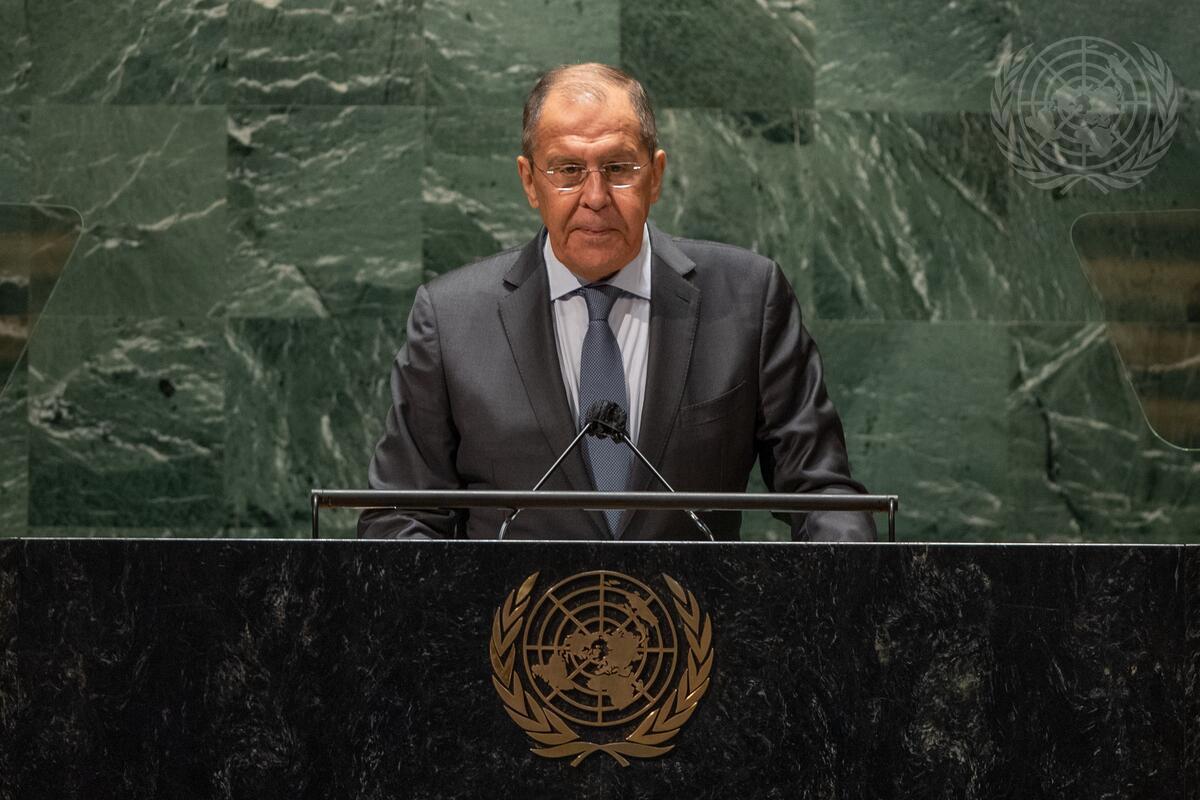
NEW YORK — Russian Foreign Minister Sergey Lavrov used the 81st United Nations General Assembly on September 26 to cast the United States and its allies as the authors of a widening international crisis, calling them “warmongers” headed for a “strategic dead end” while insisting Russia's war in Ukraine would continue “through to the end.” The address was less a new peace proposal than a statement of negotiating posture: Moscow wants the world to believe time is on its side.
The Lavrov UNGA warmongers speech mixed allegations about Ukraine, Venezuela and Iran with appeals for a more representative United Nations. It also pursued a familiar political wedge. Lavrov praised President Donald Trump's interest in talks and revived Moscow's version of an understanding reached with Trump in Alaska in August 2025, while blaming European governments for blocking peace. That division between a supposedly pragmatic Washington and an obstructionist Europe is the speech's central strategic message.
Its timing matters. Trump had used his own General Assembly speech to call for an end to the Ukraine war, and the United States was considering new technical-level trilateral diplomacy. At the same time, the Lindsey Graham Act was moving sanctions pressure toward states and companies that sustain Russian trade. Lavrov was therefore speaking to several audiences at once: the Kremlin's domestic constituency, governments in the Global South, the White House and European capitals that expect the war to intensify through winter.
What Lavrov said — and what the speech left out
On Ukraine, Lavrov accused Western governments of “pumping” Kyiv full of weapons and claimed outside assistance was helping Ukrainian forces direct drones and missiles at civilians and civilian infrastructure. Those were Russian allegations, not independently established findings. He did not pair them with an account of Russia's repeated missile and drone attacks on Ukrainian apartment blocks, railways, power plants and other civilian and energy sites, including strikes documented by Ukrainian authorities and international monitors.
That omission is essential context. Ukraine has struck Russian refineries and other industrial facilities, and civilian harm from either side deserves scrutiny. But Russia began the full-scale invasion in February 2022 and has sustained a nationwide strike campaign. A balanced reading cannot treat the two sets of claims as morally or operationally interchangeable without examining who launched the war, what was targeted and what evidence supports each incident.
Lavrov also condemned U.S. actions in Venezuela, claiming Washington invaded the country and abducted President Nicolás Maduro and his wife. He accused the United States and Israel of using force to kill Iran's supreme leader, Ayatollah Ali Khamenei, and members of his family, and of attacking civilian and safeguarded nuclear infrastructure. He demanded an end to restrictions on Cuba, which he called an “island of freedom.” Each claim served a broader argument that Washington invokes international law selectively; each must still be judged against evidence from the governments involved and independent reporting rather than accepted as fact because it was delivered from the U.N. rostrum.
Germany, Japan and the argument over the United Nations
Europe drew some of Lavrov's harshest language. He claimed Germany had become Kyiv's “main sponsor,” said European Union leaders had failed to learn historical lessons and accused them of trying to frustrate talks that he said interest the Trump administration. The phrasing was designed to isolate Berlin and other European capitals from Washington at a moment when their sanctions, weapons commitments and energy strategy remain critical to Ukraine.
Lavrov's institutional argument was more selective. He backed stronger representation for India, Brazil and African states on the U.N. Security Council, reflecting a widely shared complaint that the council's permanent membership no longer represents the world's population or economic balance. Yet he opposed permanent seats for Germany and Japan, tying both to Russia's interpretation of World War II memory.
Japan's deputy U.N. ambassador, Mikanagi Tomohiro, answered that attack at the end of the meeting. He called Japan “peace-loving” and said freedom, democracy and fundamental human rights remain unshakable foundations of its decisions. The exchange exposed a contradiction in Moscow's reform message: advocating broader representation for some influential states while using a permanent member's veto-era power and historical grievance to exclude others.
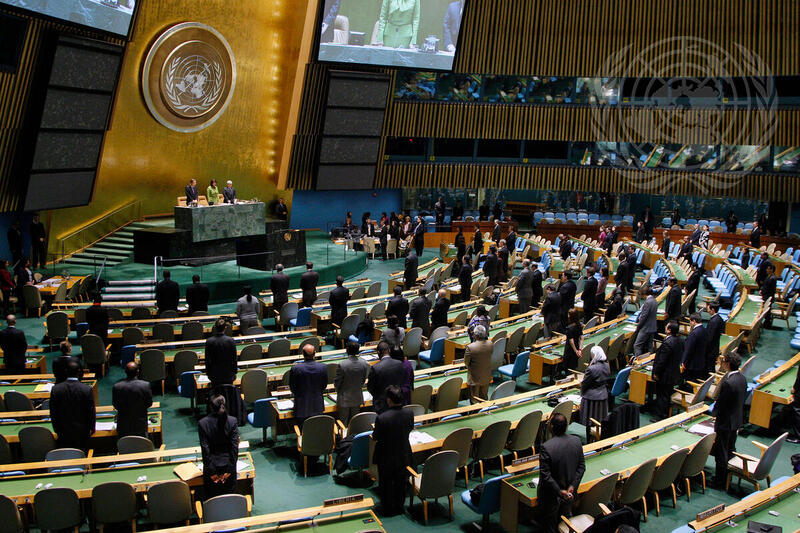
The Wadephul meeting showed how narrow the diplomatic space has become
Before the address, Lavrov met German Foreign Minister Johann Wadephul on the U.N. sidelines, the first such encounter since Russia's 2022 invasion. Wadephul urged Moscow to leave what Germany described as a dangerous path of escalation with Germany, Europe and NATO and pressed for an immediate ceasefire, particularly around grain exports and energy infrastructure.
Lavrov later said he heard nothing new. On the alleged drone incident at Leipzig/Halle Airport, he dismissed the aircraft as “unclaimed” and said Germany had too quickly attributed it to Russia. On Black Sea shipping, he challenged Berlin to identify a commercial vessel damaged or targeted by Russian strikes and blamed Ukraine for attacks on vessels. Those replies were rebuttals, not resolution: European governments have linked Russia to a broader pattern of drone incursions near critical sites, while Moscow denies responsibility; both sides continue to trade accusations over attacks affecting ports and commercial navigation.
The meeting was still significant because contact itself has become rare. It showed that European governments can keep channels open without accepting Moscow's account. It also illustrated the limits of diplomacy conducted through competing public statements: neither side indicated that the exchange produced a ceasefire formula, a verification mechanism or even a shared description of the problem.
Alaska is now Moscow's “we agreed, you walked away” narrative
Lavrov said Russia believed Trump and President Vladimir Putin reached an understanding on ending the war at their August 2025 meeting in Alaska and that Moscow remained ready to return to it. No mutually published text establishing a comprehensive peace agreement has been produced. Without common terms, enforcement rules or confirmation from both sides, the claim is best understood as Moscow's negotiating narrative rather than a settled accord.
That narrative is politically useful. It allows the Kremlin to say Russia already accepted a path forward, Washington drifted away from it and Europe pulled the process off course. It also directs pressure toward Trump, who must choose whether to validate Moscow's description of Alaska, define a different U.S. account or leave the ambiguity intact. The fuller background appears in Signal Post News' analysis of the Trump U.N. address and the Rubio–Lavrov diplomacy at UNGA.
Lavrov's praise for Trump's interest in negotiations, combined with his attacks on Europe, is therefore not a concession. It is a wedge strategy. Moscow can flatter the U.S. president, accuse European allies of sabotage and preserve maximalist language about fighting “to the end” — all while claiming it, not Kyiv or Brussels, is the party ready to talk.
A hard-line speech during a high-tempo strike exchange
The address landed amid another exchange of long-range attacks on September 26. Ukrainian officials reported Russian strikes affecting civilians and infrastructure; Russia reported Ukrainian drone activity against targets on its territory. Signal Post News' running account of the September 26 Russia–Ukraine strikes separates confirmed consequences from each government's operational claims.
The military trend matters as much as the day's individual tally. Ukraine has expanded attacks on refineries to constrain revenue and logistics. Russia has combined massed one-way attack drones with missiles and a developing class of faster systems. The phrase Ukraine jet-powered drone strikes September 2026 captures one side of that adaptation cycle, but both sides are changing launch patterns, routes and targets faster than air defenses can be replenished.
The campaign around the Ilsky refinery illustrates the strategic logic. Kyiv seeks to impose costs deep inside Russia and reduce usable refining capacity; Moscow seeks to overwhelm Ukraine's electricity system, urban defenses and industrial base. Neither approach has yet produced a decisive political break. Instead, the exchange raises the civilian and economic price while improving both militaries' ability to sustain the next round.
How we got here
Four and a half years after Russia's full-scale invasion, diplomacy is occurring inside a war of attrition rather than outside it. Trump has alternated public pressure for a settlement with efforts to preserve direct access to Putin. President Volodymyr Zelenskyy has asked Washington to increase pressure on Moscow while arguing that any pause without security guarantees could simply give Russia time to rearm. Secretary of State Marco Rubio and Lavrov have kept a channel open, but their UNGA contact did not produce a publicly verified breakthrough.
On the battlefield, Ukraine's strike on the Ilsky refinery and a wider refinery campaign seek leverage against the revenue and fuel systems that support Russia's war. Russia's Geran drone campaign, including reported jet-powered variants, tries to compress Ukrainian reaction time and force Kyiv to spend scarce interceptors. The result is a contest not just over territory but over industrial replacement rates: which side can build drones, repair power systems and finance air defense faster than the other can destroy them.
That contest explains why a speech about global order also dwelled on weapons and sanctions. Russia wants outside states to see the war as a Western project that can be ended by reducing support to Kyiv. Ukraine and its partners argue the opposite: that sustained military and economic pressure is necessary to make a durable agreement possible. The same facts — arms deliveries, refinery strikes, interrupted diplomacy — are arranged into rival theories of how wars end.
The numbers behind the rhetoric
More than 4.5 years of full-scale war: the February 2022 invasion has now extended through another U.N. General Assembly, with no comprehensive ceasefire in force.
Drone and refinery tempo: recent barrages have reached into the hundreds of drones in a night, while Ukrainian attacks have repeatedly targeted Russian refining and defense-industrial sites. Daily counts vary by government and are difficult to verify during active operations; the durable fact is the accelerating volume and geographic reach.
$400 million in U.S. obligation: a recent American commitment represents meaningful ammunition and support but remains small beside the annual cost of sustaining a nationwide war. Delivery schedules and the mix of air-defense, artillery and other systems matter more than the headline total.
€6.6 billion from the European Union: European support provides Kyiv with a larger financial bridge, yet procurement delays and national political disputes can blunt its battlefield effect. Money promised is not the same as interceptors or shells delivered on time.
The tariff lever: sanctions advocates argue that tariffs and secondary penalties on buyers such as China and India could reduce Russia's energy income. The leverage is real, but so is the risk of higher prices, trade retaliation and resistance from governments that reject being forced to choose sides. The Lindsey Graham Act Russia sanctions debate turns on whether those costs create negotiating pressure or merely reroute commerce.
Who gains, who loses
Moscow gains room to define the diplomatic story
By presenting Alaska as an agreement already made and Europe as the spoiler, Russia shifts attention from its battlefield demands to a dispute inside the Western coalition. Even without winning acceptance, that framing can complicate alliance messaging and buy time.
Trump gains leverage — and ownership of the ambiguity
Lavrov's praise offers the White House a role as indispensable broker. It also creates a trap: if Washington never states what it believes happened in Alaska, Moscow can keep filling the gap. If Trump endorses an account allies consider one-sided, he may deepen the very transatlantic divide Lavrov is courting.
Europe loses if it is discussed rather than included
European states finance much of Ukraine's defense and would live with the security consequences of any settlement. A framework negotiated over their objections could be difficult to implement. Wadephul's meeting was an attempt to put European concerns directly into the record.
Ukraine faces the highest immediate cost
For Kyiv, “through to the end” is not rhetorical theater. It signals more attacks, more pressure on the grid and another winter in which civilian resilience becomes a military variable. Critics of Lavrov's speech argue that appeals to sovereignty ring hollow when made by the government prosecuting an invasion; critics of Western policy argue that weapons without a credible negotiating design can prolong suffering without defining an attainable endpoint.
What happens next
A possible UAE technical meeting
Washington has reportedly proposed technical-level talks among the United States, Ukraine and Russia in the United Arab Emirates. Kyiv has said it is awaiting details and Moscow has suggested a meeting could be possible, but there was no public U.S. confirmation of a date or agreed format at publication. The proposal should be judged by whether it creates verifiable steps — prisoner exchanges, navigation rules, energy restraint or a monitoring mechanism — rather than by the optics of a meeting. Read the UAE trilateral proposal explainer.
The winter 2026–27 strike campaign
Both sides have incentives to accelerate before weather and energy demand peak. Russia can target Ukraine's grid and heating systems; Ukraine can keep attacking refining, logistics and launch infrastructure. A limited energy or Black Sea arrangement may be more feasible than a comprehensive ceasefire, but it would require clear target definitions, third-party monitoring and consequences for violations.
Miami and the Putin invitation
The December G20 in Miami offers a potential diplomatic stage. The decisive question is whether Putin receives and accepts an invitation, and on what political terms. A meeting could open a channel; it could also confer legitimacy without extracting concessions. Signal Post News tracks the Putin G20 invitation decision.
Alaska versus the Lindsey Graham Act
The clearest coming test is whether Washington's policy is organized around reviving the disputed Alaska understanding or enforcing the economic pressure promised by new sanctions law. Those paths are not necessarily incompatible: pressure can support negotiations. But they require a consistent account of objectives. If the United States cannot say what compliance looks like, neither allies nor adversaries can know what leverage is for.
Lavrov's address did not close the door to talks. It narrowed the opening. By insisting Russia can fight to the end while claiming an earlier deal already existed, he offered Washington a choice between Moscow's preferred narrative and a more demanding process built on verification, allied consent and Ukrainian agency. The speech's real significance lies there: not in its insults, but in the terms Russia is trying to establish before the next negotiation begins.