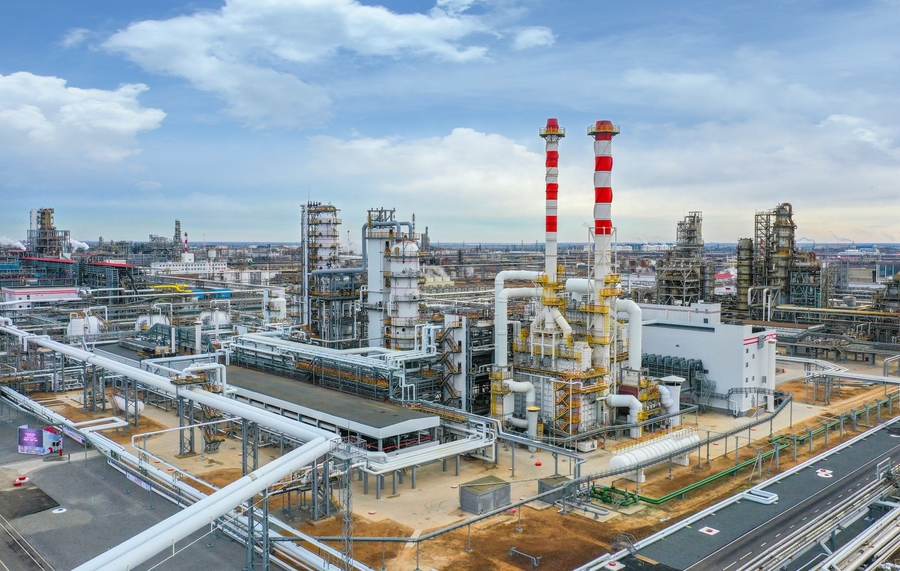
KYIV — Ukraine strikes Samara refinery October 2026 became a leading search phrase after President Volodymyr Zelensky said Ukrainian forces had carried out a coordinated overnight campaign against targets tied to Russia's war effort. In a social-media statement on Thursday, Zelensky named an oil facility in the Samara region, a drone launch-and-storage site in Oryol, a supply depot serving Russian occupation forces in Bryansk and two Russia-linked ships in the Black Sea.
Those are claims by Ukraine's president, not independently established battlefield facts. Zelensky did not name the Black Sea target, identify the Samara facility or provide a damage assessment. Russian authorities had not publicly confirmed the full list at publication time. Video clips posted with his statement appeared to show strikes on two vessels, but their location, timing and effects could not be independently verified.
Why this matters
Zelensky framed the operation as “Ukrainian sanctions” and “just responses,” arguing that strikes on the systems sustaining Russia's campaign are meant to reduce Moscow's ability to continue the war. The phrase compresses a strategic argument into political language: where formal sanctions constrain finance and trade, Ukraine's long-range attacks seek to impose physical costs on fuel, logistics and launch capacity.
The reported Samara oil facility drone strike would be notable for its depth. Samara is roughly 860 kilometers, or 534 miles, southeast of Moscow. Reaching that area would demonstrate that Ukraine can threaten infrastructure well beyond the immediate border zone. But range alone does not prove strategic effect. A fire, temporary shutdown or damaged storage tank has a different military impact from a prolonged loss of refining capacity.
The timing also matters. The announcement came after Russia's September 30 mass attack on Ukraine's energy system. Kyiv presents its deep-strike campaign as retaliation and deterrence; Moscow describes Ukrainian attacks on Russian territory as terrorism and has repeatedly warned of further retaliation. Both sides are increasingly targeting the infrastructure that allows the other to sustain combat.
How we got here
Ukraine's attacks on Russian oil infrastructure have expanded in distance and frequency as Kyiv developed longer-range drones and sought alternatives to scarce missiles. The aim is not simply spectacle. Refineries turn crude oil into fuels needed by civilian transport and military units, while export earnings support the Russian state. Repairs, air defenses and production interruptions add costs even when a plant returns to service quickly.
That campaign has already included attacks far from Ukraine. Our report on the Perm refinery and Ulyanovsk Iskra plant strikes examined how distance complicates Russian air defense. Earlier, Ukraine said it hit an Oryol drone base, part of the same effort to disrupt launches before weapons reach Ukrainian cities.
A four-part target set, not a single refinery raid
Zelensky's list spans four functions: energy in Samara, drone operations in Oryol, battlefield supply in Bryansk and maritime activity in the Black Sea. Taken together, the pattern suggests systems targeting rather than random retaliation. Oil supports revenue and fuel; drone sites support aerial attack; depots connect production to front-line units; ships move cargo or provide maritime capability.
That breadth can force Russia to distribute defenses across a vast area. It can also make verification harder. Each target requires separate evidence, and public video rarely establishes the operational result. A statement that several sites were struck does not show whether production stopped, drones were destroyed, supplies were lost or ships were disabled.
Who benefits, who loses
Ukraine benefits if the campaign creates cumulative pressure. Even limited damage can force Russia to relocate aircraft, harden depots, disperse drones and assign air-defense units away from the front. Kyiv also gains a political answer to attacks on its grid: it can show Ukrainians that Russia's rear areas are not immune.
Russia bears fuel, logistics and protection costs if the targets and damage are confirmed. Yet Moscow can absorb some disruptions through inventories, rerouting and repairs, and Russian officials may use the attacks to justify new strikes. The decisive measure is sustained lost capacity, not the number of explosions reported online.
Energy consumers and Ukraine's partners face a tradeoff. Pressure on Russian refining can reduce war revenue and military fuel availability, but large or repeated disruptions can tighten regional product markets. Western governments that support Ukraine must balance Kyiv's right to defend itself against concerns about escalation and fuel prices.
What the claims imply
The reported operation points to a doctrine aimed at networks. Ukraine is trying to connect individual strikes into a chain of effects: reduce drone launches, strain fuel supply, interrupt logistics and contest maritime movement. Success would not be visible in one night's footage. It would appear later in fewer sorties, delayed deliveries, lower refinery runs, longer transport routes or additional Russian resources pulled into rear-area defense.
Skepticism remains essential. Wartime governments have incentives to emphasize successful operations and withhold failures. Russia may also minimize damage. Independent satellite imagery, commercial shipping data, regional emergency notices and company disclosures will be more useful than either side's initial narrative.
What happens next
Russia may respond with another large missile-and-drone barrage against Ukraine's energy system as colder weather approaches. Ukraine is likely to continue testing routes to distant industrial targets while seeking more air-defense systems for its own cities. The resulting contest is asymmetric: Russia fields a larger missile arsenal, while Ukraine relies heavily on domestically produced drones and selective strikes.
Watch for confirmation of the vessels' identities, the exact Samara site, any production shutdown, and evidence from Oryol or Bryansk. Those details will determine whether Zelensky's announcement marks a damaging operation or a politically forceful claim with limited measurable effect.
Sources and reporting notes
- The Independent live blog mirror: Zelensky's October 1 statement
- EA WorldView: Ukraine war update and strike claims
- Kyiv Post via EuropeSays: targets named by Zelensky
- Demócrata: Black Sea and Russian-region strike claims
Reporting note: The strike list and descriptions are attributed to Zelensky. Signal Post News could not independently verify the targets or damage, and Russian authorities had not confirmed the full list at publication.