Business · Technology · Markets
For four years, Washington controlled the box: the advanced AI chip itself, crated, shipped and counted at the border. On Monday the Commerce Department moved to control the compute inside it. The new rule reaches into data centers on other countries’ soil and says that above a bright numerical line — more than 12 million aggregate TPP — renting American AI power to a company headquartered in China or another restricted destination is an export, and exports need licenses.
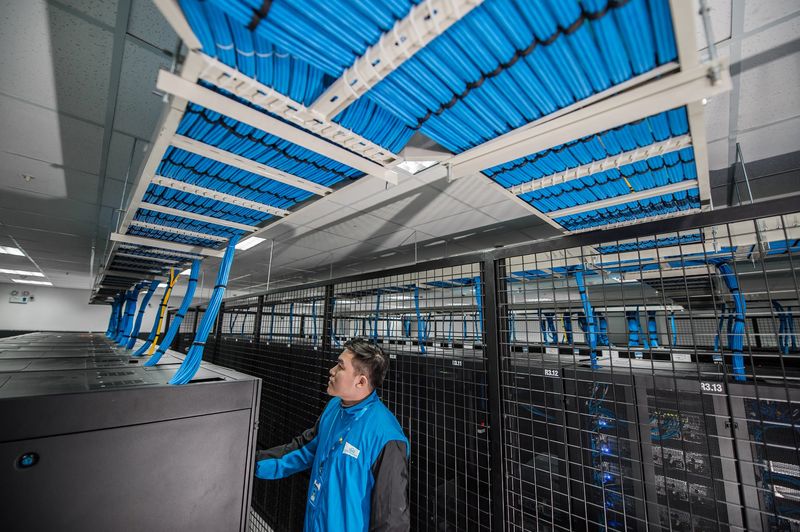
WASHINGTON, November 16, 2026 — The AI chip cloud loophole rule arrived on Monday, and it is best understood as Washington conceding a fact its own export controls created. Ban the shipment of advanced American artificial-intelligence chips to China, and the chips do not disappear; they gather in data centers in third countries, where the computing power they produce can be rented remotely, by the hour, over the internet, by customers the ban was written to keep away from them. The hardware never crosses a border. The capability does. The interim final rule released on November 16 by the Commerce Department’s Bureau of Industry and Security (BIS), RIN 0694-AK50, titled “Addressing Remote Access to Advanced Semiconductors,” is the administration’s answer: treat that remote access itself as a controlled export, license it, and set the threshold high enough — more than 12 million aggregate TPP, in the rule’s unit of total processing performance — that ordinary cloud business is untouched while serious AI training capacity is squarely caught.
Track it live: Live markets tracker — follow chip stocks, the Nasdaq and the AI trade as the new licensing regime is priced in.
One timing point must be stated precisely at the outset, because the whole compliance calendar turns on it. BIS released the interim final rule on Monday, November 16. The rule takes effect only when it is published in the Federal Register — and as of 2 p.m. Eastern on Monday, it had not been published there; the text displayed on Monday still carried placeholders for its publication, effective and comment dates. November 16 is the release date, not the effective date, and every deadline described in this article — the 60-day comment period and the 90-day window for existing operators to obtain licenses — runs from publication and the effective date it sets, not from Monday’s announcement.
What we know
- The rule: BIS released interim final rule RIN 0694-AK50, “Addressing Remote Access to Advanced Semiconductors,” on Monday, November 16, 2026. BIS said it was written at the direction of the Treasury Department and the National Security Council.
- The core control: a new end-use control at §744.24 requires a license to export, reexport or transfer covered advanced-computing items for a data center anywhere in the world that provides, or will provide, more than 12 million aggregate TPP to a company headquartered in Macau or a Country Group D:5 destination — a group that includes China, Russia, Iran and North Korea among roughly two dozen destinations — or whose ultimate parent is headquartered there. Linked data centers aggregate toward the threshold, and license applications are reviewed case by case.
- The five-country list: separate new license requirements apply to covered advanced-semiconductor exports, reexports and transfers to or within Indonesia, Malaysia, Singapore, Thailand and Brazil, which Commerce identified as presenting a higher-than-normal diversion risk.
- The timing: the rule takes effect on Federal Register publication, which had not happened as of 2 p.m. ET on November 16. Comments are due 60 days after publication. Operators already serving covered customers have 90 days from the effective date to obtain a license.
- The carve-outs: computing access used exclusively for commercial recommender systems — the ranking engines behind e-commerce and social-media feeds — is excluded from the §744.24 prohibition, subject to reporting conditions. End users headquartered in the United States are exempt from the new export license requirement, though the remote-access limits still apply.
- The burial: the rule formally rescinds the Biden-era AI Diffusion Rule of January 2025, which BIS had announced in May 2025 it would discard and which was never enforced.
- The scale: 12 million TPP is, on third-party estimates, roughly the output of 750 to 760 Nvidia H100- or H200-class chips — the conversions are analysts’ and reporters’ estimates, not BIS figures, and are attributed as such in this article.
What the rule actually does
Start with the mechanism, because the mechanism is the story. American export controls have traditionally attached to things: a chip, a lithography machine, a crate on a dock. The new §744.24 control attaches to a relationship — between a data center, wherever it is located, and the customer drawing on its capacity. If that customer is headquartered in Macau or a Country Group D:5 destination, or its ultimate parent is, and if the computing power made available to it crosses the line of more than 12 million aggregate TPP, then providing that access requires a BIS license. The data center does not have to be in China. It does not have to be in a restricted country at all. It can stand in a friendly jurisdiction with reliable power and cheap land, full of lawfully purchased American chips — and the moment its remote capacity is pointed, at sufficient scale, at a covered customer, US law claims a say in the transaction.
Three design choices give the control its reach. The first is aggregation: linked data centers count together toward the threshold, so an operator cannot defeat the rule by slicing one large cluster into nominally separate facilities each sitting just under the line. The second is the ultimate-parent test: the rule looks through the immediate customer to where its parent is headquartered, which is aimed squarely at the subsidiary structures — a Singapore or Malaysian entity owned from Shenzhen or Beijing — through which restricted computing has most often been rented. The third is case-by-case review: BIS has not written a blanket ban. Applications will be judged individually, which gives the bureau discretion to approve benign uses and deny sensitive ones — and gives every operator in the affected business a queue to stand in and a file to build.
Alongside the remote-access control, the rule adds a more conventional layer: fresh license requirements for covered advanced-semiconductor exports, reexports and transfers to or within five countries — Indonesia, Malaysia, Singapore, Thailand and Brazil — that Commerce identified as carrying a higher-than-normal risk of diversion. Reason magazine, in its analysis of the rule, noted the White House’s August transshipment rationale covering four of the five, with Singapore treated as a “weak link” target in its own right; that framing is Reason’s account of the administration’s reasoning, and it is attributed here as such. What is not in dispute is the geography. Four of the five are Southeast Asian states that have become the region’s data-center frontier, and the fifth, Brazil, is Latin America’s largest emerging compute market. The list reads like a map of where the chips went when the direct road to China closed.
The rule also distributes homework. A licensing regime of this kind cannot run on BIS examiners alone; it depends on diligence by the companies that make, sell and house the chips — foundries and exporters verifying who ultimately benefits from a shipment, data-center operators knowing whose workloads their halls are running and at what scale. That is the quiet revolution inside the document: compliance is being pushed down the stack, from the border to the balance sheet, and the cost of not knowing your customer is becoming a legal exposure rather than a public-relations risk. End users headquartered in the United States sit outside the new export license requirement — Washington is not licensing Americans’ use of American clouds — but the remote-access limits still apply to them, a reminder that the control follows the destination of the compute, not the passport of the buyer.
What 12 million TPP actually buys
TPP — total processing performance — is the rule’s yardstick, an aggregate measure of raw computing throughput. Twelve million of it is an abstraction until it is translated into hardware, and the translations available on Monday were third-party estimates rather than BIS figures; they are reported here as estimates, because the bureau itself did not publish a chip count. TechCrunch put the threshold at roughly the output of about 750 Nvidia H100- or H200-class accelerators. Analyst estimates circulated by ZeroHedge landed in the same neighbourhood — about 760 H100-equivalents — and added that the same performance equals roughly 330 of Nvidia’s newer B200 chips, or just over four GB200 NVL72 racks, the cabinet-scale systems that have become the standard unit of serious AI infrastructure.
Read those estimates for what they say about intent. A cluster of 750 top-end accelerators is not a research group’s sandbox or a start-up’s fine-tuning rig; it is a training-scale installation, the kind of capacity used to build frontier models. BIS has drawn the line where experimentation ends and industrial AI begins — low enough to catch any operation that could plausibly train a competitive large model for a covered customer, high enough that a Chinese-owned business renting ordinary cloud capacity for ordinary purposes never comes near it. Every licensing regime lives or dies on whether its line sits in the right place. This one will be tested, immediately, by operators whose clusters sit near it and whose customers’ corporate structures were designed, in part, to make lines like it hard to apply.
Why this matters: from boxes to compute
The deepest significance of Monday’s rule is jurisdictional, and it deserves to be stated plainly. For four years the US strategy on AI chips was a strategy about physical objects in physical space: lists of controlled items, lists of controlled destinations, licences for shipments between them. That strategy had a structural flaw that grew larger every quarter. Computing is fungible and networks are borderless; a capability that cannot be delivered in a crate can be delivered through a cable. The “cloud loophole” was never really a loophole in the drafting sense — it was the predictable consequence of controlling atoms in a market that had learned to sell the work the atoms do. Monday’s rule is Washington’s admission that the unit of control has to be the compute itself.
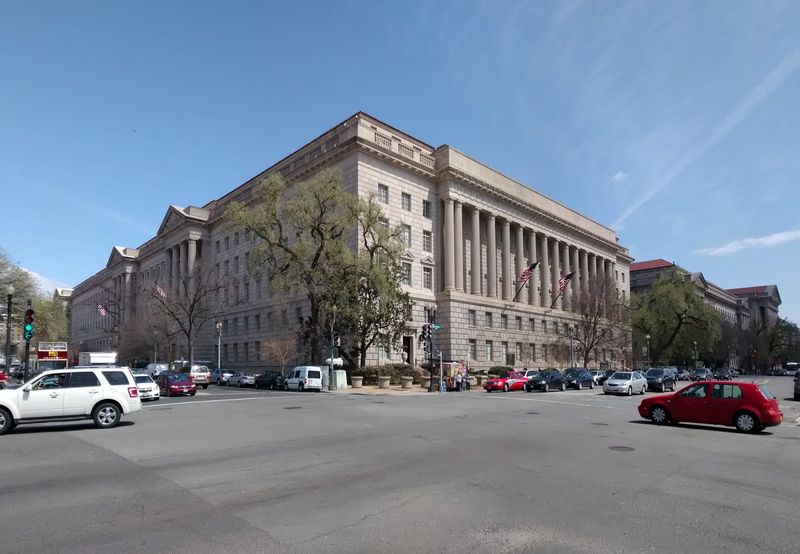
That admission carries a claim with long consequences. When BIS asserts licensing authority over a data center in a third country because the facility runs American technology and serves a customer headquartered in a fourth, it is asserting that US jurisdiction travels with the US technology stack — through the chip, into the rack, out along the fibre. Allies and hosts will notice. Singapore and Malaysia have spent years and billions courting exactly the data-center investment this rule now subjects to an American licensing lens, and they did so partly on the promise that geography was destiny: build in a stable, friendly jurisdiction and the geopolitics stays manageable. The rule does not forbid that model. It reprices it. Every future data-center pitch in Southeast Asia now carries a line item it did not carry last week: the possibility that Washington, applying a case-by-case standard in a bureau in the Herbert Hoover Building, decides which customers the hall may serve at scale.
There is a strategic logic that the rule’s defenders will press, and it is not frivolous. If the purpose of chip controls is to slow the military and frontier-AI progress of strategic rivals, then a control that stops at the water’s edge of the physical chip while leaving its output freely rentable is a control that leaks by design. Closing the leak — if the licensing machinery can actually process the demand, and if the diligence duties actually surface the shell structures — converts a sieve into something closer to a wall. Whether it works is an empirical question the next two years will answer. What Monday settled is the doctrine: in the eyes of the US government, there is no longer a meaningful difference between giving a restricted customer the chip and giving them the chip’s work.
How Washington got here
The road to §744.24 runs through four years of physical controls and their documented evasions. Successive rounds of export rules from 2022 onward restricted the direct sale of advanced accelerators to China, and a diversion economy grew in the shadow of the restrictions: intermediaries, re-labelling, third-country routing and corporate structures designed to put distance between the chip and its true end user. Signal Post News has tracked that economy as it surfaced — including in our report on Malaysia’s probe into Nvidia chip diversion, under way since April 2025 — and Monday’s five-country list overlaps conspicuously with the geography of those investigations.
The immediate predecessor framework is also formally dead as of this rule. The AI Diffusion Rule, issued in January 2025 in the final days of the previous administration, attempted a global tiering of chip access — and was attacked from its first week by industry and by allied governments who found themselves capped. BIS announced in May 2025 that it would discard the framework, and it was never enforced; Monday’s interim final rule completes the burial by rescinding it outright and replacing its country tiers with a different architecture: end-use controls keyed to the customer’s headquarters and parentage, plus named-country licensing where diversion risk is judged highest. The difference matters. The Diffusion Rule rationed countries. The new rule polices customers and uses — a narrower instrument in theory, and a more intrusive one in practice, because it requires the government, and the industry, to know who is behind the login.
The political trigger, though, was scandal. The Singapore firm Megaspeed — at the heart of the Nvidia affair that has consumed the chip world this autumn — became the case study every faction reached for. Reuters reported on Monday that Treasury Secretary Scott Bessent said the Treasury, the Pentagon, the State Department and the US Trade Representative had favoured blacklisting Megaspeed for months, while the Commerce Department, which owns the entity list, had not acted — a public breach between the administration’s economic principals that Signal Post News covered in Bessent’s charge that Commerce held the pen on Megaspeed and failed to use it. On Sunday, Senator Maria Cantwell added congressional weight, writing to Commerce Secretary Howard Lutnick to accuse the department of failing to stem the flow of AI chips to China, Reuters reported. The rule landed the following day — the day President Trump departed for Asia, and days after Jensen Huang’s resignation as Nvidia’s chief executive convulsed the industry, a succession crisis this newsroom examined in Bessent’s insistence that Nvidia hire an outsider to replace Huang. Reason, citing Semafor, noted that Lutnick himself travels with the president’s China contingent — a detail reported here on that attribution. Read the sequence whole and Monday’s rule is not merely a regulatory instrument. It is Commerce’s answer, delivered under fire from the Treasury, the Senate and the headlines, to the charge that it had lost control of its own file.
The carve-outs — and the critics
No licensing regime is only its prohibitions; its exclusions define it just as much, and this rule’s most consequential exclusion is BIS’s own. Computing access used exclusively for commercial recommender systems — the ranking and recommendation engines that order e-commerce catalogues and social-media feeds — is excluded from the §744.24 prohibition, subject to reporting conditions. As a matter of regulatory design the logic is visible: recommender systems are the workhorse of the consumer internet, they run at enormous scale for entirely civilian purposes, and a rule that licensed every feed-ranking workload touching a Chinese-headquartered platform would drown itself. The exclusion is the bureau’s, written into its own text.
What the exclusion covers in practice is where the argument starts, and the argument must be attributed to its maker. Reason magazine contended on Monday that the recommender carve-out, applied to the real structure of the industry, sweeps in exactly the biggest Chinese platforms — naming TikTok’s parent ByteDance and Alibaba — whose consumer businesses run on recommendation at a scale few other workloads match. That is Reason’s critic argument about the provision’s effect, not a BIS statement: BIS named no companies, and Signal Post News reports the ByteDance and Alibaba application strictly as Reason’s analysis. But the critique identifies the rule’s central tension with precision. The line between a recommender system and a general AI capability is not a wall inside a modern data center; it is a label on a workload, and labels can be managed. A carve-out written for feeds will be tested by every operator whose training runs can be described, with a straight face, as improving recommendations.
Reason’s broader case — that compliance costs of this kind entrench incumbents, because only the largest cloud providers can afford the legal machinery to certify customers and workloads at this granularity — will be familiar to anyone who watched the Diffusion Rule die under industry pressure. A second, structural criticism circulated in industry commentary on Monday and deserves a hearing on its merits: the Export Administration Regulations have long paired a presumption of denial for D:5 destinations with a presumption of approval for close partners in Country Groups A:5 and A:6, a category that includes Gulf states such as the UAE that are building vast AI campuses. A regime that is restrictive in one geography and permissive in another does not abolish arbitrage; it relocates it, and the next diversion map may be drawn around the permissive tier rather than the restricted one. The rule’s defenders answer that case-by-case review is precisely the tool for watching that frontier. Both things can be true: the tool fits the problem, and the problem moves.
Winners, losers and the licensing queue
The winners’ column is headed by the constituency that has demanded this rule for two years: the national-security hawks in Congress and the administration who argued that physical controls without remote-access controls were a performance rather than a policy. They have their doctrine now, in regulatory text. Domestic cloud providers with mature compliance operations also stand to gain twice over — once because restricted customers pushed out of third-country halls will seek capacity in jurisdictions with clear rules, and again because the diligence burden falls heaviest on smaller rivals. And BIS itself, whatever the rule’s eventual efficacy, has reasserted ownership of a file on which it was being publicly second-guessed by the Treasury secretary.
The exposed column is longer. The data-center hubs of Singapore and Malaysia — named on the five-country list while hosting some of the largest concentrations of advanced American silicon outside the United States — now sell capacity under an American licensing shadow, and every hyperscale tenant agreement in the region will be re-read this week. Nvidia and AMD face a licensing queue interposed between their exportable hardware and some of its fastest-growing demand, arriving — in Nvidia’s case — in the same week as a leadership transition and a quarterly report. Chinese AI laboratories, for their part, receive one more push along a road they were already travelling: toward domestic silicon, principally Huawei’s, whose progress Washington’s controls were designed to make necessary and whose improvement each new restriction subsidises with urgency. That is the controls paradox in its purest form, and Monday’s rule does not escape it. It bets that the time bought by denial is worth the acceleration it causes in the rival’s self-sufficiency. Reasonable strategists have taken both sides of that bet for four years; the bet is now placed again, at larger scale.
The market’s verdict on Monday
Investors did not wait for the Federal Register to price the new regime. Monday’s session was already a rout in the AI trade before the rule’s full text circulated — the Nasdaq fell about 2.5 percent into correction territory and Nvidia dropped about 4 percent, moves Reuters’ Trading Day column recorded as the market’s verdict on a sector suddenly carrying earnings risk, leadership risk and now a fresh layer of regulatory risk simultaneously. Signal Post News’ own close-of-day report, Stock Market Today, Nov. 16: Nasdaq Falls 2.5% Into Correction as Chip Rout Deepens Before Nvidia Earnings, sets out the full scoreboard. Attribution matters here as in everything else in this story: the sell-off had several drivers, and no honest account assigns a 2.5 percent index move to a single rule. But the direction of the repricing was unmistakable. The market spent Monday valuing AI infrastructure as an asset whose cash flows now run, in part, through a licensing bureau — because, as of Monday, they do.
What happens next
The calendar now runs on a document that does not yet exist in its official form. When the interim final rule is published in the Federal Register — it had not been, as of 2 p.m. ET on Monday, and the displayed text’s date fields were still placeholders — publication starts two clocks: a 60-day window for public comments, and the countdown to the effective date from which existing operators serving covered customers will have 90 days to obtain their licenses. Interim final rules take effect without waiting for comments to be resolved, so the comment period is an argument about the rule’s future shape, not a stay on its arrival. Watch, in that argument, for the recommender-system exclusion to draw the heaviest fire from both directions — from hawks who see Reason’s loophole and from platforms who want its boundaries widened — and for the five-country list to be lobbied over by every government named on it.
Three further tests follow quickly. The first is administrative: whether Commerce designates additional countries, as the rule’s architecture allows, and how fast BIS can process a case-by-case queue that the industry will flood the moment the window opens. The second is corporate: Nvidia reports quarterly earnings after Tuesday’s close, the first under its interim leadership, and the licensing outlook for its data-center business is now a question its executives will be asked in public. The third is diplomatic, and it is the largest. On Thursday, November 19, Presidents Trump and Xi and President Putin meet in Shenzhen for the first trilateral summit of its kind — a room in which trade, technology and the architecture of the AI century are all, one way or another, on the table. Beijing will arrive knowing that Washington chose the week of the summit to close the cloud loophole, and that the man whose department wrote the rule is travelling with the American contingent. Whether the rule is raised in that room — as a grievance, a bargaining chip or a precedent — will say much about whether Monday’s document was the end of the cloud-loophole era or merely the opening position in its negotiation. The chips, meanwhile, sit where they sat last week: in halls from Johor to São Paulo, humming. What changed on Monday is who Washington says may listen to them hum, at scale, from Beijing — and that, once the Federal Register prints it, will be the law of the stack.
Sources
- US Department of Commerce, Bureau of Industry and Security, interim final rule RIN 0694-AK50, “Addressing Remote Access to Advanced Semiconductors,” released November 16, 2026 (primary source) — the new end-use control at §744.24; the threshold of more than 12 million aggregate TPP for data centers serving companies headquartered in Macau or Country Group D:5 destinations or whose ultimate parent is headquartered there; aggregation of linked data centers; case-by-case license review; the separate license requirements for Indonesia, Malaysia, Singapore, Thailand and Brazil; the exclusion for computing access used exclusively for commercial recommender systems, subject to reporting conditions; the treatment of US-headquartered end users; the formal rescission of the AI Diffusion Rule; and BIS’s statement that the rule was written at the direction of the Treasury Department and the National Security Council. The rule takes effect on Federal Register publication and had not been published in the Federal Register as of 2 p.m. ET on November 16, 2026; comments are due 60 days after publication and existing operators have 90 days from the effective date to obtain a license.
- TechCrunch, November 16, 2026 — reporting and analysis of the rule’s release: the remote-access licensing mechanism, the five-country requirements, the recommender-system exclusion and the rescission of the AI Diffusion Rule; and the estimate that 12 million TPP corresponds to roughly the output of about 750 Nvidia H100/H200-class chips — an estimate, not a BIS figure.
- Reuters, November 16, 2026 — two reports: (1) Senator Maria Cantwell’s November 15 letter accusing Commerce Secretary Howard Lutnick of failing to stem the flow of AI chips to China, and Treasury Secretary Scott Bessent’s statement that Treasury, the Pentagon, the State Department and USTR had favoured blacklisting Singapore’s Megaspeed for months while Commerce had not acted; (2) Trading Day market coverage recording the Nasdaq’s fall of about 2.5 percent and Nvidia’s fall of about 4 percent on Monday. Analyst estimates of about 760 H100-equivalents and roughly 330 B200s for the 12 million TPP threshold circulated via ZeroHedge are likewise third-party estimates.
- Reason, November 16, 2026 — critic analysis, labelled as such: the argument that the recommender-system carve-out in practice sweeps in Alibaba and TikTok’s parent ByteDance (Reason’s argument about the BIS provision’s effect, not a BIS statement); the White House’s August transshipment rationale for the five-country list, with Singapore as a “weak link” target; the compliance-cost critique; and, citing Semafor, the detail that Secretary Lutnick travels with the president’s China contingent.
- Fortune, via syndication, November 16, 2026 — coverage of the rule’s release, the remote-access controls and the recommender-system exclusion.
- Signal Post News, related coverage: Stock Market Today, Nov. 16: Nasdaq Falls 2.5% Into Correction as Chip Rout Deepens Before Nvidia Earnings; Bessent Blames Commerce for Megaspeed Blacklist Delay; Bessent Says Nvidia Must Hire an Outsider to Replace Huang; Malaysia Probing Nvidia Chip Diversion Since April 2025, Minister Confirms; Nvidia Board Opens Investigation Into CEO Jensen Huang Over Foreign Intelligence Report.
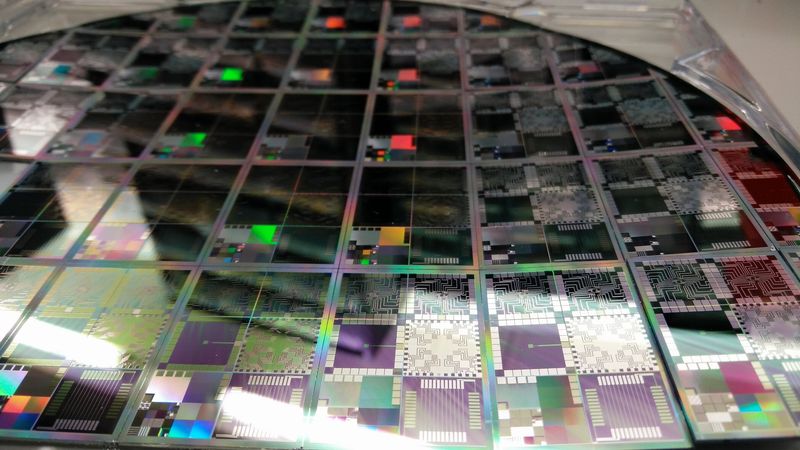
- Photos: technicians among caged server racks at a CMC Telecom data center, Daoducquan via Wikimedia Commons (CC BY-SA 4.0); a semiconductor wafer of microelectronics, DrHughManning via Wikimedia Commons (CC BY-SA 4.0); the Herbert C. Hoover Building, US Department of Commerce, Washington, photographed April 6, 2014, Gunnar Klack via Wikimedia Commons (CC BY-SA 4.0) — each credited in its caption.