US · Investigations
A professor who has served as a cause-of-death expert to attorneys-general in the United States says the photographs in Jeffrey Epstein’s autopsy file show strangulation, not hanging — and that, in his team’s assessment, the death was a homicide. His work is not peer-reviewed, he never examined the body, and the file he studied was supplied by Epstein’s brother. New York’s medical examiner, backed by FBI and Justice Department reviews, stands by the official ruling: suicide by hanging.
LONDON, November 16, 2026 — The Epstein forensic expert homicide claim arrived on Monday evening with its warning label attached, and the warning label is part of the story. Professor Michael Freeman told BBC Newsnight that after reviewing the New York City medical examiner’s file on Jeffrey Epstein’s death, he believes Epstein was strangled, most likely from behind — a homicide, in Freeman’s assessment, not a suicide. Freeman published his research and the examiner’s files after presenting his findings in London on Monday evening. It is a claim — one expert team’s claim, not peer-reviewed, built entirely from photographs and paperwork rather than from an examination of the body — and it collides head-on with an official ruling that has now survived more than seven years of challenge.
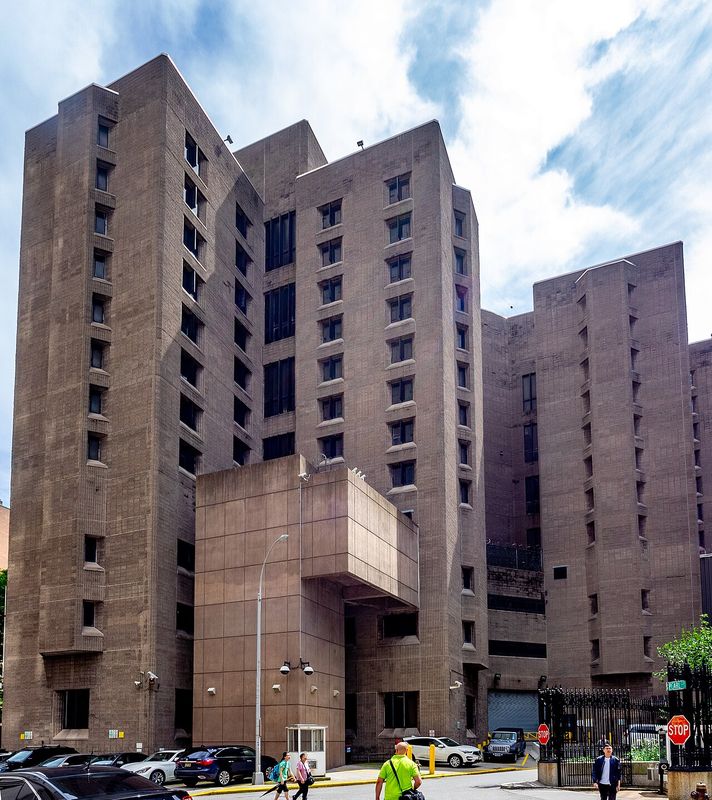
The official ruling has not moved
Start where the record stands, because it has not changed. The New York City Office of Chief Medical Examiner, asked about Freeman’s presentation, gave CBS News a single sentence: “Our office stands by its determination.” That determination was made in 2019. The autopsy was performed by Dr Kristin Roman, and the chief medical examiner at the time, Dr Barbara Sampson, ruled the death a suicide by hanging — a ruling Sampson has stood by ever since. Roman, for her part, told the Justice Department’s Office of the Inspector General that the injuries were more consistent with suicide by hanging than with homicide by strangulation, and that there was no evidence of defensive wounds.
Federal reviewers have reached the same conclusion as the city’s examiners. A Justice Department and FBI memorandum on July 7, 2025, again concluded that Epstein died by suicide. No official body has changed the 2019 ruling, and nothing about a London presentation changes it by itself: Freeman’s work is an argument about the file, addressed to the public, not a proceeding before any court or medical authority. Every homicide statement in this article is therefore Freeman’s, or his team’s, and is reported as such. What follows is what he says the photographs show, how he came to be looking at them, why the examiners who handled the body read the same evidence the other way — and what it would actually take for the official answer to change.
What Freeman says the photographs show
Freeman’s case, as he set it out to Newsnight, rests on injuries he says do not belong to a hanging. He cited signs of an assault: a deep haemorrhage to Epstein’s left shoulder, injuries he described as consistent with being struck in the face, and apparent fingernail marks above the ligature mark on the neck, which he said were consistent with strangulation from behind. The evidence, he said, was most consistent with strangulation using a ligature — with that same ligature then probably used, in his account, to suspend the body from the bunk bed in the cell.
His summary was unambiguous, and it is worth hearing in his own words, attributed exactly as he gave them: “The injuries and the way the body was found don’t match up. There’s only one remaining explanation then, and that is that the death was as a result of a homicide.” That is Freeman’s conclusion, from Freeman’s reading of the file. It is not a finding by any authority, and Freeman himself framed the limits of his own claim in one respect that matters: he does not say — and has not claimed — that he knows who might have been responsible. His argument is about the manner of death, not about a perpetrator, and this article names no alleged killer because Freeman’s work identifies none.
The detail that started his inquiry, as he has described it, was the neck mark itself. Freeman’s first thought on seeing a photograph, he has said, was that “that doesn’t look like a hanging mark”: the mark in the photographs was deep, ragged and forked into a Y shape on one side, rather than the smooth, slanting line of a textbook hanging. Working from the file, his team built three-dimensional reconstructions of the injuries and the scene as documented. Whether a forked, ragged mark can carry the weight Freeman places on it is the scientific heart of the dispute — and, as the examiners’ response shows, qualified specialists looking at the same photographs have drawn the opposite inference.
A year with a file supplied by the brother
The provenance of Freeman’s material is the second thing any reader needs, and Freeman has been open about it. He did not see the body. He based his conclusions on the files and photographs from the New York City medical examiner’s report — material provided to him by Epstein’s brother, Mark Epstein, who has always maintained that his brother was murdered. Freeman spent about a year examining the autopsy file after Mark Epstein gave it to him last November, in 2025. He says his analysis is independent and that he was not paid by Mark Epstein.
Freeman did not work alone. His co-authors are Itiel Dror, a cognitive neuroscientist, and Anders Eriksson, a Swedish forensic pathologist. Nor is Freeman an unknown quantity in American courtrooms and inquiries: he has served as a cause-of-death expert to attorneys-general in the United States for deaths in police custody, including the death of George Floyd in Minnesota. That pedigree is part of why the claim commands attention. The counterweight is just as concrete: the team’s research has not been peer-reviewed. They have sought peer-reviewed publication, and their submissions have been rejected so far. Peer review is not a guarantee of truth, and its absence is not proof of error — but it is the mechanism by which a claim like this one would ordinarily be tested by specialists with no stake in it before it is presented as settled, and that testing has not happened.
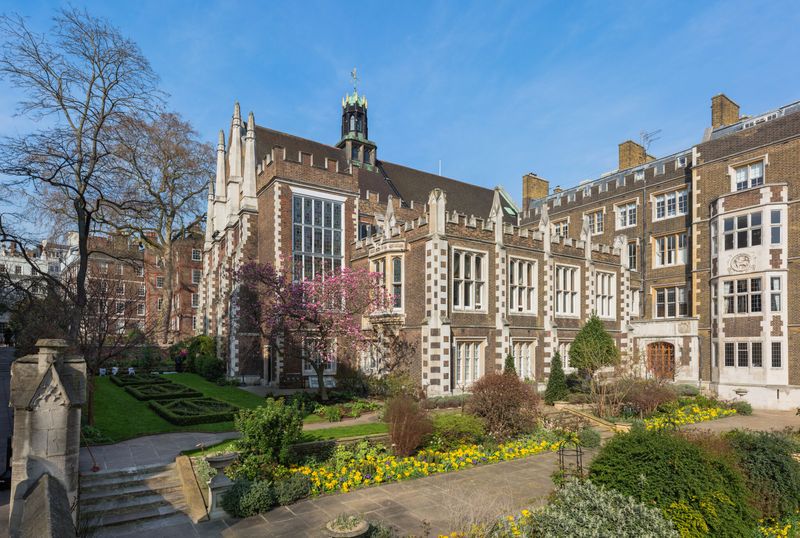
At the London presentation on Monday evening, Freeman appeared with his co-authors, and Mark Epstein was present. Shortly before the talk, Mark Epstein posted the autopsy photographs online, and Freeman published his research together with the examiner’s files. Signal Post News does not publish autopsy or body photographs, and none appears in this article; the photographs used here are non-graphic file photographs of the places in the story, credited in their captions. What matters for the record is the sequence: a family that has contested the official account for seven years obtained the examiner’s file, placed it with an credentialed outside expert, and published the result itself. That is how this review came to exist at all — and it is also why its independence, however sincerely Freeman asserts it, will be argued about for as long as the claim circulates.
The other reading of the same photographs
Against Freeman’s reading stands the reading of the people who examined the body itself. Roman, who performed the autopsy, told federal investigators that the injuries were more consistent with suicide by hanging than with homicide by strangulation, and pointed to the absence of defensive wounds — the injuries to the hands and arms that examiners would expect to find, in many though not all cases, if a conscious person had fought off an attacker. Sampson, who signed the ruling, has never qualified it. The office’s response to earlier challenges is also on the record: when pathologist Michael Baden — hired by Mark Epstein to observe the 2019 autopsy — disputed the ruling in 2020, citing fractures to the hyoid bone and thyroid cartilage, the medical examiner’s office answered that such fractures can occur in both suicides and homicides. A fracture that appears in both categories cannot, by itself, decide between them; that was the office’s position then, and its one-sentence answer on Monday suggests it remains the position now.
Strip the dispute to its mechanics and it is narrower than the headlines suggest. A hanging mark and a ligature-strangulation mark can look similar in a photograph because, in Freeman’s own account, the same kind of ligature is involved in both; the argument is over depth, direction, texture and the injuries around the mark — a haemorrhage here, a fingernail mark there, the presence or absence of wounds that suggest a struggle. Photographs flatten all of that. They preserve colour and outline but not tissue resistance, not the feel of a structure under a pathologist’s hands, and not the parts of the examination that were never photographed at all. Two qualified readings of the same photographs can therefore diverge honestly — which is precisely why forensic systems ordinarily privilege the examination of the body, corroborating evidence from the scene, and review by other specialists over a retrospective reading of images, however expert the reader.
Why an unreviewed claim still moves this story
If the claim’s limits are so clear, why does it land? Partly because of who is making it, and partly because of the case it is made about. Epstein’s death is the rare case in which the official record itself documents failures on the night in question — guards who did not carry out their checks, cameras that did not capture what they should have, a ligature that was not preserved as it should have been, and no photographs of the body as it was found. Freeman’s case leans on those gaps as much as on the injuries: every missing photograph and unpreserved item is a place where the official account cannot answer him from its own evidence. A claim does not have to be proven to be destabilising when the record it attacks is incomplete in ways the record-keepers themselves have acknowledged.
There is also the family factor, which cuts in two directions at once. Mark Epstein’s campaign is now in its seventh year: he hired Baden to observe the autopsy in 2019, he has maintained throughout that his brother was murdered, and it was his access to the examiner’s file — as next of kin — that made Freeman’s year-long review possible. Without the brother, there is no file, no reconstructions and no London presentation. With the brother, the work arrives pre-framed by the conclusion he has always held. Freeman says he was not paid and that his analysis is independent; readers weighing the claim should hold both facts together — the independence as he states it, and the provenance he does not hide.
What would actually change the ruling
It is worth ending with the burden of proof, because the distance between “inconsistent with” and “proves” is where this story will live until something stronger arrives. A presentation in London, however credentialed the presenter, triggers nothing: it does not reopen the autopsy, compel a review, or amend a death certificate. Three things could actually move the ruling. A court could order a fresh examination of the evidence. An official body — the medical examiner’s office itself, or a federal reviewer with jurisdiction — could reopen the file and reach a different conclusion. Or Freeman’s team could achieve what it has not yet achieved: peer-reviewed publication, followed by replication or endorsement from specialists who did not produce the work. None of those has happened. Until one does, the accurate summary of November 16, 2026, is a double sentence, and both halves are required: a credentialed forensic team says the photographs show a homicide — and the official ruling, reaffirmed on Monday in a single sentence and by federal review last year, remains suicide by hanging.
Related reading: Judge Dismisses Trump’s $10 Billion WSJ Lawsuit Over Epstein Birthday Letter — With Prejudice · New Mexico Sues Epstein’s Lawyer and Accountant, Saying They Helped Hide His Crimes · Epstein Introduced at Least Six Modeling Agents and Executives to Trump in the 1990s, the Times Reports
Sources
BBC News, November 16, 2026, reporting Professor Michael Freeman’s BBC Newsnight interview (18:57Z): Freeman’s statement that he believes Epstein was strangled, most likely from behind; the deep haemorrhage to the left shoulder, the facial injuries and the apparent fingernail marks above the ligature mark that he cited; his account that the ligature was probably then used to suspend the body from the bunk bed; his statement that he did not examine the body, that the file was provided by Mark Epstein, that his analysis is independent and unpaid, and that the research has not been peer-reviewed; and his service as a cause-of-death expert to US attorneys-general, including on the George Floyd case. Full report: https://www.bbc.co.uk/news/articles/c5n4exg1kkmyo. The New York Times, November 16, 2026, read via republications: Freeman’s year-long examination of the autopsy file given to him by Mark Epstein in November 2025; the deep, ragged ligature mark forked into a Y; the three-dimensional reconstructions; and the London presentation on Monday evening, attended by his co-authors Itiel Dror and Anders Eriksson and by Mark Epstein, who posted the autopsy photographs online shortly before the talk. CBS News, November 16, 2026, read via republications: the New York City Office of Chief Medical Examiner — “Our office stands by its determination”; the autopsy performed by Dr Kristin Roman; Dr Barbara Sampson’s ruling of suicide by hanging; and Roman’s evidence to the Justice Department’s Office of the Inspector General that the injuries were more consistent with suicide by hanging than with homicide by strangulation, with no evidence of defensive wounds. Background, from the established record: Epstein was found dead on August 10, 2019, at the Metropolitan Correctional Center in New York while awaiting trial on sex-trafficking charges; a Justice Department and FBI memorandum on July 7, 2025, again concluded he died by suicide; pathologist Michael Baden, hired by Mark Epstein to observe the 2019 autopsy, disputed the ruling in 2020, and the medical examiner’s office said the fractures he cited can occur in both suicides and homicides. No official body has changed the 2019 ruling. This article publishes no autopsy or body photographs.