US · New York
Co-op City shooting Bronx — a routine wellness check at the largest housing development in America ended in gunfire on Monday morning, when a resident opened fire on two Co-op City public safety officers, wounding both, then barricaded himself in a 25th-floor apartment and was later found dead of a self-inflicted gunshot wound, police said.
The shooting erupted at about 11:40 a.m. at 4240 Hutchinson River Parkway East, a 33-story tower in the sprawling Co-op City complex in the northeast Bronx. The two wounded officers belong not to the NYPD but to the Co-op City Department of Public Safety, the development's own certified peace-officer force. One officer was struck in the arm — the department's chief, Andre Waring, described it as a graze wound and listed him in good condition — and the second, a woman, was shot in the buttocks and had come out of surgery by late Monday afternoon. The Associated Press reported that neither injury was believed to be life-threatening and that both officers were expected to survive. Local reports differed on the hospital: the Daily News said the officers were taken to Jacobi Medical Center, while the New York Post said St. Barnabas Hospital.
What we know — and what was corrected
The first hours produced a number that did not survive the afternoon. Police initially said three people had been shot at the complex; as the investigation developed, that total was revised down to two — the two officers. The third reported victim had not, in fact, been struck by gunfire. That correction matters, and this article leads with the corrected figure: in the first chaotic dispatches from any shooting scene, counts move, and the count that should enter the record is the one authorities settle on, not the one that arrived first.
What is settled is the outline. After the shooting, the 56-year-old suspect barricaded himself in an apartment on the 25th floor, bringing NYPD officers — including emergency and SWAT units — into a standoff inside a tower where hundreds of families live above, below and beside the scene. When officers entered the apartment, they found the man dead of what investigators described as an apparent self-inflicted gunshot wound, and recovered a firearm. No NYPD officer was shot or injured. Police have not released a motive, have not described what was said or done inside the apartment in the moments before the shots, and had not publicly named the suspect in the accounts verified for this article — one name attributed to a single official in low-authority reporting is not repeated here because it has not been confirmed by the NYPD or any major outlet.
Why this matters
A wellness check is the softest call in policing — no warrant, no suspect, no allegation, just a knock on the door of someone whose family, neighbour or building staff feared the silence on the other side of it. It is also, officers across the country will tell you, one of the least predictable. The person who answers may be in medical distress, in a mental-health crisis, frightened, armed, or some combination of all four, and the two people at the door have seconds to read a situation that nobody planned. Monday's shooting is a case study in that asymmetry: the call that begins as an act of care is the call for which almost no tactical template exists.
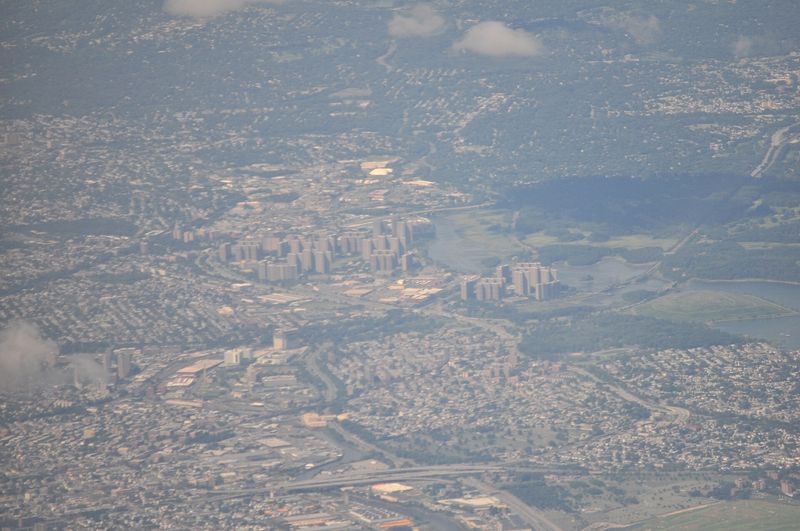
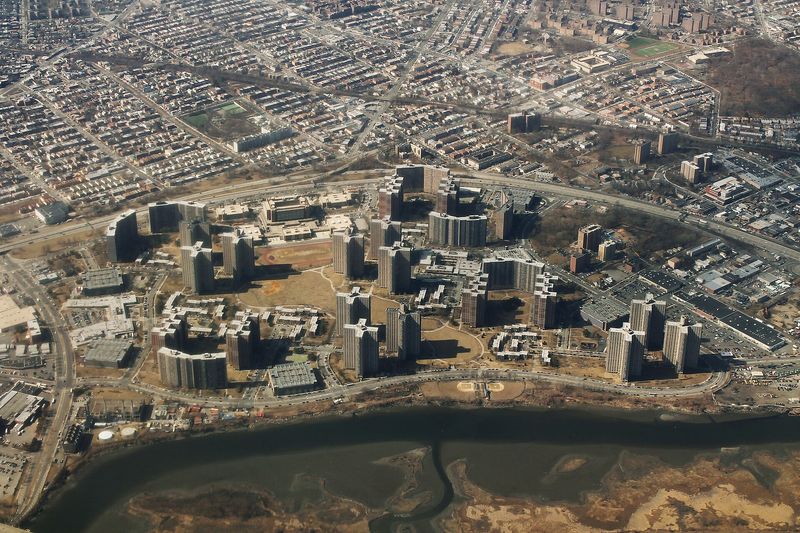
Co-op City magnifies everything about the problem. This is not an apartment building; it is a city within a city — 35 high-rise towers and 15,372 homes on 320 acres along the Hutchinson River, built under New York's Mitchell-Lama programme in the 1960s and 1970s, home to more than 40,000 people, and large enough to need its own public safety department, whose members are registered New York State peace officers tasked with patrolling the development. When a gunman barricades himself on the 25th floor of a 33-story tower there, the perimeter is not a street corner. It is a vertical neighbourhood.
Context: the call nobody can rehearse
Wellness checks sit at the centre of a national argument about who should answer the door. Reformers note how often checks on people in crisis end in violence — sometimes by officers, sometimes, as in the Bronx on Monday, against them — and argue for pairing responders with mental-health professionals. Police unions answer that Monday is exactly why: the danger at the door is real, unscripted and borne by whoever knocks. Both arguments can cite this case, which is usually a sign the honest conclusion is narrower than either. What the verified record supports is this: two unarmed-looking errands of mercy — a knock, a question, a neighbour's worry — put two officers in hospital and a third man in the morgue, and no policy slogan yet written would have told the officers at that door what was waiting behind it.
Who carries the cost
The officers carry it first: one through surgery, one through a graze that a few inches would have made fatal. The residents of the tower carry it next — an afternoon of SWAT teams in their hallways and the knowledge that the building's own safety force can be shot doing the gentlest job it has. And the department carries a question it will have to answer in the coming days: how its officers are equipped, trained and backed up for the one call that cannot be scheduled, scripted or refused.
What happens next
Investigators still owe the public the basic architecture of the morning: who requested the check and why, what happened between the knock and the first shot, and the medical examiner's formal ruling on the suspect's death. The two officers' recoveries will be updated by the department. What will not change is the corrected shape of the story — two officers wounded and expected to survive, a 56-year-old gunman dead by his own hand on the 25th floor, and a housing development of 40,000 people reminded that in a vertical city, there is no such thing as a routine call.
Related reading: Mamdani Disbands Strategic Response Group, Bans Kettling and Tear Gas in Sweeping NYPD Protest Overhaul · Brooklyn Bridge ICE Protest: 14 Arrested as Demonstrators Block Traffic Over Marble Hill Shooting
Sources
Associated Press (two officers shot, injuries not life-threatening, victim count revised from three to two, suspect found dead); New York Post (times, floor, Chief Andre Waring condition update); New York Daily News via Officer.com (wellness check at 4240 Hutchinson River Parkway East, Jacobi Medical Center, firearm recovered). The suspect's name and motive had not been confirmed by police in the verified accounts at publication.