Business · Technology · Markets
The Nvidia new CEO search acquired something no executive search is supposed to have: a cabinet secretary as a public participant. On Sunday, Treasury Secretary Scott Bessent said Nvidia’s board needs to “go outside the company” to replace Jensen Huang, called for a “dramatic shakeup,” and said the board and its outside counsel should answer questions about export-control compliance within 10 days. The board, meanwhile, says it has not formally engaged any candidate at all.
Track it live: Markets tracker
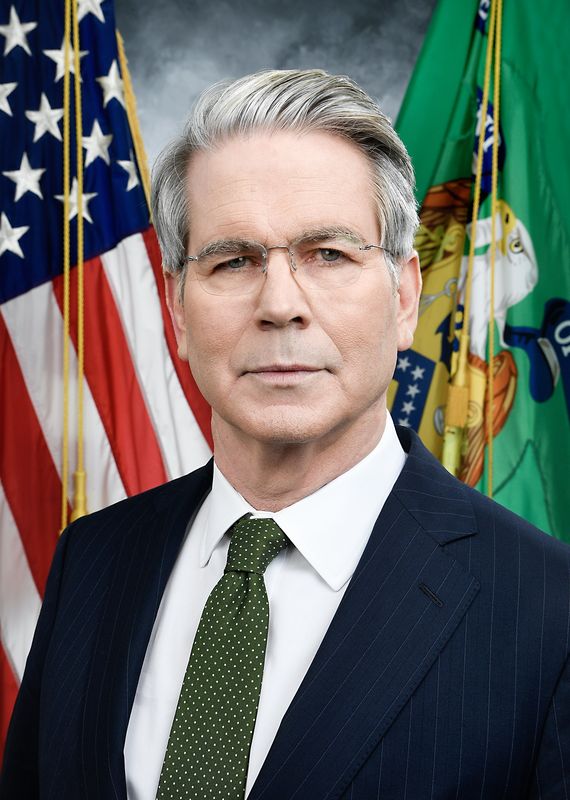
WASHINGTON, November 15, 2026 — Begin with the precision, because in this story precision is the difference between news and noise. What Scott Bessent did on Sunday was appear on Fox News’s “Sunday Morning Futures” and say, on television, what he thinks Nvidia’s board must do. It was a statement by a Treasury Secretary, reported by Reuters — not a formal order, not a regulatory deadline issued through any legal process, and not a power he possesses. The United States Treasury does not appoint the chief executive of Nvidia. Bessent said the board needs to “go outside the company” for its next leader, and he said why: “This makes me think that as the board conducts a search for a new leader that they need to go outside the company, that just (with) what was going on inside the company, they need a dramatic shakeup.” He also said the board and its outside counsel needed to answer, within the next 10 days, questions about the company’s culture of compliance with export restrictions. A Treasury Secretary saying that on television is an extraordinary act of public pressure on a private boardroom. It is not the same thing as directing it, and this article will keep the two separate throughout, because conflating them would flatter Bessent’s power and misstate the law.
The context is a governance crisis without real precedent in the technology industry. Jensen Huang — founder, chief executive for 33 years, and the single most identified-with-his-company leader in the age of artificial intelligence — stepped down abruptly last Thursday. Around that resignation sit two other threads, and Signal Post News’s standing rule for this story, kept here, is that they remain separate threads: a board investigation, covered in the board investigation into Huang, and allegations in reporting concerning extramarital affairs, including one involving a person suspected of being a Chinese spy. That suspicion is an allegation in reporting, not an adjudicated finding, and nothing in the verified record establishes that the allegations caused the resignation. Readers who see those threads braided into a single causal chain elsewhere should ask for the evidence; it has not been published. What is established is the sequence: a founder gone in a week, an interim chief executive in place, a board searching, and now the Treasury Secretary of the United States telling the board, in public, what kind of answer he expects.

The 10 days: a television statement, not an order
Bessent’s compliance demand deserves the same careful handling as his succession advice. He said the board and outside counsel needed to answer questions about the company’s culture of compliance with export restrictions within the next 10 days. Reported plainly: that is a cabinet secretary stating an expectation on a Sunday talk show. No filing, order or formal deadline accompanied it in the reporting. And yet it would be equally wrong to dismiss it as mere commentary, because the subject is not commentary territory. Export controls on advanced AI chips are the sharpest instrument of American technology policy toward China; Nvidia’s chips sit at their centre; and the question of whether advanced processors reached restricted buyers — the issue at the heart of the chip-smuggling cases this site covered in Bessent’s criticism of the Commerce Department over the Megaspeed blacklist delay — is a national-security question on which the Treasury Secretary’s public impatience carries institutional weight whether or not it carries legal force. Boards do not need to be ordered to hear a message like that. They need only to imagine the regulatory weather if they are seen to ignore it. That is how public pressure of this kind works: formally weightless, practically heavy.
The Haas track: an approach, a denial of process, and a name
Against Bessent’s demand for an outsider sits the one concrete name in circulation, and it must be reported at exactly the strength the sourcing supports. The Financial Times reported on Friday, November 13 — as carried by Reuters — that Nvidia’s board had approached Rene Haas, the chief executive of Arm Holdings, as one of several names under consideration. CNBC’s reporting added the board’s own position: it is still selecting a search firm, it has not formally engaged any candidates, and speculation about individual names is premature. No offer to Haas has been reported by any of these sources. He has not been hired. He is not the incoming chief executive. He is a name that was approached, according to the FT, in a process the board says has not formally begun.
Haas’s biography explains why his name surfaces in a search like this, and why the board’s caution is also understandable. He spent 2006 to 2013 at Nvidia itself — an insider’s knowledge with an outsider’s current address, which is often exactly the profile boards reach for when a founder’s era ends in crisis. He has run Arm since 2022, presiding over the chip designer whose architecture underlies much of the industry and whose ownership by SoftBank would make any move a negotiation between empires, not a simple hire. An approach to Haas, if the FT’s account is right, tells us the board was thinking about semiconductor statesmen rather than internal deputies even before Bessent said the word “outside” on television. It does not tell us where the search will land, and the board’s statement is a reminder that in its early days a search is a list of conversations, not a shortlist of candidates.
The insider in the room: Colette Kress
Every “go outside” argument is also an argument about the people already inside, and at Nvidia that argument has a name: Colette Kress, the company’s longtime chief financial officer, now serving as interim chief executive. Kress is among the most respected finance chiefs in the industry, a central figure in Nvidia’s rise, and by any normal succession logic the safest pair of hands available on short notice. Bessent’s comments land, whether intended or not, as a public verdict on the internal option: that what was “going on inside the company” disqualifies continuity itself. That is a remarkable thing for a government official to imply about named, serving executives who have not been accused of anything in the verified record, and the board will have noticed. It also frames the board’s dilemma precisely. Hire Kress or another insider and it defies a Treasury Secretary in public, in the middle of a compliance storm. Hire an outsider and it concedes his premise — that the house Huang built cannot be trusted to clean itself.
Why this matters
Government in the boardroom
Strip away the personalities and the event is structural: the American state has decided that the leadership of one private company is a matter of public, national concern, and has said so on television. There is a defensible version of that position. Nvidia is not an ordinary company; its products are the substrate of the AI race, its export compliance is a front line of technology policy, and its governance failure — a founder’s abrupt exit amid an investigation and intelligence-flavoured allegations, each thread separate — is a legitimate subject of state anxiety. There is also a cost, and markets and boards will price it: if cabinet secretaries grade CEO searches in public, every strategically important American company now operates with an unofficial additional constituency in its succession planning, and every foreign government watching learns that this is how the game is now played. Both things are true at once, which is why the argument about Bessent’s intervention will outlast the appointment itself.
The compliance question underneath
The succession drama sits on top of the harder question, which is the one Bessent gave 10 days. What did Nvidia’s compliance culture actually permit, miss or fail to escalate, as advanced chips moved through a global market under tightening export rules? That question connects this story to the wider enforcement landscape — the smuggling prosecutions, the blacklist delays Bessent himself criticised at Commerce, and the funding questions explored in the fallout from Huang’s departure. A new chief executive, insider or outsider, inherits that question on day one, and the board’s answers — whenever and however they come — will matter more to Nvidia’s next decade than the name on the door.
One more name, handled exactly as sourced
President Trump previously posted a suggestion naming Tim Cook in connection with Nvidia’s future. That is recorded here at its correct weight: it was the president’s suggestion, offered in his own voice, and it is not an appointment, not a board action and not part of the board’s process as the board describes it. It belongs in the story because it happened and because it adds to the atmosphere of public direction surrounding a private decision. It does not belong in any sentence that describes who will actually run Nvidia.
Who benefits, who loses
Bessent gains a reputation for grip: a Treasury Secretary visibly unwilling to let the world’s most important chipmaker drift through a governance crisis on autopilot. The board loses room to manoeuvre with every day the story runs, because any insider appointment now reads as defiance and any outsider as obedience. Haas, without doing anything, has been priced as the statesman candidate — a position that benefits him in every negotiation he will ever have with Arm’s owners, whether or not Santa Clara ever calls again. Kress carries the strangest cost: an interim leader publicly argued against, by implication, before she has had the chance to be judged on the job she is actually doing. And Nvidia’s shareholders sit underneath all of it, holding a company whose products remain the most wanted on earth and whose leadership question has become a three-way negotiation between a board, a cabinet and a commentariat.
What happens next
The calendar is unforgiving. The board says it is still selecting a search firm; until that firm exists, every name in print — Haas included — is conversation, not candidacy. Bessent’s 10 days will expire as television deadlines do, without legal consequence, but watch for the board or its counsel making any public compliance statement inside that window: even a holding statement would confirm that the pressure registered. Nvidia’s earnings, imminent on the calendar, will force the interim leadership in front of investors with the succession question unanswered, and the first question of that call writes itself. The scenarios from here are three. The board hires a genuine outsider and presents it as its own conclusion, reached independently — the face-saving convergence both sides can live with. The board elevates Kress or another insider and absorbs the political cost, betting that results quiet the argument. Or the search drags, the interim becomes semi-permanent, and the uncertainty itself becomes the story’s longest chapter. What will not happen is the thing the headlines imply: no secretary will appoint anyone. The signature, when it comes, will be the board’s — which is precisely why who holds the pen, and who is seen to have guided the hand, will be argued about long after the name is known.
Sources
Reuters, November 15, 2026 — “Bessent says Nvidia must ‘go outside the company’ to find new CEO” (https://www.reuters.com/world/bessent-says-nvidia-must-go-outside-company-find-new-ceo-2026-11-15/): Bessent’s remarks on Fox News’s “Sunday Morning Futures,” including the “go outside the company” and “dramatic shakeup” quotations and the statement that the board and outside counsel needed to answer export-compliance questions within 10 days — a statement made on television, reported here as such and not as a formal order. Financial Times, November 13, 2026, via Reuters: the board’s approach to Arm chief executive Rene Haas as one of several names. CNBC, November 13, 2026: the board’s position that it is still selecting a search firm, has not formally engaged any candidates, and regards speculation about individual names as premature; Haas’s Nvidia service (2006–2013) and Arm tenure (since 2022). The resignation, the board investigation and the affair allegations are treated throughout as separate threads, per the verified record; the spy element remains an allegation in reporting, not a finding. President Trump’s earlier naming of Tim Cook is described only as his suggestion. Photographs are file photos via Wikimedia Commons.