Business · Technology · Markets
The Nvidia board rules out Huang return story begins with a sourcing warning, and the warning is the story. Three people familiar with the matter told Reuters on Monday that Nvidia’s board is not considering bringing Jensen Huang back — no statement, no vote, no announcement, just the board’s position carried by people who would not give their names. Against that quiet “no” stands the loudest possible “yes”: a president who said he “would not mind that,” the world’s richest man’s signature on a petition, and more than 180,200 names demanding the founder’s reinstatement.
Track it live: https://signalpostnews.com/tracker/markets
SANTA CLARA, November 16, 2026 — Start with exactly what was said, and how. “The Nvidia board is not considering bringing Jensen back,” one of three people familiar with the matter told Reuters, in reporting published Monday by Ross Kerber, Alexandra Alper, Jeffrey Dastin and Karen Freifeld. The three people described a board that is not weighing a return for the founder who resigned last Thursday, November 12, and that is instead focused on its search for a successor, with Colette Kress — the company’s longtime chief financial officer — serving as interim chief executive. That is the whole of the board’s position, and its form matters as much as its content: Nvidia and its board have issued no public statement ruling a return out, and no board vote on the question has been announced. What exists is anonymous sourcing of the highest quality — three people, speaking to Reuters — describing a decision the board has not chosen to defend in its own name. Every sentence in this article about the board’s position should be read with that attribution attached, because the board itself has attached nothing at all.
The timing is what makes the position remarkable. The board’s answer, delivered through sources, arrived on the same day the campaign for Huang’s return reached full volume: a petition past 180,000 signatures, a presidential blessing offered on the way out of the White House, and, half a world away, Taipei’s tallest tower lit up with a message of support. A board that wanted this question closed had every incentive to say so formally. A board that said it this way — deniably, through intermediaries — was saying something else as well: that it wants the answer known without owning the argument, at least not yet. Why a board would choose that posture, and what it can and cannot withstand, is the real subject of the week Nvidia now enters, with its third-quarter earnings due Tuesday, November 17.
The campaign: 180,200 names, and the fine print underneath
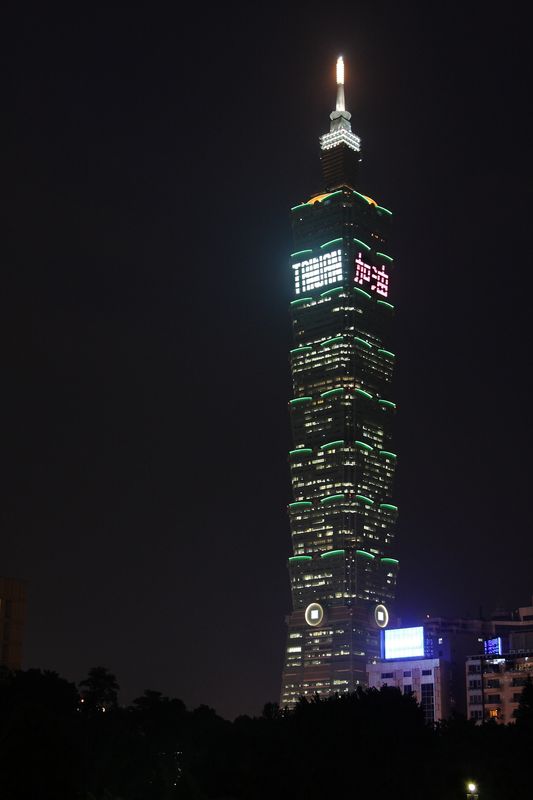
The campaign calls itself Stand With Jensen, and by Reuters’ count on Monday it had gathered more than 180,200 petition signatures calling for Huang’s reinstatement. Its named supporters are not anonymous internet volume: the campaign lists Elon Musk, Replit chief executive Amjad Masad and Epic Games founder Tim Sweeney among its signatories, and Musk had said days earlier that he had signed the petition. In Taipei, where Huang was born and where Nvidia’s supply chain runs through TSMC and the island’s contract manufacturers, the support turned literal: Taipei 101, the skyscraper that anchors the capital’s skyline, was illuminated on Monday with the words “Taiwan Loves Jensen.”
Now the fine print, because the campaign’s most quoted numbers carry a caution that Reuters itself attached to them. The Stand With Jensen site has displayed counts of more than 8,800 self-identified current employees and more than 94,000 shareholders among its supporters. Those figures are self-reported by the people signing and have not been independently verified — not by Reuters, and not here. A petition can measure intensity; it cannot, on self-declared numbers, measure how much of Nvidia’s workforce or shareholder register actually stands behind it. Petition totals also moved through Monday across outlets — The Times counted more than 175,000 signatories at its check — which is why this article uses Reuters’ figure of more than 180,200, dated to Monday, and treats the employee and shareholder breakdowns as the campaign’s own unverified claims. Two prominent investors, meanwhile, aimed their public comments at the board rather than the petition: Gavin Baker of Atreides Management and Brad Gerstner of Altimeter Capital urged the board not to rush a permanent replacement before all the facts are known — a plea for patience that is not the same thing as a demand for Huang’s return, and should not be counted as one.
Trump: “I would not mind that”
President Trump’s contribution came on Monday as he departed the White House for Asia, in remarks reported by the Washington Post. Asked about a Huang return, he said: “I would not mind that.” He added: “I think he learned a big lesson” — and, in the Post’s account, “I would certainly not mind.” The Times, reporting the same exchange, described the president as playing down the behaviour at the centre of the scandal and saying national security was “not put at risk”; both the Post and The Times reported that Trump cast doubt on the spy claim that runs through the wider story — a claim this article handles below as what it is, an allegation, not a finding.
Two pieces of context belong beside the president’s words, both attributed and both relevant. First, the money: the Washington Post reported on Monday that Trump’s financial disclosures suggest he held between $13 million and $62 million in Nvidia stock as of the end of August. That is the Post’s review of his disclosures, reported here as context for a president publicly blessing the return of a chief executive at a company in which he has disclosed a substantial position — it does not, by itself, establish why he said what he said. Second, the policy weather: on Monday the administration further restricted China’s access to advanced AI chips, even as Trump travelled toward talks with Xi Jinping, with the Shenzhen trilateral set for Thursday, November 19. The president is therefore, simultaneously, tightening the export regime that governs Nvidia’s most sensitive products and expressing openness to restoring the founder whose departure grew out of the crisis surrounding those same products. Both facts are in the record; readers can weigh them together, as the board plainly must.
A White House divided: Trump’s openness, Bessent’s outsider
The president’s remarks also opened a public split inside his own administration. On Sunday, Treasury Secretary Scott Bessent said Nvidia’s board must “go outside the company” for Huang’s successor and submit to a “dramatic shakeup” — a position this newsroom covered in Bessent’s demand that Nvidia hire an outsider to replace Huang. An outsider succession and a founder’s restoration are opposite answers to the same question. Bessent’s premise is that what happened inside the company disqualifies continuity itself; Trump’s premise, offered a day later, is that the man at the centre of it has “learned a big lesson” and could come back. Neither man appoints Nvidia’s chief executive — that power sits with the board alone — but a board does not get to pretend it cannot hear its own government arguing in public about its decision, in the middle of an export-control fight in which that government is the referee. The split also reframes the president’s earlier intervention in this succession: Trump previously posted a suggestion naming Tim Cook in connection with Nvidia’s future. It is recorded at its correct weight, as it was in the Bessent coverage — a suggestion, in the president’s own voice, never an appointment, never a board action.
Four threads, kept separate
Precision matters most where this story is most often blurred, so the threads are stated separately, as this newsroom has kept them throughout its coverage. Thread one: Huang resigned on Thursday, November 12. Thread two: the board’s independent investigation, covered in the board investigation into Huang, is examining the circumstances around his departure; CNBC has reported, via secondary coverage, that the law firm Wachtell Lipton is conducting an independent probe into whether the affairs compromised national security or company secrets — reported here as reported, and attributed accordingly. Thread three: the affair allegations themselves, which are allegations in reporting. Thread four: the separate allegation involving Alice Huang and Megaspeed, in which she is alleged to have acted as a spy. On that fourth thread, Reuters has reported that U.S. intelligence is still assessing Alice Huang’s relationship with China’s Ministry of State Security and that evidence so far suggests she was “likely an intelligence asset” rather than a trained spy — a reported assessment by two sources, not an adjudicated finding; China’s position, stated in prior coverage, is that the claims are groundless. Nothing in the verified record establishes that the affair allegations caused the resignation, and this article does not claim otherwise. A campaign to restore a chief executive does not dissolve any of these threads; the board’s investigators are still working through them, which is precisely the ground on which its institutional critics are standing.
The market’s verdict, so far
Investors have not waited for the board. Nvidia’s shares closed down more than 4% on Monday, extending a collapse that has erased roughly $800 billion in market value since the relationship news broke — a repricing this newsroom tracked in Monday’s market coverage of the Nasdaq correction and the Nvidia selloff. The stock’s price-to-earnings multiple has compressed to 11.54, from 15.59 before the crisis, against a Nasdaq Composite average of 20.8 — which is to say the market is now pricing the world’s defining AI company at a discount to the average stock in its own index, a sentence that would have read as satire a month ago. Numbers like those explain both sides of the boardroom argument. For the campaign, they are the cost of losing a founder the market trusted completely. For the board’s defenders, they are the price of a crisis that a restoration — with investigations unresolved — might deepen rather than end.
Who actually decides — and why the board is whispering
Strip away the volume and the decision structure is plain. Nvidia’s next chief executive will be chosen by a majority of its board. Huang holds roughly 3.6% of the company and no dual-class share structure gives him control of the outcome; the founder who built the company cannot vote himself back into it, and the president who blessed his return cannot sign the appointment either. The petition, the tower and the presidential remarks are pressure, and pressure is real — but it is applied to a dozen or so directors, not exercised by anyone else. Which raises the question hanging over Monday’s news: if the board’s position is settled, why is it speaking through anonymous sources instead of a statement? The charitable reading is process discipline — a board mid-search, with an independent investigation running, says nothing formal until it can say everything at once. The harder reading is exposure management: a formal rejection of a popular founder, blessed by a president and mourned by the company’s home island, is a document that would follow every director into every future fight, while a position carried by “people familiar with the matter” can be revised without ever being retracted. Both readings can be true at once. What anonymous sourcing cannot do is bind anyone — and everyone in this story, including the campaign, knows it.
The institutional money, for now, is not with the campaign. Richard Windsor, an independent technology researcher, told Reuters he expects large institutions to oppose a return while the investigations are unresolved, because of the legal exposure a restoration would carry — even though he personally favours one. An unnamed institutional investor was warier still, pointing to Apple and Microsoft as proof that companies can thrive after their founders. And a T. Rowe Price note cut in a third direction: the transition, it argued, may require a new organisational structure rather than simply a new executive — a reminder that even Nvidia’s defenders among the institutions are thinking about redesign, not restoration. Against that wall of caution, the campaign’s self-reported employee and shareholder counts — unverified, as noted — are the softest evidence in the room, however loud the names attached to the petition itself may be.
Tuesday: what Colette Kress must answer
The next move belongs, improbably, to an earnings call. Nvidia reports third-quarter results on Tuesday, November 17, with Kress — the interim chief executive and career finance chief — in front of investors for the first time since the crisis began. The numbers will matter; the questions will matter more. Analysts will press her on whether the board’s successor search has a timetable, whether the independent investigation has a scope she can describe, what the tightened China chip restrictions do to guidance, and whether the company will say anything — anything at all — in its own name about the founder whose return its president, its petitioners and its home island are demanding while its board, through sources, declines. Kress cannot announce a chief executive on an earnings call. But she is the only person in this story who will speak on the record this week, and in a story defined by anonymous sourcing, an on-the-record voice carries weight out of proportion to its words. The fallout she is managing was mapped in the fallout from Huang’s departure; Tuesday is when the market grades her handling of it.
What happens next
Three scenarios cover the realistic ground. In the first, the board holds: it completes an external search, appoints an outsider or a vetted insider who is not Huang, and lets the earnings, the investigation’s conclusion and time convert Monday’s sourced position into settled fact — the path Bessent’s comments support and the institutions&rsquo caution rewards. In the second, the board waits: it lets the independent investigation finish, and only then — with the legal exposure Windsor cited either cleared or confirmed — reconsiders whether a founder’s return is survivable, which is the outcome Baker’s and Gerstner’s plea for patience quietly keeps open. In the third, Huang returns in a non-CEO role — a technology or strategy post that restores his presence without restoring his authority — a compromise that would satisfy no camp completely and might therefore be the one a divided board can actually pass. What would change the board’s stated-through-sources position fastest is not more signatures. It is a conclusion to the investigation, a formal statement in the board’s own name, or a shareholder revolt with verified numbers behind it. Until one of those exists, the answer to the question “is Jensen Huang coming back to Nvidia” remains the one three unnamed people gave Reuters on Monday: the board is not considering it — whatever the president, the petition and a lit tower in Taipei may wish.
Sources
Reuters, November 16, 2026 — “Nvidia rules out Huang comeback as campaign for his return grows” (Kerber, Alper, Dastin and Freifeld): the board is not weighing a Huang return, per three people familiar with the matter, including the direct quotation “The Nvidia board is not considering bringing Jensen back”; the Stand With Jensen petition at more than 180,200 signatures on Monday, with Musk, Amjad Masad and Tim Sweeney listed as signatories; the campaign’s self-reported counts of more than 8,800 self-identified current employees and more than 94,000 shareholders, which Reuters noted are self-reported and not independently verified, and which are labelled unverified throughout this article; Taipei 101 illuminated with “Taiwan Loves Jensen” on Monday; Gavin Baker and Brad Gerstner urging the board not to rush a replacement; shares closing down more than 4% on Monday, roughly $800 billion in market value lost since the relationship news broke, and the price-to-earnings multiple at 11.54 against 15.59 before and a Nasdaq Composite average of 20.8; third-quarter earnings due Tuesday, November 17; Richard Windsor’s expectation that large institutions will oppose a return while investigations are unresolved; the unnamed institutional investor’s caution; and the T. Rowe Price note on organisational structure. Washington Post, November 16, 2026: Trump, asked while departing the White House for Asia, saying “I would not mind that,” “I think he learned a big lesson” and “I would certainly not mind,” and casting doubt on the spy claim; and the Post’s review of Trump’s disclosures suggesting he held $13 million to $62 million in Nvidia stock as of the end of August. The Times, November 16, 2026, corroborating: Trump playing down the behaviour and saying national security was “not put at risk,” with more than 175,000 signatories at its count. CNBC, Monday evening, November 16, 2026: the board is not considering bringing Huang back. The Wachtell Lipton independent probe is reported by CNBC via secondary coverage and is attributed as reported in the text. PRECISION: Nvidia and its board have issued no public statement and announced no vote; the board’s position rests on anonymous sourcing and is framed that way throughout. The resignation, the board’s independent investigation, the affair allegations and the Alice Huang / Megaspeed spy allegation are treated as separate threads; espionage is not stated as fact, and the affairs are not stated to have caused the resignation. President Trump’s earlier naming of Tim Cook is described only as his suggestion. Photographs are file photos via Wikimedia Commons; none depicts the events of November 16, 2026.