Technology · Nvidia · China
The Nvidia Jensen Huang investigation is open. Nvidia’s board announced an independent inquiry on Sunday after reporting that its chief executive was the target of a foreign intelligence effort — while stating plainly that it has no reason to believe Nvidia’s secrets or U.S. national security were compromised. The board inquiry, a congressional demand for a closed-door briefing, and Huang’s own admission of a personal affair are three separate threads. None of them, so far, is a finding.
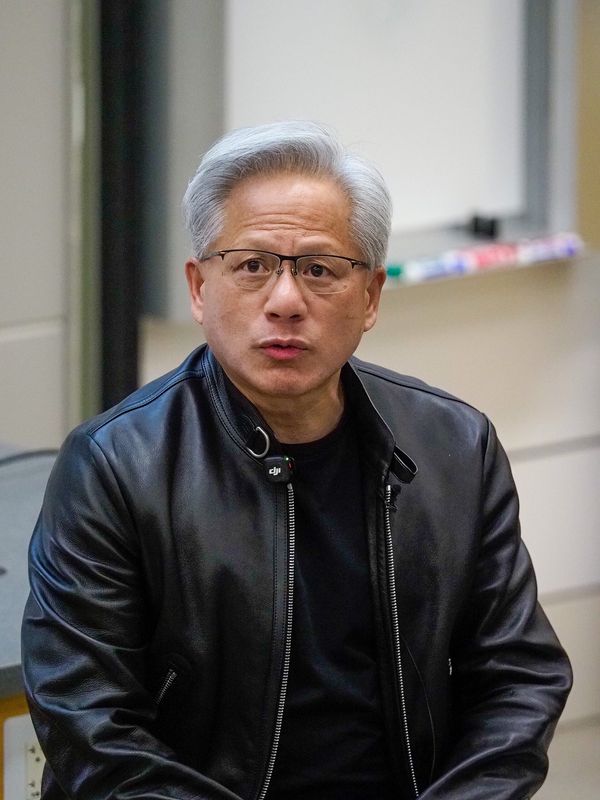
SANTA CLARA, California, November 8, 2026 — Nvidia’s board of directors announced on Sunday that it has opened an independent investigation after recent reporting that the company’s founder and chief executive, Jensen Huang, was the target of a foreign intelligence effort. The Nvidia Jensen Huang investigation will be overseen by a committee of independent directors, assisted by outside independent counsel, the board said in a statement reported by Reuters. It is, at this stage, an inquiry and nothing more: the board said it has “no reason to believe” that United States national security or Nvidia’s own secrets were compromised — and it has made no finding that they were.
Three distinct things happened in the open on Sunday, and the precision of this story depends on keeping them apart. First, a board of directors opened an internal investigation. Second, members of Congress pressed ahead with a separate demand that Huang brief three House committees behind closed doors on November 18. Third, Huang himself, in a message to employees published by Nvidia the same day, admitted that he had been unfaithful to his wife and took full responsibility. The first is a governance process. The second is congressional oversight. The third is a personal admission. Only a conflation of the three turns any of them into something none of them yet is: a conclusion that Nvidia’s secrets were compromised. No such conclusion has been announced by anyone.
What the board did — and what it did not say
The board’s statement, as reported by Reuters on November 8, said the investigation was being opened “in light of recent reporting that founder and CEO Jensen Huang has been the target of a foreign intelligence effort.” The inquiry will be overseen by a committee of independent directors — directors without executive roles at the company — and assisted by outside independent counsel, a structure designed to keep the review at arm’s length from the management it may need to examine. The board said the inquiry “will examine all available information.”
Just as notable is what the statement did not contain. It named no committee members. It named no law firm. It set no completion date and offered no timetable for interim or final findings. It did not say what prompted the board to act on Sunday rather than earlier, beyond the reference to recent reporting. And it did not announce any change in Huang’s position: he remains chief executive, the board expressed confidence in him, and Huang pledged his full cooperation with the investigation. A board that believed its chief executive had compromised the company would be unlikely to frame its announcement this way; a board that believed there was nothing to examine would have had no reason to announce an independent inquiry at all. Sunday’s statement sits deliberately between those poles.
That middle position is worth reading literally, because it is the only authoritative position that exists. An independent investigation is a fact-finding instrument, not a verdict: its opening says the board judged the reporting serious enough to test formally, not that anything improper occurred. The board’s sentence on the merits — it has “no reason to believe” U.S. national security or Nvidia secrets were compromised — remains, until the committee reports, the whole of the established record on the security question.
Huang’s message to employees — and what it is not
The same day, Nvidia published a message from Huang to employees in which, Reuters reported, he said he had been unfaithful to his wife and took full responsibility. The message addressed his personal conduct. It is the kind of admission that ends speculation about one question — whether a personal relationship existed that could be turned into leverage or embarrassment — while answering none of the questions an intelligence investigation exists to ask.
The distinction matters, and it is the point on which coverage of this story is most likely to go wrong. An admission of infidelity is not a security confession. Nothing in the board’s statement describes Huang’s message as evidence that information passed to anyone, that he acted at anyone’s direction, or that company or national secrets were exposed. The personal admission and the intelligence allegation run on parallel tracks that happen to share a news cycle: the board’s inquiry concerns whether a foreign intelligence effort targeted the chief executive and whether anything was compromised; Huang’s message concerns his marriage. A reader who merges them into a single narrative of guilt has added a fact that no source in this story has supplied.
The reported background: Alice Huang and Megaspeed
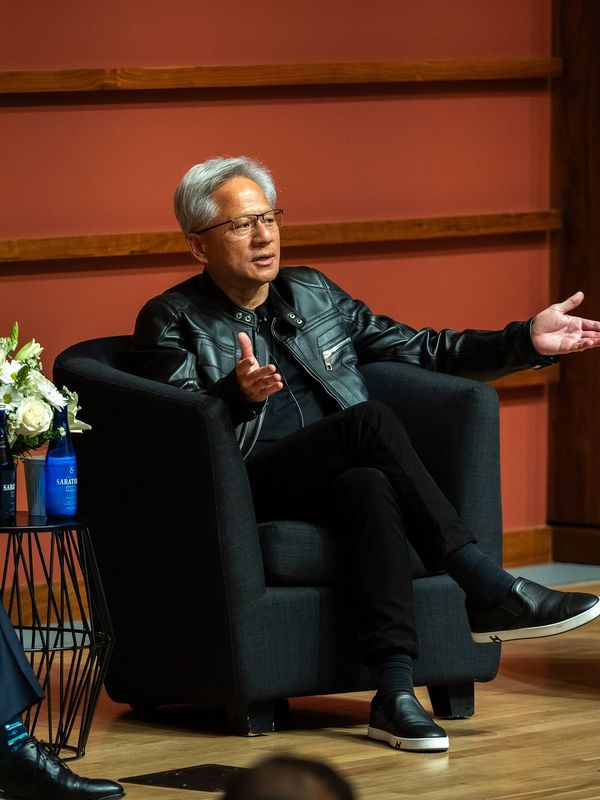
The reporting that set Sunday’s events in motion came from The New York Times. As cited by Reuters, the Times reported on October 29 that U.S. intelligence agencies had concluded that Alice Huang — no relation to Jensen Huang — a former executive at Singapore-based Megaspeed, a Nvidia customer, was a Chinese intelligence asset who had built a close relationship with Huang. That is the allegation at the center of this story, and its provenance should be stated exactly: it is a conclusion that the Times reported U.S. intelligence agencies had reached, relayed by Reuters. It is not a charge filed in court, not a finding of the Nvidia board, and not a fact this article states in its own voice.
Megaspeed itself was already under a cloud before the Times reporting. U.S. authorities have scrutinized the Singapore-based company over suspicions that it helped Beijing gain access to advanced artificial-intelligence chips that are barred from shipment to China under U.S. export controls. A customer firm suspected of serving as a channel for restricted chips, a former executive reported to be an intelligence asset, and a personal relationship with the chief executive of the company whose chips sit at the center of the U.S.–China technology rivalry: those are the reported elements from which the board’s inquiry and Congress’s interest are built.
Counterintelligence works on access. A chief executive knows a company’s product road map, its supply constraints and its government relationships years before any of that reaches a filing; a close personal relationship with such a person is a channel worth building, which is why intelligence services cultivate them, and why a reported cultivation is a serious governance event even when it yields nothing. But the distance between “a relationship existed” and “secrets were compromised” is the entire distance this story has yet to travel. As of Sunday, the public record contains the relationship as reported, and no established instance of anything passing through it.
The congressional track: a reply by November 11, a briefing on November 18
Congress moved first, and on its own track. Three Republican House committee chairs — Brian Mast of the Foreign Affairs Committee, John Moolenaar of the Select Committee on China, and Rick Crawford of the Intelligence Committee — wrote to Huang on November 4, in a letter released on November 5, requesting a joint closed-door briefing on November 18. The committees asked for a reply by November 11. The subjects they named were Nvidia’s security protocols and Huang’s interactions with Alice Huang.
The congressional request and the board investigation are separate processes, run by different institutions for different purposes, and neither controls the other. The board’s committee is examining the company’s own affairs under the board’s authority. The House committees are exercising oversight: they can ask what protections surround the chief executive of the company that supplies the processors on which American AI development — and a growing share of American military and intelligence computing — depends, and whether those protections match the threat that U.S. intelligence agencies themselves are reported to have identified. A closed-door format is the norm for briefings that touch intelligence matters; it also means the public may learn little of what is said on November 18 beyond whether the briefing took place.
The calendar now imposes its own order: Nvidia’s reply is due by November 11, its quarterly earnings land on November 17, and the briefing is requested for November 18. The gaps between what is said at each step — a company answering Congress, a company answering investors, a board saying nothing while it investigates — are where this story will actually be decided.
Why this matters
The chokepoint company
Nvidia is not an ordinary company with an ordinary chief executive. Its graphics processors have become the standard engine of artificial-intelligence training and inference, its order book is a leading indicator of the entire AI build-out, and its products are the single most contested item in the U.S. export-control regime toward China. Washington’s strategy for slowing Beijing’s military and surveillance AI rests substantially on keeping Nvidia’s most advanced chips out of Chinese hands. That makes Nvidia a strategic asset in corporate form — and makes its chief executive, who personally fronts the company’s relationships with governments from Washington to Taipei, a target of a kind that few business leaders ever become.
A chief executive as an intelligence target
Intelligence services target people, not firewalls. The classic vulnerability is a person with access, habits and a private life — and the reported outline of this case, an asset building a close relationship with a chief executive, is the oldest pattern in the espionage book. Even a targeting effort that fails obliges a board to ask what its chief executive was exposed to, what the company’s protective protocols assumed, and whether any of it needs to change. The alternative — a company of Nvidia’s strategic weight declining to examine reported intelligence targeting of its own chief executive — was never realistically available to this board.
Background: Megaspeed, diversion, and the grey market for AI chips
The Megaspeed scrutiny belongs to a wider, documented problem: the diversion of restricted AI chips toward China through third countries, intermediaries and paper transactions that obscure the true end user. Export controls are only as strong as the chain of custody they can observe, and the gap between chips shipped to a legitimate-seeming customer in a third country and chips operating in a Chinese data center has been the regime’s weakest seam. Our reporting has followed that seam all autumn: some 600,000 Nvidia H200 chips stockpiled in Hong Kong awaiting Beijing’s approval for import, and a federal case in Los Angeles involving Greg Lui and the alleged smuggling of Nvidia chips toward China. Against that background, a Nvidia customer in Singapore suspected of helping Beijing obtain barred chips was always going to draw the attention of U.S. authorities.
Two cautions belong in the record here as well. Suspicion is not diversion: the cited reporting describes scrutiny and suspicion around Megaspeed, not an adjudicated finding that it moved restricted chips to China. And a customer’s conduct is not its supplier’s: nothing in the reporting cited on Sunday accuses Nvidia itself, as a company, of violating export controls in the Megaspeed matter. What the reporting does establish is the environment in which the board’s inquiry will operate — one in which a personal relationship at the top of the company and a scrutinized customer in its supply chain have become, fairly or not, a single story.
Who benefits, who loses — and what critics say
The constituencies with something at stake in this inquiry extend well beyond Nvidia’s campus. Nvidia’s shareholders lose if uncertainty lingers: a founder-chief executive under investigation by his own board is the kind of headline that reprices governance risk regardless of outcome. Rivals gain from any hesitation the episode plants in customers and governments — AMD in the United States, and Huawei in China, whose advance as Nvidia’s China position has narrowed under export controls we have covered in our reporting on Nvidia’s falling China AI-chip share. In Washington, the episode hands ammunition to both camps in the export-control argument: hawks who say the controls and the vetting around them must tighten further, and skeptics who warn that suspicion-driven policy will strand American companies while pushing China to build its own stack faster.
Critics of the board’s handling so far have focused on its silences: no named counsel, no named committee members, no timeline — a disclosure that announces scrutiny while withholding every detail by which shareholders might judge it. The board’s defenders answer that the statement was calibrated to the actual state of knowledge: disclose the inquiry, put the no-reason-to-believe position on the record, express confidence in a chief executive against whom no finding exists, and decline to litigate an intelligence allegation in a press release. Both readings are available because the underlying facts are thin; what neither side can yet claim is the fact that would settle the argument — whether anything of value reached anyone it should not have.

The stakes in numbers
What is at stake needs no exaggeration. Nvidia sits astride the supply of the processors on which the world’s AI capacity is being built; its data-center business drives the capital spending of every major cloud operator; and its treatment under U.S. export rules is a live instrument of American foreign policy. A finding — which does not exist — that its chief executive had been compromised by a foreign service would therefore not be a normal corporate scandal: it would reach export licensing, government contracts, allied confidence in shared AI infrastructure, and the credibility of the control regime itself. That asymmetry, between the ordinariness of what is currently known and the scale of what a contrary finding would mean, is why a board investigation with no conclusion yet is a major story.
What happens next
The first fixed point is November 11, the committees’ deadline for Nvidia’s reply to the briefing request. The second is November 17, when Nvidia reports its third-quarter earnings — ordinarily a ritual of demand forecasts and data-center revenue, this time the first occasion on which Huang will face public questions, from analysts, with the investigation open. Companies under inquiry typically decline to discuss it beyond the statement already made; whether Nvidia holds that line, and what it costs the stock if it does, is its own test. The third fixed point is November 18, and it has three plausible shapes. Huang briefs the committees as requested, signaling a company confident it can satisfy oversight behind closed doors. Nvidia offers senior security and legal officials in his place, signaling cooperation while contesting the premise that the chief executive personally must appear. Or the company seeks a delay, signaling that the board’s inquiry and the congressional track have begun to collide. Each shape would be read, correctly, as information.
The board’s own process has no public clock. Such investigations end in a small set of ways: a statement that the inquiry found no compromise and is closed; governance changes — new protocols around the chief executive’s contacts, travel and disclosures — announced with or without an account of what prompted them; or, at the far end, a finding that changes the company’s leadership. Nothing in Sunday’s statements points toward that far end, and it would mislead readers to pretend otherwise. What Sunday established is narrower: the most important company in the AI economy has formally begun asking whether a foreign intelligence service got close to the man who runs it, three House committees want his account within ten days, and the only security conclusion on the record remains the board’s own — that it has no reason to believe anything was compromised. The investigation exists to test whether that sentence survives examination.
Sources: Reuters, November 8, 2026 — reporting of the Nvidia board’s announcement of an independent investigation, overseen by a committee of independent directors assisted by outside independent counsel, “in light of recent reporting that founder and CEO Jensen Huang has been the target of a foreign intelligence effort”; the board’s statement that it has “no reason to believe” U.S. national security or Nvidia secrets were compromised and that the inquiry “will examine all available information”; the board’s expression of confidence in Huang, his continued service as CEO and his pledge of full cooperation; and Huang’s message to employees. Nvidia newsroom, November 8, 2026 — publication of the board statement and of Huang’s message to employees, in which he said he had been unfaithful to his wife and took full responsibility. The New York Times, October 29, 2026, as cited by Reuters — reporting that U.S. intelligence agencies had concluded Alice Huang, a former executive at Singapore-based Megaspeed, a Nvidia customer, was a Chinese intelligence asset who had built a close relationship with Huang, and that U.S. authorities have scrutinized Megaspeed over suspicions it helped Beijing gain access to advanced AI chips barred from shipment to China; the intelligence conclusion is reported, not established, and no finding of compromise has been made by the board. U.S. House of Representatives, committee release, November 5, 2026 — the November 4 letter from Foreign Affairs Committee Chair Brian Mast, Select Committee on China Chair John Moolenaar and Intelligence Committee Chair Rick Crawford requesting a joint closed-door briefing from Huang on November 18, with a reply due by November 11, on Nvidia security protocols and his interactions with Alice Huang.