IDF drone explosion Gaza soldiers killed
An IDF drone explosion in Gaza killed two soldiers on Thursday afternoon, September 24, after an explosive first-person-view aircraft crashed during takeoff inside a military position near Beit Hanoun. Master Sgt. (res.) Nadav Kali, 24, of Har Halutz, and Master Sgt. (res.) Ofek Moalem, 23, of Jerusalem, both from the 7007th Battalion of the Jerusalem Brigade, approached the downed “Atalef” drone several minutes later to examine it. It detonated as they handled it, critically wounding both men. They were evacuated by helicopter to Barzilai Medical Center in Ashkelon and pronounced dead.
The IDF announced the deaths Friday morning and opened an investigation. It said investigators are examining every possibility disclosed so far, including a technical malfunction or communications interference. The military suspended use of the drone model pending the findings. That last decision is the most important operational fact after the deaths themselves: grounding a class of armed aircraft treats the event not merely as an individual mistake, but as a potential risk that could recur until engineers and commanders understand it.
Why this matters
Explosive FPV drones have changed the economics and rhythm of modern combat. A small aircraft can carry a lethal payload into a defended space without putting a pilot in the sky, and units can operate them close to the front. Their affordability and availability encourage mass use. Their weakness is the other side of that bargain: a weapon built to be expendable can still endanger the people launching it when a flight fails at arm's length.
The fatalities also land in a ceasefire period in which Israeli military deaths in Gaza have been rare but violence has not ended. That combination matters politically. Low military losses can create an impression of stability even while airstrikes, contested movement lines and Palestinian casualties continue. The deaths of Kali and Moalem puncture that impression: a ceasefire can lower the tempo without removing the weapons, forward positions and daily operating risks that make renewed escalation possible.
What happened near Beit Hanoun
The preliminary sequence begins with an approved drone operation from the Israeli position near Beit Hanoun in northern Gaza. Kali and Moalem were operating two explosive FPV drones known by the IDF name “Atalef,” Hebrew for “bat.” The first aircraft launched successfully and completed its mission.
The second aircraft did not clear the post. During takeoff it crashed inside the military position for reasons that remain unknown. The distinction is crucial: the aircraft was down but its explosive payload had not been rendered safe. Several minutes passed before the reservists approached it. When they examined and handled the drone, it exploded.
Medical teams treated both men at the scene. They were then flown to Barzilai Medical Center in Ashkelon, where doctors pronounced them dead. The Friday announcement placed their names and unit in the public record after their families had been notified.
The investigation must answer two separate questions. Why did the drone crash during takeoff? And why did its payload detonate minutes later when it was handled? A complete safety response requires both answers. Fixing a flight-control problem would not by itself explain delayed detonation; changing recovery procedures would not by itself explain the crash.
The soldiers
Nadav Kali was 24 and from Har Halutz. Ofek Moalem was 23 and from Jerusalem. Both were reserve master sergeants serving in the 7007th Battalion of the Jerusalem Brigade. Their deaths are not an abstract entry in a weapons review. They were young reservists performing a specialized task from a forward position, and the investigation now carries an obligation to their families as well as to every crew asked to operate the same system.
Prime Minister Benjamin Netanyahu called them “brave reserve soldiers who defended the security of Israel,” offered condolences to their families and said all necessary lessons must be learned. The appropriate measure of that statement is practical: whether the inquiry identifies the chain of failure, whether its findings alter equipment or procedure, and whether operators receive clear rules for treating a crashed armed drone.
The Atalef fleet and the drone war
The Atalef belongs to the class of small FPV aircraft that military operators guide through a live camera view and that can carry an explosive payload. Such systems collapse the distance between surveillance and attack. They also move lethal decisions and technical risk down to small units operating close to the battlefield.
Ukraine's drone war has made attrition central to the way militaries think about these aircraft. Drones are lost to interference, mechanical failure, hostile fire and the ordinary punishment of frequent frontline use. Forces accept that loss rate because inexpensive mass can put more sensors and weapons into the air than a fleet built only around scarce, highly protected platforms. But expendable must describe the aircraft, not the crew. The Gaza accident shows the point at which an attrition strategy can fail its own logic: if a lost drone becomes a lethal hazard inside the launch site, the human cost erases the advantage of cheap mass.
The IDF's two publicly identified possibilities point toward different remedies. A technical malfunction could implicate power, flight control, arming logic or another component; the public record does not yet identify which. Communications interference would instead focus attention on the control link and what the aircraft does when that link degrades. Neither possibility should be treated as established. The difference matters because one may require hardware or software modification, while the other may demand changes in frequencies, operating distances, launch procedures or recovery rules.
Grounding the model gives investigators time to separate those pathways. It also imposes a real operational cost. Explosive FPV drones have become a primary strike instrument precisely because they are flexible and available. Suspending them means commanders either lose that option temporarily or substitute another weapon. A serious safety culture accepts that short-term cost when the alternative is continuing to fly an armed system before the failure mode is understood.
Related reporting: the September 23 Khan Younis strike · the Board of Peace Gaza recovery plan · Ukraine's strike on a Russian drone base
A fragile ceasefire, first deaths in months
The US-brokered ceasefire took effect last October, but it has not produced an absence of force. Israeli airstrikes have continued. In a September 23 report, Reuters cited Gaza health officials saying at least 1,400 Palestinians, mostly civilians, had been killed since the ceasefire took effect. Reuters also reported the Israeli military's figure of four Israeli soldiers killed during that period before the deaths announced Friday. Those figures come from the named parties and should be read as reported claims; access, attribution and casualty accounting remain contested in the war.
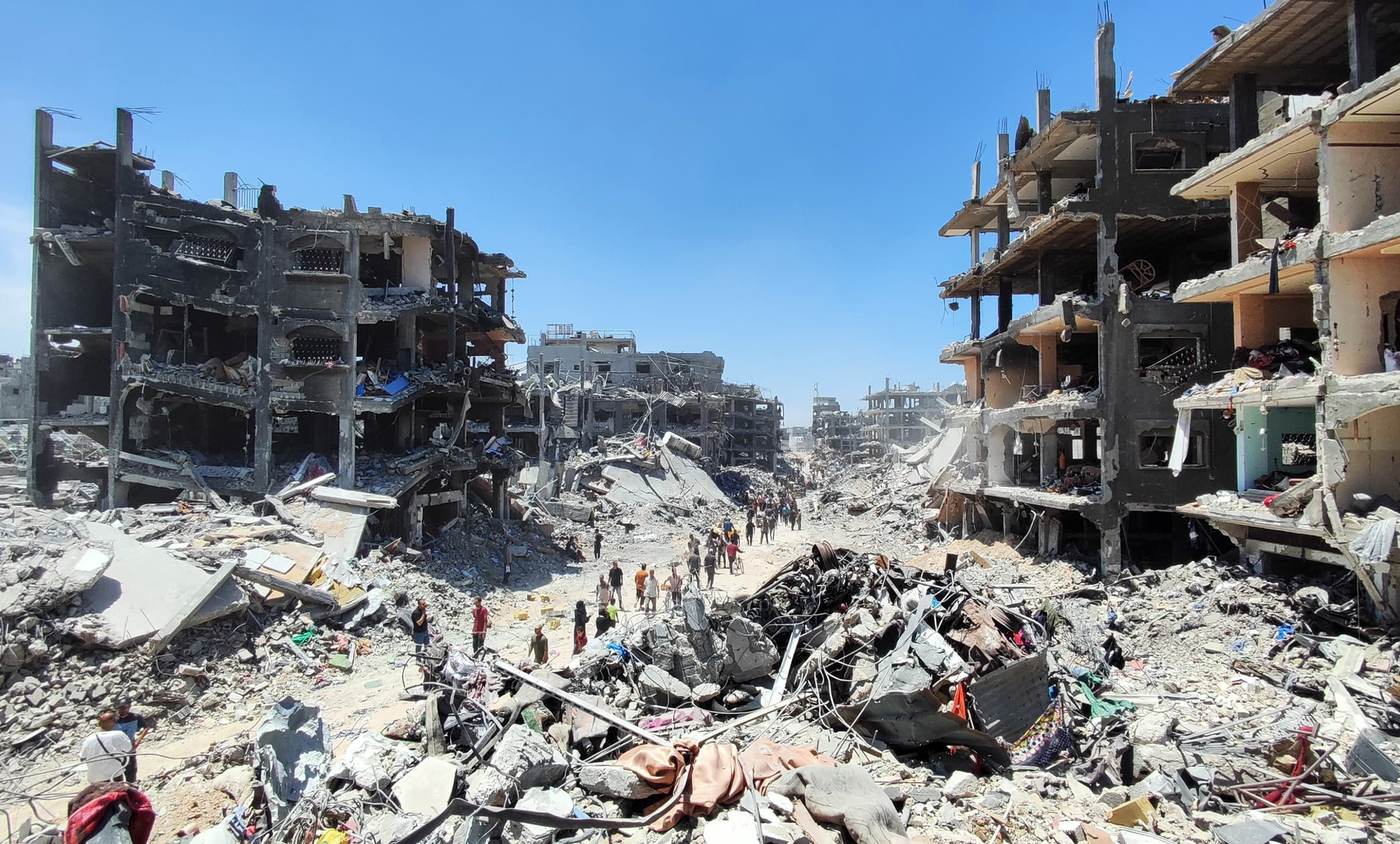
The two reservists are the first Israeli military deaths in Gaza in months. That rarity does not make the ceasefire secure. It makes the accident a sharper reminder that armed forces remain in positions where lethal systems are launched and handled, while Palestinians continue to face reported strikes, displacement and aid shortfalls. A ceasefire that reduces direct clashes but leaves the underlying military architecture intact remains vulnerable to both deliberate escalation and unintended catastrophe.
What happens next
The first scenario is a contained fault: investigators identify a problem limited to one aircraft, reinforce handling rules and return the model to service after inspection. The second is a fleet-level problem requiring modification before flights resume. The third is a finding that communications conditions or operating procedures created the danger, leading to new launch zones, exclusion distances and recovery protocols. Permanent retirement is possible if the risk cannot be controlled, but the grounding alone does not establish that outcome.
Operationally, the most urgent lesson is simple: a crashed armed drone cannot be treated as a failed gadget. It must be isolated and approached as a live explosive hazard until specialists make it safe. The investigation will also have to test whether crews received adequate guidance for a delayed detonation and whether the aircraft's safety mechanisms behaved as designed.
Politically, Netanyahu's condolence statement puts responsibility on the institution to convert sympathy into prevention. Watch for whether the IDF publishes a fleet-wide modification, narrows the grounding to one configuration, or resumes service after procedural changes. Also watch whether Hamas or other factions claim any role or respond militarily; no such role is established in the preliminary account. At the diplomatic level, progress or failure in Gaza ceasefire discussions around the UN General Assembly will determine whether this remains a tragic safety case inside a low-tempo conflict or becomes part of a wider renewed confrontation.
The larger conclusion is uncomfortable but necessary. Cheap armed drones are often described as a way to spare soldiers by pushing risk onto machines. That promise is real only when the system remains safe from launch through recovery and disposal. Near Beit Hanoun, the weapon failed before it left the post, and two reservists paid the price. The investigation matters because the next lesson must be built into equipment and procedure—not left as a line in a condolence statement.
Sources
- The Times of Israel report carrying the IDF's preliminary account, via Qoshe
- CTech / Calcalist: Drone crash inside Gaza post kills two Israeli reservists
- Sweden Herald: Two Israeli soldiers killed after drone explodes
- Matzav.com: Deadly drone malfunction in Gaza
- Reuters, September 23: Gaza ceasefire casualty figures and Khan Younis strike