IDF kills Hamas commander Gaza
The targeted killing — plus the death of an Oct. 7 infiltrator who held Israeli hostages — shows the ceasefire's second phase stalling as violations pile up on both sides.
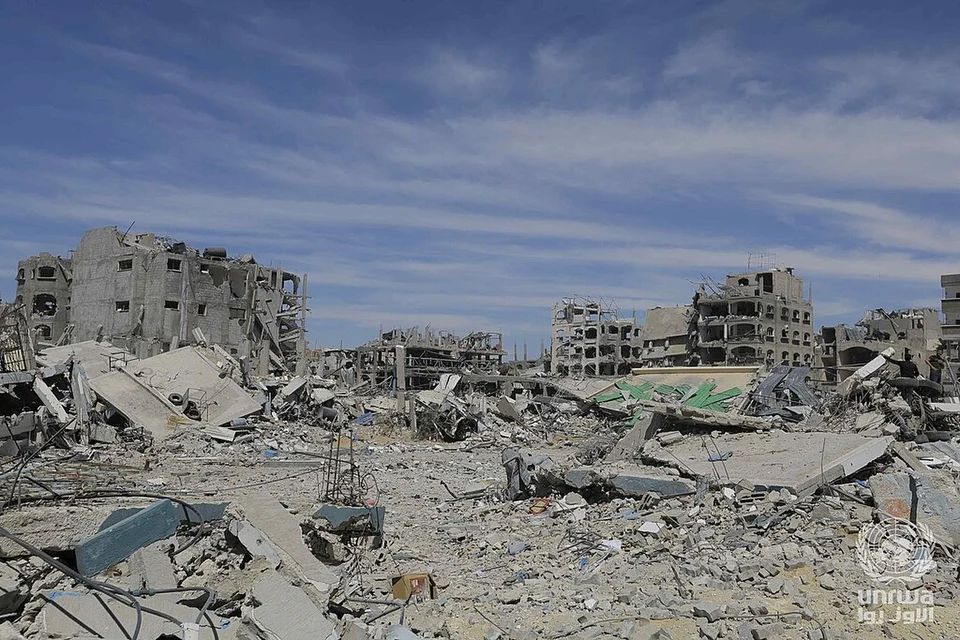
The Israel Defense Forces said it killed Ibrahim Fawzi Ismail Mohsen, whom it described as a platoon commander in Hamas's Nukhba force, in the central Gaza community of Nuseirat on September 26. The military said a separate strike killed Mohammed Kamel Suleiman Mohsen in Khan Yunis. The operations came amid continuing targeted killings nearly a year after the October 2025 ceasefire began.
Every identification and allegation of militant activity in the operation was released by the IDF and could not be independently verified from Gaza. Hamas had not issued a detailed public response to the specific claims in the reporting reviewed for this article.
The operation
The IDF said both Ibrahim Mohsen and Mohammed Mohsen had taken part in attacks on Israeli soldiers and civilians and were working to restore Hamas's military capabilities. It also announced the killing of Hassan Mahmoud Siam, whom it accused of infiltrating Israel during the October 7, 2023 attack and later holding Israeli hostages Dafna Elyakim, Keith Siegel, Aviva Siegel and Amit Soussana.
The military separately named Adham Sabhi Salim Ziara among those killed. It said operatives had fired at soldiers and planted explosives around the Yellow Line, the ceasefire boundary that separates Israeli-held areas from the rest of Gaza. The IDF said it used “precise munitions and aerial surveillance” and took measures to reduce civilian harm. Those mitigation claims, like the targeting accounts, are attributed to the military.
Israeli forces also said they destroyed a two-kilometre tunnel. That claim points to the dual nature of the campaign: killing named operatives can disrupt command networks immediately, while tunnel demolition is intended to reduce Hamas's ability to move, store weapons and rebuild below ground.
The money war
The IDF said it had eliminated 16 Hamas finance operatives in recent operations. Funding is less visible than launch sites or tunnels, but it is essential to sustaining fighters, paying local networks, moving equipment and financing reconstruction of underground infrastructure. If the military's account is accurate, the finance campaign is designed to make every other part of Hamas's recovery slower and more expensive.
The limitation is substitution. Financial functions can be dispersed, reassigned or moved into informal networks. The strategic result therefore depends not only on the number of named operatives killed but on whether Israel can also disrupt cash, trusted intermediaries and the records that connect them.
The northern front
The IDF also said it struck a Hezbollah weapons depot at Sejoud in southern Lebanon. The announcement tied Gaza's targeted-killing campaign to Israel's wider effort to prevent allied armed groups from rebuilding across multiple fronts. Hezbollah had not independently confirmed the military's description of the site in the reporting reviewed here.
The ceasefire math
Gaza's Health Ministry, which is controlled by Hamas, reported 1,415 people killed and 4,953 injured since the October 2025 truce, including seven deaths in the latest 48 hours. It put the cumulative death toll since October 7, 2023 at 74,016. Those figures could not be independently verified. Reuters reported in April that the post-truce toll had already exceeded 800.
Israel says militant attacks since the truce killed four soldiers. Prime Minister Benjamin Netanyahu has said Israel will “not stop until Hamas no longer exists in the Gaza Strip.” The competing tolls and objectives underscore a central problem: both sides describe the other's actions as violations while the agreement still carries the label of a ceasefire.
A Hamas delegation is in Cairo discussing a second phase that would include Israeli withdrawal, a transitional governing authority, a multinational force and Hamas disarmament. Reporting indicates little progress. Each new strike or attack around the Yellow Line narrows the political room for negotiators to define what phase two would mean in practice.
Why this matters
Nukhba units played a central role in the October 7 attack, so Israel treats commanders linked to the force as high-priority targets. The allegation that Siam was connected to four named hostages gives his killing additional domestic resonance in Israel. The finance-network campaign broadens the strategy from battlefield leadership to the systems that enable Hamas to pay fighters and rebuild tunnels.
At the same time, repeated operations raise the question of whether a meaningful ceasefire still exists beyond the partial restraint imposed by the Yellow Line. A truce can survive isolated violations; it is much harder to sustain when targeted killings, shootings, explosives and airstrikes become routine features rather than exceptions.
What happens next
The Cairo talks may continue even as Israel strikes targets and Hamas tries to restore its network. The most important near-term indicator is activity around the Yellow Line: a sustained rise in shootings, planted explosives or Israeli incursions would make a negotiated second phase still less likely, while verified restraint could create room for withdrawal and governance talks.