Risk of new Gaza war: the UN's acting Middle East envoy Ramiz Alakbarov told the Security Council on October 15, 2026 that the risk of a return to war in Gaza has never been higher, one year after the ceasefire — citing some 1,500 Palestinian deaths since the truce by Gaza's Health Ministry count, 1,135 of them independently verified by the UN Human Rights Office.
Gaza / 'The ceasefire exists in name only' — and winter is coming
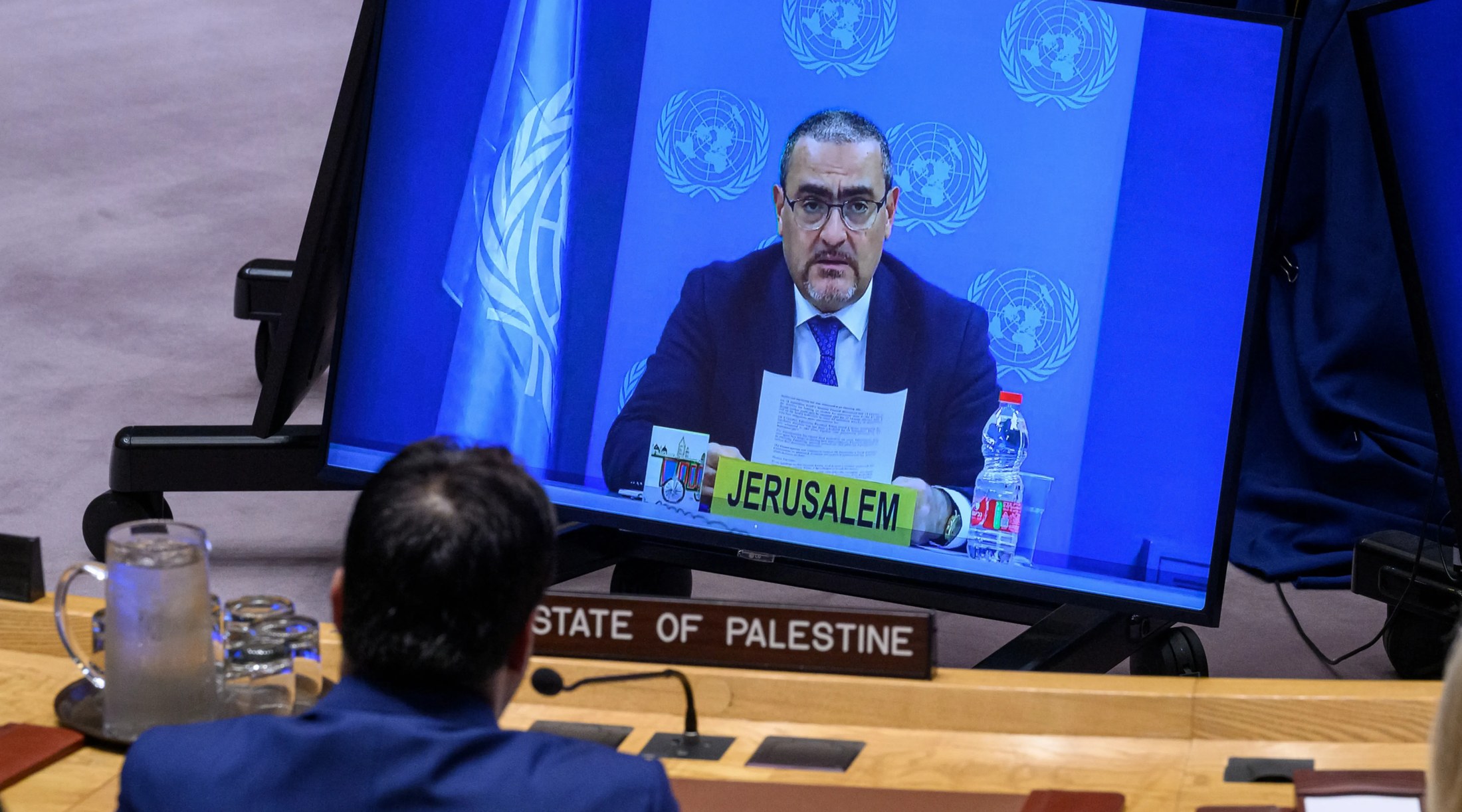
UNITED NATIONS — The risk of a return to war in Gaza "has never been higher," the United Nations' acting Middle East peace envoy told the Security Council on Thursday, October 15, a year after the ceasefire took hold — warning that frustration in the Strip "cannot build indefinitely" while killing continues under the truce itself.
Track it live: Israel–Gaza war map and live tracker · all live war trackers
Ramiz Alakbarov, the UN's acting special coordinator for the Middle East peace process, opened the Council's quarterly open debate on the Middle East — a session that drew some 70 speakers, according to Jordan's Petra news agency — with an unusually personal formulation. "Today, I feel obliged to sound the alarm," he said. "In Gaza, desperation is palpable. One year after the ceasefire, too many people have seen little or no improvement in their lives. This frustration cannot build indefinitely. The risk of a return to war has never been higher. This must be avoided at all costs."
Two death tolls for one ceasefire — and why the UN published both
Alakbarov told the Council that Israeli military operations since the truce have caused some 1,500 Palestinian deaths, citing Gaza's Health Ministry. More than 320 of the dead were children and 140 were women, he said.
The UN Human Rights Office in the occupied Palestinian territory gave a lower figure based on its own verification work. It said this week it had verified 1,135 deaths since the October 2025 ceasefire: 854 attributed to reported Israeli air and drone strikes, 163 to reported Israeli gunfire and 118 to other circumstances. "Violence of this magnitude is outrageous at any time. To record it during a supposed ceasefire is simply unfathomable," said Ajith Sunghay, who heads the office.
The gap between the two numbers — roughly 1,500 reported against 1,135 verified — is itself part of the story. The Health Ministry count is a running tally reported by hospitals and authorities in Gaza; the UN office's figure counts only cases its staff have been able to check individually, a slower process that historically trails the ministry tally rather than refuting it. Both institutions chose to put their numbers before the Council in the same week, and the distance between them marks the zone of uncertainty every other figure in this war now travels through — including the site's earlier reporting of UNICEF's count of more than 340 children killed since the ceasefire, a figure Alakbarov's 320-plus children, drawn from a different counting method and date range, sits alongside rather than replaces.
'For Palestinians living along the Yellow Line, the ceasefire exists in name only'
Alakbarov said he had visited Gaza on Sunday, days before the briefing. For Palestinians living along the Yellow Line — the line separating Israeli-held areas from the rest of the Strip — "the ceasefire exists in name only," he said. In Shuja'iyya, a community of approximately 950 households, women told him they had not experienced 40 consecutive minutes without shooting over their land in a year. "Their most basic request was for safety, yet many have nowhere else to go," he said.
That testimony reframes what a "ceasefire" currently means on the ground. It is not a line that stopped the shooting; it is a line along which the shooting became routine — close enough to homes that residents measure their lives in minutes of quiet. The one-year assessment on this site reached a similar conclusion from the aid and access side; Alakbarov's account adds the security side, from the UN's own envoy, on the record, in the Council chamber. See also: Gaza's ceasefire, one year on.
The second emergency: winter, flooding and buildings at risk of collapse
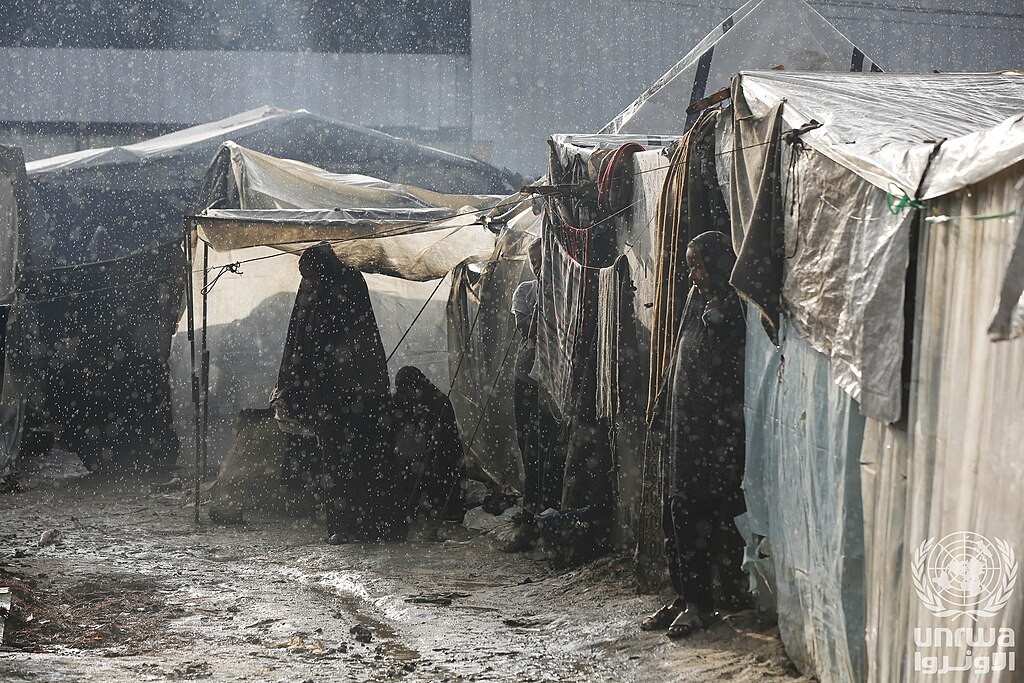
About 950,000 people live in areas at medium or high risk of flooding as winter approaches, Alakbarov said, and more than 4,000 buildings where people have taken shelter are at risk of collapse. With El Niño expected to bring severe winter storms, he said the UN knows what is needed to prepare but lacks the essential materials and equipment to act at the scale required: for the fourth consecutive year, restrictions on the entry of essential equipment, spare parts, engine oil and other supplies continue to impede humanitarian and recovery efforts. "Most of Gaza still lives in darkness," he said.
This is the part of the warning that does not depend on anyone firing a shot. A ceasefire can hold, formally, while a flooded tent camp in January or a collapsing shelter block produces its own casualty lists. The envoy's argument is that the two emergencies compound each other: a population that has seen "little or no improvement" in a year is the same population he says is losing patience with the political process meant to follow the truce.
The West Bank 'at boiling point' — and the October 19 deadline
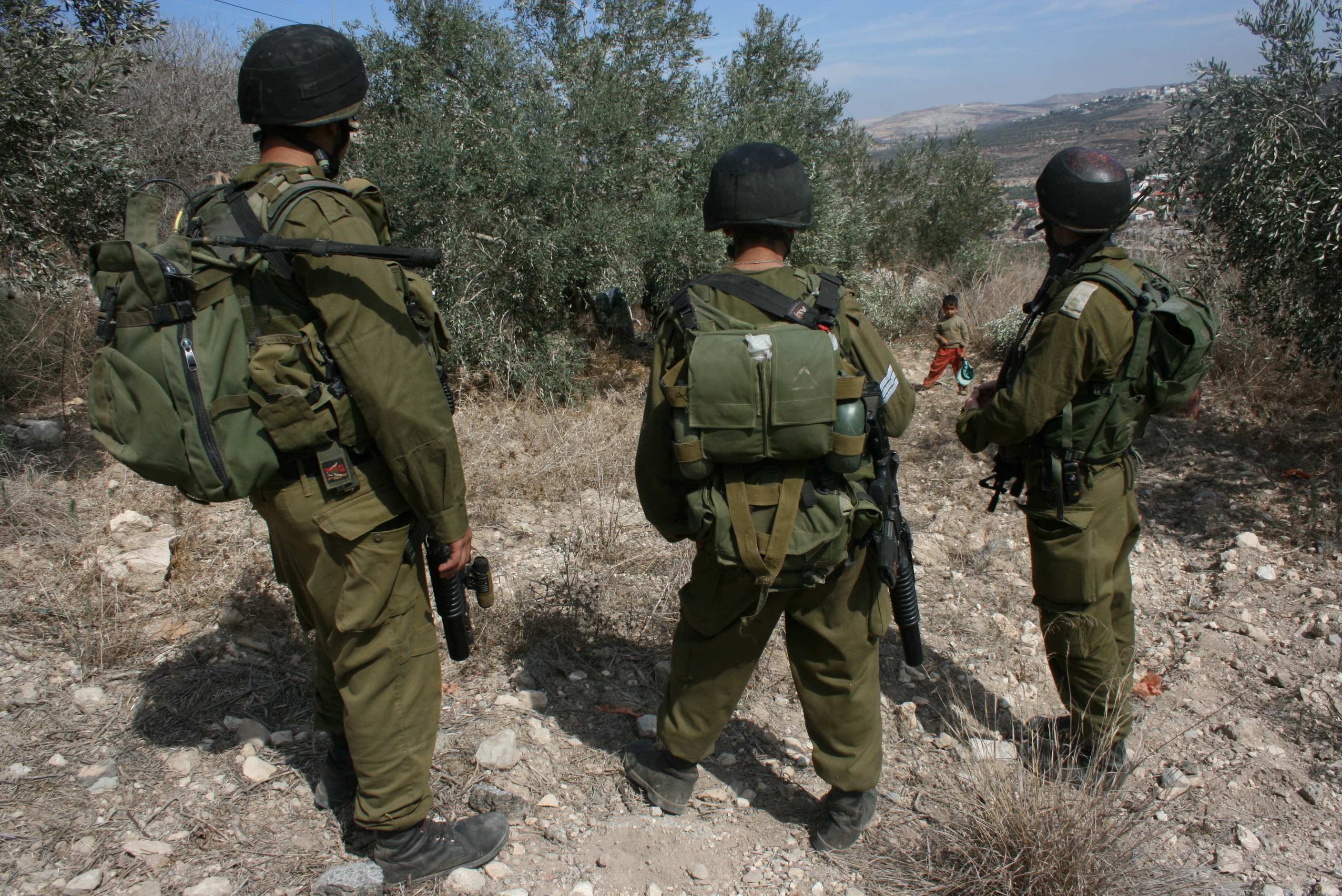
Alakbarov also warned of "extremely high" levels of settler violence in the occupied West Bank, including attacks on Palestinians at the start of the olive harvest, and said most perpetrators had not been held accountable. Palestinians, he said, face constant threats to their safety and livelihoods, and communities are being forcibly driven into ever more fragmented areas — eroding the territorial basis of a future Palestinian state.
He noted that Israel's attorney general had set October 19 as the deadline for bids on settlement tenders in the E1 area near Jerusalem — a corridor whose development critics have long said would sever the northern and southern West Bank — with contracts awardable only after Israel's October 27 election. He called on Israel to stop all settlement activity.
What Israel and the United States told the Council
Israel and the United States told the Council that Hamas must disarm. The ceasefire plan backed by Security Council Resolution 2803 — the US-brokered Comprehensive Plan built on President Donald Trump's 20-point framework — calls for Hamas to disarm, Israeli forces to withdraw, and an international stabilization force to deploy. Its first phase delivered the ceasefire itself and the release of the remaining hostages. The later phases — Hamas disarmament, full Israeli withdrawal under the stabilization force, and large-scale reconstruction — have not materialised, a stall this site has tracked in the Gaza plan, one year on.
Israel has said it will not permit large-scale rebuilding until Hamas disarms, and characterises its continuing operations in Gaza as responses to ceasefire violations. That position makes disarmament the hinge of everything else in Alakbarov's briefing: it is, in Jerusalem's and Washington's framing, the precondition for the withdrawal and reconstruction whose absence the envoy says is driving despair — and, in the envoy's framing, delay itself is now the danger, because frustration "cannot build indefinitely." Both causal chains were stated to the same chamber on the same day. The Council took no new action at the session.
Why this matters
Three things make this briefing more than a ritual warning. First, the speaker and the setting: this was the UN's acting coordinator for the peace process, briefing the Security Council under its quarterly open debate, explicitly framing his remarks as an alarm he felt "obliged" to sound — language diplomats reserve for moments they want on the record before a deterioration, not after one.
Second, the arithmetic of the truce. A ceasefire under which between 1,135 verified and roughly 1,500 reported people are killed in its first year — including more than 320 children on the ministry's count — is functioning, for the people living along the Yellow Line, as a slower war rather than a peace. Alakbarov's "40 minutes" line matters because it converts that arithmetic into lived time: safety measured not in months since a deal was signed, but in minutes since the last shot.
Third, the calendar. The next two weeks hold three hard dates the briefing threaded together: the October 19 deadline for E1 settlement-tender bids, Israel's October 27 election — after which those contracts can be awarded — and the arrival of winter storms over a territory where 950,000 people sit in flood-risk areas and 4,000 damaged buildings shelter families who have nowhere else to go. Add the postponement Alakbarov noted with frustration — Palestinian legislative elections, decreed by President Mahmoud Abbas on October 9, moved from November 28 to September 11, 2027, alongside presidential elections — and every constituency in his account is being asked to wait: for disarmament, for withdrawal, for reconstruction, for a vote. His warning is that waiting has a limit, and the limit is approaching from several directions at once.
What happens next
Three scenarios follow from the briefing's own logic. If the plan's second phase moves — a disarmament formula, a stabilization-force mandate with dates, reconstruction equipment allowed in at scale — the envoy's alarm becomes the documented low point of the ceasefire's first year. If the phase-two stall continues through the winter while E1 contracts are awarded after October 27, the Council will have been told, in advance and in detail, how the ground for a renewed war was prepared. And if a single incident along the Yellow Line — a strike, a shooting, a collapsed building after a storm — produces mass casualties, the "risk has never been higher" line will be quoted back as the warning that preceded it. None of those outcomes is certain. What Thursday's session established is that the UN's own envoy has now said, formally and publicly, that the current arrangement is not stable — and that the choice, as he put it, is to underpin the ceasefire with genuine recovery and a lasting political settlement, or to watch the frustration he described find its own outlet.
Sources
- United Nations — Ramiz Alakbarov briefing to the Security Council, October 15, 2026 ("Gaza: ceasefire exists in name only" — UN briefing recording and summary).
- The Insight International — "UN envoy tells Security Council risk of new Gaza war has never been higher," October 16, 2026 (briefing report; UN Photo/Loey Felipe).
- Petra (Jordan News Agency) via Fana News — "UN Security Council warns of risks of renewed war in Gaza," October 15, 2026 (70 speakers; Alakbarov quotations).
- Asian Lite — "UN Warns Of Gaza Disaster As Winter And Floods Loom," October 16, 2026 (flood risk, elections postponement, two-state calls).
- UN Human Rights Office, occupied Palestinian territory — verified casualty figures since the October 2025 ceasefire (1,135 verified: 854 air/drone strikes, 163 gunfire, 118 other), via the briefing reports above.