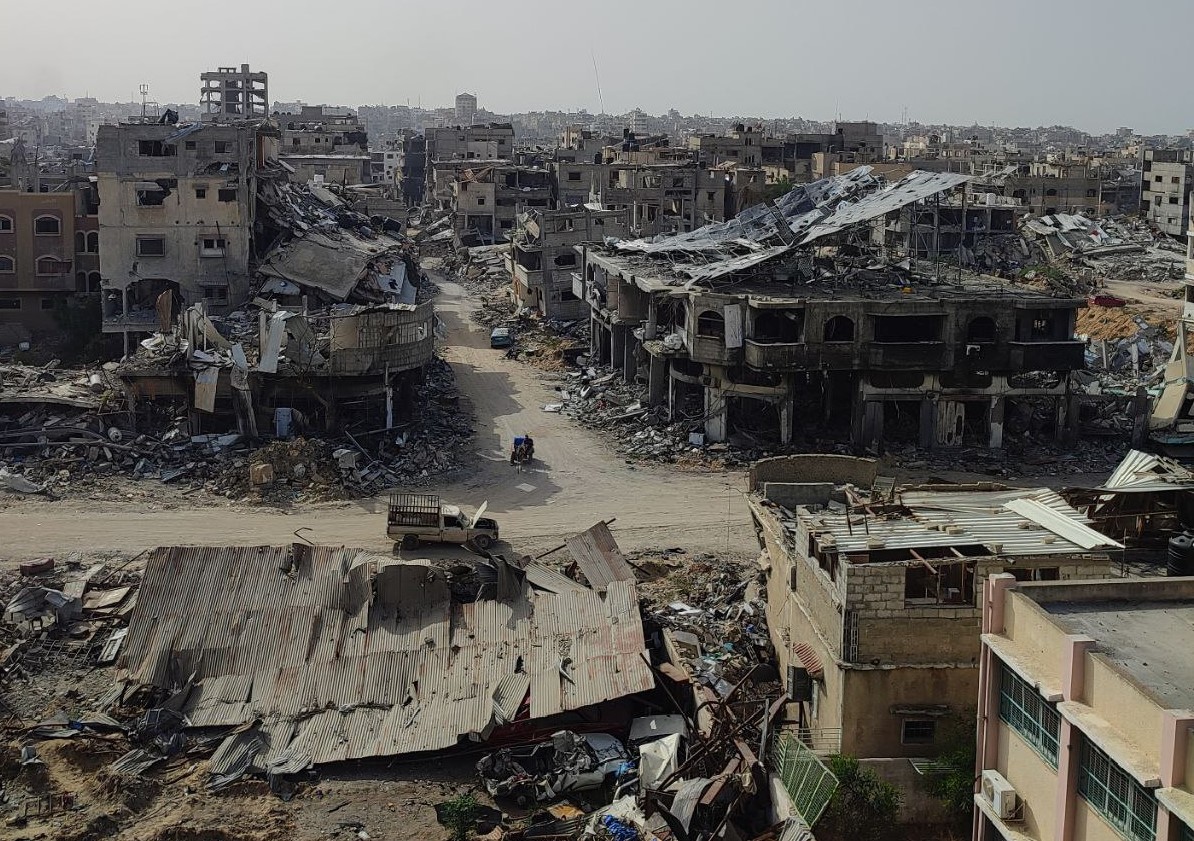
The Israel airstrike Khan Younis September 23 incident began with a vehicle hit in the western part of the southern Gaza city on Wednesday. Medics and local health officials told Reuters that two men were killed and two other people were wounded. An Israeli military spokesperson confirmed the strike and said it had targeted “a militant,” adding that more information would follow.
That is the verified core of the report. The Israeli military had not released the alleged target’s name, affiliation or the evidence for its militant designation by the reporting cutoff. No Palestinian armed group had claimed either dead man. The identities of those killed had not been independently confirmed. Those gaps do not erase the strike; they define what can responsibly be said about it.
Why this matters: the ceasefire that is not peace
The western Khan Younis strike matters not because two deaths are numerically exceptional in Gaza, but because they are not. It is another entry in the ledger of a conflict whose diplomatic vocabulary and physical reality have steadily drifted apart. The United States brokered a ceasefire in October 2025. Nearly a year later, Gaza remains under a pattern of intermittent strikes, targeted killings and lethal incidents that is less intense than the war’s peak but far from an end to hostilities.
Each operation described as “targeted” quietly rewrites the meaning of the truce. Israel’s position is that a ceasefire does not require it to tolerate armed threats or abandon action against militants. Gaza’s health officials and medics record the human consequence as a continuing death toll that they say falls mostly on civilians. Both propositions can exist in the same conflict, but they cannot indefinitely coexist with the ordinary meaning of a ceasefire without hollowing that term out.
The running post-truce toll is therefore more than a statistic. Palestinian authorities say more than 1,400 Palestinians have been killed since the October 2025 agreement, mostly civilians according to Gaza health officials. That is nearly 2% of the more than 73,000 Palestinians those authorities say have been killed since October 2023. A reduction in tempo is real, but a cumulative toll above 1,400 makes “reduced intensity” an inadequate description of what families on the ground experience.
UNGA-week optics expose the gap between diplomacy and the ground
The timing sharpens the contradiction. World leaders are gathered in New York for United Nations General Assembly week, where Gaza is being discussed through road maps, phases, stabilization forces and reconstruction mechanisms. On the ground, a vehicle in Khan Younis was struck and four people were killed or wounded. The diplomatic process speaks in future tense; the casualty reports keep arriving in the present.
Eight Muslim-majority nations have endorsed a Gaza Comprehensive Plan road map for Phase Two, tying Israeli withdrawal to decommissioning, an international stabilization force, transitional Palestinian administration and reconstruction. Israeli Defense Minister Israel Katz, meanwhile, has issued a separate Gaza City evacuation ultimatum tied to any new abduction. Those two tracks—an international architecture for transition and an Israeli escalation ladder—are unfolding at once.
The Khan Younis strike will not by itself determine which track prevails. But it is precisely the kind of event that drains confidence from a negotiated sequence. A plan dependent on restraint, verified decommissioning and reciprocal movement becomes harder to implement when one side sees every strike as evidence that Israel intends to preserve open-ended freedom of action and the other sees every surviving armed cell as evidence that Hamas has not met the central security condition.
How the October 2025 truce stalled in Phase Two
The October 2025 U.S.-brokered agreement achieved part of its first purpose: it lowered the intensity of fighting and enabled the return of remaining hostages. It did not settle the central questions deferred to a second phase. Negotiators have failed to agree on terms for Hamas to disarm or for Israel to withdraw its troops. Reconstruction has also advanced little, leaving much of Gaza’s population among ruins and damaged infrastructure.
That deadlock is not procedural. It is the conflict in miniature. Israel argues that withdrawal without verified disarmament would permit Hamas to rebuild military capacity. Hamas has resisted terms it views as surrender without a guaranteed political settlement and full withdrawal. Mediators can sequence the steps on paper, but sequence does not solve the underlying trust problem: each side fears that moving first gives the other an irreversible advantage.
Katz has used that impasse to signal readiness for a broader offensive and to insist that Hamas’s continued possession of weapons cannot become a permanent feature of the truce. Our analysis of the Hamas disarmament deadlock and Israel’s threatened return to full-scale war explains how those security arguments now overlap with Israel’s October 27 election calendar.
Israel’s rationale, and the unanswered question of identity
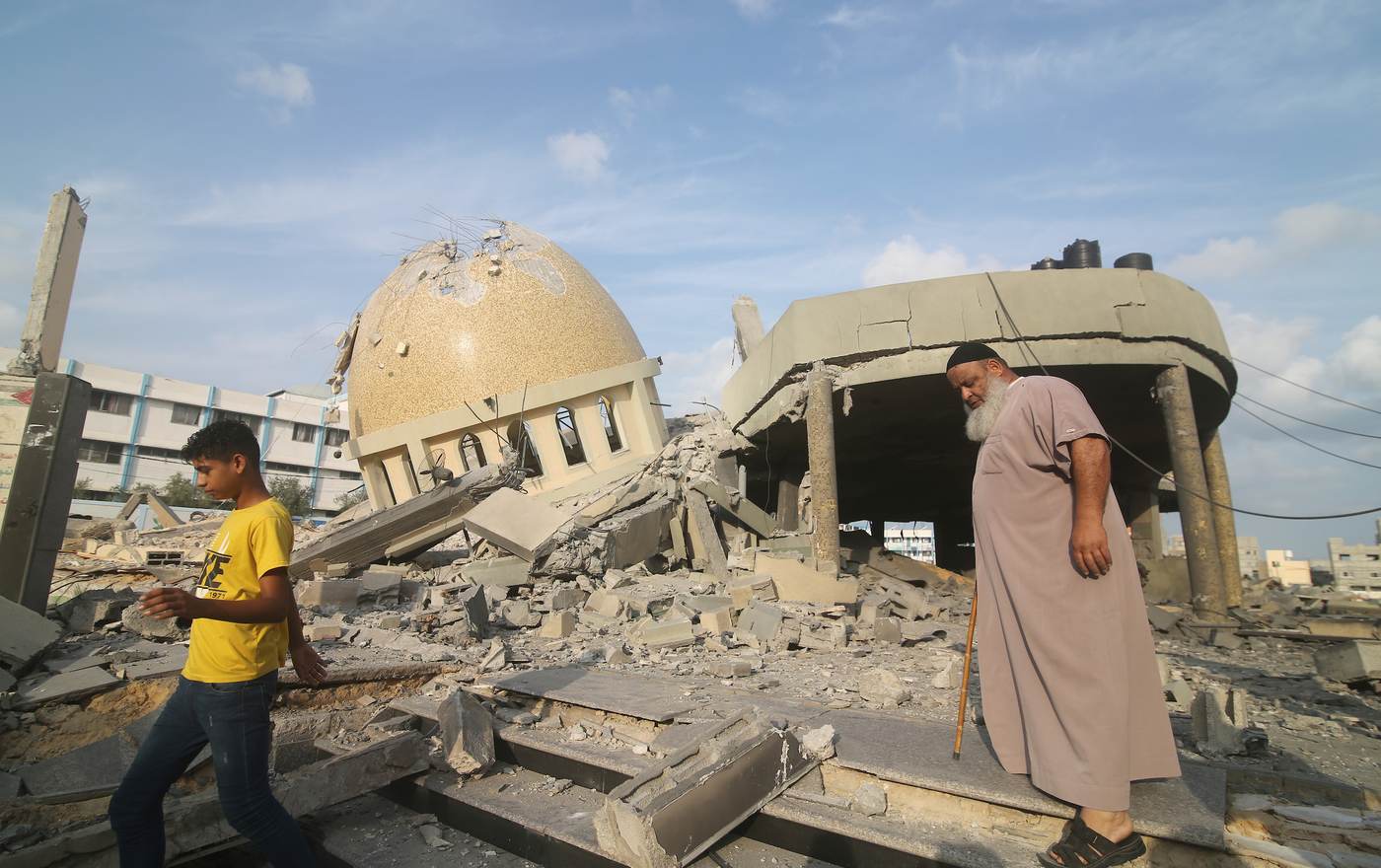
Israel’s stated rationale is narrow: its forces targeted “a militant.” That formulation matters because it places the strike within Israel’s continuing claim of self-defense and counter-militant operations rather than a resumption of general hostilities. If the target was actively planning or conducting attacks, Israel will argue that the operation was a limited response to a continuing threat, not a rejection of the ceasefire.
But the statement, as released, does not establish the claim. No name, organization, alleged role or evidence accompanied the designation. The absence of a claim by Hamas or another Palestinian militant group leaves the public record incomplete rather than disproving Israel’s account. The two wounded people were also not identified in the available reporting.
That evidentiary gap has legal and political consequences. International humanitarian law requires parties to distinguish between civilians and combatants and to take precautions in attack; whether this strike met those obligations cannot be determined from the limited public facts. The military’s confirmation establishes responsibility for the strike, not the status of everyone affected or the lawfulness of the targeting decision.
How Gaza’s health officials count the continuing toll
Medics and local health authorities supply the immediate casualty count because they receive the dead and wounded. Gaza’s health ministry operates under Hamas authority and does not separate combatants from civilians in its aggregate figures. Israel disputes aspects of Palestinian casualty accounting and emphasizes the militants it says it targets. International agencies have nevertheless relied on the ministry’s broad totals while noting the limits of independent verification during the war.
The result is a dispute that can obscure the most basic fact: people continue to die after the ceasefire. Classification matters enormously for assessing military conduct, but the post-truce count also measures whether diplomacy is changing civilian exposure to lethal force. A figure above 1,400 says that the truce has not produced physical security commensurate with its label.
The asymmetry is also stark. The Israeli military says four Israeli soldiers have been killed during the same post-ceasefire period. That does not make those deaths less significant; it shows how differently the residual conflict distributes risk. The disparity can reinforce opposite political conclusions: Israelis may see sustained low-cost operations as necessary to prevent a renewed attack, while Palestinians see a system in which Israeli forces retain overwhelming latitude and Gaza absorbs most of the human cost.
The numbers show a rhythm, not isolated exceptions
The September sequence makes the pattern visible. During roughly 12 hours across September 18 and 19, reported strikes killed 33 Palestinians, including people in tents. On September 19, three more Palestinians were killed in separate incidents, including Basir Al-Bursh, the son of Gaza health ministry director-general Munir Al-Bursh. Israel said it had struck militants in those operations. On September 23, the Khan Younis vehicle strike killed two men and wounded two others.
These are different events with different target claims and circumstances; they should not be collapsed into one allegation. Their analytical significance lies in frequency. When lethal episodes recur every few days, they cease to look like rare deviations from an otherwise stable truce. They become the operating condition of the truce itself.
The more than 73,000 Palestinian deaths reported since October 2023 describe the scale of the entire war. The more than 1,400 reported since the ceasefire describe something different: the performance of the agreement. The first total is a record of catastrophe. The second is a metric of whether the political instrument designed to stop the catastrophe is working. On that narrower test, the trend is deteriorating.
Who gains, who loses and why the election matters
Israeli leaders who favor continued military pressure can present targeted strikes as evidence that the state is preserving security while avoiding a full ground campaign. That position may have electoral value before the October 27 parliamentary vote, especially on the right, where rivals can portray restraint as allowing Hamas to survive. Katz’s public language about finishing the job reflects that incentive structure.
Hamas can use continued Israeli strikes to argue that disarmament would not produce protection or withdrawal, strengthening its case against surrendering weapons before Israel meets its obligations. That argument may preserve leverage, but it also prolongs the deadlock that blocks reconstruction and normal civilian life. The political actors retain tools; Gaza’s civilians bear the accumulating cost.
The United States and the eight-nation coalition risk a quieter loss: credibility. If their road map cannot reduce strikes, expand aid and establish reciprocal benchmarks, the diplomatic architecture begins to look performative. UNGA-week declarations may generate consensus in New York while events in Khan Younis demonstrate that no enforcement mechanism has changed behavior on the ground.
What happens next: three plausible paths
Continued drip strikes: The most immediate scenario is continuity. Israel conducts periodic operations against people it identifies as militants; Palestinian authorities report additional civilian casualties; negotiators preserve the ceasefire framework because the alternative is a return to full-scale war. This is politically convenient but strategically corrosive. The label survives while confidence in it collapses.
Escalation around Gaza City: A new abduction, a high-casualty attack on Israeli forces or an election-driven decision could activate Katz’s threatened escalation ladder. Evacuation orders and broader operations would likely overwhelm the distinction between a strained ceasefire and renewed war. They would also push the eight-nation road map further from implementation.
Renewed diplomacy at the UNGA margins: The United States, Arab mediators and other members of the eight-nation group could use this week’s meetings to define verifiable steps: transparent investigations of strikes, limits on military action, a timetable for withdrawal, monitored decommissioning and practical reconstruction access. The obstacle is not a shortage of plans. It is the absence of mutually trusted enforcement.
Analysis should not be mistaken for prediction. The known facts do not establish that a larger escalation is imminent, nor do they show that Wednesday’s strike will restart talks. They do show that the status quo has a measurable human cost and a narrowing political shelf life.
The ceasefire’s name is now part of the story
A ceasefire need not resolve a war to be valuable. Even an imperfect reduction in violence can save lives, create space for aid and preserve a path back to negotiation. But terminology can also conceal deterioration. If repeated targeted strikes, stalled withdrawal, blocked reconstruction and a post-truce toll above 1,400 become normalized, calling the arrangement a ceasefire risks describing its diplomatic origin rather than its current function.
The Khan Younis vehicle strike is one small incident in a vast conflict. That is exactly why it matters. It shows how a truce can erode without a single dramatic announcement of collapse—two people killed here, three there, 33 over half a day—until the cumulative exception becomes the rule.
Sources
- Reuters, September 23, 2026: Khan Younis vehicle strike, Israeli military confirmation, casualties and ceasefire context
- Middle East Eye, September 23, 2026: corroborating report on the western Khan Younis vehicle strike
Reporting cutoff: September 23, 2026 at 1:45 a.m. PDT. The identities of the dead were not confirmed in the sources available by publication. The Israeli military’s statement that it struck “a militant” is presented as its own claim and was not accompanied by supporting detail. Casualty totals are attributed to Gaza health officials and Palestinian authorities and were not independently verified. Both images are file photographs and do not depict the September 23 strike.