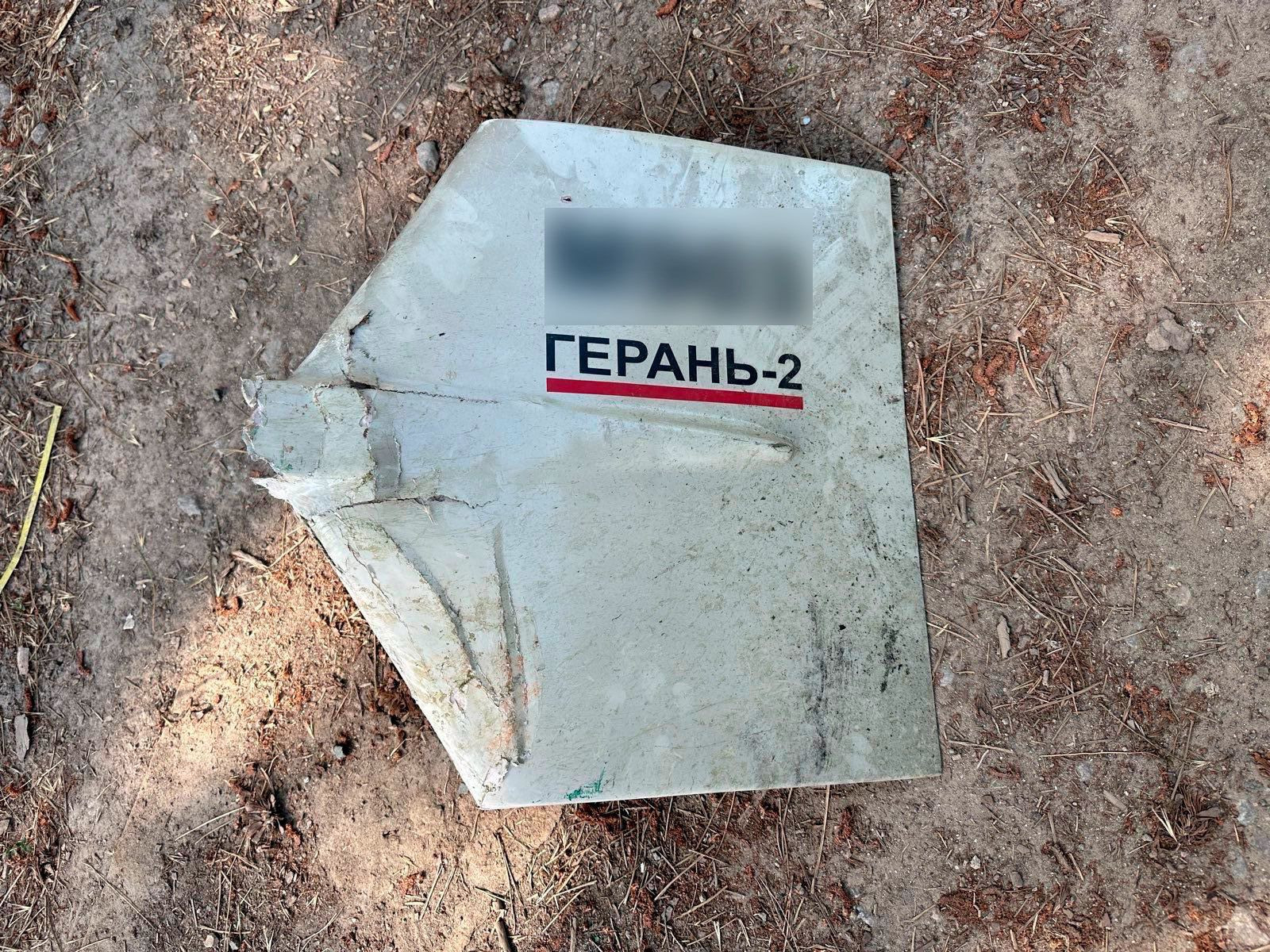
Ukrainian forces struck a Russian military facility used to store, prepare and launch attack drones in the Oryol region on Sept. 21, Ukraine's General Staff announced on Sept. 22, saying the attack damaged drone storage buildings and five launchers at a site near the village of Tsymbulova, roughly 150 kilometers from the Ukrainian border.
What Ukraine says happened
According to the General Staff statement published Sept. 22, at least three unmanned aerial vehicle (UAV) storage buildings were hit and caught fire; a launch site used for jet-powered strike drones was damaged; and five launchers were damaged. The statement said Ukraine's Defense Forces “systematically and as a priority target sites used for the storage, preparation and launch of attack UAVs in order to reduce the Russian aggressor's capability to strike civilian targets in Ukraine,” adding that operations against key enemy military targets are ongoing.
What remains unverified
The Kyiv Independent reported the General Staff's announcement but said it could not independently verify the extent of the damage. Moscow had not commented on the claimed strike as of publication. All damage figures in this article are attributed to Ukraine's General Staff and are not independently confirmed.
The Tsymbulova droneport
Satellite imagery published Sept. 21 and analyzed by the Ukrainian military publication Militarnyi indicates the Tsymbulova facility — sometimes transliterated Tsimbulova — has grown substantially since construction began in August 2024. Militarnyi's analysis, based on images shared by the Telegram channel Absolutely Reliable, reported visible impact sites, burn marks and damaged drone equipment, with some strikes reaching bunker-protected areas and hangars.
According to Militarnyi, by August 2026 the complex hosted around 10 launchers for Geran-5 jet-powered drones, six for Geran-4, four for Geran-3 and three for the standard Geran-2 model. The site was previously struck on the night of Aug. 30, when Ukraine's Defense Forces said they damaged a Geran launch position and a drone storage facility.
Why this matters
Russia's jet-powered drones — notably the Geran-5 — are faster and harder to intercept than propeller-driven Shahed-derived systems. Targeting launch infrastructure rather than individual aircraft is Ukraine's attempt to suppress the threat before takeoff. If all five reported launchers were disabled, they would equal about half of the roughly 10 Geran-5 launchers Militarnyi said were visible at Tsymbulova in August. That comparison is approximate: Ukraine has not published an inventory-level damage assessment, and a damaged launcher can be repairable.
The three reported warehouse strikes may be as consequential as the launcher count. A storage building can hold airframes, engines, warheads, spares or servicing equipment, but the Ukrainian statement did not say what was inside. Destroying stocked components could constrain operations longer than damaging open launch rails; empty or lightly damaged buildings would have a smaller effect. Satellite imagery and subsequent launch patterns are therefore more probative than the initial count.
Background: a droneport built for a larger air war
The site’s expansion from August 2024 through 2026 illustrates how Russia has built fixed infrastructure around a mass drone campaign. By the time of the reported Sept. 21 strike, Militarnyi said the complex had launch positions for several Geran variants, hardened shelters and support areas. Ukraine’s Aug. 30 strike claim was an early precedent: it said a launch position and storage facility were damaged. Repeated attacks can force dispersal, camouflage and repair costs even when no single raid closes a base.
Overnight into Sept. 22, Russia's barrage on Ukraine included Oniks anti-ship missiles, ballistic missiles, four cruise missiles and 212 drones, according to Ukraine's air force in a Reuters report published Sept. 22. Ukrainian officials said the attacks killed three people in Dnipropetrovsk region and cut power to nearly 100,000 consumers in Chernihiv. Recent weeks have also brought far larger salvos, including a daytime assault of 542 drones and 37 missiles, most of which Ukraine said it intercepted. Moscow denies targeting civilians.
How it fits the refinery campaign
Ukraine’s deep-strike campaign has also hit the Bashneft-UNPZ refinery in Ufa, the Kuibyshev refinery in Samara, the Moscow Oil Refinery, air-defense systems, command posts and reported drone-production sites. The military logic is similar—raise the cost of launching attacks—but the political effects differ. Drone-base strikes target a direct military capability; refinery strikes also affect fuel markets and civilian economic activity.
Contemporaneous reporting cited estimates that Russian refining output had fallen to its lowest level in two decades and that a refinery was hit, on average, about once every three days in the first eight months of 2026. Those are reported estimates, not measurements of permanent capacity destroyed. Refineries can repair units, reroute crude and draw on inventories; throughput losses also vary sharply by which processing unit is hit.
Who benefits, who loses—and the limits
Kyiv benefits if the damage reduces Geran sortie rates against Ukrainian cities and power infrastructure. Moscow loses capacity at a site it has spent two years developing. Civilians in Ukraine benefit only if fewer weapons get through; civilians near Russian military and industrial sites face added risk from debris, interception and targeting errors.
Critics of deep strikes argue that individual raids can be militarily marginal when Russia can move launch crews, repair equipment or use other bases. The stronger case for the campaign is cumulative: repeated attacks may compel dispersion, added air defense and slower logistics. The weaker case is symbolic—damage that produces headlines but no sustained reduction in launches. Without before-and-after sortie data, both outcomes remain plausible.
What the numbers imply
Russia's drone tempo — hundreds per night, with Ukrainian air defenses claiming interception of the majority — shows an attrition war that is straining both sides. Ukraine's claim that it intercepted 515 of 542 drones in a recent daytime assault reflects substantial defensive performance but also an economic asymmetry: relatively cheap drones can consume expensive interceptors and force continuous readiness.
Hitting launchers and warehouses may be cheaper than shooting down every drone, but it also carries escalation risk. Longer-range strikes invite stronger Russian demands for retaliation and can blur the line between direct military targets and dual-use infrastructure. The relevant test is sustained output: a measurable fall in launches from Oryol would support Kyiv’s operational claim; rapid redistribution would suggest a temporary effect.
What happens next
Three paths are possible before winter. Ukraine could continue strikes on drone infrastructure while Russia disperses and hardens its network. Russia could answer with heavier attacks on Ukrainian drone-production and energy facilities, increasing civilian-protection demands on a defense system already facing interception limits. Or diplomacy could produce a reciprocal pause covering energy assets while excluding clearly military drone bases—a narrower arrangement that would still leave enforcement disputes.
Any ceasefire would need an agreed target list, a mechanism for attributing drones and missiles, and consequences for violations. Without those details, a pause could collapse after the first contested incident. The immediate evidence to watch is high-resolution satellite imagery of Tsymbulova, changes in Russian launch geography and any Russian acknowledgment or denial.
Sources and reporting notes
- Ukraine's General Staff, Sept. 22, 2026: “Enemy attack UAV storage and launch site hit in Oryol region. Five launchers damaged.”
- The Kyiv Independent reporting via EuropeSays summary, Sept. 22: “Ukraine strikes Russian drone storage and launch site in Oryol Oblast, damages 5 launchers.”
- Dagens.com, citing Militarnyi satellite analysis, Sept. 21: “Ukrainian drones damage Russian drone base in Oryol region.”
- Reuters via 94.7 The Beast, Sept. 22: “Russia strikes Ukraine industrial sites, killing three, officials say.”
Reporting cutoff: September 22, 2026, 11:30 p.m. Pacific time. All claimed damage at Tsymbulova is attributed to Ukraine's General Staff; Signal Post News has not independently verified it, and Moscow had not commented as of the cutoff. Claims and estimates that remain contested are explicitly attributed. The assessment of launcher capacity, operational effects, escalation risk and winter scenarios is Signal Post News synthesis.