Trump Patriot missiles Ukraine final decision
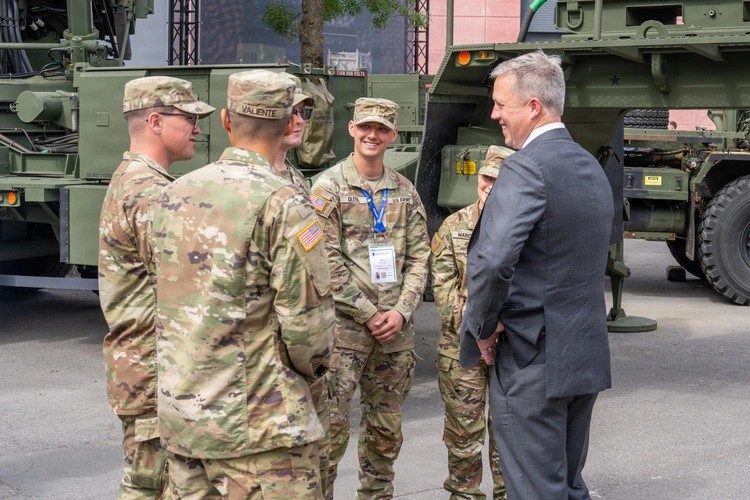
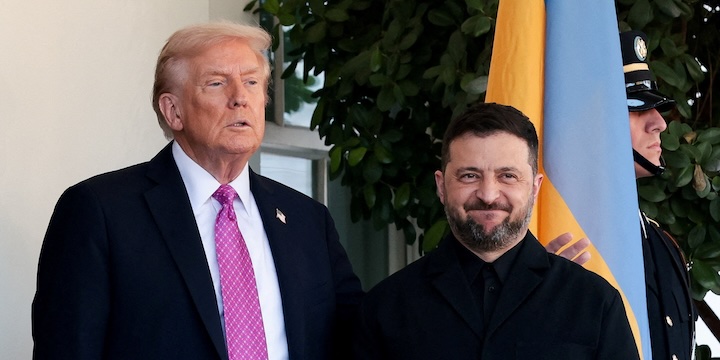
The Trump Patriot missiles Ukraine final decision is, for now, a claim by Ukraine's president rather than a publicly documented decision by the United States. Zelenskyy told reporters Friday that Trump had verbally agreed to let Ukraine receive licenses to manufacture Patriot missiles: “Yes, I have made the final decision: Ukraine will receive the licenses to produce Patriot missiles,” he said, quoting Trump.
The quote is consequential because it appears to move the issue beyond the exploratory language surrounding earlier talks. It is also incomplete. Zelenskyy did not say whether the license would cover PAC-2 GEM-T interceptors, PAC-3 interceptors or both; when any rights would be issued; which facilities would build the missiles; or how U.S. export controls, proprietary technology and supply chains would be handled. Trump and Zelenskyy met Tuesday on the sidelines of the United Nations General Assembly in New York, but no agreement or joint framework accompanied Friday's account.
The contradictory public record matters. The U.S. State Department told Deutsche Welle on Wednesday that discussions were still underway and that no final decision had been announced. CNN said it sought White House comment and had received no response by publication. Those facts do not prove Zelenskyy's account is wrong; leaders can make private commitments before agencies publish them. They do mean the claim should not be reported as a signed U.S. license.
A verbal green light is not a manufacturing license
A presidential statement can authorize officials to negotiate, settle an internal policy argument or signal political intent. A manufacturing license has to do much more. It must define exactly what Ukraine may produce, where, with whose components, under what security controls and subject to which inspection, export and intellectual-property rules. Contracts then have to allocate cost, quality assurance, liability, training, tooling and access to scarce subcomponents.
The United States would also have to align the White House, State Department export-control process, Defense Department and, where notification or funding applies, Congress. Patriot's industrial team includes Raytheon and Lockheed Martin. Ukraine would need a secure production site, cleared personnel, test equipment, reliable energy, protected logistics and a supplier network resilient enough to operate under missile attack.
That is why the distinction is operational, not semantic. A verbal decision can change negotiating leverage today. It cannot fill a launcher tomorrow. The license becomes strategically meaningful only when governments and companies publish a scope, execute documents, fund the line and begin transferring knowledge and equipment.
July offer, a cooler follow-up and the Raytheon track
The current claim sits at the end of a stop-start sequence. At the July NATO summit in Turkey, Trump floated the possibility that Ukraine could receive manufacturing rights. The offer later cooled, with no formal commitment announced and U.S. officials continuing to describe the issue as under discussion.
Kyiv kept a separate industrial track open. Zelenskyy's government said it was discussing licensed production with Raytheon and framed domestic manufacturing as a way to reduce long-term dependence on annual political decisions and overseas delivery queues. Signal Post News's September 24 analysis of the Raytheon licensing talks found that even a successful agreement would be a medium-term capacity project rather than an answer to the present winter shortage.
Tuesday's UNGA meeting then gave Zelenskyy a direct opportunity to press Trump. Ukraine had already sought a winter arms package centered on additional Patriots. Friday's statement is Zelenskyy's description of the outcome. It may represent the political permission the industrial talks lacked; until Washington confirms it, the more cautious reading is that the private discussion and the public paperwork are moving on different clocks.
Patriot interceptor production Ukraine 2027: what the estimates mean
Earlier Signal Post News reporting on the Raytheon discussions cited industry estimates that a production line could require roughly 12 to 18 months before it began operating. That would place initial output, at best, around late 2027 or early 2028 if a license, site, funding and equipment moved quickly. It is an estimate, not a disclosed schedule, and first production would not necessarily mean full-rate production.
The scale of the demand explains Kyiv's urgency. The same analysis cited estimates that Ukraine uses roughly 60 to 70 Patriot interceptors a month, rising to 150 to 180 during concentrated attack waves. Those estimates vary with the threat and rules for which targets merit a Patriot shot. They nevertheless show why a future domestic line and immediate allied deliveries are complementary rather than substitutes.
The threat side is also industrial. Estimates cited in that reporting put Russian monthly production at roughly 40 to 50 Iskander-M ballistic missiles and around 10 Kinzhal air-launched ballistic missiles. Not every missile is launched at Ukraine and not every threat requires Patriot. The comparison still underlines the strategic contest: sustained defense depends on production rates, stockpiles and allocation as much as launcher numbers.
PAC-2, PAC-3 and the unanswered scope
“Patriot missile” covers interceptors with different designs and supply chains. The PAC-2 GEM-T uses a blast-fragmentation warhead that detonates near a target and is used against aircraft, cruise missiles and some tactical ballistic threats. PAC-3 uses hit-to-kill technology and is more optimized for demanding ballistic-missile defense.
That difference shapes the value of any license. PAC-2 production could expand the volume available for a wider air-defense mission. PAC-3 rights would reach more sensitive technology and a different supply chain. Zelenskyy's statement did not resolve whether Kyiv seeks one, the other or a layered arrangement. Until the scope is public, claims about exactly what Ukraine will build are premature.
Who benefits—and where the risks fall
Ukraine benefits from strategic depth. Domestic production could shorten some logistics, build a skilled defense workforce and make supply less vulnerable to a single foreign budget cycle. Even before output begins, a credible license can strengthen Kyiv's hand in negotiating interim deliveries.
U.S. and European suppliers could gain capacity and contracts. A Ukrainian line might add output to an alliance-wide shortage rather than merely relocate it. The risk is that a new line competes for the same scarce seekers, motors, electronics and test equipment already limiting production elsewhere.
Washington gains leverage but accepts technology and escalation risks. Licensing can bind Ukraine more tightly to U.S. standards and oversight. It also requires protecting sensitive technology inside a country under constant attack. Russia would have a strong incentive to locate and strike any production site, raising security costs and creating escalation arguments Moscow could exploit.
Ukrainian civilians gain no immediate shield from an unsigned promise. A future line cannot address the current missile and drone threat to Kyiv and other cities. Near-term protection still depends on delivered interceptors, launcher availability, warning systems and the way commanders ration shots through the winter.
Three scenarios from here
1. The White House confirms and licensing proceeds
A U.S. statement naming the scope, companies and process would convert political intent into a work program. The next markers would be export approvals, an industrial memorandum, a site and funding. This scenario would validate Zelenskyy's account while leaving the 12-to-18-month estimate and supply-chain risks intact.
2. Washington walks the claim back
The administration could say Trump approved further talks rather than a license, or that no final decision exists. That would reopen the July pattern: a public offer followed by narrower official language. Kyiv would lose leverage, and allied donors would face renewed pressure to cover the winter gap with transfers from existing stocks.
3. Quiet Raytheon-track progress continues without public paperwork
The most ambiguous path is also plausible. Engineers, lawyers and officials could keep negotiating while Washington avoids a headline announcement. That might protect sensitive details and reduce political friction, but it would leave the public unable to distinguish genuine progress from indefinite process. Evidence would come through procurement notices, facilities, training and supplier contracts—not rhetoric alone.
Diplomacy and air defense are moving together
The claim lands as Washington is also proposing UAE-hosted technical talks involving Ukraine and Russia. Air-defense capacity can support diplomacy by reducing pressure on Kyiv to accept terms under bombardment; it can also be portrayed by Moscow as evidence that Washington is deepening the war. The effect depends on whether licensing is paired with an immediate supply plan and a coherent negotiating strategy.
The related energy-ceasefire discussion at UNGA faces the same credibility test. A reciprocal restraint on infrastructure strikes needs written terms, monitoring and consequences. A Patriot manufacturing arrangement needs licenses, contracts and a production plan. In both cases, leader-level words can open a door; institutions determine whether anyone can walk through it.
That is the disciplined conclusion. Zelenskyy's account is newsworthy and potentially historic. It is not yet a factory, an interceptor or a confirmed American policy document. The next decisive evidence will be a White House statement, licensing paperwork or visible industrial action.
Sources
- CNN — Zelenskyy says Trump made a final decision on Patriot manufacturing licenses
- Dagens — Zelenskyy describes Trump's verbal approval after the meeting
- Wikimedia Commons — U.S. Army Patriot launcher photograph and public-domain credit
Reporting basis: Fixed September 25, 2026 snapshot. The claimed “final decision” and quoted words are attributed to Zelenskyy. The State Department's position is attributed to its response to Deutsche Welle as reported by CNN; CNN said the White House had not responded by publication. No signed license, framework or timetable was public at the reporting cutoff. Production, consumption and Russian output figures are attributed estimates from Signal Post News's September 24 Patriot-production analysis, not official totals.