Yandex data centre drone strike
Yandex data centre drone strikeUkraine hits Yandex data centreKaluga data centre drone attackSasovo Yandex data centre strikeYandex AI supercomputer strikedata centres new front Ukraine warRussia Ukraine data centre attacksYandex services disrupted droneZelenskyy mirror response data centresYandexGPT supercomputer
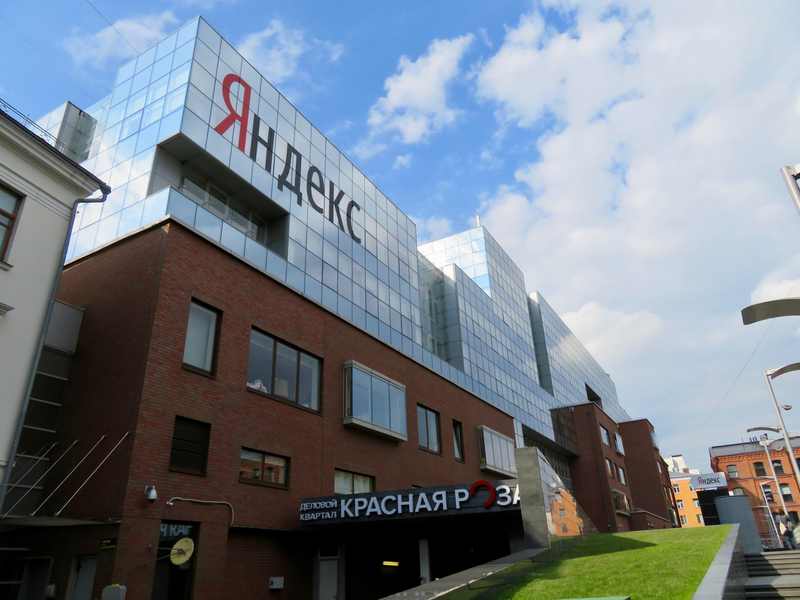
Ukraine has struck a second Yandex data centre in two days, the Russian technology giant confirmed on Friday, saying several modules at its facility in the Kaluga region, southwest of Moscow, had been "completely disabled" by a drone attack, with some services potentially disrupted. The Friday hit followed Thursday's drone attack on Yandex's major data hub in Sasovo, in the Ryazan region, which houses two of the three supercomputers used to develop the company's flagship AI model — a strike that caused a fire and forced a full suspension of that centre's operations. Together, the two attacks mark the first confirmed Ukrainian campaign against Russian data infrastructure and open a new front in a war that has steadily expanded from the battlefield to the networks underneath it.
What happened on Friday
Yandex said on Friday that its data centre in the Kaluga region, southwest of Moscow, had been struck by drones and partly put out of action, with several modules "completely disabled." The company said some of its services may be disrupted and that no one was injured in the attack. The confirmation came a day after the larger and more consequential Thursday hit: a drone attack that caused a fire at Yandex's data centre in Sasovo, in the central Ryazan region about 300 kilometres east of Moscow, forcing the company to suspend the centre's operations entirely and leaving it unable to say whether the damaged equipment could be restored. Ryazan's regional governor, Pavel Malkov, said two Ukrainian drones had been shot down over the region overnight and that "the roof of a business caught fire" in the Sasovo area. Separately, Kaluga's governor Vladislav Shapsha said nine people had been injured by drone attacks across the Kaluga region — a toll tied to the wider wave of drone strikes, not specifically to the data centre hit. Russia's defence ministry said its air defences had downed 505 Ukrainian drones between late Thursday and early Friday, a figure that, even discounted for wartime inflation, describes an extraordinary volume of air activity.
Why Yandex matters — and why it is not just any data centre
Yandex is not a marginal target. Often called Russia's Google, it runs the country's most popular search engine, plus food-ordering and taxi applications used by tens of millions of people across the Russian-speaking world. It is also the company at the centre of Russia's AI ambitions: the Sasovo facility alone housed two of the three supercomputers used to develop YandexGPT, one of Russia's leading generative AI models. When a company's own statement describes its data centres as the "iron heart" of its operations — technology used by hundreds of thousands of companies to take orders, serve customers, and run their businesses — it is describing exactly the kind of dual-use infrastructure modern warfare has learned to target: civilian enough that its destruction ripples through everyday life, military-adjacent enough (AI compute, routing, cloud) to matter to a war effort. The outage monitor Downdetector Russia showed a large spike in user complaints beginning in the early hours of Thursday, the first public signal of how quickly a burning server hall can translate into a stuttering internet.
"Two can play at this game" — the mirror logic
The head of Ukraine's official Center for Countering Disinformation indicated Kyiv was behind Thursday's strike, writing on Telegram: "Two can play at this game." President Volodymyr Zelenskyy said the same thing in plainer language on Thursday: "We always respond in mirror-like fashion. You all know, they have been hitting and continue to hit our data centres. We are responding. I can't share all the details." The framing is deliberate. Russia has spent the past month conducting a strike campaign against Ukrainian data centres and telecommunications infrastructure, including targets in central Kyiv — attacks that degraded the networks Ukraine's military and civilian systems depend on. Kyiv's answer is symmetrical: if Moscow can hit the infrastructure Ukraine's internet runs on, Ukraine can hit the infrastructure Russia's internet runs on. The logic of deterrence-by-punishment is as old as warfare; what is new is the target set. Data centres are to this decade what rail yards were to the 1940s: the sinews that hold a war economy together, and therefore the things both sides now openly hunt.
How we got here — from oil refineries to server halls
The data-centre strikes did not arrive out of nowhere. Both Russia and Ukraine have been expanding their long-range drone campaigns all year, and the target list has been widening for months: energy facilities and refineries first, then ports and the vessels carrying oil and grain, then e-commerce warehouses, and now data centres. Ukraine's campaign against Russian energy infrastructure — including the strike on the Omsk refinery deep in Siberia reported this week — was designed to raise the cost of the war to Moscow's economy; the data-centre strikes extend the same logic to Moscow's digital economy. On the other side, Russia's recent strikes on Ukrainian data centres, power infrastructure, and logistics hubs were designed to degrade the systems Ukraine needs to fight and to function as a state. What changed this week is that the escalation became reciprocal in a domain where it previously was not: until Thursday, there had been no confirmed major Ukrainian drone attack on a Russian data centre. Two in two days ends that asymmetry — and, as asymmetries end, the question is where the new equilibrium settles.
Why this matters
Three things make the Yandex strikes significant beyond the damage reports. First, they demonstrate reach and precision against hardened, high-value targets deep inside Russia — 300 kilometres from Moscow for Sasovo, and southwest of the capital for Kaluga — in the same week Ukraine was also striking refineries and Russia's defence ministry was claiming to have intercepted hundreds of drones. Second, they touch AI infrastructure directly: the Sasovo hub's supercomputers are part of the compute base Russia uses to develop its own AI models, and AI compute is emerging as a strategic asset in the same way oil was a century ago. Third, and most importantly, they normalize a new category of target. Once both sides have struck each other's data centres, the taboo is gone — and the taboo was the only thing keeping the internet's physical layer out of the war. The civilians who will feel this first are not soldiers but ordinary users: disrupted search, rides, food delivery, cloud services — the texture of daily life in a digitized society becoming a casualty of war, one server hall at a time.

Who wins, who loses
For Ukraine, the strikes are a proof of capability with multiple audiences. Militarily, they degrade a slice of Russia's digital infrastructure and force Moscow to defend an enormous new target set — every data centre, telecom exchange, and server hall in European Russia — stretching air defences that are already failing to stop everything. Diplomatically, they demonstrate to Western partners that Ukraine's long-range strike program keeps finding new ways to impose costs, at a moment when US-brokered peace talks are reportedly continuing and leverage matters. For Russia, the damage is operational and symbolic: the operational loss is the disabled modules and the suspended Sasovo hub; the symbolic loss is the image of the country's tech flagship burning on back-to-back days while its defence ministry counts hundreds of intercepted drones it could not all stop. For Yandex itself, the company is caught in the middle — a civilian technology firm whose infrastructure is now a legitimate-looking target in Kyiv's mirror-war doctrine, with shareholders and users absorbing the cost of a conflict the company did not start. For the broader tech world, the precedent is chilling: if data centres are fair game in Ukraine, they are fair game everywhere wars are fought, and every cloud provider's risk model just gained a new line item.
What the numbers actually say
Two data centres in two days is a campaign, not an incident — the tempo is the message. Two of three AI supercomputers in one building made Sasovo a uniquely valuable target; it is rare for a single strike to touch that much strategic compute at once, which is presumably why it was chosen. Zero confirmed major Ukrainian strikes on Russian data centres before this week tells us how new this front is — and how fast norms can collapse once they do. 505 drones allegedly intercepted in roughly 24 hours, even treated with the scepticism all defence-ministry claims deserve, points to a Ukrainian strike tempo that is straining Russian air defences to their limits; the drones that get through are the ones that matter, and two of them reached Yandex facilities. And the human cost so far — no injuries reported in either data-centre strike — is worth stating plainly, because it will not necessarily stay that way: server halls are staffed buildings, and the next "mirror" strike on either side may not be as bloodless.
What happens next
Three scenarios now compete. In the first, the data-centre exchange becomes the new normal: each side keeps hitting the other's digital infrastructure, outages become a routine feature of life in both countries, and cloud operators start quietly hardening facilities or moving capacity — a slow, grinding war of attrition fought in server halls. In the second, the strikes escalate into something less discriminate: telecom exchanges, undersea cable landing points, power substations feeding data centres — the infrastructure one layer down, where the civilian harm multiplies fast and the line between economic warfare and attacks on the population blurs beyond recognition. In the third, the strikes become bargaining chips: with US-brokered talks reportedly ongoing, each side's demonstrated ability to reach the other's digital crown jewels becomes leverage at the table — "we can stop hitting your data centres if you stop hitting ours" is the kind of reciprocal deal that ceasefire negotiators actually trade in. What is certain is that the taboo is broken. The war's newest front is the one the modern world is built on — and neither side has shown any inclination to give it up.
Sources and verification
Damage claims and official statements in this article are attributed to Yandex, Ukrainian officials, and Russian regional governors and the defence ministry as reported by Reuters, AFP, and the Associated Press. Claims by either side about the other have not been independently verified by Signal Post News. The nine injured in the Kaluga region were reported in connection with wider drone attacks on the region, not specifically the data-centre strike.
- Reuters, October 9, 2026 — Yandex confirmation of the second (Kaluga) strike: several modules "completely disabled", some services may be disrupted, no injuries reported.
- Reuters, October 8, 2026 — first strike on the Sasovo hub: fire, full suspension of operations, two of three YandexGPT supercomputers housed there.
- AFP via Berliner Tageblatt, October 8, 2026 — "Two can play at this game" (Ukraine's Center for Countering Disinformation), Governor Malkov's account of two drones downed and the Sasovo roof fire.
- Associated Press roundup, October 9, 2026 — nine injured by drone attacks in the Kaluga region, factory fire in Tver's Redkino, Russia's claim of 505 drones downed.