Ukraine Patriot missile production
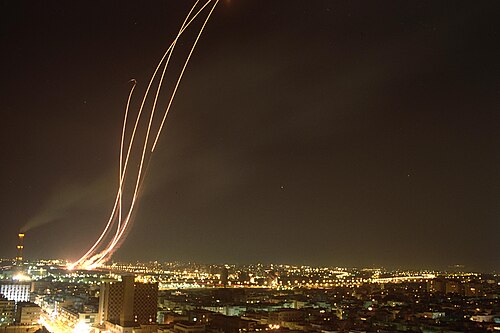
Ukraine Patriot missile production could begin within roughly 12 to 18 months if Kyiv and U.S. defense company Raytheon complete a licensing arrangement, President Volodymyr Zelenskyy said after talks in New York. That timetable points to a production line becoming operational around late 2027 or early 2028, well after the immediate danger period Ukraine faces as Russia intensifies attacks on energy infrastructure.
Zelenskyy told reporters that discussions were continuing and that a meeting between a member of his team and Raytheon had been positive. Separate reporting said the company was willing to provide a production license. The president described the talks as producing results, but the reporting reviewed by Signal Post News did not establish that every government approval, technical arrangement and supply-chain contract required for full-scale output had already been completed.
The distinction matters. A political understanding and an industrial agreement can open the path to licensed production, but neither places finished interceptors in launch canisters. Facilities must be equipped, workers trained, components certified and quality controls accepted. Even an aggressive 12-to-18-month target therefore describes the start of a production capability, not relief for the coming winter.
Raytheon points to the PAC-2 GEM-T
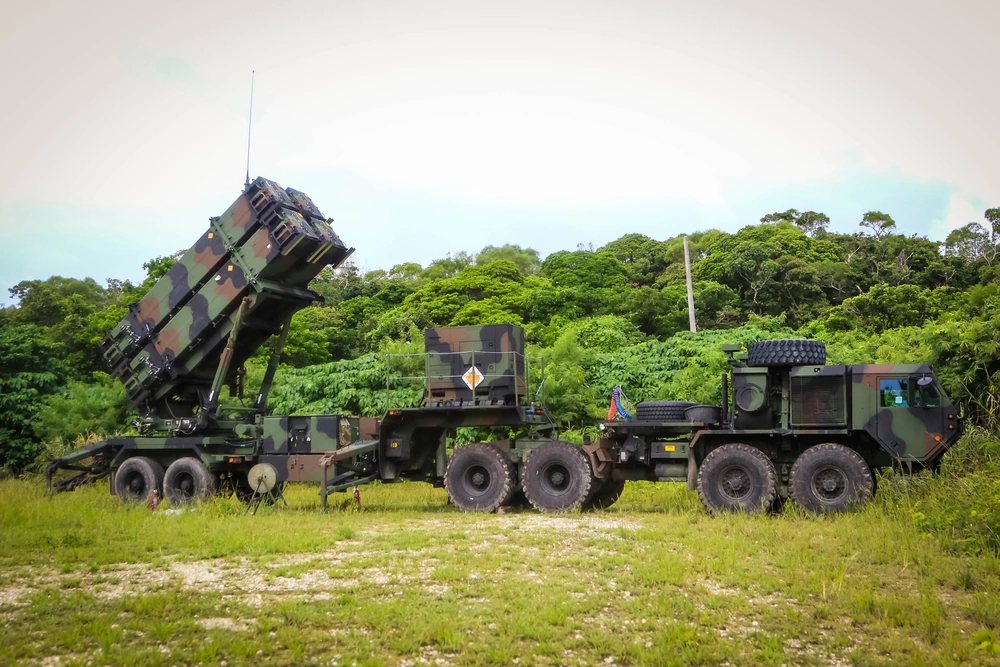
Raytheon manufactures the PAC-2 Guidance Enhanced Missile–Tactical, or GEM-T, while Lockheed Martin produces the newer PAC-3 family. That division of labor is why analysts cited by Dagens and TechTimes said the Raytheon track most likely concerns the PAC-2 GEM-T rather than the PAC-3 Missile Segment Enhancement.
The two interceptors are related but not interchangeable in performance. PAC-2 GEM-T uses a blast-fragmentation warhead and is designed for aircraft, cruise missiles and some tactical ballistic threats. PAC-3 MSE uses hit-to-kill technology and is optimized for more demanding ballistic-missile defense. The reported trade-off is industrial as well as operational: GEM-T avoids the active-radar-seeker bottleneck that constrains PAC-3 MSE output, making licensed production more plausible on the accelerated schedule Kyiv wants.
That does not make GEM-T unimportant. Ukraine needs layered air defense and cannot reserve its most advanced rounds for every target. A larger supply of domestically produced interceptors could free scarce higher-end missiles for the threats only they are best positioned to stop. But reporting that treats any Patriot interceptor as equivalent risks obscuring the capability gap.
Why This Matters
The proposal shifts the air-defense debate from one-off transfers toward industrial capacity. Since Russia’s full-scale invasion in 2022, Ukraine has depended on allied inventories and foreign factories for the Patriot rounds it uses against ballistic missiles. Licensed production would give Kyiv more control over replenishment, reduce some exposure to political delays and tie Ukraine more closely to the Western air-defense supply chain.
Yet long-term resilience and immediate survival are different problems. Zelenskyy’s delegation went into Tuesday, Sept. 22 talks with Trump seeking a winter package of Patriot missiles from U.S. stockpiles. Kyiv proposed offsetting those releases with future deliveries from Germany’s stated arrangement to provide 600 missiles in 2027 and 2028. Zelenskyy called it a good sign that the idea was not rejected, while acknowledging Trump had not agreed to it. That unresolved request is the central near-term issue in the broader winter air-defense package.
The Interceptor Math: Why Production, Not Launchers, Is the Crisis
Ukraine’s reported problem is not simply the number of Patriot launchers. Some batteries have lacked enough missiles to remain fully active. TechTimes, citing Ukrainian and defense-sector reporting, put routine Ukrainian consumption at roughly 60 to 70 Patriot interceptors a month, rising to 150 to 180 during concentrated attack waves. Those figures are estimates, not independently verified battlefield totals, but they illustrate the scale of the mismatch.
The same source reported estimated Russian monthly production of 40 to 50 Iskander-M ballistic missiles and about 10 Kinzhal hypersonic missiles. Defenders may launch more than one interceptor at a target to raise the probability of a kill. That creates an unfavorable equation even before cruise missiles, aircraft and other threats compete for the same defensive network.
Germany’s planned 600-missile supply across 2027 and 2028 would be strategically significant, but it does not bridge a 2026 winter gap by itself. Nor would a Ukrainian production line that begins in late 2027 necessarily deliver finished rounds immediately. Component imports, testing and final certification could extend the timetable beyond the opening of the line.
Who Wins, Who Loses
Ukraine wins strategically if the license becomes a functioning production program. Domestic capacity would turn a scarce imported munition into part of Ukraine’s own defense-industrial base. Raytheon and European suppliers would gain a committed long-term production partner, while NATO members could benefit from additional regional capacity.
European air-defense planning also gains options. Ukraine and France are separately discussing SAMP/T systems, interceptor missiles and possible production in Ukraine, alongside the joint FREYJA anti-ballistic missile program. Parallel programs reduce dependence on a single interceptor family, although they also demand money, engineering capacity and protection for multiple production chains.
Russia faces a more durable opponent if Ukraine can manufacture interceptors at home. But Moscow retains an immediate advantage: it can attack before those lines mature and can target the factories, energy networks and logistics needed to run them. A production site inside a country at war would require its own layered protection, adding another claim on already scarce interceptors.
Ukrainian cities remain exposed in the near term. The people who gain least from an agreement today are those relying on air defenses this winter. The result of the Trump–Zelenskyy New York talks left the immediate stockpile question open even as both leaders discussed strikes on energy infrastructure and efforts to end the war.
From Ankara to New York: How We Got Here
The licensing push did not begin this week. Trump publicly said at a July summit in Ankara that the United States would give Ukraine a license to make Patriot missiles. Raytheon later discussed several possible lines of effort, including component manufacturing, maintenance and recertification, and full missile assembly. A framework agreement followed, but reporting at the time said technical parameters and formal approvals still needed to be completed.
By September, the focus had moved from political permission to whether the project could produce on a credible schedule. Zelenskyy used meetings around the U.N. General Assembly to press the case on two tracks: secure enough imported missiles to survive the winter, and create Ukrainian capacity that reduces future dependence. His separate reciprocal energy-truce offer sought to lower the immediate threat to power and heating systems, but he said Kyiv would not unilaterally halt strikes while Russia continued attacking.
What Happens Next
The first test is documentary: whether a final manufacturing license and the associated U.S. export approvals are issued, and what those instruments actually authorize. The second is technical: which GEM-T components Ukraine can build, which must be imported and where final assembly and testing will occur. The third is physical security, because a fixed missile-production facility would be an obvious wartime target.
The winter decision comes sooner. Trump would have to approve or facilitate the release of existing missiles, while Germany and other allies would need to align replacement schedules. France’s SAMP/T talks provide another route, but those systems face their own production and interceptor constraints.
For now, the Raytheon track is best understood as a credible strategic opening rather than a solved air-defense shortage. Zelenskyy says the company is prepared to license production and that the talks are moving. What remains uncertain is how quickly approvals, machinery and supply chains can convert that willingness into missiles — and whether Ukraine can secure enough interceptors to protect its cities before then.
Sources
- Reuters syndication via Devdiscourse: Zelenskyy discusses energy truce and Patriot supply with Trump
- The Maltese Herald: Raytheon licensing talks and Ukraine’s winter interceptor shortfall
- Dagens: likely PAC-2 GEM-T production, timeline and supply-chain constraints
- TechTimes: framework agreement, licensing gap and interceptor production analysis
Reporting basis: Fixed September 24, 2026 snapshot. Zelenskyy’s account of the negotiations and proposed timeline is attributed to him. Production timing, missile effectiveness and consumption figures are estimates reported by the cited outlets and were not independently verified by Signal Post News. Analysis is Signal Post News’s.