Key topics: Zelensky winter arms package · Ukraine Patriot missiles winter 2026 · Trump Zelensky UNGA meeting · energy ceasefire Ukraine Russia
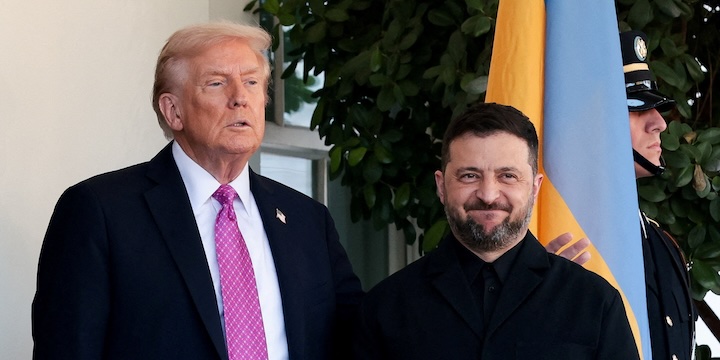
UNITED NATIONS — Ukrainian President Volodymyr Zelenskyy used a 40-minute meeting with U.S. President Donald Trump on the sidelines of the United Nations General Assembly to ask for what amounted to a winter arms package: additional Patriot air-defense missiles and other technology intended to blunt the kind of large-scale Russian strike that Kyiv believes is coming.
Zelenskyy described the encounter as “positive and productive” and said both governments wanted the war ended before winter. Asked about Washington’s response to his request, he offered a deliberately limited formulation: “Nobody said no.” Trump, for his part, said he had a “very good relationship” with Zelenskyy and believed a solution would happen. Neither leader announced a transfer, a delivery timetable or a ceasefire.
That distinction matters. The meeting established political room for further bargaining, not a completed deal. It linked three tracks that are often discussed separately: protecting Ukrainian cities and the power grid, raising the economic cost to Russia through sanctions and strikes on refining, and testing whether energy infrastructure can become the first subject of a reciprocal truce.
What is established: the leaders met, Zelenskyy made the requests and both publicly emphasized an interest in ending the war. What remains uncertain: the size and timing of any U.S. package, the intelligence basis for Ukraine’s warning, and whether Moscow has any interest in a reciprocal energy arrangement. Zelenskyy made that last uncertainty explicit: “I don’t know the position of Russia.”
Why This Matters
The Zelensky winter arms package is not simply another request for military aid. It is a race between procurement time and the weather. Electricity networks become more consequential as temperatures fall, while the same Patriot interceptors that protect civilian infrastructure are scarce, expensive and sought by other U.S. partners. A political “yes” that arrives after launchers run short or grid damage accumulates would have far less operational value.
Analysis: Kyiv is trying to turn vulnerability into leverage. Its proposition is that the United States can reduce the risk of a humanitarian winter by improving air defense now, while stronger sanctions and Ukrainian strikes on Russian energy assets create incentives for Moscow to accept restraint. Those mechanisms do not automatically reinforce one another. Pressure can produce bargaining space, but it can also invite escalation and increase the importance each side attaches to energy targets.
The timing also pulls Trump in opposite directions. A visible package could demonstrate leverage over Moscow and answer critics who say negotiation without pressure rewards delay. Yet it could also deepen U.S. involvement in a war Trump says he wants to end. The reported 32% job-approval reading in the political backdrop, together with pressure ahead of the midterm elections, gives the White House reason to favor a result it can describe as both tougher and cheaper than an open-ended commitment.
For European governments, the immediate question is whether Washington will allocate scarce interceptors or expect allies to surrender stocks and backfill them later. For civilians in Ukraine, the question is more direct: whether air defenses will be dense enough to prevent attacks on power generation, substations and residential areas from producing cascading outages.
Background: How We Got Here
The UNGA conversation followed months in which diplomacy repeatedly narrowed to smaller, potentially verifiable steps. A comprehensive ceasefire remained out of reach, so the energy system became a candidate for limited restraint. Earlier attempts did not hold. The reported one-day energy truce collapsed, reinforcing the central problem: a declaration without shared definitions, monitoring and consequences is fragile.
Kyiv’s current position is reciprocal rather than unilateral. Ukraine does not want to halt attacks on Russian refineries while Russian forces retain the ability to strike Ukrainian generation and transmission facilities. Zelenskyy argues that pressure on Russia’s fuel system is one of the few tools Ukraine can use to impose direct economic costs away from the front.
That demand builds on the agenda described in our earlier report on the Trump–Zelensky UNGA meeting and the proposed energy ceasefire. It also intersects with Kyiv’s call for Trump to sign the Lindsey Graham sanctions act against Russia, a pressure track intended to raise costs on buyers and intermediaries tied to Russian energy exports.
After later meeting UK Prime Minister Andy Burnham, Zelenskyy said Ukrainian intelligence indicated that Russia was preparing a new massive attack. He did not publish the intelligence, and Signal Post News cannot independently verify its scope or timing. The warning is nevertheless consistent with Kyiv’s effort to accelerate decisions before winter rather than after a new strike wave begins.

From broad peace talks to a narrower test
Zelenskyy said he was ready for a trilateral meeting with Trump and Russian President Vladimir Putin “any time.” The offer is significant as a statement of availability but not evidence that a summit is close. A trilateral Putin–Zelensky–Trump meeting would still require agreement on venue, agenda, security and—most important—what each side is prepared to negotiate.
Other diplomatic channels remained active around UNGA. U.S. envoys Steve Witkoff and Jared Kushner held talks described in the day’s reporting, while Secretary of State Marco Rubio met Russian Foreign Minister Sergei Lavrov. Those contacts show that communication has not stopped. They do not prove convergence on territory, security guarantees, sanctions or sequencing.
Trump also criticized China, India and Turkey over their continued roles in Russia’s energy trade. The criticism broadens the pressure strategy beyond Moscow, but it introduces a second-order risk: measures strong enough to alter major buyers’ behavior could affect oil flows, inflation and U.S. relations with important partners. Our analysis of oil below $100 and expectations around a Trump–Xi summit explains why markets may react as much to enforcement design as to the headline sanction.
The Numbers, in Context
40 minutes: the reported duration of the Trump–Zelenskyy meeting. That is long enough for a substantive exchange, but duration is not a measure of agreement. The absence of an announced package means the operational decisions still sit with U.S. and allied officials.
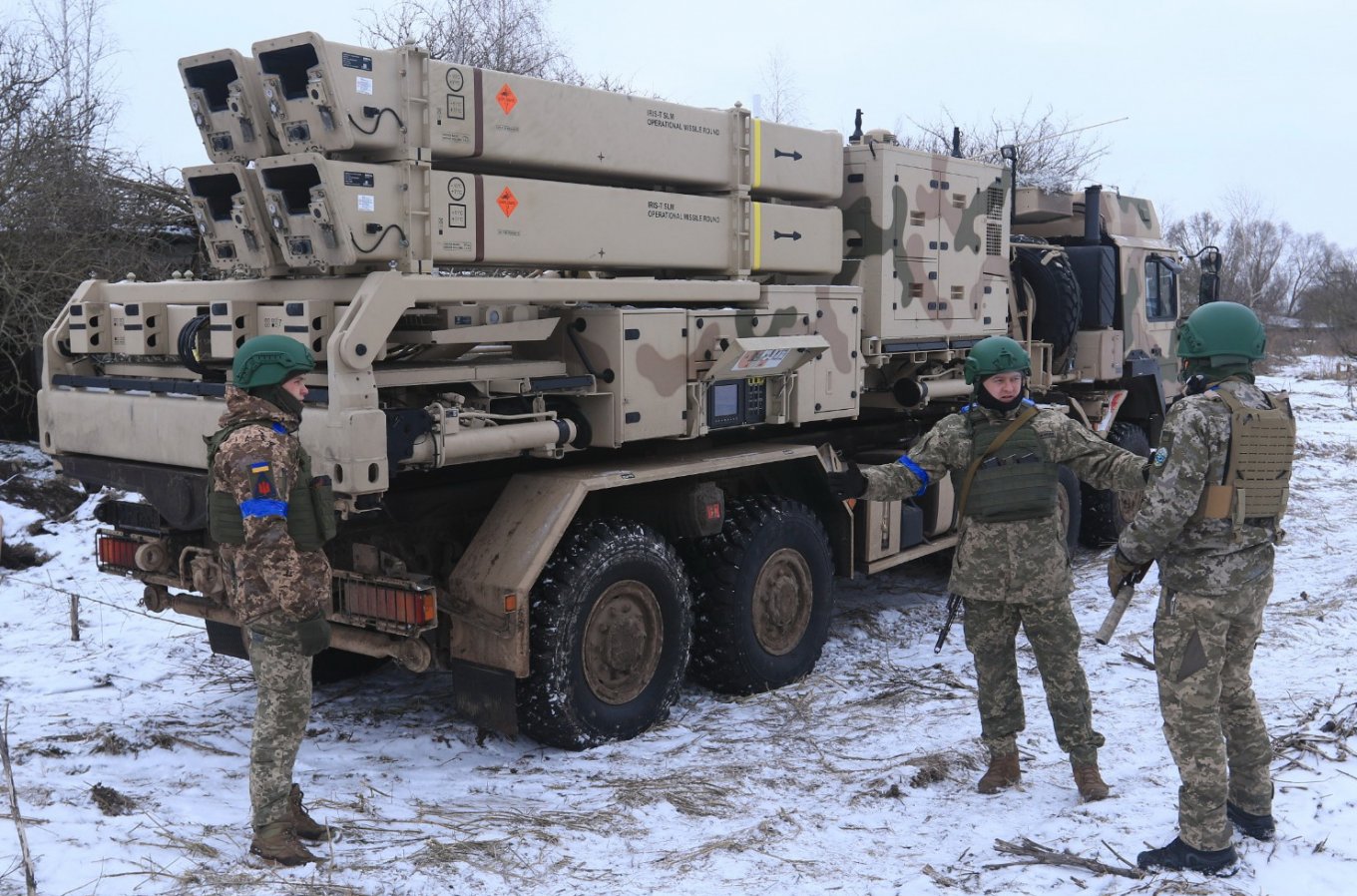
Patriot capacity: Zelenskyy asked specifically for Patriot missiles and other technology. The system’s significance lies in its ability to engage high-end aerial threats, but “Patriots” can mean launchers, radar, command components, interceptor rounds or a combination. Public remarks did not specify which elements, how many or from whose inventories.
3,000 kilometers: Zelenskyy said Ukraine’s strike reach now extends to roughly that distance. If accurate, the figure indicates that facilities well beyond the border must account for Ukrainian attack risk. Range alone does not establish payload, accuracy, launch volume or the probability of penetrating layered defenses.
45%: Zelenskyy claimed Ukraine had destroyed 45% of Russian refining capacity. That is his assertion, not an independently verified measurement. “Destroyed” can also describe different conditions, from a damaged unit taken temporarily offline to a facility requiring extensive reconstruction. National refining capacity is not the same as current throughput, and repairs, spare capacity and rerouting can narrow the economic effect.
Ukrainian officials also described higher-flying jet-powered drones as part of the changing threat. Higher altitude and greater speed can compress detection and interception time, but performance varies by platform and mission profile. A drone crash into a residential building in Romania underscored the cross-border danger: even when a weapon does not hit its intended target, debris, malfunction or interception can carry the war into NATO territory.
Analysis: the numbers point to a contest between reach and resilience. Ukraine is extending the distance at which it can threaten Russian infrastructure; Russia is adapting its attack platforms and maintaining the ability to strike Ukraine at scale. The decisive measure is therefore not a single range or percentage. It is how quickly each side can replace launch systems, interceptors, refinery units and grid equipment relative to the other side’s ability to damage them.
Who Wins, Who Loses, What the Critics Say
Who could gain
Ukraine gains most directly if the request produces interceptors before a major strike wave. More coverage could reduce damage to the grid, preserve military mobility and improve Kyiv’s bargaining position. The Trump administration could claim that pressure and personal diplomacy yielded a limited, measurable deal if energy restraint holds. European allies would benefit from lower escalation risk and fewer cross-border incidents, provided the package does not hollow out their own defenses.
Who bears the costs
Russia would face greater risk to aircraft, missiles and energy revenue if air-defense supply, refinery attacks and secondary sanctions all intensify. Major energy buyers could confront compliance costs or disrupted trade if sanctions reach transactions with China, India and Turkey. Ukrainian civilians remain the most exposed if the bargaining fails: a warning can improve readiness, but it cannot substitute for interceptors or physical protection of infrastructure.
What critics say
Critics of more arms argue that additional weapons can lengthen the war, expand U.S. liabilities and encourage maximalist positions. Critics of a ceasefire limited to energy infrastructure argue that it could let both militaries shift resources elsewhere without resolving the wider conflict. Critics of sanctions warn that broad secondary measures can fragment trade, raise consumer prices and drive targeted states toward alternative payment systems.
The opposing critique is that diplomacy without credible costs has already allowed Russia to buy time. From that view, Patriots, refinery pressure and sanctions are not alternatives to negotiation but the conditions required for negotiation to produce more than another temporary pause.
Analysis: both critiques identify real risks. The key policy question is not “pressure or diplomacy” in the abstract. It is whether each pressure instrument is tied to a specific, reversible demand. A narrowly defined energy arrangement—with mapped protected sites, a start time, monitoring and automatic consequences—would be easier to test than a general promise to de-escalate.
What Happens Next
First, watch for evidence that “Nobody said no” becomes a procurement decision. The meaningful signals would be a Defense Department announcement, an allied transfer, a production allocation or a delivery schedule—not another expression of support. The package’s value depends on when equipment arrives and whether it includes enough interceptors to sustain operations through repeated waves.
Second, watch the design of any energy ceasefire. Reciprocity has to be explicit. The parties would need to define whether the protected category includes refineries, pipelines, export terminals, power plants, substations and fuel depots; decide how alleged violations are investigated; and agree what happens after a breach. The failed one-day truce shows why vagueness is not neutral—it favors the side best positioned to exploit ambiguity.
Third, look for movement on the Graham sanctions act and on U.S. pressure toward China, India and Turkey. Signature alone would not determine the effect. Waivers, thresholds, enforcement dates and coordination with allies would shape whether the measure changes behavior or merely reroutes trade.
Fourth, test the summit talk against Russian conduct. Zelenskyy says he is available for a trilateral meeting. Trump says he believes a solution will happen. Yet no public Russian acceptance was announced, and Zelenskyy’s own caution remains the most accurate summary: “I don’t know the position of Russia.”
The winter deadline concentrates attention, but it should not compress analysis. A Russian mass attack could come before diplomacy advances; intelligence warnings can also be incomplete or strategically communicated. A weapons package could strengthen deterrence, or arrive too slowly to alter the immediate campaign. An energy truce could protect civilians, or become another short pause without verification. The next proof will be material: interceptor deliveries, observed changes in strike patterns and a written framework that both sides can be held to.
- Reuters: Zelenskiy says Russia planning new mass attack on Ukraine
- Reuters: Zelenskiy says he discussed peace efforts and an energy ceasefire with Trump
- Reuters: Zelenskiy to meet Trump at UN and push energy truce with Russia
- The Wall Street Journal: Interview with Volodymyr Zelenskyy
- New York Post: Zelensky calls for the Graham sanctions act and says he is ready to talk with Putin