Zelenskyy Trump Xi China Ukraine talks
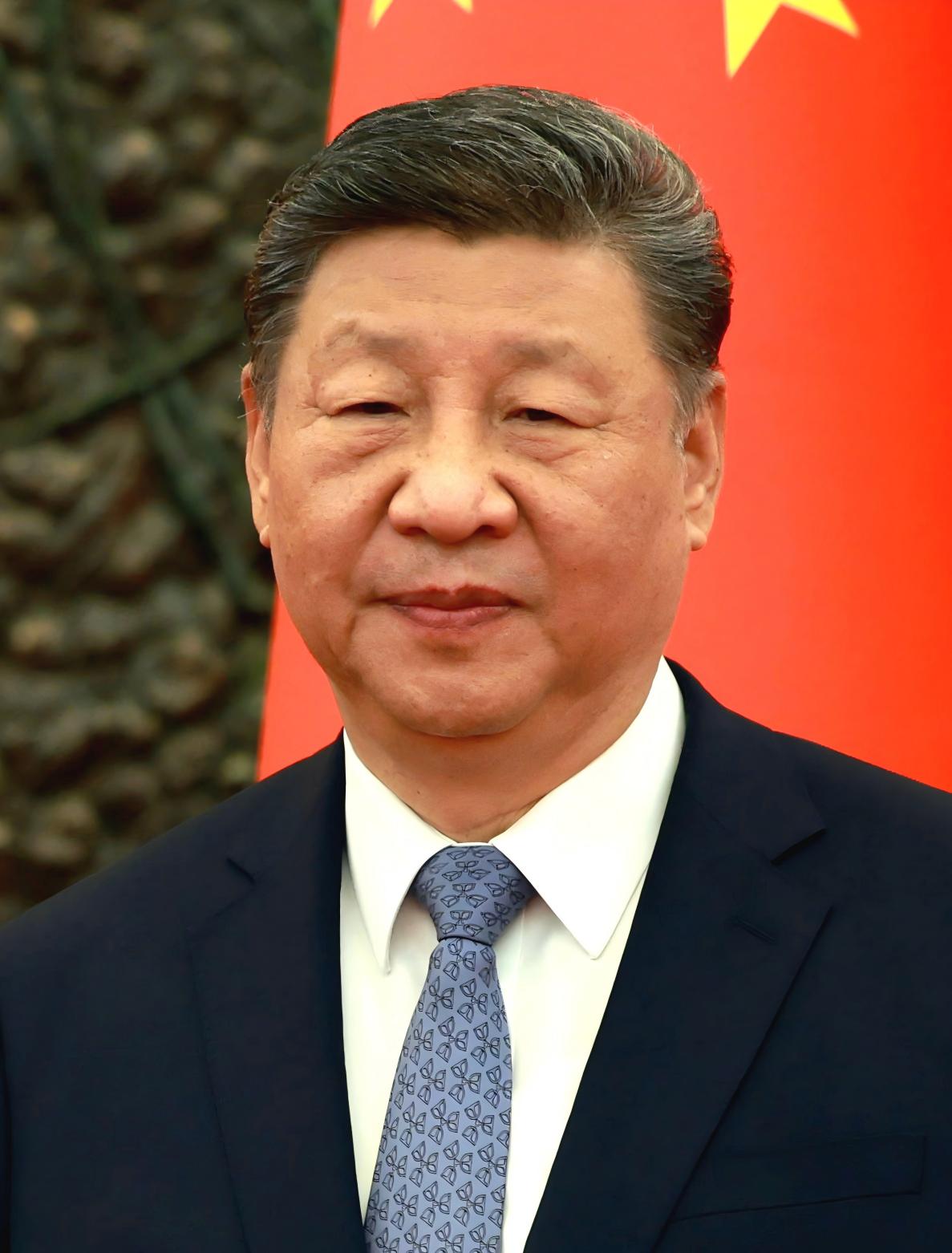
Zelenskyy Trump Xi China Ukraine talks moved from theory to an explicit Ukrainian request on Friday, September 25. President Volodymyr Zelenskyy said he had asked U.S. President Donald Trump to urge Chinese President Xi Jinping to use Beijing's influence on Moscow to help end Russia's invasion. Kyiv was still waiting to hear from the White House whether Trump raised that request during Xi's state visit—and there was no public evidence at publication that he did, or any indication of how Xi might have responded.
The disclosure came after a compressed week of diplomacy around the United Nations General Assembly. Zelenskyy met Trump on Tuesday. Trump met Xi on Thursday, September 24, during the Chinese leader's visit to Washington. The sequence gave Kyiv a rare opening: instead of asking China directly for a new initiative, Zelenskyy asked the U.S. president to carry Ukraine's argument into his own summit with China's leader.
Why this matters — Kyiv is trying to rewrite the diplomacy map
A request aimed at the one capital Moscow cannot dismiss
Ukraine's immediate objective is not to make Beijing an ally. It is to test whether China can be moved from diplomatic cover for Russia toward practical pressure on the Kremlin. That is a much narrower—and potentially more attainable—goal. Moscow can ignore demands from European governments it portrays as parties to the conflict. It has more reason to weigh a signal from the leader of the country that remains its most important major-power partner.
The gambit also changes the geometry of the peace effort. Previous initiatives have revolved around Washington, Kyiv, Moscow and European capitals, with Gulf states serving as hosts or intermediaries. Zelenskyy's request tries to place Beijing inside the decision chain without granting it ownership of a settlement. If Trump did convey the message, Kyiv would have used a U.S.–China summit to make Russia's war a test of Chinese influence rather than merely another subject of Western pressure.
Kyiv is pairing diplomacy with leverage
Zelenskyy did not present outreach to Xi as a substitute for military support or sanctions. He thanked U.S. lawmakers for the bipartisan Russia sanctions bill passed the previous month, and he again proposed a reciprocal halt to attacks on energy infrastructure. The combination matters: Kyiv is offering a bounded de-escalation step while arguing that Moscow should face stronger costs if it declines.
That strategy also reflects Ukraine's winter air-defense crunch after a record summer campaign of Russian ballistic-missile attacks. A narrow energy truce could protect grids and civilian heating even if a comprehensive ceasefire remains distant. At the same time, the related Patriot missile licensing decision remains central to whether Ukraine can withstand another season of high-intensity strikes.
The context: how China became the war's pivotal third player
Partnership gives Beijing access, but not command
China's relevance rests on its political and economic relationship with Russia, not on a formal role in the war. Beijing has kept channels open to Moscow, resisted Western attempts to isolate the Kremlin and rejected the premise that it should accept Western framing of the conflict. NATO governments have described China as a “decisive enabler” of Russia's war effort, particularly through the wider flow of trade and dual-use goods. China disputes that characterization and presents itself as a potential advocate for negotiations.
That makes Xi valuable to Kyiv precisely because his leverage is real but limited. Beijing can signal that an open-ended war is imposing costs on broader relations, encourage Moscow to engage, or support a narrow ceasefire. It cannot simply order the Kremlin to accept Ukrainian terms. Treating China as if it controls Russia would overstate the relationship and let other governments evade their own choices.
Washington's UAE proposal creates a near-term test
The United States has proposed technical-level talks among Ukraine, Russia and the United States in the United Arab Emirates. Kyiv says it is awaiting a date and expects feedback within roughly a 10-day window. Kremlin spokesman Dmitry Peskov said Vladimir Putin and Trump discussed the idea, but he offered no details about a venue, agenda or Russian commitment.
Washington's proposal is therefore an opening, not yet a negotiation. Three previous rounds—twice in Abu Dhabi and once in Geneva—produced no significant breakthrough. The new effort needs more than another table and another communique. It needs a reason for Moscow to alter its calculation, which is exactly where Kyiv hopes Chinese pressure could matter. Signal Post News has separately examined the proposed UAE technical talks and the limits already visible in that format.
Who gains, who loses — and what the skeptics say
The possible beneficiaries
Ukraine gains if the request persuades Beijing that passivity now carries a reputational cost. Even a private Chinese warning to Moscow could strengthen the hand of negotiators seeking an energy ceasefire or a credible technical agenda. The United States gains if it can show that its relationship with China produces movement on a war that European pressure alone has not ended. China gains diplomatic stature if it can help unlock talks without abandoning its ties to Russia.
Russia could also gain from a process that reduces attacks on energy infrastructure or creates a pause, but only if the terms serve its interests. That is why the design of any talks matters. A ceasefire without enforcement could allow either side to regroup. Technical negotiations without political authority could generate procedural progress while the battlefield continues unchanged.
The risks for Kyiv and Beijing
Kyiv's risk is that the appeal legitimizes Beijing as a neutral broker without securing any measurable pressure on Moscow. If Trump raised the request and Xi declined, China could still present itself as open to peace while preserving the existing partnership. If Trump did not raise it, the disclosure may expose the limits of Kyiv's influence over Washington's China agenda.
Beijing's risk runs in the opposite direction. Serious pressure on Russia could strain a strategically useful partnership. Refusing even a limited role, however, would weaken China's claim that it wants a negotiated end to the war. Moscow faces a reputational choice too: agreeing to another technical round might look responsive to partners, while rejecting it could reinforce Kyiv's argument that only stronger external pressure will change Russian behavior.
What skeptics are right to question
Skeptics can point to the absence of any public confirmation from Washington that Trump delivered Zelenskyy's message. They can also point to the three prior rounds that failed to produce a significant breakthrough. Personal diplomacy, summit choreography and statements of support are not substitutes for an agreed agenda, empowered delegations and consequences for violating commitments.
They are also right that China's interests do not align neatly with Ukraine's. Beijing may prefer stability and oppose escalation while still resisting sanctions or pressure that could weaken Russia. Any Chinese contribution must therefore be judged by observable conduct—what it asks Moscow to do and whether Moscow changes course—not by the language of neutrality.
What the numbers and the record imply
Three failed rounds set the burden of proof
The most important number is the record already on the table: three previous negotiating rounds, with two in Abu Dhabi and one in Geneva, and no significant breakthrough. A fourth meeting would not be evidence of momentum on its own. It would matter only if at least one variable changes—participants with authority, a narrower objective, stronger outside pressure, or a mechanism for verifying compliance.
The roughly 10-day feedback window creates a useful short-term benchmark. If no date, delegation or agenda emerges, the UAE proposal risks becoming another diplomatic placeholder. If technical teams are named, the first test will be whether they begin with a concrete issue such as energy infrastructure rather than reopening every territorial and security dispute at once.
The battlefield record narrows the diplomatic window
The winter air-defense crunch and the record summer ballistic-missile campaign make delay costly for Ukraine. Kyiv's proposal to stop attacks on energy infrastructure is designed around that reality. It offers a measure that could be monitored more clearly than a broad political declaration while preserving Ukraine's claim that sanctions and defensive support must continue until Russia demonstrates restraint.
The sanctions bill passed the previous month is the other part of the record. Zelenskyy's thanks to lawmakers signal that he sees diplomatic outreach and economic pressure as mutually reinforcing. Whether that combination works depends on implementation: enacted authorities, credible enforcement and a negotiating channel able to convert pressure into specific commitments.
What happens next — three scenarios
Scenario one: Xi quietly leans on Moscow
Trump confirms that he raised the request, China privately encourages participation, and the UAE talks receive a date and defined technical agenda. An energy-infrastructure ceasefire would be the most plausible first test because Kyiv has already put it forward and because compliance can be judged against observable strikes. This would not end the war, but it could establish whether Chinese involvement changes Russian behavior at the margin.
Scenario two: a fourth round repeats the first three
Washington secures a meeting, but delegations lack authority or arrive with incompatible terms. The talks yield exchanges and procedural language but no significant breakthrough. In that outcome, Beijing may endorse dialogue without exerting pressure, allowing every capital to claim diplomacy while military operations continue.
Scenario three: the initiative stalls before a date
No confirmation comes from Washington, Moscow avoids a commitment, and the 10-day feedback window closes without a meeting. Kyiv would then return to the sanctions, air-defense and coalition-building tracks, arguing that Russia rejected another opening. China would face renewed scrutiny over whether its partnership with Moscow outweighs its stated support for political settlement.
The next evidence is straightforward: whether the White House says Trump carried Zelenskyy's request into the Xi meeting; whether Beijing describes any Ukraine discussion; whether Moscow accepts the UAE format; and whether the sides define an enforceable first step. Until then, claims of a new diplomatic alignment are premature.
Zelenskyy's Xi gambit will ultimately be decided not by summit language but by Moscow's actions—and by whether a fourth round of talks arrives with leverage the first three lacked.
Related Signal Post News coverage
Read the earlier analysis of Zelenskyy's 2026 General Assembly appeal, alongside the Patriot and UAE talks reports linked above.
Sources and reporting basis
- Associated Press report carried by The Daily Reflector
- Business Day report on Zelenskyy's request and the diplomatic timeline
- Fox 49 report on proposed talks, Patriot production and the energy ceasefire
- Wikimedia Commons file page for the Zelenskyy–Trump lead photograph
- Wikimedia Commons file page for the Xi Jinping photograph
Reporting note: This is a fixed September 25, 2026 snapshot. Zelenskyy's account of his request is attributed to him. At publication, the White House had not publicly confirmed that Trump raised the request with Xi, and there was no public account of Xi's response.