War · Iran · Washington
Seven US officials tell CNN the planning names specific locations and targets and has triggered a flurry of US contingency planning — but they stress it looks, for now, like Tehran keeping its options open, not an imminent attack. The White House says there are “no credible threats to the homeland,” and Iran calls the allegations fabricated.
Track it live: Iran war tracker
WASHINGTON, November 16, 2026 — The Iran dirty bomb Washington story begins with a distinction that everything else in it depends on, so it is worth making before anything else. CNN reported on Monday, citing seven US officials, that new US intelligence indicates Iran is developing plans to target senior Trump administration officials by detonating a so-called dirty bomb or a chemical weapon in Washington, DC. That is a report about planning — about options being drawn up, in the officials’ own characterization — and the same officials who described the planning to CNN stressed that, for now, it does not look like an attack is imminent. The White House said so on the record, in almost the same breath as the story broke: it is monitoring potential threats, but “at this time there are no credible threats to the homeland.” Iran, for its part, categorically rejected the allegations and called them fabricated. All three of those sentences — the reported planning, the official qualifier, and the denial — are the story. Any one of them without the other two is a distortion.
What CNN’s sourcing describes is nonetheless unusually concrete for intelligence reporting of this kind. Two of the seven sources told CNN that the plotting is very specific, and that it includes locations and targets — named places in the capital and senior officials in President Donald Trump’s administration. The reporting has, according to CNN, sparked a flurry of contingency planning inside the US government. And yet the officials talking to CNN kept returning to the same caution: drawing up an option is not the same as deciding to use it, and the intelligence, as they describe it, shows the first and not the second.
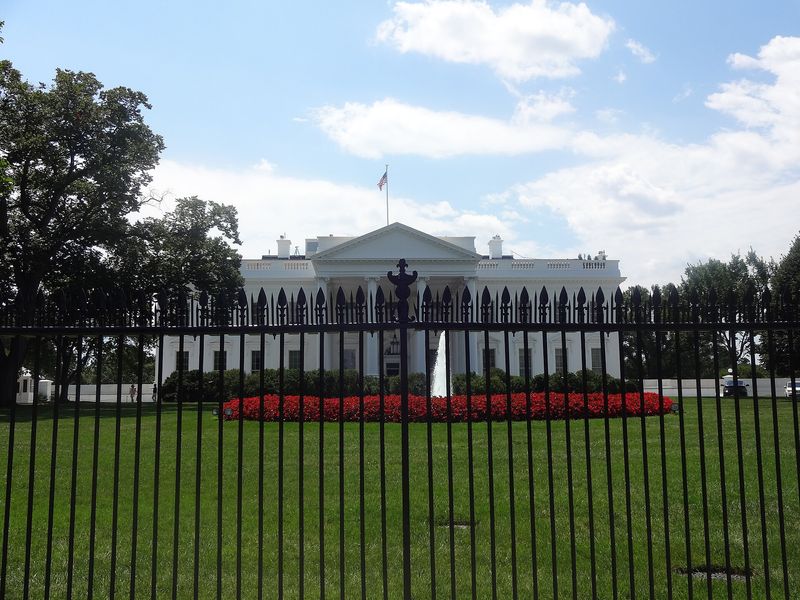
“Very specific” — locations, targets, and a flurry of contingency planning
Two sources, CNN reported, characterized the Iranian plotting as very specific, extending to particular locations in Washington and particular targets among senior Trump administration officials. CNN did not publish those locations or names, and Signal Post News does not have them independently; what can responsibly be said is what the officials themselves said about the character of the material — that it reads, to the people whose job is to read such things, less like propaganda and more like staff work. Planning documents and option papers are the ordinary paperwork of any state’s coercive apparatus. States that intend nothing still plan for everything; states that intend something begin, necessarily, by planning. The paperwork alone cannot tell you which state you are looking at.
What the paperwork has already done, on CNN’s account, is set Washington’s own machinery in motion. The officials described a flurry of US contingency planning in response — the unglamorous work of deciding in advance who protects whom, which agencies own which scenario, and what the United States would do in reply. Contingency planning is not mobilization, and it is not evidence that officials expect an attack. It is what a government does when a reported threat crosses the line from unthinkable to merely unlikely: it writes the plan it hopes never to open, and the flurry measures how seriously the intelligence is being taken inside the system — not a forecast that the event planned against will occur.
Options, not imminent: the qualifier that governs the whole story
Every account of this reporting will be graded, fairly, on whether it kept hold of the qualifier. So here it is again, in the form CNN’s sources gave it: the planning, as the officials characterize it, appears designed to give Tehran options rather than to signal an imminent attack. In intelligence terms, that is the difference between capability-building and intent. An option is a thing a leadership can hold in reserve — to be used if a war widens, if a negotiation collapses, if a red line is crossed, or never. The officials who spoke to CNN — seven of them, a number that itself suggests a coordinated desire to put this intelligence, and its limits, into the public record — described the Iranian work in exactly those terms: options being prepared, not a decision taken.
The White House’s on-the-record position points the same way, and it deserves to be quoted rather than paraphrased. Spokesperson Lauren Bis said the administration is “monitoring any and all potential threats, but at this time there are no credible threats to the homeland.” That sentence does two jobs at once: its first half says the reported intelligence is being watched at the highest level; its second half is a deliberate, quotable refusal to elevate the reporting into a warning. No alert was issued to the public on Monday, and no official advised anyone in Washington to change a single plan. An honest account of CNN’s story has to carry that posture near its top, which is why this one does.
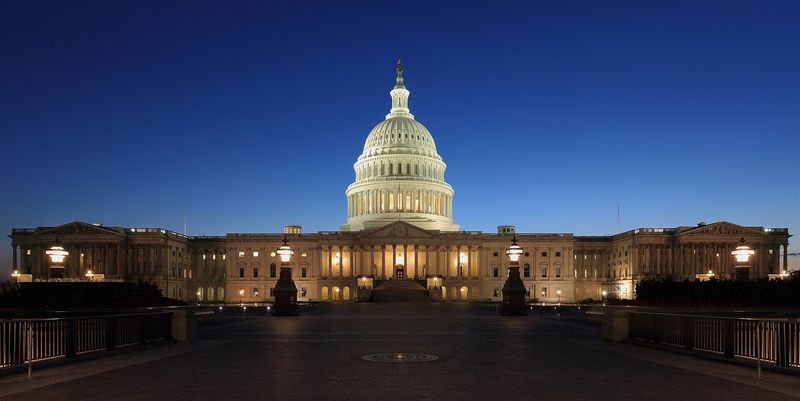
The capability debate: “Whether they actually have the personnel in place”
If the first question about the reported plans is whether Tehran means to use them, the second is whether it could. On that, CNN’s sources were openly divided — and their disagreement, quoted plainly, may be the most informative passage in the entire report. “Whether they actually have the personnel in place to execute is a matter of debate,” one strand of the official view runs. That is a remarkable sentence to find in a story about a plot against the capital of the United States. It says that the intelligence community, having detected the planning, cannot agree on whether the human machinery to carry it out exists on American soil at all. A plan without people is a document. A plan with people is a threat. The officials talking to CNN placed the current reporting, unmistakably, closer to the first of those than the second — while being careful, as officials in their position must be, not to close the question entirely.
The debate matters because it disciplines everything downstream of it — and it explains the otherwise puzzling calm of the White House statement. An administration that believed an Iranian team was in place in Washington would not be saying “no credible threats to the homeland” on the record; it would be saying considerably more, considerably faster. The gap between the gravity of the reported planning and the steadiness of the official response is not a contradiction in the story. It is the story’s most reliable data point: the people who have seen the underlying intelligence are behaving like people who have seen planning, not like people who have seen a countdown.
The “chatter” claim — one source, and officials divided
One element of CNN’s reporting needs to be handled with tongs, and CNN’s own sourcing invites exactly that. A single source told CNN that US intelligence had picked up Iranian “chatter” claiming that bomb-making materials have been stashed inside the United States. Note every hedge in that sentence, because each one was earned. It is one source, not seven. It is chatter — intercepted talk — not surveillance of a cache. And the chatter itself is a claim: people saying that materials exist, which is a different thing from materials existing. Officials, CNN reported, are divided over how credible any of it is. Claims of pre-positioned materiel are a staple of coercive signaling precisely because they are cheap to make and impossible to disprove quickly. Signal Post News is reporting the claim as what CNN reported it to be — an unverified assertion inside intercepted talk, credited by some officials and doubted by others — and as nothing more than that.
A stash claim, a personnel question and a planning document are three different evidentiary objects, and a responsible account keeps them in three different boxes. CNN’s reporting, read carefully, does exactly that: seven officials on the planning, two on its specificity, one on the chatter, and an open argument about capability. Collapsing those boxes into a single headline about an Iranian bomb plot in Washington would be simpler to share. It would also be wrong in a way that matters — wrong about what is known, wrong about what is claimed, and wrong about what the officials who actually know are prepared to say. The boxes stay separate here.
The Pentagon defers, the intelligence chiefs stay silent
The rest of the government’s public response on Monday was a study in saying as little as possible. The Pentagon, asked about the reporting, referred questions to the Office of the Director of National Intelligence — the ODNI, the coordinating body atop the US intelligence community. The ODNI declined to comment. That choreography is standard for sensitive intelligence reporting and cuts in no particular direction: agencies decline to comment on stories they consider accurate, on stories they consider wrong, and on stories they consider accurate-but-classified, with the same flat sentence in each case. What it confirms is the day’s division of labor — the White House speaking to public reassurance through a named spokesperson, the military deferring to the intelligence community, and the intelligence community saying nothing at all. Anyone looking for a second official voice confirming or pushing back on CNN’s account will not find one in the public record as of Monday evening.
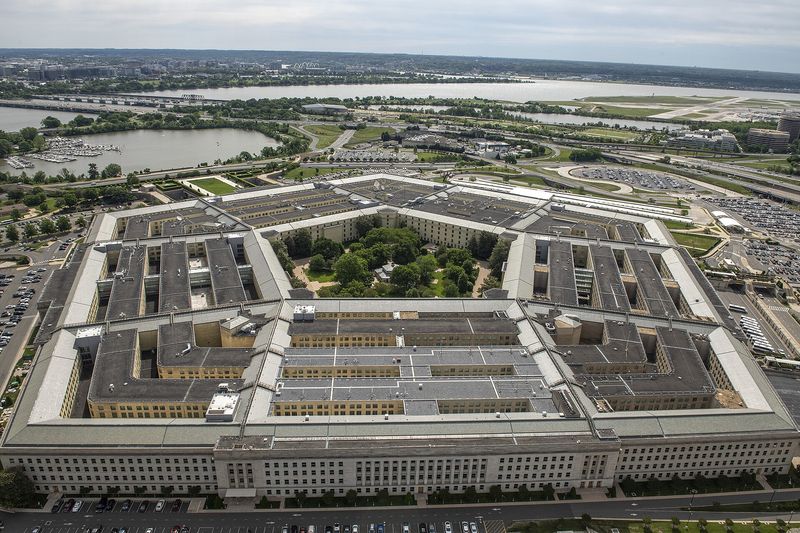
Iran’s denial, in full
Tehran’s answer came through its mission to the United Nations, and it was total. Iran’s UN Mission said that Iran “considers the use of chemical weapons under any circumstances to be wholly illegitimate and categorically rejects and unequivocally refutes the false and fabricated allegations.” The denial is printed here in the body of this article, at length and in Iran’s own words, because that is where it belongs: a government accused, through intelligence reporting it cannot inspect, of planning a radiological or chemical attack on another country’s capital is entitled to have its refutation carried with the same prominence as the accusation. The formulation is worth a moment’s attention: the mission does not merely deny this plot, it denies the category — asserting that chemical weapons use is illegitimate “under any circumstances” — and characterizes the allegations themselves as “false and fabricated,” the vocabulary Tehran reaches for when it wants to accuse Washington not of misreading intelligence but of manufacturing it. Readers can weigh that denial against the officials’ account for themselves; what they cannot fairly do is weigh it if it was never put in front of them. Here it is not a footnote.
What a dirty bomb actually is — and what it is not
The term at the center of this story is widely used and widely misunderstood, so the explainer is not optional. A dirty bomb — formally, a radiological dispersal device — is a conventional explosive: ordinary chemical explosive of the kind used in ordinary bombs, packed around radioactive material so that the blast scatters that material across the surrounding area. It is not a nuclear bomb. No nuclear reaction takes place; there is no fission, no fusion, no mushroom cloud, and no yield measured in kilotons. The destructive power of the device itself is the destructive power of its conventional explosive — lethal at close range, and no more than that. The radiological material is the point, and its purpose is different in kind: to contaminate an area, force evacuations and expensive decontamination, and above all to frighten. That is why security officials have long described the dirty bomb as a weapon of mass disruption rather than mass destruction: in most modeled scenarios its casualties come overwhelmingly from the explosion, while its economic and psychological damage — a district of a capital city cordoned off and scrubbed for months — is the payload its planners would actually be buying. CNN’s reporting pairs the dirty bomb with a second reported option, a chemical weapon, which works on a different principle again — toxic agents dispersed against people — and the two should not be blurred together. Neither is a nuclear weapon, and this article will not call either of them one.
The backdrop: a long record of alleged plots, a war, and a blockade
None of CNN’s officials presented the new intelligence as arriving from nowhere. Iranian plotting against current and former US officials, on the public record of US charges and official statements, runs back to President Trump’s first term — a years-long thread of alleged schemes that US authorities have attributed to Tehran and its proxies. Its most concrete recent entry is the 2024 murder-for-hire plot against Trump himself, in which US prosecutors charged a scheme to assassinate the then-candidate. That history does not prove anything about the new reporting. It does explain why a planning document, if that is what the intelligence describes, lands on desks in Washington already half-believed: the category of event is not novel, the alleged author is not novel, and the alleged target set is not novel. Novelty, in threat assessment, is a reason for doubt; familiarity is a reason for the flurry.
The second piece of backdrop is the war. The officials who spoke to CNN situated the reported planning against the backdrop of ongoing US strikes on Iran and an American economic blockade — a live, grinding conflict, tracked day by day on this site’s Iran war tracker, in which Washington and Tehran have been exchanging blows and pressure for months. Signal Post News has covered that escalation as it has unfolded: Trump confirms ‘minor’ US strikes on Iran’s air defence as Qatar tables a two-day bridge deal; U.S. aircraft disables cargo ship Huda in the Gulf of Oman as the Iran blockade tightens; and Iran lifts its missile range limit — and says it will prove the new reach in practice. Read against that backdrop, the reported planning looks less like an isolated initiative and more like one instrument in a retaliation portfolio: the kind of option a state under bombardment and blockade prepares so that its leadership, if it chooses escalation, is not improvising. That reading is an interpretation — but it is the one CNN’s own sources offered, and it points, once again, toward preparation rather than decision.
Why this matters, and what would change the assessment
Intent is reported; capability is argued about; that gap is the assessment
Strip the story to its load-bearing walls and it is a study in the two halves of every threat judgment. On intent, the reporting describes a state preparing the option of a spectacular attack on the American capital — specific, staffed at the planning level, and aimed at the president’s senior officials. On capability, the same reporting records an open official argument about whether the people to execute such an attack are in place at all, and a single-source, contested claim about hidden materials. Threat is intent multiplied by capability, and when one factor is documented and the other is disputed, the honest headline is the one this story has carried from its first paragraph: plans, being drawn up, by a government that has not — on the evidence officials will describe — decided or shown itself able to carry them out. Washington’s public behavior on Monday, from the White House’s reassurance to the ODNI’s silence, is consistent with exactly that judgment. The assessment could change; assessments do. But it would change on new facts about people and materiel, not on the planning documents already described.
The politics of an option: deterrence, leverage and the leak itself
There is a final layer to stories of this kind, on which the reported planning and its publication may be doing the same work. An option, once prepared, is leverage whether or not it is ever used: it can be hinted at in a negotiation, brandished in a crisis, or traded away in a settlement. And intelligence about an option, once described to a news organization by seven officials, is leverage too — a public signal to Tehran that its preparations are seen, in detail, and that moving from paperwork to personnel would begin from a position of zero surprise. Officials do not talk to CNN in sevens by accident. Tehran’s reply — total, categorical, and delivered through its UN mission within the same news cycle — suggests the message was, at a minimum, received. What either side does next will be visible where this story began: in whether the capability debate resolves, in whether the White House’s “no credible threats” line moves, and in the wider war, where Trump may hold off on Iran attacks unless Tehran provokes US, sources say remains the operative description of American restraint — and where the region’s other alleged-plot cases, such as the one in which Kuwait summons Iran’s ambassador after three are sentenced to death over an alleged assassination plot, continue to accumulate.
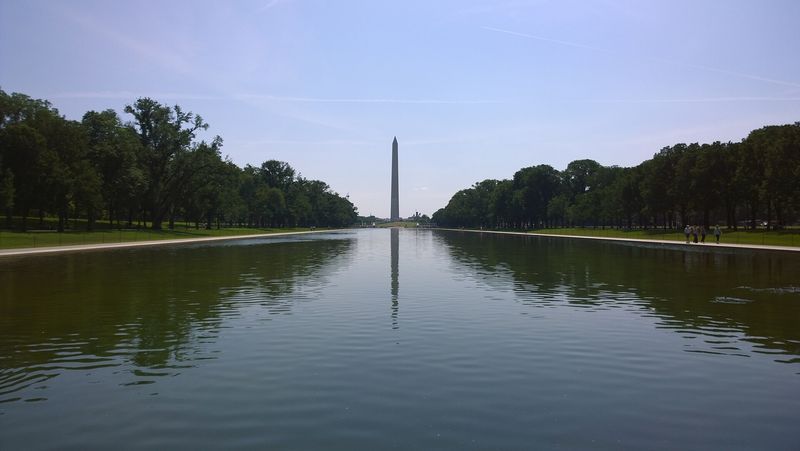
For now, the record stands where the officials themselves left it: a reported set of plans, specific in their targets and locations; a capability the intelligence community itself debates; a White House that says, on the record and by name, that there are no credible threats to the homeland at this time; and a denial from Tehran that rejects the allegations root and branch. Signal Post News will follow the story on those terms — attributed, qualified, and in that order — and will say so plainly if any of its load-bearing facts change.
Sources
CNN, November 16, 2026 — “US intelligence says Iran drawing up ‘dirty bomb’ plans” (https://www.cnn.com/2026/11/16/politics/us-intelligence-iran-dirty-bomb): the exclusive report on which this article is based, citing seven US officials — new US intelligence indicating Iran is developing plans to target senior Trump administration officials by detonating a dirty bomb or a chemical weapon in Washington, DC; the characterization of the planning as, for now, an effort to give Tehran options rather than an indicator of an imminent attack; two sources describing the plotting as very specific, including locations and targets, and the resulting flurry of US contingency planning; the capability debate, including “whether they actually have the personnel in place to execute is a matter of debate”; one source’s account of intercepted “chatter” claiming bomb-making materials have been stashed inside the US, and officials’ division over its credibility; White House spokesperson Lauren Bis’s statement that the administration is “monitoring any and all potential threats, but at this time there are no credible threats to the homeland”; the Pentagon’s referral of questions to ODNI and ODNI’s decision to decline comment; Iran’s UN Mission’s denial, in which Iran “considers the use of chemical weapons under any circumstances to be wholly illegitimate and categorically rejects and unequivocally refutes the false and fabricated allegations”; and the context of Iranian plotting against current and former US officials since President Trump’s first term, including the 2024 murder-for-hire plot against Trump, against the backdrop of ongoing US strikes and an economic blockade on Iran. Every element of the reported plot in this article is attributed to CNN and its official sources; none is stated as independently verified fact. Photographs are file photos via Wikimedia Commons and do not depict any person, place or material named in the reporting.