War · Middle East · Iran
A day after this site reported two unexplained explosions on Iran’s Qeshm Island as unconfirmed, President Donald Trump has confirmed them: US forces struck an Iranian air defence system on Friday, in the first American strikes since the midterm elections — even as Qatar put a two-day “bridge deal” on the table to reopen the Strait of Hormuz and restart nuclear talks.
Track it live: Iran war tracker · Live war tracker
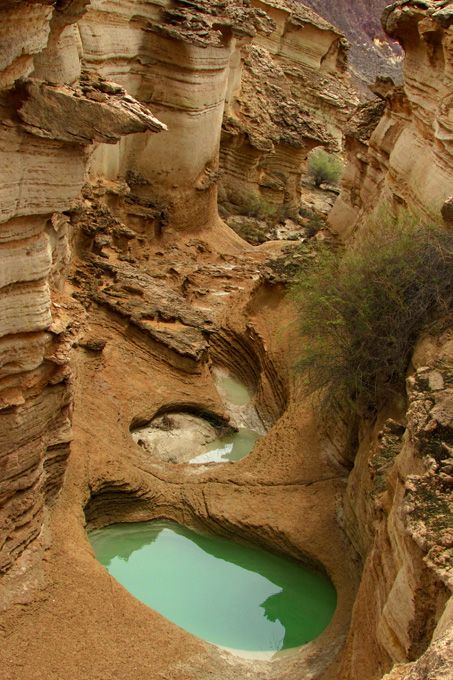
WASHINGTON, November 7, 2026 — President Donald Trump said on Friday that the US military carried out new limited strikes on Iran, targeting an Iranian air defence system — confirming the US strikes Iran air defence reports that began with Iranian state media accounts of two explosions in the Suza area of Qeshm Island, in the Strait of Hormuz. Speaking to reporters in West Palm Beach, Florida, on Friday evening, Trump described the action as “minor.” “They knocked out — they built a little bit of an anti-aircraft device and we knocked it out in about 15 minutes, maybe five,” he said. On Friday, Signal Post News reported the Suza explosions as unconfirmed, noting that no government had confirmed who fired the projectiles. Trump’s remarks are the confirmation that was missing: the blasts on Qeshm were, by the president’s own account, an American strike on a rebuilt piece of Iranian air defence.
What Trump confirmed — and what he did not
Precision about the confirmation matters, because the accounts do not line up perfectly. The Associated Press reported that Trump said US forces struck an Iranian air defence system on Friday and that Iranian state media reported two explosions in the Suza area of Qeshm. Reuters, in its reporting, added an important nuance: Iran’s semi-official Tasnim news agency said two missiles struck Qeshm, but Trump declined to discuss Qeshm specifically — “I don’t want to talk about it” — and did not explicitly confirm in that exchange that the target he described was on the island. RFE/RL, drawing on its Radio Farda service, reported the confirmation as a strike on an air-defence system on Qeshm Island itself. The honest summary is this: the president confirmed a limited US strike on an Iranian air defence system on Friday; Iranian media placed two projectiles at Suza on Qeshm at the matching time; and the White House has not published target coordinates that would close the gap between the two accounts.
The strikes are the first since the November 3 midterm elections, in which Republicans lost control of both chambers of Congress — a defeat delivered, in part, by voter frustration over an eight-month war and the prices it has pushed up. They also follow a pattern set earlier in the week: on Monday, November 2, the US military reported carrying out what it called defensive strikes, with explosions heard on Qeshm and Hengam islands and in the mainland port area of Bandar Abbas. Friday’s strike, like Monday’s, was framed by Washington as housekeeping — the removal of a threat to the forces enforcing the blockade — rather than a resumption of major combat operations, a characterisation a US official repeated to Reuters on Saturday.
The drone claim and the $20 million reward
Iran’s answer, so far, has been a claim rather than a confirmed counterstrike. Iranian media reported that the country’s air defences intercepted and destroyed a US drone over Qeshm — RFE/RL’s Radio Farda reported the claim as an MQ-1 Predator, while state broadcaster IRIB’s army statement said an MQ-9. The reports conflict with each other, and the United States has not confirmed the loss of any drone: a CENTCOM official described the situation around the island as relatively calm and declined to comment on the claim. Signal Post News is treating the drone report as an unverified Iranian claim, not an established loss.
Washington’s other Friday move was quieter and, in its way, larger. Late on Friday, US Central Command posted a State Department Rewards for Justice offer of up to $20 million, plus possible relocation, for information on Iran’s nuclear programme — its facilities, its equipment, the personnel who run it including its scientific community, and their movements. Rewards of that size are not routine public diplomacy; they are an attempt to buy visibility into a programme that inspectors currently cannot see, aimed at the scientists and logistics officers who would know where Iran’s enriched uranium actually is.
Qatar’s bridge deal: two days of trust-building
Running underneath the strike is the most concrete diplomatic proposal in weeks. According to the Associated Press, citing two regional officials speaking on condition of anonymity, Tehran is reviewing proposals from Qatar — the war’s chief mediator — including a two-day trust-building sequence. On the first day, the United States would lift its blockade of Iranian ports and release some frozen Iranian funds, and Iran would readmit International Atomic Energy Agency inspectors to the nuclear sites bombed by the US and Israel. On the second day, Iran would reopen the Strait of Hormuz under a modified version of the existing Iran-Oman strait agreement — a text the United States has not approved — as a temporary arrangement until a permanent strait deal can be negotiated with the other Gulf countries. Only after those steps would the two sides move to extensive talks on the fate of Iran’s stockpile of highly enriched uranium and the wider nuclear programme.
The proposal is distinct from the draft this site covered on November 2, when Doha talks produced a two-day Hormuz reopening plan on paper; the Qatari bridge deal is a broader sequencing — money and inspectors first, the strait second, the uranium last — designed to give each side a reversible concession before it is asked for an irreversible one. Whether Tehran will accept it is another matter. Iran has set its own conditions before any nuclear negotiations: an end to the blockade, the lifting of sanctions, the unfreezing of its assets, compensation for war damage, and an end to hostilities across the region, including Israeli operations in Lebanon. Iranian officials have said Tehran is unwilling, for now, to negotiate until those demands are addressed — a position that collides directly with a bridge deal whose first step asks Iran to admit inspectors before most of its conditions are met. The White House declined to comment on the Qatari proposals. Trump, for his part, kept the channel open in public: “We are talking to Iran. We have been.”
A day of phone calls
Friday’s diplomacy ran in parallel with the strike. Defence Secretary Pete Hegseth spoke with his Qatari counterpart, Sheikh Saoud bin Abdulrahman Al Thani; Trump spoke with Qatar’s emir about de-escalation; and Iranian Foreign Minister Abbas Araghchi worked his own phones, speaking with Iraq’s Foreign Minister Fuad Hussein and with his Tunisian counterpart. Egypt’s Foreign Minister Badr Abdelatty, who has spoken with Araghchi twice this week, posted on Friday that both sides must show “flexibility” and reach “compromise solutions,” and also called the UAE’s Foreign Minister, Abdullah bin Zayed. The call sheet describes the bridge deal’s coalition: Qatar proposing, Egypt urging, the Gulf states being lined up behind a strait arrangement they would eventually have to underwrite.
Background: eight months of war over one strait
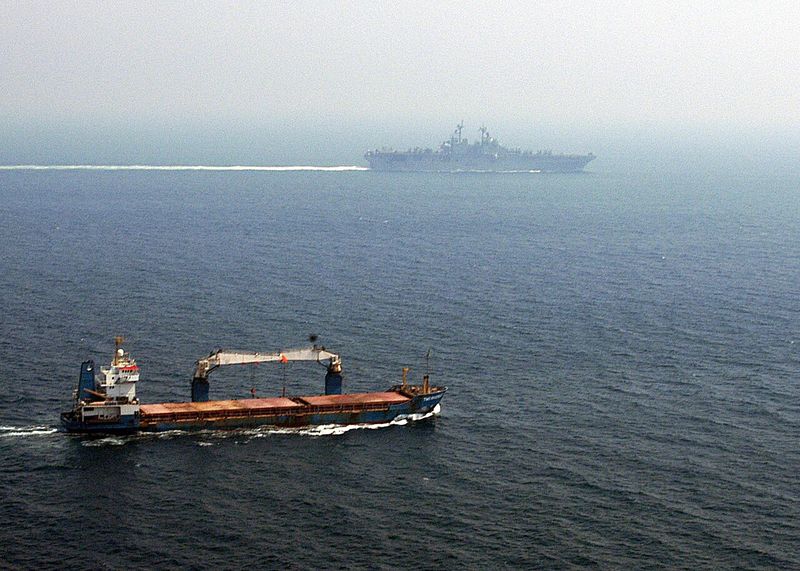
The war began on February 28, 2026, with US-Israeli strikes on Iran, and it is now more than eight months old. Its geography has narrowed to a single chokepoint. Qeshm is Iran’s largest island in the Gulf, sitting in the Strait of Hormuz, through which roughly 30 percent of the world’s seaborne oil normally passes; shipping through the strait is running about 65 percent below pre-conflict levels, according to UK Maritime Trade Operations reporting this week, and at least 11 ships have been attacked in and around the strait in the past week, three of them sunk. It is also a war in which air defence is the tripwire. US officials say most of Iran’s air defences were destroyed or badly degraded in Israel’s June 2025 bombardment and in the opening phase of this war, and that Washington has assessed Iran would try to rebuild them — which is why a single “little anti-aircraft device,” in Trump’s phrase, drew an American strike within hours of appearing: each rebuilt battery is both a military fact and a test of whether the blockade’s air umbrella still holds. The nuclear file runs on its own clock: the IAEA calculates that Iran holds 440.9 kilograms of uranium enriched to 60 percent purity, a short technical step from the 90 percent considered weapons-grade; Iran maintains its programme is peaceful. And the threats around any miscalculation have widened — Tehran has warned its responses could reach beyond the region, a warning this site covered as Iran threatened missile strikes on Europe and US bases, while Trump spent the days before the midterms publicly weighing whether to resume striking at all.
Why this matters
Striking and talking at the same time
Friday compressed the war’s whole logic into a single news cycle: a strike in the morning’s reports, a confirmation in the evening, a $20 million bounty for nuclear secrets, and a peace proposal moving through three capitals’ phone lines simultaneously. Neither track is a bluff layered over the other; both are the strategy. The strike tells Tehran that rebuilding air defences around the strait will be answered in minutes, which is meant to keep the blockade cheap to enforce. The bridge deal tells Tehran the blockade is also negotiable — that there is a priced exit in which the first steps are reversible for both sides. The risk is that the two tracks read differently in Tehran than in Washington: what the White House calls a minor, almost administrative strike, Iranian commanders may read as proof that talks are a cover for attrition, which is precisely the argument Iran’s conditions-first position is built on.
Who benefits, who loses
In the short term, the strike costs Trump little and buys him a headline of control three days after a midterm defeat partly blamed on the war — provided it stays minor. Qatar benefits either way: every proposal that moves, even one that stalls, confirms Doha as the indispensable channel, the role it has monetised diplomatically all year. Iran’s position is the most double-edged. Its conditions list is maximal, but the bridge deal’s existence proves its core leverage works: the strait stays mostly closed, oil stays expensive, and Washington is bidding for inspectors rather than simply demanding them. The clearest losers are the ones with no seat in the sequence — shipowners and crews still running a strait at a third of its normal traffic, and the IAEA, whose inspectors remain outside facilities holding 440.9 kilograms of 60-percent uranium while governments negotiate the terms of letting them back in.
What happens next
Three paths branch from Friday. In the first, Iran accepts the bridge sequencing in some form: inspectors return to bombed sites, frozen funds move, Hormuz reopens under the modified Iran-Oman arrangement, and the argument shifts to the uranium stockpile — the hardest file, deferred to last on purpose. In the second, Tehran holds to its conditions-first position, the bridge deal stalls, and the war settles back into its recent rhythm of blockade, drone claims and periodic “minor” strikes, each one a small chance of a large accident. In the third, a strike or a claim goes wrong — a drone actually downed with its crew, a ship sunk with casualties, a battery rebuilt beside something that cannot be hit — and the limited war both sides insist they are fighting stops being limited. One early indicator is already ambiguous: on Saturday evening, Iranian media reported further explosion sounds on Qeshm and in Jask, Sirik and Bandar Abbas, and Reuters reported explosions heard on Qeshm and in Jask with the cause unclear. There is no official explanation for those reports from any government, and no confirmation that any strike took place; Signal Post News is recording them as unconfirmed reports only. What is confirmed is narrower and, for now, sufficient: for the first time since the midterms, the United States has struck Iran again — and on the same day, it was also, by its president’s account, talking to it.
Sources: Associated Press, “US Military Carries Out New Targeted Strikes on Iran as Tehran’s Leaders Weigh Mediator’s Proposals” (November 7, 2026), via Military.com; Reuters, “Explosions heard in Iran’s Qeshm Island, Iranian media reports” (November 7, 2026); RFE/RL, “Trump Confirms US Strikes On Iran’s Qeshm Island” (November 7, 2026); and Signal Post News reporting on Friday’s then-unconfirmed Suza explosions and the November 2 Doha reopening draft.