UN Security Council Ukraine ceasefire
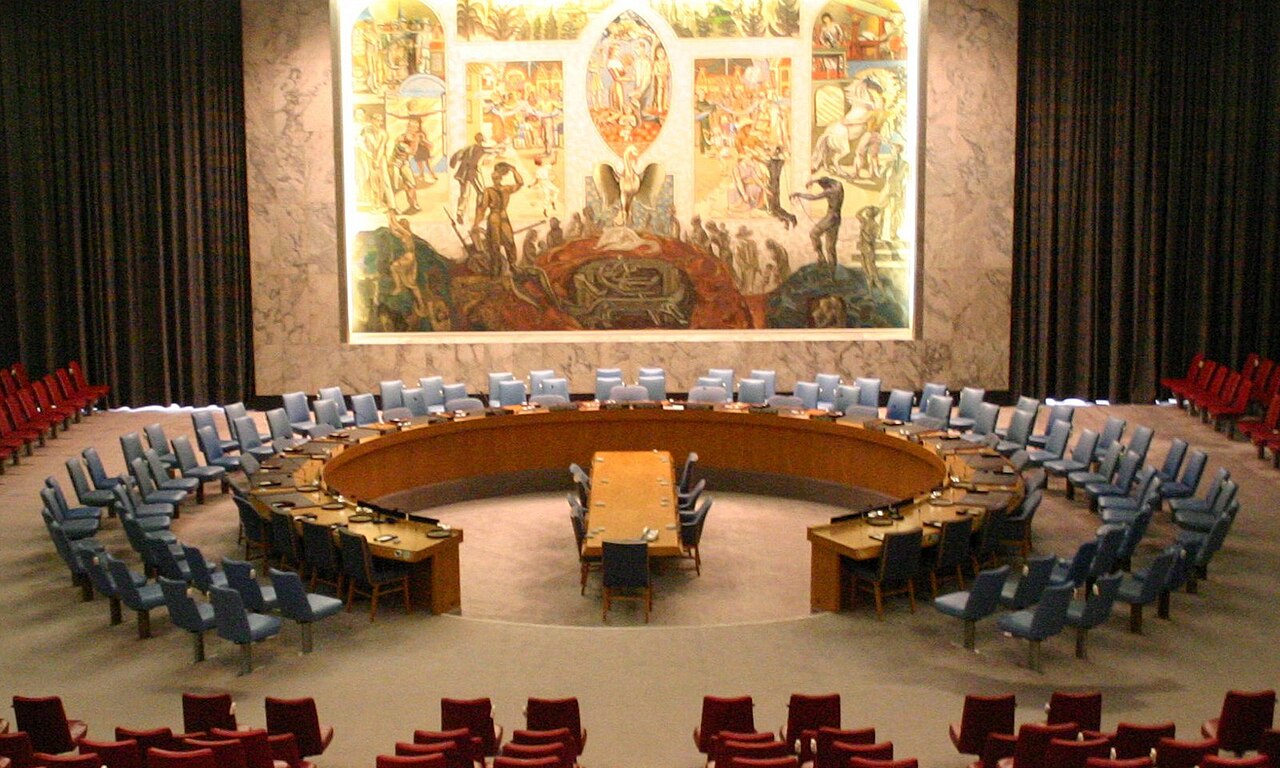
UNITED NATIONS, New York — The UN Security Council Ukraine ceasefire debate ended with the parties farther apart in public than American diplomacy had suggested in private. At a September 23 meeting during the 81st U.N. General Assembly's high-level week, Russian Foreign Minister Sergey Lavrov rejected a halt in combat while Ukraine and a coalition of 51 signatories called for an immediate and unconditional ceasefire.
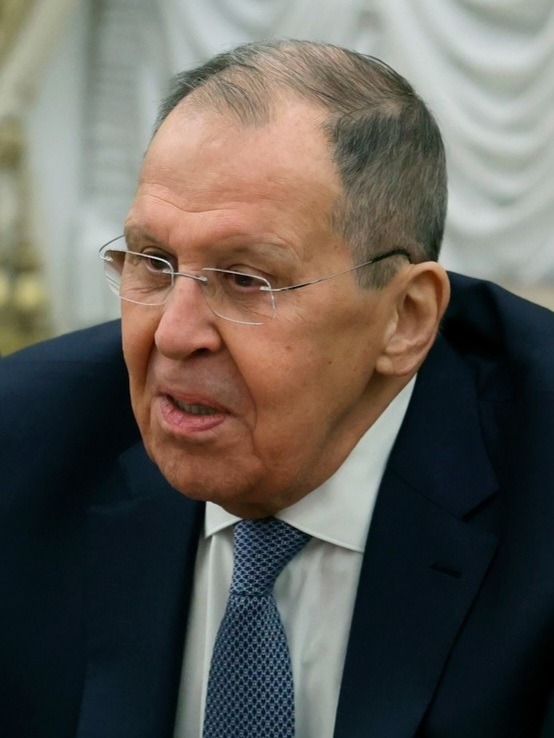
“We are not going to have a pause in our special military operation,” Lavrov told the Council. He said Russia remained prepared to negotiate toward what Moscow calls a lasting peace, but argued that a temporary halt would let Ukraine rebuild its forces. “Europe, whatever it thinks, just wants to get a pause, and it wants to use it to pump the Kyiv regime with weapons,” he said.
Ukraine's Foreign Minister Andrii Sybiha offered the opposite sequence. “Ukraine has agreed to a full, immediate, and unconditional ceasefire. We call on Russia to finally do the same,” he said, adding that Kyiv had been ready since March 2025. The meeting was requested by Denmark, France, Greece, Latvia and the United Kingdom. It produced no resolution and no jointly accepted path from diplomacy to a halt in fighting.
Why the UN Security Council Ukraine ceasefire divide matters
The immediate news is not simply that Moscow and Kyiv disagreed. It is that two versions of the diplomatic picture appeared in New York within hours of each other. After a private meeting with Lavrov, U.S. Secretary of State Marco Rubio said, “I think both sides have expressed an interest in some limited ceasefire that involve grain and energy. Obviously, you know, that won't be easy either.” In the Council chamber, Lavrov ruled out any pause in the wider war.
Those statements are not necessarily irreconcilable. A bounded agreement on grain shipping and energy infrastructure would not freeze the front, and Moscow could support narrow protections while refusing a comprehensive ceasefire. But the Kremlin had not publicly backed the Egyptian, Indian and Turkish maritime proposals that Ukraine accepted. Rubio's account therefore describes a private-channel opening; Lavrov's remarks describe Russia's public red line.
The distinction is the article's central thesis: diplomacy may be searching for a small, reciprocal bargain while the belligerents remain unwilling to accept the political meaning of a general pause. A grain-and-energy arrangement could reduce civilian harm without settling territory. It could also fail because every protected category—ports, refineries, power plants, shipping lanes—has military as well as civilian value.
Lavrov no pause war Ukraine: Moscow's stated case
Lavrov's refusal rested on a security argument Russia has used repeatedly: a temporary ceasefire would not be neutral because Ukraine's partners could use it to deliver weapons, rebuild units and prepare another campaign. In that view, stopping before a political settlement would preserve the causes of the war while changing the military balance against Moscow.
That claim should be presented as Russia's stated rationale, not as an established description of European intent. European governments say their weapons deliveries support Ukraine's defense against Russia's invasion and that an unconditional ceasefire would stop deaths immediately. Moscow says a durable agreement must address what it calls the conflict's root causes. Neither formulation supplies the monitoring, security guarantees or territorial settlement needed to turn a pause into peace.
Russia's position also reflects the battlefield incentive to keep pressure on while lines remain largely stalled. Slow advances can still create bargaining value, especially if Moscow believes Ukraine's manpower, air defenses and winter energy resilience are under strain. A ceasefire would lock in the existing line at least temporarily and interrupt that pressure. Conversely, continuing the war exposes Russian forces and infrastructure to further losses, including Ukrainian attacks on refineries and logistics.
Ukraine demands unconditional ceasefire with 51-country backing
Ukraine's coalition used breadth as leverage. The joint statement was signed by 51 countries, including European Union member states, the United Kingdom, Canada and Australia, and called on Russia to accept an “immediate and unconditional ceasefire.” That number does not bind the Security Council or overcome Russia's veto. It does show that Kyiv can still assemble a substantial diplomatic bloc around a clear sequencing demand: stop the fighting first, then negotiate.
Sybiha expanded the case beyond the front line. He called for the return of prisoners of war and internees, and of civilians taken from occupied territory, including children. He described Oleshky in the occupied part of Kherson region as a “humanitarian catastrophe,” presenting humanitarian access and civilian returns as inseparable from ceasefire diplomacy.
He also centered Black Sea navigation, port operations, grain exports and global food security. That choice gives the coalition a wider audience. Governments that do not share every Western position on sanctions or arms may still have a direct interest in lower wheat prices, predictable cargo insurance and safe passage for commercial vessels.
Zelenskyy maritime truce Black Sea offer puts a narrower deal on the table
President Volodymyr Zelenskyy said Ukraine accepted a proposed Black Sea maritime truce built from Egyptian, Indian and Turkish ideas. “We are waiting for Russia's response... We have to start somewhere,” he said. The proposal would test whether the two governments can protect shipping and food exports even while fighting continues elsewhere.
Reuters reported that cargo movements near Ukrainian ports had fallen close to a standstill and that global wheat prices were surging. The economic mechanism is direct: attacks or credible threats raise insurance costs, delay vessels and reduce export capacity. Ukraine is a major grain exporter, so disruption around its ports can transmit quickly into prices paid far from the Black Sea.
A maritime arrangement would need more than political consent. It would require mapped routes, notification procedures, inspection or verification rules, attribution for mines and drones, and a process for investigating attacks. It would also have to address ports and shore infrastructure, because safe water lanes are of limited value if loading facilities are damaged. Signal Post News has separately examined the Black Sea maritime-truce proposal and the latest attack on a cargo ship near Odesa.
Rubio Lavrov limited ceasefire: private optimism, public refusal
Rubio's comment is the clearest evidence that a smaller bargain remains under discussion. Grain and energy are reciprocal pressure points. Russia wants more predictable export access and fewer attacks on its refining system. Ukraine wants safer Black Sea trade and fewer strikes on electricity, fuel and communications infrastructure before winter.
That symmetry creates negotiating space, but not equality of circumstances or easy verification. Russia's war has damaged Ukrainian generation, distribution and urban services. Ukraine's long-range campaign has hit Russian refineries and storage. Each side can argue that its own attacks are lawful military pressure and the other's are attacks on civilians or commerce. A truce needs shared definitions precise enough to survive the first disputed explosion.
The public-private gap may be tactical. Lavrov can reject a general pause for domestic and bargaining reasons while Russian negotiators test limited terms behind closed doors. Rubio can emphasize mutual interest to preserve momentum without claiming agreement. The danger is that optimism becomes a substitute for consent: until Moscow publicly accepts a text and behavior changes, a possible limited ceasefire remains a proposal.
The same contrast appeared in the earlier Rubio–Lavrov meeting outcome, where the two governments issued different definitions of progress. Washington sought meaningful action to stop the killing; Moscow returned to the framework it says was established at the Alaska summit.
Black Sea shipping truce, wheat prices and winter blackout risk
The ceasefire debate is now driven by physical vulnerability. Ukrainian ports are essential to export revenue and food shipments. The power system is essential to heating, water, communications and industrial production. A winter campaign against substations, generation and data networks could impose civilian costs even without a major change in the front line.
Recent strikes underline the risk. Ukrainian officials said attacks on Kyiv data centers disrupted internet service to about 100,000 households, while Russia described the facilities as supporting military activity. Our report on the Kyiv data-center strikes and internet outages details the dispute. The episode shows why any energy agreement that excludes communications and backup power may leave a major civilian vulnerability untouched.
The energy campaign is reciprocal. Ukraine has attacked Russian refineries and fuel infrastructure, seeking to cut revenue, strain repairs and impose costs behind the front. Russia has hit Ukrainian power, fuel, rail, port and communications systems. Stalled ground lines can intensify this logic: when neither side achieves a decisive breakthrough, both look to infrastructure pressure to alter the opponent's capacity and public endurance.
Sikorski tell your boss enough: Europe's blunt and quiet diplomacy
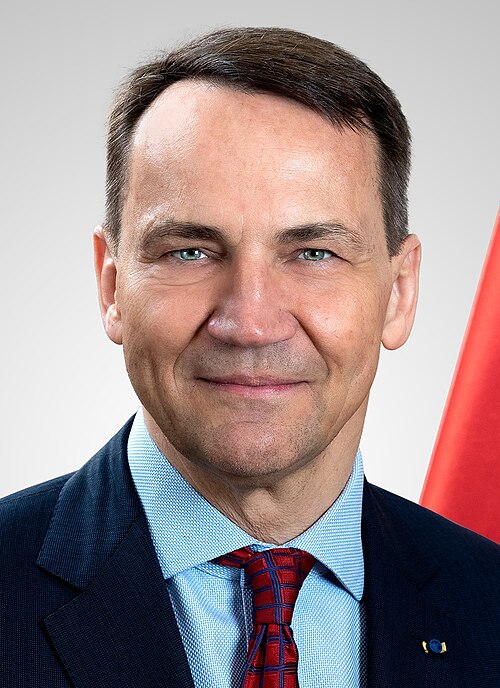
Polish Foreign Minister Radosław Sikorski delivered the session's sharpest personal appeal to Lavrov: “Stop destroying Russia's future, Sergey. I know you are listening. Tell your boss: enough.” Polish media reported that Lavrov had left shortly before Sikorski spoke, so the line was delivered into the diplomatic record rather than necessarily to Lavrov in the chamber.
Britain, France and Denmark also condemned Russia's war and warned about escalation. Their representatives pointed to a sharp rise in civilian deaths during the summer, drawing on U.N. reporting. They framed the pattern as evidence that waiting for a comprehensive settlement carries immediate human costs.
Europe's approach is broader than the confrontation in the chamber. Publicly, ministers use direct language to assign responsibility and sustain the 51-country coalition. Privately, European governments also work on shipping, sanctions enforcement, prisoner exchanges, humanitarian access and security guarantees. The blunt and quiet tracks are not contradictory: condemnation shapes political pressure, while technical diplomacy tries to find areas where an agreement can be implemented.
What the numbers mean
- 51 signatories
- Countries backing the joint call for an immediate and unconditional ceasefire. The coalition demonstrates diplomatic reach but does not have the force of a Security Council resolution.
- Wheat-price surge
- Reuters reported sharply higher global wheat prices as Ukrainian cargo movements neared a standstill. The reports did not establish that one proposal alone would reverse the increase.
- Summer civilian-death spike
- British, French and Danish representatives cited U.N. reporting showing a sharp increase. The exact toll depends on the period and verification standard used.
- More than 500,000 Russian troops killed
- A cumulative estimate attributed to Western analysts in the reporting around the meeting. Wartime fatality estimates are disputed, vary by methodology and are not independently audited here.
These figures answer different questions and should not be combined into one scorecard. Coalition size measures diplomatic alignment. Wheat prices measure market stress. Civilian deaths measure human harm. Military-fatality estimates measure attrition with unusually wide uncertainty. None, by itself, shows that either government is ready to accept the other's ceasefire sequence.
Who gains, who loses and what each side fears
Kyiv gains diplomatic support. Fifty-one signatories help Ukraine show that its ceasefire offer is not isolated. The Black Sea proposal also gives states concerned about food prices and commercial navigation a concrete reason to engage, even if they avoid taking sides on every issue.
Moscow preserves military freedom of action. Rejecting a pause avoids a freeze that Russia says would let Ukraine rearm. It also keeps infrastructure and battlefield pressure available as negotiating leverage. The cost is diplomatic: an explicit refusal makes it easier for Kyiv and European capitals to argue that Russia—not process or sequencing—is blocking an immediate halt.
Civilians face the winter risk. Continued attacks on grids, fuel, ports and communications increase the chance of blackouts, heating failures, dangerous travel and higher food costs. Those harms fall before any eventual territorial settlement and are the strongest practical argument for a narrow agreement.
Washington owns the gap between rhetoric and terms. Rubio's limited-ceasefire optimism can be useful if it reflects real private interest. It becomes a liability if the public record never moves beyond statements. The United States will be judged on whether it produces a reciprocal text, monitoring and consequences rather than another description of what the sides might want.
Three scenarios for Ukraine Russia ceasefire talks 2026
1. A limited grain and energy truce
Washington, Ankara and other intermediaries turn the overlapping interests into a written arrangement. Shipping lanes, ports, major power infrastructure and refineries receive defined protection, with notification and investigation procedures. Combat continues along the front, but grain movements recover and winter infrastructure attacks decline. This is the narrowest scenario consistent with both Rubio's remarks and Lavrov's refusal of a general pause.
2. Winter escalation
Russia rejects the maritime and energy proposals or the parties fail to agree on scope. Moscow intensifies attacks on Ukraine's grid and urban systems; Kyiv continues strikes on Russian refining and logistics. Wheat prices and insurance costs remain elevated, blackouts become more likely, and each side argues that coercion will improve its later bargaining position.
3. Security Council stalemate, bilateral diplomacy continues
The Council remains divided and produces no binding action. The United States keeps a channel open with Russia while Ukraine, European governments and Black Sea states negotiate specific humanitarian, prisoner and shipping measures. Progress is incremental and vulnerable to battlefield shocks, but dialogue does not stop.
Bottom line
The September 23 meeting clarified the dispute more than it narrowed it. Ukraine and 51 partners demanded an immediate, unconditional ceasefire. Russia said it would negotiate for lasting peace but would not pause operations and let Kyiv rearm. Rubio, meanwhile, identified a smaller area where both sides may have interests worth testing: grain and energy.
That limited path is real enough to examine and too uncertain to call a breakthrough. Its credibility will depend on a Russian public response to the maritime proposals, written definitions and measurable changes in attacks and cargo movements. Until then, New York has produced a diplomatic opening inside a strategic refusal—not a ceasefire.
Sources
- Reuters, September 23, 2026: Zelenskyy's maritime-truce acceptance, stalled cargo movements and wheat-price context
- Reuters wire via Q101.9, September 23, 2026: Rubio's limited grain-and-energy ceasefire remarks and Lavrov's position
- Reuters, September 23, 2026: Kremlin position before the Rubio–Lavrov meeting
- Agence Europe, September 23, 2026: statement by 51 states and the European Union
- Anadolu reporting via EuropeSays, September 23, 2026: Security Council statements by Lavrov, Sybiha and European representatives
- CEO.com.pl, September 23, 2026: Sikorski's remarks and Polish reporting that Lavrov left before he spoke
Reporting cutoff: September 23, 2026 at 4:20 p.m. PDT. Official statements and military positions are attributed to the speakers or governments that made them. Cargo, price and casualty trends are attributed to Reuters, U.N. reporting cited by delegations, or Western analysts. Analysis of incentives, leverage and scenarios is Signal Post News analysis.