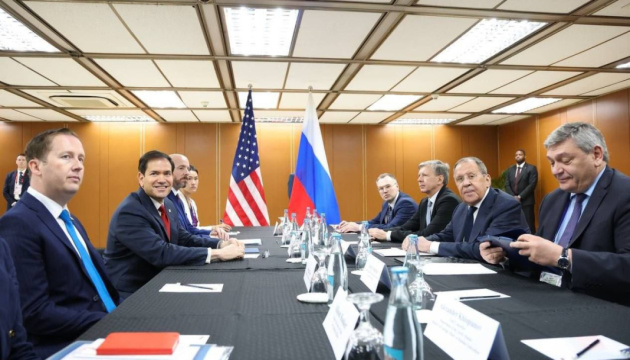
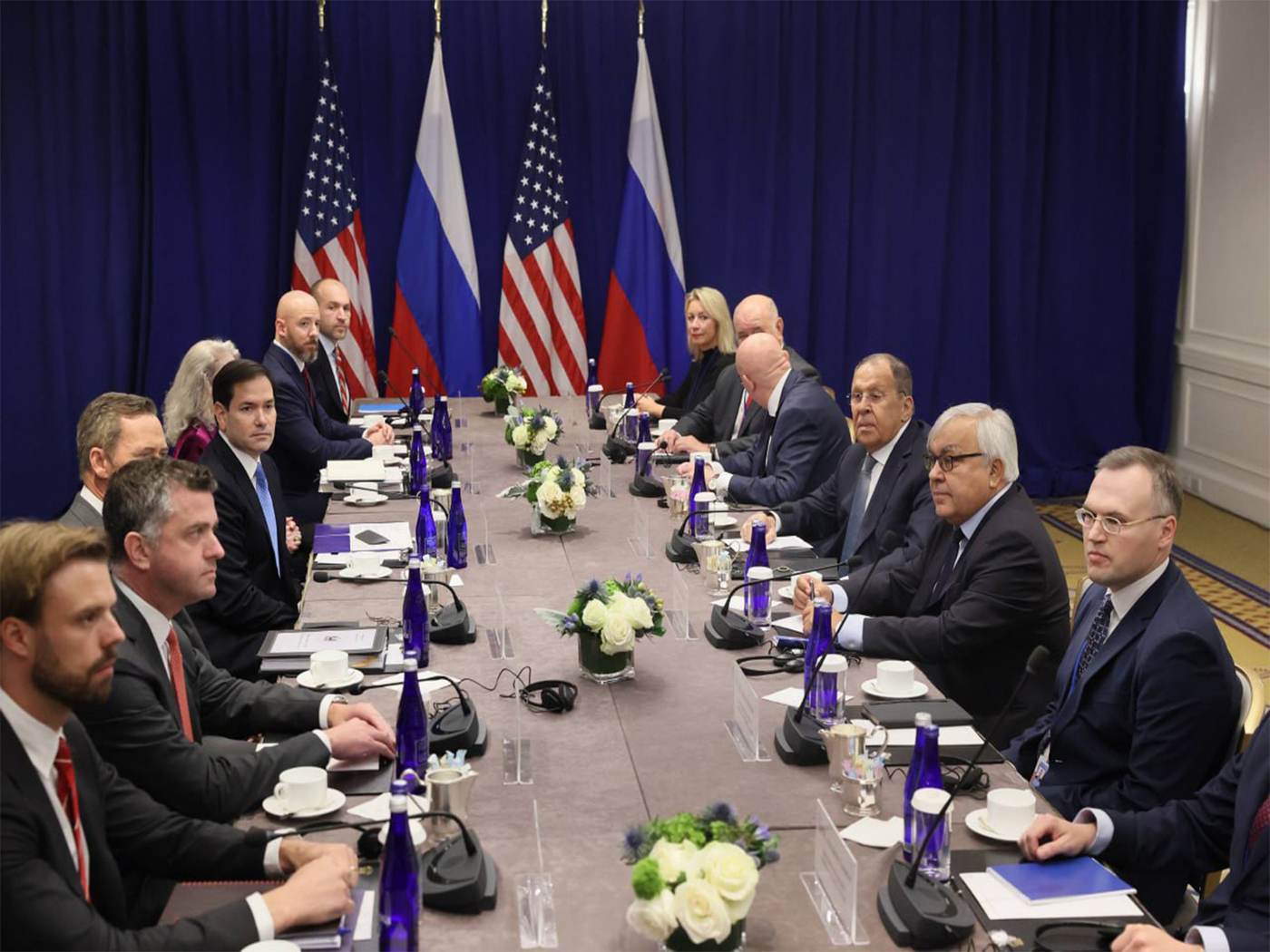
UNITED NATIONS, New York — U.S. Secretary of State Marco Rubio and Russian Foreign Minister Sergey Lavrov met behind closed doors Wednesday morning, September 23, for more than 50 minutes on the sidelines of the United Nations General Assembly. The Ukraine war dominated the session. There were no opening remarks to the press, no joint statement and no announced breakthrough.
The two official accounts were brief but revealing. Washington said Rubio repeated President Donald Trump’s demand for an end to the killing and pressed Moscow for meaningful action toward a durable settlement. Moscow said Lavrov remained ready to follow the line developed by Trump and Russian President Vladimir Putin at their August 15 summit in Alaska, including work with the United States to remove what Russia calls the conflict’s “root causes.”
That contrast is the central result of the Rubio Lavrov UNGA meeting. The United States framed the test as Russian action; Russia framed it as fidelity to the Alaska process and rejection of proposals it says would prolong the war. The channel survived. The positions did not visibly narrow.
Why this matters: pressure and process now compete
This was the first top-level U.S.–Russia contact after Trump’s sharpest rhetorical turn on the war. On Tuesday, after meeting Ukrainian President Volodymyr Zelenskyy at the United Nations, Trump said Ukraine was “in a position to fight and WIN all of Ukraine back in its original form” with support from the European Union and NATO. He called Russia a “paper tiger,” said it had been “fighting aimlessly for three and a half years a War that should have taken a Real Military Power less than a week to win,” and declared that “Putin and Russia are in BIG Economic trouble.”
The Wednesday meeting therefore became a live test of which strand represents policy: the new Trump paper tiger Russia pressure, or the diplomatic channel built around the Alaska summit. The answer, for now, is both. Rubio delivered a demand for meaningful steps while still meeting privately with Lavrov; Lavrov defended the Alaska line while agreeing that the foreign ministries should maintain constructive dialogue.
A session lasting just under an hour can support two readings, and the public record does not settle between them. It may indicate serious, concentrated business conducted without ceremony. It may also represent managed stalemate: enough time to state hardened positions, preserve a channel and avoid a public rupture, but not enough evidence of bargaining toward a common text. The absence of opening remarks and a joint outcome makes the official readouts more important—and their differences more visible.
Two readouts, two definitions of movement
The State Department’s account was direct: “The Secretary reiterated President [Donald] Trump's call for the killing to stop and the need for Moscow to take meaningful steps toward a durable resolution of the Russia-Ukraine war.” The wording places responsibility for the next demonstrable move on Moscow. It does not identify a ceasefire mechanism, territorial formula or timetable.
The Russian Foreign Ministry said the ministers exchanged views on settling the Ukraine crisis as a follow-up to the understandings reached at the Russia–U.S. summit in Anchorage. Lavrov emphasized Russia’s readiness to adhere to the line developed there, including coordinating with Washington to remove the “root causes” of the conflict. He called schemes intended to prolong the conflict and “promoted by Kiev and some European countries” unacceptable.
Moscow’s account also widened the agenda beyond Ukraine. It said both sides reaffirmed the importance of using the presidents’ momentum to normalize bilateral relations, including restoring the regular functioning of diplomatic missions, and agreed to maintain constructive dialogue between the two foreign ministries.
The Rubio Lavrov readouts State Department contrast is not a semantic footnote. Washington’s benchmark is meaningful Russian action toward a durable resolution. Moscow’s benchmark is continued work from the Alaska understandings and acceptance of its root-causes framework. Unless those standards are translated into the same practical sequence, dialogue can continue without producing a ceasefire.
Trump’s turn and the Kremlin’s “real bear” reply
Trump’s Tuesday post gave Zelenskyy his strongest U.S. rhetorical backing in months. Along with saying Ukraine could retake all of its territory, Trump wrote, “This is the time for Ukraine to act.” He said the United States would continue supplying weapons to NATO “for NATO to do what they want with them,” and ended: “Good luck to all!”
The posture extended beyond Ukraine. Asked whether NATO countries should shoot down Russian aircraft that violate their airspace, Trump answered: “Yes, I do.” The statement did not by itself establish a new alliance rule or an operational order, but it added military weight to a rhetorical shift already centered on Russia’s battlefield and economic performance.
Kremlin spokesman Dmitry Peskov answered on RBC Radio Wednesday. “Mr. Trump heard about what's happening from Zelensky's perspective. And, apparently, at this point, that version is what led to the assessment we heard,” he said. Peskov called it a “mistake” to believe Ukraine can retake territory currently under Russian control, joked that Russia was a “real bear” rather than a “paper tiger,” and said the Kremlin would continue its “special military operation” because it saw “no alternative.”
The Peskov real bear response makes the public distance unmistakable. Trump described a Russia under economic and military strain; Peskov rejected the implied vulnerability and ruled out the territorial outcome Trump endorsed. Rubio and Lavrov’s meeting kept those positions in contact without resolving them.
The diplomatic thread from Kuala Lumpur to Alaska
Wednesday was not a first encounter. Rubio and Lavrov met in July on the sidelines of ASEAN ministerial events in Kuala Lumpur. On August 15, both joined the restricted three-on-three session at the Alaska summit between Trump and Putin. The Russian readout’s emphasis on Anchorage was therefore a claim of continuity: Moscow wants subsequent diplomacy judged against that line rather than against Trump’s newest public language.
Special envoys Steve Witkoff and Jared Kushner added another track on September 5 and 6, workshopping a new Ukraine deal during trips to Moscow and Kyiv. The White House said substantive plans for next steps would be announced in the coming weeks. Wednesday’s readouts did not disclose whether the ministers advanced that plan, amended it or simply repeated their governments’ starting positions.
Trump entered office at the start of 2025 promising to end the war. Twenty months into his presidency, that goal remains unmet. Russia’s full-scale invasion, launched in early 2022, has continued for roughly three and a half years. That record raises the burden of proof for diplomatic process: meetings are inputs, while a halt in fighting or an enforceable agreement would be an outcome.
For a fuller account of what was expected before the session, read our Rubio–Lavrov meeting preview. The earlier report outlined the competing pressure and diplomacy scenarios that Wednesday’s limited result now helps test.
The energy war is outrunning the ceasefire idea
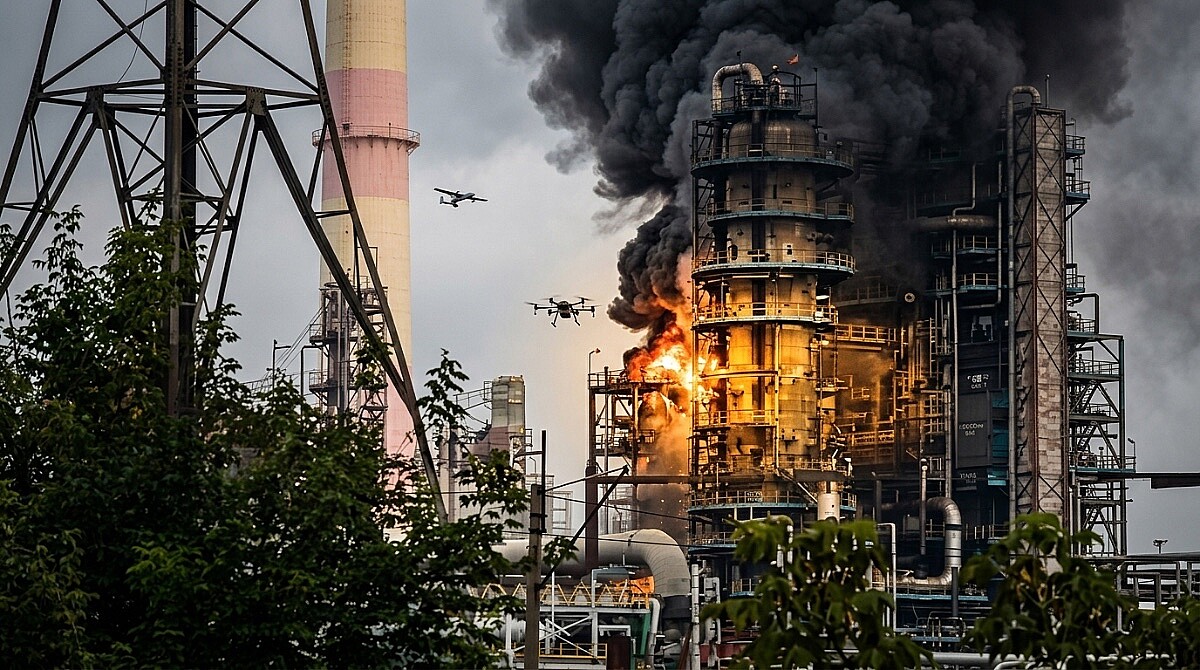
Diplomacy is being measured against strikes that continued around it. Ukraine’s military said Tuesday that it struck an oil refinery in Ufa, more than 1,300 kilometers from the Ukrainian border, and also reported hitting the Kuibyshev refinery in Russia’s Samara region. The distance of the Ufa oil refinery Ukraine strike demonstrates the reach of Kyiv’s campaign even as its forces face pressure at home.
Last week, Trump said Ukraine and Russia had allegedly agreed not to attack energy facilities. The next day, Russia struck gas stations in Kyiv while Ukraine attacked a Russian refinery. That sequence did not produce a functioning ceasefire. It showed the difference between a political assertion and an arrangement with defined sites, reciprocal duties, monitoring and consequences.
The clash is detailed in our report on Russia’s strikes on Kyiv petrol stations. Ukraine’s wider maritime pressure is examined in our analysis of Operation MoLoChKa and the shadow fleet.
Supporters of an energy ceasefire are the clearest immediate losers from continued attacks on both sides. Each new strike makes a narrow agreement more urgent but also harder to negotiate: both governments would have to give up a tool they are actively using. The refinery campaign and the strikes in Kyiv suggest that the energy-truce idea is not yet operating as a restraint.
Who benefits—and who does not
Zelenskyy gains political space. Trump’s statement that Ukraine can win back all its territory is stronger public backing than Kyiv had received from him in months. It does not by itself provide the air defenses, interceptors or other capabilities required to convert rhetoric into battlefield effect, but it changes the argument around what Washington says is possible.
Washington preserves a channel. Rubio can deliver pressure directly, test Moscow’s response and reduce the risk that public statements become the only form of communication. That has value even when no agreement emerges. The danger is that a channel becomes an end in itself rather than a route to measurable commitments.
Moscow keeps the process alive without conceding anything publicly. The Russian readout restated its Alaska framework, its “root causes” language and its criticism of Kyiv and some European governments. Agreement to keep talking costs Moscow less than accepting a ceasefire or changing its territorial position.
European capitals singled out by Lavrov lose room to shape the narrative. Moscow’s accusation that Kyiv and some European countries promote schemes to prolong the war puts them inside Russia’s explanation for diplomatic failure. Those governments, meanwhile, carry much of the burden of purchasing U.S. weapons for Ukraine through NATO.
Critics see process without a plan. Rep. Michael McCaul’s criticism is that no real peace plan is visible beyond occupied territories being “neutral.” That skepticism is reinforced when a meeting produces no shared text. It is not proof that private diplomacy contains nothing more; it is a demand that the administration show how its contacts connect to enforceable terms.
What the numbers mean
- More than 50 minutes
- The closed-door Rubio–Lavrov session lasted just under an hour, long enough for substantive exchange but not evidence of agreement.
- More than 1,300 km
- The distance from Ukraine’s border to Ufa, according to the confirmed account of Tuesday’s reported refinery strike.
- About $2 billion
- Allied money pledged to NATO’s PURL fund, which pools cash to buy American arms, toward a goal of $10 billion.
- Three and a half years
- Trump’s description of how long Russia has been fighting a war he said a “Real Military Power” should have won in less than a week.
- 20 months
- The time since Trump took office at the start of 2025 with a promise to end the war.
The gap between roughly $2 billion pledged and a $10 billion PURL goal illustrates the limits of rhetorical support. Ukraine’s need for Patriot interceptors is part of the approaching winter decision. Trump is considering allowing Ukraine to make a “less sophisticated version” of those interceptors, according to USA Today. The proposal may change supply over time, but it does not erase the immediate shortage described in the diplomatic push.
For the wider winter-air-defense question, see our analysis of Zelenskyy’s requested winter arms package and Patriot needs.
What comes next
Lavrov’s Saturday address could harden the line or leave an opening. He is scheduled to speak to the General Assembly after saying last week that Russia would not halt hostilities during potential negotiations. A speech centered on “root causes” and criticism of Kyiv and Europe would reinforce the Russian readout. Any practical sequencing for talks would matter more than a general pledge to maintain dialogue.
Thursday’s Trump–Xi White House summit adds another audience. The Ukraine war is entangled with wider questions of pressure, arms and great-power diplomacy. What Trump says after hosting Xi will show whether the “paper tiger” turn remains a sustained line or a message tailored to the UN week.
The Witkoff–Kushner plan now faces a credibility deadline. The White House said substantive next steps would be announced in coming weeks. A plan will be judged by whether it addresses Ukraine’s consent, Russia’s demands, enforcement and the sequencing of any ceasefire—not simply by whether another meeting is scheduled.
The winter package is the clearest policy test. Trump’s promise to keep supplying weapons to NATO leaves the practical question with allied purchasing, production and delivery. The PURL shortfall and Ukraine’s Patriot shortage make air-defense decisions more consequential than rhetorical tone.
The energy-truce idea could be revived or buried. A credible version would need reciprocal limits and a method to determine violations. If refinery strikes and attacks on Ukrainian fuel infrastructure continue, the proposal will look less like an emerging deal and more like another diplomatic phrase overtaken by battlefield incentives.
Conclusion: a channel without convergence
The strongest conclusion available after Wednesday’s meeting is narrow. Rubio and Lavrov spoke directly for more than 50 minutes. Washington called for meaningful Russian steps toward a durable resolution. Moscow returned to the Alaska understandings, its “root causes” formulation and an agreement to keep foreign-ministry dialogue constructive. No public breakthrough bridged those positions.
That is not the same as saying the meeting had no value. Direct contact can clarify red lines and keep escalation from being managed entirely through public threats. But a channel is not a settlement. The test is what follows: whether Russia alters its conduct, whether Washington turns the “paper tiger” message into decisions, whether Ukraine receives the winter defenses it seeks, and whether an energy ceasefire becomes an enforceable arrangement rather than a disputed claim.
For now, Trump’s pressure language and the Alaska diplomatic line coexist. The Rubio–Lavrov session showed that Washington is not choosing between them yet. It also showed why that ambiguity cannot last indefinitely: the war’s energy front, air-defense needs and territorial stakes continue moving while the communiqués remain terse.
Sources
- The Frontier Post / Anadolu: Rubio and Lavrov meet in New York
- KXLY / Reuters: meeting duration and Ukraine focus
- Russian Foreign Ministry via International Affairs: Russian readout
- Al-Ahed: State Department readout
- USA Today: UNGA diplomatic agenda and Patriot proposal context
- USNN: Trump’s Ukraine and “paper tiger” remarks
- ZeroHedge citing Peskov’s RBC interview: Kremlin response
- NewsPoint: Trump’s Truth Social post and NATO-airspace answer
This is a fixed September 23, 2026 reporting snapshot. Official statements describe each government’s position; analytical judgments about leverage, winners, losers and scenarios are Signal Post News analysis. The public readouts did not disclose a negotiating text or breakthrough.