Zelenskyy UNGA AI warning
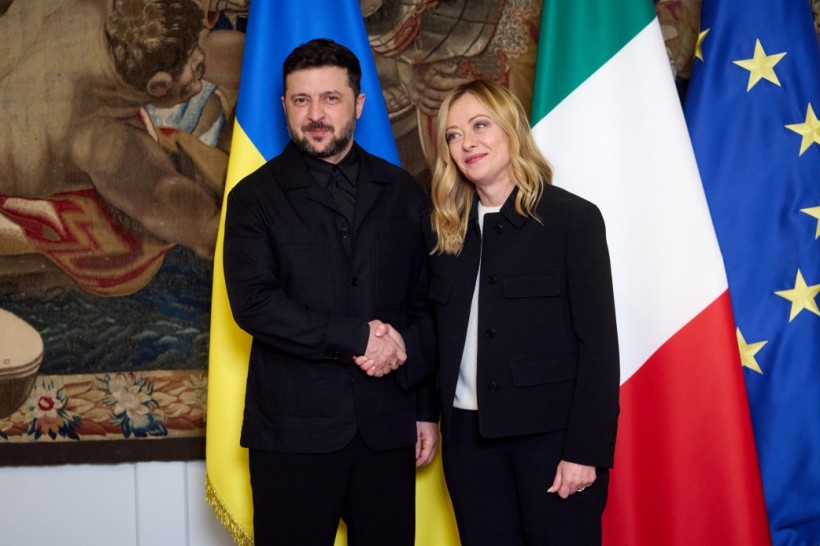
UNITED NATIONS — The Zelenskyy UNGA AI warning placed an emerging weapons problem inside an urgent diplomatic argument: governments should seek peace before increasingly autonomous systems make escalation faster and human control weaker. In his September 23 address, Ukrainian President Volodymyr Zelenskyy said artificial intelligence could “begin deciding what happens on the battlefield” as early as 2027. “We need peace before machines decide the battlefield,” he said, according to reports of the speech.
The warning did not stand alone. Zelenskyy used the same address to press for restrictions on Russian revenue, request a U.S.-organized meeting among Donald Trump, Vladimir Putin and himself, and signal that Ukraine was prepared for a reciprocal ceasefire covering energy infrastructure. His thesis was that diplomacy needs leverage and speed because the technology of war is advancing faster than the institutions trying to contain it.
That argument deserves scrutiny as well as attention. AI already assists surveillance, target recognition, navigation, electronic-warfare adaptation and large-scale analysis. But public reporting does not establish that an autonomous system independently controls the course of the Russia–Ukraine war. Zelenskyy’s 2027 timetable is a political and strategic warning, not a verified technical deadline.
Why the Zelenskyy AI battlefield warning matters
The immediate risk is not a science-fiction machine choosing the winner of a war by itself. It is the gradual transfer of more steps in the kill chain—from detecting a target to prioritizing it, navigating toward it and deciding when to strike—to systems operating at machine speed. Each transfer can shorten the time commanders have to check data, distinguish combatants from civilians, interpret an opponent’s intent or stop an erroneous response.
Ukraine’s battlefield is already a proving ground for networked drones, computer vision, automated route planning and electronic countermeasures. Both Russia and Ukraine adapt systems quickly because jamming and attrition make static designs obsolete. The phrase AI weapons Ukraine war autonomous drones therefore describes an existing direction of travel, even if the exact level of autonomy varies widely and is often obscured by military secrecy or marketing language.
Zelenskyy’s warning also reaches beyond Ukraine. Software developed or refined in one conflict can be copied, exported or improvised elsewhere at lower cost than conventional aircraft or missiles. A state need not possess a vast defense industry to combine commercially available components with increasingly capable models. The policy window is consequently narrow: legal rules, procurement standards and fail-safe requirements are easier to establish before systems become deeply embedded in doctrine.
Zelenskyy UN General Assembly speech September 2026: pressure and diplomacy
The Zelenskyy UN General Assembly speech September 2026 linked technological risk to a familiar Ukrainian request—constrain the money that sustains Moscow’s campaign. He read from Trump’s Truth Social statement saying Russia had “lost control of its Diesel Oil Industry,” then urged governments to act on the economic logic behind that claim. “Limit his money. Limit his war,” Zelenskyy said.
The formula is direct, but its implementation is not. Russia has adapted to successive sanctions through discounted exports, a shadow fleet, intermediaries and trade with buyers outside the Western sanctions coalition. Tighter enforcement could raise costs and reduce margins, yet it could also shift routes, increase evasion or create pressure in global fuel markets. The case to limit Russia revenues war financing therefore depends on enforcement details, coordination with major importers and protections against unintended supply shocks.
Zelenskyy also called Putin “Patient Zero,” portraying the Russian president as the source from which wider instability spreads. The Zelenskyy Patient Zero Putin UN line was rhetorically sharp and plainly partisan. Its strategic purpose was to argue that allowing Russia’s invasion to succeed would encourage other governments or armed groups to conclude that force carries manageable costs.
What the numbers say—and what they do not
Zelenskyy supplied three headline figures, each of which should be read as his claim rather than as an independently verified count. He said Russia had used 63,000 attack drones in 2026. He said Russian forces had suffered approximately 248,000 casualties while capturing roughly 1,000 square kilometers. And he said Moscow had recruited foreign fighters from 47 countries.
The Russia 63000 drones Ukraine 2026 figure would average roughly 237 attack drones a day through September 23 if it covered the year to date, or about 173 a day if it were projected across a full 365-day year. But the address, as reported, did not supply an auditable event-level dataset, define whether the number included decoys or reconnaissance aircraft, or explain how duplicates were excluded. It is best treated as a measure of the scale Zelenskyy wanted the audience to picture, not a validated inventory.
The Zelenskyy 248000 Russian casualties claim implies about 248 casualties for every square kilometer he said Russia captured. That ratio is mathematically derived from his two figures, not independently verified evidence of the exchange rate across every sector. Casualty estimates in wartime differ because governments use different definitions, time windows and intelligence methods; territory also varies dramatically in operational value. A kilometer of open ground and a fortified logistics node are not interchangeable.
The foreign fighters Russia 47 countries assertion carries similar limits. Nationality counts do not reveal how many people came from each country, whether they joined voluntarily, were deceived by recruiters, were coerced, or had dual citizenship or prior residence in Russia. The figure nevertheless supports Zelenskyy’s broader point that the war’s labor market and consequences extend far beyond two states.
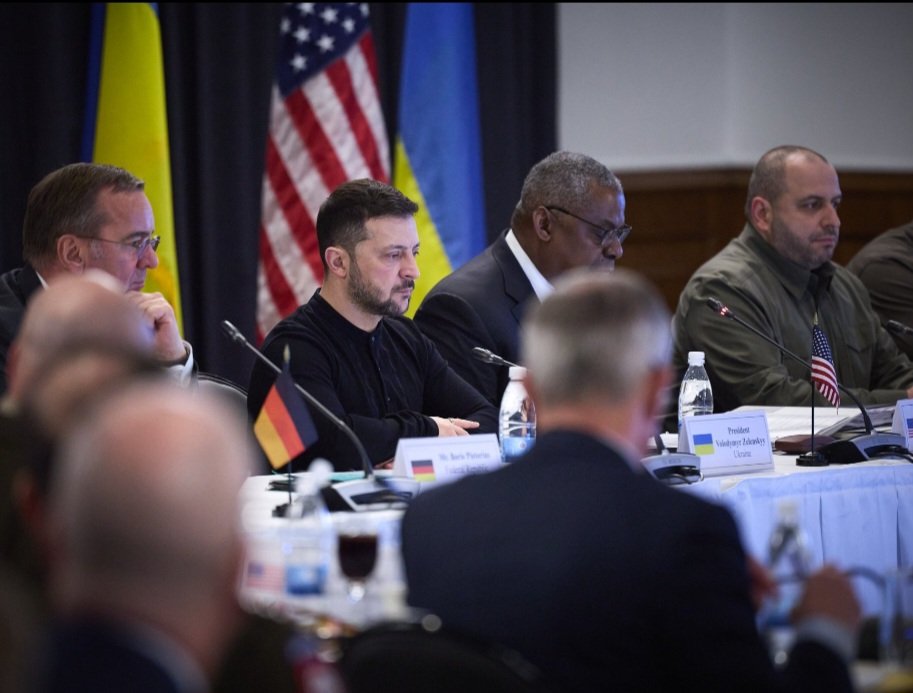
Ukraine energy ceasefire Trump Zelenskyy: a narrower test
Alongside the broad appeal for peace, Zelenskyy said Ukraine was ready for a reciprocal halt to attacks on energy infrastructure. The Ukraine energy ceasefire Trump Zelenskyy proposal offers a narrower test than a comprehensive truce: both sides could identify covered facilities, exchange alleged-violation data and measure whether attacks stop.
That apparent simplicity is deceptive. Russia and Ukraine have disputed earlier claims about compliance, and dual-use facilities can make attribution contentious. Drones may be intercepted or diverted before striking somewhere other than their intended target. A credible arrangement would need definitions, monitoring, rapid investigation and consequences for violations. Without those mechanisms, each side could accuse the other while preserving room to continue operations.
Russia’s position remains materially different from Ukraine’s. Foreign Minister Sergei Lavrov has said Moscow is prepared to negotiate a lasting peace but will not accept a pause that allows Ukraine to rearm. The Kremlin has also said the grounds for high-level talks are not in place. Those positions do not rule out diplomacy, but they show why a limited energy arrangement or leaders’ summit cannot be assumed from Kyiv’s offer alone.
Trilateral meeting Putin Trump Zelenskyy: the diplomatic wager
Zelenskyy asked Trump to organize a trilateral meeting Putin Trump Zelenskyy, concentrating the negotiation at the presidential level. The wager is that only top leaders can authorize the compromises, guarantees and enforcement arrangements required to end the war. It also lets Kyiv demonstrate publicly that it is willing to enter the room.
The drawback is sequencing. Russia has argued that expert-level work must come first, while Ukraine fears that indefinite preparatory talks can become a substitute for decisions. A summit without agreed parameters could produce spectacle, expose disagreements and leave the battlefield unchanged. A process without leaders could stall before negotiators receive authority to move. The difficult task is building enough substance for a meeting to matter without using preparation as an excuse never to hold it.
The Kyiv backdrop: pressure continued during the speech
The diplomatic message landed against another day of attacks in Kyiv. Ukrainian authorities said two people were killed and 23 wounded in separate strikes, while damage to data infrastructure disrupted internet service for about 100,000 households. Those figures come from Ukrainian officials and service reporting; the full damage picture may change as assessments continue.
The outage illustrates why the distinction between military and civilian systems is increasingly hard to sustain. Communications networks can support emergency alerts, businesses, families and military coordination at the same time. Russia has said some data facilities it struck served military purposes. Public reporting confirmed the disruption but did not independently establish every target’s function.
This same-day backdrop strengthens Zelenskyy’s political argument that negotiations occur under continuing coercion. It does not, by itself, prove that the attacks were timed in response to his speech or to the proposed energy ceasefire.
Who gains and who loses from the message
Ukraine gains by placing three themes—technological risk, economic pressure and a leaders’ meeting—inside one appeal. The AI warning broadens the audience beyond governments already focused on territorial lines. The revenue argument gives sanctions advocates a concrete slogan, while the summit request presents Kyiv as open to talks.
Trump gains leverage if both Kyiv and Moscow treat him as the organizer of any eventual meeting. But ownership creates risk: once the U.S. president is positioned as the indispensable broker, failure or an unenforced agreement can also be attributed to Washington.
European governments gain a rationale for combining defense assistance with rules for autonomous weapons. They lose room to treat those files as separate: systems bought for Ukraine today can shape norms and proliferation risks tomorrow.
Russia gains if debate over AI or summit choreography distracts from immediate battlefield and revenue pressure. It loses if Zelenskyy’s framing persuades more governments that the war is a test case for future machine-speed conflict rather than a contained regional struggle.
Civilians on both sides lose if the technology accelerates attacks without stronger verification and human control. They would gain most from a workable energy ceasefire, but also bear the risk if an ambiguous or poorly monitored pause collapses.
Three scenarios for what happens next
1. A limited energy ceasefire becomes the first test
Washington converts the Ukrainian offer into a written, reciprocal framework covering power plants, refineries, fuel depots and major grid infrastructure. Russia accepts because the arrangement protects its energy assets as well as Ukraine’s. Even partial compliance could create verification channels useful for broader talks. The central risk is disagreement over dual-use sites and attribution.
2. Presidential diplomacy advances without a ceasefire
Trump’s team begins preparing a three-way meeting while attacks continue. The participants use the prospect of a summit to exchange conditions on territory, sanctions and security guarantees. This could clarify positions, but it could also reward delay if the meeting becomes an end in itself rather than a path to enforceable commitments.
3. Battlefield automation outruns diplomacy
No leaders’ meeting materializes, revenue restrictions remain uneven and both militaries accelerate automated targeting and drone production into 2027. Systems become more resistant to jamming and more capable of operating with limited communications. The result is not necessarily a fully autonomous war; it is a conflict in which humans have less time to intervene and errors can propagate more quickly.
Bottom line
The speech’s most consequential idea was not that AI will suddenly replace commanders on January 1, 2027. It was that incremental automation is shrinking the time available for diplomacy, regulation and human judgment. Zelenskyy paired that warning with demands for economic pressure and direct negotiation because his argument depends on acting before new capabilities become routine.
Whether the appeal changes policy will be visible in concrete decisions: stronger enforcement against Russian revenue, defined safeguards for autonomous weapons, a monitored energy arrangement, or serious preparation for a leaders’ meeting. Until one of those steps occurs, the address remains a warning with strategic logic but no mechanism of its own.
Sources
- The Daily Reflector: Zelenskyy urges leaders to restrict Russia’s revenues and warns about battlefield AI
- Washington Examiner: Zelenskyy urges the U.N. to resolve the war before AI transforms the battlefield
- AnewZ: world leaders return for the second day of the General Assembly
- Stock Market Watch: AI-driven warfare and Russia’s foreign recruitment
- Reuters: Kyiv internet disruption affecting about 100,000 households
- Reuters: Kyiv petrol-station strikes and casualties
Reporting basis: Fixed September 23, 2026 snapshot with a 3:20 p.m. PDT reporting cutoff. Casualty, drone-use, territorial and foreign-recruitment figures are attributed to Zelenskyy and were not independently verified by Signal Post News. Russian and Ukrainian positions are included where available; analysis and calculations are Signal Post News’s.