
The Russia Kyiv drone strikes internet outage unfolded from Wednesday morning into early afternoon, when an hours-long wave crossed the Ukrainian capital and left communications failures alongside fires and physical damage. Ukraine’s digital ministry said internet service was disrupted for about 100,000 households in Kyiv and the surrounding region. It said specialists were assessing damage and carrying out repairs. Reuters reported that providers UTELS and Pautina were among those experiencing outages.
Russia’s Defence Ministry said its forces struck two data centers in Kyiv and two logistics centers in Odesa, the Black Sea port, describing all four as facilities “used for the benefit of the Ukrainian military.” Ukraine rejected that characterization. Foreign Minister Andrii Sybiha said Russia had targeted major data centers to disrupt information flows and argued that rapid missile and drone alerts are life-saving civilian infrastructure, “not a military target.” The public record confirms disruption and competing claims; it does not independently establish the intended function of every server or the military value Moscow attributed to it.
The daytime wave was broader than the data centers. Reuters reports attributed strikes or damage to a business center, Ukrnafta petrol stations, railway infrastructure, warehouses and the Darnitsa pharmaceutical plant. President Volodymyr Zelenskyy said Russia was targeting “pharmaceutical facilities, gas stations, railways, communications infrastructure, and shopping malls.” Reported casualty figures changed during the response: contemporary accounts put the toll at two people killed and between 22 and 41 wounded. Those figures remain attributed to officials and reporting agencies rather than independently confirmed totals.
What happened during the Kyiv September 23 drone wave
The reported Kyiv data center drone attack added a new layer. A power cut can darken a neighborhood; a damaged communications node can make it harder for people to know what is happening, coordinate work or receive instructions. The digital ministry’s figure—about 100,000 households in Kyiv and the nearby region—describes affected internet service, not a complete communications collapse. Mobile networks, other fixed-line providers and satellite links can provide redundancy. Still, the outage was large enough to move the attack from isolated physical damage into a city-scale information problem.
This report is distinct from Signal Post News’s separately published account of the September 23 strikes on Kyiv petrol stations. That article focuses on fuel distribution, railway damage and the earlier casualty picture. The development examined here is the declared targeting of data centers and the resulting internet disruption—not a rewrite of the petrol-station story.
Why this matters: information flow becomes part of the battlefield
Power grids, fuel depots and rail lines have obvious material value. Data centers are less visible, but they support the systems through which a modern city receives warnings, processes transactions, routes services and coordinates institutions. By publicly claiming attacks on such sites, Russia framed information infrastructure itself as a legitimate object of military pressure. Ukraine, in turn, framed the same network as a civilian safety system whose degradation puts residents at risk.
That dispute is more consequential than the label attached to a building. If Russia targets air raid alert system components or the communications chain that carries warnings, the effect can extend beyond customers who lose home broadband. Alerts depend on overlapping channels—sirens, mobile notifications, broadcast media, messaging services and local networks. Redundancy reduces the danger, but it does not erase it. A temporary loss of one channel can matter when a weapon’s approach leaves only minutes to react.
The military-versus-civilian dispute
Russia’s stated case is that the data and logistics facilities supported Ukraine’s military. Data centers can be dual-use: commercial hosting, government services, corporate systems and defense-related traffic may coexist in the same ecosystem. Military communications, logistics software and command functions have operational value. If the centers performed such roles, Moscow would argue that the strikes were directed at nodes contributing to Ukraine’s war effort.
Sybiha’s case is that the essential function is civilian. Internet access carries warnings, emergency information, medical communications, banking and ordinary economic activity. His statement—“Rapid alerts about missile and drone threats are essential — they save lives”—identifies the humanitarian consequence even if some traffic has a military connection. International humanitarian law does not turn on a government’s label alone; questions of military objective, anticipated advantage, proportionality and precautions require evidence not available in the public reports reviewed here.
The verifiable center is narrower. Russia claimed military benefit; Ukraine reported large-scale civilian internet disruption, repairs and provider outages. Those facts establish consequence, not certainty about server-level use, target selection or legality.
What 100,000 disconnected households means in a city of roughly three million
The phrase 100,000 Kyiv households lose internet is striking, but household counts and population are not directly interchangeable. Kyiv has roughly three million residents, while households vary in size and the ministry’s estimate also included the surrounding region. The disruption therefore did not disconnect one-third of the capital. It did, however, plausibly affect several hundred thousand people directly or indirectly, depending on household composition and overlapping service interruptions.
The number also matters because connectivity is a network service rather than a stockpile. A damaged provider node can affect many customers at once, though traffic may be rerouted. That is why the ministry’s language about assessment and repairs is important: the scale of the initial outage does not tell us the duration, the permanent capacity loss or the level of redundancy that remained.
Part of a systematic pre-winter infrastructure campaign
Russia has repeatedly struck Ukrainian energy and communications infrastructure as colder weather approaches, while Ukraine has attacked Russian refineries and logistics. The previous night’s barrage hit industrial and energy sites and cut power to nearly 100,000 consumers in Chernihiv region, according to Ukrainian officials. Our report on the Chernihiv blackout and industrial strikes details that preceding wave.
The petrol-station pattern reinforces the point. Ukrnafta said the September 23 hit was the sixth strike on one of its facilities in recent weeks. One damaged forecourt is a localized emergency; six incidents begin to look like pressure on a network’s repair capacity, insurance, staff and public confidence. The same logic applies to data infrastructure: repeated attacks could force providers to disperse equipment, harden sites and maintain costly backup links.
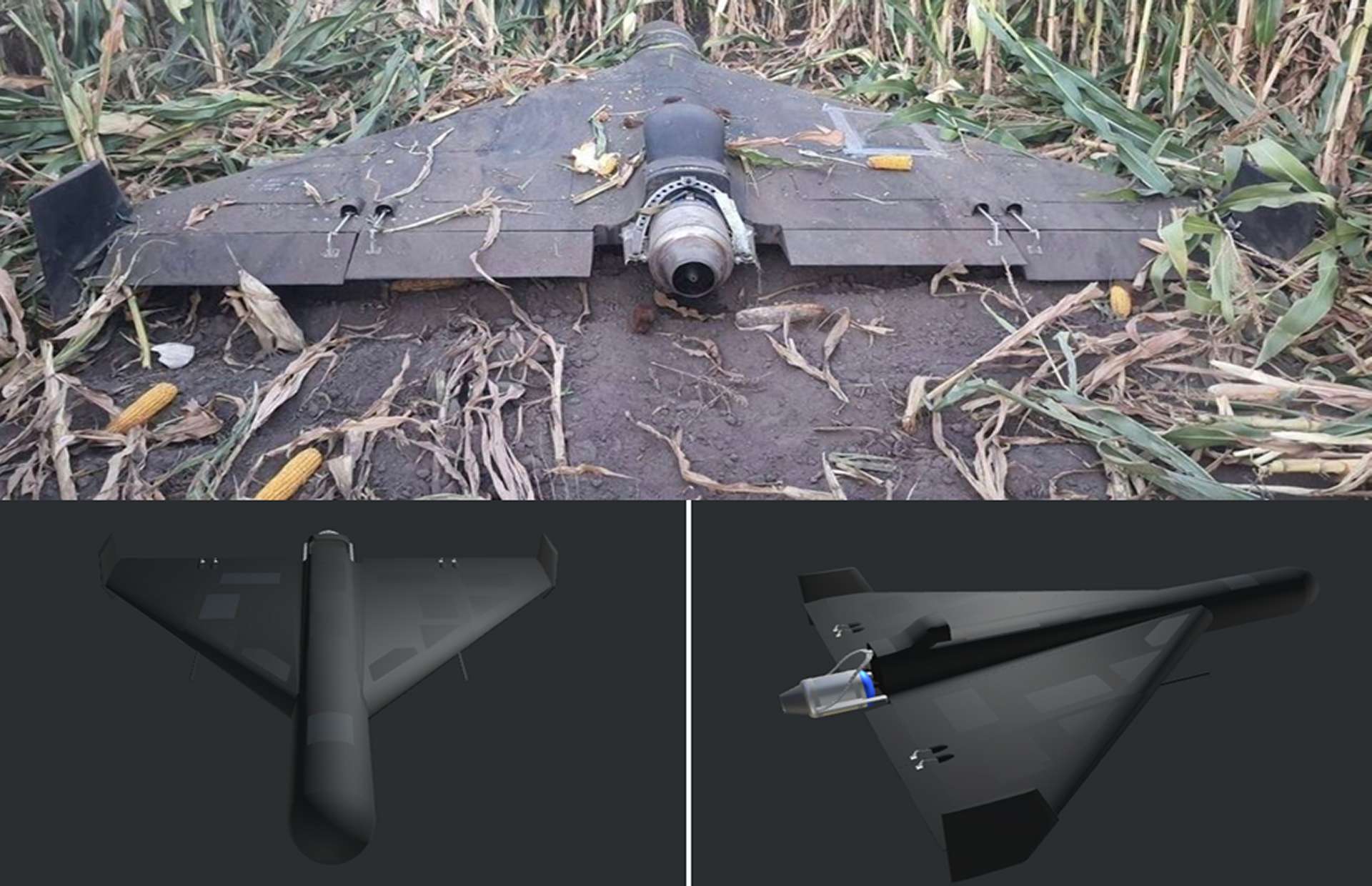
Faster drones complicate the defense. Ukraine says Russia is increasingly employing jet-powered systems that reduce warning and engagement time. They are not invulnerable, but speed can compress decisions and push defenders toward more expensive interceptors. Our explainer on jet-powered Russian drones and Ukraine’s air-defense strain examines that cost exchange in detail.
Darnitsa, Odesa and the breadth of the target set
The reported Darnitsa pharmaceutical plant strike adds a public-health dimension. Pharmaceutical production is a civilian economic activity, though Russia’s broader target claims described sites as serving military interests. The available Reuters reports did not provide independent evidence linking the plant to military use. Zelenskyy included pharmaceutical facilities in his list of sectors hit, placing the factory within Kyiv’s argument that the wave was designed to disrupt ordinary life.
The claimed Odesa logistics drone strike shows the campaign was not confined to the capital. Russia said two logistics centers in the port city were struck. Odesa is central to Ukrainian trade and maritime access, and logistics facilities can serve civilian and military supply chains. Again, the existence of dual use cannot be assumed from Moscow’s statement or ruled out from Kyiv’s response; site-specific evidence would be required.
Separately, a Russian aerial bomb hit a frontline village in the Donetsk region, killing at least four people and wounding four, according to the regional governor on Telegram as reported by Reuters. The Donetsk village aerial bomb attack was a distinct event, not part of the Kyiv drone wave. Keeping those incidents separate matters because they involved different locations, weapons and reporting chains even though they occurred within the same day’s war.
The diplomatic timing: one day after the UNGA meeting
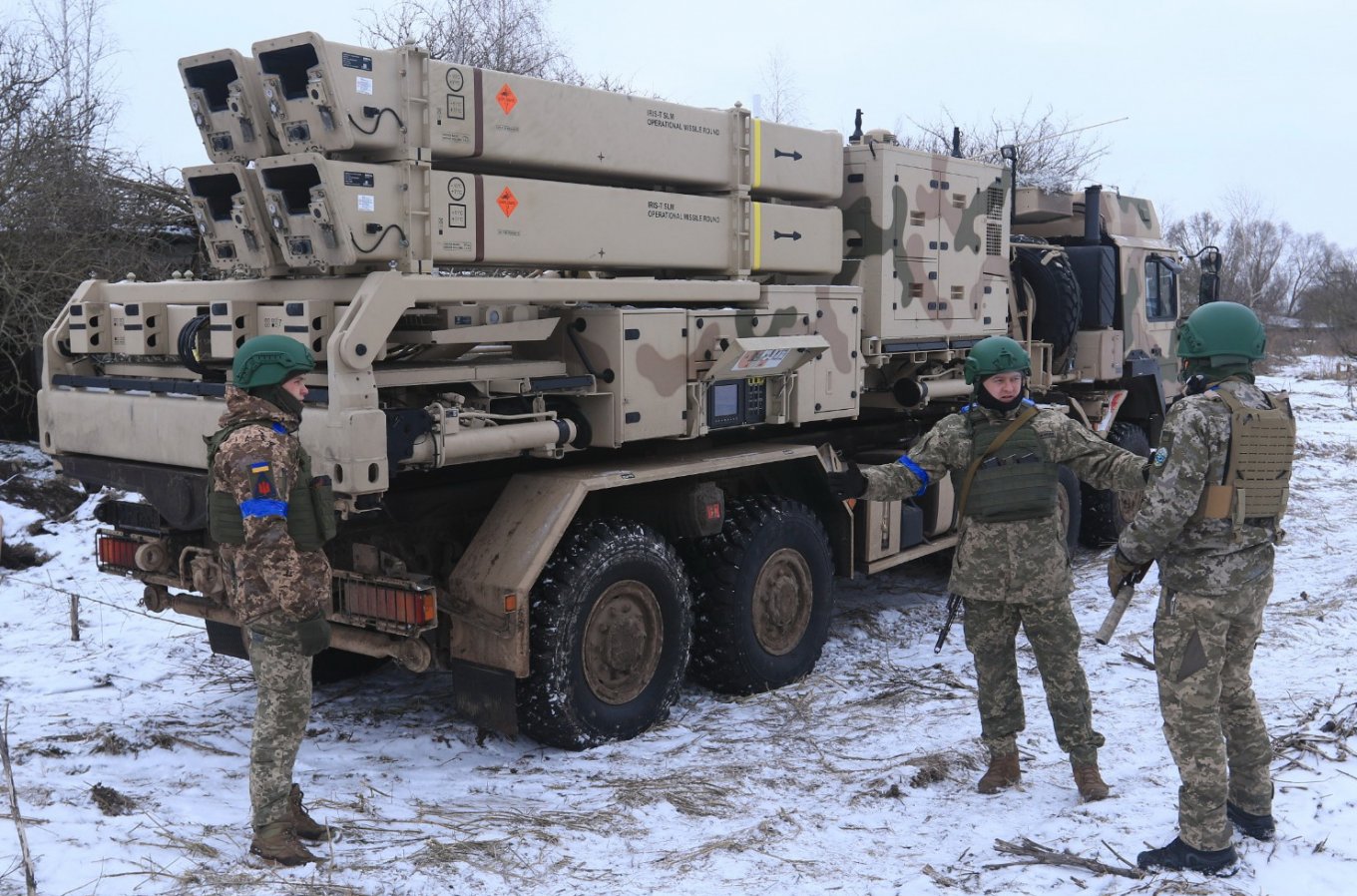
The strike came one day after President Donald Trump and Zelenskyy met during the United Nations General Assembly in New York, where a reciprocal pause in attacks on energy infrastructure was discussed. No ceasefire was concluded, no verification mechanism was announced and Russia had not accepted the proposal. Those limits make it inaccurate to describe Wednesday’s wave as a violation of an agreement that did not exist.
Even so, timing shapes political meaning. The attack can reasonably be read as Moscow’s answer to the truce proposal: not a documented order responding to the meeting, but a practical demonstration that Russia retained the ability and willingness to strike interconnected urban systems. For Zelenskyy, the wave undercut the diplomatic message he was carrying through UNGA by turning the next news cycle back toward casualties, outages and air defense.
Russia may see a different benefit. Demonstrating reach across data, logistics, fuel and rail networks can pressure Ukrainian military coordination and send a domestic signal of resolve. It can also raise the price of continued Ukrainian refinery attacks by reminding Kyiv and its partners that Moscow can answer against infrastructure closer to civilians. Yet that strategy carries costs: visible disruption to warning systems strengthens Ukraine’s argument for more air-defense support and may harden foreign opposition to Russia’s campaign.
Who benefits—and who loses
Russia could gain tactical friction. If the affected centers supported military or government traffic, even a temporary outage could slow coordination, complicate logistics or force Ukraine onto backup networks. The strike also consumes Ukrainian interceptors and repair resources. The extent of any military effect remains unverified.
Kyiv’s civilians bear the clearest immediate cost. Households lost service; workers and businesses faced disruption; residents had to navigate alerts during an active attack. The danger is not merely inconvenience. Communications outages can delay warnings, separate families and complicate access to emergency information at the moment it is most valuable.
Diplomacy loses credibility. A strike wave immediately after ceasefire discussion makes verbal proposals look remote from battlefield behavior. That does not prove negotiations are futile, but it raises the burden on Washington and other intermediaries to define protected infrastructure, monitoring and consequences rather than rely on general statements of intent.
What happens next: resilience, satellite links and escalation risk
The first test is technical: how quickly providers restore service, whether customers can be rerouted and whether the damaged centers had functions that cannot be moved easily. Ukraine’s digital ministry said experts were assessing damage and conducting repairs. A rapid recovery would demonstrate resilience; repeated or cascading failures would suggest that the attack reached deeper dependencies.
The second test is whether data-center targeting becomes a pattern. Additional strikes on provider facilities, internet exchange points, mobile backhaul or the electricity supply serving them would indicate a campaign rather than a single operation. Defenders would then have to decide which nodes receive scarce protection while providers accelerate geographic dispersion and redundancy.
Satellite systems such as Starlink can preserve connectivity for military units, emergency teams and selected institutions when terrestrial networks fail. They are not a complete substitute for fixed broadband across 100,000 households: terminals, capacity, power and distribution are finite. Heavy reliance on any one external network also creates strategic dependence, making contractual access, interference and resilience part of national-security planning.
The final test is diplomatic. A narrowly drawn infrastructure truce would have to specify whether data centers, commercial telecoms, mobile towers, power supplies and logistics sites are protected, and how dual-use disputes are investigated. Without that detail, each side can describe its own target as military and the other’s as civilian. The September 23 wave shows why a ceasefire category that mentions “energy” but ignores communications may be too narrow for the infrastructure war now unfolding.
Conclusion: the outage is the warning
The significance of Wednesday’s attack lies in the service interrupted. About 100,000 households lost internet access while a daytime drone wave was still moving through Kyiv. Russia says the centers benefited Ukraine’s military; Ukraine says the same infrastructure carries alerts that save civilian lives. Both propositions can be asserted, but the military function and legality of the specific targets cannot be settled from official statements alone.
What is clear is that the boundary between physical and informational warfare is narrowing. A damaged server hall can isolate households, burden emergency systems and force military traffic onto backups at the same time. If September 23 becomes a template rather than an exception, Ukraine’s winter defense will depend not just on protecting generators and substations, but on preserving the networks that tell people where the danger is.
Sources
- Reuters, September 23, 2026: data-center strike claims, digital-ministry outage report, provider disruption and official statements
- Reuters, September 23, 2026: petrol-station, railway and casualty reporting from the Kyiv wave
- TBS News / Reuters, September 23, 2026: Kyiv strike overview and the separate Donetsk village attack
- Prohoster: March 2026 file photograph of a Kyiv commercial data center, not identified as a strike site
Reporting cutoff: September 23, 2026 at 12:45 p.m. PDT. Casualty totals are reported figures and may change. Russia’s military-use description and Ukraine’s civilian-infrastructure description are attributed claims. The Donetsk aerial-bomb attack was separate from the Kyiv drone wave. All photographs are clearly identified file images and do not depict Wednesday’s strikes.