Zelenskyy UN General Assembly speech 2026
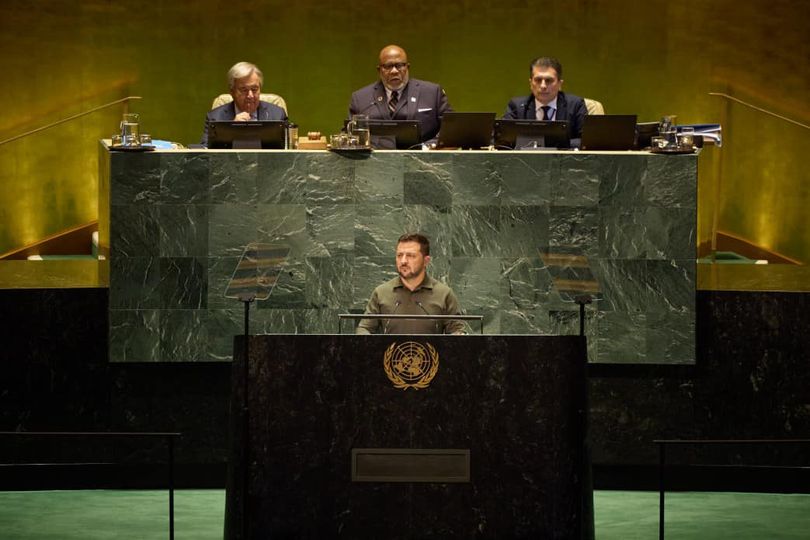
The Zelenskyy UN General Assembly speech 2026 put a blunt demand before the world body on Wednesday: it must “speak out and condemn” Russia. Appearing in person before the General Assembly for the first time since Russia’s full-scale invasion began in 2022, Ukrainian President Volodymyr Zelenskyy argued that survival in war is decided by weapons rather than institutions. The Times’ UNGA Day 2 live coverage listed him as the 17th speaker in the morning session of the General Debate in New York.
The speech was not simply an appeal for another declaration. It was an argument about power. Zelenskyy asked the institution to use its voice while warning that voice alone cannot stop an attack. That tension—between the authority of 193 member states and the Security Council’s paralysis under Russia’s veto—was the organizing logic of the address.
Why this matters
A sitting president used the United Nations’ most visible annual stage to lecture the institution hosting him on its weakness, then asked that same institution to act. The paradox was calculated. If the General Assembly cannot compel Russia to stop, Zelenskyy’s appeal can still force governments to choose whether to condemn Moscow, support Kyiv materially or remain silent.
Zelenskyy weapons decide who survives: the doctrine behind the appeal
The line of argument that weapons—not institutions—decide who survives reframed the request. Condemnation was presented as a starting point, not an outcome. The implication was that a vote or statement matters only if it contributes to concrete protection, pressure or military capacity. That is analysis of the speech’s logic, not a claim that the General Assembly itself can authorize or deliver weapons.
The timing gave that argument added force. President Donald Trump had just described Russia as a “paper tiger” and said Kyiv was “in a position to fight and win all of Ukraine back” with European Union and NATO support. Zelenskyy’s doctrine aligned with that turn: if Russia is weaker than its battlefield image suggests, then arming Ukraine becomes, in this framing, a way to test the claim rather than merely to express solidarity.
The address also arrived as winter approached, when both sides prepare for harder conditions and pressure on energy infrastructure. Delivering the appeal personally—his first in-person appearance before the body since 2022—made the Zelenskyy first in-person UN address 2026 a deliberate escalation of personal diplomacy. A remote appeal can inform; appearing in the hall forces leaders and delegations to encounter the argument in the room where collective security is supposed to be organized.
What he actually said
The following passages are reproduced exactly from the official Ukrainian presidential transcript as republished by GlobalSecurity.org:
“many countries are here, at this General Assembly — countries that are at war, or just came out of war, or are trying to stop one. Or openly getting ready for one. War has already reached too many people to pretend it has nothing to do with you.”
“Yesterday, we had a good meeting with President Trump. And I also spoke with many other strong leaders. And together, we can change a lot.”
“So don't stay silent while Russia keeps dragging this war on — please, speak out and condemn it. Please join us in defending life, and international law and order. People are waiting for action.”
Those are transcript quotations. A separate ANI wire report dated September 24 paraphrased Zelenskyy’s opening as questioning the relevance of the United Nations in addressing global crises. ANI also reported that he stressed the importance of the G7 and G20 but said that “in the end, this depends on all of us, on the United Nations.” The distinction matters: the longer passages above come from the official transcript; the description of how he opened and framed institutional relevance comes from the wire service’s account.
Zelenskyy don't stay silent Russia: a demand aimed at the undecided
The wording “don't stay silent” was directed beyond Ukraine’s established supporters. The reference to countries at war, emerging from war or preparing for one widened the constituency. It asked governments to see the Ukraine conflict not as a regional file but as evidence about what happens when international rules meet force. The phrase Zelenskyy speak out condemn Russia captures the immediate ask; the accompanying appeal to defend international law explains why he presented it as a test for every delegation.
The day around the speech
Zelenskyy Trump meeting UNGA: the “good meeting” framing
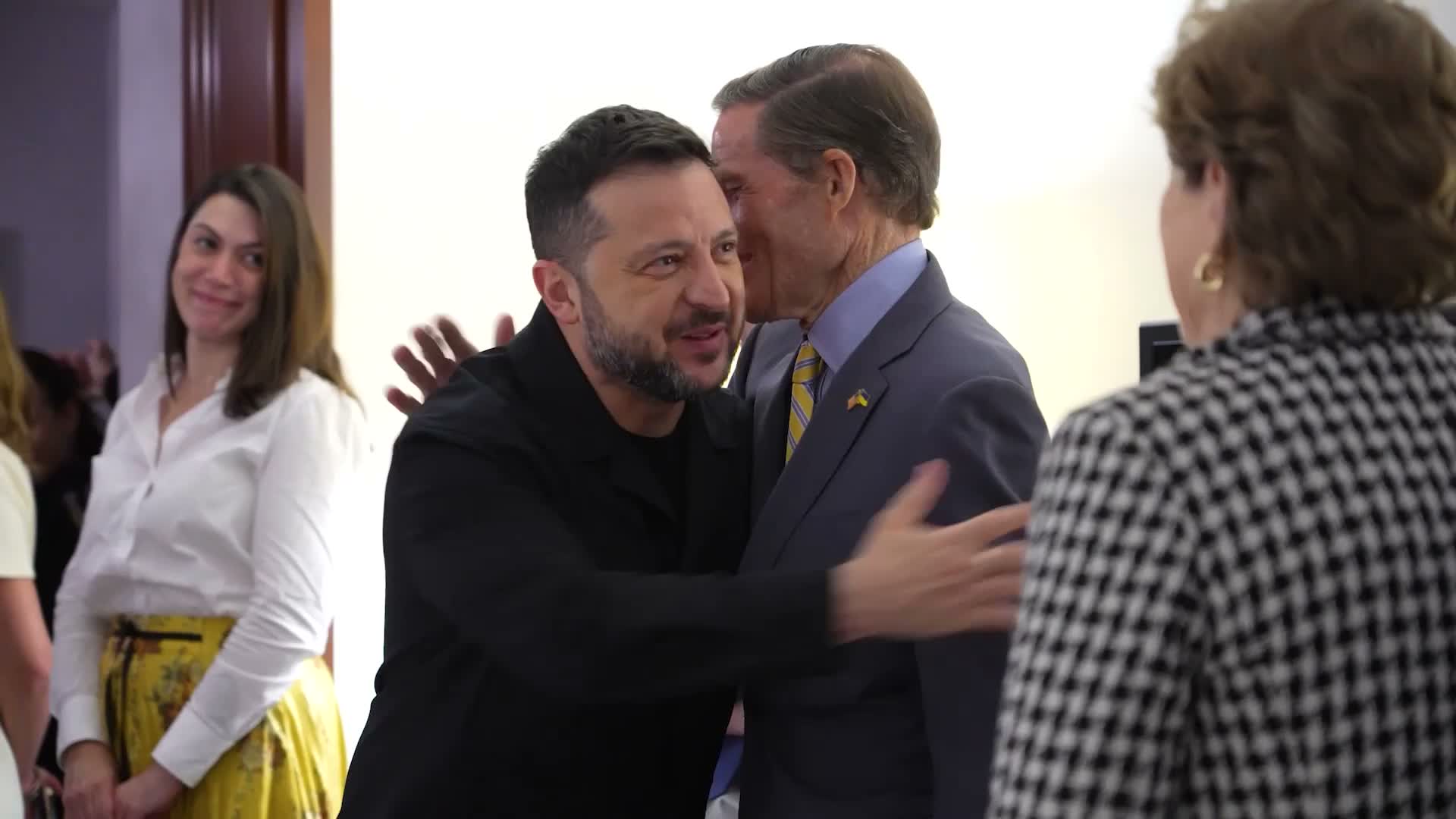
Zelenskyy’s reference to a “good meeting” pointed to his Tuesday, September 22 talks with Trump at UNGA. The two discussed ending the war and a potential energy ceasefire. No settlement or Russian commitment emerged in the verified account. The value of the phrase was political: Zelenskyy publicly attached his appeal to a constructive description of his exchange with the U.S. president.
Trump’s subsequent Truth Social post supplied tailwind. He said Kyiv was “in a position to fight and win all of Ukraine back” with EU and NATO support and called Russia a “paper tiger.” Zelenskyy did not need to claim a new agreement; he could instead place Trump’s shift beside his own argument that material capability determines survival. For the full sequence, see Signal Post News’ analysis of the Trump–Zelenskyy meeting and proposed energy ceasefire.
UN Security Council Ukraine meeting September 2026
The diplomacy continued on Wednesday. U.S. Secretary of State Marco Rubio and Russian Foreign Minister Sergey Lavrov met behind closed doors at UNGA for just under an hour. The State Department and Russia’s Foreign Ministry each issued a readout. The verified material supplied for this report does not include the language of those readouts, so this article does not infer agreement or disagreement beyond the confirmed fact that the channel remained open. Signal Post News has separate coverage of the Rubio–Lavrov UNGA meeting.
A U.N. Security Council meeting on Ukraine was held the same day. Its existence underscored the institutional split at the center of Zelenskyy’s speech: Ukraine can command attention in both the Assembly and the Council, but Russia’s veto prevents the Council from taking binding action against Moscow.
Syria’s interim leader Ahmed al-Sharaa also addressed the General Assembly Wednesday, becoming the first Syrian leader to address the body in nearly six decades, according to ANI. That historic appearance broadened the day’s theme: leaders shaped by war were using the same chamber to ask what international institutions can still do.
The war continued while diplomacy convened
Russian strikes on Ukraine continued while Zelenskyy spoke in New York, including a Wednesday morning drone assault on Kyiv. Reuters had reported on September 22 that Zelenskyy said Ukrainian intelligence showed Russia preparing a “new massive attack.” That was an attributed intelligence assessment, not a confirmed forecast; our report on the warning separates the claim from what remained unknown.
Background: the UN's paralysis problem
Zelenskyy can appeal to the General Assembly and call the United Nations weak because the two propositions are not mutually exclusive. The Assembly offers visibility, diplomatic legitimacy and a forum in which every member state has a voice. The Security Council is the body with the strongest enforcement authority, but Russia’s veto means it cannot act against Russia over the invasion.
That structure turns the General Debate into political pressure rather than executive power. The Ukraine UN General Assembly 2026 campaign can produce statements, coalitions and signals. It cannot, by itself, stop missiles, compel negotiations or overcome a permanent member’s veto. Zelenskyy’s peace formula remains part of Ukraine’s diplomatic framework, but the verified source set for this report does not supply new terms or a new agreement attached to Wednesday’s address.
Earlier wartime appeals to the body were delivered by video. The personal return to the hall after four and a half years of full-scale war therefore mattered as a change in method. The Zelenskyy General Debate address was not evidence that the institutional obstacle had disappeared; it was a decision to confront that obstacle in person.
Who gains and who loses
Ukraine gains the center of the news cycle at UNGA’s peak. The speech linked battlefield urgency, institutional criticism and the “good meeting” with Trump in one narrative. That lets Kyiv present military support and diplomacy as complementary rather than competing tracks.
Russia absorbs a public indictment but retains institutional leverage. Moscow was condemned by name before representatives of 193 member states while Lavrov met Rubio in a back room. The contrast favors Ukraine’s public argument, yet Russia’s veto and the absence of a confirmed settlement mean the formal balance of power did not change at the podium.
The United Nations is elevated and indicted at the same time. Zelenskyy treated the Assembly as the place where global judgment should be voiced, while his weapons-first argument accused the system of failing its core security test. The institution gains relevance as the arena and loses authority as the instrument.
Trump gains reinforcement for a peacemaker narrative. Zelenskyy’s public appreciation of their meeting gives Trump a favorable role in the account without establishing that the meeting produced a deal. That distinction is essential: political credit can move faster than policy.
European capitals receive a warning against drift. The official transcript’s reference to countries “openly getting ready” for war reads as a message to governments weighing defense readiness and support for Ukraine. It does not identify particular capitals or predict a wider war, but it raises the cost of treating the conflict as distant.
What the numbers mean
- 81st session: the speech came during the annual General Debate of the U.N. General Assembly’s 81st session, where global visibility is high but speaking time is short.
- 193 member states: the audience gives condemnation breadth. It does not give the Assembly the Security Council’s enforcement powers.
- 17th speaker: Zelenskyy’s place in the morning sequence put him inside a crowded program, making clarity and repetition central to the message’s reach.
- Four and a half years: the duration of the full-scale invasion explains both the urgency and the difficulty of producing a new diplomatic outcome.
- About 15 minutes: a podium slot can define a news cycle, align public messages and pressure delegations. It cannot negotiate ceasefire terms, transfer weapons or remove Russia’s veto.
Winter approaching is not a ceremonial number, but it is a strategic clock. Energy infrastructure, defensive supplies and the endurance of civilians become more consequential as temperatures fall. The speech tried to turn that calendar pressure into a decision point for governments before events on the ground set the terms.
What happens next
The confirmed next tracks are institutional and diplomatic. The Security Council meeting creates a record for follow-up, though Russia’s veto remains. The potential energy ceasefire discussed by Trump and Zelenskyy remains a proposal, not an agreement. The Rubio–Lavrov channel remains open after a meeting of just under an hour, but no result should be inferred from the fact of contact alone.
Zelenskyy has repeatedly flagged the winter window. That makes allied decisions on support and pressure more important in the near term, but the verified facts here do not establish what any government will approve. General Assembly condemnation could translate into votes, weapons or political pressure; it could also stop at statements. Which outcome follows is speculation until governments announce concrete decisions.
The test of the speech is therefore measurable. Watch for additional votes or joint statements, specified military support, defined energy-ceasefire terms, or public movement in the U.S.–Russia channel. The speech established Ukraine’s demand and its diagnosis of institutional weakness. It did not resolve the war, create a ceasefire or show that Russia had accepted negotiations.
Sources
- GlobalSecurity.org: official president.gov.ua transcript of Zelenskyy’s General Assembly address
- ANI via NewKerala: “Don’t stay silent while Russia keeps dragging this war”
- The Times: U.N. General Assembly Day 2 live coverage and speaker order
Reporting basis: Direct quotations are reproduced from the official presidential transcript as republished by GlobalSecurity.org. Descriptions from ANI are identified as wire-service reporting. Analysis distinguishes confirmed meetings and statements from proposals, forecasts and unresolved diplomatic outcomes.