Science · Space · Business
The ULA Vulcan rocket failure on Sunday, November 15 ended the most scrutinised return-to-flight mission in United Launch Alliance’s history: a rocket that had waited nine months to fly again, carrying the largest single batch of Amazon Leo satellites ever launched, was lost about 10 minutes after liftoff — and with it, a perfect mission record that had survived, unbroken, since 2006.
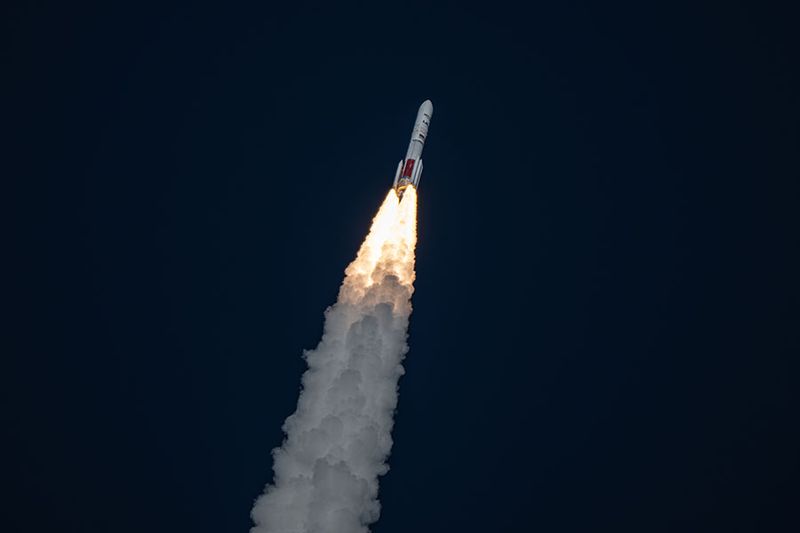
CAPE CANAVERAL, Florida, November 16, 2026 — The ULA Vulcan rocket failure that destroyed 40 Amazon Leo broadband satellites on Sunday began, by every outward sign, as a triumph. After two scrubbed attempts and a nine-month grounding, the 214-foot Vulcan lifted off from Space Launch Complex 41 at Cape Canaveral Space Force Station at 12:40 p.m. ET (9:40 a.m. PT), riding 3.8 million pounds of thrust from six solid rocket boosters and two methane-burning BE-4 engines. About 10 minutes into the flight, during the burn of the Centaur upper stage, the vehicle suffered what United Launch Alliance calls an anomaly and failed to deliver its payload to orbit. All 40 satellites were lost. It was the first outright mission failure in ULA’s history — the first since Boeing and Lockheed Martin formed the joint venture in 2006 — and the cause, as of publication, is unknown. Nothing in this article speculates about what failed or why, because neither ULA nor any investigator has said.
The stakes were stacked unusually high for a single commercial launch. This was Vulcan’s fifth flight since its January 2024 debut and its first in nine months, a return to flight after a solid rocket booster nozzle failure on a February 2026 Space Force mission. It was also the first of 38 Vulcan launches Amazon has bought for Leo, its planned rival to SpaceX’s Starlink — the largest single share of the launch manifest for a constellation that needs more than 3,300 satellites. A successful Sunday would have pushed Leo’s launched total to 436 satellites. Instead, the mission known as LV-01 became the data point that will define two companies’ next year: the launcher that sold reliability above all else has now lost a rocket, and the constellation racing an operational competitor has lost its biggest batch yet, in a single morning.
What we know
- The flight: ULA’s Vulcan lifted off Sunday, November 15, 2026 at 12:40 p.m. ET from Space Launch Complex 41, Cape Canaveral Space Force Station, carrying 40 Amazon Leo satellites on mission LV-01. About 10 minutes into flight, during the Centaur upper-stage burn, the vehicle suffered an anomaly and failed to deliver the payload to orbit. All 40 satellites were lost.
- The record: it is ULA’s first outright mission failure since the Boeing–Lockheed Martin joint venture was formed in 2006, ending a two-decade run without a total loss.
- The cause: unknown. ULA has identified no failed component and has not said whether an unexplained countdown hold at T-minus 20 seconds on Sunday was related to the failure.
- The investigation: the FAA requires ULA to conduct a mishap investigation and submit a final report for approval identifying the root cause and corrective actions. No timeline has been set, and Vulcan faces a grounding while it runs.
- The rocket: this was Vulcan’s fifth flight since January 2024 and its first in nine months, following two earlier solid-booster nozzle anomalies — the third anomaly of some kind in five flights, but the first total loss.
- What is next for Amazon: Leo’s next scheduled launch is an Ariane 6 carrying 36 satellites, targeted for November 23 at the earliest. The 38-flight Vulcan backlog is paused pending the investigation.
What happened, minute by minute
A weekend of scrubs before the Cape Canaveral Vulcan launch of November 15
Sunday’s liftoff was the third attempt in three days, and the weekend’s troubles began on the ground, not on the rocket. Friday’s November 13 attempt was scrubbed after a power outage at the Air Liquide gaseous nitrogen plant that serves the launch site. Saturday’s attempt was scrubbed over a ground-to-rocket network communication problem. On Sunday, with the rocket finally fuelled and the countdown running, launch controllers called a hold at T-minus 20 seconds for an unexplained technical issue. The issue was resolved, the count resumed, and Vulcan lifted off at the end of its launch window, at 12:40 p.m. ET. ULA has not said whether the countdown issue was related to the failure that followed, and Signal Post News does not assume it was: a resolved ground or vehicle hold and an in-flight anomaly ten minutes later are, on the public record, two separate facts.
The first two minutes of flight were the part of the mission everyone was watching most nervously — and they went well. The six Northrop Grumman solid rocket boosters, whose nozzles had failed on two earlier Vulcan flights, appeared to perform normally, separating about one minute 35 seconds after liftoff. The twin Blue Origin BE-4 engines of the first stage then carried the climb. Two details in the public record deserve careful wording, because they are observations, not findings. Spaceflight Now reported that the BE-4 first stage appeared to burn longer than the pre-launch timeline called for, and that stage separation came late; and that the telemetry-driven animation on the launch broadcast showed the Centaur upper stage making unusual orientation adjustments early in its burn. Those are descriptions of what the webcast data appeared to show. ULA has not confirmed them as significant, has not connected them to the anomaly, and has not identified any component as having failed. The confirmed fact is narrower and grimmer: about 10 minutes into the flight, during the Centaur’s burn, the vehicle suffered an anomaly and the mission was lost.
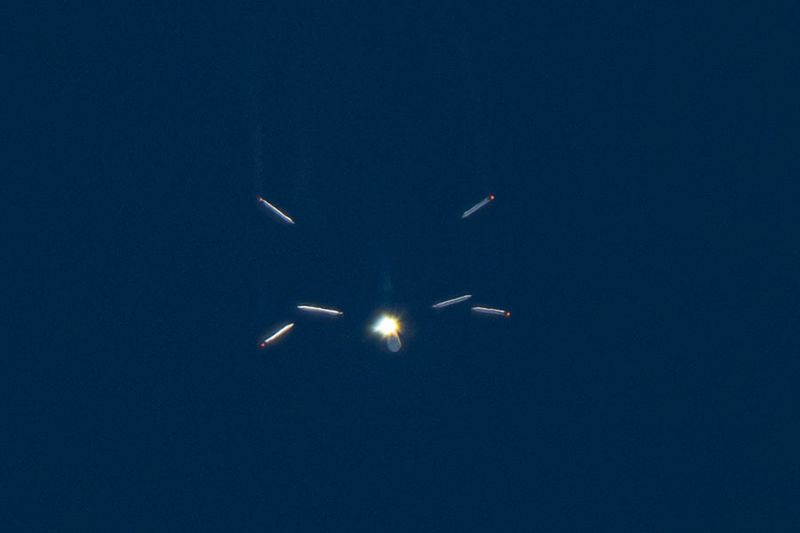
Roughly 50 minutes after liftoff, ULA confirmed the loss publicly. The launch commentators had closed the broadcast without confirming whether the Centaur’s planned burn had completed, and the company’s statement, when it came, was the only authoritative account of the flight’s end.
The ULA statement and the FAA mishap investigation
ULA’s statement, issued about 50 minutes after liftoff, is worth reading in full, because everything that is officially known about the failure is inside it — and everything that is not known is outside it: “Based on data received by our Launch Director, we confirm that the Vulcan vehicle launched from Space Launch Complex 41 suffered an anomaly 10 minutes into the flight and failed to deliver the Amazon mission to orbit… We will work closely with our customer and other appropriate organizations to find the cause, determine the appropriate corrective action and return to flight as quickly as possible.” The company also pledged full transparency with its customers, who will have visibility into the investigation process. Notably absent from the statement — as from everything ULA has said since — is any identification of what went wrong. The Vulcan Centaur anomaly is, at this stage, exactly that: an anomaly, a deviation from the planned flight that ended the mission, with its mechanism unestablished.
The formal process now runs through the Federal Aviation Administration. FAA officials said ULA must conduct a mishap investigation and submit a final report for approval identifying the root cause and the corrective actions taken — the standard regulatory path after a commercial launch failure, and one with no timeline attached. Until that report is approved, a Vulcan rocket grounded investigation is the reality both companies plan around: Vulcan does not fly again on ULA’s say-so alone. NASA, whose Artemis programme depends on ULA, publicly offered help. NASA Administrator Jared Isaacman wrote on X: “Artemis, Moon Base, and the nation need ULA. We are in your corner and here to help.” Amazon Leo, for its part, acknowledged the loss on X with the launch industry’s oldest truth, noting that there is risk with any launch, and especially with inaugural missions like LV-01.
Why this failure matters far beyond one payload
Start with the record, because the record was the product. For two decades, through the entire history of the Boeing–Lockheed Martin joint venture, ULA’s core selling point against SpaceX was never price or cadence — it was certainty. Governments and satellite operators paid ULA’s premium because ULA rockets, across the Atlas and Delta fleets and then Vulcan, did not fail outright. That argument ended on Sunday. A ULA first mission failure since 2006 is not just a statistic; it removes the single clearest line in every future ULA bid, at the moment the company can least afford to lose it.
The second reason is who else was waiting on this flight. Vulcan is not only Amazon Leo’s workhorse-in-waiting; it is a certified national-security launcher whose Space Force missions were already on hold. After February’s booster nozzle failure, the Space Force paused Vulcan launches of national-security payloads pending further analysis, while allowing commercial flights to proceed — which made LV-01, in effect, a demonstration flight as well as a delivery. A commercial failure now deepens the certification pressure from the other direction: the investigation must satisfy not only the FAA and Amazon, but a military customer deciding when its most sensitive payloads can ride this rocket again. One anomaly, in other words, has put the same rocket on hold for three different audiences at once.
The rocket Vulcan had to be
Vulcan exists to replace the Atlas 5, the Russian-engined workhorse ULA is retiring, with an all-American heavy lifter built around Blue Origin’s methane-burning BE-4. Sunday’s vehicle stood 214 feet tall and left the pad on 3.8 million pounds of thrust — six strap-on solid boosters plus the two BE-4s. The programme’s short flight history is now the context every investigator will start from. Vulcan debuted in January 2024. In five flights it has recorded three anomalies of some kind: two involving the solid rocket booster nozzles — one in 2024 and the second on the February 2026 Space Force mission, after which the fleet stood down for nine months while ULA and Northrop Grumman worked the problem — and now a third, in a different phase of flight, that destroyed the vehicle and its payload. Three anomalies in five flights is not the same statement as three failures: the nozzle events did not lose their missions. But Sunday converted a pattern of partial problems into a total loss, and it did so on the flight that was supposed to close the nozzle chapter.
One more piece of the machine deserves mention, precisely because it must not be turned into an accusation. The BE-4 engines flown Sunday carried a retrofit kit for a main oxygen valve, developed after a May New Glenn engine-test explosion — the BE-4 powers both Vulcan’s first stage and Blue Origin’s New Glenn, and Blue Origin engineers installed the fix on this vehicle’s engines months before flight. ULA’s pre-flight position was that the boosters’ known issues had identified causes and mitigations in place, and on Sunday the boosters did perform. Whether the valve retrofit, the long first-stage burn, the late separation or the Centaur’s behaviour are connected to the loss is exactly what the mishap investigation exists to determine. Until it does, they are entries in a timeline, not a verdict — and any account that presents them as a cause is ahead of the evidence.
Amazon’s arithmetic: 40 satellites, one morning
For Amazon, the loss is measured in batches. Leo has been deploying since April 2025 and had launched nearly 400 satellites before Sunday, in batches of up to 29 at a time on ULA’s Atlas 5 — eight Atlas 5 Leo missions in all. LV-01 was to be the step change: 40 satellites on one Vulcan, the largest single batch yet, lifting the launched total to 436. Set against the more than 3,300 satellites the full constellation requires, even success would have left Leo at roughly 13 percent deployed. Failure leaves it under 400, with the difference between those two numbers now waiting on an investigation calendar nobody controls.
Amazon Leo vs Starlink: a delay measured in batches
The competitive frame is unforgiving. Starlink is not a plan but an operating network, adding satellites on a launch cadence no rival currently matches, while Leo is still in the deployment phase where every lost batch is a visible fraction of the whole. Amazon’s hedge against exactly this kind of day is its diversified manifest: alongside the 38 Vulcan flights, it holds 24 launches on Blue Origin’s New Glenn, 24 on Europe’s Ariane 6 and 13 on SpaceX’s Falcon 9 — a Starlink rival buying rides from Starlink’s own rocket, because capacity is capacity. Sunday’s failure does not break that strategy, but it stresses its weakest leg: the largest block of Leo launches belongs to the one provider that is now grounded. Readers following Amazon’s wider year can set this against the company’s October results in this newsroom’s coverage, Amazon Stock Falls as AWS Growth Hits 39 Percent but Earnings Miss and AI Spending Swallows Cash Flow — a reminder that Leo’s billions are being spent by a company whose investors are already asking hard questions about the pace of its capital spending.
Two judgements will be argued in the weeks ahead, and fairness requires stating both as the open questions they are. Critics will ask whether a nine-month return-to-flight campaign, flown under commercial schedule pressure with a first-of-its-kind payload of 40 satellites, moved faster than the evidence justified — a question experts will put to the investigation, not a conclusion anyone has established. ULA’s position, stated before and after the flight, is that the known booster problem had identified causes and mitigations, that the boosters performed on Sunday, and that the company will share the investigation with its customers in full. Both things can be examined by the same inquiry. What cannot be done honestly, yet, is to pick a culprit.
What happens next
The near term belongs to Europe. Amazon’s next scheduled Leo launch is an Ariane 6 carrying 36 satellites, targeted for November 23 at the earliest — a flight that, a week ago, was one line in a manifest and is now the constellation’s only scheduled path to orbit. If it flies on time, Leo resumes growing while Vulcan is investigated; the Amazon Leo next launch on Ariane 6 has become, by accident, the most important near-term date in the programme.
Beyond that, the scenarios branch on a single unknown: how long the Vulcan rocket grounded investigation runs. A contained finding — a cause isolated to a component or procedure that can be corrected and re-qualified quickly — could return Vulcan to flight in months, with the 38-flight Amazon backlog resuming and the Space Force hold reassessed on the same evidence. A systemic finding, or a long argument about one, stretches the grounding toward a year or more, and pushes Amazon’s planners toward the capacity it has already booked elsewhere: more weight on Ariane 6, on New Glenn as it matures, and on the 13 Falcon 9 flights that suddenly look less like insurance and more like a bridge. Which scenario is real depends entirely on what the telemetry says, and the telemetry has not spoken publicly yet.
It has been an extraordinary week in this newsroom’s space coverage, and Sunday’s failure sits at one end of its range of outcomes: a 49-year-old probe reaching a milestone no machine has reached before, in Voyager 1 One Light-Day From Earth: NASA’s Farthest Probe Crosses 16 Billion Miles on November 18; a veteran telescope coming home the hard way, in NASA’s Swift Telescope Is Falling to Earth After a Failed Rescue; and SpaceX’s next-generation rocket still writing its own test history, in Starship Flight 15 Reaches Orbit as Booster Catch Is Aborted. Vulcan’s story is the week’s cautionary counterweight: a reminder that in launch, a reputation built over two decades is carried, entire, on the next ten minutes of flight. ULA built that reputation one successful mission at a time. It will now have to rebuild it the same way — starting with an investigation whose first job is to say, with evidence, what happened at minute ten.
Sources
- Spaceflight Now, November 15, 2026 — ULA suffers first outright failure with loss of Vulcan rocket carrying 40 Amazon Leo satellites: the 12:40 p.m. ET liftoff from Space Launch Complex 41; ULA’s statement issued about 50 minutes after liftoff, quoted in this article; the anomaly about 10 minutes into flight during the Centaur burn; the first outright ULA failure since 2006; the fifth Vulcan flight and first in nine months; the booster separation at about 1 minute 35 seconds; the reported longer first-stage burn, late stage separation and Centaur orientation adjustments (reported as observations, not findings); the two earlier booster nozzle anomalies; the Space Force hold on national-security Vulcan launches; the BE-4 oxygen-valve retrofit kit; the 38-flight Amazon purchase and the 436 would-be total; and NASA Administrator Jared Isaacman’s offer of assistance.
- GeekWire, November 15, 2026 — Amazon loses 40 Leo satellites in ULA Vulcan launch failure: the 12:40 p.m. ET (9:40 a.m. PT) liftoff; Amazon Leo’s response on X; the booster and BE-4 flight sequence; and Amazon’s next scheduled Leo launch — an Ariane 6 carrying 36 satellites, targeted for November 23 at the earliest.
- USA Today, November 16, 2026 — coverage of the Vulcan failure: the loss of the 40 Amazon Leo satellites, ULA’s first total mission failure since its 2006 formation, and Amazon’s constellation and launch-manifest figures (3,300+ satellites; 38 Vulcan, 24 New Glenn, 24 Ariane 6 and 13 Falcon 9 launches).
- Florida Today, November 15, 2026 — coverage of the Cape Canaveral launch and failure: FAA officials’ requirement that ULA conduct a mishap investigation and submit a final report for approval identifying root cause and corrective actions, with no timeline set.
- SatellitePlan, LV-01 report — the three-attempt launch campaign: Friday’s scrub after the power outage at the Air Liquide gaseous nitrogen plant, Saturday’s scrub over the ground-to-rocket network communication problem, and Sunday’s hold at T-minus 20 seconds for an unexplained technical issue before the 12:40 p.m. ET liftoff.
- Signal Post News, related coverage: Voyager 1 One Light-Day From Earth: NASA’s Farthest Probe Crosses 16 Billion Miles on November 18; NASA’s Swift Telescope Is Falling to Earth After a Failed Rescue; Starship Flight 15 Reaches Orbit as Booster Catch Is Aborted; Amazon Stock Falls as AWS Growth Hits 39 Percent but Earnings Miss and AI Spending Swallows Cash Flow.
- Photos: the Vulcan climbing away from Florida’s space coast on November 15, 2026, and the six solid rocket boosters separating from the first stage — Michael Cain / Spaceflight Now, each credited in its caption.