Business
Amazon’s cloud business just posted its fastest growth in nearly five years, its stores set a record operating margin, and its chief executive promised two possible trillion-dollar businesses — and investors sold the stock anyway, because the bill for the artificial-intelligence buildout is now bigger than the cash the company generates.
Track it live: https://signalpostnews.com/tracker/markets
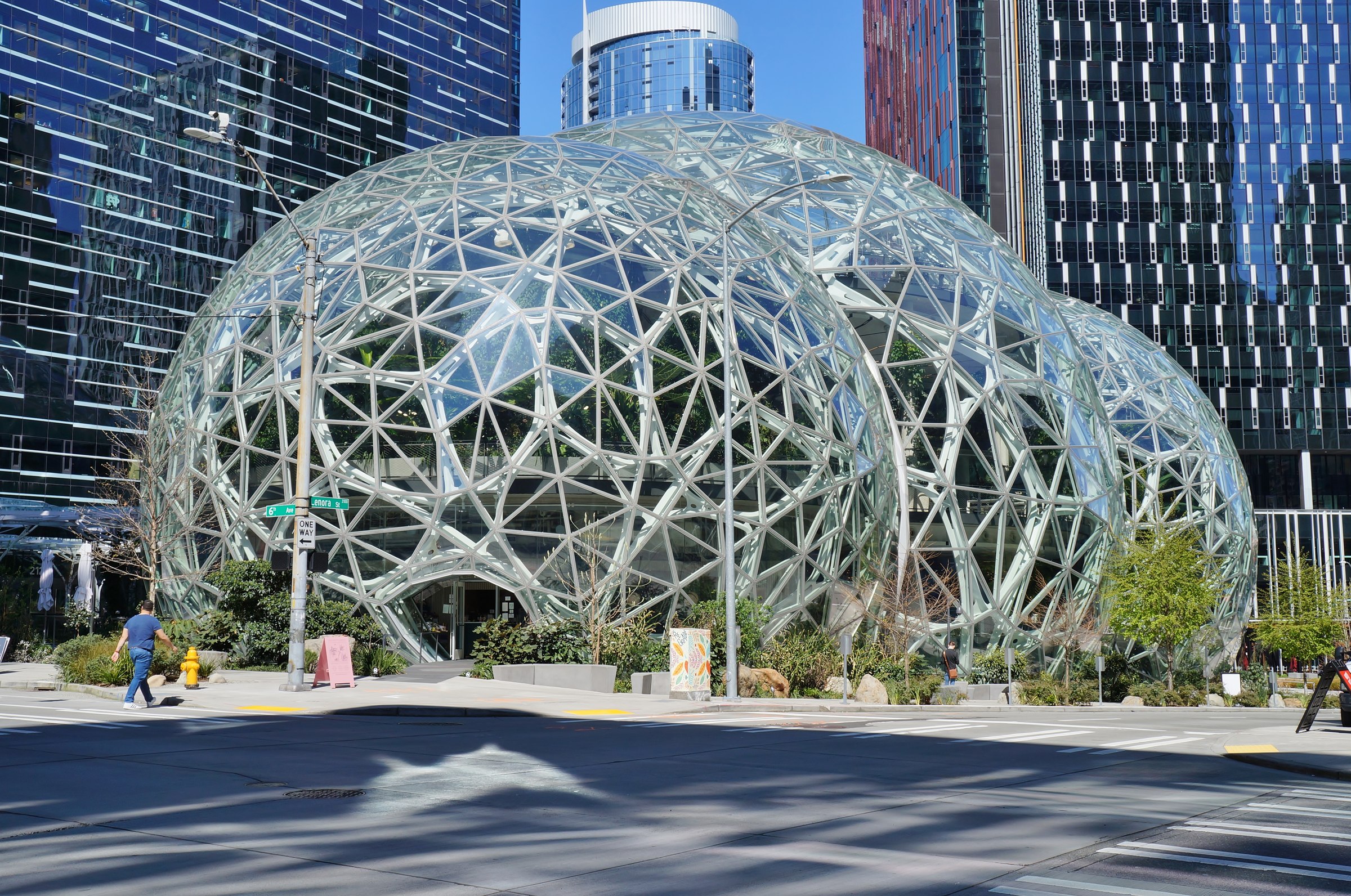
The Amazon Q3 earnings 2026 report, published on Thursday for the quarter ended September 30, told two stories at once, and the market chose to trade the darker one. Net sales rose 12 percent to $201.9 billion, a fraction below the roughly $202.3 billion analysts had expected, while Amazon Web Services — the cloud unit that investors now treat as the company’s centre of gravity — grew 39 percent to $46.0 billion, its fastest pace in nearly five years. Operating income climbed to $28.1 billion, comfortably ahead of the roughly $26.1 billion consensus, at an operating margin of 13.9 percent, the highest Amazon has ever recorded. Yet diluted earnings per share came in at $1.89, missing the $1.97 consensus, capital spending reached $77.3 billion in a single quarter, and trailing-twelve-month free cash flow swung to an outflow of $42.4 billion. Amazon stock fell after earnings: shares closed the regular session down 4.25 percent at $243.79 and dropped a further 6 to 7 percent in early after-hours trading, at one point falling as much as 11 percent.
Nothing in the release was broken in the way a bad quarter is usually broken. The sales miss was four-tenths of one percent of revenue. The earnings miss, as the analysis below shows, was driven less by the operating business than by a comparison against a year-earlier quarter flattered by $9.5 billion of pre-tax gains on Amazon’s investment in the AI company Anthropic, and by interest costs on a debt pile that has nearly tripled since December. What the market was really pricing was the shape of Amazon’s new financial model: a company whose cloud profits are compounding at an extraordinary rate, and which is deliberately spending those profits — and then some — on data centres, chips and power for an AI race it does not intend to lose.
The quarter in numbers
- Net sales: $201.9 billion, up 12 percent from $180.2 billion a year earlier (up 13 percent excluding a $0.9 billion unfavourable currency impact), just below the roughly $202.3 billion consensus
- Diluted earnings per share: $1.89, versus a $1.97 consensus and $1.95 a year earlier; net income $20.7 billion versus $21.2 billion
- Operating income: $28.1 billion, up from $17.4 billion, beating the roughly $26.1 billion estimate; operating margin 13.9 percent, a company record
- AWS sales: $46.0 billion, up 39 percent year over year; AWS operating income $17.8 billion, versus $11.4 billion
- North America: sales $112.9 billion, up 6 percent; operating income $8.7 billion, versus $4.8 billion
- International: sales $43.1 billion, up 5 percent (8 percent excluding currency effects); operating income $1.6 billion, versus $1.2 billion
- Advertising: $19.6 billion, up 11 percent (12 percent excluding currency effects), down from 22 percent growth on that basis a year earlier
- Capital spending: $77.3 billion in the quarter, versus a roughly $57.5 billion estimate; full-year 2026 cash capital expenditure guidance held at about $220 billion
- Free cash flow: an outflow of $42.4 billion over the trailing twelve months, versus an inflow of $14.8 billion a year earlier, even as operating cash flow rose 29 percent to $168.3 billion
- Fourth-quarter guidance: net sales of $240 billion to $247 billion and operating income of $28.5 billion to $33.5 billion, roughly in line with consensus
One distortion runs through the sales line and is worth settling at the start. Prime Day, Amazon’s largest promotional event, fell in the second quarter this year in most large countries, whereas in 2025 it sat entirely in the third quarter. Amazon said that excluding the shift, third-quarter growth would have been roughly 400 basis points — four percentage points — higher. The same timing effect explains much of the slowdown in advertising, and it means the headline 12 percent growth rate understates the underlying pace of the retail business in a way the fourth-quarter comparison will reverse.
AWS is growing like it is 2021 again
AWS revenue growth 39 percent: the fastest pace in nearly five years
The single most important number in the release was the growth rate of the cloud. Amazon AWS sales of $46 billion — $45.98 billion, precisely — rose 39 percent year over year, accelerating from 37 percent in the second quarter and beating the roughly $45.6 billion analysts had pencilled in. To grasp how unusual that is: AWS spent much of 2023 growing in the low teens, as corporate customers cut cloud bills after the pandemic-era binge, and large cloud providers are not supposed to re-accelerate to nearly 40 percent growth at a $46 billion quarterly revenue base. Every additional point of growth at this scale is worth roughly $1.8 billion of annualised revenue, which is why the re-acceleration, more than any other figure, is what the bulls will take from this report.
The profit followed the revenue. AWS operating income rose to $17.8 billion from $11.4 billion a year earlier — roughly 63 percent of the entire group’s operating profit, produced by a segment that accounts for less than a quarter of group sales. In a quarter when the retail businesses also performed well, the cloud still earned nearly two-thirds of the money. That concentration is the key to understanding everything else in this article, including the market’s reaction: Amazon is valued, increasingly, as a cloud and AI infrastructure company with a very large store attached.
Amazon $184 billion AWS run rate, and a growth guide above 40 percent
Chief executive Andy Jassy went further than the numbers, offering the kind of forward commitment chief executives usually avoid. Annualising the quarter puts AWS at an Amazon $184 billion AWS run rate, and Jassy told investors he expects AWS growth above 40 percent in both 2027 and 2028 — the Andy Jassy AWS growth 2027 2028 guide that will now anchor analyst models for two years. If AWS merely meets that guide, it will add on the order of $75 billion of incremental annual revenue by the end of 2028. The demand signals in the release pointed the same way: AgentCore, Amazon’s platform for building and running AI agents, has signed up tens of thousands of customers and deployed twice as many AI agents in the third quarter as in the second, while Alexa for Shopping now reaches more than 400 million customers, with interactions up 570 percent year over year.
Jassy framed the opportunity in the language of scale that only Amazon can plausibly use. Retail sales — online stores, physical stores and third-party seller services combined — totalled nearly $500 billion over the past twelve months. “There has never been a trillion dollar revenue business,” he said, “and we may have two of them in the next 5-10 years.” The two candidates are the store and the cloud: a retail operation already halfway to a trillion in annual sales, and a cloud unit that would pass the same mark in the early 2030s if anything like the guided growth rate persists.
Retail held up — and advertising cooled
The North America segment, Amazon’s largest, grew sales 6 percent to $112.9 billion and nearly doubled operating income to $8.7 billion from $4.8 billion, as the multi-year squeeze on fulfilment costs — regionalised warehouses, faster delivery routes, more automation — continued to convert modest sales growth into much faster profit growth. International sales rose 5 percent to $43.1 billion, or 8 percent excluding currency effects, with operating income up to $1.6 billion from $1.2 billion. Neither segment set a growth record, and both were measured against the Prime Day shift described above; judged on profit delivery rather than top-line pace, the stores had one of their strongest quarters ever, which is how the group operating margin reached its record 13.9 percent.
Amazon advertising revenue slows to 11 percent
The one retail-adjacent line that genuinely softened was advertising, for years Amazon’s fastest-growing large business. Advertising revenue grew 11 percent to $19.6 billion — 12 percent excluding currency effects — down from 22 percent growth on the same basis a year earlier. Amazon attributed the step-down largely to the Prime Day shift, which moved a block of high-margin promotional spending into the second quarter, and said it expects advertising growth to return to the high teens in the fourth quarter. Investors will treat that promise as a testable claim: advertising is almost pure profit at the margin, and a second consecutive soft quarter in the holiday period would raise harder questions about competition from Walmart, TikTok and AI-driven search than a calendar quirk can answer.
The cash-flow problem in full

Amazon capex $220 billion: a $77.3 billion quarter
Capital expenditure is where this earnings report becomes a story about industrial policy as much as retail. Amazon spent $77.3 billion on capital projects in the third quarter, against a consensus estimate of roughly $57.5 billion — a $20 billion overshoot in a single quarter — and held its full-year 2026 cash capital expenditure guidance at about $220 billion, the Amazon capex $220 billion programme that is funding the largest private infrastructure buildout in the world. The money is going overwhelmingly into AI infrastructure for AWS: data centres, servers, networking and the custom silicon that fills them. Nor is Amazon building on spec in the usual sense; Jassy has said repeatedly that AWS capacity is substantially booked by customers, including AI laboratories, before it comes online.
Amazon free cash flow negative: a $42.4 billion outflow
The arithmetic consequence is stark. Operating cash flow over the trailing twelve months rose a healthy 29 percent to $168.3 billion — the underlying machine has never generated more cash. But net purchases of property and equipment rose $94.8 billion year over year, largely for AI-related assets, and Amazon free cash flow negative is now the defining line of the report: a trailing-twelve-month outflow of $42.4 billion, against an inflow of $14.8 billion in the prior-year period. The gap is being bridged with debt. Long-term debt has nearly tripled since December to about $173 billion, and quarterly interest expense has more than tripled to $1.7 billion — a cost that now visibly dents the bottom line and contributed, alongside the Anthropic comparison, to the earnings-per-share miss. Amazon is, in effect, converting itself from a company that funded growth from its own cash into one that borrows like a utility to build infrastructure ahead of demand. Utilities, of course, earn regulated returns; Amazon is betting the returns on AI capacity will be anything but regulated.
Guidance, and why the stock fell anyway
Amazon Q4 guidance holiday quarter: sales of $240 billion to $247 billion
For the fourth quarter — the holiday quarter that decides Amazon’s retail year — the company guided to net sales of $240 billion to $247 billion and operating income of $28.5 billion to $33.5 billion, a range Reuters described as roughly in line with consensus, with the sales outlook’s midpoint a touch soft against an average estimate of about $244.5 billion. The operational build-up behind the guide is substantial: Amazon said earlier this month it will hire 300,000 seasonal workers in the United States for the holidays, up from 250,000 last year, and it expects advertising growth to recover to the high teens. A holiday quarter at the top of the sales range with AWS still compounding near 40 percent would make the third quarter look like a pause; a quarter at the bottom, with soft consumer spending, would sharpen every question the after-hours market asked on Thursday.
Amazon stock falls after earnings: down 4.25 percent, then further
The trading pattern told its own story about what investors had priced in. The shares had already closed the regular session down 4.25 percent at $243.79, on a weak day for megacap technology stocks, and the first after-hours prints knocked off a further 6 to 7 percent, with the fall at one point reaching about 11 percent before recovering part of the loss. A double-digit intraday reaction to a quarter in which operating income beat by $2 billion and the cloud accelerated is not a verdict on the quarter’s trading; it is a verdict on the spending plan, and on guidance that left the holiday quarter’s profit range wide enough to drive either narrative through it.
Why this matters
The EPS miss was mostly an Anthropic comparison, not an operating failure
Start with the headline that moved first: earnings per share of $1.89 against a $1.97 consensus. Strip the quarter to its operating core and a different picture emerges. Operating income of $28.1 billion beat the roughly $26.1 billion estimate by a wide margin and rose more than 60 percent year over year. The per-share miss was manufactured below the operating line. The year-earlier quarter’s net income of $21.2 billion included $9.5 billion in pre-tax gains from Amazon’s investment in Anthropic, booked in non-operating income — a paper gain that made the comparison base artificially rich. This year, higher interest expense on the enlarged debt stack and the absence of a comparable gain did the damage. Analysts who model Amazon on operating income saw a beat; screens that trade on reported EPS saw a miss. Both were reading the same release.
AWS is carrying the group — and the valuation
The second structural fact is concentration. AWS produced about 63 percent of operating profit on about 23 percent of sales, and it is growing roughly six times faster than the North America stores. That mix shift is mechanically lifting group margins to records even as the retail business merely grinds forward, and it is why Amazon’s valuation debate is now a cloud debate. If AWS compounds above 40 percent through 2028 as guided, the segment alone would generate operating income on the order of the entire group’s today, before the stores contribute anything. If it decelerates sharply — because AI demand disappoints, capacity outruns customers, or Microsoft and Google take share — there is no second engine of remotely comparable profitability to catch the stock.
The bet: spend the cash flow now, harvest the cloud later
Which leads to the third and largest question: the capital cycle. Amazon is spending about $220 billion this year, borrowing heavily to do it, and accepting negative free cash flow and tripled interest costs as the price. The bull logic is that AI capacity is scarce, booked in advance, and priced at cloud margins — that every data centre filled at AWS’s roughly 39 percent segment operating margin pays back quickly, and that capacity not built is demand permanently handed to Microsoft Azure and Google Cloud. The bear logic is that depreciation is a lagging cost: the $220 billion of 2026 spending will hit the income statement for years whether or not AI revenue arrives on schedule, that the industry is building aggregate capacity on the same demand forecasts, and that a company which once prided itself on cash generation now needs capital markets to fund its ambitions. Thursday’s report strengthened both arguments simultaneously, which is precisely why the stock could not hold its price.
One week, three verdicts on AI spending
Amazon’s report closed the heaviest week of the Big Tech earnings season, and the pattern across it was consistent. On Wednesday, Microsoft beat expectations while Alphabet missed, with Azure growing fast, Google Cloud surging, and investors punishing whichever legacy advertising or search line happened to soften while rewarding whichever cloud line accelerated. Amazon’s quarter rhymed almost exactly: cloud far ahead of estimates, a legacy line — in Amazon’s case the EPS print and the advertising growth rate — soft enough to give sellers their excuse, and a capital-spending figure large enough to dominate the call. The market is no longer asking whether the AI buildout is real; at a combined spend running toward three-quarters of a trillion dollars a year across the largest platforms, it plainly is. It is asking which company’s legacy cash cow wobbles first while the bills mount.
Amazon’s answer to the cost side of that race is increasingly its own silicon. Its Trainium accelerators are designed to cut the cost of training and running AI models inside AWS, and this month Amazon widened that push with TorchNeuron, a tool that lets PyTorch code written for Nvidia’s CUDA ecosystem run on Trainium with a single settings change — an attempt to loosen Nvidia’s software grip on AI development at the same time as AWS rents out the capacity itself. Read together, the earnings and the product moves describe one strategy: own the buildings, own more of the chips, own the software path into both, and let the cloud margin fund the next round.
The bull case and the bear case
What the bulls see
Bulls start with the acceleration. A cloud business growing 39 percent at a $184 billion run rate, guided above 40 percent for two more years, with demand described as booked ahead of supply, is close to a unique asset in public markets. Add a retail operation whose profits are compounding on automation rather than sales hype, a record group operating margin achieved during the heaviest investment year in company history, an advertising business still growing double digits with a guided re-acceleration, and a chief executive credibly describing two possible trillion-dollar revenue lines, and the after-hours fall looks like an invitation. On this view, the negative free cash flow is a choice, reversible within a year if Amazon chose to slow construction — and the debt, at $173 billion against $168 billion of annual operating cash flow, is well covered by the machine underneath.
What the bears and the sceptics see
Sceptics answer that the choice is less reversible than it looks. Capacity commitments, power contracts and chip orders span years; depreciation on $220 billion of annual spending will pressure reported margins long after construction slows; interest expense has already tripled and now touches the EPS line that most screens trade on. They note that sales missed, however narrowly, that advertising growth halved on a currency-adjusted basis, that the holiday sales guide centred slightly below consensus, and that the entire investment case rests on AI demand forecasts shared by every competitor building at the same time. Above all, they point to the simplest fact in the release: a company generating $168 billion of operating cash flow still burned $42.4 billion more than it made over twelve months. However profitable AWS looks today, that is a funding model that works only while capital markets stay open and cloud growth stays extraordinary.
What happens next
The next test arrives quickly. The holiday quarter will be judged on three numbers: whether net sales land in the upper half of the $240 billion to $247 billion range, whether advertising growth returns to the high teens as promised, and whether AWS holds a growth rate near 39 percent against a strengthening comparison. Amazon’s 300,000 seasonal hires suggest management expects volume; the consumer backdrop, with household budgets squeezed by fuel and living costs, will decide whether that expectation was confidence or habit. Beyond the quarter, the 2027 and 2028 AWS growth guide above 40 percent becomes the stock’s central promise — and its central risk, because Jassy has now given investors a specific yardstick, two years long, against which any deceleration will be measured.
The slower-moving story is the balance sheet. Watch the 2026 capital-expenditure out-turn against the $220 billion guide, the trajectory of the $173 billion debt stack, and the point at which depreciation from the buildout begins to weigh visibly on AWS’s own segment margin. If AI workloads fill the new capacity at anything like current pricing, Thursday’s sell-off will be remembered as the market flinching at the size of a winning bet. If they do not, the same numbers — $77.3 billion a quarter, negative free cash flow, tripled interest costs — will read as the moment the bill came into view. Amazon has built its history on being, in Jassy’s borrowed founder’s phrase, willing to be misunderstood for long periods of time. The third quarter of 2026 asked investors to be patient on an historic scale; the stock’s fall says patience, this time, has a price.
Sources
- Reuters, October 29, 2026 — fourth-quarter sales guidance of $240 billion to $247 billion against an average estimate of about $244.5 billion, AWS revenue up 39 percent to $46 billion against a $45.61 billion estimate, the maintained capital-spending forecast of about $220 billion, and shares down more than 7 percent in extended trading.
- GeekWire, October 29, 2026 — AWS growth of 39 percent as its fastest pace in nearly five years, the $184 billion annual revenue run rate, earnings of $1.89 per share against $1.97 expected, Jassy’s expectation of growth above 40 percent in 2027 and 2028, and advertising growth of 11 percent to $19.6 billion.
- Amazon, October 29, 2026 — third-quarter earnings release — net sales of $201.9 billion, operating income of $28.1 billion at a record 13.9 percent operating margin, segment results for North America, International and AWS, and Jassy’s statement that retail sales totalled nearly $500 billion over the past twelve months.
- Business Wire, October 29, 2026 — Amazon.com Announces Third Quarter Results — the full results release, including the Prime Day timing shift to the second quarter and the statement that excluding the shift, third-quarter growth would have been approximately 400 basis points higher.
- Unite.AI, October 29, 2026 — operating income up 61 percent, the decrease in net income to $20.7 billion attributed primarily to $9.5 billion in pre-tax Anthropic investment gains in the year-earlier quarter, and segment operating income detail.