Trump Xi summit results
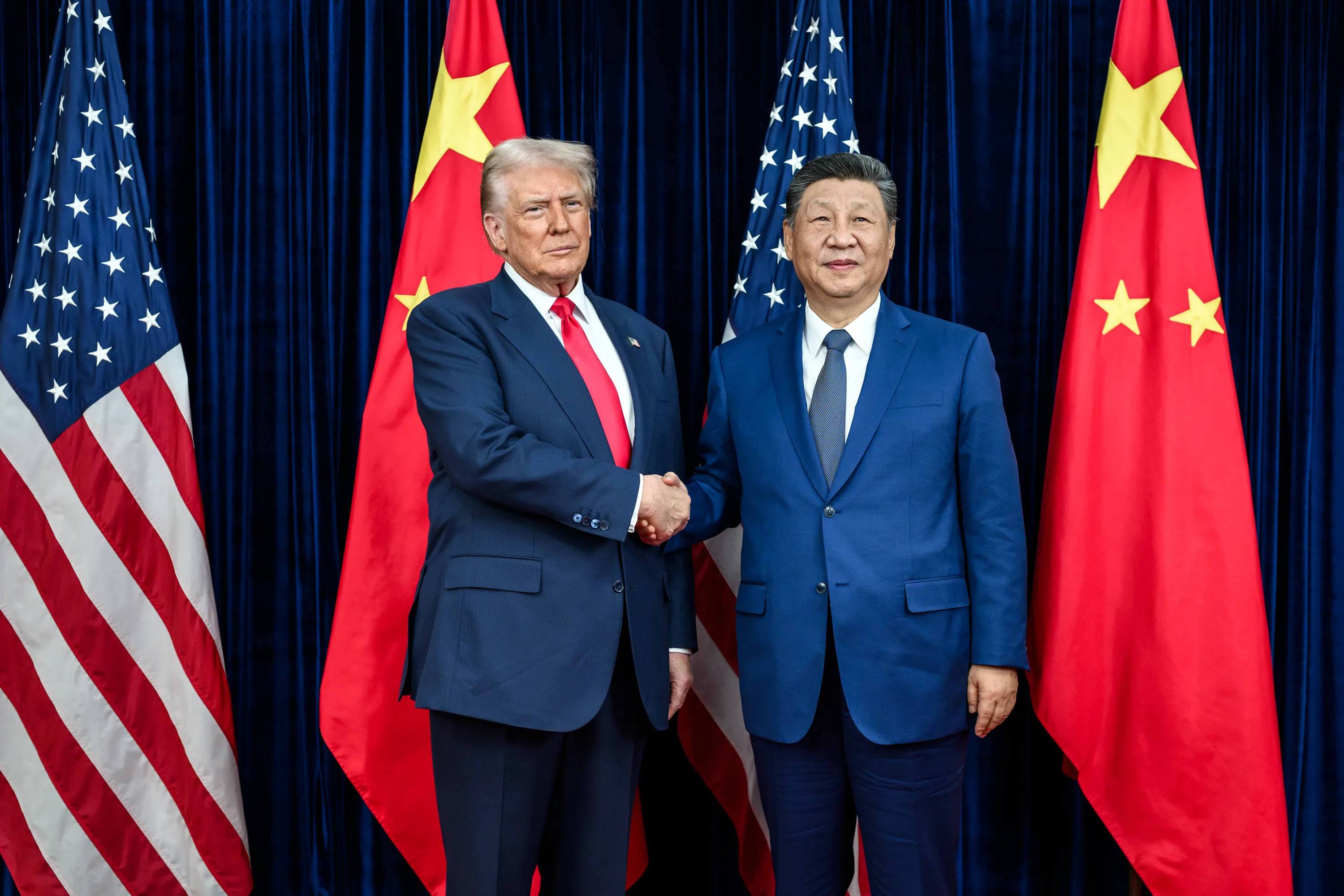
WASHINGTON — The Trump Xi summit results can be stated plainly: three days of high ceremony ended with a measure of temporary stability, but with no announced signed breakthrough on the disputes that define the U.S.–China relationship. President Donald Trump gave Chinese leader Xi Jinping a military welcome, a state dinner, tea at the White House and a final tour of the National Archives. The two governments extended an existing trade detente, discussed artificial intelligence and restated familiar positions. They did not publish a major joint pact.
That does not make the visit meaningless. In a relationship where a misread military signal, technology restriction or tariff deadline can move markets and unsettle allies, keeping the two presidents talking has value. But a diplomatic pause is not a settlement. Reuters described Thursday's summit as heavy on symbolism and light on substance, while The Wall Street Journal reported a modest two-month extension of the trade detente and few concrete answers on deeper disagreements.
Why the absence of a pact matters
State visits are designed to communicate importance, but their durability normally comes from written commitments, implementation schedules and enforcement mechanisms. None of those accompanied a new major bargain in Washington. Farmers may gain from the market access Trump said China was providing, and businesses may welcome two more months without an immediate tariff escalation. Yet companies cannot plan multi-year supply chains around a truce that expires on January 10, 2027, and Taiwan cannot treat ceremonial calm as a security guarantee.
The analytical distinction is between stabilization and resolution. Stabilization reduces near-term volatility: leaders meet, officials keep channels open and deadlines move. Resolution narrows the actual dispute through enforceable terms. On trade, technology, Taiwan and military risk, Washington delivered the first and not the second. As of Signal Post News's September 25 reporting cutoff, the number of newly announced, signed major breakthroughs was zero.
Trump Xi summit takeaways: ceremony as strategic theater
The pageantry was not incidental. According to the White House's official program, the arrival ceremony involved 479 military personnel and concluded with a flyover by one B-2 Spirit and four F-22 Raptors. Those aircraft supplied a visual grammar of respect and capability at the same time: Xi was being honored as the leader of a peer power, while American strategic reach was placed overhead.
Trump gained images of presidential command roughly six weeks before the U.S. midterm elections. Xi gained something Beijing values just as much: treatment as a co-equal at the center of American power. The result was political theater with audiences in two countries. Trump could present personal diplomacy as a method of control; Xi could show Chinese viewers that Washington receives him on the grandest terms.
The warm staging also created a contradiction for Republicans campaigning against China. A leader can argue that ceremony gives him leverage, but the more elaborate the welcome, the harder it becomes to pair the photographs with claims that China is an implacable threat requiring sharper domestic mobilization. That tension is why some of the criticism came from Trump's own party rather than only from Democrats.
From Obama's 2015 state visit to Busan, Beijing and Washington
The Xi Jinping Washington state visit belonged to a longer diplomatic arc. President Barack Obama hosted Xi for a state visit in September 2015, when official ceremony was paired with a more conventional effort to publish shared understandings. The White House Historical Association's history of Chinese state visits places that visit in the long pattern of U.S. presidents using pageantry to manage a relationship that has always mixed cooperation with strategic competition.
Trump and Xi then met in Busan in October 2025, establishing the framework for a trade pause rather than a comprehensive reset. That detente carried into the reciprocal May 2026 meeting in Beijing, where the two leaders again emphasized personal engagement while the hardest issues remained open. The Washington visit extended the sequence: Busan lowered the temperature, Beijing maintained the channel and Washington elevated the symbolism.
The continuity matters more than any single dinner. Each meeting has bought time. None has yet produced an enforceable grand bargain covering tariffs, export controls, agricultural purchases, Taiwan, security competition and AI risk. The latest U.S.–China trade truce extension is therefore best understood as another bridge to the next negotiation, not the destination.
US China summit 2026 outcome, by the numbers
- 479: military personnel assigned to the state-arrival ceremony, representing all branches of the U.S. armed forces.
- 1 + 4: one B-2 Spirit and four F-22 Raptors in the ceremonial flyover.
- 61 days: the trade deadline moved from November 10, 2026, to January 10, 2027.
- 0: announced signed major breakthroughs at the close of the visit.
The numbers expose the imbalance between presentation and policy. The military elements were exact, rehearsed and visible. The policy results were narrower and more contingent. Le Monde reported that the trade truce moved from November 10 to January 10; a two-month reprieve may prevent an immediate rupture, but it is not the long-term commercial settlement many exporters want.
Who won from the Washington visit
Farmers and ranchers—if the access becomes real
Trump said the talks improved market access for U.S. farmers and ranchers. That is a potential win for agricultural producers squeezed by tariff uncertainty and by China's use of commodity purchases as leverage. But the qualifying phrase matters. A claimed opening becomes valuable only when contracts, volumes and delivery schedules follow. The White House had a political reason to emphasize farm gains; producers have an economic reason to wait for measurable sales.
Trump's midterm image
The White House obtained a full portfolio of presidential imagery: aircraft, honor guards, a state dinner and a private historical tour. For Trump, the optics support a claim that he can confront China rhetorically and still command Xi's attention personally. Whether voters interpret that as strength or inconsistency will depend partly on what happens before the midterms—and whether the farm claims turn into income.
Xi's co-equal-power frame
Xi received the status Beijing sought and a private venue to press Taiwan demands. He also repeated the argument that the powers should avoid a “zero sum gladiatorial contest” and what he called the Thucydides trap—the idea that rivalry between a dominant power and a rising one can make conflict appear inevitable. In that frame, parity and restraint are not merely diplomatic niceties; they are evidence that the United States accepts China as a power whose red lines must be negotiated.
Who lost—or remains exposed
Taiwan
Taiwan faced the clearest downside. According to Xinhua's account cited by Reuters and the Journal, Xi privately urged the United States to “adhere to the correct position of opposing Taiwan independence.” That wording is stronger than Washington's longstanding formulation that it does not support Taiwan independence. There was no equivalent public U.S. readout adopting Beijing's language, and the absence of one should not be filled with speculation. Still, the asymmetry matters: Beijing publicly framed the private exchange, while Washington did not publish a similarly detailed account of Trump's response.
China also continues to seek an end to U.S. arms sales. Washington remains Taiwan's most important international backer and is required by U.S. law to help the island maintain a self-defense capability. The visit did not resolve the gap between those positions. For more on Taipei's response, read Signal Post News's report on Taiwan's rejection of Xi's reunification claims.
China hawks inside the Republican Party
Republicans who define China primarily as a strategic adversary were left defending images that looked more conciliatory than confrontational. Their argument is not that presidents should never meet. It is that extraordinary honors should purchase extraordinary concessions. No such public bargain followed this visit.
Companies and producers that need enforceable commitments
A short extension helps a cargo already moving; it does not justify a factory relocation or a five-year sourcing plan. Companies facing export controls, tariffs and political screening remain exposed to the next deadline. Farmers also need more than declarations of access: they need purchase orders and predictable rules. The truce delayed uncertainty rather than removing it.
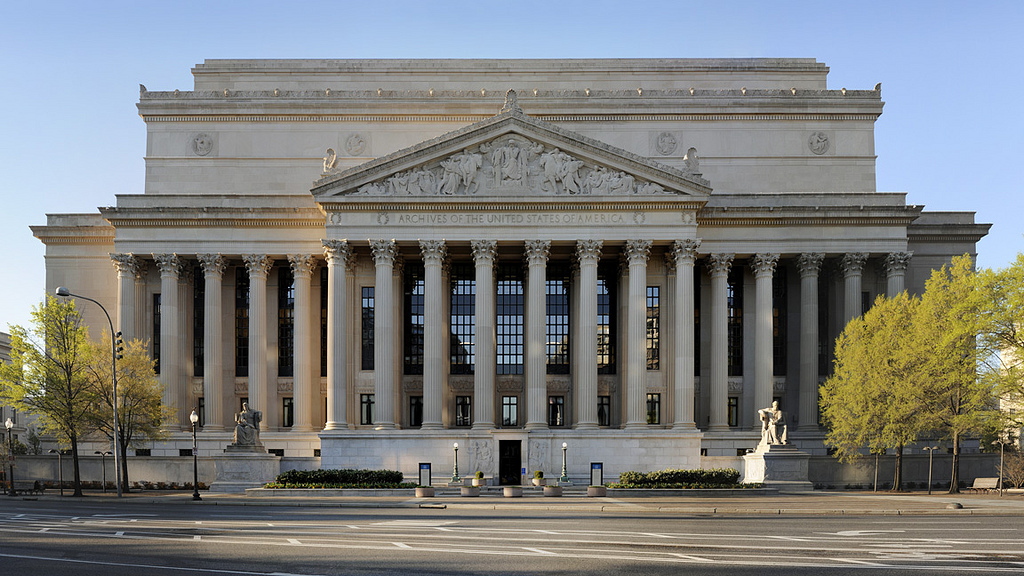
Trump Xi National Archives visit: history as diplomacy
The final stop shifted the message from weapons and banquets to historical continuity. Trump said the leaders would view the Declaration of Independence, Constitution and Bill of Rights, along with records concerning U.S.–China relations and cultural exchange. The venue allowed both sides to present the relationship as longer and broader than the argument of the week.
Reuters reported that China had not publicly commented on the Archives visit at the time of publication. Analysts told the news organization that Xi might be interested in records surrounding Washington's 1979 switch of diplomatic recognition from Taipei to Beijing. That is analysis, not a disclosed Chinese motive. Without a statement from Beijing, it would be wrong to present the Archives program as proof that Xi sought any particular document or concession.
Xi Taiwan warning Trump—and the limits of private diplomacy
The strongest account of Xi's private Taiwan message came from China's state news agency. That does not make it irrelevant; official Chinese wording is itself a signal. But it does require attribution. Xinhua said Xi urged the United States to oppose Taiwan independence. U.S. officials did not issue a comparably detailed public transcript of Trump's answer. The evidentiary limit is therefore clear: the public knows how Beijing characterized Xi's demand, not every word exchanged in the room.
This is one reason the lack of a joint statement matters. Joint language forces both sides to own the same text. Separate readouts permit each government to emphasize what serves its domestic and strategic audience. On Taiwan—the most dangerous issue between the two powers—that ambiguity can preserve maneuvering room, but it can also increase the risk that each capital believes the other conceded more than it did.
John Kennedy Xi reptile quote reveals the Republican split
Sen. John Kennedy of Louisiana supplied the bluntest criticism: “I think President Xi is a reptile,” he told the Journal, adding that Xi believes he is “on a mission from God except his god is himself.” Sen. Joni Ernst of Iowa said she was uncomfortable with the pageantry but hoped farmers would benefit. Sen. Thom Tillis of North Carolina warned that the red carpet undercut the party's own anti-China campaign message, noting that Trump “campaigned on an anti-China policy.”
The quotes show three versions of Republican discomfort: a moral judgment of Xi, a transactional demand for agricultural returns and an electoral concern about message discipline. Trump is betting that personal diplomacy can sit beside hard-line politics. His critics are asking what, exactly, the United States received in exchange for the spectacle.
Trump Xi AI cooperation: a possible guardrail, not an agreement
Both leaders identified artificial intelligence as an area for cooperation. That is significant because AI risk is one of the few fields where strategic competitors share an interest in preventing accidents. Before the summit, Treasury Secretary Scott Bessent floated an incident-notification system—effectively an AI hotline—for events that reach national-security significance. The Journal reported that it was unclear whether the presidents addressed that specific proposal.
The practical opportunity is a narrow crisis mechanism: notify the other side when an AI-related incident risks being mistaken for an attack, clarify that a system failure is not deliberate escalation and establish officials who can speak quickly. That would not end the technology race. It could make the race less dangerous. As of the visit's close, however, no formal Trump Xi AI cooperation agreement or hotline had been announced.
What happens next
The first hard date is January 10, 2027, when the extended trade truce is due to expire. Negotiators will need to convert claimed progress into verifiable purchases, tariff terms or enforcement arrangements before then. If they do not, the same escalation risk that existed on November 10 simply returns two months later.
The second test is Taiwan. Beijing will continue pressing for stronger U.S. language and reduced arms support; Taipei and U.S. lawmakers will watch for signs that temporary restraint is becoming a new baseline. The third is AI. A limited incident-warning or crisis-dialogue channel is plausible because it serves both sides, but the summit did not create one publicly.
The fourth test is American politics. The midterms will force Trump and Republican candidates to reconcile anti-China rhetoric with red-carpet diplomacy. If agricultural sales rise and the truce holds, the White House can argue the spectacle bought leverage. If January arrives without enforceable terms, the images may instead become evidence for the critics' case.
The honest verdict is therefore neither triumph nor failure. The visit was a controlled pause in a competitive relationship, rich in symbolic reassurance and poor in durable commitments. It showed that Trump and Xi still prefer negotiation to rupture. It did not show that they have solved the conflicts most likely to break that preference.
Sources
- Reuters — Trump wraps up Xi summit with a tour of the U.S. National Archives (September 25, 2026)
- The White House — Official program for Xi Jinping's state visit
- The Wall Street Journal — Five takeaways from Trump's Washington summit with Xi
- Le Monde — Trump welcomes Xi with great pomp as trade truce is extended
- BusinessWorld / Reuters — Summit expectations and the temporary trade-truce extension
Reporting basis: Fixed September 25, 2026 snapshot. Facts attributed to Reuters, the White House and the Journal are distinguished from Signal Post News analysis. China's silence about the Archives visit does not establish motive; Xinhua's description of Xi's private Taiwan remarks has no equivalent detailed public U.S. readout; and no signed or jointly published major breakthrough had been announced at the reporting cutoff.