Trump Xi White House summit
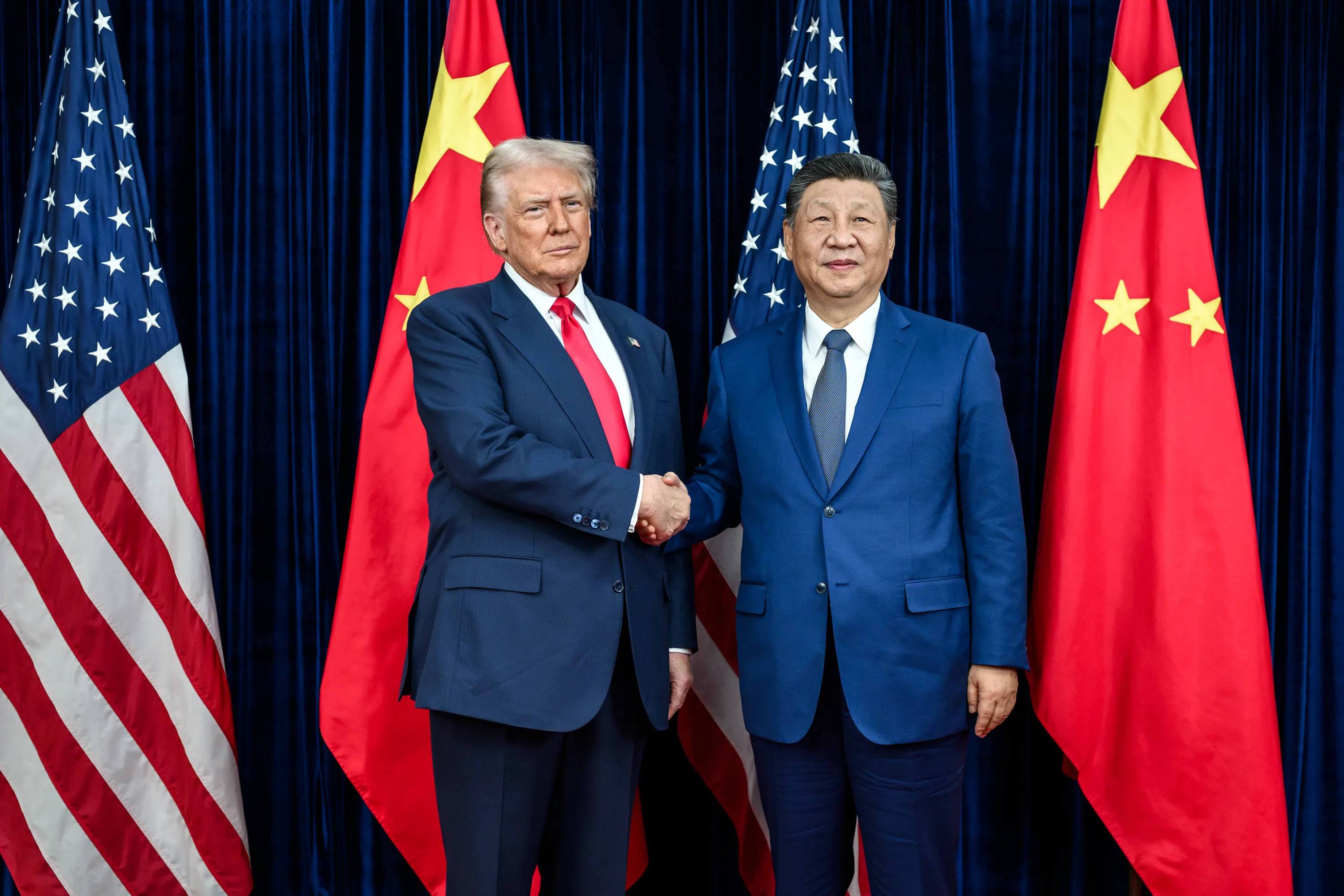
The Trump Xi White House summit concluded Thursday with a warmer public tone and a concrete extension of the tariff truce. President Donald Trump hosted Chinese President Xi Jinping at the White House on September 24, Xi's first Washington visit in more than a decade. Xi said the countries should be “partners, not rivals,” while Trump invoked their shared World War II history. The two leaders also agreed to examine risks from artificial intelligence.
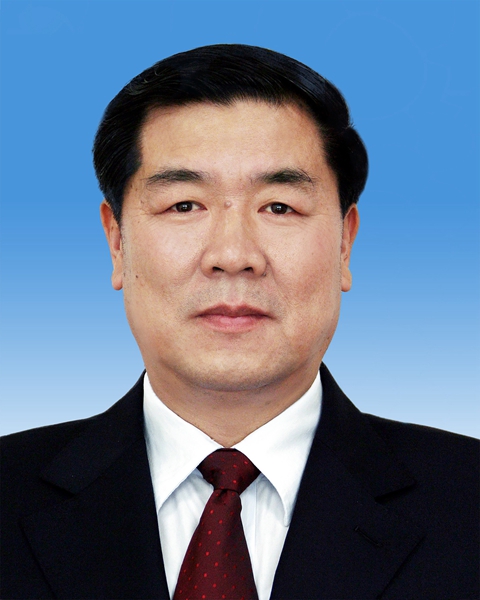
The summit added visible diplomacy to the trade framework described below. Xi invited 100,000 American students to visit China over five years and announced that two pandas would go on loan to Zoo Atlanta. Treasury Secretary Scott Bessent said talks with Vice Premier He Lifeng extended the tariff pause until January 10, 2027. The result lowers the immediate risk of tariffs above 100% returning, but it gives businesses only a two-month extension rather than a permanent settlement.
The outcome therefore manages rivalry without resolving it. Exporters and markets gain a longer planning window, Xi gains the prestige of a state-style reception, and both governments gain time for AI discussions. The unresolved questions remain export controls, critical minerals, technology security and whether the January deadline produces a durable agreement or another last-minute extension.
WASHINGTON — Treasury Secretary Scott Bessent said Wednesday that the United States and China agreed to keep the Busan trade framework in force until January 10, 2027, moving the expiration date from November 10 and giving negotiators a two-month runway to pursue a larger economic package. The announcement came on Fox News’ “Special Report” after Bessent met Chinese Vice Premier He Lifeng in Washington, their second round of talks in four days.
“We have agreed today that we will extend what we call the Busan Agreement, the economic detente between the two countries that was scheduled to end on Nov. 10 — that is going to be extended until Jan. 10 to give us more time to see what we can do on the economic front,” Bessent said. He described Sunday’s marathon session in New York and Wednesday’s follow-up in Washington as “very productive.” U.S. Trade Representative Jamieson Greer also participated.
The extension is narrow in legal duration but broad in political meaning. It keeps the existing tariff reductions, minerals understandings, agricultural commitments and shipping-sector pauses from snapping back while President Trump and Xi Jinping move into formal White House talks on Thursday. It also changes the summit’s starting point: the leaders no longer need to spend their first hours preventing an imminent breakdown. They can negotiate from a temporarily stabilized baseline.
Why this matters: the November 10 tariff cliff is gone
The immediate gain is the removal of a known deadline that could have unsettled import orders, commodity contracts and manufacturing plans before the holiday season. Without an extension, companies would have had to prepare for the possibility that suspended tariffs and retaliatory measures could return on November 10. Even if both governments eventually stepped back, the uncertainty itself would have imposed costs through delayed purchases, precautionary inventories and more expensive hedging.
The new date is not a settlement. It is a reprieve. January 10 creates roughly two additional months for negotiators to test whether the outline of a broader bargain is real. Compared with the original year-long Busan pause, the new runway is short; compared with an abrupt November expiration, it is commercially meaningful. The extension therefore functions as a bridge, not a destination.
Bessent said the idea of a larger package came first from the Chinese side during Sunday’s talks. “We met today to see if we could do a bigger deal as opposed to just a series of smaller things,” he said after Wednesday’s meeting. That language matters because a collection of isolated concessions can be reversed one by one. A broader agreement could tie tariff relief, export licensing, agricultural purchases and financial access together, giving both governments more reasons to comply—and more leverage if the other side does not.
Bessent He Lifeng trade talks shift from triage to a bigger bargain
The possible deliverables discussed so far point to a pragmatic, sector-by-sector compact rather than a grand reset of the relationship. One option is to remove U.S. tariffs from roughly $30 billion of non-sensitive goods. Another is an AI incident notification mechanism through which the two governments could flag serious artificial-intelligence accidents, threats or misunderstandings before they escalate. Chinese purchases of American farm products and wider openings for U.S. financial-services firms are also under discussion.
Each item addresses a different constituency. Tariff reductions would lower costs for importers and potentially consumers. AI notifications would serve a strategic-stability goal rather than a conventional trade goal. Farm purchases would deliver a visible benefit to U.S. producers. Financial-services access would give American firms a commercial prize while allowing Beijing to present the opening as a controlled reform rather than a unilateral concession.
The negotiating logic is reciprocal but not symmetrical. Washington controls access to the world’s largest consumer market, advanced technology and dollar-based finance. Beijing holds enormous influence over industrial supply chains and the processing of critical minerals. The two sides are not trading like-for-like assets; they are bargaining across different forms of leverage.
Busan agreement January 10: what the original deal actually did
The Busan framework was struck in October 2025 on the sidelines of the Asia-Pacific Economic Cooperation summit in South Korea. It stopped a cycle of tariff escalation and retaliation before that cycle hardened into a more complete economic rupture.
Washington halved its fentanyl-related tariff on Chinese goods from 20 percent to 10 percent. That move took the overall U.S. tariff burden on Chinese imports from roughly 57 percent to 47 percent. The distinction is important: the agreement did not restore low-tariff trade. US tariffs on China at 47 percent still represent a formidable barrier. Busan reduced the temperature without ending the trade war.
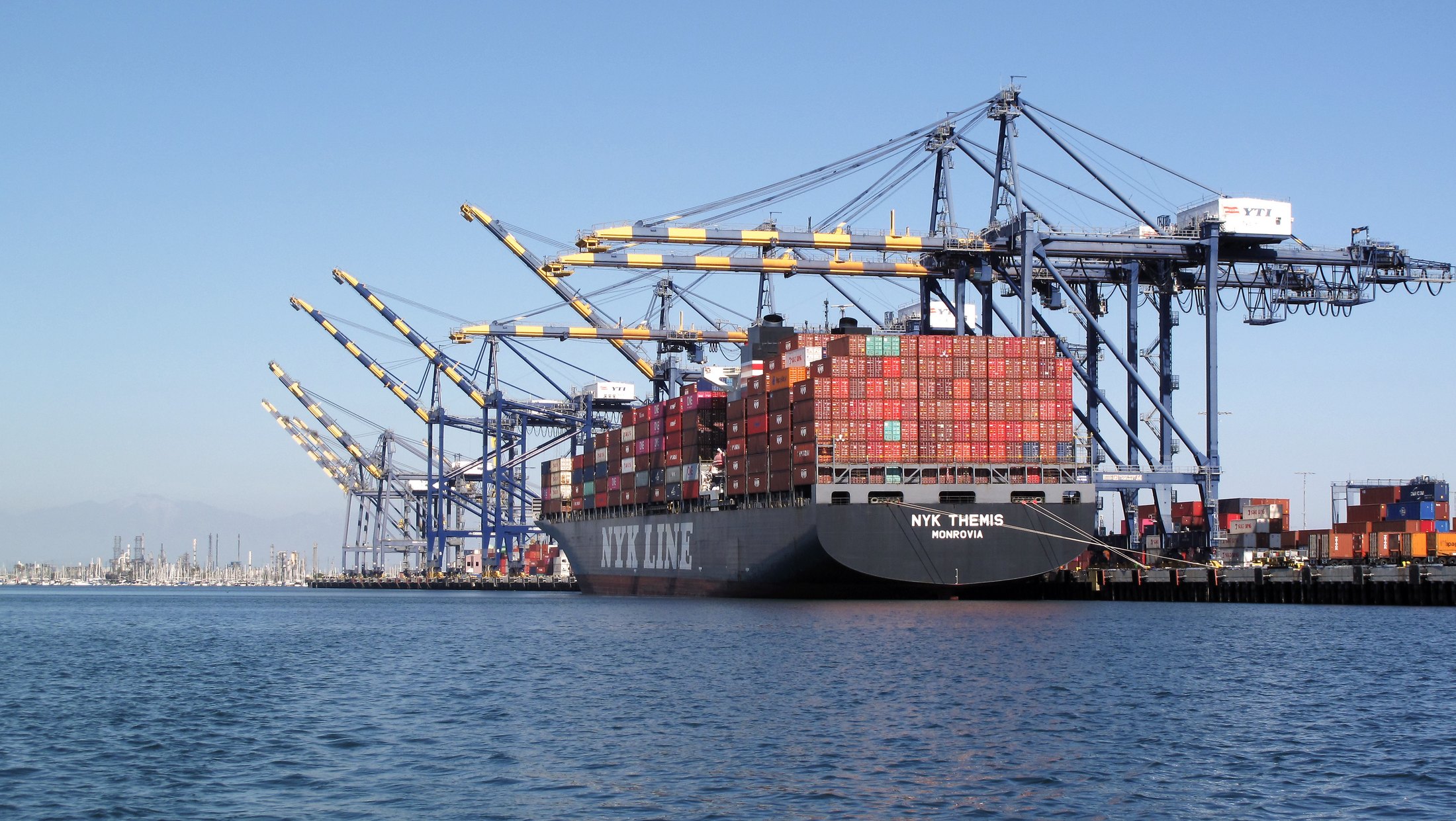
In return, China agreed to issue general licenses for exports of rare earths, gallium, germanium, antimony and graphite, and to suspend sweeping export controls announced on October 9, 2025. Beijing also committed to purchase at least 12 million metric tons of U.S. soybeans during the final two months of 2025 and at least 25 million metric tons annually through 2028. Both governments paused shipping-industry investigations and port fees on each other’s vessels for one year.
Those figures reveal why a two-month extension matters but cannot be mistaken for resolution. The 10-percentage-point tariff reduction was significant, yet nearly half the value of many Chinese imports still sits under a U.S. tariff burden. The $30 billion of non-sensitive goods now under discussion would be a targeted carve-out, not a wholesale rollback. The soybean commitments provide scale and predictability, but they also depend on actual purchases, shipping capacity and price conditions. And the critical-minerals provisions matter only if licenses produce reliable deliveries.
China rare earth export licenses are the credibility test
Bessent made clear that Washington considers implementation incomplete. “There are some deliverables that have not been perfect on the Chinese side, so we also want to see, now that we’ve sat down and told them our expectations, if over the coming months they can be more fulsome in enacting the agreement,” he said.
Rare earths are the sharpest test because they sit inside products that are difficult to redesign quickly: electric motors, defense systems, consumer electronics, medical equipment and energy technologies. A license on paper does not guarantee a shipment on time. Delays, limited quantities or product-specific restrictions can preserve Beijing’s leverage even while officials say the export channel is open.
That is why China rare earth export licenses will be judged by delivery data, approval times and the range of materials actually released. U.S. manufacturers need predictability, not merely permission to apply. Trade hawks will also watch whether Washington gives away tariff leverage before Chinese performance can be measured.
Fentanyl tariff China debate still sits beneath the headline
The fentanyl tariff China component is politically sensitive because Washington tied trade penalties to Beijing’s cooperation against precursor chemicals and illicit financial networks. Cutting the rate from 20 percent to 10 percent under Busan created economic relief, but it also raised a compliance question: what evidence should determine whether the lower tariff remains justified?
Supporters of continued engagement argue that a structured agreement gives the United States measurable demands and preserves communication between law-enforcement and economic officials. Skeptics argue that the tariff should remain leverage until Chinese enforcement produces durable results. Thursday’s summit may clarify whether fentanyl cooperation is folded into a larger package or kept as a separate test.
China soybean purchases: farmers gain certainty, but only if contracts become cargoes
American farmers are among the clearest potential winners. The 12-million-ton commitment for late 2025 provided a near-term floor, while the promise of at least 25 million tons a year through 2028 offered a longer planning horizon. For producers deciding acreage, storage and financing, predictable access to the Chinese market can matter almost as much as the spot price.

But purchase commitments are not self-executing. The meaningful measures are signed contracts, customs data and physical shipments. Farmers benefit if promised demand arrives; they remain exposed if volumes are delayed, redirected or used as bargaining chips. A broader agreement could improve confidence by adding reporting and enforcement mechanisms rather than relying only on headline tonnage.
Who wins, who remains skeptical
Manufacturers that depend on rare earths and other Chinese inputs gain time and a lower risk of sudden disruption. Farmers gain a better chance that soybean and other agricultural commitments remain in force. Consumers and retailers avoid, for now, the price pressure that another round of tariffs could transmit through supply chains. Financial firms could gain if Beijing offers meaningful market access.
The skeptics have a coherent case. U.S. trade hawks fear that extensions can become an end in themselves, granting stability to Beijing without closing compliance gaps. Labor and industrial-policy advocates may oppose tariff cuts that weaken incentives to relocate production. Chinese nationalists, meanwhile, can argue that deeper purchases and market openings trade away leverage while U.S. technology restrictions remain. Businesses on both sides may welcome calm but doubt that a two-month window can settle strategic disputes built over years.
The correct test is therefore not whether both governments can publish a long list of promises. It is whether those promises contain dates, volumes, licensing standards, verification and consequences. The most valuable outcome would be boring: customs data that match the purchase commitments, export approvals that arrive on schedule and tariffs that change according to transparent milestones.
Trump Xi summit trade deal: what to watch Thursday
Xi arrived in Washington on Wednesday for a three-day state visit, his first U.S. visit since 2015. Trump and first lady Melania Trump greeted Xi and Peng Liyuan at Joint Base Andrews, where the arrival ceremony included a 100-foot red carpet and B-1 bomber flyovers. The pageantry projected respect and power at the same time. Trump and Xi are scheduled to hold formal talks and attend a White House state dinner on Thursday, September 24. They last met in Beijing in May 2026.
Three signals will matter. First, does the Trump Xi summit trade deal produce a written negotiating mandate with deadlines before January 10? Second, does Beijing offer measurable improvement on rare-earth licensing and farm purchases before receiving further tariff relief? Third, is the proposed AI incident notification mechanism narrow and operational—who calls whom, what qualifies as an incident and how quickly must notice be given—or simply aspirational language?
Readers can follow the visit through Signal Post News’ coverage of Xi’s Washington arrival and red-carpet welcome, the Trump–Xi White House summit and state dinner, and the market backdrop in oil, stocks and summit expectations.
Three scenarios for January 10
A bigger deal. The most ambitious outcome would bundle limited tariff reductions, verified rare-earth deliveries, additional agricultural buying, financial-services openings and an AI notification channel. That would not end strategic competition, but it could make economic conflict more rules-based and less vulnerable to abrupt escalation.
A simple rollover. If negotiators make partial progress, both sides could extend Busan again. Markets would likely prefer continuity to confrontation, but another temporary extension without stronger enforcement would deepen skepticism that either government is willing to spend political capital on a durable bargain.
A return to escalation. If Beijing falls short on minerals or purchases, or if Washington demands concessions China will not accept, tariffs and non-tariff restrictions could return. In that scenario, the January deadline would become a fresh cliff for importers, manufacturers and farmers, with retaliation likely to spread across technology, shipping and commodities.
The extension is therefore neither a breakthrough nor an empty gesture. It is a decision to keep the negotiating table intact at a moment when both sides still have powerful tools to disrupt the other. The next two months will show whether Busan was the foundation of a broader settlement—or merely a longer pause before the rivalry resumes.
Sources
Associated Press live coverage, September 23, 2026, republished by The Answer: Trump welcomes Xi as the trade truce is extended.
ICIS, September 24, 2026: US, China agree to extend trade truce by two months to 10 January.
Washington Examiner, September 23, 2026: US and China to push trade truce deadline to January, Bessent says.
Reuters, September 23, 2026: US, China agree to extend the Busan agreement until January.
Scott Bessent’s on-record remarks were delivered on Fox News “Special Report” on September 23; the quoted passages are independently reproduced in the linked ICIS, Washington Examiner and Reuters reports.