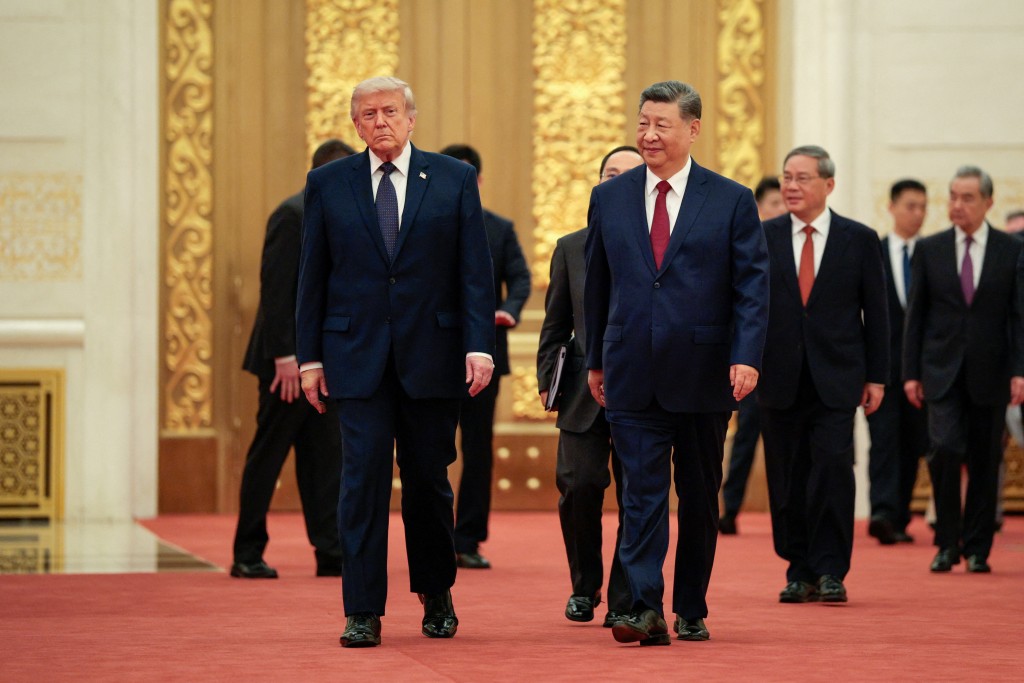
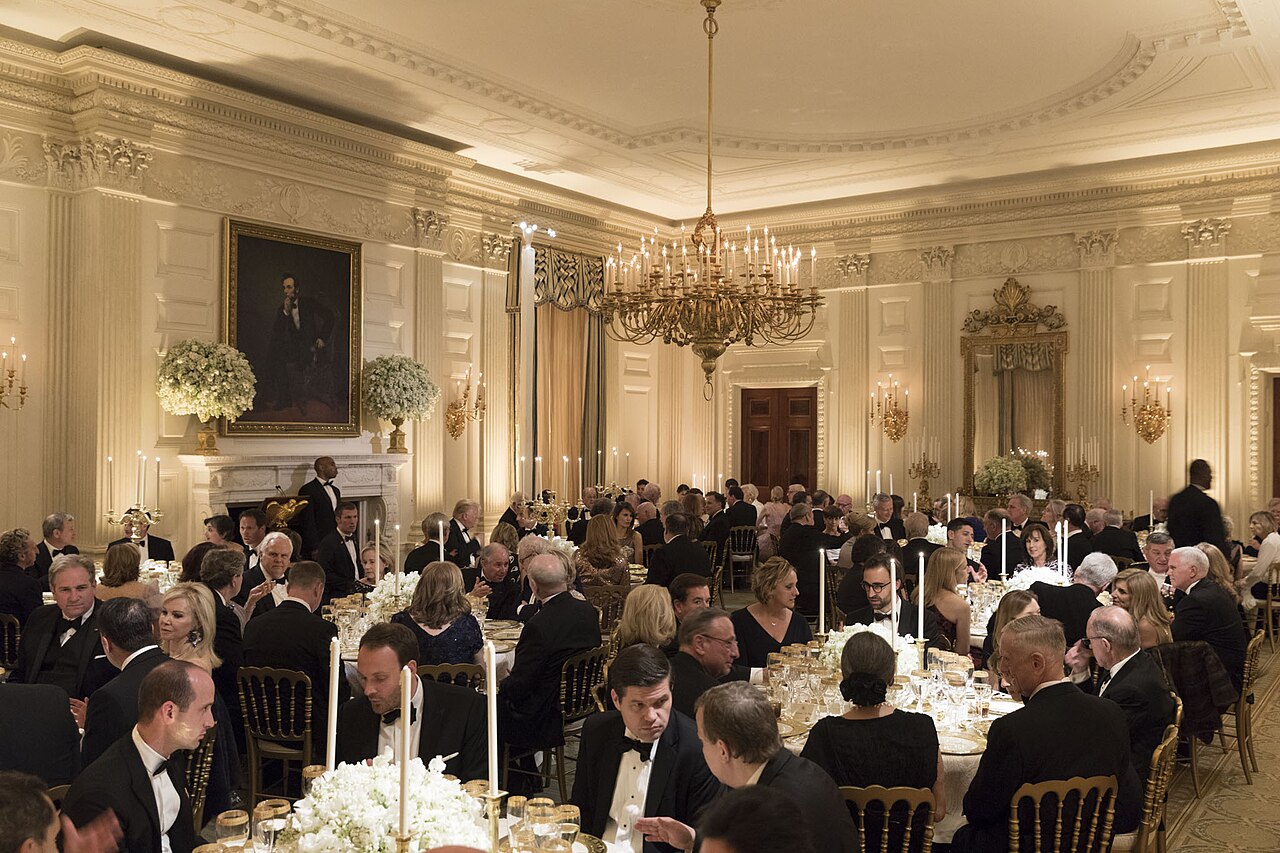
The Trump Xi state dinner 2026 ended Thursday beneath low East Room lighting, with red-and-gold place settings, a black-tie crowd and two toasts that sounded warmer than the day’s documented results. President Donald Trump said the United States and China had “never gotten along better.” President Xi Jinping said their talks had produced “common understanding on many issues,” given the relationship “new substance” and supplied “new strategic guidance.” He did not name the understandings.
That gap between tone and text was the evening’s central fact. The ceremony was unusually generous, the language intentionally reassuring and the symbolism carefully staged. Yet by the late-evening reporting cutoff, the White House had issued no joint statement and neither leader had announced a breakthrough on Taiwan, advanced chips, artificial intelligence, Iran or rare-earth supplies.
The clearest concrete result was narrower: Treasury Secretary Scott Bessent said an existing trade truce would be extended from November 10, 2026, to January 10, 2027. It bought 61 days. It did not settle the structural disputes that made the truce necessary.
A candlelit assertion of friendship
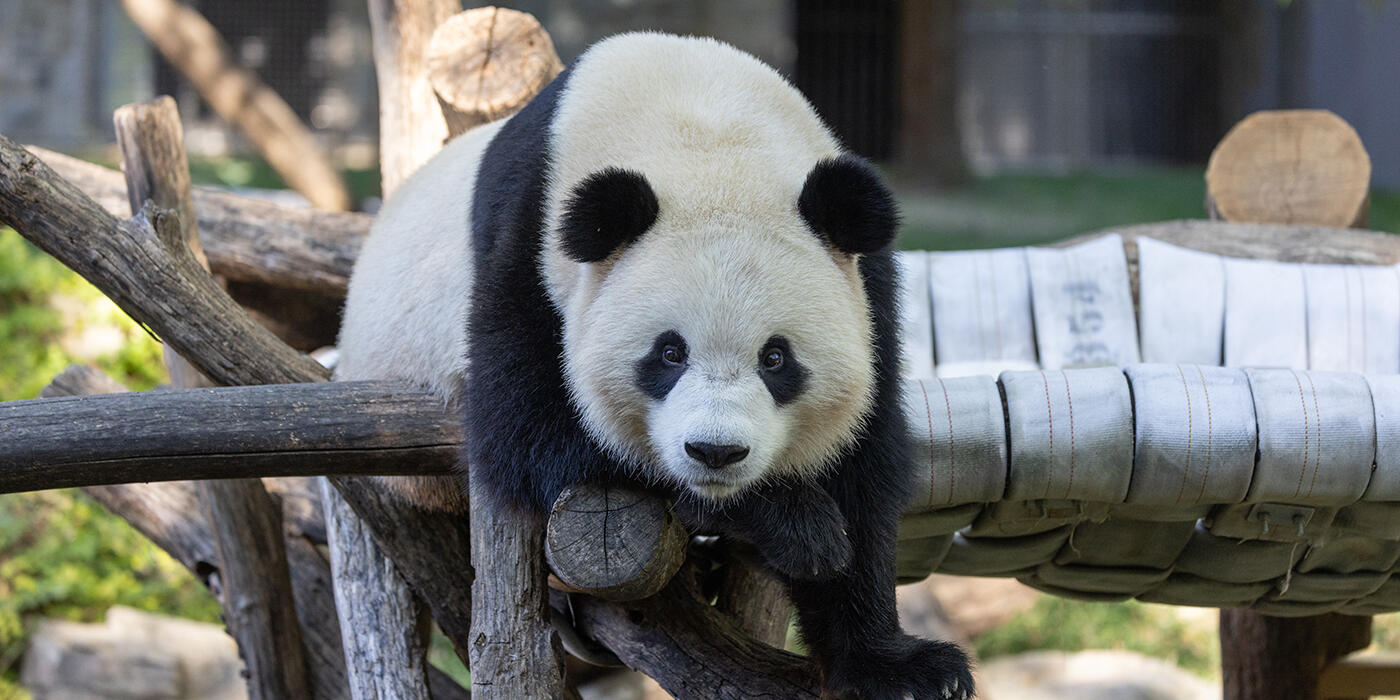
The dinner was diplomacy in its most tactile form. Trump presented Xi with a bald-eagle statue, calling the bird a national symbol and saying he hoped the gift would find “a nice place, a wonderful place in Beijing.” China’s public gift was softer but no less symbolic: two giant pandas bound for the United States, described by Xi as envoys of friendship.
The White House press pool reported 134 guests. At the main table were Apple’s Tim Cook; Nvidia chief Jensen Huang and his wife, Lori; Elon Musk; and AMD chief Lisa Su. OpenAI’s Sam Altman mingled with cabinet members. Their presence made the seating chart a policy document: the men and women building chips, models, consumer platforms and industrial capacity were placed inside a geopolitical negotiation about who will control those technologies.
The first course paired yellow-squash velouté with wild-mushroom fricassee, a deliberate echo—whether intended or not—of the wild-mushroom soup served when Barack Obama hosted Xi in 2015. The menu’s continuity offered a reminder that U.S.–China competition has outlasted administrations even as the rhetoric and decor have changed.
Trump’s toast emphasized personal rapport and durable ties between the two peoples. Xi’s was more institutional. He said national rejuvenation in China and Trump’s “make America great again” ambition could be mutually reinforcing, then urged the two countries to find a new way for major powers to coexist. The smiles were real. So was the absence of specifics.
Pageantry versus substance
The dinner capped an arrival designed to communicate equality at every stage. Trump took the highly unusual step of greeting Xi on the tarmac at Joint Base Andrews rather than waiting for the formal White House arrival. A red carpet, honor guard, fighter flyover and stealth bomber supplied the imagery of state power. Later, Trump showed Xi Marine One and the new South Lawn helipad.
The Wall Street Journal’s assessment was blunt: substantial pageantry, few concrete gains. Its reporting also captured the strategic value Beijing sought—the picture of Xi being received as the co-equal of an American president. Ceremony is not empty in diplomacy; it can stabilize a tense relationship and create political room for bargaining. But ceremony is not an agreement, either.
The paradox is that both leaders had reasons to prefer an impressive visit without a binding settlement. Trump could stage control, hospitality and personal influence roughly 40 days before the November 3 midterm vote. Xi could bank the imagery of parity for a domestic audience and for his preparation around the Communist Party Congress, while conceding little in public. A vague success is easier to claim than a detailed compromise is to defend.
Trump Xi summit results: two months, not transformation
The trade-truce extension is useful precisely because it prevents an immediate deterioration. Businesses planning imports, farm purchases and production get two more months without a scheduled return to the previous confrontation. Financial markets get a date, January 10, rather than an undefined cliff.
But the number should not be inflated. Sixty-one days is a negotiating bridge, not a trade architecture. Bessent said he did not know whether a “bigger deal” could be done or whether the parties would simply roll the existing arrangement again. That admission placed the uncertainty inside the administration’s own account.
Beijing and Washington also described the result differently. Xi welcomed what he called a new joint arrangement reached by the countries’ economic teams. Bessent publicly identified a two-month extension. Without a joint text, it was not clear whether those descriptions referred to exactly the same package or whether additional understandings remained unpublished.
This distinction matters for farmers, manufacturers and investors. A truce can pause tariff escalation, but it does not automatically guarantee soybean purchases, loosen export controls, restore market access or resolve complaints about subsidies and intellectual property. Those are the deliverables by which any larger deal will eventually be judged.
The Trump Xi Taiwan red line is now harder to ignore
According to a Chinese Foreign Ministry readout carried by Xinhua and summarized by the Korea JoongAng Daily, Xi urged Washington to oppose Taiwan independence and handle the issue “with prudence.” That is Beijing’s claim about the private exchange; the White House had not released a comparable account by the reporting cutoff.
The pressure point is concrete. Trump suspended a roughly $14 billion Taiwan arms package before his May meeting with Xi in Beijing, and Beijing wants it scrapped. Supporters of the sale see the weapons as essential deterrence for a self-governing democracy. Beijing regards them as interference in what it calls an internal matter. Trump may view the package as leverage, but prolonged suspension can become policy by inertia.
For Taipei, therefore, the most consequential summit outcome may be what did not happen. No public declaration changed U.S. policy, yet no announced timetable settled the weapons question. The longer the package remains in abeyance, the more allies will ask whether Washington is trading away deterrence for a commercial accord—even if no such bargain has been admitted.
AI, chips, Iran and rare earths remain deferred
Xi said artificial intelligence should be “always under human control” and called for cooperation against misuse. The phrase identifies a genuine shared risk, but it is not an operating mechanism. No public agreement established an AI hotline, incident-notification system, model-evaluation protocol or limits on military use.
That leaves the U.S.–China AI relationship divided between safety language and industrial competition. Washington wants to preserve advantages in leading chips and computing infrastructure; Beijing wants restrictions eased and domestic capacity strengthened. The tech-heavy guest list did not alter those incentives. Until a framework specifies what each government will disclose, “human control” remains a principle rather than a safeguard.
On Iran, a Reuters-derived report published by Devdiscourse said Xi supported a U.S.–Iran return to a ceasefire and an eventual negotiated peace. That put negotiation on the record but did not show that Beijing would use oil purchases, finance or diplomatic pressure to move Tehran. Trump, meanwhile, did not announce a Chinese commitment.
Rare earths followed the same pattern of deferred substance. China’s leverage comes from processing capacity and export controls; America’s leverage comes from technology access, tariffs and alliances. A short trade extension lowers the chance of an immediate rupture but does not diversify supply chains or resolve licensing uncertainty. Buyers will still hedge.
Who won the imagery?
Xi won recognition. The tarmac greeting, flyover, White House tour and candlelit dinner created a visual sequence in which China’s leader was treated as the representative of a fully co-equal power. Those images can support Xi’s domestic presentation as he prepares around the Party Congress: Washington did not summon or lecture him; it honored and negotiated with him.
Trump won a made-for-television presidency. The eagle statue, military aircraft, Marine One and roomful of technology chiefs fit his argument that personal relationships and spectacle can produce calm between rivals. Forty days before voting, the visit offered midterm optics of command at a moment when the Iran war and energy costs were weighing on public attention.
Neither visual victory guarantees a policy victory. Trump faces criticism from Republicans who saw the welcome as too lavish for a strategic competitor. Xi must still manage an economy exposed to tariffs and technology controls. Their shared achievement was avoiding a public rupture. Their shared risk is that the images raise expectations the negotiations cannot meet.
Winners and losers
The immediate winners are negotiators, exporters and companies that value predictability. The truce gives them more time. The technology executives at dinner also gained proximity to both political systems shaping their markets, although access is not exemption from regulation.
Xi gained the clearer symbolic prize. Co-equal treatment came without a public Chinese concession on Taiwan, rare earths or Iran. Trump gained domestic production value and a temporary stabilization he can describe as the product of personal diplomacy.
The vulnerable losers are actors whose interests can be deferred: Taiwan, companies waiting for licensing clarity, farmers needing enforceable purchase commitments and governments seeking Chinese pressure on Iran. They received process, not closure. Human-rights cases and detained Americans were also absent from the public outcome.
The long-term loser could be credibility if both governments continue to advertise “understandings” that never become verifiable commitments. Strategic ambiguity can prevent a breakdown for a while; repeated ambiguity eventually makes every deadline less persuasive.
What the numbers mean
- 134 guests: a deliberately concentrated room of political, corporate and cultural power, with technology leaders placed near the center of the relationship.
- $14 billion: the approximate value of the suspended Taiwan arms package—large enough to affect deterrence calculations and congressional politics, but still a bargaining item rather than an announced concession.
- 61 days: the interval from November 10 to January 10. It is breathing space, not proof that a larger trade bargain is near.
- Two pandas: high-value public diplomacy with little strategic cost. The animals can create years of positive attention even if government relations remain difficult.
- 40 days: the distance from the summit to the November 3 midterms, making every image part foreign policy and part domestic political communication.
Three scenarios for what happens next
1. A narrow January package
The most plausible constructive outcome is a limited agreement before January 10: further agricultural purchases, procedural relief on selected trade barriers, and enough language on export licensing to extend the truce again. Taiwan and the most advanced chips would remain outside the bargain. Both leaders could claim progress without crossing core red lines.
2. Managed ambiguity continues
The sides may simply keep talking and roll the truce forward. That would reduce immediate market risk but leave companies making expensive decisions under temporary rules. Panda diplomacy and leader-level contact would soften the atmosphere while the strategic contest continued underneath.
3. Deferred disputes collide
A Taiwan arms decision, rare-earth restriction, chip-control expansion or escalation in Iran could break the pause. In that scenario, the dinner would be remembered not as the start of a settlement but as the high-water mark of a brief stabilization.
The verdict at the reporting cutoff
The state visit was scheduled to continue through Friday, September 25, giving the two governments another day to clarify what Xi’s “common understanding” contained. At the late-Thursday cutoff, however, there was no joint statement. That absence is not proof that nothing was agreed; private commitments and technical work can precede public text. It does mean outside governments, companies and voters cannot yet test the leaders’ claims against a shared document.
The balanced judgment is therefore narrower than either side’s celebration. The visit succeeded as crisis management and political theater. It produced a modest trade reprieve and an open channel at the top. It did not resolve the central contests over Taiwan, chips, AI governance, Iran or rare earths. The pageantry bought time. What matters now is whether the negotiators can turn that time into terms.
Sources and further reading
- The Wall Street Journal: White House summit and pageantry
- The Wall Street Journal: five takeaways and limited concrete gains
- USA Today: dinner menu, guests, gifts and panda announcement
- The Times: AI language, Taiwan arms package and state-visit context
- IANS: dinner quotations and the 134-guest pool count
- Korea JoongAng Daily: Chinese Foreign Ministry readout carried by Xinhua
- Reuters report via Devdiscourse: Taiwan, Iran and summit outcomes
- Associated Press report via 990 AM: dinner setting, menu and technology guests
Reporting basis: Fixed late-evening September 24, 2026 snapshot. Xi’s private-meeting positions are attributed to the Chinese Foreign Ministry readout carried by Xinhua; U.S. claims are attributed to named officials. Signal Post News analysis is identified as interpretation, and no joint statement had been issued by this cutoff.