Taiwan Xi Trump reunification
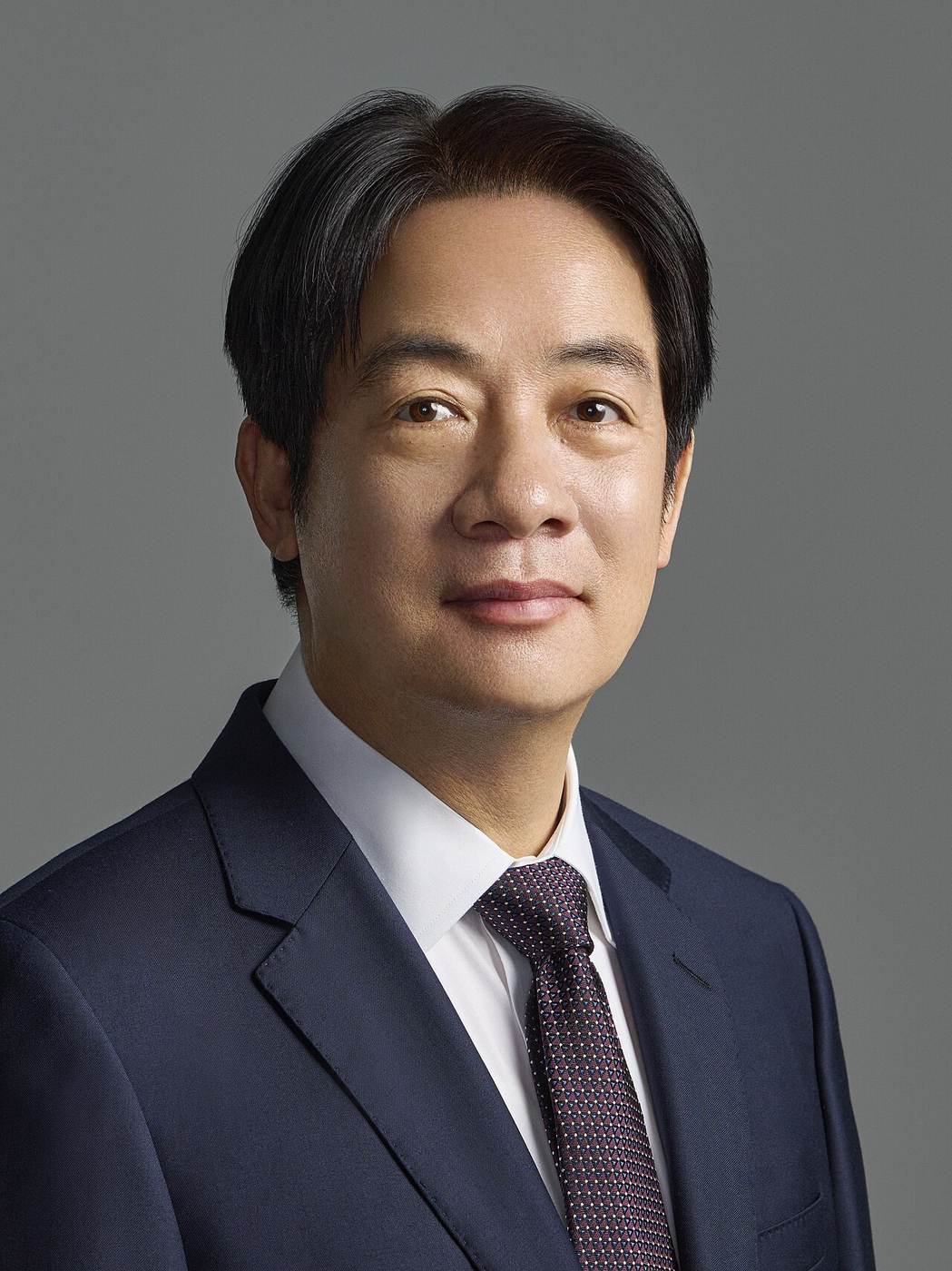
The Taiwan Xi Trump reunification dispute moved from summit diplomacy into a direct public confrontation on Friday, September 25. Taiwan's foreign ministry denounced Chinese President Xi Jinping's presentation of “reunification” to U.S. President Donald Trump as a “distortion of the facts,” saying sovereignty belongs to Taiwan's people and that only they can determine the island's future through democratic means.
Xi had told Trump at the White House on Thursday that China's position on safeguarding national “reunification” and territorial integrity was clear. According to China's account, he urged Washington to adhere to what Beijing called the “correct position” of opposing Taiwan independence. Taipei answered that the Chinese Communist Party has no right to represent the Taiwanese people, called China the “true disruptor” of regional peace, and pointed to military pressure around Taiwan and in the East and South China Seas.
The exchange is not merely semantic. Beijing succeeded in putting its preferred China reunification Taiwan language into the public record of a U.S.-hosted summit. Taipei then drew its own red line in equally public terms: the island's future is a matter of democratic self-determination, not an understanding to be reached by two larger powers. The immediate struggle is therefore over which Taiwan narrative acquires legitimacy in Washington—and whether American policy treats deterrence as a durable commitment or a negotiable component of a wider bargain.
Why this matters: Taiwan's red line while Washington hosts Xi
The timing gives the Taiwan foreign ministry statement unusual weight. Xi was still in Washington, where Trump planned to take him to the National Archives on Friday to view the Declaration of Independence, Constitution and Bill of Rights. Against that setting, Taipei's insistence that its people choose their own political future was both a rebuttal to Beijing and an appeal to the democratic principles Washington displays as national foundations.
Beijing's wording also seeks to shift the baseline. U.S. policy has long said Washington does not support Taiwan independence; Xi wants the stronger formulation that the United States opposes it. Those phrases sound close, but they are diplomatically distinct. The first leaves room for Washington to oppose unilateral changes by either side. The second is language Beijing could cite as U.S. alignment with its desired political outcome.
Taipei's response attempts to close that space before repetition hardens it. Its message to U.S. officials and lawmakers is that managed relations with Beijing cannot come at the cost of allowing China's sovereignty claim to stand unanswered. Its message to other governments is that Taiwan democratic self-determination and Taiwan Strait peace stability are connected: legitimacy cannot be separated from deterrence.
A lavish Xi–Trump summit, but little settlement
The September 24 Xi Trump summit Taiwan dispute unfolded inside an event heavy with symbolism and lighter on binding outcomes. Trump staged a lavish White House welcome and state dinner. The two governments pointed to a bilateral trade mechanism, greater access for U.S. farmers and ranchers, and artificial-intelligence cooperation. Yet there was no sign that the central economic and security disputes had been resolved.
That asymmetry matters. Trade process, farm access and AI safeguards offer both leaders visible areas of cooperation. Taiwan presents a harder test because each side defines stability differently. Beijing describes movement toward unification and opposition to independence as stabilizing. Taipei argues that Chinese military coercion is the destabilizing force. Washington wants economic gains and managed competition without weakening the deterrence that helps prevent either coercion or a unilateral declaration.
The summit thus delivered three simultaneous narratives. Beijing could say Xi placed reunification and opposition to independence directly before Trump. Taipei could say it immediately rejected the premise and reaffirmed popular sovereignty. Washington could emphasize dialogue, trade and AI while avoiding a public rupture. All three claims can coexist in the short term; they cannot all determine policy over time.
The $14 billion question hanging over strategic ambiguity
The sharpest test is the Taiwan arms sale paused by Trump after his May 2026 trip to Beijing. His administration had approved an approximately $11 billion package in December 2025, described in reporting as the largest ever. A second package worth roughly $14 billion has remained on hold for months. Trump called it a “very good negotiating chip.” If approved, the two packages would total about $25 billion in announced sales within roughly a year—an exceptional concentration of U.S. security support.
Four Republican senators—Mitch McConnell, John Cornyn, Lisa Murkowski and Thom Tillis—wrote this week that more than $15 billion in Taiwan security assistance and proposed sales was stalled when the $14 billion package, $1 billion not yet obligated by the Pentagon and $300 million in congressionally appropriated financing were counted together. Their criticism was explicit: deterrence becomes less credible if capabilities are withheld to preserve diplomatic appearances.
This is where U.S. strategic ambiguity Taiwan policy meets the law. Washington recognizes the People's Republic of China rather than Taiwan and does not promise in advance exactly how it would respond to an attack. But the Taiwan Relations Act makes it U.S. policy to provide Taiwan with defense articles and services necessary for sufficient self-defense and to maintain the capacity to resist coercion. Strategic ambiguity is meant to leave an adversary uncertain about the American response—not to make Taiwan and U.S. allies uncertain whether approved capabilities will be traded away.
The risk is larger than one procurement package. If Beijing concludes restraint is the new baseline, future summits may start from an expectation that arms approvals can be delayed for unrelated economic concessions. If Taipei concludes weapons are bargaining inventory rather than part of a stable process, it may accelerate indigenous programs, seek more explicit political assurances or make plans based on a less reliable American timetable. Allies from Tokyo to Seoul will draw their own conclusions about U.S. reliability.
What Taiwan is spending—and what it faces every day
Taipei is not relying only on Washington. Its government proposed NT$1.1225 trillion in broadly defined defense spending for 2027, about US$35.3 billion and 3.01% of projected GDP. That is an 18% nominal increase from the NT$949.5 billion 2026 level. President Lai Ching-te has said spending should remain above 3% of GDP and rise toward 5% by 2030. The trajectory reflects both U.S. pressure for greater burden-sharing and Taiwan's own assessment of the military environment.
Percentages require care. The government's broader NATO-style measure includes the defense ministry, special budgets, military pensions and the coast guard. The 2026 total was originally described as 3.32% of GDP, while the larger 2027 proposal comes to 3.01% using a higher GDP forecast. The cash increase is real even though the headline share declines. The policy question is not only how much is budgeted, but how quickly money becomes deployable missiles, drones, hardened infrastructure, trained personnel and resilient command systems.
China military pressure Taiwan is now measured in daily operating patterns, not occasional crises. Taiwan's defense ministry reported 21 PLA aircraft sorties, 10 navy ships and five Chinese government vessels around the island in the 24 hours ending September 6; 13 aircraft crossed the Taiwan Strait median line and entered several sectors of Taiwan's air-defense identification zone. In the period ending September 9, it reported six aircraft sorties, eight navy ships and three government vessels, with two aircraft entering southwestern and eastern sectors. The numbers vary by day, but the presence is near-continuous, consuming Taiwanese readiness and normalizing Chinese access around the island.
Beijing says its actions defend sovereignty and deter separatism. Taipei says the patrols, median-line crossings and encirclement exercises are coercive. Neither the daily figures nor the rhetoric alone proves an imminent attack. They do show why a delayed weapons decision is judged against an active pressure campaign rather than a hypothetical future threat.
Japan, South Korea and the regional credibility test
The argument already reaches beyond the island. In 2025, Japanese Prime Minister Sanae Takaichi warned that a conflict involving warships and force around Taiwan could become a “survival-threatening situation” for Japan, language that can open a path to collective self-defense under Japanese law. Her warning reflected geography: Japan's southwestern islands sit close to Taiwan, and U.S. bases in Japan would be central to any regional contingency.
Days before Xi arrived in Washington, U.S. Secretary of State Marco Rubio met Japanese Foreign Minister Toshimitsu Motegi and South Korean Foreign Minister Cho Hyun in New York. Their joint statement stressed peace and stability across the Taiwan Strait, a peaceful resolution of cross-strait issues, opposition to unilateral changes to the status quo, and support for Taiwan's meaningful participation in appropriate international organizations. Washington also reiterated “ironclad” defense commitments to Japan and South Korea.
That creates a credibility chain. If Washington's public alliance assurances are strong while Taiwan capabilities remain stalled as negotiating leverage, Asian capitals must decide which signal carries more weight. The concern is not that every arms delay causes a war. It is that ambiguity about process can erode the confidence on which deterrence depends.
Who gains, who loses—and what remains uncertain
Beijing gains a diplomatic foothold. Xi's reunification framing appeared in the summit account and put pressure on Trump to move from “does not support” toward “opposes” Taiwan independence. That does not mean Washington accepted China's sovereignty claim, but Beijing can present the exchange at home and abroad as evidence that Taiwan is central to any stable U.S.–China relationship.
Taipei gains clarity, but not control. Its rapid rebuttal asserted that the CCP cannot represent Taiwan and placed democratic choice at the center of the dispute. International backing can reinforce that position, yet Taipei does not control the U.S. arms timetable or the language Trump may use as he closes Xi's visit.
Washington gains room for trade and AI cooperation, but spends credibility if defense decisions look transactional. Managed competition can reduce escalation risk and produce practical benefits. The cost appears when an economic mechanism is announced while a security package stays suspended, allowing critics to argue that the balance is being purchased with Taiwan's uncertainty.
The evidence does not establish a secret bargain. There is no public agreement that Trump traded the arms package for farm access, an AI mechanism or summit pageantry. The package could still move after Xi leaves. Nor does Xi's wording by itself change U.S. law. The present conclusion is narrower: public sequencing has created a perception that Taiwan arms policy is negotiable, and Beijing, Taipei, Congress and U.S. allies are acting on that perception.
What happens next
First, watch the National Archives tour on Friday, September 25. The setting invites both leaders to frame the history and future of U.S.–China relations. Any statement about recognition, independence or the 1979 diplomatic shift will be parsed for movement beyond established American language.
Second, watch whether the $14 billion package is sent to Congress. Approval soon after the visit would support the argument that the pause was temporary sequencing. A prolonged hold—or a smaller package without explanation—would strengthen concern that arms sales have become a recurring bargaining instrument.
Third, watch the November 2026 U.S. midterms. Trump can present trade, farm access and AI cooperation as evidence of dealmaking, while both Republican and Democratic critics can frame the arms pause as weakness toward Beijing. Congressional pressure may rise as campaigns turn U.S.–China policy and alliance reliability into electoral tests.
Finally, distinguish managed competition from escalation. In the managed scenario, Washington restores a predictable arms process, Beijing keeps channels open, Taipei avoids unilateral political moves and all sides reduce the chance that daily patrols become a crisis. In the escalation scenario, the package remains stalled, PLA operations intensify and each capital interprets the others' restraint as weakness. The next decision—not the summit's pageantry—will reveal which track is taking hold.
Related reporting: what Xi's Washington visit means for AI and Taiwan · Takaichi's Taiwan warning before the summit · the symbolism and limited gains of the state dinner
Reporting basis: Fixed September 25, 2026 snapshot. Government claims are attributed; analysis is Signal Post News's. The page does not update at open.