Trump Xi political prisoners
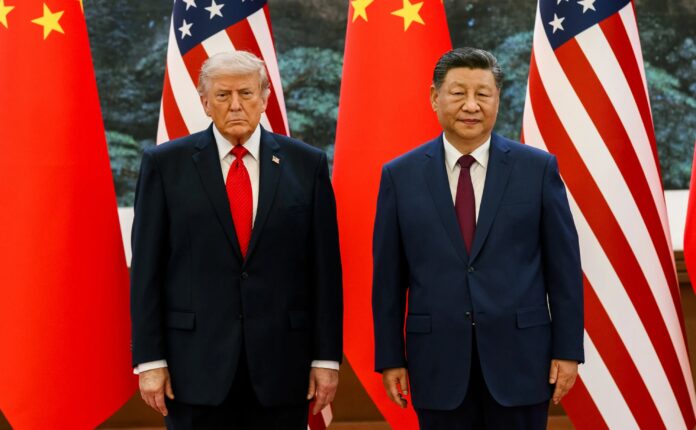
WASHINGTON — President Donald Trump said Wednesday that he personally pressed Chinese leader Xi Jinping on the release of political prisoners when the two met at the White House last week — and, for the first time, named the cases he put on the table.
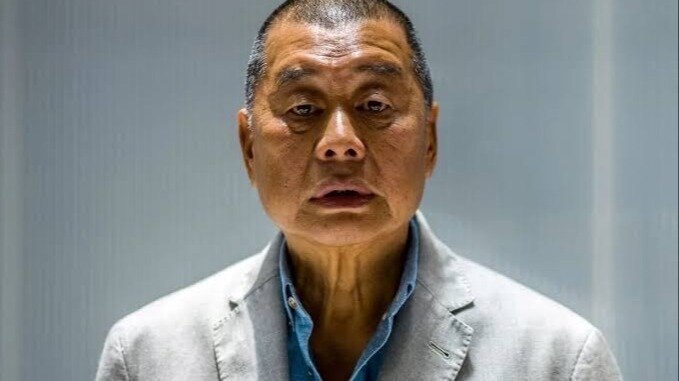
Asked whether he had raised cases such as that of Min Zin, the Myanmar scholar and U.S. citizen arrested in China in June and designated by Washington as “wrongfully detained” in August, and Jimmy Lai, the Hong Kong media tycoon who founded the shuttered Apple Daily, Trump answered without hesitation. “I did with President Xi. I did,” he told reporters, according to Reuters correspondents Gram Slattery and Kanishka Singh.
“We talked, and I think we had some very, very important discussions. Hopefully, fruitful discussions,” Trump added, according to the same Reuters report by Slattery and Singh.
The White House had signaled before Xi’s visit that Trump was expected to bring up Americans wrongfully detained in China. It did not say whether the exchange would reach beyond U.S. citizens. Wednesday’s remarks confirm that it did: named dissidents, including a Hong Kong prisoner Beijing considers a purely internal matter, were raised directly with the Chinese leader.
Why this matters: names turn principles into demands
There is a difference between raising “human rights” as an agenda item and naming names. The first is diplomacy as weather — acknowledged, noted and moved past. The second is a demand, and it puts a face on the abstraction. By confirming that he raised Min Zin and Jimmy Lai specifically, Trump turned a general principle into two testable cases: either Beijing moves, or it visibly refuses.
That is significant for three reasons. First, it is the first confirmation that last week’s Trump Xi summit at the White House — an event heavy on pageantry and light on signed agreements — included a direct leader-level exchange on political prisoners. Second, it exposes the split in Trump’s China posture: relentless about freeing Americans held overseas, conspicuously quiet about China’s treatment of Tibetans, Uyghurs and domestic dissidents. Min Zin is a U.S. citizen; Jimmy Lai is not, but his case has a powerful constituency in Washington and London, and Trump chose to spend leader-level capital on it.
Third, the timing converts a summit talking point into a deliverable. “Hopefully, fruitful discussions” is not a promise, but it is a marker. The next time Trump and Xi meet, plausibly on the margins of November’s G20, reporters will ask what fruit those discussions bore.
The two names on the table
Min Zin is a Myanmar scholar and naturalized U.S. citizen whose arrest in China in June stunned academic circles. Washington’s August decision to formally designate him “wrongfully detained” — a legal classification that unlocks the full machinery of the U.S. hostage-affairs apparatus — was the government’s formal judgment that his detention is a political act rather than a legitimate criminal matter. Such designations have historically been the bureaucratic on-ramp to swaps and releases.
Jimmy Lai is Hong Kong’s most prominent political prisoner and its most vocal China critic. The 78-year-old founder of the pro-democracy Apple Daily — shut down by authorities in 2021 — was sentenced in February to 20 years in prison on two counts of conspiracy to collude with foreign forces and one count of publishing seditious materials under Hong Kong’s national security law. The sentence, effectively a life term at his age, made him the highest-profile casualty of the security crackdown that dismantled Hong Kong’s opposition press. His case has been raised repeatedly by Western governments; Trump’s decision to put it to Xi directly is the most prominent American intervention yet.
How we got here: a summit that needed a substance story
Last week’s Trump–Xi summit was, by most accounts, a triumph of ceremony over content: a military welcome, a state dinner and an extended trade truce, but no jointly published major breakthrough on trade, Taiwan or artificial intelligence, as Signal Post News reported in its summit analysis, Trump–Xi summit: all pomp, no pact. For a White House six weeks out from the midterm elections, the optics were the point. But optics alone leave a vacuum, and detainee stories were already filling it: days before Xi arrived, the wife of jailed Chinese scientist Youlin Chen made a public plea for her husband’s freedom in the plea for Youlin Chen ahead of the summit.
The White House notably did not say, before or during the visit, whether Trump intended to raise the broader rights questions — Tibet, the Uyghur Muslim minority or China’s new “ethnic unity” law — and Wednesday’s remarks do not fill that gap. The administration’s pattern holds: make the freedom of Americans held overseas a signature priority while largely avoiding public confrontation over China’s treatment of its own minorities and dissidents. Raising Jimmy Lai complicates that critique, but only if it produces something. That distinction also sharpens the question examined in what the Trump–Xi state dinner actually delivered.
Who benefits, who loses, what the critics say
The families — and the hostage-affairs machinery — benefit first. A presidential-level raise is the highest escalation short of a public ultimatum. For Min Zin’s family and advocates, Trump’s confirmation means the case is now personally owned by the president, concentrating bureaucratic attention. For Jimmy Lai’s international supporters, the intervention is a morale event: the most powerful leader in the world put their cause to Xi’s face.
Washington gains a negotiating chip. US China prisoner talks are transactional, and named cases are tradable assets. If Beijing wants something in the next round — tariff relief, technology access or a favorable G20 bilateral — Washington now has a public, president-level ask to trade against. This is the logic of Trump hostage diplomacy: convert moral cases into leverage.
Beijing loses narrative control — or gains an opening. China’s position is that cases such as Lai’s are internal affairs and that American “wrongful detention” designations are interference. A leader-level raise forces Beijing to respond rather than ignore. But it also gives Xi an option worth watching: a well-timed release, framed as clemency rather than concession, would be the cheapest goodwill purchase available ahead of November.
The critics see a contradiction. Human-rights advocates have long argued that Trump compartmentalizes: fierce about Americans held abroad, muted about Uyghurs, Tibetans and Hong Kong dissidents with no direct American constituency. They will also note what was not raised — the White House has said nothing about Tibet, the Uyghurs or the “ethnic unity” law — and that Trump’s own framing, “hopefully, fruitful,” keeps expectations deliberately low.
China hawks see a different risk: folding human-rights cases into a summit dominated by trade and technology turns prisoners into bargaining chips in a commercial negotiation. Paradoxically, that may be exactly what gets them released.
By the numbers
The arithmetic of U.S.–China prisoner diplomacy is lopsided and instructive. The United States has in recent years secured the release of hundreds of Americans wrongfully detained abroad — a record Trump has made central to his foreign-policy brand. Against that stands the stubborn remainder: Americans still held in China whose cases have not moved, and the far larger population of Chinese political prisoners for whom no American president has leverage except the kind Trump just tried to create.
Jimmy Lai’s 20-year sentence is the sharp end of that asymmetry. At 78, two decades is effectively terminal, and its severity was widely read as a message to every remaining dissident in Hong Kong. That is precisely why the case’s elevation to a summit-level discussion matters: it signals Washington is willing to spend leader-level capital on a non-citizen, changing Beijing’s calculus about how many such cases it can afford to keep frozen.
What happens next: three scenarios
Scenario one: the quiet release. Beijing frees or deports one of the named prisoners — most plausibly Min Zin, the U.S. citizen — in the weeks before the next leader-level meeting, letting Trump claim a win and Xi bank goodwill at minimal cost. This is the pattern of past U.S.–China detainee deals, and “hopefully, fruitful” reads like a president leaving the door open for exactly this.
Scenario two: the trade. The cases get folded into the next round of U.S.–China negotiations as explicit quid pro quos — releases in exchange for tariff relief or export-license easing. This is the scenario the critics fear and the dealmakers expect: human beings as line items in a commercial bargain. It is also, historically, the scenario that actually frees people.
Scenario three: the freeze. Beijing treats the raise as interference, digs in and the cases join the long list of summit talking points that produced nothing. The risk is not just stasis: public naming can harden positions, making quiet concessions politically costlier for Xi. If November’s G20 passes with no movement, “fruitful discussions” becomes a data point for the argument that personal diplomacy with Xi delivers theater, not results.
The honest assessment is that all three remain live, and the tell will be what happens before the next meeting. Prisoner diplomacy rewards patience and punishes premature celebration — but it starts, always, with someone powerful saying the names out loud. On Wednesday, Trump did.
Sources
- Reporting by Reuters correspondents Gram Slattery and Kanishka Singh, September 30, 2026: “Trump says he discussed release of political prisoners with Xi”.
- SRN News: Trump says he discussed release of political prisoners with Xi.
Reporting basis: Trump’s remarks and the named cases are reported by Reuters correspondents Gram Slattery and Kanishka Singh and by SRN News. Analysis is Signal Post News’s. This is a fixed September 30, 2026 reporting snapshot.