Trump Xi White House summit 2026
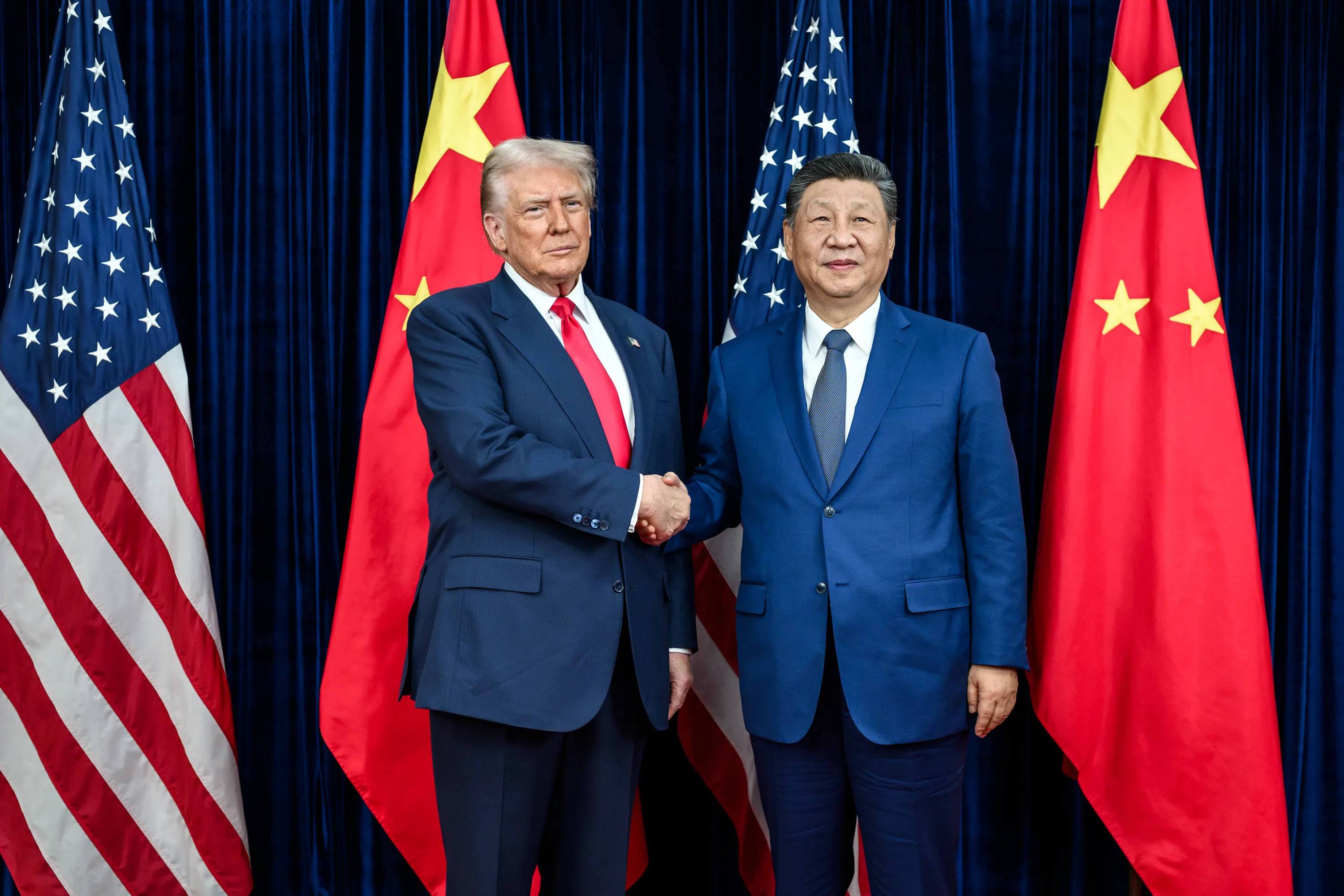
WASHINGTON — The Trump Xi White House summit 2026 began before either leader entered the White House. President Donald Trump personally greeted Chinese President Xi Jinping at Joint Base Andrews on Wednesday, September 23, after Xi and Peng Liyuan arrived for the state visit. The presidential tarmac welcome—a rare departure from normal protocol—gave Xi an image of equal-power treatment and gave Trump a dramatic opening for negotiations that could shape trade, artificial intelligence and security far beyond this week.
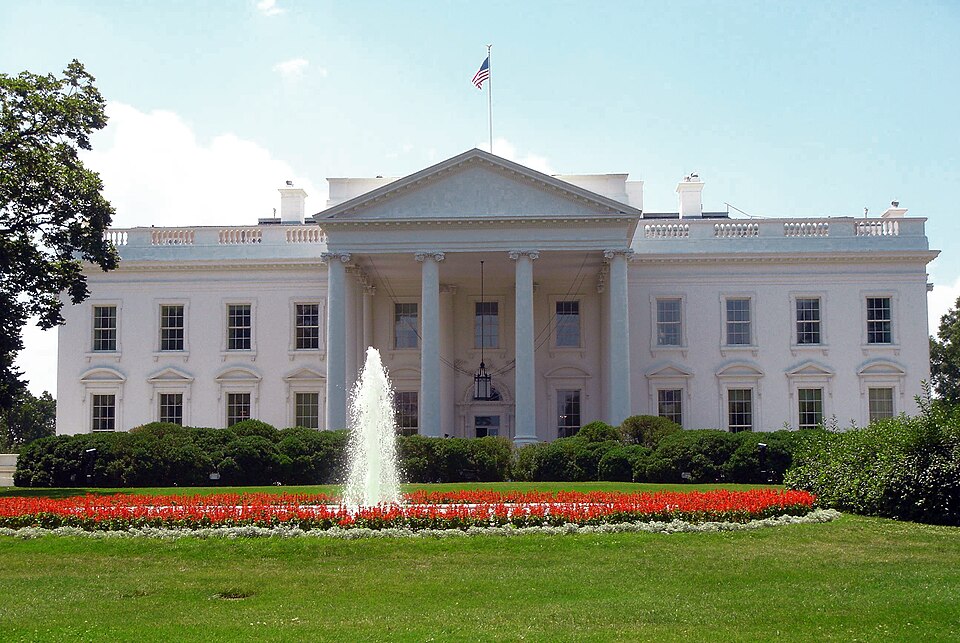
Xi is staying at Blair House, the presidential guest residence across Pennsylvania Avenue from the White House. On Thursday, he is expected to receive a South Lawn arrival ceremony involving 479 military personnel, inspect a military review in the Rose Garden, hold bilateral talks with Trump, visit a Smithsonian museum and attend an East Room state dinner hosted by Donald and Melania Trump for Xi and Peng. The first ladies are also expected to attend a separate Washington-area event.
The schedule is verified as a plan, not as a completed sequence. Ceremony can change for security, weather or diplomacy, and guest attendance remains subject to last-minute changes. What has already happened is the arrival and Trump’s airport greeting. What comes next is the part by which the visit will be judged.
Trump Xi state visit schedule: ceremony first, follow-through second
Thursday’s choreography is designed to communicate respect without disguising power. A 479-person military welcome and Rose Garden review display American capacity while honoring the visitor. A Smithsonian stop gives the program a cultural frame. The East Room dinner then places political leaders and major technology executives in one of the presidency’s most symbolic rooms.
Friday’s planned program is quieter: private tea in the Red Room, a National Archives visit to view the Declaration of Independence and Constitution, then a farewell ceremony and departure from Joint Base Andrews. The progression—from military display, to negotiation, to dinner, to foundational documents—is deliberate. It presents the U.S. relationship with China as a contest managed through institutions rather than a temporary personal truce.
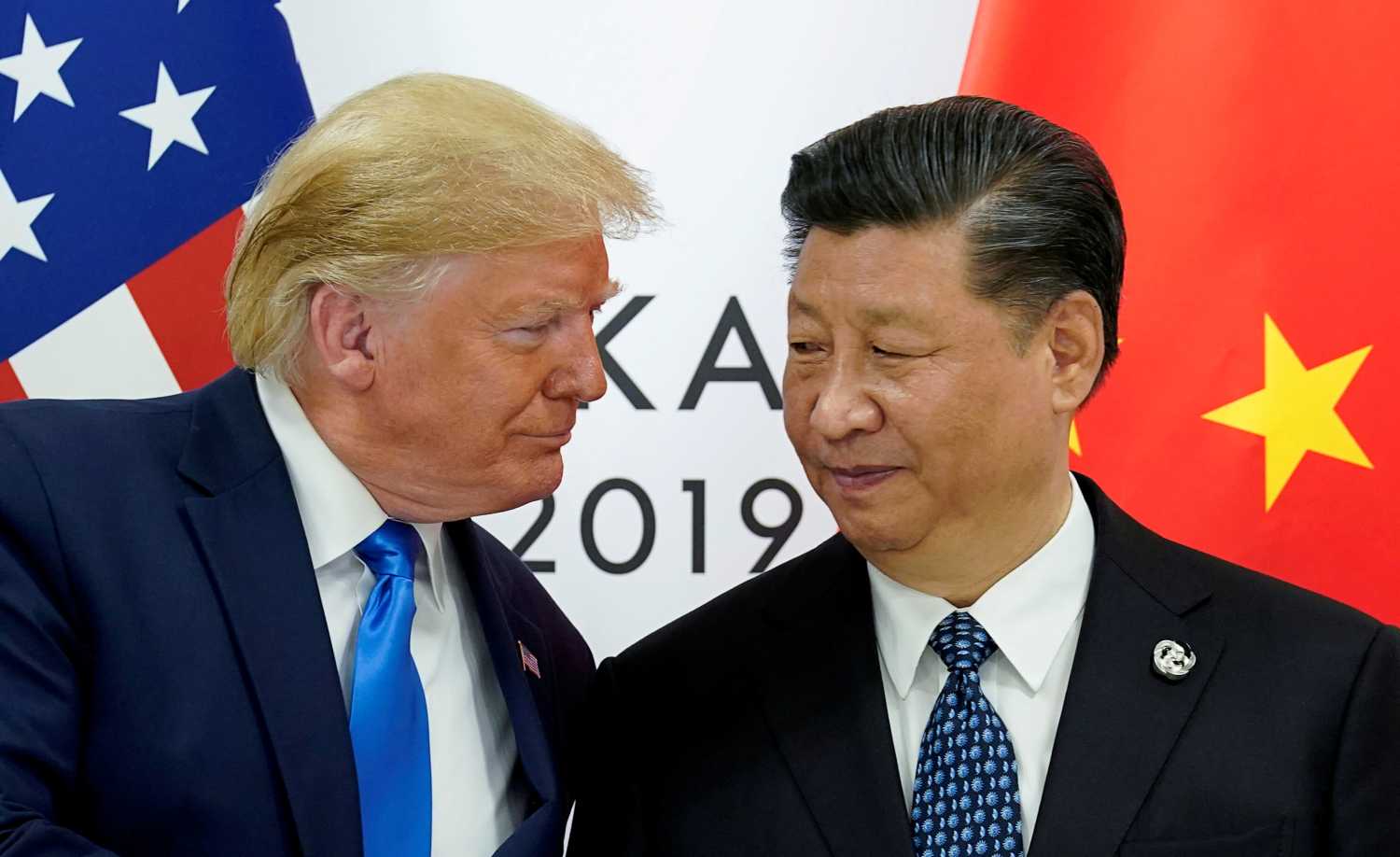
This is the leaders’ third meeting in 11 months, after Busan, Beijing and now Washington. Their May 14 summit at the Great Hall of the People lasted about two hours. At the banquet that evening, Trump formally invited Xi and Peng to the White House for September 24 and called the talks “extremely positive.” Repetition matters because summits can create channels; it also raises the standard. By a third meeting, continuity should be visible in written measures, assigned officials and deadlines.
Our earlier coverage of Xi’s visit without a Chinese chief-executive delegation explains an important asymmetry: American business leaders are expected in the room, while no matching Chinese corporate group is expected. That lowers the likelihood of a parade of commercial contracts, but it does not prevent government-to-government agreements.
Why it matters: the relationship sets costs for everyone else
The two countries are simultaneously customers, suppliers, competitors and military rivals. Their tariff decisions alter consumer prices and factory plans. Their chip rules influence the pace and geography of AI development. Their dispute over Taiwan shapes defense planning across the western Pacific. Their choices on rare earths reach automakers, electronics producers, energy projects and weapons systems.
That is why a ceremonial visit cannot be dismissed as optics. Protocol can give leaders political cover to make limited concessions without appearing weak. Yet spectacle also creates a risk: the larger the welcome, the easier it becomes to mistake cordiality for durable policy. The summit matters because small, enforceable agreements could reduce the probability of simultaneous economic and military crises. It also matters because a vague communiqué could postpone decisions while leaving every source of leverage intact.
Xi arrived only 10 days after attending the BRICS summit in New Delhi, where the New Delhi Declaration criticized unilateral tariffs and coercive economic measures. Washington therefore follows a multilateral stage on which China sought to cast U.S. trade tools as a systemic problem. Trump’s response is a bilateral format centered on leader-to-leader bargaining. The contrast is not merely stylistic: it reflects competing ideas about where rules should be made.
US China trade deal 2026: a $30 billion test of credibility
The clearest prospective economic deliverable is a negotiated reciprocal tariff-cut framework covering about $30 billion in products from each side. The symmetry is politically useful: each government can say it won access rather than surrendered protection. But the headline number is only the beginning. Businesses need to know which products qualify, when rates change, how customs agencies implement the rules and what happens if one side alleges noncompliance.
A framework would be meaningful if it turns an unstable ceasefire into predictable operating conditions. It would be less meaningful if the covered products can be removed administratively or if new national-security tariffs replace the cuts. “Reciprocal” does not necessarily mean economically equal, because the two countries’ export mixes and exposure differ.
China enters the meeting with a record 2025 trade surplus of $1.189 trillion. That number shows the scale of its global exporting machine, but it does not mean every Chinese sector is strong or every trading partner accepts the imbalance. For Trump, tariff relief must be presented as leverage producing access. For Xi, an agreement must avoid appearing to validate unilateral pressure. The result will be durable only if both narratives can coexist with the same text.
AI chip export controls meet a $50 billion revenue question
AI chip export controls are the hardest commercial-security issue on the table. Washington argues that access to the most advanced accelerators and semiconductor-manufacturing equipment can strengthen military and intelligence capabilities. Beijing sees the controls as an effort to contain its technological development. Semiconductor companies see both a security boundary and a lost market.
Nvidia-related reporting says roughly $50 billion in annual revenue is excluded from financial guidance because export bans prevent the company from counting sales that might otherwise be available. The figure is not a forecast of guaranteed revenue; it is an estimate of market opportunity outside the company’s formal outlook. That distinction matters. A policy change could reopen potential demand without ensuring licenses, orders or payment.
Democratic senators led by Chuck Schumer and Elizabeth Warren want the export-control regime treated as non-negotiable. Three bipartisan bills—the AI OVERWATCH Act, MATCH Act and Chip Security Act—would give Congress additional tools to scrutinize or secure advanced-chip exports. The unusual coalition signals that easing controls could face resistance even if Trump and Xi agree at the presidential level.
A credible outcome would define which chips or manufacturing tools remain prohibited, which uses could receive licenses, how end users are verified and what enforcement follows diversion. A general promise to cooperate on AI safety would be useful for crisis management, but it would not resolve market access or strategic-compute questions.
Rare earth minerals China controls—and the six-week clock
The immediate counterweight to American chip leverage is China’s dominance of global rare-earth refining. Mines alone do not deliver the magnets and processed materials needed for vehicles, robotics, electronics and defense systems. Separation, refining and magnet production are the bottlenecks, and Beijing occupies the strongest position in those stages.
China’s suspension of rare-earth export restrictions is scheduled to expire in six weeks. That turns a broad supply-chain vulnerability into a near-term negotiating deadline. An extension would reduce the risk of factory interruptions and give U.S. and allied diversification projects more time. A lapse could force companies to draw down inventories, seek licenses and ration inputs before alternative capacity is ready.
For Beijing, the leverage is powerful but not costless. Persistent restrictions encourage customers to finance new refining capacity outside China and can make Chinese supply appear politically unreliable. For Washington, a temporary extension would buy time but not solve dependence. The practical test is whether any announcement specifies covered materials, license timing and the duration of relief.
China Taiwan talks, military ties and the limits of a bargain
Taiwan is the issue least suited to transactional ambiguity. Beijing claims the self-governed island and opposes U.S. military support. Washington says its policy seeks to deter unilateral changes to the status quo and preserve peace. Any change in arms approvals, delivery schedules or official language will be examined by Taipei and U.S. allies for signs that security commitments have been traded for economic concessions.
The leaders are also expected to discuss military-to-military ties. Restoring reliable contact does not resolve the dispute over Taiwan, the South China Sea or regional deployments. It can reduce the chance that an encounter between ships or aircraft becomes a wider crisis. The useful deliverable would be a calendar of contacts, named channels and procedures for urgent communication—not merely an agreement that dialogue is desirable.
The balance is difficult. A calmer military relationship benefits both countries, but neither wants crisis-management talks interpreted as acceptance of the other’s claims. Progress will therefore probably be procedural: regular calls, incident notifications and clearer escalation channels. Those are less dramatic than a grand bargain and more valuable than another promise to avoid misunderstanding.
Fentanyl precursors deal, political prisoners and human rights
A fentanyl precursors deal offers a narrower area for measurable cooperation. The two governments can identify chemicals, companies, shipping practices, investigations and enforcement actions. Results can then be tested through seizures, prosecutions and changes in supply chains. The challenge is preventing law-enforcement cooperation from becoming a bargaining chip that stops whenever another part of the relationship deteriorates.
Human rights will test whether the summit’s agenda extends beyond trade and security. Senator Dick Durbin has asked Trump to raise the cases of Jimmy Lai, Gulshan Abbas, Gao Quanfu, Pang Yu and Ekpar Asat. Representative Jim McGovern wants cooperation linked to human-rights conditions. Their pressure reflects a recurring criticism of summit diplomacy: that urgent economic negotiations can push individual cases into a general statement with no deadline.
The responsible measure is specific. Did Trump raise the named cases? Did the Chinese side agree to a review, consular access, release or another identifiable step? Neither government’s summary alone will resolve the question if the accounts differ. Publicly naming a case can increase pressure, while quiet diplomacy can sometimes create room for movement; the outcome, not the format, should be judged.
Keeping the Strait of Hormuz open
Trump and Xi are also expected to revisit a reported understanding from the May Beijing summit to keep the Strait of Hormuz open to global shipping. China is a major oil importer with a direct interest in stable maritime flows, while the United States brings military reach and sanctions pressure. Their interests overlap on navigation even when their policies toward Iran differ.
An agreement at the level of principle would be significant but incomplete. Neither leader alone controls every actor operating near the strait, and Beijing’s influence in Tehran is not command. The useful questions are operational: whether China will press for de-escalation, whether Washington will distinguish commercial shipping from sanctions enforcement, and whether both sides will support a channel for maritime incidents.
The Hormuz discussion also connects this visit to the broader UN diplomacy unfolding in New York. Signal Post News is tracking President Masoud Pezeshkian’s statements and U.S.–Iran contacts in our Iran and UNGA live analysis.
Xi Jinping state dinner: who is in the room
The expected White House state dinner guest list includes Apple chief executive Tim Cook, Nvidia chief executive Jensen Huang, OpenAI chief executive Sam Altman, Amazon founder Jeff Bezos, Tesla chief executive Elon Musk, Alphabet chief executive Sundar Pichai, Dell Technologies chief executive Michael Dell and Citigroup chief executive Jane Fraser. Attendance can change, and being invited does not make an executive a negotiator.
Even so, the tech CEOs White House dinner makes the structure of the relationship visible. Apple depends on vast Asian supply chains; Nvidia sits at the center of the chip-control fight; OpenAI and Alphabet shape frontier AI; Tesla spans vehicles, batteries and Chinese manufacturing; Dell touches enterprise computing; Amazon connects cloud and commerce; Citi represents capital flows. Each company experiences a different version of U.S.–China interdependence.
The phrase “state dinner of the decade” describes the concentration of political and commercial power, not a guaranteed diplomatic breakthrough. The dinner can open conversations and signal access. It cannot replace statutes, export licenses, customs schedules or military orders. The most important outcomes may appear days later in agency guidance rather than in the East Room photographs.
Winners and losers
Trump wins if the ceremony produces enforceable tariff cuts, continued rare-earth access and crisis-management channels without weakening chip controls or Taiwan deterrence. He loses if the imagery of deference becomes the summit’s most durable result.
Xi wins from the symbolism of a personal tarmac greeting and full state honors. He wins materially if the U.S. relaxes technology restrictions or tariff pressure. He loses if the visit validates China-focused coalitions in Congress while producing only temporary relief on trade.
Manufacturers and consumers could gain from lower tariffs and reliable mineral supplies. The gains will depend on which goods are covered and whether companies pass lower costs through prices. Technology firms face a split outcome: access to Chinese demand can increase revenue, while weaker safeguards could accelerate future competitors or create national-security exposure.
Taiwan bears the largest third-party risk. It is not represented in the bilateral talks even though summit language and arms decisions can alter its security environment. Regional allies also lose if they conclude Washington treats commitments as negotiable inputs in a trade package.
Human-rights advocates and families of detainees win only through specifics. Inclusion on an agenda is not the same as progress. A named review, release, transfer or consular step would matter; a generic statement about dialogue would not.
Data context: what the headline numbers actually mean
$30 billion on each side is the reported scale of products in the reciprocal tariff-cut framework. The symmetry makes the deal easier to sell politically, but it does not show the value of the rate reduction, the sectors covered or whether the benefit is distributed evenly.
$1.189 trillion is China’s record 2025 trade surplus. It measures exports minus imports across the world, not the bilateral U.S. deficit and not household prosperity. It demonstrates industrial scale while also explaining why trading partners are demanding rebalancing.
Roughly $50 billion is the Nvidia-related estimate of annual revenue excluded from financial guidance because of chip-export bans. It is an indication of commercial stakes, not revenue already earned or guaranteed if policy changes.
Six weeks is the time remaining before China’s rare-earth export suspension expires. Unlike the broad trade numbers, this is an operational deadline. Companies must plan procurement, inventory and production before they know whether the pause will continue.
479 military personnel are expected in the South Lawn arrival ceremony. The figure measures the scale of the welcome, not the scale of an agreement. It will dominate the images; the smaller numbers in tariff schedules and export licenses will determine economic effect.
What to watch
First, read the documents, not the adjectives. “Historic,” “positive” and “productive” have no implementation value. Look for product lists, tariff rates, license categories, effective dates and named agencies.
Second, compare the U.S. and Chinese accounts. Separate statements can reveal whether each government believes the other made the same commitment. A joint text is stronger, but even joint language needs a mechanism for disputes and noncompliance.
Third, watch what happens after the dinner. Rare-earth licenses, chip-control guidance, Taiwan arms decisions and military calls will show whether the summit changed practice. The absence of immediate detail does not guarantee failure, but it transfers the burden of proof to implementation.
Fourth, track the six-week mineral deadline and congressional response. Congress can constrain technology concessions, while China can decide whether rare-earth relief continues. The summit’s political bargain may therefore be tested almost immediately by institutions neither leader fully controls.
Fifth, separate access from influence. A seat at the dinner gives chief executives a chance to speak; it does not prove their advice prevailed. Likewise, a leader’s public praise can lower tension without resolving the issue under discussion.
The bottom line
The White House has built a state visit capable of producing the decade’s defining diplomatic images. Trump’s tarmac greeting, the military ceremony, the museum visit and the Xi Jinping state dinner all signal that Washington wants the rivalry managed at the highest level. Xi gains stature from that treatment; Trump gains a stage on which personal diplomacy can be tested.
The summit will succeed only if the pageantry is followed by verifiable action. A reciprocal tariff framework, a six-week rare-earth extension, defined chip rules, scheduled military contacts, specific fentanyl enforcement and a practical understanding on Hormuz would add up to meaningful risk reduction. None would end strategic competition.
The comparison point is not a perfect reset but whether the relationship becomes more predictable than it was before Xi landed. That standard also applies to other high-level invitations, including Trump’s planned December summit diplomacy examined in our report on the Putin G20 Florida invitation. Spectacle can open a door. Only institutions, dates and compliance can keep it open.