Trump Xi summit Washington 2026
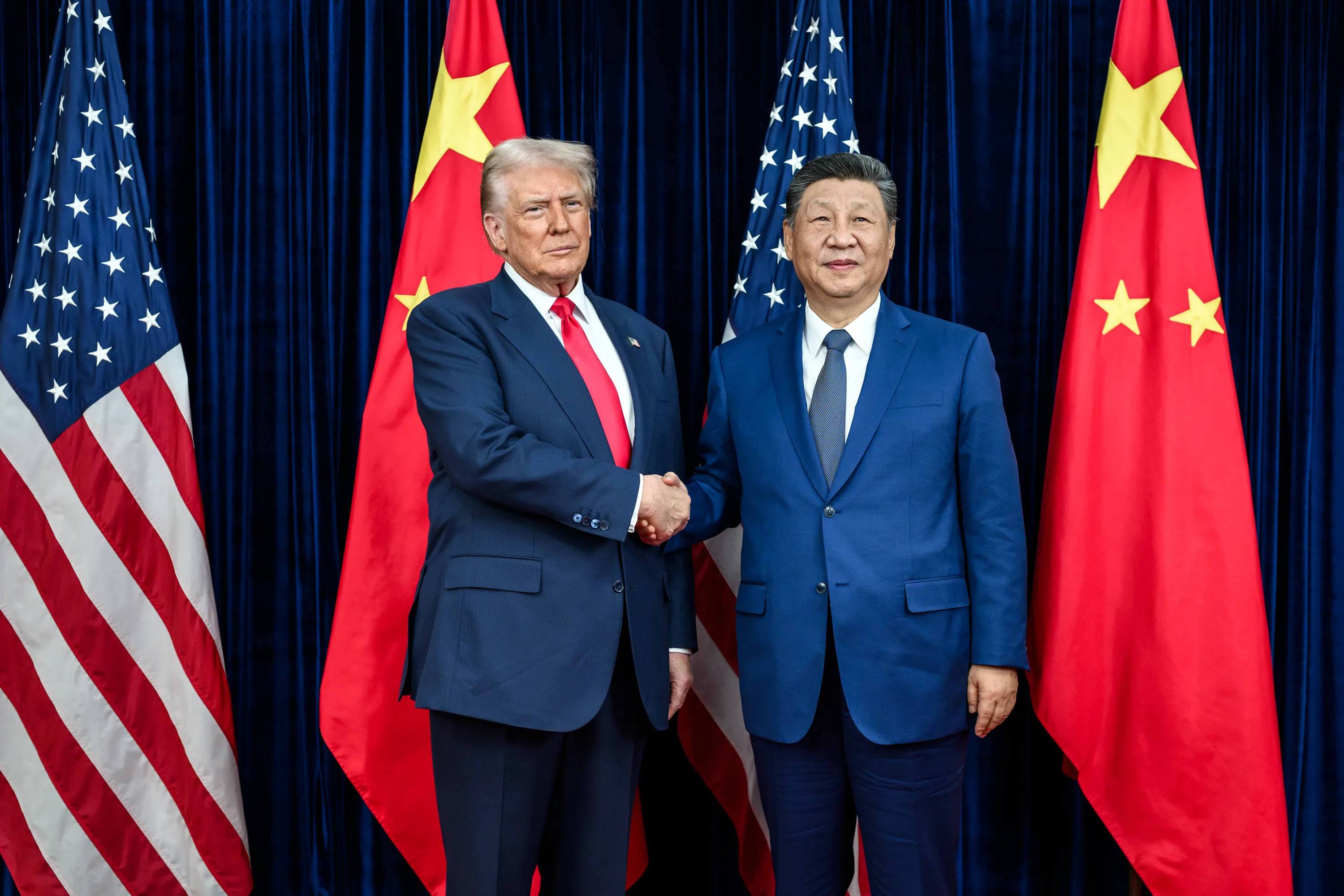
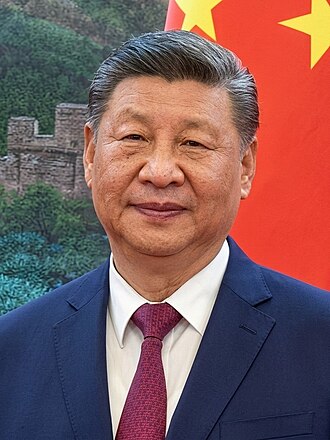
WASHINGTON — The Trump Xi summit Washington 2026 is losing its expected Chinese corporate cast before the leaders enter the room. President Xi Jinping will arrive in Washington this week for talks with President Donald Trump without the delegation of Chinese business leaders Beijing had sought to bring, Reuters reported Wednesday, citing two people familiar with preparations. Reuters had reported last week that China was finalizing a group that could have included companies facing U.S. regulatory scrutiny.
Why the delegation will not attend remains uncertain, and plans around a presidential visit can still change. One Reuters source said the White House had other priorities. A second said U.S. officials did not want Chinese companies they believe have links to China’s military represented. Both spoke anonymously because the planning was not public. A Chinese foreign ministry spokesperson said at a Wednesday briefing, “I do not have the relevant information.” The White House did not immediately respond to Reuters.
The Wall Street Journal independently reported on September 22 that Xi was unlikely to bring a corporate-executive delegation. Industry officials had expected Beijing to assemble senior executives for Thursday’s state dinner beside American technology and artificial-intelligence chiefs. Their absence lowers the odds of the kind of memoranda, purchase commitments and boardroom access that turn summit theater into commercial business.
Why this matters: at a deal-maker’s summit, the guest list is policy
Trump presents diplomacy as deal-making, and executive entourages are one of the oldest ways governments make that promise legible. CEOs arrive when ministries expect contracts, market-access concessions or investment announcements worth signing. They supply technical detail, absorb political risk and give leaders deliverables to display. When they do not come, that is also communication.
The missing Xi Jinping Washington visit business delegation does not prove negotiations have failed. It does suggest that neither government wants to pre-commit corporate actors to a package that may not survive disputes over security, tariffs and technology. The absence is a deliberately readable signal: expectations should move from a grand commercial bargain toward a narrower effort to manage rivalry.
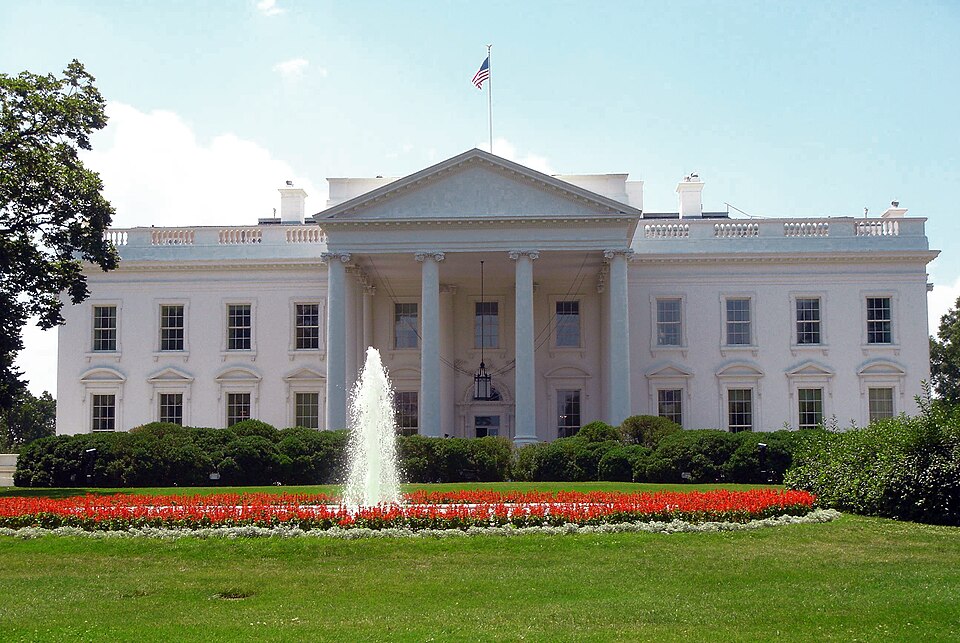
That signal matters especially because the American side of the dinner will be crowded with corporate power. Reuters said expected attendees include Amazon founder Jeff Bezos; Alphabet chief executive Sundar Pichai; OpenAI chief executive Sam Altman; Apple chief executive Tim Cook; Tesla chief executive Elon Musk; Nvidia chief executive Jensen Huang; Pfizer chief executive Albert Bourla; and Meta chief executive Mark Zuckerberg. The Bezos Musk Huang state dinner guest list places the U.S. industries China most wants access to inside the room, without obvious Chinese peers across the table.
The asymmetry: U.S. CEOs in Washington, Chinese CEOs kept back
That imbalance is historically unusual. When Trump visited Beijing in May 2026, Musk and Huang traveled with him, and the two governments agreed to establish bilateral boards of trade and investment. The corporate entourage reinforced the message that political negotiations would open a practical channel for capital, chips, electric vehicles and supply chains.
Washington now presents the reverse picture: American executives at the state dinner and no comparable Chinese group. This may reflect U.S. leverage — Beijing wants access to U.S. markets, advanced semiconductors and political stability but cannot choose the guests admitted to the White House. It may also reflect Xi’s leverage: by keeping executives home, Beijing avoids sending firms into a setting where attendance could be treated as evidence of concession or expose them to questions about military links.
The shorthand “Chinese CEOs excluded Trump summit” goes further than the evidence allows. Reuters’ sources offered different explanations, and neither government has publicly described a formal exclusion list. The sound conclusion is narrower: a delegation Beijing had considered is not expected to attend, and at least one source connected that outcome to U.S. national-security objections.
What the numbers say — and what they do not
Trade is smaller, but still too large to compartmentalize
U.S. Census Bureau data put 2025 goods exports to China at about $106.0 billion and imports at about $308.7 billion, for roughly $414.6 billion in two-way goods trade and a $202.7 billion U.S. deficit. That is far below the pre-escalation peak in direct trade, but still too large for either side to treat the relationship as a purely military contest. The falling bilateral deficit also does not automatically mean dependence disappeared; production and transshipment can move through third countries while Chinese industrial capacity remains in the chain.
Tariffs show the same distinction between pressure and resolution. During the 2025 escalation, the reciprocal rates announced by Washington and Beijing reached 125% before a temporary agreement cut the headline rate to 10%. A 125% tariff is closer to an embargo than an ordinary border tax; 10% still raises costs and preserves the threat of renewed escalation. The U.S. China trade talks September 2026 are therefore not starting from normal commerce. They are managing a truce built over an economic barricade.
Rare-earth magnets are leverage measured in bottlenecks
China accounts for roughly 90% of global rare-earth magnet production and about 80% of processing, according to industry estimates cited in supply-chain analysis. Those shares matter more than the value of the raw ore. Motors for vehicles, robots and military systems need processed materials and high-performance magnets, not simply a mine. The China rare earth magnets export controls therefore operate as a chokepoint: licensing delays can interrupt factories long before alternative refining capacity is ready.
The October 2025 Trump–Xi meeting in South Korea produced a tariff-and-rare-earths truce. The question now is whether Thursday extends that pause with dates and licensing rules or merely repeats political intent. A pledge without processing approvals would leave manufacturers exposed; an extension with measurable export flows would be a real, if limited, deliverable.
Chip controls target capability, not every semiconductor
The U.S. China chip export controls 2026 are broad in strategic effect but narrower than a blanket chip ban. They focus on advanced AI accelerators, high-end computing capacity and equipment needed to manufacture leading-edge chips, while ordinary consumer electronics continue to move. Washington’s objective is to slow military and frontier-AI capability without severing all technology trade. Beijing views that boundary as containment.
This is why the dinner’s U.S. attendance is consequential. Nvidia, Apple, Alphabet, OpenAI, Meta, Amazon and Tesla sit at different points in the compute, cloud, device and AI stack. They can explain commercial consequences, but they cannot reconcile the central policy dispute: the U.S. treats some technology access as a security question, while China treats restrictions on it as an obstacle to national development.
Who benefits, who loses and what the critics see
Security-first officials in Washington benefit from separating the leaders’ strategic talks from a corporate showcase. They can argue that firms with suspected military links should not gain prestige or access through a state dinner. Their case is that commercial pageantry can blur the line between ordinary business and technologies with dual-use consequences.
Xi also preserves optionality. Keeping executives home means Chinese companies are not publicly bound to purchases or investments negotiated under American pressure. Beijing can let the heads of state stabilize the relationship first, then use the bilateral boards of trade and investment created in May as a lower-profile channel if political conditions improve.
Companies on both sides lose access. Chinese executives miss direct contact with Trump officials and U.S. peers. American companies lose the ability to test proposals with Chinese decision-makers in the same room. Investors who expected Xi Trump summit business deals lose the clearest near-term catalyst for contracts or regulatory relief.
Trade-focused critics will say excluding or discouraging a business delegation wastes the summit’s best chance to turn political goodwill into operating rules. Security-first voices will answer that a dinner should not legitimize firms Washington believes may support China’s military. Both arguments have force. The first recognizes that commercial detail is how diplomacy becomes durable; the second recognizes that access is itself a form of leverage.
What Thursday’s Trump Xi state dinner CEOs will be watched for
The Trump Xi state dinner CEOs are now less a signing party than a diagnostic panel. Watch who receives time with Xi, which executives appear in official photographs and whether the two governments name follow-up meetings. A conversation with Huang would point toward chips and compute; one with Musk could touch electric vehicles, batteries and manufacturing; appearances by Cook, Pichai, Altman or Zuckerberg would highlight data, devices, AI and market access.
The more important signals may arrive outside the ballroom: a tariff-truce extension, faster rare-earth export licenses, a defined agenda for the bilateral trade and investment boards, or a commitment to keep military and AI-risk channels open. Ceremony without one of those mechanisms would confirm that the summit’s purpose is stability, not breakthrough.
Three scenarios after the summit
1. An announcement-light summit by design
Trump and Xi could choose disciplined ambiguity: cordial meetings, separate national readouts and no major corporate package. That outcome would disappoint markets looking for a headline deal but may be rational if both leaders want to keep Taiwan, chips and military-linked companies away from a fragile trade understanding.
2. The truce is extended through technical channels
The leaders could extend tariff and rare-earth arrangements while assigning detail to the boards of trade and investment established in May. This is the most practical fallback. It would let both sides claim stability without forcing Chinese executives to sign under the glare of the state visit.
3. The empty chairs foreshadow new friction
If no extension emerges and each government emphasizes the other’s restrictions, the missing delegation will look less like caution and more like an early breakdown. Tariffs could rise again, rare-earth licensing could tighten and chip controls could expand. The absence of corporate intermediaries would then matter because there would be fewer high-level relationships available to slow escalation.
The bottom line
The Xi Jinping Washington September 2026 visit can still produce useful agreements, and anonymous-source reporting about guest lists should not be mistaken for a final diplomatic record. But summits are staged messages as well as negotiations. A room filled with American CEOs and no matching Chinese delegation tells every participant to lower expectations for a deal parade.
That may be prudent rather than pessimistic. The U.S.–China relationship is too commercially deep to sever and too strategically contested for easy bargains. Thursday will be judged less by how many famous executives enter the White House than by whether Trump and Xi create enforceable channels for tariffs, rare earths and chips after dinner is over.
- Reuters: Xi to visit Washington without a Chinese CEO delegation, according to two people familiar with the matter
- The Wall Street Journal: Trump summit with Xi unlikely to include Chinese CEOs
- U.S. Census Bureau: U.S. trade in goods with China
- Congressional Research Service: U.S.–China tariff actions since 2018
- Industry analysis: China’s share of rare-earth processing and magnet production