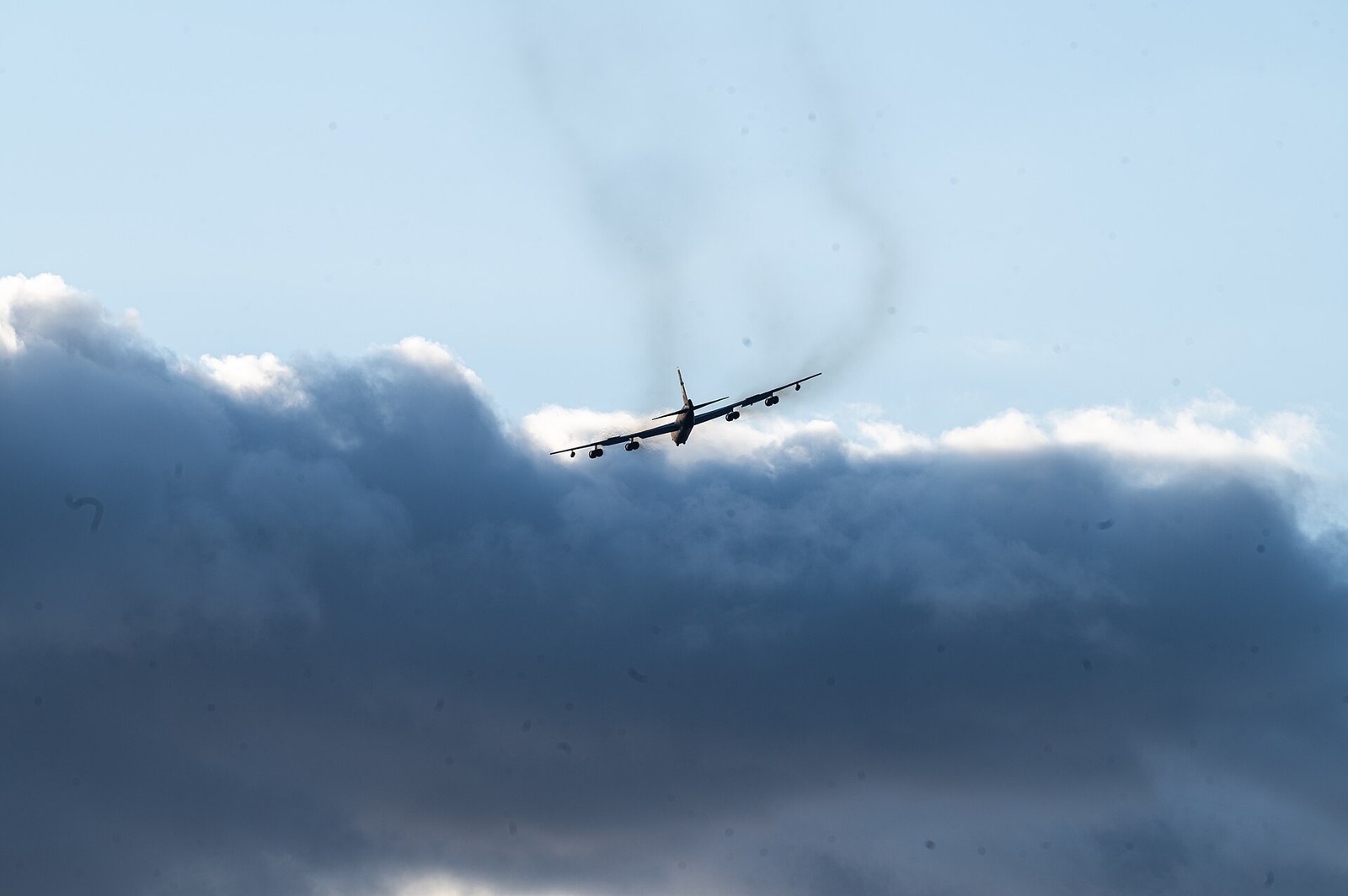
WHELFORD, England — An alleged RAF Fairford bomb plot was disrupted in the early hours of Sunday, September 27, 2026, when British police arrested several men on suspicion of offences under the Explosives Act near the US Air Force base in Gloucestershire, declared a major incident, and evacuated homes in the nearby village of Whelford. Army bomb-disposal specialists spent the morning examining a number of vehicles, and counter-terrorism police have now taken over the investigation.
Gloucestershire Police said residents of "a number of properties" in Whelford were moved to a nearby leisure centre while emergency services dealt with the incident. A Reuters witness reported roadblocks and armed police preventing access to the air base, with around 30 emergency vehicles — police cars, ambulances, fire engines and an incident command vehicle — stationed in the area. The force said it believed the incident was contained and that officers were working with partner agencies under established emergency plans.
The arrests were not the result of a long-running surveillance operation. According to reporting on the police response, the operation was not intelligence-led — investigators had no advance knowledge of a potential plot, which raises the question of what, exactly, triggered the Sunday-morning swoop. Police have not said. What is confirmed is that viable incendiary devices and chemicals were found in a van, according to The Sun, and that a bomb-disposal robot was seen moving between three white vans at the scene.
Why this matters
RAF Fairford is not just another airfield. It is the US Air Force's forward bomber base in Europe — home to the 501st Combat Support Wing headquarters and the 420th Air Base Squadron, roughly 90 miles from London — and since late February it has been an operational launchpad in the U.S.-Israeli war on Iran. After that war began on February 28, the British government allowed the American military to use Fairford for strikes on Iranian missile sites; four American bombers arrived at the base in March after the then-prime minister authorised what was described as defensive action from UK bases.
That history is what elevates a Sunday-morning explosives arrest into a story with strategic weight. If the suspects were targeting Fairford — and police have pointedly not confirmed that they were — it would represent the first alleged attempt to bring the Iran war to British soil by striking the very base from which American bombers have been flying. Iran's Islamic Revolutionary Guard Corps issued a public warning to the British government in July not to allow US bombers to operate from the base. Whether that warning and this plot are connected is unknown, but the sequence will dominate the analysis in London, Washington and Tehran alike.
What happened: the timeline so far
Piecing together the confirmed reporting: in the early hours of Sunday, police moved on several men in the Whelford area, close to RAF Fairford. The New York Post reports five suspects were arrested, some held at gunpoint and stripped to the waist after officers suspected they might be wearing suicide vests — a detail that, if accurate, speaks to how seriously the responding officers took the threat in the moment. Explosives and chemicals were recovered from a van. The Army's specialist explosive ordnance disposal team was scrambled to examine several vehicles. Homes were evacuated. A cordon went up. By late morning UK time, counter-terrorism police had formally taken the lead, with MI5 supporting the investigation, and police said the situation was contained.
The political response was swift. Prime Minister Andy Burnham is receiving updates on the situation, his office said. Defence Secretary Wes Streeting thanked the emergency and specialist teams and said the public should be "reassured that this [incident] is being dealt with." A US Air Force spokesperson said personnel at Fairford "remain vigilant" but declined to discuss specific force-protection measures, citing security.
RAF Fairford: why this base
To understand why Fairford matters, consider what it does. The base hosts the US Air Force's heavy bomber presence in Europe — B-52s, B-1s and B-2s rotate through on Bomber Task Force deployments — and it sits at the center of the transatlantic security bargain: American striking power, staged from British soil, under arrangements successive UK governments have defended as defensive. In March, spotters tracked four American bombers arriving at Fairford after the UK authorised US action against Iranian missile sites described as defensive. The base has since been used for what the Associated Press describes as "strictly limited strikes" during the war with Iran.
That makes Fairford a symbolic and practical target in a way few other British installations are. It is sovereign UK territory hosting a foreign military's offensive capability — precisely the arrangement Tehran has protested. The base's defenders would note the strikes flown from it were framed as defensive, aimed at Iranian missile sites threatening shipping in the Strait of Hormuz. Its critics — in Tehran, and among opponents of the war in Britain — see it differently. Either way, the base's profile is why a van full of incendiary devices two miles from its perimeter cannot be treated as an ordinary criminal matter.
The Iran connection — and what police have not said
Here the reporting requires care. The Sun reports that investigators have not ruled out whether the plot was motivated by terrorism or by "a rogue state like Iran or Russia using criminal proxies." That is speculation about motive, not a finding. Gloucestershire Police have not confirmed the arrests are linked to the base at all, let alone to Tehran. A careful legal analysis of the incident notes the essential distinction: proximity to a strategically important airbase is not proof of motive, sponsorship, or intended target.
Still, the context is impossible to ignore. The IRGC's July warning to London was explicit. Tehran has spent the year arguing — including through back-channel proposals to reopen the Strait of Hormuz that Washington says it rejected — that it is acting from weakness; a covert strike on Fairford would be consistent with the asymmetric playbook Iran has used for decades when conventional options narrow. Russia, too, has a documented history of using criminal proxies for sabotage in Europe. But none of that is evidence about Sunday morning. The honest position, and the one the police have taken, is that the investigation will determine what this was. Everything else is pattern-matching.
Who benefits, who loses
If a foreign link is established, the beneficiaries of the plot's logic are clear: any actor seeking to raise the cost of Britain's participation in the Iran war without triggering open retaliation. A successful attack on Fairford would have forced London into an agonising choice — escalate against the sponsor, or absorb the blow and look exposed. The losers, in every scenario, are the residents of Whelford, evacuated from their homes on a Sunday morning, and the broader public, for whom the incident is a reminder that a distant war has a way of arriving uninvited.
There are also political losers in waiting. The government authorised US strikes from British bases on the argument that they were defensive and controlled. An attack plot — successful or merely attempted — hands critics of that decision a powerful talking point: that hosting the bombers imported the risk. Expect that argument in Parliament this week regardless of what the investigation finds. Conversely, if the plot turns out to have no foreign or ideological dimension at all — a criminal enterprise that happened to park near a famous base — the government's position is strengthened, and the morning's drama deflates into a policing success story.
The numbers that frame the threat
The figures available so far are modest but telling. Around 30 emergency vehicles at the scene signals a response at the top of the scale short of a mass-casualty event. "Several" arrests under the Explosives Act — five, per the New York Post — suggests a cell rather than a lone actor, though conspiracy charges at this stage prove little about sophistication. The evacuation of "a number of properties" rather than a whole village suggests police believed the threat was localised to specific vehicles or addresses. And the detail that the operation was not intelligence-led cuts both ways: it means the plotters were not under surveillance, which is worrying, but also that something — a tip, a traffic stop, an observant member of the public — surfaced them before any device was used, which is the system working.
Historical parallel: when Britain's bases became targets before
Britain has been here before. During the Troubles, IRA units repeatedly targeted British military installations, including a 1989 bombing at the Royal Marines barracks in Deal that killed 11. More recently, the UK's terror threat level has fluctuated with the tempo of jihadist and far-right plotting, and just this month counter-terrorism police in Manchester arrested suspects over an alleged Yom Kippur attack plot. What is new about Fairford is the geopolitical overlay: previous plots aimed to coerce British policy in Northern Ireland or to punish Britain for its foreign policy in the abstract. An attack on Fairford would aim to sever a specific, live military capability — the bomber pipeline to the Iran war. That is sabotage as strategy, closer to statecraft than to terrorism as traditionally understood, and it would mark a qualitative shift in how the Iran war touches Europe.
What happens next
The investigation now follows a familiar but unforgiving path. Forensic examination of the vehicles and devices will determine what the suspects actually possessed — viable explosives, or the aspiration to them. Digital forensics will map the suspects' contacts, travel and communications, which is where any foreign direction would surface. Charging decisions under the Explosives Act — and potentially under terrorism legislation — will follow within days, and the choice of charges will itself be a signal about what police believe they have.
Watch three things. First, whether counter-terrorism police or prosecutors use the word "terrorism" at all; its absence so far is deliberate. Second, whether the US Air Force visibly changes its posture at Fairford — spotters reported heightened alert levels at the base on September 26, the day before the arrests, and any sustained force-protection upgrade would suggest the threat picture is wider than one van. Third, Tehran's response: silence, denial, or — least likely — acknowledgement will each tell London something about who it is dealing with. The village of Whelford will get its Sunday back. The strategic question the morning raised will take considerably longer to answer.
- Associated Press (via NPR): multiple arrests on suspicion of explosives offenses near U.K. base used by U.S. forces
- New York Post: terror suspects stripped down after alleged van bomb plot at UK base used by US Air Force
- The Sun: homes evacuated as bomb squad probes explosives arrests near RAF Fairford
- LADbible: major incident declared near RAF base; operation not intelligence-led
- Swindon24: bomb squad called as homes evacuated and men arrested near RAF Fairford
- Diplomacy and Law: RAF Fairford's status, Iran strikes and the September 27 incident