US Iran War October 2026 Live: Pezeshkian at UNGA as Secret Talks Collide
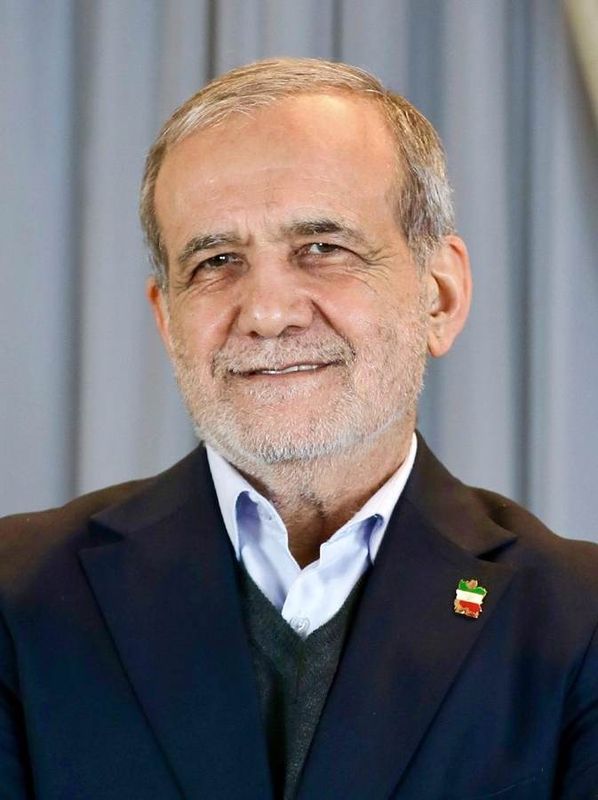
Masoud Pezeshkian arrived in New York on Tuesday, September 22, 2026, leading a slimmed-down Iranian delegation into one of the most consequential weeks of his presidency. He is expected to take the General Assembly podium on Wednesday morning, where — by his own account before departure from Tehran — he will convey "our positions, our grievances, and our strength to the world."
The 81st session of the General Assembly has become, almost by accident, an Iran summit. Within hours of Pezeshkian's arrival, Trump revealed that American and Iranian delegations had held a secretly arranged three-hour meeting on the UNGA sidelines, with another round already scheduled. The U.S. side was led by special envoys Steve Witkoff and Jared Kushner, with Pakistan and Qatar acting as mediators shuttling between the two delegations, according to reporting by The New York Times citing two Iranian officials. It is the first known high-level contact between the two countries since the ceasefire and memorandum framework collapsed in July.
Hours later, Trump used his 37-minute address to the General Assembly to present Tehran with what he framed as a binary choice: a deal, or "annihilate the Islamic Republic" and "drive them into hell." The Iranian delegation walked out of the hall during the speech.
Why this week matters
The twin tracks — negotiation and threat — are not contradictory so much as they are Trump's signature pressure formula. The president predicted a deal would come "right after the election," arguing Tehran is waiting on the November 3 midterm results because "I'm not running." He vowed he would "never allow Iran to have a nuclear weapon," claimed Operation Midnight Hammer had "obliterated their nuclear program beneath mountains of rubble," and said Operation Epic Fury destroyed Iran's navy.
What makes this UNGA different from last year's is the calendar of hard deadlines surrounding it. The United Nations Security Council "snapback" of sanctions on Iran took effect after the expiry of Resolution 2231, a step Tehran — along with China and Russia — has declared "null and void" but which Western capitals are enforcing anyway. On September 9, the IAEA Board of Governors passed a U.S.- and E3-backed resolution, 23 votes to 3 with 8 abstentions, moving Iran's nuclear file toward the Security Council. And on September 14, Austria revoked the visa of Iran's nuclear chief Mohammad Eslami, blocking him from an IAEA conference in Vienna — a move Iran called a violation of host-country obligations.
For Pezeshkian, a reformist physician who won the 2024 runoff promising outreach to the West, the stakes are existential for his presidency. Hard-liners in Tehran control the commanding heights of the system; if his diplomatic track produces nothing while sanctions tighten, his political room collapses. For Trump, an Iran deal would cap a year in which he has claimed credit for ending wars and now touts a 20-point Gaza peace plan — while failure risks a return to open conflict in the Gulf.
What to watch next
Wednesday morning — Pezeshkian's speech. Expect grievances about the June war, the collapsed negotiations, and the "mistrust" he says adversaries created, plus a defense of Iran's nuclear rights. Watch whether he leaves the door open to the next round of talks.
The second round of secret talks. Trump said another session is scheduled. Witkoff wrote that mediators "will continue their work." Iranian state media says the first meeting happened at Witkoff's request.
The Strait of Hormuz. Foreign Minister Abbas Araghchi has set Tehran's conditions for reopening the strait: an immediate lifting of the U.S. naval blockade, release of frozen Iranian assets, and an end to the war on all fronts, including Lebanon. U.S. officials counter that Tehran's Hormuz leverage is diminishing.
Thursday — Netanyahu's address. Israel's prime minister plans a brief New York visit and an Iran-focused Thursday speech that aides say will include "surprises."
Live updates
Iran downplays the UNGA-sideline talks as "nothing new"; Trump calls meeting "very productive." Iranian Foreign Ministry spokesperson Esmail Baghaei said on Wednesday that Tehran maintained its negotiating stance in the indirect talks with U.S. officials, demanding an end to the U.S. blockade on Iranian ports and the release of Iran's frozen assets. Baghaei confirmed the interaction took place through Qatari mediators in New York, adding: "This was not anything new." Separately, Trump told reporters that envoys Steve Witkoff and Jared Kushner "had a very productive meeting today with mediators of Iran, merely mediators," saying he sees "a lot of momentum for them to make a deal."
Sources: Associated Press, Reuters.
Pezeshkian delivers defiant UNGA address, casting Iran as a "victim of terrorism." The Iranian president told the General Assembly that "the United States president described us as terrorists" while insisting Iran has "been the victim of terrorism," blaming the US and Israel for regional instability. On the nuclear file he said Iran seeks energy "for progress, not to threaten society with bombs," adding that "for 200 years, Iran has not attacked any country, we've only defended ourselves." Holding a portrait of the late Supreme Leader Ali Khamenei, he declared "we will never bow our heads or bend at the knee," warned that "we either all live in security, or we will have to live in insecurity together," and said Tehran would not surrender or reopen the Strait of Hormuz until the US and Israel meet its demands. The Washington Post described the address as a defiant reply to Trump's "annihilate" threat; the New York Post reported the lone US delegate walked out of the hall during the speech.
Sources: New York Post, Washington Post (via Political Wire), Inshorts.
Rubio says the New York talks yielded no major breakthrough; the earlier U.S.–Iran MoU is "no longer on the cards." Following Iranian President Masoud Pezeshkian's defiant UN General Assembly address on Wednesday, U.S. Secretary of State Marco Rubio told reporters the indirect session between Foreign Minister Abbas Araghchi and U.S. envoy Steve Witkoff produced no major breakthrough, and indicated the Memorandum of Understanding reached earlier this year is off the table, according to CNN. Rubio also blasted Pezeshkian's speech: "I don't know what standing Iran has to lecture anyone on human rights or the international system when they habitually violate it."
Sources: CNN, Associated Press.
Iranian hard-liners assail the New York diplomacy; Tehran's security chief says Washington must move first. Hard-line lawmaker Ebrahim Rezaei demanded that Foreign Minister Abbas Araghchi explain "on which authorization" his meeting with U.S. envoy Steve Witkoff was conducted, while other hard-liners criticized Pezeshkian for attending the New York talks at all, CNN reported. Around the same time, Supreme National Security Council chief Mohsen Rezaei told state media Iran will adopt a new framework in which "the era of rhetoric and negotiations for their own sake has come to an end" — any future talks, or reopening the Strait of Hormuz, will require Washington to first fully implement Tehran's conditions as a precondition.
Sources: CNN, Iranian state media.
Ship targeted near the Strait of Hormuz, one person killed, Oman says. Oman's Maritime Security Center said a vessel was targeted near the strait, killing one person, while the UK Maritime Trade Operations center advised ships to "transit with caution," CNN reported. The incident coincided with Pezeshkian's UN address and the New York back-channel talks — a reminder of how quickly the maritime front can flare alongside the diplomacy.
Sources: CNN, Oman Maritime Security Center, UKMTO.
One sailor killed as cargo ship is struck in Strait of Hormuz; 27 crew evacuated. The Antigua and Barbuda-flagged bulk carrier MV Cape Dao was hit by an unknown projectile at around 6:30 a.m. UTC Wednesday while transiting the strait, leaving the vessel on fire and adrift with the crew forced to abandon ship. Oman's Maritime Security Center said 27 crew members were evacuated and one — an Indian national, confirmed by India's embassy in Oman — was killed. Lloyd's List reported the vessel was not on Iran's list of vessels deemed "non-compliant" by its Persian Gulf Strait Authority. No group immediately claimed responsibility; India condemned the continuing assaults on commercial vessels in the waterway.
Sources: Reuters, UK Maritime Trade Operations, Oman's Maritime Security Center, Lloyd's List.
Witkoff and Kushner communicated with Araghchi through Qatari mediators Wednesday; no shift in positions. Reuters reported that U.S. envoys Steve Witkoff and Jared Kushner communicated with Iranian Foreign Minister Abbas Araghchi through Qatari mediators on Wednesday — not face-to-face — and that neither side announced a change in its negotiating position. Iranian officials said Tehran set out its conditions for revived negotiations, including an end to the blockade, release of Iranian oil revenues held overseas under U.S. sanctions, and an end to U.S. aggression. Mediators including Qatar, other Gulf states, and Pakistan are pressing for fresh talks in the coming days.
Sources: Reuters, gCaptain.
Netanyahu slashes New York trip to a few hours amid expected protests; his Thursday UNGA speech will center on Iran. Israeli Prime Minister Benjamin Netanyahu is due to land in the US on Thursday morning, address the General Assembly at 2 p.m. New York time, and fly back to Israel that evening without spending the night in the country, the Jerusalem Post reported, with earlier plans for a longer trip dropped. His official aircraft is expected to land in New Jersey rather than at JFK airport, and Israeli journalists will not travel aboard, Ynet reported — part of heightened security amid expected street protests and a potentially hostile reception inside the UN hall, where delegates walked out during his speech last year. Aides say the address will focus heavily on Iran and include "surprises."
Sources: Jerusalem Post, Ynet, Wall Street Journal.
India names the sailor killed in the Hormuz ship attack; seafarers' union says vessel was hit twice. The Forward Seamen's Union of India identified the crew member killed aboard the Antigua and Barbuda-flagged bulk carrier MV Cape Dao as Suraj Yadav, a wiper from Deoria, Uttar Pradesh, the Hindustan Times reported. The union says the vessel was struck twice on its port side — a claim authorities have not verified — and is demanding India deploy naval protection for civilian seafarers transiting the Strait of Hormuz. India's embassy in Oman confirmed 19 Indian nationals were among the crew and said it is coordinating with Omani authorities.
Sources: Forward Seamen's Union of India, Hindustan Times, Indian embassy in Oman.
Iranian opposition demonstrators rallied outside UN headquarters during Pezeshkian's speech. Iranian-Americans and supporters of Iranian opposition groups gathered outside the United Nations in New York on Wednesday as Pezeshkian delivered his address inside, pressing governments at the gathering to focus on executions, political imprisonment, and repression in Iran, SCN News reported. Associated Press photographs from the scene showed demonstrators protesting against the Iranian government while the president was addressing world leaders.
Sources: SCN News, Associated Press.
No Trump meeting expected as Netanyahu flies in for Thursday UNGA address; Mamdani feud takes center stage. Israeli Prime Minister Benjamin Netanyahu is not expected to meet US President Donald Trump during his hours-long Thursday visit to New York — a senior US official told Reuters their schedules do not overlap, with Netanyahu arriving only after Trump has left the city. Reuters reports Netanyahu will use his General Assembly address to berate New York City Mayor Zohran Mamdani for calling him a war criminal; in a video statement this week he addressed the mayor directly, saying he was coming to New York "to tell the truth about our heroic soldiers" and "to tell the truth about you." Former Israeli Ambassador Michael Oren told Reuters he expects the address to resemble a "campaign speech" aimed at the Israeli public five weeks before the October 27 election. Netanyahu is due to arrive early Thursday and fly back to Israel the same day after delivering his afternoon speech.
Sources: Reuters.
Pezeshkian rewrote his UNGA speech after Trump's "annihilate" threat; address drew rare praise across Iranian media, even from hardline outlets. CNN reported that the Iranian president discarded the speech he had prepared before traveling to New York in response to Trump's Tuesday remarks, and that his defiant Wednesday address — holding firm on Iran's nuclear program, missile defenses, and control of the Strait of Hormuz — received near unanimous praise in Iranian media, including hardline publications that rarely back a reformist president.
Sources: CNN.
Netanyahu lines up a packed Thursday bilateral schedule in New York; his team is discussing a possible meeting with Rubio. Reuters reported the Israeli prime minister's office says he will meet the presidents of Argentina, Bolivia, Paraguay, Panama and Ethiopia, the vice president of Colombia, and the prime ministers of Greece, Slovenia and Papua New Guinea on Thursday, and that his team is discussing potentially holding meetings with senior US officials including Secretary of State Marco Rubio, though nothing has been set. Reuters also reported that Mamdani — whom Netanyahu plans to berate in his General Assembly address — this week called him "the architect of a horrific genocide against Palestinians," and that Netanyahu falsely accused the mayor of supporting Hamas militants.
Sources: Reuters.
Netanyahu lands in New York for Thursday UNGA address; no Trump meeting on the schedule. Israeli Prime Minister Benjamin Netanyahu has arrived in New York to deliver his General Assembly address at 2 p.m. Eastern time (9 p.m. Israel time), capping a trip lasting only a few hours on the ground. His office says he will hold sideline meetings with the presidents of Argentina, Bolivia, Paraguay, Panama, and Ethiopia, the vice president of Colombia, and the prime ministers of Greece, Slovenia, and Papua New Guinea — but not with President Donald Trump, Secretary of State Marco Rubio, or any Arab leaders — and will return to Israel before the start of Sukkot at sundown Friday. Reports citing the Times of Israel say the speech will focus on three issues: Iran, West Bank terrorism, and the Gaza war.
Sources: Associated Press (via SRN News), Times of Israel, Ynet.
Saudi Arabia says it intercepted six Houthi missiles targeting Yanbu and Taif. Saudi military spokesman Maj. Gen. Turki al-Malki said Thursday that the kingdom's air defenses intercepted and destroyed six ballistic missiles fired by the Iran-backed Houthi rebels in Yemen, targeting the Red Sea port city of Yanbu and the southwestern city of Taif. The Associated Press noted it could not independently verify the Saudi claim.
Sources: Associated Press (via SRN News), Saudi military.
Iran's security chief threatens to paralyze airports of neighbors that ground Iranian flights. Supreme National Security Council secretary Mohsen Rezaei told state TV that if neighboring countries cooperate with the United States by stopping Iranian flights, Tehran will "ensure their airports cannot function," Reuters reported. The warning follows Treasury Secretary Scott Bessent's deadline after which foreign firms servicing Iranian carriers face secondary sanctions — a step Iran's semi-official media say has already disrupted Tehran–Baghdad and Tehran–Muscat flights.
Sources: Reuters.
Senior Iranian official: US and Iran "still far apart," but diplomacy continues. A senior Iranian official told Reuters on Wednesday that Tehran is reviewing Washington's response to its peace proposals, which prioritize lifting the U.S. naval blockade on Iranian ports and reopening the Strait of Hormuz. "There are still many differences between the Iranian and US positions, but diplomacy is continuing," the official said. Secretary of State Marco Rubio said the same day that a deal would involve hard work over time and that President Trump keeps military options on the table.
Sources: Reuters.
India formally condemns the Hormuz ship attack; killed seafarer is its 11th in the waterway crisis. India's Ministry of External Affairs confirmed that an Indian seafarer was killed when the Antigua and Barbuda-flagged bulk carrier MV Cape Dao was attacked off Oman's coast on Wednesday, said 19 of the 20 Indian crew aboard were rescued, and called the continuing attacks on commercial shipping "deeply worrisome." New Delhi called for dialogue and diplomacy to de-escalate, said the targeting of commercial shipping and civilian infrastructure "must end," and urged that free and unimpeded navigation through the Strait of Hormuz be restored "at the earliest." Indian officials say Suraj Yadav, the wiper killed aboard the Cape Dao, is the 11th Indian seafarer killed in Strait of Hormuz attacks since the regional crisis began.
Sources: Indian Ministry of External Affairs, TBS News.
Netanyahu delivers UNGA address under mass walkout; calls Iran attack "one of the easiest decisions I've ever had to make." As the Israeli prime minister took the podium on Thursday, dozens of delegates walked out of the General Assembly hall, the Palestinian mission to the UN having urged delegations to do so. Netanyahu denounced those who left as "moral cowards" and invited anyone else who felt that way to leave before he began. In his address he tore into New York City Mayor Zohran Mamdani, accusing him of making the city unsafe for Jews. Ahead of the speech, several demonstrators — including actress Susan Sarandon and New York congressional candidate Darializa Avila Chevalier — were detained by the NYPD for blocking a roadway near the UN.
Sources: Reuters, New York Post.
Pezeshkian meets Pakistan's Shehbaz Sharif on UNGA sidelines; Islamabad MoU "remains acceptable" to Iran. Pakistan's Prime Minister's Office said Shehbaz Sharif met Masoud Pezeshkian in New York on Thursday, with the prime minister reaffirming Pakistan's readiness to play a "sincere and constructive role" in support of regional peace. Sharif expressed deep concern over the prolonged conflict and stressed the need for restraint, de-escalation and sustained diplomacy, while Pezeshkian told him the Islamabad Memorandum of Understanding remains acceptable to Tehran. Deputy Prime Minister Ishaq Dar and Defence Minister Khawaja Asif were present; Sharif addresses the General Assembly on Friday.
Sources: Pakistan Prime Minister's Office, Dawn News.
Pezeshkian holds talks with editors-in-chief and senior officials of American media in New York. During his New York visit, the Iranian president sat down with editors-in-chief and senior officials from American media outlets, Iran's official IRNA news agency reported, part of his planned outreach to U.S. media and think tanks alongside the UNGA schedule.
Sources: IRNA (Iranian official news agency).
Netanyahu brandishes Starlink terminal at UNGA podium, predicts Iran's "evil regime will fall"; Iran's empty seats held a Soleimani portrait. In follow-up coverage of his Thursday address, Benjamin Netanyahu held up a Starlink satellite-internet terminal, saying Tehran fears its people having unrestricted internet access, and declared: "One day, and it may not be far away, this evil regime will fall." He said he would leave the device with the General Assembly president for the Iranian delegation — "when they inevitably defect, they'll be able to tell their story on social media," according to a statement from Israel's Government Press Office. He also held up one of the pagers used against Hezbollah operatives in the 2024 explosions, asking the hall: "You remember the beepers?" AP photographs showed Iran's delegation had placed a portrait of slain IRGC commander Qasem Soleimani on their empty seats; Israeli ambassador to the UN Danny Danon quipped that "photos are about all they have left of their senior generals."
Sources: New York Post, Newsmax, The Media Line, All Israel News (via Israel's Government Press Office).
Pezeshkian denies any Iranian plot to kill Trump in New York press briefing; says Supreme Leader Mojtaba Khamenei is "quite healthy." Iranian President Masoud Pezeshkian told a group of journalists at the Millennium Hilton near UN headquarters on Thursday — a day after his General Assembly address — that Iran "would never try to kill Donald Trump," despite the U.S. president and American authorities accusing the regime of plotting his assassination, CNN reported. Pezeshkian also described recent meetings with Supreme Leader Mojtaba Khamenei, who has not been seen in public since the war's outset: he said the leader was "quite healthy," that he saw "no major challenges with his health or physical appearance," and that their most recent in-person meeting took place around one month ago and lasted about seven hours. The briefing — tightly controlled affairs are the norm for Iranian media appearances — came with the president under U.S. Secret Service protection in New York.
Sources: CNN.
Netanyahu closes UNGA address vowing Iran will lose its war; calls Gaza genocide claims "the biggest lie of the century." In his fiery Thursday address, the Israeli prime minister quoted his late brother Yoni's words from the 1967 Six-Day War — "We're going to win. We have no other choice" — framing the campaign against Iran the same way. He denounced allegations of Israeli genocide in Gaza as "the biggest lie of the century," the New York Post reported. Newsmax, which aired the speech live, reported Netanyahu also credited President Trump and the U.S. military, saying "Israel and America acted together not only to protect ourselves, but to save civilization" and that "brave American pilots, alongside brave Israeli pilots, flew joint missions over the skies of Iran." Israeli media have described the address as aimed at Israeli voters five weeks before the October 27 Knesset election.
Sources: New York Post, Newsmax.
Pezeshkian tells Fox News Trump can end the war "at any moment"; says Iran would give up its 60% enriched uranium stockpile under the NPT. Iranian President Masoud Pezeshkian told Fox News on Thursday that Iran does not "wish to continue" the nearly seven-month war, adding: "It's America that must choose whether it wants to end this or not." He said Tehran offered the Trump administration a proposal to reopen the Strait of Hormuz and restart talks to end the broader war within a week. Asked if Iran would give up its stockpile of 60 percent enriched uranium, which brings it close to weapons-grade, Pezeshkian said: "Yes, within the framework of international law, based on the Non-Proliferation Treaty. Whatever we are supposed to adhere to, we will." On a possible deal before the November US midterm elections, he said: "If not, before the elections or after the elections, what difference does it make for us?" He insisted Supreme Leader Mojtaba Khamenei was "completely" healthy and unseen in public only due to security concerns.
Sources: The Times.
Xi urges Trump to steer US–Iran back to June interim deal during White House summit. During Thursday's White House meeting with Donald Trump, Chinese President Xi Jinping raised the Iran war and said China supports the US and Iran returning to the interim deal signed in June in an effort to wind down the war, according to Chinese state broadcaster CCTV. Xi said Beijing hopes the two sides can return to dialogue and negotiations as soon as possible toward an eventual comprehensive deal, including on Iran's nuclear program, the Associated Press reported. The official Chinese government readout of the meeting said the two leaders exchanged views on regional issues including the Middle East. China is Iran's biggest oil buyer and its largest trading partner.
Sources: China Central Television (via Associated Press "The Latest" feed), Xinhua/official Chinese government readout.
Araghchi says Iran gave the US a seven-day proposal to reopen the Strait of Hormuz and restart talks; White House calls discussions "positive and constructive." Iranian Foreign Minister Abbas Araghchi said Tehran presented Washington a proposal through mediators this week that would restart negotiations and reopen the strait if the US meets Iran's conditions within seven days — "nothing more" than what was in the June Islamabad memorandum of understanding, which covered sanctions relief, the release of frozen assets, and a halt to military operations including in Lebanon, CNN reported. A White House official told CNN the mediated exchanges were "positive and constructive." Separately, White House spokesperson Anna Kelly fired back at Pezeshkian's denial of an Iranian plot to kill Trump, calling the Iranian regime "evil" and saying Trump is ensuring "such an evil country never possesses a nuclear weapon."
Sources: CNN.
Reuters: US and Iranian negotiators in New York are exploring a phased path out of the war, with Tehran reopening the Strait of Hormuz and Washington lifting its economic blockade. US and Iranian negotiators are exploring a phased route out of the nearly seven-month war that would involve Tehran reopening the Strait of Hormuz and Washington lifting its economic blockade of Iran, sources close to the talks told Reuters. The report comes as oil prices slipped slightly Friday on hopes of a truce, with Brent at $105.85 a barrel, even as Houthi attacks on Saudi Arabia kept risk priced in. The development follows Tehran's seven-day proposal to reopen the strait and restart talks, which the White House described as "positive and constructive."
Sources: Reuters (via SRN News).
Some 80 countries at the UN demanded the urgent reopening of the Strait of Hormuz on Thursday, condemning Iran and its Houthi allies for attacks in the region. A joint statement read out by Bahrain's Foreign Minister Abdullatif bin Rashid Al Zayani, backed by Gulf Arab states and major Western powers, said "Iran's actions in the Strait of Hormuz continue to threaten international security and navigational rights and freedoms." The statement also condemned the Houthis' decision to resume conflict in Yemen, their continuous strikes on Saudi Arabia, and their attacks in the Red Sea, warning that a Houthi advance toward the Bab el-Mandeb strait would only heighten risks to international shipping, maritime security and global trade. Both Iran and the Houthis frame their actions as defensive.
Sources: Reuters.
Gulf of Oman ship-to-ship oil transfers hit their limit as Saudi exports surge through Hormuz. Ship-to-ship transfers in the Gulf of Oman for Middle Eastern crude coming out of the Strait of Hormuz have reached their limits, Reuters reported, as Saudi Arabia diverts exports from the Red Sea after its East-West Pipeline was attacked on September 13, halting shipments from the Red Sea port of Yanbu. State-run Saudi Aramco has sold more than 60 million barrels of crude for ship-to-ship transfer off Sohar, Oman, this month and next, and Saudi crude exports via Hormuz are on track to rebound to 3.6 million barrels per day in September, up from about 900,000 bpd in August, according to Kpler data. The tanker-demand spike drove the daily time-charter rate for a VLCC on the Middle East-to-China route to a record $1.27 million on Monday, LSEG data showed.
Sources: Reuters.
Hormuz transits fell to single digits Thursday: nine commodity vessels, eight out and one in. Preliminary shiptracking data showed only nine commodity vessels transited the Strait of Hormuz on Thursday — eight exits and one entry — down from 14 the previous day and below the 10-day average of around 18, Reuters reported. Before the U.S.–Iran conflict began, the strait typically handled about 125 large commercial vessels a day. The figures exclude vessels sailing with their transponders switched off.
Sources: Reuters.
Oil slides Friday as traders weigh US–Iran diplomacy against Houthi strikes on Saudi energy sites. Brent crude fell 1.1% to $105.45 a barrel and West Texas Intermediate dropped 1.9% to $92.85 in early European trading Friday, the Wall Street Journal reported, as markets balanced hopes for a phased US–Iran deal to reopen the Strait of Hormuz against continued Houthi attacks on Saudi Arabia. The International Energy Agency said global observed oil inventories have fallen by 507 million barrels since the conflict began — an average draw of 2.8 million barrels a day, with a further 95 million barrels drawn in August alone — while US commercial crude inventories rose by nearly 3 million barrels in the week ended September 18 to 426.4 million barrels, according to the Energy Information Administration.
Sources: Wall Street Journal, International Energy Agency, US Energy Information Administration.
Macron orders French troops, radars and air defenses to protect Saudi Arabia's Yanbu oil hub from Houthi attacks. President Emmanuel Macron told TF1 and France 2 on Thursday that France will deploy "military means — that is to say, soldiers, radars, defense systems" to protect Yanbu, the kingdom's main Red Sea oil export terminal, which has been targeted by Yemen's Houthi rebels, Le Monde reported. Macron did not rule out sending Rafale fighter jets "depending on needs" but stressed France would not "engage" in the conflict with the Iran-backed group. He also vowed to "do everything to reopen the Strait of Hormuz," saying easing tensions at the chokepoint could have an "immediate effect on prices at the pump," and said France's supplies of "diesel, gas and heating oil" were guaranteed "until the end of the year." The deployment drew immediate criticism at home: Jean-Luc Mélenchon warned that "troops in Saudi Arabia means setting up in a theater of war," while Rassemblement National's Sébastien Chenu said France "should not send any troops."
Sources: Le Monde.
Chinese groups are aiding Iran's targeting of ships in Hormuz and U.S. bases, U.S. intelligence assesses. Satellite imagery and intelligence support provided by Chinese groups has helped Iran threaten ships in the Strait of Hormuz and launch precision strikes on U.S. military bases in the Middle East, according to recent American intelligence assessments described to CNN by four sources. The imagery allowed Iran to strike a U.S. base in Jordan in July with a level of precision U.S. officials believe was otherwise beyond Tehran's capabilities, the sources said, and Chinese geospatial data has enhanced Iran's ability to track ships through the strait. U.S. officials told CNN it is unclear whether Beijing ordered the support or is merely tacitly allowing it.
Sources: CNN.
Top Khamenei adviser warns the war could expand to the Indian Ocean if the U.S. or Israel attacks again. Major General Yahya Rahim Safavi, a senior military adviser to Supreme Leader Mojtaba Khamenei, said in a video released by Iran's Fars news agency that "since the conflict has spread from the Persian Gulf and Strait of Hormuz to the Red Sea, it is possible that — in response to more war — the front will expand even further, reaching the Indian Ocean and perhaps beyond." Safavi said Iran's military has prepared plans for a worst-case scenario of renewed U.S.-Israeli attacks and warned that a new front centered on the Red Sea and the Bab el-Mandeb Strait could open. The remarks were reported by Al Jazeera and AFP and carried in the Wall Street Journal's live coverage, and coincided with a jump in oil prices.
Sources: Al Jazeera, AFP, Wall Street Journal.
Saudi Arabia, Turkey and Pakistan plan urgent defense-pact meeting as Houthi attacks escalate; Iran distances itself. The foreign ministers of Saudi Arabia, Turkey and Pakistan met under the Mecca Joint Defence Agreement and discussed arrangements for an urgent meeting of the three countries' chiefs of staff to support the kingdom amid attacks by Yemen's Iran-aligned Houthis, Reuters reported, under a pact whose clause treats an attack on one party as an attack on all. Saudi Arabia's top religious authority called on soldiers to be ready to "lay down their lives" fighting the Houthis, while Tehran sought to distance itself from its Houthi allies — with Pezeshkian doing so in an American television interview on Thursday.
Sources: Reuters.
Miliband meets Araghchi in New York; UK warns it will "not tolerate intimidation" on British soil. British Foreign Secretary Ed Miliband met Iranian Foreign Minister Abbas Araghchi face-to-face on the UNGA sidelines Thursday, telling him Britain "will not tolerate intimidation, threats or hostile activity on UK soil" from Iranian-linked groups, according to the Foreign Office readout. Miliband urged Iran to choose de-escalation and diplomacy over prolonging the war, stressed the importance of fully reopening the Strait of Hormuz and restoring freedom of navigation, and raised the detention of British nationals Craig and Lindsay Foreman in Tehran's Evin prison. Separately, Araghchi told The Guardian that Iran had sent its proposal to Washington through mediators and was awaiting a response.
Sources: Reuters (via Sky News), PA/Foreign Office, The Guardian.
Iran uses UN right of reply to denounce Netanyahu's speech as "an utmost disgrace"; Turkey and Qatar also hit back. Iran's First Secretary Nasser Asadi Nazari delivered Tehran's right-of-reply statement after Netanyahu's Thursday address, calling the Israeli prime minister's presence "an utmost disgrace" and "an insult to human dignity," and warning that any further aggression against Iran would face a "decisive and devastating response," Foreign Ministry spokesman Esmail Baghaei posted on X, with IRNA carrying the statement. The delegation urged the Assembly to invoke Article 6 of the UN Charter to expel Israel. Turkey told the Assembly Netanyahu's "isolation is deepening," while Qatar dismissed his accusations against Doha as "not even worth refuting."
Sources: IRNA, Iranian Foreign Ministry spokesman Esmail Baghaei, Citizen Portal, DRM News.
Pezeshkian says Iran is "willing to dilute" its 60% enriched uranium and "submit ourselves to verification," while flatly denying any bomb ambition. Asked point-blank by Fox News' Bret Baier on Thursday night whether Iran wants a nuclear weapon, the Iranian president replied: "Not at all. Not at all." He said it was "not a big deal" that Iran holds enriched uranium buried "underground in a mountain," adding: "We said we're willing to dilute them. It's not a big deal. We are willing to submit ourselves to verification." He dodged Baier's questions about readmitting IAEA inspectors — Iran cut ties with the watchdog in 2025 — and blamed Washington for blocking diplomacy after the June memorandum framework collapsed.
Sources: Fox News (Special Report with Bret Baier), Washington Examiner.
Trump told Xi that Chinese help for Iran is "totally unacceptable," U.S. ambassador says. U.S. Ambassador to China David Perdue told CNBC on Friday that Donald Trump made clear during candid talks at the White House with Chinese President Xi Jinping on Thursday that any Chinese help for Iran — "whether it be direct or indirect, whether it be intelligence or parts or military equipment" — was "totally unacceptable." Perdue said the message had been delivered weeks earlier as well and called it "an ongoing drumbeat." The disclosure follows U.S. intelligence assessments, reported by CNN, that Chinese groups provided satellite imagery and geospatial support aiding Iran's targeting of ships in the Strait of Hormuz and precision strikes on U.S. military bases.
Sources: Reuters, CNBC.
Pezeshkian hosts Qatar's PM early Friday as AP reports new details of Tehran's seven-day Hormuz proposal. The Associated Press reported that Foreign Minister Abbas Araghchi detailed the proposal — reopening the Strait of Hormuz and resuming nuclear talks in seven days if the U.S. lifts its naval blockade, waives sanctions on Iranian oil sales and observes a ceasefire including Lebanon — in a private Thursday gathering on the UNGA sidelines in New York. Quincy Institute executive vice president Trita Parsi, who attended, said Araghchi suggested a speedy agreement could help President Donald Trump ahead of November's midterm elections. The AP also reported that Saudi Arabia is skeptical of the latest push for a deal, and that parliament speaker Mohammad Bagher Qalibaf offered a rare public acknowledgment of Tehran's internal divide over the war. Pezeshkian's early-Friday meeting with Qatar's prime minister is the latest sign of Doha's mediation role after hours of indirect Iran–U.S. talks this week.
Sources: Associated Press (Cara Anna, Aamer Madhani).
Senior Iranian official tells Reuters Iran will offer "no nuclear concessions" even if U.S. accepts the Hormuz proposal. The official, speaking on condition of anonymity, said Tehran would show no flexibility over its nuclear program — including its right to enrich uranium and its refusal to ship highly enriched uranium out of the country, one of Washington's main demands — even if the United States accepts the offer to reopen the Strait of Hormuz within seven days. The waterway would remain closed, the official said, until "all of Iran's conditions are met": lifting the U.S. naval blockade, releasing frozen Iranian funds, waiving oil sanctions, and ending hostilities on all fronts including Lebanon. Tehran would only then engage in detailed nuclear negotiations. The official added that Pezeshkian hopes a deal to end the hostilities could be reached before the U.S. midterm elections on November 3.
Sources: Reuters.
Trump confirms he personally warned Xi that any Chinese support for Iran is "totally unacceptable"; envoy says Beijing "pulled some things down." Asked by reporters at the White House on Friday, Donald Trump affirmed he "did" tell Chinese President Xi Jinping during their Thursday talks that any direct or indirect Chinese help for Iran was unacceptable. U.S. Ambassador to China David Perdue said "we have seen evidence that they have listened to us" and "they pulled some things down." The remarks came on the final day of Xi's three-day state visit, which included White House tea with Trump, Melania Trump and Peng Liyuan, plus a joint tour of the National Archives. Aboard Air Force One, Trump brushed off a Wall Street Journal report on Chinese spying: "They basically do what we do. When they say China spies on us, I say, 'You're right, and we spy on them too.'"
Sources: New York Post.
U.S. official says "positive and constructive" mediated talks continue; Washington "not in a rush." A U.S. official said Friday that "positive and constructive discussions through the mediators" were occurring — without confirming the exact outlines of the purported phased peace proposal — adding: "The United States is in a very strong position with control of the Strait of Hormuz, so we are not in a rush." The official claimed almost 40 million barrels of oil passed through the strait in the past 48 hours, suggesting Iran's grip on the critical energy chokepoint may be slipping.
Sources: New York Post.
Iranian official warns "our fingers are on the trigger," says diplomacy's chances are "extremely low." An Iranian official told Reuters that Tehran is ready for all outcomes, including war, if no deal is reached: "The Americans know what they need to do but, because of their excessive demands, the chances of diplomacy resolving this are extremely low." The warning came as both sides explored a phased deal to reopen the Strait of Hormuz and lift Washington's economic blockade. A White House official countered that Iran is "desperate for a deal" and that "President Trump holds all the cards."
Sources: Reuters (via New York Post).
India's Jaishankar meets Araghchi at UNGA; New Delhi pushes dialogue on Gulf conflict. External Affairs Minister S. Jaishankar said Friday he held a detailed conversation with Iranian Foreign Minister Abbas Araghchi on the sidelines of the 81st UN General Assembly, focused on the latest developments in the Gulf conflict. "Appreciate the conversation with FM @araghchi of Iran at the @UN #UNGA81," Jaishankar wrote on X, adding the two would "continue to be in touch." India, heavily reliant on Gulf energy imports, has pressed for dialogue, de-escalation and respect for international law.
Sources: IANS, EAM S. Jaishankar (X).
Araghchi publicly lays out the seven-day Hormuz timetable: four to five days of initial steps, strait open on day six, talks on day seven. Iranian Foreign Minister Abbas Araghchi detailed Tehran's seven-day proposal to reporters outside the U.N. Security Council on Friday: "The seven-day timeline will start as soon as the United States accepts this plan," he said, adding that initial steps would take about four to five days to complete, the strait would be open on the sixth day, and "on day seven, the talks with the U.S. will be started for the final deal on mutually agreed subjects" — referring to the nuclear program. The White House, responding to questions from the AP, said only that U.S. officials are having "positive and constructive conversations" with mediators on the Iran war and that the U.S. is facilitating significant oil exports through the Strait of Hormuz. Araghchi also said more than 5,000 people in Iran have been killed in the nearly seven-month U.S.-Israeli war, and the AP reported Saudi Arabia is skeptical of the latest push for a deal.
Sources: Associated Press (Cara Anna, Farnoush Amiri, Aamer Madhani).
Araghchi says the "choice now rests with the United States" on Tehran's seven-day Hormuz plan; calls US nuclear allegations "a big lie." Speaking to reporters at the United Nations in New York on Friday, Iranian Foreign Minister Abbas Araghchi said Tehran has conveyed a "concrete seven-day plan" to Washington through Qatar to reopen the Strait of Hormuz: "If they accept this plan tomorrow, the seventh day would start from tomorrow." He insisted Iran "does not accept coercion, threat or intimidation, and Iran will not surrender its sovereign rights under pressure," dismissed allegations that Iran is on the verge of making nuclear weapons as "a big lie," accused the United States of "weaponizing economic deprivation as an instrument of collective punishment" against the Iranian people, and said there is "seriousness in the US side to come to a deal."
Sources: United Nations UNifeed, Press TV.
Pezeshkian meets UN Secretary-General Guterres at UN headquarters on Friday. Iranian President Masoud Pezeshkian met Antonio Guterres at UN headquarters in New York on the UNGA sidelines, signing the UN guest book before the two posed for photographs, according to footage of the encounter. The meeting appears in the United Nations' official Friday schedule of photo opportunities with the secretary-general.
Sources: United Nations (MALU media schedule), footage.
Trump rejects Iran's seven-day ceasefire proposal; expects airstrikes "likely" after midterms. The president has turned down Tehran's offer to reopen the Strait of Hormuz and resume nuclear talks within seven days, and U.S. officials have conveyed to Iran and the mediators that he has "no intention" of lifting the naval blockade on Iranian ports, the Wall Street Journal reported Friday. Trump told aides it is "likely" the U.S. military resumes airstrikes after the November midterm elections, though the scale of any campaign is undecided; a White House official told Reuters the blockade and sanctions have left Iran "broke" and that Trump is content to let the "inevitable Iranian collapse" play out rather than be "played" by the regime. Iran first floated the seven-day framework in a Sunday meeting with mediators in Qatar, and Foreign Minister Abbas Araghchi formally offered it to the U.S. in New York this week.
Sources: Wall Street Journal (via New York Post), Reuters.
Pezeshkian meets Lebanon's Nawaf Salam; Beirut says it won't be an arena for regional wars. Lebanese Prime Minister Nawaf Salam told Iran's president during their meeting on the UNGA sidelines in New York that Lebanon "has paid a heavy price in terms of its security, stability and economy" and "does not want to become an arena for regional conflicts or a venue for the exchange of messages between others," his office said in a statement reported by AFP on Friday. Salam pressed for a new state-to-state chapter in relations — Beirut has asked Tehran to nominate a new ambassador nearly six months after declaring its former envoy persona non grata — alongside a full Israeli withdrawal from Lebanese territory, an end to attacks, and weapons held exclusively by the state. Iran's Tasnim news agency reported that Pezeshkian said Tehran supports Lebanon's independence and stability and respects its sovereignty.
Sources: AFP, Lebanese Prime Minister's office, Tasnim.
Iran says it is still awaiting an official U.S. answer after the Wall Street Journal reported Trump rejected Tehran's seven-day Hormuz proposal. Reuters reported that Iran is awaiting an official American response after the Journal, citing U.S. officials, said Trump had turned down the plan and saw a renewed bombing campaign as "likely" after the midterms — though Reuters said it could not immediately confirm the Journal report, leaving the deal's status unofficial. Foreign Minister Abbas Araghchi told reporters at the UN on Friday: "If there is seriousness on the US side to come to a deal and reopen the Strait of Hormuz, everything is now prepared," adding that agreement could trigger wider talks "on mutually agreed subjects," potentially including the nuclear program.
Sources: Reuters.
Araghchi briefed Saudi Arabia's foreign minister on the Iran-Oman Hormuz shipping arrangement; the Saudi-led coalition intercepted Houthi drones and a missile overnight. Iran's foreign ministry said early Saturday that Foreign Minister Abbas Araghchi briefed his Saudi counterpart, Prince Faisal bin Farhan, on the understanding between Iran and Oman regarding safe shipping routes in the Strait of Hormuz. Separately, Yemen's Saudi-led coalition said it intercepted two Houthi drones launched toward Riyadh and a ballistic missile toward Khamis Mushait, while Turkish and Pakistani defense officials met in Riyadh on Friday to review security, intelligence and military coordination under their joint defense pact, the Saudi defense ministry said.
Sources: Reuters, Iranian foreign ministry, Saudi defense ministry.
Trump trolls Tehran with a "Trump Strait" map after reportedly rejecting Iran's seven-day ceasefire proposal. On Friday night, the president shared a map of the Persian Gulf region on Truth Social with the Strait of Hormuz circled and labeled "Trump Strait," the New York Post reported — the same day the Wall Street Journal, citing U.S. officials, reported he had rejected Tehran's seven-day plan and told aides renewed airstrikes were "likely" after the November midterm elections.
Sources: New York Post, Truth Social.
UAE suspends all flights by Iranian airlines indefinitely as U.S. aviation sanctions tighten. The Emirates' General Civil Aviation Authority announced via the state WAM news agency that all flights operated by Iranian airlines to and from the UAE are suspended, with no end date given — a decision the authority said was based on the U.S. sanctions barring Iranian airlines from using airports worldwide. An Iran Airtour flight from Tehran to Dubai was cancelled Thursday morning after tickets had already been issued, according to AFP. Iran's Civil Aviation Organization said Iranian carriers halted all UAE services from midnight, and a Tehran–Dushanbe flight was forced to return to Imam Khomeini airport after Turkmenistan refused it airspace permission. The UAE joins Oman, Iraq, Azerbaijan, Georgia and Turkmenistan in restricting or suspending Iranian carriers since the U.S. Treasury's September 8 aviation-sector sanctions; Iran's aviation spokesman said diplomatic and aviation talks are underway to restore flights.
Sources: AFP, WAM (UAE state news agency), The National, Anadolu Agency.
Pezeshkian leaves New York for Tehran, closing his UNGA trip. Iranian President Masoud Pezeshkian has departed New York for Tehran after attending the 81st session of the United Nations General Assembly, Press TV reported Saturday, closing a week that included his defiant Wednesday address, Friday meetings with UN Secretary-General Antonio Guterres and Lebanese Prime Minister Nawaf Salam, Thursday talks with Pakistan's Shehbaz Sharif and Qatar's prime minister, and interviews with Fox News, CBS and Al Jazeera.
Sources: Press TV.
Pezeshkian tells CBS's "Face the Nation" Iran would admit UN nuclear inspectors, cites "atmosphere of distrust" with Washington. In an interview with Margaret Brennan recorded Friday and airing Sunday, the Iranian president said Tehran would allow U.N. nuclear inspectors back into the country — "That is absolutely correct," he said when asked twice — a shift from his evasion of the same question on Fox News days earlier, when he dodged questions about readmitting IAEA inspectors. He said Iran would "abide by whatever we commit to" if Washington accepts the seven-day Hormuz proposal, blamed the U.S. for the collapse of the June memorandum of understanding, and dismissed meeting Trump in person while "an atmosphere of distrust" persists. He also insisted Supreme Leader Mojtaba Khamenei is "completely healthy," saying they last met twice, including one session of more than seven hours.
Sources: CBS News ("Face the Nation with Margaret Brennan").
Pezeshkian says Supreme Leader Mojtaba Khamenei backs the Hormuz reopening plan; a six-member Iranian team now holds decision authority. The Iranian president said Saturday that Tehran's seven-day proposal to reopen the Strait of Hormuz was coordinated with the supreme leader — "coordination with the leader of the revolution ... has been carried out" — and that a six-member team drawn from "various organisations and bodies, including the military, the parliament and the government" now "has the authority to make decisions" on the negotiations, state media reported, quoting excerpts of his CBS interview released by IRNA. "If the US accepts it and fulfils its obligations, we will do the same, and there will be no issue in this regard," Pezeshkian said. Iran's stated conditions remain the release of frozen assets estimated at at least $12 billion, the lifting of sanctions on Iranian oil, and an end to the U.S. naval blockade — while Washington has yet to give an official response after the Wall Street Journal reported Trump had rejected the plan.
Sources: AFP (via Malay Mail), CBS News.
Trump personally confirms he rejected Iran's peace proposal: "They made a proposal, but I rejected it." Speaking to reporters Saturday morning, the president confirmed the Wall Street Journal's report that he had turned down Tehran's seven-day offer to reopen the Strait of Hormuz and resume nuclear talks, the Washington Examiner reported. The on-the-record confirmation answers the open question hanging since Friday, when Reuters said it could not independently confirm the Journal's reporting and Iran said it was still awaiting an official U.S. response.
Sources: Washington Examiner, Wall Street Journal.
Pezeshkian tells Al Jazeera Iran has "no trust" in Washington; says the U.S. closed Hormuz routes first. In an interview aired by Qatar-based Al Jazeera on Saturday, the Iranian president said Tehran awaits a U.S. answer to its seven-day proposal but that "we have no trust in the American side and do not know on what basis an understanding can be reached with it," arguing past diplomacy was followed by strikes and sanctions. He rejected blame for disrupting Hormuz traffic — "The US closed the routes before us" — said Houthi operations are independent of Tehran though Iran is ideologically supportive, and confirmed he held two recent meetings with Supreme Leader Mojtaba Khamenei, including a seven-hour session on strategic affairs, TBS News reported.
Sources: Al Jazeera (via TBS News).
Iran's military command warns of risks to U.S. interests if Washington "makes a mistake"; Araghchi's team to stay in New York until Wednesday. Iran's Khatam al-Anbiya Central Headquarters said Saturday that "Iran will not start the war, but if the enemy imposes it, Iran is ready to defend its security and territorial integrity," the Mehr news agency reported. Separately, Iran's IRNA reported that Foreign Minister Abbas Araghchi and his team plan to remain in New York until Wednesday — a sign diplomatic channels are still open.
Sources: Mehr news agency (via New York Post), IRNA (via New York Post).
Trump posts "IRAN CAN NOT HAVE A NUCLEAR WEAPON!!!" and repeats his rejection of Tehran's seven-day plan before Tennessee trip. Speaking to reporters at the White House on Saturday morning before departing for Tennessee, the president said "I reject their proposal" and added: "They want to make a deal where they open the Strait immediately because they're losing so badly." He posted the all-caps nuclear-weapons line on Truth Social shortly before, describing the Iranians as negotiating from a position of weakness.
Sources: New York Post, Truth Social.
Trump says Iran "outsmarted themselves" closing the strait; claims "greatest blockade ever in military history." In expanded remarks to reporters at the White House on Saturday before his Tennessee trip, Donald Trump said Iran's ceasefire proposal "would not be acceptable," said Tehran "outsmarted themselves" by closing the Strait of Hormuz, and claimed Iran is "dying" because it has "no money coming in." He said the U.S. is "winning tremendously," credited "the greatest blockade ever in military history," and claimed "massive amounts of oil are coming out of the Hormuz Strait." Iranian Foreign Minister Abbas Araghchi responded: "You cannot bomb a country, threaten its annihilation, impose a maritime blockade, and coercive measures, and expect automatic restoration of security and navigation."
Sources: USA Today, Associated Press, CNN.
Israel's UN ambassador Danny Danon offered a Starlink terminal directly to Iran's envoy at UNGA; the Iranian representative ignored him. Following Benjamin Netanyahu's Thursday General Assembly address — in which the Israeli prime minister brandished a Starlink terminal and predicted Iran's "evil regime will fall" — Ambassador Danny Danon approached Iran's representative, identified in reports as Nasser Asadi, on the UN floor and offered him the satellite-internet device, asking: "Do you want to take it and deliver it back to Tehran?" The Iranian envoy ignored him and looked away without replying, Danon said, posting the video on his X account with the caption "The Iranian representative didn't want the Starlink :(".
Sources: Hindustan Times (via TBS News).
Araghchi answers Trump's rejection: Iran "will not back down" from its conditions, still awaits an official U.S. reply. After Donald Trump publicly rejected Tehran's seven-day proposal to reopen the Strait of Hormuz, Iranian Foreign Minister Abbas Araghchi said in a statement on Telegram on Saturday that Tehran had seen the president's public reaction but is waiting for an official U.S. response delivered by mediators before making any decision, CNN reported. Araghchi posted that Iran's conditions are clear, that reopening the strait is contingent on them being met — "We will not back down from them" — and that "only a negotiated solution can get them out of this deadlock," Reuters reported.
Sources: Reuters, CNN.
Iranian commercial ship struck near the Strait of Hormuz; one killed, three wounded, state media say. Iranian state-run media said an Iranian commercial vessel was struck off Qeshm Island early Sunday, killing one person and wounding three, the Associated Press reported. The United Kingdom Maritime Trade Operations monitor separately reported a vessel was hit by a projectile while transiting the strait, though the AP said it was not immediately clear whether it was the same strike. There was no immediate statement by the U.S. military, which the AP notes has previously struck Iranian-flagged vessels while keeping up a blockade of Iranian ports; the U.S. military said Saturday its forces had redirected 100 commercial vessels over the past 60 days.
Sources: Associated Press, Iranian state-run media, UK Maritime Trade Operations.
Houthis claim new drone and missile strikes on southern Saudi Arabia; Saudi civil defense reports two injured near the Yemen border. Iran-backed Houthi rebels in Yemen said they fired drones and missiles toward southern Saudi Arabia, with their military spokesperson, Brig. Gen. Yahya Saree, claiming they targeted a military base in Sharurah province in the Najran region, the Associated Press reported — noting he provided no evidence and did not say when the attack took place. Saudi civil defense said sirens sounded in Sharurah province on Saturday, with no casualties or damage reported. Separately, civil defense said a projectile fell in al-Tawwal governorate near the Yemen border along the Red Sea, injuring two people and damaging a mosque and several buildings, blaming the Houthis.
Sources: Associated Press, Houthi military spokesperson Yahya Saree, Saudi civil defense.
Iranian state media report Saturday-evening cruise-missile and drone strikes on vessels in the Strait of Hormuz. The Times reported Saturday evening that Iranian state media carried reports of cruise-missile and drone attacks against vessels in the strait, striking a number of boats described as violating the closure — a fresh wave of strikes in the waterway on the same day President Trump publicly rejected Tehran's seven-day proposal to reopen it. The reports have not been independently confirmed, and no party has publicly claimed responsibility for any new strikes.
Sources: The Times (citing Iranian state media).
Pezeshkian lands in Tehran, vows Iran "will stand until our last breath"; armed-forces spokesman threatens a "slap" if the U.S. interferes in Hormuz management. Iranian President Masoud Pezeshkian has returned to Tehran from the UN General Assembly, telling supporters who gathered at the airport to welcome him: "We stand firm with strength, we are at the service of our people, we will stand until our last breath," ANI reported. In an interview with Iranian state television, Armed Forces senior spokesperson Brig. Gen. Abolfazl Shekarchi said Iran was resolved "to have not the slightest retreat in the face of the enemy," warned that if Washington interferes in the Strait of Hormuz's management it "will receive a slap from the Iranian Armed Forces," and said any ship passing through the strait "outside the route designated by Iran will not have security."
Sources: ANI (Asian News International), Iranian state television.
Araghchi calls Trump's messages "contradictory"; says Tehran has tried "every diplomatic avenue" on Hormuz. Speaking to Iranian journalists in New York on Saturday, Foreign Minister Abbas Araghchi said Tehran would decide on the Strait of Hormuz "after receiving a clear response through the mediators," noting "US President Donald Trump's messages have been contradictory." He also held Saturday sideline meetings with the foreign ministers of the Philippines, Nicaragua and Malaysia, and with UN humanitarian chief Thomas Fletcher.
Sources: Press TV.
Iran's army voices readiness for a potential renewed US attack as Trump rejection stands. Army spokesperson Mohammad Akraminia said Sunday Iran's armed forces are fully prepared for any renewed US attacks and warned Washington would suffer greater damage if it launches another attack, Reuters reported, after Donald Trump said he rejected Tehran's seven-day proposal to reopen the Strait of Hormuz. Separately, Army Commander-in-Chief Amir Hatami said the war is at a critical and decisive stage, warning: "If Iran cannot trade, if Iran cannot live, no one will be able to trade or live. The Strait of Hormuz is the strait of our dignity and honour."
Sources: Reuters.
Araghchi calls Trump's public rejection a "first reaction"; Tehran awaits the mediators' "definitive" U.S. position. In remarks carried by Iran's state broadcaster IRIB on Sunday, Foreign Minister Abbas Araghchi said "nothing has been conveyed to us by the mediators" yet and that Tehran "will make a decision based on" the definitive positions once conveyed — adding that the U.S. president has "said many good things and also many contradictory things." Araghchi said Iran would not back down from its "clear" conditions to reopen the Strait of Hormuz within seven days in return for lifting the U.S. naval blockade, easing oil sanctions, and a ceasefire on all fronts including Lebanon.
Sources: CNN, The Times, IRIB (Iranian state broadcaster).
WSJ: Trump is reluctant to launch a major bombing campaign against Iran because of a dwindling munitions stockpile. The Wall Street Journal, citing unnamed officials, reported that the president privately told aides he expects a renewed bombing campaign after the November midterms but is reluctant to launch a major one over weapons shortages, the Times reported — adding that the White House has denied previous reports of munitions shortages.
Sources: The Times (citing the Wall Street Journal).
IRGC claims its navy captured a second U.S. underwater drone in the Strait of Hormuz. The Islamic Revolutionary Guard Corps said Sunday its naval forces intercepted a U.S. REMUS 600 autonomous underwater vehicle in what it described as a "coordinated and complex operation" using intelligence capabilities and electronic warfare, accusing the drone of conducting espionage in the waterway. The IRGC said the vehicle had been seized and handed to specialists working to retrieve the information stored on it, and reiterated that the strait remains closed, warning it would continue to respond to what it called dangerous movements and unauthorized passage. Earlier in September the IRGC announced it had captured a Dive-LD autonomous underwater vehicle developed by U.S. defense company Anduril Industries — an episode Reuters analysts said was unlikely to give Tehran a decisive military advantage. The United States had not immediately confirmed the latest reported seizure.
Sources: Press TV, WANA (Iranian news agency), Seoul Economic Daily, The Pundit.
Trump tells Axios he expects more Iran talks this week: "They overplayed their hand." On Sunday, Donald Trump told Axios he expects further talks with Iran this week, the day after he publicly rejected Tehran's seven-day proposal to reopen the Strait of Hormuz and resume nuclear talks. "They want to make a deal, but it is not the deal that I want to make," the president said. "It is what we would have maybe agreed to a year ago. They overplayed their hand."
Sources: CNN, Axios.
UN Ambassador Mike Waltz says Trump rejected Iran's plan over bad faith: "asking for everything up front." The U.S. ambassador to the United Nations told CNN's "State of the Union" on Sunday that Trump rejected Iran's seven-day Hormuz proposal because he does not believe Tehran was negotiating in good faith — "The bottom line is they were asking for everything up front with a promise that they would then talk." On NBC's "Meet the Press," Waltz dismissed the proposal as "a pretty cynical attempt to put something on the table that they knew was unacceptable," and said a consistent U.S. frustration has been whether Iran's negotiators actually speak for Supreme Leader Mojtaba Khamenei: "Who's calling the shots in Iran right now? Is it the IRGC? Is it the president? Is it the foreign minister?"
Sources: CNN, NBC News.
Waltz calls Iran's seven-day plan "a pretty cynical attempt"; says Trump will leave all options on the table. U.S. Ambassador to the United Nations Mike Waltz told NBC's Meet the Press on Sunday that Tehran's seven-day proposal to reopen the Strait of Hormuz was "a pretty cynical attempt to put something on the table that they knew was unacceptable," adding that President Trump would "leave all options on the table" to keep the world safe from an Iranian nuclear weapon. On CNN's State of the Union earlier the same morning, Waltz said Trump rejected the plan because Iran was "asking for everything up front" — lifting the blockade, sanctions relief and the unfreezing of assets — with only a promise to talk, and questioned whether Iran's negotiators truly speak for the Supreme Leader: "Who's calling the shots in Iran right now? Is it the IRGC? Is it the president? Is it the foreign minister?"
Sources: NBC News (Meet the Press), CNN (State of the Union), Barron's.
Araghchi tells Meet the Press Iran is ready for a "doomsday war" — and for diplomacy: "It is up to President Trump to choose." Iranian Foreign Minister Abbas Araghchi said on NBC's Meet the Press on Sunday that Tehran is fully prepared for the war to resume: "We stand firm in the face of any new aggression, even if it comes to a doomsday war. At the same time, we stand ready for diplomacy. It is up to President Trump to choose." He said the rejection of Iran's seven-day Hormuz plan had not yet been formally conveyed through the mediators, and that Tehran's conditions — release of frozen assets, lifting the blockade and oil sanctions — are "nothing more" than what was in the June memorandum of understanding.
Sources: NBC News (Meet the Press), Barron's, Washington Examiner.
Trump says he expects more Iran talks this week: "They want to make a deal, but it is not the deal that I want to make." In a Sunday phone interview with Axios, the president said U.S. negotiators would continue talks with Tehran this week despite his rejection of Iran's seven-day Strait of Hormuz proposal: "It is what we would have maybe agreed to a year ago. They overplayed their hand." Asked whether he has considered resuming airstrikes against Iran, he replied, "I am always thinking about it," without committing to any specific action. Trump also claimed more than 20 million barrels of oil had been moved through the Strait of Hormuz since the war began in February.
Sources: USA Today (Axios interview).
Trump claims a "record amount" of oil moved through Hormuz overnight; Bessent says the strait is open at 15–22 million barrels a day. Speaking to reporters on Sunday, the president said: "Last night, we took a record amount of oil out of the Hormuz Strait, more than we took out before the war," while repeating his rejection of Tehran's seven-day proposal as "not acceptable." Treasury Secretary Scott Bessent said on Fox News Sunday: "The straits are open. We're averaging now 15 to 22 million barrels a day. It was at about 20 pre-conflict," adding of Iran: "They are isolated from the world. They are a pariah state... They are on their knees." Iranian Foreign Minister Abbas Araghchi said Tehran stood behind its proposal, posting: "Only a negotiated solution can get them out of this deadlock."
Sources: The Times, Fox News.
Trump says he is "always thinking about" resuming strikes on Iran in Axios interview. Asked whether he has considered resuming strikes against Iran, the president told Axios: "I am always thinking about it," without committing to any specific attacks, USA Today reported in its update to coverage of the Sunday phone interview — in which Trump also said he expects more talks with Tehran this week and that Iran "overplayed their hand."
Sources: USA Today, Axios.
U.S. official: 22 million barrels moved through Hormuz on Friday night. A U.S. defense official told Axios that 22 million barrels of oil moved through the Strait of Hormuz on Friday night, the largest single-night flow since the war began, as the U.S. military escorts tankers through the waterway in daylight. The figure aligns with Treasury Secretary Scott Bessent's Sunday statement that the strait is averaging 15 to 22 million barrels a day, near the pre-war level of about 20 million.
Sources: Axios, The Times.
Axios: indirect U.S.–Iran talks could resume as early as Monday via Qatari mediators. Citing sources familiar with the matter, Axios reported that indirect talks between Washington and Tehran could take place as early as Monday, conducted through Qatari mediators. The talks would follow this week's indirect exchanges between U.S. envoys Steve Witkoff and Jared Kushner and Iranian Foreign Minister Abbas Araghchi on the sidelines of the UN General Assembly. Trump told Axios he expects "more talks" this week but said Iran had "overplayed their hand."
Sources: Axios.
Oil prices rebound Monday as markets price in Trump's rejection of Iran's Hormuz peace deal. Brent crude futures rose $1.82, or 1.74%, to $106.14 a barrel by 2202 GMT, while U.S. West Texas Intermediate crude climbed $1.14, or 1.23%, to $93.55, Reuters reported — the market's first reaction to the president's weekend rejection of Tehran's seven-day proposal to reopen the Strait of Hormuz and end the nearly seven-month war.
Sources: Reuters.
Netanyahu made a secret Sunday visit to Abu Dhabi, meeting the UAE president. Israeli Prime Minister Benjamin Netanyahu visited Abu Dhabi on Sunday and met with UAE President Sheikh Mohamed bin Zayed Al Nahyan, a senior Israeli official told Reuters. Neither Netanyahu's office nor the UAE foreign ministry commented immediately. The trip comes three days after the prime minister's Iran-focused Thursday UNGA address; Reuters noted the UAE has strengthened its relationships with the United States and Israel since coming under attack during the US–Iran war.
Sources: Reuters.
Trump refuses to rule out fresh Iran strikes before the midterms; predicts the war ends "very soon." Speaking to Fox News and at the PGA Tour Presidents Cup in Illinois on Sunday, the president declined to deny that U.S. strikes could return before the November elections: "I don't want to say that. I mean, it's possible, but I just don't want to say that." Asked whether Washington was winning militarily or through its "Operation Economic Outcast" economic campaign, he said: "I think we'll win it both ways. We've already won it really from a military standpoint. But that doesn't mean we've stopped that." He predicted: "I think what's going to happen is we're going to win this war very soon," adding that Iran's economy is "gone" and reiterating that "the key is, Iran will not have a nuclear weapon." Earlier Sunday at the White House he said: "As soon as Iran gives up, as soon as the war is over, which will be soon, oil is going to come plummeting down."
Sources: IANS, Fox News, Nation Press.
N12: Netanyahu's secret Abu Dhabi trip was a four-hour, largely one-on-one meeting with the UAE president. Israeli broadcaster N12, first to report the trip, said Netanyahu flew on a private executive jet from Ben Gurion Airport shortly after noon Sunday, landed in Abu Dhabi at 3:10 p.m. local time, spent roughly four hours in the country — most of it in one-on-one conversation with President Sheikh Mohamed bin Zayed — and departed at 7:10 p.m. N12 noted it was the same aircraft type used on his earlier wartime UAE visit. The meeting comes weeks after Haaretz reported Sheikh Mohamed warned Netanyahu about a major Hamas operation roughly a week and a half before the October 7, 2023 attack — a claim Netanyahu has denied and threatened legal action over. Neither his office nor the UAE foreign ministry commented on the Sunday meeting.
Sources: N12 (Yaron Avraham, Barak Ravid), Reuters, The News.
U.S. military rejects Iran's claim of seizing an underwater drone as "clearly desperate"; IRGC spokesman called the strait "a hunting ground" for its navy. U.S. Central Command spokesman Capt. Tim Hawkins said Sunday that American forces maintain "positive control of all of our operational drone assets" and dismissed the IRGC's assertion that it had captured a U.S. unmanned underwater vehicle in the Strait of Hormuz as "clearly desperate." Earlier in the day, an IRGC spokesman said its navy had seized what he identified as a Mk 18 Mod 2 Kingfish autonomous underwater vehicle, declaring the waterway "not only open, but a hunting ground for the IRGC Navy targeting American submarines."
Sources: The Independent (live blog); Al Jazeera (via ANI).
Oil jumps to $107 on Monday as Iran refuses to soften Hormuz demands after Trump rejects the seven-day plan. Brent crude rose about 3% to roughly $107.40–$107.67 a barrel and West Texas Intermediate climbed above $94 in early Asian trading Monday, Bloomberg reported, as Tehran's refusal to bend on its Strait of Hormuz conditions dashed hopes of a speedy reopening of the waterway. Oil tracker Kpler said Middle East oil exports in September are at their highest since the war began — about 12.8 million barrels a day overall, with 7.4 million bpd moving through the Strait of Hormuz, still well below the pre-war level of 18.8 million bpd. OCBC raised its end-2026 Brent forecast to $85 a barrel from $80, citing the risk of renewed escalation. Front-month WTI gained 2.2% to $94.41, Dow Jones reported; gold slipped below $4,200 an ounce as yields climbed.
Sources: Bloomberg (via Moneyweb), Dow Jones (via Morningstar), Kpler, OCBC (via EA WorldView).
Iran's New York delegation has "no plans" for U.S. talks, source says — even as Trump predicts more this week. A source close to Iran's UN General Assembly delegation told IRNA that Tehran's team in New York has no plans for talks with the United States, Newsquawk reported in its Monday morning market briefing. That sits in tension with President Donald Trump's weekend claim to Axios that he expects more talks with Tehran this week, and with earlier Iranian state media reports that Foreign Minister Abbas Araghchi's team plans to remain in New York until Wednesday — a sign the diplomatic channel may still be alive through Qatari mediators even without scheduled meetings.
Sources: Newsquawk (citing IRNA), Axios.
Saudi FM lands in Washington for Monday Rubio talks as post-UNGA diplomacy intensifies. Saudi Foreign Minister Prince Faisal bin Farhan arrived in Washington on Monday for talks with U.S. Secretary of State Marco Rubio, the Saudi state news agency said, amid escalating hostilities between Riyadh and Yemen's Houthis. Reuters reported Saudi Crown Prince Mohammed bin Salman sought U.S. military help against the Houthis this month but Washington declined to launch strikes, agreeing instead to supply intelligence and targeting support. Separately, the State Department's public schedule shows Rubio meeting Lebanese Prime Minister Nawaf Salam at 10 a.m. Eastern and the Saudi foreign minister at 11:15 a.m.
Sources: Reuters, Saudi state news agency, IANS (citing the State Department public schedule).
Gulf bourses mixed Monday after Trump dismissed Iran's Hormuz proposal. Qatar's main stock index fell 0.6% and Saudi Arabia's benchmark dropped 0.4%, while Dubai's main index gained 0.4% and Abu Dhabi's added 0.3%, Reuters reported — the first trading session since President Donald Trump dismissed Tehran's seven-day offer to reopen the Strait of Hormuz and end the nearly seven-month war.
Sources: Reuters.
Iranian commander asserts full military control over the Strait of Hormuz and the Persian Gulf. Rear Admiral Habibollah Sayyari, the Iranian Army's chief of staff and deputy coordinator, said Monday that the western side of the strait and the Persian Gulf are "under the full control" of the IRGC Navy while the eastern side of the strait and the northern Indian Ocean are under the Army Navy's "full control," Press TV reported. Sayyari said Iranian forces "will not allow anyone to pass" outside authorized routes and claimed the Army is "far more prepared than before" to confront any threat.
Sources: Press TV (Iranian state media).
Iran's Fars agency says naval forces intercepted 19 vessels in the Strait of Hormuz over two days for using unauthorized routes. The report, carried by Iranian state-aligned media citing military sources, said the ships deviated from transit routes designated by Tehran. No vessel identities, flag states, cargoes, or destinations were disclosed, and the claims have not been independently confirmed.
Sources: Fars News Agency (via Zamin.uz), Kanal13.
WSJ: mediators are pressing Iran for nuclear concessions in a bid to revive ceasefire talks after Trump's rejection. The Wall Street Journal reports peace negotiators are pressing Tehran to make a concession on its nuclear program to revive ceasefire talks with Washington, calling it a long-shot bid to placate Trump on the issue he cares about most. Mediators involved told the Journal Iran has given little indication it is ready to discuss its nuclear program; Iranian power is now concentrated in the hands of the Islamic Revolutionary Guard Corps, which has long taken a hard line against compromise with the West, Middle East officials told the paper. A senior official from one of the mediating countries said Iran had come close to a nuclear compromise in previous discussions with U.S. Vice President JD Vance but demanded explicit guarantees that Israel would not strike it again once an agreement is reached. Foreign Minister Abbas Araghchi, who stayed in New York over the weekend for additional talks, told NBC's "Meet the Press" that Tehran remained open to negotiations: "We stand firm in the face of any new aggression, even if it comes to a doomsday war. But at the same time we stand ready for diplomacy. It is up to President Trump to choose."
Sources: Wall Street Journal, JFeed, NBC News (Meet the Press).
Markets recoil Monday as US–Iran stalemate deepens: oil pushes toward $108, stock futures slip, 10-year yield tops 5.21%. Brent crude rose more than 2% Monday morning to about $106.9 a barrel and WTI climbed to roughly $94.5, Reuters-tracked markets showed, as traders priced in a prolonged Strait of Hormuz disruption after President Trump's rejection of Tehran's seven-day proposal to reopen the waterway. U.S. stock futures slipped — Dow futures down 0.5%, S&P 500 and Nasdaq-100 futures also lower — while the 10-year Treasury yield jumped to 5.21%–5.24%, its highest since 2007, as the oil surge stoked inflation fears and bets on Fed rate hikes.
Sources: Reuters (via TBS News), Investor's Business Daily, Barchart.
Reuters: Qatari mediators to hold separate talks with Iran and the U.S. on Monday or Tuesday, focused on an amended seven-day proposal. An official briefed on the negotiations told Reuters the sessions — with Iranian Foreign Minister Abbas Araqchi, who remains in New York, and a not-yet-named U.S. team — would center on an amended version of Tehran's seven-day plan: an end to hostilities in Iran and Lebanon, unfreezing billions of dollars in Iranian assets, ending sanctions on Iranian oil, and lifting the U.S. blockade on Iranian ports, in exchange for reopening the Strait of Hormuz and resuming nuclear talks. Trump said on Sunday he expects U.S. negotiators to engage in further talks this week; Araqchi said Sunday that mediators had not formally conveyed a U.S. rejection of Tehran's plan and that Iran was awaiting Washington's definitive position before deciding its next steps.
Sources: Reuters, Axios.
Araghchi meets Qatari mediators Monday morning in New York; Tehran says his stay has not been extended. Iran's semi-official ISNA news agency confirmed that Foreign Minister Abbas Araghchi would sit down with the mediators on Monday morning, New York time, to "examine the latest proposals and views regarding the current situation," with no U.S. representative expected at the session, according to a Reuters wire report carried by New Kerala and Algemeiner. The session follows planned separate Qatari-brokered talks — with Araghchi in New York and a yet-unnamed U.S. team — focused on an amended version of Tehran's seven-day Strait of Hormuz proposal. Separately, Foreign Ministry spokesman Esmaeil Baghaei told Iranian state media on Monday that Araghchi's New York stay had not been extended and that the foreign minister would return to Tehran according to his original schedule; he made no comment on the mediator talks.
Sources: Reuters, ISNA (via New Kerala and Algemeiner), Iranian foreign ministry.
AP: mediators still pushing for a US–Iran deal even after Trump rejected Tehran's proposal; Araghchi to meet Guterres on Monday. Three regional officials and a senior U.S. official told the Associated Press that indirect talks between Iran and the United States were expected to resume Monday, with Qatar mediating, as the conflict enters its eighth month. Iranian Foreign Minister Abbas Araghchi — who remained in New York after UNGA week — was also scheduled to meet U.N. Secretary-General Antonio Guterres on Monday as part of the U.N. chief's efforts to support the mediation, U.N. spokesman Stéphane Dujarric said. "Despite Trump's often bellicose rhetoric, he remains open to pursuing a non-military resolution to the conflict if one can be achieved," the senior U.S. official told the AP.
Sources: Associated Press, United Nations.
Araghchi meets Qatari mediators in New York on Monday morning; Tehran denies any extension of his stay. Iran's semi-official ISNA news agency confirmed that Foreign Minister Abbas Araghchi would meet the mediators in New York on Monday morning to "examine the latest proposals and views regarding the current situation." The report follows a Reuters briefing that the sessions would focus on an amended version of Tehran's seven-day proposal to end hostilities, unfreeze Iranian assets, ease oil sanctions and lift the blockade in exchange for reopening the Strait of Hormuz. Foreign Ministry spokesman Esmaeil Baghaei told state media that Araghchi's stay had not been extended and that he would return to Tehran on his original schedule.
Sources: Reuters, ISNA (Iranian semi-official news agency).
Trump open to Iran sanctions relief for "concrete progress" on nuclear, U.S. official says; Iran reportedly "flexible" on nuclear but timing unresolved. President Donald Trump is willing to give Iran sanctions relief and release frozen funds as part of a final deal, but only if Tehran offers "concrete progress" on the nuclear issue, a U.S. official told CNN on Monday. The official said the U.S. is having "positive and constructive discussions through the mediators," with special envoy Steve Witkoff, Jared Kushner, Vice President JD Vance and Secretary of State Marco Rubio leading the talks on the American side. According to the official, Iran has indicated it is flexible on nuclear issues — but the two sides have not reached agreement on the timing of commitments. Washington remains skeptical of Tehran's promises, the official added, given that Iran violated the July U.S.-Iran memorandum of understanding by firing on commercial vessels.
Sources: CNN.
Trump says the U.S. and Iran held talks "today, through mediators." President Donald Trump said in the Oval Office on Monday that U.S. and Iranian officials held talks through mediators earlier in the day, even as he reiterated his rejection of Tehran's seven-day proposal to reopen the Strait of Hormuz. The remark came as Brent crude settled higher at $105.28 a barrel and oil markets continued to price in a prolonged disruption of the waterway.
Sources: MarketWatch, Dow Jones Market Data.
Trump calls Axios report on Iran sanctions relief "untrue," says he offered Tehran "NOTHING." President Donald Trump wrote on Truth Social Monday that he had offered Iran nothing and demanded Axios withdraw its report that he is willing to grant sanctions relief and release frozen Iranian funds in exchange for concrete Iranian steps on its nuclear program. Axios, citing U.S. officials, had reported that Trump is open to such relief as part of a final deal tied to nuclear concessions; CNN carried similar comments from a U.S. official. Trump said Sunday he expects U.S. negotiators to engage in further talks with Iran this week.
Sources: Axios, CNN, Truth Social (via InvestingLive, iHeart).
AP: mediators pressing on with amended seven-day draft; U.S. seeks nuclear concessions including inspector access. Three regional officials and a senior U.S. official told the Associated Press that mediators are still working to broker a deal ending the fighting and reopening the Strait of Hormuz even after Trump rejected Tehran's latest proposal. Under draft text being discussed, the strait would reopen in line with a separate arrangement Iran has been negotiating with Oman — with no tolls — while the U.S. blockade would be lifted before sanctions are removed, the AP reported. One regional official said Washington is seeking Iranian nuclear concessions including allowing international inspectors into the country; a senior U.S. official told the AP that Trump remains open to a non-military resolution. Separately, a rare Monday statement attributed to Supreme Leader Ayatollah Mojtaba Khamenei said enemy forces had suffered "painful blows" near the strait, adding that "before long, the Arabian Sea, too, will be rid of them."
Sources: Associated Press.
Araghchi met Guterres on Monday as UNGA closed; Tehran says his New York stay has not been extended. Iranian Foreign Minister Abbas Araghchi met U.N. Secretary-General António Guterres in New York on Monday, the AP reported, with the U.N. chief's office saying he welcomed the diplomatic efforts of the past week to end the conflict and urged the parties to keep talking. Iran's Foreign Ministry spokesperson Esmaeil Baghaei said separately Monday that Araghchi's stay in New York had not been extended and that he would return to Tehran according to his original schedule.
Sources: Associated Press, ISNA, Reuters.
Oil pared gains after Saudi Aramco reopened its East-West pipeline; Brent eased to $105.36, WTI to $92.62. Oil benchmarks pulled back from roughly 3% earlier gains after Saudi Aramco resumed loading vessels at the Red Sea port of Yanbu via the East-West pipeline on Sunday, the Wall Street Journal reported. The pipeline had been closed since September 10 after drone strikes; Aramco is now running it at roughly 3.5 million barrels a day. Front-month Brent futures settled up about 1% at $105.36 a barrel and WTI gained 0.3% to $92.62. Trump is "very seriously" considering a ban on diesel exports to fight soaring prices, he said Sunday.
Sources: Wall Street Journal, New York Post.
Trump open to Iran sanctions relief and frozen-fund release for "concrete progress" on the nuclear issue, US official says. A US official told CNN on Monday that Donald Trump is willing to grant Iran sanctions relief and release frozen funds as part of a final deal — but only if Tehran delivers "concrete progress" on nuclear issues, with "positive and constructive discussions through the mediators" ongoing. The official said special envoy Steve Witkoff, Jared Kushner, Vice President JD Vance and Secretary of State Marco Rubio are leading the talks on the US side, and that Iran has signaled flexibility on nuclear issues, though the sides remain apart on the timing of commitments. Trump himself pushed back on Truth Social on Monday, writing that he "offered them NOTHING!" The official reiterated US skepticism, saying Iran violated the July US-Iran memorandum of understanding by firing on commercial vessels.
Sources: CNN.
Trump denies report he offered Iran sanctions relief. In a Truth Social post this evening, President Trump called the Axios report "untrue," said he offered Iran "NOTHING," and demanded Tehran's withdrawal. The denial followed reports, citing a U.S. official, that Trump was open to sanctions relief in exchange for "concrete progress" on nuclear issues.
Sources: Truth Social; CNN; Axios
Witkoff and Kushner tout "real progress" after marathon UNGA-week diplomacy on Iran and Ukraine. The two US peace envoys told the New York Post their meetings on the UN General Assembly sidelines — with newly elected UK Prime Minister Andy Burnham, Ukrainian President Volodymyr Zelensky, Russian envoy Kirill Dmitriev and Iranian mediators — yielded "real progress." More than three hours of meetings involving the Iranians, a US official said, spurred further discussions through mediators about a potential reopening of the Strait of Hormuz. The envoys also joined Trump's meeting with Gulf Cooperation Council leaders from Saudi Arabia, the UAE, Bahrain, Kuwait, Oman and Qatar, and hosted France, Germany and the UK for a dinner with Ukraine's delegation. "The big secret is that [President Trump] is a great human being and people don't see that because he's tough," Witkoff said. "Peace through strength is an important ingredient to the process of getting peace deals done."
Sources: New York Post.
Supreme Leader Mojtaba Khamenei hails "defenders of the Strait of Hormuz" in Monday message, claims enemy forces pushed back to the Arabian Sea. In a message issued Monday marking Sacred Defense Week and the anniversary of Hezbollah leader Hassan Nasrallah's killing, the rarely seen supreme leader said waters south of Iran were once a "playground" for enemy forces, but they now "do not venture beyond the Arabian Sea" after "painful blows" from Iranian fighters and the "defenders of the Strait of Hormuz" — adding that "soon, the Arabian Sea too will be rid of them." He described Iran as the world's leading power under "divine calculations" and claimed more than 30 million Iranians had declared readiness for "self-sacrifice." The Wall Street Journal notes Tehran still treats control of the waterway as key leverage over the U.S. and its allies.
Sources: Wall Street Journal, Press TV, LaPresse.
Five Britons arrested near RAF Fairford were released on bail as Trump said an Iranian connection “might be” possible. Five British nationals arrested early Sunday near RAF Fairford — the base used by U.S. B-1 bombers flying missions against Iran — were released on bail Monday but remain under investigation with strict movement conditions, according to U.K. counter-terrorism police. President Donald Trump said he was “surprised” by the release and that an Iranian connection “might be” possible, declining to elaborate. Iran’s embassy in London categorically denied involvement, calling the allegation “unfounded and malicious,” while Secretary of State Marco Rubio said the plot “clearly involves the hands of a foreign actor.”
Sources: CNN, New York Post, Newsmax.
Araghchi says further indirect talks were held through Qatari mediators in New York on the seven-day Hormuz proposal. Iranian Foreign Minister Abbas Araghchi said Tehran held further indirect talks with Washington through Qatari mediators in New York on Monday, focused on the seven-day Hormuz proposal, and expects an official U.S. response “hopefully” by Tuesday. Mediators submitted fresh inputs aimed at narrowing differences and are relaying them to Washington; Tehran also communicated the Supreme Leader’s conditions for reopening the strait.
Sources: ANI (via Al Jazeera), IRNA, Devdiscourse.
Araghchi categorically denies any change in Iran's nuclear position in Tuesday IRIB interview before leaving New York. Foreign Minister Abbas Araghchi told Iranian state broadcaster IRIB there has been "no change in Iran's positions" and that only the Strait of Hormuz is under discussion, pushing back on claims from U.S. officials that Tehran signaled flexibility on its nuclear program. He said Iran's seven-point plan was conveyed to Washington through a Qatari mediator and that Tehran expects the official U.S. response through intermediaries on Tuesday, Press TV reported. "Our position is clear, and the only issue under discussion is the Strait of Hormuz," he said, asking that no attention be paid to "speculation or deliberate media campaigns."
Sources: Press TV (Iranian state media), IRIB.
Oil extends gains into Tuesday as the Hormuz deadlock persists. Brent crude futures rose 0.6% to $105.91 a barrel and WTI climbed 0.8% to $93.32 in early Tuesday trading, Reuters reported, as lingering Middle East supply-disruption fears outweighed signs of recovering Gulf exports; in early European trading Brent pushed to $107.05 and WTI to $94.01, the Wall Street Journal reported. Data provider Kpler said Middle East exports hit 12.8 million barrels a day in September, the highest since February, though much of the flow relies on costlier ship-to-ship workarounds.
Sources: Reuters, Wall Street Journal, Kpler.
No strikes on Qeshm Island despite explosion-like sounds, Iranian state TV says. Iran's Qeshm Island had not come under strike and no explosions were reported there, state television said Monday, citing local sources, after state news agency IRNA reported an explosion-like sound heard from the direction of the sea. The sources said the sound resembled those heard on previous nights, usually linked to warning shots fired at vessels violating waterway regulations; there was no independent confirmation of the cause, Reuters reported.
Sources: Reuters, IRNA, Iranian state television.
Trump predicts the Iran war will end "one way or the other... pretty quickly" and says gas prices will fall once it ends. At a White House event on a proposed Iowa steel investment Monday, the president confirmed his team had spoken to Iran that day, IANS reported, saying: "No, we're going to win. As far as I'm concerned, it's going to be one way or the other. It's going to be — it's going to go pretty quickly." Asked about fuel prices, he said "Gas is going to go way down" once the conflict ends and predicted inflation would disappear, offering no timetable, and reiterated that "Iran will never have a nuclear weapon."
Sources: IANS.
Araghchi departs New York, denies any change in Tehran's position; Qatari mediator to carry Iran's ideas to Washington. Iranian Foreign Minister Abbas Araghchi told state broadcaster IRIB shortly before leaving New York on Tuesday that "claims have been circulating for several hours now, and I can state categorically that there has been no change whatsoever in Iran's positions" — a pushback against a U.S. official's claim that Tehran had signaled flexibility on nuclear issues. Araghchi said Iran had held a meeting with a Qatari mediator, who would present Tehran's ideas to the United States. The U.S. official said special envoy Steve Witkoff, Jared Kushner, Vice President JD Vance and Secretary of State Marco Rubio are leading the U.S. side, and that Washington is having "positive and constructive discussions through the mediators," though any deal hinges on "concrete progress" on the nuclear file.
Sources: CNN, IRIB.
Oil rises Tuesday as investors weigh stalled U.S.-Iran talks against recovering Gulf crude flows. Front-month November Brent futures rose 1.4% to $106.72 a barrel and U.S. West Texas Intermediate gained 1.4% to $93.91 in Tuesday trading, the Wall Street Journal reported, as investors set uncertainty around U.S.-Iran ceasefire efforts against recovering Middle Eastern crude flows and the restart of Saudi Arabia's East-West pipeline. Saudi loadings from Ras Tanura have climbed to about 6.5 million barrels a day from roughly 1.5 million in early September, and combined crude exports from Saudi Arabia, the UAE and Iraq have recovered to nearly 13 million barrels a day — the highest since the war began on February 28 and close to 80% of prewar levels, according to Kpler data cited by the Journal.
Sources: Wall Street Journal, Kpler.
IRGC spokesman calls Trump a "big liar" over nuclear claims and Hormuz blockade. Iranian Revolutionary Guards spokesperson Hossein Mohebbi on Tuesday accused Donald Trump of concealing the truth from Americans about Iran's nuclear program and the effectiveness of its blockade of Gulf energy supplies, Reuters reported. "The enemy knows that Iran is not after nuclear weapons," Mohebbi said. He challenged U.S. assertions that Tehran has lost its leverage over the Strait of Hormuz, saying: "The fact that the Americans might manage, at great expense, considerable trouble, and high risk to sneak a small vessel through the Strait of Hormuz under cover of darkness to export, say, 100 or 200 barrels of oil does not mean the Strait is open." Kpler data showed September oil exports via the strait recovering to almost 10 million barrels a day — about half the pre-war volume.
Sources: Reuters.
Gulf stocks mixed Tuesday as investors weigh renewed U.S.–Iran diplomacy; QatarEnergy extends LNG force majeure. Major Gulf markets were mixed in early trade Tuesday — Qatar's benchmark fell 0.5%, Saudi Arabia's slipped 0.4% and Dubai's rose 0.2% — as investors weighed renewed diplomatic efforts to end the U.S.–Iran conflict, Reuters reported. Sentiment was clouded by continued LNG disruption: QatarEnergy extended force majeure notices and will be unable to deliver liquefied natural gas cargoes to Italian utility Edison and certain Asian customers while the Strait of Hormuz remains closed, Edison and trading sources said Monday. U.S. and Iranian officials held separate talks with mediators on Monday in a renewed push to end the war, centered on an amended version of Iran's seven-day proposal.
Sources: Reuters.
Trump says all mines cleared from international waters of the Strait of Hormuz; warns any vessel laying new mines "will be destroyed." In a Truth Social post on Tuesday, the president said the United States, through its Space Force, was watching "every square inch" of the waterway and declared "a Zero Tolerance policy on mine placement in full force and effect." The post landed as shiptracker Vortexa showed oil transits at just 5 million barrels a day on Monday, down from more than 20 million before the war.
Sources: Reuters (via MarineLog).
Trump denies offering Iran sanctions relief, rejecting Axios and CNN reports: "I offered them NOTHING." In a Monday Truth Social post, the president rejected reports — Axios and CNN both cited unidentified U.S. officials — that he was willing to ease sanctions and release frozen Iranian funds in exchange for "concrete progress" on Iran's nuclear program. The denial landed after a fresh round of shuttle diplomacy in New York, with U.S. and Iranian officials separately consulting Qatari mediators on an amended version of Tehran's seven-day proposal to reopen the Strait of Hormuz.
Sources: Reuters, Axios, CNN, Truth Social.
Oil reverses Tuesday's gains as Saudi Gulf exports recover; Brent falls to $103.43, WTI to $90.61. Crude prices gave back earlier Tuesday gains as investors weighed signs of recovering Gulf supply against uncertainty around U.S.–Iran ceasefire efforts, the Wall Street Journal reported. Front-month November Brent futures fell 1.8% to $103.43 a barrel, the December contract declined 1.8% to $96.11, and West Texas Intermediate dropped 2.2% to $90.61. The pullback followed Saudi Arabia's resumption of loadings at the Red Sea port of Yanbu via its East-West pipeline, now operating at about 3.5 million barrels a day after repairs to damage from September 10 drone attacks; combined crude exports from Saudi Arabia, the UAE and Iraq have recovered to nearly 13 million barrels a day — the highest since the war began on February 28 and close to 80% of prewar levels, according to Kpler. The firm expects freight-market tightness to persist and sees a Hormuz reopening as gradual and uneven.
Sources: Wall Street Journal, Kpler, U.S. Energy Information Administration.
Iran is losing its grip on the Strait of Hormuz as oil flows rebound to nearly 80% of pre-war levels. Oil and petroleum product flows through the chokepoint averaged 13.1 million barrels a day last week — just under 80% of the 17.1 million barrels a day that passed through before the war broke out, according to Kpler marine-tracking data cited by CNN. The milestone reflects military-escorted shuttles and surreptitious "dark" transits run with U.S. Navy support, plus the return of Saudi crude diverted to the Red Sea until Iran-allied Houthis attacked the kingdom's pipeline earlier this month. "Given such a strong volume passing through the strait, it is clear Iran is losing its influence over it," said Matt Smith, Kpler's director of commodity research. CNN notes the U.S. military is expending heavy resources to keep the corridor open even as global inventories shrink toward operational lows and fuel prices hover at or near record highs — and warns that with Tehran backed into a corner, it may escalate to bolster its position.
Sources: CNN, Kpler.
NBC: eight U.S. Marines were injured in a previously undisclosed Iranian cruise-missile strike on a vessel in the Strait of Hormuz. NBC News reported, citing three U.S. officials, that the strike hit a maritime vessel on September 14 while the Marines were operating as part of a battalion landing team; the vessel was not a U.S. Navy ship and its type has not been disclosed. The Marines — seven enlisted personnel and one officer — suffered smoke inhalation and possible traumatic brain injuries with concussion-like symptoms, and all eight returned to duty shortly after the attack. The Pentagon did not publicly disclose the incident at the time; the injuries were entered into its casualty database nearly ten days later, which as of Wednesday listed 861 U.S. service members injured in the Iran war, officials said. U.S. Central Command declined to comment on the September 14 incident.
Sources: NBC News, Reuters.
IRGC spokesman says Iran will bring "new weapons" to the battlefield if fighting resumes. IRGC spokesman Hossein Mohebbi told a Tuesday press conference that Iran is "incessantly designing new weapons, upgrading the existing ones, and continuing our mass production of weaponry," warning: "If the conflicts assume another form, we will definitely bring new weapons to the battlefield." The warning landed as Tehran awaits Washington's definitive answer to its seven-day Hormuz proposal, which Tehran expects to arrive through Qatari mediators on Tuesday.
Sources: The Media Line.
Parliament speaker Ghalibaf warns no regional infrastructure will be safe if Iran's security — and its oil — are not guaranteed. Mohammad Bagher Ghalibaf said in remarks released by Iranian state TV on Tuesday: "In a region where we cannot sell oil, no one else will sell oil either; or if our security is not guaranteed, no infrastructure will remain safe." AFP quoted him warning the United States and other countries that the era of threats intimidating Iran was over, and that any aggression would meet a "swift, precise, and forceful response."
Sources: AFP (via ANI), Iranian state TV.
UN Yemen envoy met Houthi negotiators in Muscat over the weekend to avert escalation. UN envoy Hans Grundberg told the Associated Press in Cairo on Tuesday that he met the Houthis' chief negotiator, Mohammed Abdul-Salam, in Muscat over the weekend to explore "ways of how to avoid seeing the current escalation go even further," calling the Houthis' recent escalation "unprecedented" and "dramatic." He also held talks in Riyadh with the internationally recognized government and regional powers, and said the "influence of regional parties, including Iran" has affected the course of Yemen's conflict.
Sources: Associated Press.
Oil prices fell Tuesday as Saudi Arabia's East-West pipeline recovered faster than expected. Front-month November Brent crude futures fell 2.4% to $102.76 a barrel and U.S. benchmark West Texas Intermediate dropped 3.5% to $89.38, the Wall Street Journal reported, as flows through the East-West pipeline — which bypasses the Strait of Hormuz — climbed to 50% of normal at nearly 3.5 million barrels a day, quicker than anticipated after the September 10 drone damage. BOK Financial said the return of Saudi oil could push Iran toward a military move as its Hormuz leverage evaporates, though both sides are looking for an "off-ramp" to the conflict.
Sources: Wall Street Journal, BOK Financial.
Iran's rial collapsed to a new record low Tuesday as the war's economic toll deepened. Traders in Tehran exchanged more than 2.5 million rials to the U.S. dollar, a new record low, the Associated Press reported — down from the previous record of 2.2 million set on September 2, with the currency repeatedly hitting new lows since the war began in February. In the same AP reporting, Foreign Minister Abbas Araghchi said indirect negotiations with the United States aimed at reopening the Strait of Hormuz have become "more serious."
Sources: Associated Press.
IRGC spokesman reads a "letter to the American people," urging street protests against Trump ahead of the midterms. Gen. Hossein Mohebbi, spokesman for Iran's Revolutionary Guard, held a news conference in Tehran on Tuesday and read from what he described as a "letter to the American people," saying the war can end only if Washington admits defeat and withdraws, the Associated Press reported. In remarks to the AP, Mohebbi urged Americans to take to the streets and protest Trump's policies weeks before the November 3 midterm elections, and accused the United States of using Iran's nuclear program as a pretext to "plunder Iran's wealth" and turn the country "back into a colony."
Sources: Associated Press.
Pezeshkian meets Azerbaijan's deputy prime minister in Tehran on expanding rail and air links. President Masoud Pezeshkian met Azerbaijani Deputy Prime Minister Shahin Mustafayev in Tehran on Tuesday, saying Iran and Azerbaijan should make maximum use of existing capacities to expand land, air and rail connections, Press TV reported. Pezeshkian called the two countries "relatives and brothers" and said borders should not become an obstacle to developing relations, following Mustafayev's meetings with Iran's roads and energy ministers.
Sources: Press TV (Iranian state media).
Aliyev calls Pezeshkian on his birthday; leaders note the Azerbaijani government delegation now in Tehran. Azerbaijani President Ilham Aliyev telephoned President Masoud Pezeshkian on Tuesday, congratulating him on his birthday and wishing him good health and success. The two leaders recalled their recent meeting in Bishkek, and noted that a delegation of Azerbaijan's government is currently visiting Iran for discussions on bilateral relations, AzerNEWS reported.
Sources: AzerNEWS.
Trump says he doesn't know if Iran will "give up yet," but predicts it will. Asked by reporters on Tuesday about the war, President Donald Trump said, "I don't know if they are going to give up yet but they'll give up," adding that Iran is "doing very poorly." He said a U.S. blockade had cut Iran's financial lifeline — its oil exports — while noting that rising oil prices driven by the war have become a major issue for Republicans heading into the November midterm elections.
Sources: Reuters.
Trump says he does not know if Iran is going to "give up yet," but predicts Tehran will fold: "They'll give up." Speaking to reporters on Tuesday, President Donald Trump said he was unsure whether Iran would "give up yet" in the seven-month war, adding: "They'll give up. They are doing very poorly." Reuters noted a U.S. blockade has cut Iran's oil-export lifeline, while rising fuel costs loom as a political issue for the president's party ahead of the November midterm elections. The remarks come a day after the president publicly rejected Tehran's seven-day proposal to reopen the Strait of Hormuz.
Sources: Reuters.
Qatar says its shuttle diplomacy between Iran and the U.S. could still break the deadlock. Qatar said Tuesday it hopes shuttle diplomacy between Iran and the United States can lead to a breakthrough, despite Donald Trump's denial that he offered Tehran sanctions relief. "We are exchanging messages between the parties, and we're working towards establishing a common ground in order to get into a deal that would save all of us from the repercussions of the conflict," Foreign Ministry spokesperson Majed al-Ansari told reporters. U.S. and Iranian officials spoke separately with Qatari mediators on Monday, though it was unclear whether another exchange took place Tuesday.
Sources: Reuters.
U.S. sanctions 10 individuals and entities in China, Hong Kong and Pakistan over alleged weapons procurement for Iran. The Treasury Department said Tuesday the targets helped Iran's Ministry of Defense procure weapons and components, as part of the administration's "Operation Economic Outcast" economic pressure campaign. "Treasury will not tolerate any support to the regime and will continue to identify, expose, and isolate Iran's enablers," Secretary Scott Bessent said. Treasury said the sanctions aim to degrade Tehran's ability to reconstitute its weapons programs and raise the costs for those who support its procurement.
Sources: Reuters, U.S. Treasury Department.
Oil climbs in overnight trading as Trump's sanctions denial outweighs recovering Middle East supply. Brent crude futures rose 1.1% to $103.73 a barrel and WTI gained 0.4% to $89.72 in early Wednesday Asia trading, Reuters reported, after falling in the previous session on recovering crude flows. Brent is headed for a monthly gain of around 14%, its biggest since July. Trump is weighing allowing sales of red-dyed diesel instead of an export ban to give consumers price relief ahead of the November midterms, while Middle East crude exports rebounded in September to 16.3 million barrels a day, the highest since the war began in February. Separately, the U.S. government offered to loan energy companies up to 40 million barrels of oil from the Strategic Petroleum Reserve, the last U.S. batch of crude from a global reserve-release deal.
Sources: Reuters.
U.S. forces due to leave Iraq on Wednesday; Tehran hails an "axis of resistance" triumph as the Guards' letter urges Americans to vote out Trump's allies. U.S. troops are set to complete their withdrawal from their remaining bases in Iraq on Wednesday — the final pullout agreed in 2024 under President Joe Biden, 23 years after the U.S.-led invasion toppled Saddam Hussein, Reuters reported. Tehran, which says its ultimate aim is to force American forces out of the entire Middle East, cast the departure as a triumph for its "axis of resistance" of allied armed groups across the region. The withdrawal coincides with the Revolutionary Guards' 26-page "letter to the American people," published Tuesday, urging U.S. voters to remove Trump's allies in Congress and reject American backing of Israel and military intervention abroad — though Reuters notes the missive is unlikely to sway voters. A September 21 Reuters/Ipsos poll found just 17% of Americans approved of Trump's handling of the cost of living, and only 34% approved of the strikes on Iran.
Sources: Reuters.
Saudi Arabia resumes oil tanker loadings from Yanbu as the East-West Pipeline restarts; Middle East crude exports hit a wartime high. Saudi Arabia resumed oil tanker loadings from its Red Sea port of Yanbu on Tuesday after restarting operations on the East-West Pipeline, Reuters reported. Crude oil exports from Middle East producers have rebounded in September to 16.328 million barrels per day — the highest since the U.S.-Israeli war with Iran began in late February. U.S. crude and gasoline inventories rose last week, market sources said, citing American Petroleum Institute data.
Sources: Reuters.
Kuwaiti supertanker struck by suspected projectile in the Strait of Hormuz; fire extinguished, crew safe. The Kuwait Oil Tanker Company-managed VLCC Al Funtas was hit by a suspected projectile while transiting the strait north of Khasab, Oman, on the evening of September 28 local time, sparking a fire that was later extinguished, the UK Maritime Trade Operations center and maritime security firms reported. UKMTO logged the incident as "suspicious activity" rather than a confirmed attack and said the crew were safe with no environmental impact; the vessel was underway to a port of refuge. Tradewinds, citing sources, said Iran struck the VLCC late Monday, resuming attacks after a lull during the New York diplomacy — a claim no party has confirmed and no group has claimed responsibility for.
Sources: Lloyd's List, UK Maritime Trade Operations, Riviera Maritime Media, Ambrey Analytics, Tradewinds.
Iran receives U.S. feedback on the seven-day Hormuz plan in Doha; sequencing is the sticking point. Foreign Minister Abbas Araghchi received Washington's response via Qatari mediators in Doha on Tuesday on the seven-day trust-building plan aimed at returning the two sides to an enhanced version of the June memorandum of understanding, including concrete steps on Iran's nuclear program, an official briefed on the talks told Reuters. The disagreement centers on the sequencing of the steps rather than the components of the plan, the official said. Araghchi is expected to discuss the U.S. response in Tehran on Wednesday.
Sources: Reuters.
Iran warns UAE of "highly dangerous consequences" after Netanyahu's Sunday Abu Dhabi visit; Saudi Arabia denies joining the talks. Iran's Foreign Ministry said in a statement Tuesday that Israeli Prime Minister Benjamin Netanyahu's meeting with UAE President Sheikh Mohamed bin Zayed Al Nahyan in Abu Dhabi on Sunday carried "extremely dangerous consequences" for regional security, urging Gulf governments not to let their territory become a platform for Israeli actions, The Media Line and Anadolu Agency reported. Separately, Saudi Arabia denied reports Tuesday — first raised by an Israeli journalist — that its representatives took part in an expanded meeting after the Israel-UAE talks, The Media Line reported.
Sources: The Media Line, Anadolu Agency, Press TV.
Axios: US–Iran talks deadlocked; mediators increasingly frustrated as neither side budges. Efforts this week by Qatari mediators to broker a diplomatic breakthrough between Washington and Tehran have made little progress, Axios reported, with one source saying "everything is stuck" — the Iranians are demanding things the U.S. cannot agree to, while the U.S., believing it is winning, sees no need to compromise. The stalemate is bolstering belief on both sides that a renewed military conflict is becoming more likely, with U.S. officials saying President Trump could order a return to major combat operations after the November midterms. Qatar intends to keep mediating, but its representatives are growing frustrated, according to the report; Pakistan and Egypt have joined the mediation effort, urging Tehran to accept concessions on its nuclear program, while Iranian officials signaled they would only consider such steps after Washington returns to the June memorandum of understanding. Separately, Bloomberg reported that Tehran is pessimistic about reaching a deal with Washington before the midterms.
Sources: Axios (via Political Wire), Bloomberg.
U.S. military completes its withdrawal from Iraq, ending the 12-year anti-ISIS mission. Pentagon spokesperson Sean Parnell said American troops and equipment had completed an "orderly departure" from the last U.S. air base in northern Iraq, at Irbil in the Kurdish region. Iraqi Prime Minister Ali al-Zaidi presided over the handover ceremony and described the pullout as the beginning of "a new phase, one defined by Iraq's sovereignty." The withdrawal, agreed with Baghdad in 2024, lands in the middle of the ongoing U.S.–Iran war, which has at times spilled into Iraq with Iran-backed militias firing on U.S. troops.
Sources: Associated Press, CNN, Pentagon.
Flydubai jet diverted to Saudi Arabia after a "violent incident" between pilots sparked a hijack alert. Flight FZ1073, a Boeing 737 MAX 8 carrying about 180 passengers from Dubai to Tel Aviv, squawked an international emergency code and then the 7500 unlawful-interference signal while over the region, descending some 17,400 feet before landing safely at Tabuk airport in northwestern Saudi Arabia. Sources told CNN the alert was triggered by a violent altercation between the two pilots — not a hijacking — and an Israeli official described it as an "internal personnel incident" on board. Israeli fighter jets were scrambled, and Prime Minister Benjamin Netanyahu and Defense Minister Israel Katz held an emergency security consultation before Israel concluded the situation was under control and all measures were being taken to return the Israeli passengers safely.
Sources: CNN, The Times, IANS.
Three more vessels struck by unknown projectiles in the Strait of Hormuz on Sept. 29, UKMTO says; responsibility unclaimed. The UK Maritime Trade Operations agency said an LNG carrier and two tankers were hit by "unknown projectiles" in separate attacks on Tuesday — one crude carrier struck on the port side, a second tanker hit while "transiting inbound," and an LNG carrier struck by an "unknown projectile" — shipping publication TradeWinds reported, citing UKMTO advisories. No further details were announced and no group claimed responsibility. The strikes follow Monday's reported strike on a Kuwaiti-owned supertanker in the same waterway.
Sources: UK Maritime Trade Operations (via TradeWinds).
Iran confirms it has received Washington's official response; Araghchi briefs Pezeshkian's cabinet as president pushes a "win-win" deal. Iranian officials said Wednesday they have received an official U.S. response to Tehran's latest proposal to end the seven-month war, days after Donald Trump publicly rejected the offer. Foreign Minister Abbas Araghchi presented the American response to President Masoud Pezeshkian at a cabinet meeting in Tehran, government spokesperson Fatemeh Mohajerani told the state-run IRNA news agency, following Araghchi's return from New York. Pezeshkian said: "We will make every effort to bring the agreement to fruition and will firmly stand up for the rights of the Iranian people," adding that "the agreement must now be based on a win-win strategy."
Sources: Associated Press, IRNA.
Saudi foreign minister widens Washington push, meeting top senators on the Iran war and regional defense. Foreign Minister Prince Faisal bin Farhan met Senate Foreign Relations Committee chair Jim Risch and ranking member Jeanne Shaheen, Armed Services Committee chair Roger Wicker and ranking member Jack Reed, and Intelligence Committee chair Tom Cotton during his Washington visit, the Saudi Press Agency reported Wednesday. The meetings covered bilateral defense and security coordination and the latest regional developments, after Monday's session with Secretary of State Marco Rubio that stressed maritime security through the Strait of Hormuz and Bab al-Mandab. The outreach follows Reuters reporting that Crown Prince Mohammed bin Salman sought U.S. military help against the Houthis, with Washington agreeing to intelligence and targeting support rather than strikes.
Sources: Saudi Press Agency, Reuters.
Tankers struck Tuesday in Hormuz identified as VLCC Mersin Prosperity, aframax Sinbad and an Adnoc-linked vessel; September tally reaches 16 ships. Maritime security sources identified the vessels hit by "unknown projectiles" on Tuesday as the Sinokor/MSC-owned VLCC Mersin Prosperity, struck on the port side, the aframax Sinbad managed by UAE-based Chessworth DMCC, and the Adnoc-linked tanker Al Ruwais, TradeWinds reported, citing UKMTO and Vanguard. Four ships have now been hit this week, and Clarksons Research counted at least 16 tankers damaged in attacks so far in September — the highest monthly total since the war began. Windward data showed only 55 AIS-visible transits through the strait September 16–23, about 94% below pre-war traffic.
Sources: TradeWinds, UK Maritime Trade Operations, Vanguard, Clarksons Research, Windward.
Qatar's prime minister calls closing the Strait of Hormuz and mining an international waterway "unacceptable." Sheikh Mohammed bin Abdulrahman Al Thani said Tuesday his country wants diplomacy as the way to resolve the strait crisis: "We would like to see diplomacy as the way to resolve the strait issue. Of course, it's unacceptable to close the strait and to mine an international waterway. It's a lifeline for my country. It's a lifeline for the region." He said Qatar is "trying our best to find the best peaceful way to resolve it" and that legal avenues should protect coastal states' right to free passage — a sharper line than his foreign ministry spokesperson's earlier statement that shuttle diplomacy could still break the deadlock.
Sources: Qatar PM statement (via TOI live coverage).
Pezeshkian accuses the U.S. and Israel of trying to "create and deepen internal divisions" in Iran. Iranian President Masoud Pezeshkian told a meeting of mayors of major cities and provincial capitals in Tehran on Tuesday that Washington and Israel, having failed to force Iran into submission through military action, now aim to divide the country from within: "Today, the entire plan of the United States and the Zionist regime is to create and intensify internal divisions in our country." He added that Iraq, Afghanistan, Pakistan, Azerbaijan and other friendly neighboring countries help Iran but "have their own calculations."
Sources: IRNA (Iranian state news agency).
Gulf stocks mixed Wednesday as Trump rebuffs Iran sanctions easing; Saudi Yanbu pipeline restart lifts export outlook. Gulf equity markets traded mixed Wednesday morning after President Donald Trump dismissed media reports of potential sanctions relief for Iran even as Qatari mediators intensified peace-brokerage efforts, Reuters reported. Saudi Arabia's benchmark rose 0.3%, Qatar's fell 0.6%, Dubai's edged up 0.1% and Abu Dhabi's eased 0.1%. Separately, shipping intelligence showed Saudi Arabia resumed crude tanker loadings at its Red Sea terminal in Yanbu after restarting the East-West Pipeline, which had been shut since drone attacks on September 11.
Sources: Reuters.
Trump says he does not know if Iran will "give up yet," claims the U.S. blockade has cut Tehran's financial lifeline. Asked by reporters Tuesday, President Donald Trump said of Iran: "I don't know if they are going to give up yet but they'll give up," adding that Tehran is doing "very poorly" in its war with the United States, Reuters reported. The wire service noted the American blockade has slashed Iran's oil exports — its financial lifeline — while the rise in oil prices from the war has become a political problem for Trump's Republican Party ahead of the November midterm elections.
Sources: Reuters.
Saudi Arabia refused to let Israeli military planes retrieve stranded flydubai passengers; all are now home after a rare direct Saudi–Israel flight. Saudi Arabia turned down Israel's request to send military planes to bring back the roughly 180 Israelis from flydubai flight FZ1073 after its emergency landing at Tabuk, two security sources told Reuters; instead all passengers have since departed the kingdom aboard a replacement flydubai aircraft — a rare direct flight between the two countries, which have no diplomatic relations. Prime Minister Benjamin Netanyahu said Wednesday the co-pilot stabbed the pilot and tried to crash the Dubai–Tel Aviv flight before passengers restrained him and other pilots landed the plane; Defense Minister Israel Katz characterized the incident as an attempted "jihadist terrorist attack." The motive remains under investigation, and Saudi and flydubai authorities have not publicly adopted Israel's characterization. Netanyahu ordered security "ramped up" on Israeli and non-Israeli carriers, The Times reported.
Sources: Reuters, The Times, CNN.
Netanyahu names the stabbed flydubai captain as India's Smit Machchhar, calling him a "true hero"; flydubai suspends Israel flights. The Israeli prime minister wrote on X that Machchhar "saved the lives of 174 people, including Israeli citizens and other nationals" after the co-pilot stabbed him in Wednesday's alleged attempt to crash the Dubai–Tel Aviv flight, Reuters reported — the wounded captain managed to open the cockpit door so passengers and crew could overpower the co-pilot, and a second pair of flydubai pilots who were on board landed the jet in Tabuk. The Indian embassy in Saudi Arabia said Machchhar is stable and receiving necessary medical attention at a hospital in Tabuk, where the Hindustan Times reported he underwent surgery. Flydubai said it has suspended flights to and from Israel amid the investigation, saying the underlying reasons remain unknown and warning against "premature speculation."
Sources: Reuters, Hindustan Times, flydubai, Indian embassy in Saudi Arabia.
Trump says "things will happen very soon" on Iran and claims "virtually total control" of the Strait of Hormuz. At a Hispanic Heritage Month celebration at the White House on Wednesday, Donald Trump said the United States had "virtually total control of the Hormuz Strait," claimed more oil had passed through the strait in the previous three days "than at any time in the history of the Hormuz," and predicted: "We will win that war very quickly. One way or another." He described Iran's economy as weak and affected by inflation he put at over 300 percent, said Iran's military had been "totally wiped out," and told the audience: "Very soon, you're going to see what happens."
Sources: Yonhap Infomax, WE News English.
Flydubai FZ1073 passengers reach Israel as Trump and Modi hail the heroics that stopped the alleged cockpit attack. All passengers of the Dubai–Tel Aviv flight arrived safely in Israel on Wednesday aboard a replacement aircraft after the emergency landing at Tabuk, Saudi Arabia, Reuters and CNN reported. President Donald Trump, citing Prime Minister Benjamin Netanyahu, praised passenger Yaniv Hayoun, a plumber who "led the charge and righted the aircraft" after the co-pilot stabbed the captain, USA Today reported. Indian Prime Minister Narendra Modi also praised the stabbed captain, Smit Machchhar, writing that "His valour helped save hundreds of lives and avert a great tragedy"; the Indian embassy in Saudi Arabia said Machchhar is stable and recovering after surgery. The suspected attacker remains detained by Saudi authorities and the motive is still under investigation, while flydubai has suspended its Israel flights.
Sources: Reuters, CNN, USA Today, Indian embassy in Saudi Arabia, flydubai.
Trump warns the U.S. must soon decide to "blow them up" or make a deal: "It's going to end very soon, one way or the other." In an Oval Office exchange with reporters on Wednesday, Donald Trump threatened that Washington would soon have to decide whether to strike Iran or reach an agreement: "Maybe you blow them up," he said. "We have to make that decision. We blow them up, make a deal. But the time is coming. It's going to end very soon, one way or the other." The ultimatum followed his public rejection of Tehran's seven-day proposal to reopen the Strait of Hormuz, even as Iranian officials said they were reviewing Washington's formal response through Qatari mediators.
Sources: Associated Press.
Rubio ordered Iran's UNGA delegation to leave New York after talks stalled, AP reports; Tehran denies being expelled. Secretary of State Marco Rubio ordered Foreign Minister Abbas Araghchi and his delegation to leave New York immediately on Monday after weekend meetings with Qatari mediators made little progress, two U.S. officials told the Associated Press; Axios first reported the order. One official said Rubio had concluded the delegation "overstayed their welcome" once the high-level General Assembly meetings ended. Araghchi and his team departed New York very early Tuesday for Doha. Iran's U.N. delegation denied being ordered out, posting on X that it left Monday evening on a schedule communicated to the State Department on September 17 and calling the claim "baseless and worthless."
Sources: Associated Press, Axios.
Trump envoys tout "real progress" after marathon UNGA meetings; Trump rejected Iran's latest cease-fire offer. U.S. special envoys Steve Witkoff and Jared Kushner, along with Vice President JD Vance and Secretary of State Marco Rubio, have been involved in the Iran peace talks, and more than three hours of meetings with Iranian officials have spurred further discussions through mediators about a potential reopening of the Strait of Hormuz, according to a U.S. official. Trump already rejected Iran's latest cease-fire offer, but mediators anticipate more talks. A red line for the administration remains addressing Iran's nuclear program, the official added, with sanctions and the U.S. blockade of Tehran's naval ports intensifying pressure on Iran to move toward a deal.
Sources: New York Post (citing a U.S. official).
Pezeshkian leaves New York for Tehran after UNGA speech and diplomatic blitz. The Iranian president departed New York after delivering his General Assembly address, in which he accused the U.S. and Israel of aggression against Iran, said "the resistance of the Iranian people will only increase in the face of sanctions," and insisted Tehran is "ready for dialogue and diplomacy and negotiations, without accepting the language of force." During his stay he met UN Secretary-General Antonio Guterres, Pakistani Prime Minister Shehbaz Sharif, and Qatar's prime minister and foreign minister Sheikh Mohammed bin Abdulrahman Al Thani, and gave interviews to Fox News, CBS, and Al Jazeera.
Sources: PressTV.
Pezeshkian denies Iran is trying to kill Trump; says Supreme Leader Mojtaba Khamenei is "quite healthy." In a rare wide-ranging briefing for journalists at the Millennium Hilton in New York, the Iranian president insisted Iran would never try to assassinate Donald Trump, despite the president and U.S. authorities accusing the regime of plotting against him. He also addressed mounting speculation about the health of Supreme Leader Mojtaba Khamenei, who has not been seen in public since the war began, saying he had met him in person about a month earlier for around seven hours: "I did not see any major challenges with his health or physical appearance."
Sources: CNN.
Pezeshkian tells Fox News Trump "can end the war at any moment," signaling openness to a deal before the U.S. midterms. In his Fox News interview in New York, the Iranian president said Iran does not "wish to continue" the nearly seven-month war: "It's America that must choose whether it wants to end this or not." He added that if Washington wishes to reach an agreement within international legal frameworks, "fine," and asked what difference the November midterm elections made: "before the elections or after the elections, what difference does it make for us?" He blamed Israel for imposing the war through "instigations," repeated Iran's denial of seeking nuclear weapons, and asserted Iran's right to peaceful nuclear technology.
Sources: The Times, Fox News.
Netanyahu vows Iran's demise in fiery, heavily protested UNGA address: "We're going to win." Israel's prime minister used his Thursday address to declare that Iran will lose its war with the U.S. and Israel because "we have no other choice," echoing words of his late brother Yoni from the 1967 Six-Day War. Calling the attack on Iran "one of the easiest decisions I've ever had to make," he held up an explosive pager on stage — "You remember the beepers?" — and branded the scores of delegates who walked out as "moral cowards." The Iranian delegation stayed away from the chamber during the speech. He also slammed New York City Mayor Zohran Mamdani, who has called him a war criminal, saying "You can't silence me." Hours after the speech, Netanyahu flew back to Israel the same day.
Sources: Associated Press, New York Post, Reuters.
Iranian oil tankers stranded off Sri Lanka as U.S. pressure campaign bites, WSJ reports. Around 20 empty Iranian oil tankers are stranded about 15 miles off Sri Lanka's southwest coast, drifting with their engines idled as food, fuel and fresh water run short, The Wall Street Journal reported. Dozens of Iranian or Iran-linked tankers carrying sanctioned oil to China have been stuck near Sri Lanka and Malaysia since the U.S. reimposed its Strait of Hormuz blockade in July, and U.S. officials in recent weeks pressed Colombo to block local vessels from provisioning them, citing Sri Lankan government documents. Asian ports that once serviced the tankers now refuse them for fear of U.S. sanctions, leaving the vessels unable to return home.
Sources: Wall Street Journal.
Three Liberian-flagged tankers hit in Tuesday's Hormuz strikes were running dark, Marisks says. The three oil tankers struck by unknown projectiles in the Strait of Hormuz on Tuesday were sailing with their AIS transponders switched off to avoid detection, shipping intelligence service Marisks said in a report cited by Reuters. Kpler data showed the oil products tanker Al Ruwais had discharged diesel via a ship-to-ship transfer off Sohar, Oman, in late September; the VLCC Mersin Prosperity moved 2 million barrels of Iraqi Basrah crude the same way in mid-September; and the aframax Sinbad loaded refined products at Jubail in early September. ADNOC Logistics & Services, which manages Al Ruwais and Mersin Prosperity, declined to comment, and the Sinbad's manager did not respond.
Sources: Reuters, Marisks, Kpler.
Reuters: Iran readies "broader and more forceful" retaliation if the U.S. resumes large-scale attacks. Three senior Iranian officials and an insider told Reuters that senior commanders are reviewing plans to expand potential targets beyond US-linked assets to countries that support American military operations and possibly to locations outside the Middle East, in the conviction that any renewed U.S. campaign must be met with a stronger response than before. Tehran has instructed allied groups in Lebanon, Yemen and Iraq to be ready to support a coordinated response stretching "from the Strait of Hormuz to US interests in the region and outside the Middle East," the officials said. No final decision has been made, but planning has intensified since Pezeshkian returned from New York. The same report says Tehran is privately pessimistic about diplomacy: Washington wants Iran's disputed nuclear program included in negotiations, while Tehran insists nuclear talks can begin only after its seven conditions are met — "it is very unlikely that the two sides will reach an agreement," one official said.
Sources: Reuters.
Trump tells TIME he doesn't think peace with Iran is possible, keeps "annihilate" threat on the table. In a 75-minute Oval Office interview with TIME Magazine conducted Monday and published Thursday, Donald Trump said, "By annihilating Iran, we've created peace in the world," adding, "With Iran, I don't think you could ever have peace," CNN reported. Asked about his repeated threats to "annihilate" Iran, Trump said: "Yeah, I would do that. It's possible." The remarks came just a day after Trump told Axios he expected more U.S.-Iran talks this week through mediators — whiplash between diplomacy and destruction that has defined the New York track. CNN also cited a new CNN poll showing three-quarters of U.S. adults say Trump lacks a clear plan for handling the war and 78% say he is not doing enough to end it.
Sources: CNN, TIME Magazine.
US hits Iran's auto and rail sectors with fresh sanctions to close Hormuz blockade workarounds. The Treasury Department designated Iran Khodro Company (IKCO) and SAIPA — which it says account for more than 90% of Iran's domestic auto market — along with the state-owned Islamic Republic of Iran Railway Company, Raja Passenger Trains Company, and Sherkat-E Rah Ahan-E Khamle-O-Naghle (Railway Transportation Company), plus international suppliers to the sectors, Reuters reported. The measures fall under the department's "Operation Economic Outcast" campaign announced August 24, which aims to cut Tehran's funding for the war, missile construction, cyberattacks and the IRGC. Treasury said the Hormuz blockade on Iranian oil forced Tehran to rely more on autos and rail to move petroleum, fertilizer, chemicals and other goods, and that Thursday's sanctions target those alternatives. Treasury Secretary Scott Bessent said the action "directly targets Iran's enablers and lays the groundwork for the United States and our partners to drain the regime's revenue once and for all."
Sources: Reuters, U.S. Treasury Department.
Pentagon sending a third aircraft carrier to the Middle East as Trump weighs a post-midterm Iran assault. The USS Theodore Roosevelt and its strike group departed San Diego on Sunday with up to 9,000 to 10,000 service members, the Wall Street Journal reported, joining the USS George H.W. Bush and USS George Washington already stationed in the region. The buildup comes as President Donald Trump is reportedly weighing whether to ramp up the war against Iran after the November midterm elections.
Sources: New York Post, Wall Street Journal.
Trump suggests Iran was involved in the flydubai FZ1073 hijack attempt, warning Tehran it will be "hit very hard." Asked outside the White House whether the Islamic Republic was behind the attack on the Dubai–Tel Aviv flight, the president told reporters: "I would say the answer, based on what I'm hearing, is yes, but we're working on it right now," adding of retaliation: "They'll be hit, very hard." He called the co-pilot "perhaps a terrorist." The suggestion goes further than Israel's own assessment so far: two Israeli security officials said the initial assessment was that the co-pilot was likely acting alone, and Prime Minister Benjamin Netanyahu said it was "too early" to say whether Iran was involved.
Sources: The Sun, Reuters.
US imposes fresh sanctions on Iran's auto and rail sectors under "Operation Economic Outcast." The Treasury Department designated Iran Khodro Company (IKCO) and SAIPA — which it said represent more than 90% of Iran's domestic auto market — along with the state-owned Islamic Republic of Iran Railway Company, the Raja Passenger Trains Company and the Railway Transportation Company, plus international suppliers to the sectors. Treasury said the Hormuz blockade has forced Tehran to rely more on autos and rail to transport petroleum, fertilizer, chemicals and other goods, and the sanctions target those alternatives. Treasury Secretary Scott Bessent said the action "directly targets Iran's enablers and lays the groundwork for the United States and our partners to drain the regime's revenue once and for all."
Sources: Reuters, U.S. Treasury Department.
China and Russia's veto of the Iran sanctions panel sparks General Assembly debate. The General Assembly met on Thursday to examine the Security Council's latest veto — cast by China and Russia over a United States-backed resolution to extend the sanctions panel of experts on Iran's nuclear facilities, UN News reported. China's deputy permanent representative Sun Lei said his delegation voted against the draft to "uphold a correct sense of right and wrong," blaming the impasse on Washington's withdrawal from the 2015 Iran nuclear deal, its "maximum pressure" campaign and "two rounds of strikes against Iran in the midst of negotiations." The European Union's Hedda Samson argued no member state should prevent the Council from functioning, saying the need for the panel is even greater today. Under the 2022 veto initiative, Assembly president Khalilur Rahman will send a summary of the debate back to the Security Council.
Sources: UN News.
Sixth arrest in the RAF Fairford terror-plot probe: a dual UK-Iranian national detained under the Terrorism Act as Britain's prime minister cites "strong indications" of Iran's involvement. British counter-terrorism police said a dual UK-Iranian national was arrested in Westminster, London, on Thursday on suspicion of preparation of terrorist acts under Section 5 of the Terrorism Act 2006, with two properties searched; a second, 26-year-old UK national was also questioned under caution. The five Britons detained near RAF Fairford on Sunday remain on police bail after no explosives were found in their vehicles — though a quantity of petrol was recovered. Prime Minister Andy Burnham has said there are "strong indications" Iran played a part in the suspected plot near the airbase used by U.S. bombers; President Donald Trump again questioned why the original suspects were freed, while Iran's embassy in London called the allegation unfounded.
Sources: BBC, Al Jazeera, UK Counter Terrorism Policing.
Putin says he hopes Hormuz reopens to shipping and Iran sanctions are lifted; Russia's uranium offer "remains on the table." Russian President Vladimir Putin told a forum of Russia experts on Thursday that he hoped the Strait of Hormuz would be reopened to shipping and that sanctions on Iran would eventually be lifted. He said Russia's proposal to receive enriched uranium from Iran, if it is removed from the country, remains on the table — an offer Washington has rejected, insisting Iran's stockpile go into U.S. custody. The remarks landed as Qatari-mediated U.S.–Iran talks remained stalled.
Sources: Reuters.
U.S. deployment toward Iran grows to roughly 9,000 troops on five ships; Brent crude jumps 4.4%. A U.S. official told the Associated Press Thursday that about 9,000 troops — 7,000 sailors and 2,000 Marines — are now aboard ships headed to the Middle East, including the USS Theodore Roosevelt carrier strike group with the cruiser USS Chosin and the USS Makin Island amphibious readiness group with the USS John P. Murtha and USS Anchorage. Three carriers could be in the region by late October or November, totaling more than 20,000 sailors and Marines, a scale the Navy last reached in the region in April, the first time since 2003.
Sources: Associated Press.
Netanyahu says the FlyDubai suspect was an Omani national who slipped through a security loophole; warns of Iranian plots against Israel. In a Fox News interview Thursday, Israel's prime minister said the co-pilot behind the FlyDubai incident was an Omani national who got through a loophole in Israeli constraints barring pilots from countries like Oman that have no diplomatic relations with Israel. Netanyahu added that Israel has "indications that Iran and its proxies are trying to conduct attacks against Israel and Israelis right now in this election season."
Sources: Associated Press, Fox News.
Iran summons Britain's ambassador to protest UK claims linking Tehran to the RAF Fairford sabotage plot. Iranian state television reported Thursday that the Foreign Ministry summoned the British ambassador in Tehran to "strongly protest" Prime Minister Andy Burnham's statement that there are "strong indications" Iran played a part in the alleged plot at RAF Fairford. The ministry dismissed the allegations as "baseless" and demanded an official explanation, while Foreign Minister Abbas Araghchi posted on X that the U.K. was "barking up the wrong tree."
Sources: Associated Press, Iranian state television.
Araghchi says no agreement exists on resuming nuclear talks, undercutting Trump's next-week claim. Iranian Foreign Minister Abbas Araghchi told state TV in an interview late Thursday that "no agreement, arrangement or discussion has taken place regarding the initiation of new negotiations," Bloomberg reported, adding that "some of the speculation about the resumption of negotiations should not be taken seriously." The denial came a day after President Donald Trump said Wednesday that the two sides would talk next week and "may" sign an agreement.
Sources: Bloomberg, Iranian state TV.
Trump gives Tehran a stark choice — "a very fair deal or they won't exist any longer" — and claims Iran is "agreeing not to have" nuclear weapons. Speaking to reporters before leaving the White House for Texas on Thursday, Donald Trump said: "Now I have to make a decision. They'll either sign a very fair deal or they won't exist any longer." He claimed Iran had "301 per cent inflation," said "their economy is gone" and that Iran had "no military" and "no anti-aircraft computers," and asserted the United States had taken out more oil through the Strait of Hormuz "in the last two days than at any time in the history of the Strait." He also claimed Iran was "agreeing not to have" nuclear weapons, and conceded the war could affect the midterm elections but argued it "should help" him politically because "Iran will not have a nuclear weapon."
Sources: IANS (Indo-Asian News Service).
WSJ: third carrier group won't reach the region until end of November; Hegseth extends 82nd Airborne and air-defense deployments as Iran fires missiles at US warships. The Wall Street Journal reported Thursday that the ships, jet fighters, Marines and sailors President Donald Trump is sending to the Middle East will arrive by the end of November, as he weighs renewed strikes on Iran after the midterm elections. Defense Secretary Pete Hegseth has extended the deployments of air-defense units that counter Iranian missiles and drones and the Army's 82nd Airborne Division, and the U.S. is maintaining about 20 Navy ships in the region to enforce its blockade and escort commercial vessels through the Strait of Hormuz, the Journal reported. The buildup will further strain the Navy, which is experiencing supply shortages and near-record deployments — Iran has fired ballistic missiles at American warships in recent weeks — and the Roosevelt's crew is prepared for a longer-than-normal deployment.
Sources: Wall Street Journal, New York Post.
UKMTO: tanker struck by an unknown projectile in Hormuz on Thursday, sparking a fire; crew safe, no claim of responsibility. The UK Maritime Trade Operations center issued Warning 147-26 on Thursday after receiving a third-party report that a tanker transiting the Strait of Hormuz was hit by an unknown projectile at about 1750 UTC on Oct. 1, causing a fire, Reuters reported. The crew was reported safe; damage and environmental impact were unknown. UKMTO did not identify the vessel, and no party claimed responsibility. Earlier in the day, sources told Iran's Fars news agency that a tanker carrying 2.5 million barrels of crude was hit 8km off Oman — a claim that has not been independently verified.
Sources: Reuters (via Devdiscourse), UK Maritime Trade Operations, Associated Press, TradeWinds, Fars News Agency.
Bloomberg: Araghchi privately offered to restore inspectors' access to bombed nuclear sites in exchange for sanctions relief. In private meetings with European and Middle Eastern diplomats at the United Nations while in New York for the General Assembly, Foreign Minister Abbas Araghchi said Iran would be willing to restore inspectors' access to bombed nuclear facilities in return for sanctions relief, Bloomberg reported Thursday, citing people familiar with the discussions. It is the first time Araghchi raised the possibility in talks; Pezeshkian had told CBS the same last week. Araghchi also pressed Europeans to reverse the UN sanctions "snapback," which they refused. The diplomats told Bloomberg the offer signals Tehran's economic strain: inflation near 90% year over year and the rial down 30% since sanctions took effect.
Sources: Bloomberg (via NewsBeep).
Pezeshkian says Iran has "never avoided" dialogue with the US despite being attacked three times mid-negotiations. Speaking at a meeting with entrepreneurs in Tehran on Thursday, President Masoud Pezeshkian said: "We have never avoided dialogue and will not do so, although the United States targeted our country three times." He said the government is "seriously seeking to resolve all issues and problems related to the business sector," and that, given "restrictions at sea" from the blockade, Iran is working to widen import-export avenues over land with Pakistan, Iraq, Turkmenistan and Azerbaijan.
Sources: Al Jazeera, Tasnim.
Yemen's air force carried out 20 strikes on Houthi targets in Taiz, government spokesman says. The military spokesperson for Yemen's internationally recognized government said warplanes carried out 20 strikes over the past three hours targeting Houthi movements, reinforcements, gatherings, personnel, vehicles and military equipment in Taiz province, Reuters reported. Fighting was described as widespread across Taiz, and six military sources told Reuters authorities had ordered the closure of all roads into the province — around 19 roads including the main route from southern Sanaa to Taiz — designating them military operational areas. The escalation is the most serious between Saudi Arabia and the Iran-aligned Houthis since a UN-brokered truce largely halted cross-border attacks in 2022.
Sources: Reuters.
Saudi Arabia says the Houthis attacked a Medina power station feeding electricity to the Prophet's Mosque; the Houthis deny it. Saudi Arabia said on Thursday that the Houthis attacked a power distribution station in Medina that supplies electricity to the Prophet's Mosque, Reuters reported. A Houthi military source quoted by the Houthi-run Saba news agency denied the claim, saying it was meant to cover up what he called Saudi Arabia's failure to substantiate an earlier accusation that the Houthis had targeted Mecca. Saudi Arabia had said two weeks ago it intercepted and destroyed a Houthi drone south of Mecca; the Houthis deny targeting Mecca or any other Islamic holy site.
Sources: Reuters.
Oil falls Friday as Middle East crude exports recover; Brent at $101.12, WTI at $89.41. December Brent crude futures fell 1.1% to $101.12 a barrel and December West Texas Intermediate futures dropped 1.6% to $89.41 on Friday, the Wall Street Journal reported, giving back part of Thursday's 4.4% jump as traders weighed recovering Middle East crude exports against renewed shipping risks and a larger U.S. military buildup in the region. The Journal noted Thursday's UKMTO-reported tanker strike in the Strait of Hormuz was the fifth UKMTO-reported tanker strike or suspected strike in the strait since Sept. 28, and MUFG analysts said OPEC+'s monitoring committee, which meets Sunday, might leave production policy unchanged while supply security remains uncertain.
Sources: Wall Street Journal, UK Maritime Trade Operations, MUFG.
Thursday's Hormuz tanker strike victim identified as the Kuwait-flagged VLCC Kazimah III. Maritime security firm Vanguard Tech identified the tanker struck by an unknown projectile while transiting the Strait of Hormuz on Thursday as the Kuwait-flagged VLCC Kazimah III, maritime publication Splash247 reported — the second Kuwait Oil Tanker Company supertanker hit in four days after the Al Funtas on September 28. The UK Maritime Trade Operations center, which did not name the vessel, said a third-party report indicated a tanker had been hit, triggering a fire; the crew was reported safe and no group claimed responsibility.
Sources: Splash247, Vanguard Tech, UK Maritime Trade Operations.
U.S. quietly deployed two more Patriot batteries to guard Saudi and Qatari energy sites, Axios reports. The U.S. military sent two additional Patriot missile batteries in recent weeks to protect oil and natural gas facilities in Saudi Arabia and Qatar, Axios reported, citing unnamed U.S. government officials and a regional source. Bloomberg carried the report overnight as Brent December futures steadied near $102 a barrel after a two-day rally on the Pentagon's move to send a third carrier strike group to the region. Bloomberg also noted Iran appeared to have loaded no crude oil onto tankers at all in September, the latest sign the U.S. naval blockade is cutting off the Islamic Republic's access to energy markets.
Sources: Bloomberg (via Moneyweb), Axios.
Saudi Arabia transfers flydubai FZ1073 co-pilot to UAE custody as terror-or-planning probe opens. Saudi Arabia transferred the Omani co-pilot accused of stabbing the captain of flydubai flight FZ1073 to United Arab Emirates custody on Thursday under an Emirati security escort, Saudi Arabia's Interior Ministry said. The UAE took jurisdiction because the jet is registered there; the UAE Attorney-General ordered an investigation into whether the attack amounted to terrorism or involved advance planning, and Israeli investigators are expected to question the suspect about possible accomplices and any Iranian role. A regional official said investigators had excluded no explanation, from terrorism to a possible mental health crisis, the Times of Israel reported.
Sources: Saudi Interior Ministry, Reuters, Times of Israel.
Iran urges Iraq to lift flight restrictions on Iranian airlines as US sanctions bite. Iran's Foreign Ministry called on Iraq on Thursday to lift remaining flight restrictions caused by U.S. sanctions and restore normal air travel between the two countries, condemning Washington's "illegal and inhumane" efforts to disrupt Iranian trade and air transport through the "extraterritorial enforcement" of sanctions. The ministry said the curbs hurt pilgrims, patients, students and business travelers, and that the movement of millions of Iranian and Iraqi citizens requires an "independent and responsible approach." Flights between Najaf and Iran partially resumed late Monday after an intervention by Iraqi Prime Minister Ali al-Zaidi, but services remain suspended at Baghdad, Erbil and Sulaimaniyah airports, according to Iraq's state-run Iraqi News Agency and Al Jazeera; aviation monitor FlightRadar24 says flights to and from Tehran's Imam Khomeini International Airport have fallen 42 percent.
Sources: Reuters, Al Jazeera, Iraqi News Agency, FlightRadar24.
UAE stocks fall Friday as the US–Iran deadlock weighs on markets. Dubai's benchmark index fell for a fourth straight session, closing 0.5% lower, while Abu Dhabi's index declined 0.3% for a seventh straight session, Reuters reported, as stalled US–Iran negotiations and the military buildup dampened risk appetite. Daniel Takieddine, CEO of Sky Links Capital, said reports of a US military buildup could weigh on investor sentiment and damp hopes for a ceasefire, "particularly as shipping disruptions continue in the Strait of Hormuz." For the week, Abu Dhabi's index lost 2.2% and Dubai's fell 1.3%, LSEG data showed.
Sources: Reuters, LSEG.
Trump says Iran is "ready to fold up" and the war will end "right after the election" or sooner. Speaking at a Peterbilt Motors facility in Denton, Texas, on Thursday night, the president said: "We have a war going on with a country that will never have a nuclear weapon and is ready to fold up." He predicted the war would end "right after the election," adding "maybe before the election," and promised U.S. energy prices would come "rapidly, rapidly" down, CBS and AFP reported. Trump also said Washington was "trying to be nice" to Tehran's leadership but that "we don't know who the hell to deal with, to be honest with you."
Sources: CBS, AFP.
Trump claims he eliminated Iran's nuclear threat "in one night." In a Thursday Truth Social post, the president wrote: "I stated, numerous times, that it would take 4-6 weeks to get rid of THE IRAN NUCLEAR THREAT, and I did it in one night! The rest of the time is just to make sure it stays that way." CNN noted the post reframes Trump's March prediction that the war itself would be over in "four to six weeks."
Sources: CNN, Truth Social.
Europe bows to Trump pressure and agrees to release 100 million barrels of diesel and crude over four months. President Donald Trump announced Friday that Europe has agreed to release "a massive amount" of its emergency diesel reserves, after his administration threatened to ban U.S. diesel exports. France, chairing an emergency videoconference of G7 leaders called by President Emmanuel Macron, announced the deal: a coordinated release of 100 million barrels over four months through the International Energy Agency, frontloading a "substantial" diesel release within the first 20 days, with members pledging not to restrict energy exports among partners. The G7 statement also pledged to coordinate actions "to restore the full freedom of navigation in the Strait of Hormuz," with Macron noting more than three-quarters of pre-war oil volumes are now transiting the waterway. Brent crude fell below $100 a barrel on the news.
Sources: CNN, USA Today, The Times, New York Post, MarketWatch, OilPrice.com.
UAE and Netanyahu label the FlyDubai cockpit attack terrorism; Trump says Iran may have had a role but evidence remains inconclusive. Anwar Gargash, senior foreign-policy adviser to UAE President Mohammed bin Zayed, said on X Friday that the co-pilot's attempt to crash FlyDubai Flight 1073 was "a dangerous terrorist act," praising wounded captain Smit Machchhar as "a true hero." Prime Minister Benjamin Netanyahu told Fox & Friends the co-pilot, an Omani national who exploited an Israeli aviation-rule loophole, had undergone "Islamist radical indoctrination," and said Israel has opened an investigation and promised retribution. President Donald Trump told reporters Thursday that Iran may have had a role, warning Tehran it would be "hit very hard" if so — while U.S. officials cautioned there was still no concrete evidence, and no other country involved has formally blamed Iran.
Sources: Wall Street Journal, New York Post, Fox News.
New York Times: Iran has been launching dozens of drone and missile attacks on Hormuz shipping weekly since August; IRGC appears to confirm daily strikes. Confidential data shared with The New York Times by a Western security official shows Iran launched roughly 30 drone attacks and 10 anti-ship missile attacks per week against commercial vessels transiting the Strait of Hormuz since early August — largely out of public view and often missing their targets — with at least four commercial ships hit in the past 10 days. On Wednesday, the IRGC appeared for the first time to confirm it was behind the near-daily explosions heard off Iran's southern coast, saying it was striking targets in the strait every 24 hours: "We prevent them from passing, but for some time now, America has not responded." Eurasia Group analyst Gregory Brew said the violence reflects a standoff in which neither side is looking to escalate aggressively, but both want to control the waterway.
Sources: The New York Times (via NewsLocker, 15minutenews, News89).
G7 agrees to release 100 million barrels of diesel and other reserves through the IEA as the war-driven fuel crunch bites. G7 leaders announced Friday they will implement a coordinated release of 100 million barrels of diesel and other oil stocks through the International Energy Agency "to begin immediately over 4 months, including a frontloaded substantial diesel release within the first 20 days," according to a joint statement released by French President Emmanuel Macron's office. Donald Trump welcomed the move on Truth Social, writing that "Europe has just agreed to release a massive amount of their heavily stocked Diesel Oil. The process will begin immediately." Markets reacted fast: European gasoil futures fell more than 4% and Brent dropped about $3 to below $100 a barrel. The deal follows Trump's Thursday ultimatum to Germany and France to draw down emergency diesel stocks or face a potential U.S. diesel export ban, Reuters reported, and comes as China has suspended most October refined-fuel exports, tightening global diesel supply further.
Sources: Reuters, The Times, New York Post.
Trump claims the Iranian nuclear sites hit in Operation Midnight Hammer were also "drug factories." Speaking at a midterm campaign rally in Durant, Oklahoma, on Thursday night, Donald Trump gave a new justification for last year's U.S. strikes on Iran's nuclear facilities: "They went from Missouri, and then at one o'clock in the morning, with no moon, dark as can be, these unbelievable machines led by the most incredible pilots in the world, they unloaded every single bomb, went right down air chutes into this, uh, drug factories, really," he said. "They were nuclear and drug. They were doing drugs, but they were doing the nuclear. These drug factories/nuclear factories were hit so hard." Trump has never previously suggested the Fordow, Natanz and Isfahan sites were involved in drug production, and he gave no details about the drugs. At the same rally he conceded the seven-month Iran war could cost Republicans in the November 3 midterms: "Well, it's possible."
Sources: Associated Press, Washington Examiner, Oklahoma Voice.
China suspends October refined-fuel exports, deepening the global diesel crunch. Chinese refiners have suspended exports of oil products — diesel, gasoline and jet fuel — for October to preserve domestic stocks, Reuters reported Thursday, citing four people briefed on the matter. State-run PetroChina cancelled a large share of October gasoline and jet-fuel cargoes, while Zhejiang Petrochemical scheduled no exports during China's week-long National Day holiday. Beijing has yet to authorize October exports outside Hong Kong and Macau. The halt comes a week after Trump asked Xi Jinping to increase refined-product output to stabilize global supply, and as Energy Secretary Chris Wright said Wednesday the U.S. has "lost diesel exports from China" alongside Middle East supplies, keeping diesel near record prices ahead of the midterms.
Sources: Reuters.
Kuwait's oil output fell about 200,000 barrels a day in September as Gulf attacks squeezed exports. Kuwait's crude production dropped to 1.77 million barrels per day in September from about 2.5 million before the U.S.–Israeli strikes on Iran began on February 28, as attacks in the Gulf, tighter tanker availability and higher shipping risks weighed on exports, the Times of India reported. Its crude and condensate exports also fell sharply to about 740,000 bpd from 1.2 million bpd in August.
Sources: Times of India.
Pakistan's foreign minister says a Riyadh meeting next week will focus on Houthi attacks in Saudi Arabia. The meeting follows the Saudi–Turkey–Pakistan defense-pact framework that has been arranging an urgent chiefs-of-staff session to support the kingdom amid escalating Houthi strikes, which Reuters reported are being discussed under a clause treating an attack on one party as an attack on all.
Sources: Times of India; Reuters.
Iraq allows Iranian airlines 40 daily flights to Najaf, excluding Mahan Air. The decision, reported by the Times of India, is Baghdad's first concrete response to Tehran's call to lift flight restrictions imposed under U.S. sanctions: services to Najaf — the holy city at the center of Shia pilgrimage travel — are partially restored, while flights remain suspended at Baghdad, Erbil and Sulaimaniyah airports. Mahan Air, which the U.S. Treasury says ferries weapons and fighters, is excluded from the arrangement.
Sources: Times of India.
Tanker struck by an unknown projectile while transiting the Strait of Hormuz on Friday; fire extinguished, crew safe. The United Kingdom Maritime Trade Operations center said a tanker sailing outbound through the strait was hit by an unknown projectile, causing a small fire and a loss of power onboard; the fire was later extinguished and there were no reported casualties or environmental damage. The strike is the latest in the near-daily campaign against commercial shipping in the waterway and follows Thursday's strike on the Kuwait-flagged VLCC Kazimah III.
Sources: United Kingdom Maritime Trade Operations (via Times of India).
Trump says he will not authorize a diesel export ban, hours after the G7's emergency reserve release. The president said Friday he would not impose a ban on diesel exports, Reuters reported — stepping back from his Thursday ultimatum to Germany and France to draw down emergency diesel stocks or face a potential U.S. export ban, the threat that prompted the G7's agreement to release 100 million barrels of diesel and crude through the IEA over four months.
Sources: Reuters.
Saudi-led coalition says it intercepted three Houthi ballistic missiles aimed at Khamis Mushait on Friday. The missiles, launched toward the southern Saudi city, were destroyed before reaching it, Reuters reported — the latest in the escalating wave of Houthi strikes on the kingdom as fighting between the coalition and the Iran-aligned group intensifies.
Sources: Reuters.
Iran suggested engaging the Houthis politically instead of striking them, Pakistan's foreign minister says; emergency Mecca-pact talks set for Riyadh next week. Ishaq Dar told a news conference that Tehran had distanced itself from the Houthis and Iraqi militias and that President Masoud Pezeshkian and Foreign Minister Abbas Araghchi both want the matter concluded, Reuters reported. A committee of the Saudi–Turkey–Pakistan defense pact will discuss the Iranian "brainstorming" proposal — an alternative to "kinetic action" — at an emergency meeting in Riyadh next week. Dar also said there should be no fee or charges to cross the Strait of Hormuz, and that more than six countries want to join the pact.
Sources: Reuters.
Reuters: OPEC+ delayed its oil-capacity review to mid-November after the Iran war disrupted expansion plans. Two sources told Reuters the review that will set members' 2027 production quotas — due by the end of September 2026 — has slipped, with U.S. consultant DeGolyer and MacNaughton not expected to submit capacity estimates, excluding sanctioned Russia, Iran and Venezuela, until mid-November. Russian Deputy Prime Minister Alexander Novak said Friday the assessment work continues.
Sources: Reuters.
Shrapnel from an intercepted Houthi ballistic missile injures a resident in southwestern Saudi Arabia; Yemen's army says it ran 474 strikes in 24 hours. Falling debris from a missile destroyed by Saudi air defenses late Friday wounded an Asian resident in Ahad Rafidah governorate in the Asir region and damaged a prayer room and several vehicles, the Saudi Press Agency reported, quoting the kingdom's Civil Defense. Separately, Saudi Civil Defense said a Houthi projectile struck a school in Najran on Friday, causing material damage but no casualties. Meanwhile, Yemen's armed forces said they had carried out 474 airstrikes and precision-targeting operations against Houthi positions, movements, reinforcements and military capabilities during the previous 24 hours, Al Jazeera reported. The incidents came amid an escalation in Houthi missile and drone attacks on Saudi cities and energy sites, including Friday's interception of three ballistic missiles aimed at Khamis Mushait.
Sources: Saudi Press Agency (via Arab News), Sky News Arabia, Al Jazeera.
Trump says the Iran situation is "working out very well," predicts the conflict "won't be long," and rules out a U.S. diesel export ban. Speaking to reporters at the White House before departing aboard Marine One on Friday, Donald Trump declined to disclose his next move on Iran — "if I told you, you'd have a major story" — and predicted the conflict would end soon, promising oil prices would fall back to pre-war levels, "maybe even lower." Asked about a possible U.S. diesel export ban, he said Europe had agreed to release more diesel into the global market at his request: "We were never gonna do it. I don't think we ever... Europe was great because they're putting a lot of diesel oil out there."
Sources: IANS (Indo-Asian News Service).
India says five of its nationals were brought ashore safely from the struck tanker Kazimah III. The Embassy of India in Muscat said it coordinated the rescue of five Indian nationals aboard the Kuwait-flagged MT Kazimah III — the supertanker hit by an unknown projectile in the Strait of Hormuz on Thursday — and that all five were shifted ashore safely, thanking Omani authorities for their assistance.
Sources: Embassy of India in Muscat (via ANI).
Crude oil tanker struck by an unknown projectile 4 nautical miles east of Oman; all crew safe. The master of a crude oil tanker reported being struck by an unknown projectile off Oman, the United Kingdom Maritime Trade Operations center said in its latest alert, adding that all crew were reported safe and no environmental impact was observed. The vessel was not identified and no group claimed responsibility, in the latest of the near-daily strikes on shipping around the Strait of Hormuz.
Sources: Reuters, UKMTO.
Trump's top national security aides held a secret Camp David meeting on Iran and Yemen. The president's senior national security team met for hours at the presidential retreat on Friday to discuss next steps in the Iran war and the Saudi–Houthi conflict in Yemen, Axios reported, citing three U.S. officials who said "things were decided or at least deeply discussed." Vice President JD Vance chaired the session, with Secretary of State Marco Rubio, Defense Secretary Pete Hegseth, envoy Steve Witkoff, CIA Director John Ratcliffe and Joint Chiefs Chairman Gen. Dan Caine in attendance. The White House declined to comment.
Sources: Axios (via Reuters), EA WorldView.
Saudi Arabia is planning an offensive against the Houthis to break the Red Sea chokehold. Riyadh is weighing options including a coastal push to secure the Red Sea shipping route or synchronized attacks on multiple fronts in Al-Bayda, Marib, Taiz and Al-Jawf, regional and Western officials told Reuters. The operation, expected in the coming weeks, would be led on the ground by Yemeni forces overseen by Riyadh and backed by Saudi airstrikes, with more than 100,000 Yemeni troops potentially mobilized; the United States is already providing intelligence support. The aim is to reverse the Houthis' gains last month, when they advanced down the coast and seized control of the Bab el-Mandeb strait.
Sources: Reuters.
Axios: U.S. again turns down a Saudi request for airstrikes in the planned anti-Houthi offensive. For the second time in recent weeks, the United States declined Saudi Arabia's request to join the planned offensive against the Houthis with American airstrikes, Axios reported Friday, citing U.S. officials. Saudi Defense Minister Prince Khalid bin Salman called Defense Secretary Pete Hegseth on Thursday to brief him on the operation — aimed at pushing Houthi forces from the Bab el-Mandeb Strait — and to renew the request; one U.S. official told Axios the U.S. "is not going to take kinetic action for now," though the position could change if the operation runs into trouble. Axios also reported that President Donald Trump was close to ordering a strike on the Houthis last week after a request from Crown Prince Mohammed bin Salman but ultimately decided against it, and that U.S. Central Command has "serious reservations" about Yemen strikes, viewing them as a distraction from the focus on Iran.
Sources: Axios (via Newsmax).
Reuters: Turkey and Pakistan are feeding military hardware and advisers into the Saudi campaign under the Mecca defense pact. Turkish drones purchased by Riyadh before the current war have been deployed over Yemen, while Pakistan sent four cargo planes carrying air defense systems, light artillery, drones and anti-drone systems to Aden last month, with Pakistani military advisers on the ground, Pakistani and regional officials told Reuters. Islamabad has also deployed 30,000 to 40,000 troops to Saudi Arabia but has not decided to send them into Yemen in a fighting role, one official said. A Western diplomat said the United States is providing intelligence and targeting information even as President Donald Trump has rebuffed Saudi requests for direct airstrikes. Separately, Italy's defense minister said Friday that contributions to the EU's Aspides naval mission protecting Red Sea shipping remain insufficient, with six warships deployed while the EU foreign policy chief says more than 10 are needed.
Sources: Reuters.
Portuguese prosecutors open a probe into the legality of U.S. use of Lajes Air Base in the Iran war. Portugal's Prosecutor General's Office said on Saturday that it had opened the investigation following a complaint filed by opposition Left Bloc lawmakers, who argue that authorizing U.S. transit flights through the Lajes base in the Azores during hostilities amounts to a "gross violation of international law." A longstanding agreement lets Washington use the base without prior approval in peacetime but requires Lisbon's authorization once hostilities begin. Foreign Minister Paulo Rangel has maintained that Portugal is not involved in the conflict and that the base's use complied with international law, authorized only after U.S. assurances that any operation would be defensive, necessary and proportionate, and limited to military targets.
Sources: Reuters.
Houthis claim missile and drone strike on an Aramco facility in Riyadh; smoke and fire seen at the capital's refinery. Yemen's Iran-aligned Houthis said on Saturday they had targeted an Aramco facility in the Saudi capital with ballistic missiles and drones, in retaliation for Saudi attacks on Sanaa and other Yemeni provinces, Reuters reported. A witness told Reuters a large plume of smoke and fire was seen rising near an Aramco facility in Riyadh earlier on Saturday, and an AFP journalist separately saw flames and smoke at Aramco's Riyadh refinery south of the capital, with firefighters working to extinguish the blaze. Saudi authorities and Aramco had not immediately confirmed the strike. The Houthis' Al-Masirah channel also reported 26 Saudi airstrikes on Sanaa.
Sources: Reuters, AFP.
Trump says Iran has been "decimated" and he will soon decide whether to end the war "the hard way." Speaking to reporters at the White House on Saturday before departing for a campaign rally in Ohio, President Donald Trump said he would make a decision soon about whether to end the Iran war "the hard way," without offering details, the Cincinnati Enquirer reported. The president is headlining a rally for Ohio Republicans, including Senator Jon Husted, as the November 3 midterm elections approach.
Sources: Cincinnati Enquirer (USA Today network).
Saudi airstrikes pound Yemen's capital Sanaa as the Houthi–Saudi exchange escalates. Loud explosions rocked the Houthi-held capital on Saturday, with AFP correspondents in the city reporting multiple blasts and two warplanes firing missiles at targets in the city; Houthi-run Al-Masirah television said "Saudi enemy aircraft" carried out 26 strikes on Sanaa. The reported strikes came hours after the Houthis claimed a missile-and-drone attack on an Aramco facility in Riyadh — a fire was seen at the capital's refinery — and bring the capital itself into the target zone. Saudi authorities had not commented on either strike. The Houthis deny Saudi claims that they targeted a power station in Medina feeding the Prophet's Mosque.
Sources: AFP, Al-Masirah, France 24, Reuters.
Yemen's government confirms its forces are striking Houthi "vital targets" in Sanaa and Saada. A spokesperson for Yemen's armed forces, aligned with the internationally recognized government, said early Sunday that forces were hitting what he described as "vital targets" in the capital Sanaa and the Houthi stronghold Saada, without giving further details. The announcement came hours after the Houthis claimed a ballistic-missile and drone attack on an Aramco facility in Riyadh and after Houthi-run Al Masirah TV reported an attack it said was carried out by Saudi Arabia on Sanaa. There was no immediate Saudi confirmation of the Sanaa strikes, Reuters reported; Yemeni military sources say recent strikes have also targeted Houthi weapons experts and missile-and-drone commanders.
Sources: Reuters, Al Masirah TV, Institute for the Study of War.
Qalibaf says the Strait of Hormuz will not reopen until Iran's seven conditions are met; Araqchi warns Tehran is "more prepared" if the U.S. returns to military action. Parliament speaker Mohammad Baqer Qalibaf said Sunday the strait "will not be opened until our seven conditions, based on the Islamabad Memorandum of Understanding, are met," adding that the era of "dictating one-sided demands is over," Reuters reported, citing Nournews — days after Tehran received Washington's reply to its diplomatic proposal. Separately, Foreign Minister Abbas Araqchi told foreign ambassadors and diplomats in Tehran on Sunday that Iran's plan could lead to the strait reopening within seven days if Washington accepts it, and warned that if the United States again moves toward military solutions, Iran is "more prepared than before and will take whatever action is necessary to defend ourselves."
Sources: Reuters.
Saudi-led coalition calls Houthi claims of a missile-and-drone strike on an Aramco facility in Riyadh "misleading." Coalition spokesman Turki al-Maliki told Asharq Al-Awsat on Saturday that the Houthis' claim of ballistic-missile and drone strikes on an Aramco facility in Riyadh was "misleading," saying the Iran-aligned group was seeking "imaginary victories" to divert attention from battlefield losses in Taiz and other fronts, Xinhua reported. The denial follows the Houthis' Saturday claim, broadcast on Al-Masirah TV, of "direct hits" on the facility in retaliation for intensified Saudi airstrikes on Houthi-held areas of Yemen.
Sources: Xinhua, Asharq Al-Awsat.
Baghaei says Tehran answered Washington's proposal via mediators, but its focus is the Strait of Hormuz, not the nuclear file — and warns neighbors not to host attacks on Iran. Foreign Ministry spokesperson Esmail Baghaei said Sunday that Tehran had clarified its broad positions through mediators in response to the U.S. proposal, with additional points still to communicate. He said Washington's proposals were "more or less in line with their previous positions, specifically on the nuclear issue," but insisted Iran's priority at this stage is restoring security in the Strait of Hormuz, requiring concrete U.S. steps such as stopping disruptions to Iran's commercial shipping and lifting sanctions, Reuters reported. Baghaei also denied Iran had offered IAEA inspections of its nuclear facilities in exchange for sanctions relief, and warned neighboring states that allowing their territory to be used for attacks on Iran would "bring a different response," PressTV reported. He dismissed a U.S. media claim that two members of Iran's UNGA delegation were expelled from the U.S. as "pure lies," saying all travel had been fully notified in advance.
Sources: Reuters, Al Jazeera English, PressTV.
Explosion reported in Tehran; IRGC commander blames "traitorous and unpatriotic elements," says situation is "under control." Iranian outlets reported an explosion in the capital, BBC Persian reported. Mohammad Balideh, the IRGC commander for Tehran's District 10, said in a video message that a "minor explosion" had been caused by "traitorous and unpatriotic elements," without specifying who was behind it, and said the situation was "under control." The IRGC-affiliated Fars News Agency said the blast was caused by "two homemade explosive packages based on liquefied gas," leaving three people with minor injuries, shattering the windows of three houses and damaging two vehicles.
Sources: BBC Persian, Fars News Agency.
U.S. "kicked out" two Iranian diplomats who stayed in New York after UNGA, Axios and AFP report. Two members of Iran's UN General Assembly delegation were forced to leave the United States after remaining in New York days past a State Department order to depart, a U.S. official told Axios on Saturday. Secretary of State Marco Rubio had directed the entire Iranian delegation to leave the country Monday after the summit ended; on Friday the Iranian mission to the UN was informed that U.S. authorities knew the two were still in the city, and the pair were again ordered to leave immediately. One departed Friday night, the other Saturday morning. "Secretary Rubio means business," the official said. AFP separately confirmed the account with a U.S. official. Iran has disputed Washington's characterization of how its delegation left.
Sources: Axios, AFP, Washington Examiner.
Tanker hit by unknown projectile in the Strait of Hormuz, engine room damaged, UKMTO says. The United Kingdom Maritime Trade Operations center said Sunday that a tanker was struck by an unknown projectile in the Strait of Hormuz, damaging its engine room; the crew was reported safe and no environmental impact was recorded. UKMTO did not specify when the strike occurred or identify the vessel. The strike continues the near-daily campaign against commercial shipping in the waterway, a day after a crude tanker was hit by an unknown projectile four nautical miles east of Oman. No group claimed responsibility for either attack.
Sources: Reuters, UKMTO.
Pezeshkian says Iran has adopted a "new arrangement" to withstand U.S. economic pressure. In a post on X on Saturday, Iranian President Masoud Pezeshkian said his government had adopted "a new arrangement" to manage what he called the country's "special conditions" under intensified U.S. economic pressure and sanctions targeting Iran's financial and commercial networks. He accused adversaries, particularly the United States, of trying to cut off Iran's "vital economic lifelines" to pressure the Iranian people, and claimed the objectives of the "economic war" had not been achieved thanks to public support and government measures. He did not detail what the arrangement entails.
Sources: IANS, ANI.
IRGC-linked Fars news agency claims Iran's navy hit seven "violating" tankers in the strait over five days. The semi-official Fars News Agency reported Saturday that the Islamic Revolutionary Guard Corps Navy had targeted at least seven oil tankers it deemed "violating" in the Strait of Hormuz over the previous five days — more than one a day — citing the independent military observer MenchOsint, IANS reported. Fars said two tankers exploded in the strait on Friday and named two Kuwaiti tankers, Al Funtas and Kazimah III, and three Emirati vessels — Sinbad, Mersin Prosperity and Al Ruwais — as struck in the preceding days. The claims could not be independently verified, and no group has claimed responsibility for the strikes.
Sources: IANS, Fars News Agency, Xinhua.
Iran's army says it will extend the range of its missiles, citing U.S. forces 1,000 km off its coast. Army spokesperson Mohammad Akraminia told the semi-official Fars news agency on Sunday that Iran had concluded it "absolutely must increase the range of our missiles" after finding American forces positioned as much as 1,000 kilometers (621 miles) from the Iranian coast, Reuters reported. The comments came as Tehran warned it is better prepared than before if Washington returns to military action, while the Pentagon moves a third carrier strike group toward the region.
Sources: Reuters, Fars News Agency.
IRGC navy warns shippers off the U.S.-backed Hormuz corridor as a fresh wave of attacks threatens the oil-flow rebound. A new wave of strikes on vessels around the Strait of Hormuz is threatening a recovery in Gulf crude exports that had been driven by U.S. naval protection and shuttle-run tanker workarounds, the Wall Street Journal reported Sunday. The UK Maritime Trade Operations center has logged seven strikes on vessels around the waterway since Sept. 28, plus another on Sunday. In a radio message broadcast on a public shipping channel and reviewed by the Journal, Iran's Islamic Revolutionary Guard Corps navy warned ships planning to use the U.S.-backed route: "Don't trust U.S. Navy and don't use south corridor at all and don't put your life in danger." Analysts told the Journal there are early signs oil flows are beginning to slow.
Sources: Wall Street Journal, UK Maritime Trade Operations.
Energy Secretary Chris Wright says Trump knew the Iran war would hit energy prices and has "worked ceaselessly" to end it. On CBS's "Face the Nation" on Sunday, Wright said ending the war would "dramatically lower energy prices," and that Trump was "well aware of the risks to energy flows" before launching the war in February — quoting the president: "I'm going to take a hit there, but I got to do the right thing." He defended the war as necessary because "the world cannot sustain a nuclear-armed Iran," and predicted fuel prices would fall within four weeks — "Absolutely."
Sources: CBS News (Face the Nation with Margaret Brennan); Political Wire; Daily Caller.
Iran's oil minister Mohsen Paknejad resigns; NIOC chief Hamid Bovard named acting minister. President Masoud Pezeshkian accepted Paknejad's resignation on Sunday, with National Iranian Oil Company chief executive Hamid Bovard appointed caretaker oil minister, state media said. A communications deputy in the president's office told state television the minister had resigned for personal reasons and insisted on leaving. Paknejad had led the ministry since August 2024, steering Iran's oil sector through U.S. and Israeli strikes and the U.S. naval blockade choking its crude exports, Reuters reported.
Sources: Reuters, Press TV, Iranian presidency.
U.S. withdraws all 12 B-1 bombers from RAF Fairford after new warnings of an Iran-backed plot against the base. The Pentagon confirmed Sunday that every B-1 Lancer stationed at RAF Fairford in England has redeployed to home stations in the United States, the Wall Street Journal first reported, after commanders received fresh threat warnings tied to the suspected Iran-linked terror plot against the airbase. A Pentagon spokesman said the bombers — which had been used for U.S. strikes on Iran — flew out over the weekend while aerial refueling aircraft scrambled to support the return flights, Reuters and USA Today reported.
Sources: Reuters, Wall Street Journal, USA Today, New York Times.
Middle East crude exports beat pre-war levels even as Hormuz tanker attacks mount, Kpler data show. Regional crude exports exceeded their pre-war average in four of the final seven days of September, reaching 19.5 to 22.5 million barrels a day, Kpler shipping data showed Monday, with the seven-day moving average at 18.5 million barrels a day on October 1 and LNG cargoes exiting the Strait of Hormuz rising to their highest monthly level since February. At the same time, shipping intelligence firm Marisks counted at least seven attacks on vessels in and around the strait, the UK Maritime Trade Operations center has logged at least one attack a day in the strait or the Gulf of Aden since October 2, and Marisks warned vessels face an "increasingly unpredictable kinetic threat," suggesting Iranian forces may be firing into a "kill box" engagement zone where weapons lock onto whatever radar signatures appear.
Sources: Reuters, Kpler, Marisks, UK Maritime Trade Operations.
Tanker struck Sunday in the Strait of Hormuz identified as the brand-new aframax Lipsi; JMIC logs up to four attacks in 72 hours. The tanker hit by an unknown projectile in the strait on Sunday — suffering engine-room damage with the crew safe and no environmental impact, per the UK Maritime Trade Operations center — has been identified by maritime security firm Vanguard Tech as the Liberia-flagged 115,057-dwt aframax Lipsi, managed by Dynacom and delivered only on August 24, maritime publication Riviera reported. A U.S.-led Joint Maritime Information Center update listed up to four attacks in the strait in the 72 hours from October 2 to 4 without naming the vessels. No group has claimed responsibility for the strikes.
Sources: Riviera Maritime Media, UK Maritime Trade Operations, Vanguard Tech, Joint Maritime Information Center.
Araghchi rejects the U.S. claim of expelling Iranian diplomats: "oozes of desperation and defeat." Foreign Minister Abbas Araghchi wrote on X Sunday that all Iranian diplomats who attended the UN General Assembly — "except one who departed earlier" — left the United States as scheduled, rejecting Axios's Saturday report, citing a U.S. official, that two members of Iran's delegation were "kicked out" for remaining in New York days after a State Department order to depart. Araghchi wrote that taking pride in a "fake diplomat 'expulsion'" was inappropriate for the head of any diplomatic corps and inconsistent with U.S. obligations as UN host nation.
Sources: Press TV, Axios.
Fallout from Iran's oil minister resignation: Bloomberg says the U.S. blockade has halted Iranian oil exports, forcing production cuts. Bloomberg reported Monday that Mohsen Paknejad quit as the U.S. naval blockade in the Persian Gulf has brought Iran's oil exports — a key source of government revenue — to a halt, forcing the industry to cut production, while the country also faces gasoline and natural gas shortages exacerbated by the war. Judiciary chief Gholam-Hossein Mohseni-Eje'i criticized the network of intermediaries ("trustees") Iran relies on to sell oil for failing to repatriate the proceeds. Reuters, citing state media, reported Paknejad had offered to resign "a long time ago" for personal reasons and that President Masoud Pezeshkian accepted at his insistence; Press TV said earlier local-media reports pointed to disagreements with the president, including Paknejad's interventions at petrochemical giant PGPIC.
Sources: Bloomberg (via Rigzone), Reuters, Press TV.
Saudi-backed Yemeni forces seize key positions at the Bab el-Mandeb strait in the first reported gain of the new counteroffensive. Three military sources and one government source told Reuters on Monday that forces backing Yemen's internationally recognized government took large parts of Dhubab district, which overlooks the vital Bab el-Mandeb waterway, with heavy air support from the Saudi-led coalition — the first reported territorial reversal of the Houthis' September coastal surge. Houthi-aligned media denied any government advance, and battlefield control has not been independently confirmed. In the same reporting, a Houthi-run news agency claimed the group had driven government forces out of the al-Mawasit district of Taiz province near the Taiz–Aden supply road.
Sources: Reuters.
Tanker hailed by Iran's IRGC and ordered to turn back in Hormuz, UKMTO says. A tanker transiting the Strait of Hormuz was hailed by Iran's Islamic Revolutionary Guard Corps and instructed to turn back or risk being targeted, the United Kingdom Maritime Trade Operations center said Monday, adding that the vessel complied with the order. The incident occurred 11 nautical miles north of Khasab, Oman.
Sources: Reuters, UK Maritime Trade Operations.
Tanker reports multiple explosions near the Bab el-Mandeb strait; crew safe, UKMTO investigating. A commercial tanker reported several explosions in close proximity to the vessel about 60 nautical miles south of Mokha, Yemen, near the approaches to the Bab el-Mandeb strait, the United Kingdom Maritime Trade Operations center said. The vessel's company security officer told UKMTO the crew spotted the blasts at about 16:50 UTC on Sunday; the crew is unharmed and there was no environmental impact. Maritime publication Splash247 identified the vessel as the Marshall Islands-flagged tanker Chrystal Sky, which continued its voyage. No group claimed responsibility, and UKMTO advised vessels in the area to transit with caution.
Sources: UK Maritime Trade Operations, Maritime Executive, Splash247.
Trump blames Democrats and Ukraine for high U.S. gas prices, says Hormuz is no longer the driver. Under pressure from rising energy costs, Donald Trump said in a Truth Social post that "record numbers of barrels" are coming out of the Strait of Hormuz "on an almost daily basis," arguing gasoline prices are being driven by refineries — Ukraine's strikes on Russian refineries and U.S. refinery closures "in Blue States, like California, by the Dumocrats." Reuters reported the post Monday.
Sources: Reuters.
Trump blames Ukraine and Democrats for high US gas prices, says Hormuz is "no longer" the driver. In a Truth Social post, Donald Trump said US gasoline prices are being driven by Ukraine's attacks on Russian refineries and refinery closures in "Blue States" by Democrats — not the Strait of Hormuz, where he said record numbers of barrels are now flowing "on an almost daily basis."
Sources: Reuters.
US Embassy warns Americans in Saudi Arabia of possible drone and missile attacks; Houthis warn airlines against Saudi airspace. The US Embassy in Saudi Arabia warned American citizens Monday of potential drone and missile attacks, CNN reported, as Riyadh condemned escalating Houthi attacks on civilians, economic facilities and maritime traffic. Separately, the Houthi-run Humanitarian Operations Coordination Center said flying in Saudi airspace is "unsafe" while Saudi "aggression" continues.
Sources: CNN.
Houthis seize president al-Alimi's home in Taiz as Bab el-Mandeb battle stays fluid, The Times reports. The Saudi-led coalition said the operation began with at least 100 airstrikes, and government forces claimed they had secured the Bab el-Mandeb strait and Mocha — a claim the Houthis deny. Houthi fighters captured the Taiz home of Yemeni presidential council head Rashad al-Alimi and posted video of it; analyst Adam Baron said the battle remains fluid.
Sources: The Times.
Trump says he personally believes Iran was behind the foiled FlyDubai attack; US intelligence has not confirmed any Iranian link. President Donald Trump told reporters on Monday he personally believes Iran was responsible for the Sept. 30 mid-flight attack in which a FlyDubai co-pilot stabbed pilot Smit Machchhar in an apparent attempt to crash the Dubai-to-Tel Aviv flight carrying 170 passengers. Trump cited no intelligence to back the claim. Hours earlier, Vice President JD Vance said US intelligence officials had not verified Iran's involvement, deferring to CIA Director John Ratcliffe. Multiple US officials briefed on the investigation told NBC News that early indications are the suspect acted alone, not in coordination with Iran or any other foreign actor. Reuters, citing sources briefed on the UAE-led investigation, reported the suspect had planned to crash the plane into Ben-Gurion airport. Trump said last week Iran would be "hit very hard" if investigators establish a link.
Sources: USA Today, NBC News, Reuters.
Trump reaffirms belief Iran was behind the foiled FlyDubai attack as Vance says US intelligence has not verified an Iranian role. President Donald Trump told reporters on Monday he personally believes Iran was responsible for the Sept. 30 mid-flight attack in which a FlyDubai co-pilot stabbed pilot Smit Machchhar in an apparent attempt to crash the Dubai-to-Tel Aviv flight carrying 170 passengers. "I do. I personally do," Trump said, citing no intelligence to back the claim. Hours earlier, Vice President JD Vance said US intelligence officials had not verified Iran's involvement, deferring to CIA Director John Ratcliffe. Multiple US officials briefed on the investigation told NBC News that early indications are the suspect acted alone, not in coordination with Iran or any other foreign actor. Reuters, citing sources briefed on the UAE-led investigation, reported the suspect had planned to crash the plane into Ben-Gurion airport. Trump has said Iran would be "hit very hard" if investigators establish a link.
Sources: USA Today, NBC News, Reuters.
Saudi-backed Yemeni forces push toward Mokha in the Bab el-Mandeb counteroffensive; Houthis strike back at Saudi airports and refineries. Saudi and Yemeni forces pressed their counteroffensive against the Houthis on Monday, with coalition spokesman Maj. Gen. Turki al-Maliki saying around 100 jet fighters provided air cover as Yemeni ground troops pushed north along the coast toward the port city of Mokha, and coalition naval forces destroyed weapons depots and explosive-laden boats in Hodeidah province. Houthi military spokesman Yahya Sare'e said the group launched missile and drone attacks on multiple Saudi targets, including King Khalid International Airport in Riyadh and an Aramco refinery in Rabigh, and warned airlines that Saudi airspace "has now become a theater for our operations." U.S. Secretary of State Marco Rubio said the Saudis "have a right to defend themselves." Claims of territorial gains have not been independently verified and the Houthis denied the government advances.
Sources: Wall Street Journal, Associated Press, Reuters.
Trump again says he "personally" believes Iran was behind the FlyDubai hijack attempt, contradicting Vance and U.S. intelligence officials. Asked by a reporter at the White House on Monday whether he believes Iran was responsible for the foiled Sept. 30 attack on FlyDubai flight FZ1073, Donald Trump said: "I do. I personally do." Hours earlier, Vice President JD Vance said U.S. intelligence had not verified Iranian involvement: "I wouldn't say I've seen anything conclusively just yet." NBC News reported that multiple U.S. officials briefed on the investigation say early indications are the suspect acted alone; Reuters, citing sources briefed on the UAE investigation, reported the suspect planned to crash the hijacked plane into Ben-Gurion airport. The suspect was named as 29-year-old Omani national Hamam al-Hammami, and Australia's Victorian Joint Counter Terrorism Team said Sunday it is investigating his links to Australia, where he studied at RMIT Melbourne from 2015 to 2017.
Sources: USA Today, The Times, NBC News, Reuters.
Trump says Iran could "take out" Los Angeles or San Diego, calling it a "small price to pay" at Nebraska rally. At a rally in Grand Island, Nebraska on Monday night, Donald Trump defended the war's economic costs as "a small price to pay for keeping the world safe," saying "they can take out a city — let them take out Los Angeles, let them take out San Diego," and predicted the war "will end very soon." California Governor Gavin Newsom responded on X that Trump is "deranged and dangerous"; some supporters argued he was joking.
Sources: TheWrap, Hindustan Times (via Inshorts).
New details emerge on the suspected Iran-linked drone plot behind the B-1 bomber withdrawal from RAF Fairford. U.S. and European officials told the Wall Street Journal the plot, ordered by Iran's Islamic Revolutionary Guard Corps, was a complex drone attack targeting the aircraft and personnel, with UK nationals recruited and a diversion planned nearby. Vice President JD Vance said Monday the bombers were moved "out of an abundance of caution," and Trump confirmed the threat, saying "we had an idea that there might be a threat, so why would I leave them there?" The UK government said its bases are safe and declined to comment on the U.S. decision.
Sources: Wall Street Journal, Reuters.
Pezeshkian calls negotiations with the U.S. "meaningless," saying talks keep ending in attacks. Meeting Armenia's Foreign Minister Ararat Mirzoyan in Tehran on Monday, the Iranian president said "every time we come to the negotiating table, war is immediately imposed upon us," accusing Washington of attacking Iran three times after talks, according to a statement from his office. "Negotiations with an enemy that engages every day in assassinations, sanctions, pressure, and threats, and that violates agreements, are meaningless," he said, adding that the Iranian nation opposes such talks. Washington has not accepted Tehran's characterization of its policy. The assessment contrasts with Foreign Minister Abbas Araghchi's remarks that a settlement could emerge through negotiations conducted on a basis of justice and fairness.
Sources: Iranian presidency (office statement), IRNA, Press TV, IANS.
Trump signs executive order opening tax-free dyed diesel to all buyers in bid to cut fuel prices. Speaking at a rally in Grand Island, Nebraska, on Monday, Donald Trump signed an executive order waiving the off-road-only requirement for tax-free red-dyed diesel and deferring the 24.4-cent federal excise tax through the end of the year, Reuters reported. The president said the order would save truckers over $100 per fill-up and drive down grocery costs, while experts quoted by USA Today said the move may do little to cut costs.
Sources: Reuters, CNN, USA Today, New York Post.
Pezeshkian calls negotiations with the U.S. "meaningless," accusing Washington of attacking after talks. Meeting Armenia's Foreign Minister Ararat Mirzoyan in Tehran on Monday, Iranian President Masoud Pezeshkian said every round of talks with Washington had been followed by attacks: "They have attacked us three times after talks, and this shows that they are not seeking dialogue," Reuters reported, citing Iranian state media. Foreign Minister Abbas Araghchi said separately that Iran would "decisively" defend its national interests but had never hesitated to use diplomacy. Washington has not accepted Iran's characterization of its policy.
Sources: Reuters, IRNA (Iranian state media), Xinhua.
California leaders denounce Trump after he suggests Iran could "take out" Los Angeles or San Diego at a Nebraska rally. At the Monday-night rally in Grand Island, Trump called the war's economic costs a "small price to pay," adding: "Let them take out Los Angeles, let them take out San Diego," CNN reported. Governor Gavin Newsom called the president "deranged and dangerous," Los Angeles Mayor Karen Bass said the statements "could potentially compromise our safety," San Diego Mayor Todd Gloria said his city is "not collateral damage" and "not expendable," and Republican congressional candidate Jim Desmond said he "vehemently" disagreed.
Sources: CNN, Reuters.
CENTCOM says U.S. forces have redirected the 130th commercial vessel under the Iran naval blockade; 3 ships disabled, 13 destroyed in 12 weeks. U.S. Central Command said Monday the blockade, which resumed July 14, has seen American forces disable three vessels that refused to comply and destroy 13 vessels over the past 12 weeks that it said either violated the blockade or were part of the IRGC's network, the Wall Street Journal reported.
Sources: U.S. Central Command, Wall Street Journal.
Greek-owned LNG carrier struck near the Strait of Hormuz, the 13th ship hit since Sept. 29. Greek shipping ministry sources told TradeWinds they received reports late Monday that the 159,900-cubic-meter LNG carrier Maran Gas Mystras was hit by an unidentified object near the waterway; maritime security firm Ambrey confirmed the incident. The 11 Greek seafarers aboard are in good health and the vessel continued under its own power, suggesting damage was not material. TradeWinds counts it as the 13th ship struck since Sept. 29, amid Iranian media claims of action against 13 vessels in a week.
Sources: TradeWinds, Ambrey, Greek shipping ministry.
Tanker struck by an unknown projectile in the Strait of Hormuz on Monday; engine room catches fire. The UK Maritime Trade Operations center said a tanker transiting the strait on Monday was hit by an unknown projectile, starting a fire in its engine room, the Wall Street Journal reported. No casualties or environmental impact were reported, and no group claimed responsibility. It is the latest in the near-daily campaign against commercial shipping in the waterway.
Sources: Wall Street Journal, UK Maritime Trade Operations.
Tanker attacked in the Strait of Hormuz; 12 crew injured, 11 of them Indian nationals. An unknown projectile struck the Panama-flagged oil tanker On Peace while it was transiting the strait on Monday, starting a fire in its engine room, the UK Maritime Trade Operations agency reported. India's foreign ministry said Tuesday the 12 injured crew members — 11 of them Indian nationals — were evacuated with Omani assistance and are receiving treatment in Khasab, Oman. The Aframax-sized vessel carried a crew of 19; its manager and operator did not immediately respond to Reuters. Data firm Kpler showed the tanker last discharged fuel oil at Fujairah in August with its transponder switched off. No group has claimed responsibility.
Sources: Reuters, UK Maritime Trade Operations, India's foreign ministry, Kpler.
California leaders denounce Trump's suggestion that Iran could "take out" Los Angeles or San Diego; White House says he was misunderstood. Speaking at a Nebraska rally Monday night, Donald Trump said Iran could "take out a city — let them take out Los Angeles, let them take out San Diego," calling it a "small price to pay" for the Iran war, CNN reported. Governor Gavin Newsom called the president "deranged and dangerous," Los Angeles Mayor Karen Bass said the remarks "could potentially compromise our safety," and San Diego Mayor Todd Gloria said his city "is not collateral damage," while Republican congressional candidate Jim Desmond said he "vehemently" disagreed. White House communications director Steven Cheung said Tuesday morning the backlash was "not rooted in reality," arguing Trump was "clearly stating U.S. cities would have been threatened if a nuclear Iran hadn't been stopped."
Sources: CNN, New York Post.
Trump warns Iran would "suffer greatly" if it was behind the UK threat that moved U.S. bombers, but says he is open to direct talks. Speaking to reporters before departing aboard Marine One on Monday, Donald Trump confirmed the B-1 bombers were pulled from RAF Fairford because of threats — "they didn't fly out by accident" — and said U.S. authorities know who is behind the threat: "we actually know the people that made the threat and they've got themselves a big problem." Asked whether those responsible were linked to Iran, he replied: "They would be linked to Iran." He added that Britain remains safe for U.S. forces and that he remains open to direct talks with Tehran.
Sources: IANS (Indo-Asian News Service).
Crude is flowing through Hormuz again — but barely any of the diesel and gasoline the world needs most, the Wall Street Journal reports. As of Saturday, the seven-day average for crude-oil cargoes clearing the strait reached 10.3 million barrels a day — 76% of the prewar baseline, per Kpler data — but cargoes of refined products like gasoline and diesel came to just 1.3 million barrels a day, only 11% of overall flows versus more than 20% before the war. The Journal notes the U.S. national average for diesel hit a record $6.53 a gallon late last month, and $8.44 in California. Trump on Monday signed an executive order temporarily permitting highway use of tax-exempt dyed diesel to ease fuel prices.
Sources: Wall Street Journal.
Trump says "nobody knows who the hell is running" Iran; Tehran blames U.S. "mixed messaging." U.S. President Donald Trump said on Tuesday that "their leaders are gone, their second group of leaders are gone, and the biggest problem I have is nobody knows who the hell is running the country," referring to the U.S.-Israeli war with Iran now in its eighth month, Reuters reported. Iran's Foreign Ministry spokesman Esmaeil Baghaei said Washington knows very well who its counterpart in Iran is and how its decision-making works, calling "contradictory positions and mixed messaging from U.S. officials" the real problem.
Sources: Reuters.
Newsom orders California's threat center to monitor for risks after Trump's "take out" remarks; calls them "dangerous — if not treasonous." Governor Gavin Newsom directed the State Threat Assessment Center to actively monitor for potential threats "in the event that foreign actors interpret the President's remarks as an invitation to target California," following Trump's Monday remarks at a Nebraska rally that Iran could "take out Los Angeles" and "take out San Diego." Senators Adam Schiff and Bernie Sanders also condemned the remarks, while the White House said Trump was describing the danger of a nuclear-armed Iran and called the backlash "not rooted in reality."
Sources: Desert Sun, KION, Washington Examiner, FactCheck.org.
Hormuz tanker attacks hit their highest weekly level since the war began, maritime sources tell Reuters. At least 12 attacks on oil, LNG and LPG tankers took place around the Strait of Hormuz in the week of Sept. 28–Oct. 5, the highest single-week count since the U.S.-Iran war began on Feb. 28, according to three maritime security sources analyzing incident data from the area; the U.S. Navy-led Joint Maritime Information Centre said in a note Sunday that Iran's Revolutionary Guards have kept up drone overflights, surveillance and radio hailing, "demonstrating Iran's intent to assert presence along key transit lanes." The U.N.'s International Maritime Organization recorded nine incidents in the same week, its data lagging official verification. Separately, shipping data showed Gulf oil exporters topped pre-war export levels for about half of September, though attacks and logistical constraints cloud the outlook.
Sources: Reuters.
Vance says Iran must make a "meaningful" cut in enrichment capacity to end the war, and that Washington is unsure who in Tehran decides. In an exclusive interview with Reuters after a campaign trip to Alaska, U.S. Vice President JD Vance said any deal to end the seven-month war would require Iran to reduce its nuclear enrichment capacity rather than offer future assurances: "If you don't want a nuclear weapon, then why do you need 60% enriched fuel?" Vance said the U.S. is open to an agreement but demands concrete concessions — "We're not going to trade words for actions." He acknowledged Washington is uncertain who makes decisions in Tehran, saying "complicating matters," that lack of clarity complicates negotiations. The report notes Iran and the U.S. have exchanged proposals on ending the war and reopening the Strait of Hormuz, that Trump rejected Tehran's latest offer, and that the president has warned military operations could intensify after the November midterms.
Sources: Reuters.
Rubio says Iran has "lost complete control" of the Strait of Hormuz and its economy is in "total and complete freefall." Speaking to reporters in Athens on Wednesday, U.S. Secretary of State Marco Rubio claimed the strait is effectively open under American pressure — "There's almost as much oil flowing out now as there was before this conflict began" — and said "crippling" sanctions have pushed Iran's economy to a place "few countries in the world have been." He restated the U.S. red line: "Iran cannot have a nuclear weapon, simple, period, end of story," adding that any acceptable agreement must ensure Iran never gets one.
Sources: AFP (via Malay Mail).
IRGC adviser says Tehran will soon block "illegal routes" in the Strait of Hormuz. Mohammadreza Naqdi, an adviser to the Revolutionary Guards' commander, told the semi-official Fars News Agency that transit routes deemed illegal by Iran — the southern pathways hugging Oman's coast, which he said were created by blasting rocky passages and are used for oil smuggling — will soon be closed. "The Strait of Hormuz is closed, and the armed forces of the Islamic Republic of Iran have full control over it. This situation will continue until Iran's legitimate demands are met," he said, disputing reports that Gulf oil exports are regaining pre-war levels. Another IRGC adviser, Majid Mirahmadi, said only about 10 ships a day now transit the waterway against a pre-war average of 125.
Sources: Reuters, Fars News Agency.
Iranian army spokesman threatens "preemptive strikes" if the country faces a threat. Brigadier General Mohammad Akrami-Nia told the semi-official Fars News Agency on Wednesday that Iran's armed forces, drawing on lessons from the seven-month war, are fully prepared and that any operation would be "more crushing, broader, more decisive, and faster." He said the Army has continued producing military equipment on a daily basis and has advanced its missile and drone capabilities in range, speed and accuracy — while cautioning that military superiority alone cannot decide the outcome of a war. TASS also reported the army's warning that it would "decisively" strike U.S. forces should Washington launch a ground operation.
Sources: Press TV, Fars News Agency, TASS.
Trump says an Iran deal "isn't really something that I want to do," while praising Witkoff's efforts and predicting oil prices will "drop like a rock" when the war ends. Speaking at a White House event on Wednesday, the president said special envoy Steve Witkoff is "doing very well" in discussions with Iran, but added: "I think the deal isn't really something that I want to do, but they're willing to offer us anything to stop." He predicted "oil will drop like a rock as soon as we're finished with the war, which will be very soon." Treasury Secretary Scott Bessent blamed elevated headline inflation on the conflict's energy shock and said energy markets would be "well supplied" once the conflict ends.
Sources: Anadolu Agency, Indo-Asian News Service.
Houthi missile strikes on Saudi airports kill three and wound dozens; Pakistan publicly confirms its troops are stationed in the kingdom. A Houthi ballistic missile fired toward Riyadh's King Khalid Airport on Wednesday killed a Sudanese resident and wounded eight others, CNN reported, citing Saudi authorities; the Saudi-led coalition said it destroyed the launcher used in the attack. A separate strike on Abha International Airport on Tuesday killed two female residents — Moroccan and Algerian nationals — and wounded 28, Saudi aviation authorities said. On Wednesday, Houthi missiles also targeted Aden airport in Yemen, forcing a Yemenia Airways flight from Cairo to divert to Jeddah. Pakistan publicly confirmed it has troops stationed in Saudi Arabia as the conflict with the Houthis escalates; the Wall Street Journal reported Monday's Houthi strikes damaged Jazan's King Abdullah bin Abdulaziz airport and Najran airport, wounding three.
Sources: CNN, Wall Street Journal, Associated Press.
Tanker hit by projectiles off Qatar with casualties reported; Strait of Hormuz traffic sinks to its lowest in over two months. A tanker was struck by projectiles 51 nautical miles north of Qatar's Madinat ash Shamal on Wednesday, with casualties reported, the UK Maritime Trade Operations center said. Separately, Kpler data showed only seven commodity vessels transited the Strait of Hormuz on Tuesday — the lowest since July 23 — with crude crossings down 27% from the previous wartime high to 10.1 million barrels a day, Reuters reported. Exports rerouted through the Gulf of Oman coast and the Red Sea rose to 6.7 million barrels a day, more than twice pre-war levels, keeping overall Middle East crude exports near pre-war levels.
Sources: Reuters, UK Maritime Trade Operations, Kpler.
Explosions heard across Riyadh as Houthis claim a new ballistic-missile strike on King Khalid airport; the airport closed again. Several explosions were heard in the Saudi capital on Thursday, including a large blast at the airport, a witness told the Associated Press. The Iran-backed Houthis claimed responsibility for a ballistic-missile attack on King Khalid International Airport; flight monitor Flightradar24 said the airport "closed again," with fire and ambulance crews deployed and passengers told to leave luggage behind and evacuate. The Saudi-led coalition said it intercepted two Houthi ballistic missiles launched toward Riyadh and one toward Khamis Mushait. The Houthis also warned global airlines "for the last time" against using Saudi airspace and warned people in Saudi Arabia to stay away from oil facilities as the rebels press their blockade. In retaliation, the coalition said it destroyed 82 Houthi military targets in Saada, Hodeida, Jawf and Marib, including ballistic missile storage sites.
Sources: Associated Press, CNN, Reuters, Flightradar24, Bloomberg.
Trump doubles down on remarks suggesting Iran could "take out" Los Angeles and San Diego, and repeats he no longer wants an Iran deal. At a campaign rally in San Antonio, Texas, on Wednesday night, the president repeated the controversial framing from his Monday Nebraska rally, invoking strikes on San Diego and Los Angeles while defending the war's costs, NBC Los Angeles reported. He also repeated that an Iran deal "isn't really something that I want to do," even as he praised envoy Steve Witkoff's efforts, CNBC reported. NBC News reported that Trump and his national security team have discussed possibly resuming large-scale U.S. military operations in the coming weeks, while Axios reported any renewed conflict could include "massive bombing" of Iranian energy, infrastructure and nuclear targets before the midterms.
Sources: NBC News, NBC Los Angeles, CNBC, Axios.
Syria is considering military support for Saudi Arabia against the Houthis, Reuters reports. A U.S. official and a Syrian defense official told Reuters that Damascus is weighing helping Riyadh fight Yemen's Houthis — either purely defensive aid to shield the kingdom from attacks or an offensive deployment alongside Saudi-backed Yemeni troops. A succession of loud booms was heard in Riyadh on Thursday morning, and the Houthis claimed a ballistic-missile attack on King Khalid airport, though Saudi authorities had not confirmed the latest claim.
Sources: Reuters.
Trump says the US will not attack Iran before the November 3 midterm elections, citing "productive" talks. In a Truth Social post Thursday, Donald Trump wrote: "We are having productive discussions with the Islamic Republic of Iran" and declared the United States "will not be attacking Iran at any time prior to the Midterm Elections." The pledge came after The Atlantic reported the White House had directed the Pentagon to draw up limited strike options usable before the election. Trump said the naval blockade "will remain in full force and effect" and claimed 22 million barrels of oil passed through the Strait of Hormuz "last night alone" — a figure analysts dispute. The Treasury Department separately announced sanctions on 17 vessels it says are part of Iran's "shadow fleet" used to ship oil in circumvention of sanctions. A new Reuters/Ipsos poll found 60% of Americans disapprove of Trump's handling of Iran.
Sources: Reuters, CNN, USA Today, New York Post, The Atlantic.
Lufthansa and Air India suspend flights to Riyadh after Houthi attacks on Saudi airports. Lufthansa Group airlines will suspend flights to Riyadh through October 16 and Air India canceled all flights to the Saudi capital until October 10, Reuters reported Thursday, after Yemen's Iran-aligned Houthis renewed threats against airlines and claimed a ballistic-missile strike on King Khalid International Airport. Smoke was seen rising from a stationary aircraft at the airport earlier Thursday, according to witnesses and three people briefed on the matter.
Sources: Reuters.
Houthi leader vows to keep attacking Saudi targets and warns workers to stay away from Saudi oil facilities. In a televised speech Thursday, Abdul Malik al-Houthi said his group would continue strikes on Saudi targets and confront Saudi-backed forces in Yemen, warning Riyadh against continuing its military campaign. The Houthis warned employees, engineers and workers at Saudi oil facilities to avoid locations that could become targets, and renewed warnings to airlines, airport operators, travelers and airport workers, CNN reported. The remarks followed two days of Houthi attacks on Saudi airports that killed three people and wounded dozens.
Sources: CNN.
Iran's atomic chief says Tehran will not abandon uranium enrichment or hand over its stockpile. Iranian state media reported Thursday that Tehran would neither abandon uranium enrichment nor hand over its uranium stockpile, citing the head of the country's Atomic Energy Organization, TBS News reported — a pushback against Vice President JD Vance's demand that Iran make a "meaningful" cut in its enrichment capacity.
Sources: Iranian state media (via TBS News).
Oil eases in early Friday Asian trading as Trump's no-attack-before-midterms pledge calms supply fears; Hurricane Isaias shuts in Gulf of Mexico output. Brent crude futures fell 72 cents, or 0.7%, to $103.53 a barrel and U.S. West Texas Intermediate dropped 52 cents, or 0.6%, to $90.97 by 0220 GMT Friday, Reuters reported, as Donald Trump's pledge that Washington will not attack Iran before the November 3 midterms eased some supply anxiety — though Brent still headed for a weekly gain after Thursday's 4% surge. Separately, producers shut in about 1.3 million barrels a day, or 62.9%, of Gulf of Mexico crude output as Hurricane Isaias approached the U.S. coast.
Sources: Reuters.
Trump says his "take out" Los Angeles and San Diego remarks were misinterpreted. The president said Thursday that his Monday rally comments suggesting Iran could "take out" California cities were being misread: "What I was talking about was that a temporary increase in the price of Gasoline is a small price to pay for Iran not having a Nuclear Weapon," he wrote on Truth Social, adding: "If you want to see a big price, can you imagine what it would be like if they bombed San Diego and/or Los Angeles?" The remarks had drawn condemnation from Governor Gavin Newsom and the mayors of both cities earlier this week.
Sources: Reuters.
Pezeshkian meets Putin in Turkmenistan, vows Iran will "not walk away from the negotiating table." The Iranian president met Vladimir Putin on Thursday evening in Turkmenbashi on the sidelines of the CIS summit and a Caspian Sea environmental summit, Iranian and Russian state media reported. "We are engaged in dialogue; yet, every time we talk to the U.S., they launch new attacks. Nevertheless, we will not walk away from the negotiating table," Pezeshkian said. Putin, for his part, vowed to "do everything" in Russia's power to help end the Middle East war and said Iran had made "real efforts" toward ending the conflict, according to Russian news agencies cited by AFP. Pezeshkian said proposals had been exchanged with the Americans, revised, and would now be consolidated through intermediaries.
Sources: AFP, Press TV, Russian state media.
Araqchi says Tehran is reviewing the U.S. response and will answer "within the next few days." Iranian Foreign Minister Abbas Araqchi told reporters on Thursday that indirect negotiations continue through mediators and that Iran is studying Washington's reply to its seven-day Hormuz plan: "We presented our proposal, which was put forward under the title of the 'seven-day plan,' and we also heard the American side's views in response. We are currently reviewing the Americans' views, and I think we will present our response within the next few days," Iran's Tabnak news agency reported. Separately, Iran's Tasnim news agency reported Thursday that Araqchi said Tehran is reviewing the U.S. response to its proposal that would reopen the Strait of Hormuz within seven days.
Sources: Tabnak, Tasnim (via Reuters).
Pezeshkian says talks with Iran can only succeed "without threats"; negotiating under force is "imposition and coercion." At the Commonwealth of Independent States summit in Turkmenistan on Friday, Iranian President Masoud Pezeshkian said, according to AFP, that "dialogue holds meaning and a chance of success only when based on mutual respect and mutual commitments, and when devoid of pressure and threat." "Negotiation conducted in the shadow of force is not negotiation, it is imposition and coercion," he added, warning that sanctions on Iran would affect "regional trade, connectivity, energy, and order." He also said this week that talks with the United States had been worthless and produced only renewed attacks. The remarks follow his Thursday meeting with Vladimir Putin in Turkmenbashi, where the Russian president said Iran had made "real efforts" toward ending the conflict.
Sources: AFP (via Yahoo), Press TV.
Saudi Arabia confirms three killed, including a Saudia pilot, in Thursday's Houthi missile strikes on Riyadh airport; airport resumes operations. The kingdom's General Authority of Civil Aviation announced Friday that Houthi missiles hit King Khalid International Airport twice on October 8 — first striking airport facilities, then destroying a parked Saudia aircraft with no passengers aboard. The pilot killed was Captain Hamoud Ali Alkalthami, a long-serving Saudia captain; all three dead were Saudi nationals and several others were wounded, including foreign nationals. Operations have resumed and air traffic is back to normal. The UK's Foreign Office issued an advisory against all but essential travel to Riyadh, and carriers including Etihad, EgyptAir, Flydubai, Qatar Airways and Oman Air suspended Riyadh services.
Sources: Saudi General Authority of Civil Aviation (via WSJ, The Times); Etihad Airways; The Times (UK travel advisory).
WSJ: Tehran and the Houthis are mounting a "one-two punch" to regain Hormuz leverage; regional officials say Iran was likely behind the Qatar tanker attack. The Wall Street Journal reports Iran and its Houthi allies in Yemen struck Persian Gulf targets Wednesday night and Thursday morning — the unclaimed projectile attack on an oil-and-chemical tanker near Qatar, and the Houthi missile barrage on Riyadh airport — in a bid to break the stalemate over the Strait of Hormuz and raise pressure on Washington ahead of the U.S. midterms. Officials in the region said Iran was likely behind the tanker attack, which caused casualties and has been claimed by no one. U.S. officials believe holding off on resuming military operations increases pressure on Tehran to concede on its nuclear program.
Sources: The Wall Street Journal; Vanguard maritime intelligence (via WSJ); UKMTO.
Trump rules out attacking Iran before the November midterms, citing "productive" talks. President Donald Trump said Thursday the United States is having "productive discussions" with Iran and "will not be attacking Iran at any time prior to the Midterm Elections to be held in the United States on November 3rd," he wrote on Truth Social. He added that the U.S. naval blockade of Iranian ports "will remain in full force and effect" while oil flows through the Strait of Hormuz. The pledge came after media reports that the White House had asked the Pentagon to develop strike options against Iranian targets.
Sources: Reuters, Wall Street Journal, USA Today.
Trump says a deal with Iran "isn't really something that I want to do" as NBC News and Axios report bombing options under review. Speaking at a campaign rally in San Antonio on Wednesday, Trump said Tehran is "willing to offer us anything to stop" but that he no longer wants a deal, while praising U.S. envoy Steve Witkoff's negotiating efforts. NBC News reported Trump and his national security team had discussed possibly resuming large-scale military operations in the coming weeks; Axios reported separately that a renewed offensive could involve "massive bombing" of Iranian energy, infrastructure and nuclear sites.
Sources: CNBC, NBC News, Axios.
Vance says Iran must make a "meaningful" cut in enrichment for any deal to end the war. Vice President JD Vance told Reuters in an exclusive interview in Fairbanks, Alaska on Monday that any settlement must include a concrete reduction in Iran's nuclear enrichment capacity rather than promises of future restraint: "If you don't want a nuclear weapon, then why do you need 60% enriched fuel?" A senior Iranian official told Reuters that Washington's demands remain at odds with Tehran's.
Sources: Reuters.
Coalition says it destroyed the Sana'a launch platform used in the Riyadh airport attack. Saudi-led coalition spokesman Brig. Gen. Turki al-Maliki said on X that the ballistic missile launch site in Yemen's capital was destroyed while preparations were under way for another strike against the kingdom, after being identified as the platform used in the attack on Riyadh's King Khalid International Airport.
Sources: Saudi-led coalition; CNN.
Coalition launches "comprehensive operation" against Houthi targets across four Yemeni provinces. Al-Maliki said coalition forces struck more than 80 Houthi military targets in Saada, Hudaydah, Al-Jawf and Marib — including ballistic missile storage facilities, command and control centers, communications systems and weapons depots — in retaliation for the attacks on Saudi airports.
Sources: Saudi-led coalition (via CNN, EA WorldView).
Houthi leader Abdul Malik al-Houthi vows to keep striking Saudi targets, warns oil-facility workers. In a televised speech on Thursday, al-Houthi said his group had the military capabilities and resolve for a lengthy conflict and warned employees, engineers and workers at Saudi oil facilities to avoid locations that could become targets, while renewing warnings to airlines and airport operators over Saudi airspace.
Sources: CNN.
Saudi aviation authority updates airport-attack toll: three killed across Riyadh and Abha strikes, 36 wounded. The General Authority of Civil Aviation said the attack on Abha International Airport killed two women, one Moroccan and one Algerian, and wounded 28, while the strike on King Khalid International Airport in Riyadh killed a Sudanese citizen and wounded eight, including Saudi, Egyptian and Pakistani nationals.
Sources: Saudi General Authority of Civil Aviation (via CNN, Al Jazeera).
IEA members back accelerated oil stock releases to offset Hormuz disruption. IEA Executive Director Fatih Birol said member governments affirmed support for speeding up emergency oil releases under the March 2026 Collective Action, with about 325 million of 400 million pledged barrels already released and roughly 100 million more barrels of pledged-but-undeployed stocks still to reach the market.
Sources: International Energy Agency (via EA WorldView).
IRGC says it struck an LPG carrier in the Strait of Hormuz; warns vessels it deems in violation will be "punished" beyond the strait. In a Friday statement carried by Iranian state media, the Islamic Revolutionary Guard Corps said its navy hit the "giant" LPG carrier NV Sunshine as it was attempting to transit through what it called an "illegal route" south of the waterway, causing fire in the ship's engine room and propulsion system. The IRGC warned that "from now on" vessels crossing routes it deems unauthorized will be "pursued, and definitely punished" anywhere in the region. Xinhua reported the IRGC's statement also held the U.S. military responsible for such incidents, citing what it called U.S. manipulation of shipping and insurance companies. The claim has not been independently verified.
Sources: IRGC/Sepah News (via Press TV), Xinhua (via IANS).
Supertanker struck by projectile off the UAE coast on Friday, signaling the shipping threat is spreading beyond Hormuz. The Panama-flagged crude supertanker GEM NO.2 was hit by an unknown projectile about 13 nautical miles west of Al Jazeera in the United Arab Emirates at 10:00 GMT Friday, British maritime risk group Vanguard said. The fully laden tanker issued a distress alert reporting a fire onboard, which was subsequently extinguished. UKMTO said the status of the crew, the extent of the damage and the environmental impact remain unknown, and that authorities are investigating. Maritime security sources said the strike — outside the Hormuz area — indicated a widening of risk for ships. Earlier this week a tanker was struck off Qatar inside the Gulf. The US Navy-led Joint Maritime Information Center said in its latest update Thursday that attacks have become more frequent in recent days.
Sources: Reuters, UK Maritime Trade Operations, Vanguard.
Iranian state media claim "massive explosions" in the southern Strait of Hormuz from tankers striking sea mines. Iranian state broadcaster IRIB reported, citing unnamed military sources, that several heavy explosions late Thursday came from oil tankers using "unauthorised" routes hitting naval mines; the semi-official Fars News Agency carried the same claim. The number of affected vessels and any casualties are unknown, and the claim has not been independently verified — the UKMTO has not publicly shared details of any incident on Thursday. The report comes as Iran warns regional countries that attempts to open new oil-export routes would be considered hostile.
Sources: IRIB, Fars News Agency (via Al Jazeera, AnewZ), UK Maritime Trade Operations.
USS Abraham Lincoln returns to San Diego Bay after a 322-day deployment supporting the Iran war. Thousands of sailors disembarked Thursday at Naval Air Station North Island in Coronado, California, after a deployment the Navy says included a record 265 days of uninterrupted time at sea, the Associated Press reported. The Lincoln is the second aircraft carrier to endure an unusually long deployment during the Iran war and receive the Presidential Unit Citation afterward; the crew of the USS Gerald R. Ford returned in May from a 326-day deployment — the longest for a U.S. carrier in the post-Vietnam era.
Sources: Associated Press (via NPR).
Panama-flagged VLCC struck by unknown projectile off the UAE coast; fire extinguished, no claim of responsibility. The UK Maritime Trade Operations agency said Friday that a vessel was hit by an unknown projectile about 13 nautical miles west of Al Jazeera in the United Arab Emirates, sparking a fire that was later extinguished. Two shipping and security sources identified the vessel as the Panama-flagged crude supertanker GEM NO. 2, and British maritime risk group Vanguard said it issued a distress alert after being struck at about 10:00 GMT. The status of the crew and the extent of the damage remain unknown, UKMTO said, with authorities investigating. Maritime security sources said the strike, outside the Hormuz area, indicated a widening of risk for ships.
Sources: Reuters, UKMTO, Vanguard.
USS Abraham Lincoln returns to San Diego after record-setting 10-month Iran war deployment. The aircraft carrier steamed into Naval Air Station North Island on Thursday after 321 days at sea, including 265 uninterrupted days supporting the Iran war — a stretch that included reports of supply shortages and deteriorating crew conditions, the Associated Press reported. Defense Secretary Pete Hegseth flew out to the carrier Wednesday to present the crew with the Presidential Unit Citation, pushing back against portrayals of the deployment as a "failed mission" and praising its resilience.
Sources: Associated Press (via NPR), New York Post.
AP: Trump and Iran both insist the election calendar isn't driving their war decisions; Trump warns Tehran to "give us everything, or they don't exist any longer." The Associated Press reported that Trump and Iran's leadership each say the Nov. 3 U.S. midterms aren't motivating them to end the seven-month war. Campaigning in New York on Friday, Trump told voters: "Iran will be very quick one way or the other. Either they give us everything, or they don't exist any longer." An AP-NORC poll found 69% of Americans say the war has not been worth fighting, up from 64% in July, with only 28% approving of Trump's handling of Iran. Iranian officials told AP the U.S. must lift its naval blockade before Tehran stops attacking tankers in the Strait of Hormuz — security chief Mohsen Rezaei told state television: "We are telling America, you have to act first. Enough talking, enough negotiations."
Sources: Associated Press, AP-NORC Center for Public Affairs Research.
Trump claims he "settled eight wars" including Iran after the Nobel Peace Prize goes to Navi Pillay; CNN calls the claim false. After the Nobel Peace Prize was awarded Friday to former UN human rights chief Navi Pillay, Donald Trump used a speech and social media posts to argue he deserved it, claiming "I did eight (wars). No president's ever done any." On Iran, he said: "With Iran, I stopped them from destroying Israel, the Middle East, and Europe, and probably a piece of the United States before we obliterated them." CNN reported the eight-wars claim was false and that there is no proof Iran had planned the destruction Trump described; Trump called the Nobel decision "an indelible stain" on Norway.
Sources: CNN.
Trump says Russia will supply more than 4 million tons of diesel to ease the war-driven fuel crunch; Treasury waives sanctions on Russian diesel through April 2027. Trump said on Truth Social on Friday that he agreed the arrangement with Putin during their phone call: Russia will immediately supply more than 300,000 tons of diesel, followed by 500,000 tons in November, another 1 million tons after that, and then 3 million more depending on refinery conditions. The Treasury Department temporarily waived sanctions on Russian diesel through April 7, 2027 under a general license issued Friday, USA Today reported, in what the paper called an extraordinary reversal of U.S. policy weeks before the midterms. Ukrainian President Volodymyr Zelenskyy condemned the move as a "weak decision."
Sources: USA Today, New York Post, Press Trust of India.
Kremlin says Putin relayed Iran's position on a possible peace deal to Trump in Friday phone call. Kremlin spokesman Dmitry Peskov said Saturday that Russian President Vladimir Putin conveyed Iran's views on a possible resolution to the U.S.-Iran war to President Donald Trump during a phone call on Friday, in coordination with Iranian President Masoud Pezeshkian, Reuters reported via Interfax and RIA. The Kremlin disclosed no details of Tehran's proposed terms and did not say how Trump responded; the White House did not immediately respond to a request for confirmation. The outreach followed Putin's meetings with Pezeshkian on the sidelines of a summit in Turkmenistan, where the Russian leader offered to help broker a settlement.
Sources: Reuters, Interfax, RIA.
Deadliest strike in a decade: Houthi missile hits Riyadh airport, killing 12 and wounding 309. Yemen's Houthi militants struck King Khalid International Airport in Riyadh on Saturday — the third attack on the hub this week and the deadliest against the kingdom in more than a decade, CNN reported. Saudi Arabia's civil aviation authority said 12 people were killed — four Saudis, two Bangladeshis, and one each from the US, Egypt, Jordan, Syria, Palestine, and Sudan — and 309 were wounded, some critically. The Saudi-led Coalition Joint Forces Command confirmed the Houthis were behind the attack on the passenger terminal; the head of the Houthi media office said on X the group had "shut down" the airport, Reuters reported. All flights were diverted and operations temporarily halted, and the US, UK, Spain, and Canada warned citizens against using the airport. Secretary of State Marco Rubio condemned the attack, saying the US stands with Saudi Arabia.
Sources: CNN, Reuters, Saudi General Authority of Civil Aviation.
Trump says the US is weighing strikes alongside Saudi Arabia against the Houthis — and possibly renewed action against Iran — after the Riyadh airport attack. Asked by reporters Saturday about the missile strike on King Khalid International Airport, Trump said Washington was considering renewed strikes on Iran and possible military action alongside Saudi Arabia against Yemen's Houthis: "We just found out about the recent attack. So we'll make a decision. We move very quickly," Al Jazeera reported. The Institute for the Study of War noted Trump told reporters Saturday he is considering whether the US will conduct offensive strikes against the Houthis in response to the recent attacks on Saudi airports. Trump said he plans to speak with Saudi Crown Prince Mohammed bin Salman.
Sources: Al Jazeera, Institute for the Study of War, New York Post.
Trump holds midterm rally in Clarksville, Tennessee, defending his war in Iran days before early voting begins. President Donald Trump campaigned in Clarksville on Saturday, urging voters to back Republicans in the Nov. 3 midterms and defending his administration's seven-month war with Iran, the Tennessean reported. Trump took the stage at F&M Bank Arena about 50 minutes behind schedule after an introduction by Kid Rock, in a reliably Republican state where his approval rating has recently turned negative.
Sources: The Tennessean.
Saudi-led coalition vows a "firm" response to the Riyadh airport attack, calling it a war crime. Coalition spokesman Turki al-Malki said Sunday the Saturday missile strike on King Khalid International Airport's passenger terminal constituted "a full-fledged war crime under international humanitarian law," adding that the Joint Forces Command would respond firmly and in accordance with the laws of war. The Wall Street Journal reported the missiles landed direct hits on Terminals 3 and 4, causing extensive damage — 12 were killed and 309 wounded, according to Saudi Arabia's civil aviation authority, with parts of the roof collapsing onto people inside.
Sources: Wall Street Journal, Agence France-Presse.
Western officials say Iran can still build missiles and drones after eight months of U.S. and Israeli strikes, disputing White House claims. Western officials told Bloomberg that Iran's weapons factories have survived the bombing campaign and that its stocks of ballistic missiles remain healthy enough to restock its anti-ship arsenal quickly, Newsmax reported — an assessment at odds with the Trump administration's claims that Tehran's military industry has been destroyed. The White House disputed the findings, with a spokesperson saying U.S. operations had destroyed Iran's ballistic missiles, production facilities, navy, and nuclear sites.
Sources: Bloomberg via Newsmax.
New satellite imagery shows "significant renewed activity" at an Iranian nuclear weapons site Israel struck in March. High-resolution satellite images released by the Institute for Science and International Security show unusually heavy vehicle traffic, excavation work, and even new construction at the Minzadayi compound northeast of Tehran, the New York Post reported. Israeli aircraft struck the heavily secured site — believed to be involved in nuclear warhead research — on March 3, three days after the war began. The institute warned the activity "may be indicative of an effort by Iran to reestablish a nuclear weapons development capability and to reconstitute what was lost in the attack."
Sources: New York Post, Institute for Science and International Security.
US military says it disabled a cargo vessel trying to run the Iran naval blockade in the Gulf of Oman. U.S. Central Command said on Saturday that a U.S. military fighter jet struck the stern of the Panama-flagged M/V Ocean Molica — also known as the "Arika Sun" — with a precision munition, fully disabling the ship's propulsion without harming the crew, Reuters reported. CENTCOM said the cargo vessel had attempted to transit regional waters after leaving an Iranian port, and warned mariners in the Gulf of Oman and the approaches to the Strait of Hormuz to heed blockade warnings. The strike follows a week in which tanker attacks in the waterway hit their highest level since the U.S. and Israel launched the war on Iran in February.
Sources: Reuters, U.S. Central Command.
Pentagon admits more troops died in the Iran war than it had reported, raising the official toll to 21. The Pentagon acknowledged that more U.S. service members have died in the Middle East than it previously reported, raising the official number of troops who died during the war against Iran to 21, with 865 wounded, USA Today reported. The Oct. 9 correction to the military's official casualty database, the Defense Casualty Analysis System, follows congressional scrutiny of how the Pentagon has counted casualties; the two newly acknowledged deaths were from noncombat causes. The Washington Post had reported in September that the official tally understated the true toll.
Sources: USA Today, U.S. Department of Defense.
Riyadh airport closed until 9 p.m. Sunday with 627 flights canceled; UK calls the strike a "dangerous escalation" and warns against travel. King Khalid International Airport is expected to remain closed until 9 p.m. local time Sunday with at least 627 flights canceled, Flightradar24 data reported by CNN showed, as damage assessments continued. UK Defense Secretary Wes Streeting called Saturday's strike a "dangerous escalation," adding Britain was not considering offensive operations against the Houthis "at this stage," The Times reported; the UK also updated its travel guidance advising against visits to Riyadh. An eyewitness video released by Reuters showed debris strewn across a dust-filled terminal hall.
Sources: CNN, Flightradar24, Reuters, The Times.
UN chief Guterres condemns the Riyadh airport strike as a violation of international law; world condemnation widens. UN Secretary-General António Guterres said Sunday he was "deeply shocked by and strongly condemn Saturday's lethal attack by the Houthis on King Khalid International Airport in Riyadh," calling attacks on civilians and civilian infrastructure a violation of international law and demanding they "cease immediately," the IANS wire and The Times reported. India's foreign ministry called the repeated attacks on the airport "dastardly" and "completely unacceptable," while Pakistan's Prime Minister Shehbaz Sharif termed them "heinous" and reaffirmed Pakistan's support for Saudi sovereignty, livemint reported. European Commission President Ursula von der Leyen also condemned the strike.
Sources: IANS, The Times, livemint, Saudi General Authority of Civil Aviation.
Saudi stocks slide on Sunday after the Riyadh airport attack; energy conferences still set to go ahead. Saudi Arabia's benchmark index (.TASI) dropped about 1% in Sunday trading, a day after Saturday's deadly missile strike on King Khalid International Airport killed at least 12 people and wounded over 300, Reuters reported. Top lender Saudi National Bank fell about 1% and oil major Saudi Aramco slipped 0.6%; Qatar's index also retreated. Despite the attacks, organizers of two major Saudi energy and investment conferences said their events would go ahead this month.
Sources: Reuters.
Houthis renew warning for airlines and travelers to avoid Saudi airports; coalition says a projectile fell near Dammam airport. Yemen's Houthis warned airlines, travelers, and airport workers on Sunday to stay away from Saudi airports — calling them "a theatre of operations" — a day after the deadly strike on Riyadh's King Khalid International Airport, Reuters reported. The Saudi-led coalition said a projectile had also fallen near King Fahd International Airport in Dammam in the kingdom's Eastern Province on Saturday, and reported intercepting a drone in the region on Sunday.
Sources: Reuters.
Riyadh orders schools to remote learning for a week after the airport attack; US said to have sent military and intelligence personnel to assist Saudi targeting. Saudi Arabia's education ministry ordered schools across Riyadh to switch to remote learning for a week after Saturday's deadly missile strike on King Khalid International Airport, The Times reported, citing an email to parents — the second time in less than a month schools in the capital moved online. The Times also reported the United States has sent military and intelligence personnel to Saudi Arabia to assist with targeting, according to a source, as President Donald Trump weighs whether the US will join Saudi strikes against the Houthis.
Sources: The Times.
Houthis strike Riyadh airport for a second straight day, hitting Terminal 4; Dammam airport also attacked Sunday; Saturday's death toll rises to 13. A projectile struck Terminal 4 of King Khalid International Airport on Sunday, causing a fire, the Saudi-led coalition said, while Saudi Arabia's General Authority of Civil Aviation reported injuries and said a damage and security assessment was underway; coalition air defenses intercepted and destroyed a cruise missile in the vicinity of the airport, The Times reported. The aviation authority also said King Fahd International Airport in Dammam, on the kingdom's east coast, was attacked Sunday afternoon, with a security assessment underway. The Times reports Saturday's strike killed at least 13 people — the Indian embassy in Riyadh announced one of its citizens died from injuries sustained in that attack. The Times also reported Turkey and Pakistan will send troops to support Saudi Arabia under the Mecca Pact joint defense arrangement.
Sources: The Times, Saudi General Authority of Civil Aviation, Saudi-led coalition, Indian embassy in Riyadh.
Supertanker ablaze in the Strait of Hormuz after unknown projectile strike; Iran's IRGC claims it hit a naval mine. A supertanker caught fire in the Strait of Hormuz on Sunday after being hit by an unknown projectile on its port side, the New York Post reported, citing the UK Maritime Trade Operations center. The incident came hours after the US disabled the Panama-flagged M/V Ocean Molica for trying to run the Iran naval blockade. Iran's Islamic Revolutionary Guard Corps claimed the tanker struck one of its naval mines and exploded, sharing video of the vessel ablaze and warning that "a devastating fire is the fate of any tanker that violates the rules" in the strait. At least 11 tankers came under attack in the waterway during the week ended Oct. 4, the most since the war began in February, according to the International Maritime Organization.
Sources: New York Post, UK Maritime Trade Operations, Islamic Revolutionary Guard Corps.
Iran calls the US response to its seven-condition Hormuz proposal "insufficient"; Washington accepted some terms but left others unclear. Iran's security chief Mohsen Rezaei said Sunday the United States' reply to Tehran's proposal to reopen the Strait of Hormuz — presented during the UN General Assembly under which normal maritime passage could be restored within seven days if conditions are met — was "insufficient," Reuters reported. Rezaei said Washington had accepted some of Iran's seven conditions while leaving others unclear, and that Tehran is "no longer in the process of responding to the Americans." The White House did not immediately respond to a Reuters request for comment; Qatar and other mediators continue transmitting messages between the two sides.
Sources: Reuters, Iranian state media.
Iran is still reviewing the US response to its Hormuz proposal and will reply via intermediaries, foreign ministry says. Iran is still reviewing the US response to its proposal on reopening the Strait of Hormuz and will reply to Washington via intermediaries once the review is over, foreign ministry spokesperson Esmaeil Baghaei told a press conference on Monday, Reuters reported. Baghaei said Tehran continues to exchange messages through intermediaries — Qatar and Pakistan among them — and that the central sticking point remains Washington's insistence on addressing Iran's nuclear program from the outset, while Tehran wants negotiations to focus first on reopening the strait. On the escalating Saudi–Houthi conflict, Baghaei reiterated Tehran's openness to help resolve the crisis through dialogue.
Sources: Reuters.
One killed, 11 injured in Sunday's second-day strike on Riyadh airport; UK expands travel warning to Jeddah, Dammam and Saudi airports. Sunday's attack on King Khalid International Airport — the second day in a row and the fourth attack on the hub in a week — struck terminals three and four, killing one person, believed to be Pakistani, and injuring 11, The Times reported. The kingdom's civil aviation authority also said King Fahd International Airport in Dammam was targeted on Sunday evening, with damage assessments underway. The UK Foreign Office expanded its travel guidance to advise British citizens against travel to the cities of Jeddah and Dammam and to all Saudi airports except Mohammed bin Abdulaziz International Airport in Medina.
Sources: The Times, Saudi General Authority of Civil Aviation.
Riyadh airport stays shut on Monday as skies over the Saudi capital empty; about 60 percent of Monday flights expected to be cancelled. Saudi authorities extended the suspension of operations at King Khalid International Airport on Monday after the weekend Houthi attacks, Reuters reported, citing the civil aviation authority saying the closure allows safety and readiness procedures to be completed. Aviation firm Cirium said the airport cancelled 99.7 percent of scheduled flights on Sunday and about 60 percent of scheduled flights across Riyadh were expected to be cancelled on Monday, with Flightradar24 estimating Riyadh cancellations at about 78 percent. Lufthansa Group cancelled Riyadh flights until October 16, Air France-KLM extended its suspension until the end of the month, Etihad extended Saudi cancellations affecting flights to Riyadh, Jeddah and Dammam on Monday and Tuesday, and the U.S. Federal Aviation Administration advised U.S. airlines on Sunday to exercise caution flying to or over Saudi Arabia.
Sources: Reuters, Cirium, Flightradar24, Saudi General Authority of Civil Aviation.
Trump says he does not believe China and Russia are helping Iran "at all." President Donald Trump said late on Monday on Truth Social that Moscow and Beijing had "too much to lose" if they enabled Tehran, adding that if they were helping Iran it would be at a very low level and Washington would know about it very fast, Reuters reported. Trump has previously described Chinese President Xi Jinping and Russian President Vladimir Putin as "neutral" during the Iran war; Reuters noted both capitals maintain close ties with Tehran, Russia has warned the war could lead to a nuclear arms race in the Middle East, and Beijing has condemned Washington's attacks on Tehran as a violation of Iran's sovereignty.
Sources: Reuters.
Trump accuses the Houthis of trying to drive up oil prices ahead of the midterms, warns he will "never forget" their Saudi attacks. President Donald Trump wrote on Truth Social on Tuesday that Yemen's Houthis were "behaving very badly," accusing the group of resuming attacks at Iran's behest after a period of relative quiet, Reuters reported. He said he would be there after the November 3 elections and would never forget the attacks on Saudi Arabia, including the strikes on Riyadh's King Khalid International Airport. Earlier on Tuesday, Trump told reporters he "might" ask Turkish President Tayyip Erdogan to intervene in support of Saudi interests.
Sources: Reuters.
Trump says the US may have "gone too far" targeting Iran's leadership, and that Washington no longer knows who to negotiate with. Speaking at a campaign rally in Youngstown, Ohio, on Monday night, President Donald Trump suggested the United States might have gone too far in targeting Iran's leadership, saying his administration is struggling to identify Iranian officials it can negotiate with and claiming nobody wants to be president of Iran — even though Masoud Pezeshkian has held the post since July 2024. Trump also repeated his claim that Iran has lost its air force and all 159 of its naval vessels, which he said were now at the bottom of the sea. The remarks came as the UK Maritime Trade Operations agency has recorded at least 19 attacks on commercial vessels in the Gulf since October 1.
Sources: Al Jazeera, The Business Standard.
Trump calls the Houthis "misbehaving very badly," says the Iran war will end "very soon" and that the midterms will not shape his approach. Speaking to reporters on Monday before departing for Ohio, Trump predicted the war with Iran would end "very soon" and that oil prices would then "drop like a rock," insisting the November 3 midterm elections would not influence his Iran strategy. Asked about the Houthi attacks on Saudi Arabia, he said the group was "misbehaving very badly" and confirmed he had spoken directly with Saudi Crown Prince Mohammed bin Salman, while repeating that Iran will never have a nuclear weapon.
Sources: Al Jazeera, ANI.
IAEA chief Grossi tells the General Assembly the agency is ready to resume Iran inspections and urges a diplomatic agreement. IAEA Director General Rafael Grossi told the UN General Assembly in New York on Friday that most of the technical work needed to verify Iran's nuclear activities has been done, saying: "So we are ready. The IAEA is ready." UN News reported Grossi called for a swift return of inspectors to Iran, said "the technical groundwork has been done" and "the bases on which a diplomatic agreement could be concluded exist," and urged the parties to "redouble efforts," adding that inspectors' return "requires a return to the negotiating table." He said there will not be a lasting stable solution without a diplomatic agreement, expressing hope that Iran and the United States, with support from Pakistan, Qatar, Oman, Egypt and others, will reach that point in their negotiations. Iran has sharply restricted access since the June 2025 strikes; the IAEA estimated in March that just over 200 kg of uranium enriched to 60 percent remained at Isfahan, with more at Natanz, and in September the agency's board referred Iran's non-compliance to the Security Council, which Tehran contests.
Sources: UN News, UNifeed (United Nations).
Qatari mediators present Iran with a new draft deal to end the war; Tehran is expected to respond by the end of the week. Reuters reported on Wednesday, citing an official briefed on the negotiations, that the draft — presented to Iran on Sunday — sets a seven-day timeline addressing both Tehran's and Washington's concerns, laying out daily confidence-building steps each side must take. The timeline could begin early next week, with several countries acting as guarantors of the deal, the official said. Qatar, along with Pakistan, has led mediation to end the war; an earlier mediation effort produced an interim peace agreement in June that quickly unravelled.
Sources: Reuters.
Iran dismisses Qatar's mediation package as "unacceptable ideas and not an offer," says it will show no flexibility on the nuclear issue. A senior Iranian official involved in the talks told Reuters on Wednesday that Doha had presented only "unacceptable ideas and not an offer," disputing the account — from an official briefed on the negotiations — that Qatari mediators handed Tehran a new draft deal on Sunday with a seven-day timeline of confidence-building steps and a response expected by the end of the week. The Iranian official said Tehran's policy of showing no flexibility over the nuclear issue remains unchanged: Washington wants Iran's nuclear programme included in negotiations to end the war from the outset, while Iran says its conditions — an end to the U.S. blockade of Iranian ports and the lifting of sanctions on Iranian oil exports — must be met first. Reuters also reported that Qatar said on Tuesday that Iran needs to stop threats against Arab Gulf states and open the Strait of Hormuz to show good intentions for mediation efforts to succeed.
Sources: Reuters.
Araghchi says Iran is still giving diplomacy a chance and is reviewing ideas with mediators to implement its seven-day plan in even less than a week. Foreign Minister Abbas Araghchi wrote on X on Wednesday that while Iran's armed forces are "fully prepared to defend the Homeland," Tehran "continues to give diplomacy a chance to succeed" and remains in "close and ongoing contact with intermediaries to review ideas that can ensure implementation of our 7-Day Plan in even less than a week." The post came hours after a senior Iranian official dismissed the package presented by Qatari mediators as "unacceptable ideas and not an offer." Iran's seven-day plan, first put forward in September, calls for Washington to end its blockade of Iranian ports and ease sanctions on Iranian oil exports, after which Tehran would reopen the Strait of Hormuz and resume negotiations within a week.
Sources: Abbas Araghchi on X, Press TV, MNI.
Qatari mediators return to Tehran to push for a U.S.–Iran deal, in talks coordinated with Washington. Qatari mediators returned to Tehran on Friday as part of efforts to reach a deal between the U.S. and Iran, an official briefed on the talks told Reuters, adding that the mediation talks have been coordinated with the United States. The return follows Qatar's presentation on Sunday of a draft peace plan, which a senior Iranian official dismissed as unacceptable, saying Tehran would maintain its nuclear position. Washington wants nuclear issues included from the start of negotiations, while Tehran demands that the U.S. first end its port blockade and lift oil export sanctions.
Sources: Reuters.
Iranian envoys hold talks in Doha with Qatari mediators as Araghchi says Tehran has no plans to meet U.S. officials. Reuters reported Saturday that Iranian negotiators met Qatari mediators in Doha to discuss paths out of the Gulf war, following more than 12 hours of talks in Tehran on Friday, with the mediation coordinated in regular contacts with Washington, according to a source briefed on the negotiations. Foreign Minister Abbas Araghchi, in remarks reported by Al Jazeera on Saturday, said Iran was studying Vice President JD Vance's letter, had no plans to meet U.S. officials, and said Iran's own seven-day plan was the only proposal on the table to reopen the Strait of Hormuz. Reuters also reported Supreme Leader Mojtaba Khamenei issued a statement Saturday ordering Iran's armed forces to be prepared to respond to any attacks.
Sources: Reuters, Al Jazeera.
Rubio says Trump has not decided whether to launch new strikes on Iran and would prefer a diplomatic resolution; "talks have actually never stopped." Secretary of State Marco Rubio, hosting G20 foreign ministers in Atlanta on Saturday, said direct and indirect contacts with Iran were under way and declined to set a timeframe for the talks in Qatar, Reuters reported. Trump would "prefer to solve it diplomatically," Rubio said, while expressing confidence the U.S. could act militarily if needed.
Sources: Reuters.
Iran's security chief says Tehran is debating whether to lift its ban on nuclear weapons if hostilities resume. Supreme National Security Council chief Mohsen Rezaei said Tehran was debating whether to lift its longstanding ban on nuclear weapons should hostilities resume, although no such decision had been taken, Reuters reported. Rezaei added there could be no talks on Iran's nuclear programme unless Washington accepted Iran's demands.
Sources: Reuters.
Iranian negotiators are in Doha for a third consecutive day of talks with Qatari mediators aimed at ending the war. Reuters reported on Sunday that Iranian negotiators were in Doha for a third consecutive day of talks with Qatari mediators aimed at pushing for a deal to end the U.S.-Israeli war on Iran, according to an official briefed on the discussions. The mediation moved to Doha on Saturday after Qatari mediators held talks in Tehran on Friday, and is being coordinated in regular contacts with Washington, the official said. The talks come amid concern the conflict could escalate again after the November 3 U.S. midterm elections; President Donald Trump has said the United States will not launch new attacks on Iran before the vote and that talks with Tehran have been productive, while not ruling out further military action afterward.
Sources: Reuters.
Iranian negotiators stay in Doha for a third straight day of talks with Qatari mediators. Iranian negotiators were in Doha on Sunday for a third consecutive day of talks with Qatari mediators aimed at pushing for a deal to end the U.S.–Israeli war on Iran, an official briefed on the discussions told Reuters. The talks, coordinated in regular contacts with Washington, come amid concerns the conflict could escalate again after the November 3 U.S. midterm elections; President Donald Trump has said the United States will not launch new attacks on Iran before the vote and that talks with Tehran have been productive, though he has not ruled out further military action afterward. Tehran has repeatedly said it would respond to any new attacks by striking U.S. and Israeli targets in neighbouring countries.
Sources: Reuters.
Iranian negotiators have left the Doha talks; a draft proposal for a U.S. deal is being circulated. Reuters reported on Monday that Iranian negotiators have left talks with Qatari mediators aimed at ending the war with the United States, and that a draft proposal is being circulated with a follow-up meeting possible, according to an official briefed on the talks. The negotiators departed on Sunday, though not because of difficulties in the negotiations, the official said. Foreign Ministry spokesperson Esmaeil Baghaei said the basis of the talks is the seven-step plan Iran drew up in September to reopen the Strait of Hormuz and end the U.S. naval blockade, which Tehran now suggests could be implemented on a faster timeline under a deal, and that Deputy Foreign Minister Kazem Gharibabadi had been in Doha to facilitate the exchange of messages with Washington via Qatari intermediaries. Baghaei said no final agreement can be initiated, nor the strait reopened, unless the U.S. naval blockade is ended and Iran's demands are addressed. The diplomacy comes amid concern the conflict could escalate again after Tuesday's U.S. midterm elections; President Donald Trump has said the United States will not launch new attacks on Iran before the vote and that talks with Tehran have been productive, while not ruling out further military action.
Sources: Reuters.
Pezeshkian says the Supreme Leader has given the government "certain authorities" to pursue dialogue to end the war. Speaking on Monday at a meeting with provincial governors and the mayors of major cities, Iranian President Masoud Pezeshkian said Tehran is trying to solve the problem through dialogue and that Supreme Leader Mojtaba Khamenei has given the government certain authorities in that regard, according to the official readout of the meeting published by the Iranian presidency. Pezeshkian did not specify what the authorities are. He added that "in war, no one benefits," that Iran's enemies cannot force it to surrender through war, and that Tehran will stand firmly against what he called their lies and excessive demands. The remarks came a day after Iranian negotiators left the Qatar-mediated Doha talks, where a draft proposal for a deal with the United States is being circulated.
Sources: Iranian presidency (president.ir), IRNA, ISNA.
Trump says "no" to striking Iran after the midterms and that a deal "could happen"; Vance cites "good conversations" with Tehran. Speaking to reporters after his closing-argument speech at the Washington Reflecting Pool on Monday, President Donald Trump answered "no" when asked whether he was considering striking Iran after Tuesday's midterm elections, raising doubts about following through on weeks of hints that attacks could resume, Reuters reported. Trump said he believed Iran wanted to make a deal and that such an agreement "could happen," while stressing that Iran must never possess a nuclear weapon. Vice President JD Vance said there had been "a number of good conversations with the Iranians" and that he and Trump "both feel pretty good about the prospects for potentially coming to a negotiated settlement."
Sources: Reuters.
Iran and the U.S. are still far from a deal, a senior Iranian official says; Qatar says both sides are reviewing mediator proposals, with feedback expected within 36 hours. Reuters reported on Tuesday that a senior Iranian official said Tehran and Washington remain far from a deal to end the war, even as Qatari mediators travelled to Tehran on Monday night for talks on a version of a draft deal under discussion for the past eight days and are "working hard to narrow gaps." The official said Tehran's conditions — including waiving oil sanctions, ending the U.S. naval blockade and releasing frozen Iranian funds — must be met if the U.S. wants the Strait of Hormuz reopened, that Tehran will not accept Washington's "excessive demands," and that nuclear talks can begin only after those conditions are met. Qatar's foreign ministry spokesperson Majed al-Ansari said both sides were reviewing proposals put forward by mediators, that the Qatari team had returned to Doha while talks continued, and that "if there were no glimmer of hope, there would be no negotiations." An official briefed on the talks said feedback from Washington and Tehran was expected within the next 36 hours. Separately, Supreme National Security Council secretary Mohsen Rezaei said the U.S. response to Iran's demands "was not convincing" and that Washington must fully address Iran's seven conditions before Hormuz reopens, while Parliament Speaker Mohammad Baqer Qalibaf said the ball was in Washington's court after Tehran delivered a "strong and rational response."
Sources: Reuters.
Trump tells the FT the U.S. has no immediate plan to strike Iran and is "getting everything we want" from the stand-off. President Donald Trump told the Financial Times in a six-minute telephone interview on Tuesday that the United States has no immediate plans to strike Iran and suggested he was content with the state of the stand-off, Reuters reported. "We seem to be getting everything we want," Trump said. He added that the U.S. military is "locked and loaded" if strikes prove necessary but that there may be no reason to reignite military action, that the United States is "not really in a war" with Iran, and that talks were ongoing regarding Iran's "nuclear dust." Asked about Israeli Prime Minister Benjamin Netanyahu's hints that an attack could come this week, Trump said the U.S. was fully ready to act if needed but that there might be no reason to do so; Netanyahu has been pressing for new strikes after Tuesday's U.S. midterm elections, according to officials cited by the Associated Press. Trump's comments came hours after a senior Iranian official told Reuters that Tehran and Washington remain far from a deal to end the war.
Sources: Reuters, Financial Times (via Reuters), Associated Press.
Trump says the Iran war has been worth it despite the midterm losses, telling reporters "we continue to do it." President Donald Trump said on Wednesday the Iran war has been worth it despite acknowledging its role in losses in the U.S. midterm elections in which his Republicans were driven from control of Congress, Reuters reported. "The Iran thing we had to do, and we continue to do it," he told reporters. Al Jazeera's live coverage carried the same remarks under the headline that Trump admitted the war on Iran was responsible for the election loss but said "we had to do it."
Sources: Reuters, Al Jazeera.
Vance breaks with Trump on the Iran war, saying "the reason we lost is the war." U.S. Vice President JD Vance distanced himself from President Donald Trump's war on Iran on Wednesday, questioning its worth and blaming it entirely for the electoral rebuke that delivered control of Congress to Democrats, Reuters reported. "The reason we lost is the war," Vance said in a post on X. "If you'd like to argue it was worth it, that losing the Senate for the next 6 years was worth it, then do so." Vance also said an earlier recommendation to end the war was "sound advice." Reuters reported the remarks could complicate Trump's deliberations as he weighs whether to restart major combat operations against Iran, a step U.S. officials have told Reuters is still under consideration. Vance sought to play down any difference of opinion with Trump, saying the president had also acknowledged the war cost Republicans in the midterms, though Trump's comments were more measured.
Sources: Reuters.
Iran has sent the United States a nuclear proposal via Qatar, to be discussed only after Washington meets Tehran's seven demands. A senior Iranian official told Reuters on Thursday that Washington is reviewing Tehran's nuclear proposal. The sequencing remains the core dispute in the Qatar-mediated talks: Washington wants Iran's nuclear programme included in negotiations from the outset, while Tehran says its conditions — including an end to the U.S. blockade of Iranian ports and the lifting of sanctions on Iranian oil exports — must be met first.
Sources: Reuters.
SK hynix record quarter and the AI memory shortage
Seoul / Revenue past 100 trillion won for the first time, an 80 percent operating margin, HBM4 shipping in earnest — and a warning that the memory shortage now runs to 2030: SK hynix’s third quarter redraws the economics of the AI build-out
Track it live: Live markets tracker

The SK Hynix record earnings HBM4 story is, at its simplest, a story about a ceiling being removed. SK hynix reported third-quarter revenue of 104.6155 trillion won — roughly $78.9 billion — the first time in the company’s history that a single quarter has crossed 100 trillion won. Revenue rose 32 percent from the previous quarter and 328 percent from a year earlier. Operating profit reached 83.3338 trillion won, up 38 percent quarter on quarter and 632 percent year on year, for an operating margin of 80 percent — a figure that would be extraordinary for a software company and is close to unheard of for a business that manufactures physical chips in billion-dollar factories. A year ago the same margin was 47 percent. Both lines cleared the market’s already-lofty expectations: LSEG consensus had looked for revenue of 98.34 trillion won and operating profit of 76.72 trillion won.
Numbers like these do not come from a normal semiconductor cycle. They come from a shortage — specifically, from the fact that the artificial-intelligence build-out has turned high-bandwidth memory from a component into a chokepoint. Every advanced AI accelerator that ships from Nvidia and its rivals needs stacks of HBM soldered beside it, and SK hynix, the company that industrialised HBM first and still leads the market, is the supplier the entire industry queues in front of. The third quarter is what that queue looks like when it is converted into an income statement: pricing power, sold-out capacity and a product mix tilted almost entirely toward the most advanced memory money can buy.
HBM4 arrives — and is already taking over
The quarter’s hinge product is HBM4, the newest generation of high-bandwidth memory. SK hynix said HBM4 shipments began in earnest in the third quarter, and it expects HBM4 volumes to pass those of its predecessor, HBM3E, as early as the fourth quarter — a strikingly fast generational handover in an industry where transitions usually take the better part of a year. The ramp is anchored at the company’s M15X fab in Cheongju, which is reaching full capacity and is purpose-built for the HBM production lines that advanced packaging demands. When a memory maker says a new generation will overtake the old one within a quarter of volume shipments starting, it is describing customers who have already qualified the parts, already written the purchase orders and are, in effect, waiting at the loading dock.
The conventional-memory business told the same story in a different register. Shipments of server DDR5 — the workhorse memory of the data-centre CPU fleet that surrounds the accelerators — rose more than 40 percent from the previous quarter. Average selling prices climbed across the board: DRAM prices rose by a high-20s percentage quarter on quarter, and NAND flash prices by a mid-20s percentage. Price rises of that size, in both major memory families at once, are the signature of a market in which buyers have stopped negotiating and started securing. As Signal Post News reported in its analysis of the AI power and memory shortfall, the constraint on the AI race has been migrating from chips to everything around the chips — power first, and memory right behind it. SK hynix’s quarter is the memory half of that argument, stated in won.

The shortage now runs to 2030
If the results were the headline, the guidance was the story investors will still be trading next year. SK hynix said it expects the memory shortage to persist until 2030 — pushing the industry’s scarcity horizon years beyond the rolling “through next year” language memory makers usually offer. The company disclosed that long-term supply agreements with 14 customers already cover more than half of its planned 2027–28 capacity, and that its DRAM and HBM output is effectively sold out through 2029. Read that again with a buyer’s eyes: the world’s leading HBM supplier has, on its own account, committed the majority of two future years of production and sold essentially everything it can make for three. Customers are not spot-buying memory in this market; they are annexing it, years in advance, at prices agreed in a seller’s market.
That visibility cuts two ways, and both matter. For SK hynix, multi-year contracted demand converts a famously cyclical business into something closer to an annuity: the company can plan fabs, hiring and shareholder returns against an order book rather than a forecast. For the rest of the technology industry, it means the AI build-out’s memory bill is now a fixed, escalating cost line through the end of the decade. Hyperscalers that cannot secure HBM allocations will find their accelerator deployments throttled no matter how many GPUs they can buy; smaller AI labs and consumer-electronics makers, who buy what is left after the giants’ long-term deals are served, face the shortage in its rawest form — higher prices for DRAM and NAND, or simply no supply. A shortage that lasts until 2030 is not a spike. It is a restructuring of who gets to build, and at what margin.
The honest complication: net profit fell 58 percent
One line in the release moved the other way, and it deserves an explanation rather than a gloss. Net profit came in at 39.7756 trillion won, down 58 percent from the previous quarter, even as operating profit hit a record. The gap between those two lines is the difference between the business and the bookkeeping around it. Operating profit measures the factories: chips sold, at record prices, against their costs. Net profit additionally absorbs non-operating items — and SK hynix attributed the drop to foreign-exchange movements and factors tied to its stake in Japan’s Kioxia, the flash-memory maker in which it holds a major investment. Exchange-rate swings and valuation effects on that holding can add or erase tens of trillions of won between the operating line and the bottom line without a single chip changing hands, and a quarter in which the year-ago and prior-quarter comparisons were flattered by such gains will mechanically show a steep net decline when they normalise.
The distinction matters for how the quarter should be read. Cash generation follows the operating business, and by that measure this was the strongest quarter in the company’s history. The balance sheet underlines it: SK hynix closed the quarter holding 114.5 trillion won in cash against just 15.8 trillion won of borrowings — a net cash position of nearly 100 trillion won for a company that, within living memory of the last memory downturn, was the industry’s financial weak link. The Kioxia stake, notably, was also the source of the quarter’s generosity to shareholders: half of the third-quarter dividend is a special payment funded from gains on that investment, which is the same asset whose valuation swings depressed the net-profit line. Both things are true at once, and any account of this quarter that mentions only one of them is incomplete.
A 100-trillion-won promise to shareholders
SK hynix used the release to convert a windfall into a commitment. The company said it expects shareholder returns of roughly 100 trillion won for full-year 2026 — more than 30 trillion won in dividends and more than 60 trillion won in share buybacks, amounting to over half of its free cash flow. The third-quarter dividend alone is set at 20,000 won per share, half of it the special dividend paid from the Kioxia gains, and a new 20 trillion won buyback programme comes on top. For a South Korean market that has spent two years pressuring its champions to close the “Korea discount” with exactly this kind of payout discipline, the scale is the message: SK hynix is not merely having a good year, it is distributing like a company that believes the earnings power is structural.
One strategic loose end was tied off in the same announcement. The company said it has dropped its review of an initial public offering for Solidigm, its U.S.-based NAND and enterprise-SSD subsidiary acquired from Intel. In a market where NAND prices just rose by a mid-20s percentage in a single quarter and enterprise storage demand rides the same AI wave as everything else, keeping Solidigm whole — rather than listing it into the rally — reads as a decision to retain full exposure to a business whose value is compounding inside the group. It also removes a long-running question mark that had hung over the stock, which rarely hurts a results-day reception.
Seoul’s verdict: hynix up a tenth, the KOSPI up with it
The market’s response was immediate and broad. SK hynix shares jumped about 10 percent in Seoul on Wednesday, and the rally did not stop at one stock: the benchmark KOSPI rose about 6.7 percent on the day, with Samsung Electronics — SK hynix’s great domestic rival, and the other name every HBM allocation fight runs through — climbing around 9 percent as investors re-rated the whole Korean memory complex on the shortage-to-2030 guidance. Moves of that size in an index of the KOSPI’s weight are rare outside crises and their resolutions; Wednesday was the mirror image of a crash day, a national market repricing upward because two of its companies sit astride the AI era’s scarcest input. The session also sharpened the question hanging over Samsung, whose HBM programme has spent two years chasing SK hynix’s lead: in a market sold out through 2029, even the number-two supplier’s capacity is suddenly worth far more than it was.
Why this matters
An 80 percent operating margin rewrites what a memory company is. Memory has been the canonical commodity business for four decades: brutal cycles, margins that swung from thin to negative, and survivors defined by cost rather than pricing power. A quarter at 80 percent — up from 47 percent a year earlier, on revenue that grew 328 percent — is what happens when a commodity becomes a bottleneck. The closest parallels are not in semiconductors but in any market where one supplier’s product is a non-substitutable input to a much larger industry’s growth: the pricing power migrates to the chokepoint, and it stays there until capacity or a rival catches up. SK hynix’s guidance says neither happens before 2030.
Sold out through 2029 changes everyone else’s planning. When the leading supplier’s DRAM and HBM are effectively committed years ahead, with 14 customers’ long-term agreements covering over half of 2027–28 capacity, access to memory becomes a strategic asset allocated by contract rather than a purchase made by procurement. That advantages the hyperscalers who signed early and big, and it quietly raises the drawbridge against everyone else — a dynamic Signal Post News has tracked in the AI supply chain, from the contract manufacturers converting AI demand into shipments to the power market’s 32-gigawatt shortfall. The AI race is increasingly a race for secured inputs: power, packaging and now, explicitly, memory until 2030.
The returns programme is a governance event, not just a payout. Roughly 100 trillion won in a single year — north of 30 trillion in dividends, north of 60 trillion in buybacks, over half of free cash flow — from a Korean chipmaker would have been unthinkable in the last cycle, when every spare won was hoarded against the next downturn. Paying out at this scale, while simultaneously telling investors the shortage runs to 2030, is management underwriting its own guidance with cash. If the cycle turns early, the buybacks will look mistimed; if it does not, this is the quarter the Korea discount on SK hynix began to close for good.
What happens next
The next test arrives quickly. Fourth-quarter numbers will show whether HBM4 volumes have indeed passed HBM3E, as guided, with the M15X fab in Cheongju at full capacity — the single most falsifiable claim in this release, and therefore the one analysts will grade first. Watch, too, for the terms of the next round of long-term agreements: with more than half of 2027–28 capacity already committed, the remaining allocations are the scarcest negotiating chips in the industry, and their pricing will set the memory cost curve for AI systems shipping in 2028. Samsung’s response — its own HBM4 qualification progress and any capacity announcements — will determine whether this remains a one-company bottleneck or becomes a two-company oligopoly with slightly softer edges. And in Seoul, the follow-through question is political as much as financial: a KOSPI that can rise 6.7 percent on a memory maker’s earnings is a market whose fortunes are now visibly concentrated in the AI trade, with all the opportunity and all the exposure that concentration brings. The shortage, on SK hynix’s own telling, has four more years to run. The industry has just been told to plan accordingly.
Sources
- SK hynix, third-quarter 2026 earnings release, October 28, 2026: revenue of 104.6155 trillion won, operating profit of 83.3338 trillion won (80 percent margin), net profit of 39.7756 trillion won; HBM4 shipments and M15X Cheongju ramp; DRAM and NAND pricing; shortage guidance to 2030; 14-customer long-term agreements; shareholder-return programme and Solidigm decision. news.skhynix.com
- CNBC, October 28, 2026: reporting on the results against LSEG consensus (revenue 98.34 trillion won; operating profit 76.72 trillion won) and the Seoul market reaction, including SK hynix’s roughly 10 percent rise. cnbc.com
- Aju Business Daily, October 28, 2026: reporting on the dividend of 20,000 won per share, the new 20 trillion won buyback, cash of 114.5 trillion won against borrowings of 15.8 trillion won, and the KOSPI’s roughly 6.7 percent rise with Samsung Electronics up around 9 percent.
Note: won figures are as reported in SK hynix’s release; the dollar figure for revenue (about $78.9 billion) is as reported in market coverage of the release. Quarter-on-quarter and year-on-year comparisons are the company’s reported figures; consensus figures are LSEG estimates as reported by CNBC.