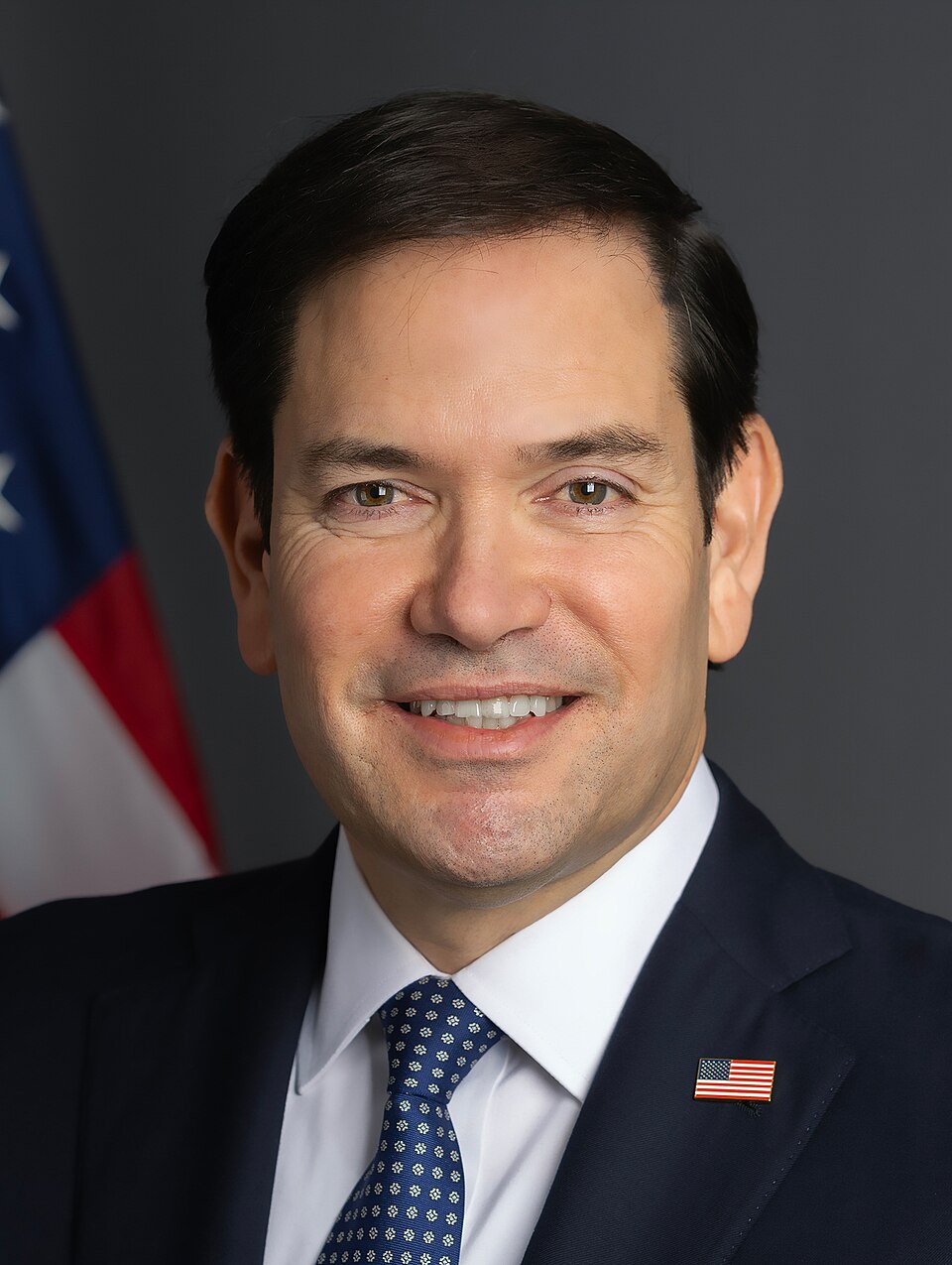
UNITED NATIONS, New York — U.S. Secretary of State Marco Rubio is scheduled to meet Russian Foreign Minister Sergey Lavrov in New York on Wednesday morning, September 23, the State Department said late Tuesday. The appointment places the two governments’ chief diplomats across a table less than a day after President Donald Trump publicly hardened his language toward Russia and Rubio warned that presidential patience with Moscow “is not infinite.”
The meeting has not happened as of this article’s September 22 publication. No agenda, duration or negotiating text was publicly announced in the reporting available at publication. What is verified is the appointment itself, confirmed by the State Department and separately described by Russian Foreign Ministry official Kirill Logvinov as scheduled for September 23 during the high-level week of the UN General Assembly.
What gives an otherwise routine UN-week bilateral unusual weight is the sequence around it: Trump told the world that Ukraine could recover all its territory and described Russia as a “paper tiger”; Rubio held open the prospect of additional economic costs and more weapons sales; Ukraine asked Washington for a winter package including Patriot systems; and a new sanctions law gave Trump authority to widen pressure on Russia and major buyers of Russian oil. Wednesday’s question is whether those pieces form a negotiating position or the opening of a heavier coercive campaign.
Why this meeting matters
Rubio and Lavrov are not meeting to design a comprehensive peace agreement from a blank page. They are meeting after months of high-level contact produced no publicly verified ceasefire, while attacks, sanctions and energy-market pressure accumulated. Their more plausible immediate task is narrower: establish what each side believes the other must do next, test whether an energy-infrastructure truce is negotiable and determine whether the political space for continued talks still exists.
The diplomats also carry messages whose credibility depends on decisions made elsewhere. Rubio can explain the costs Washington is prepared to impose, but only Trump can decide how aggressively to use the new sanctions authority. Lavrov can relay Moscow’s position, but battlefield strategy rests with President Vladimir Putin. Any formula involving Ukrainian targets or territory would require Kyiv’s consent; a bilateral U.S.–Russia conversation cannot legitimately settle it for Ukraine.
The civilian urgency is measurable. The UN Human Rights Monitoring Mission in Ukraine verified at least 372 civilians killed and 2,349 injured in August 2026, after an updated July count of 448 killed and 2,675 injured. Across January through August, it recorded 2,222 killed and 13,058 injured—55% more total civilian casualties than in the same period of 2025. Those are verified minimums, not estimates of the full toll. Long-range missiles and drones caused 47% of August’s civilian casualties.
The run-up: a month that tilted the board
The path to New York runs through Anchorage. At the August 15, 2025 Trump–Putin summit, Rubio and special envoy Steve Witkoff joined Trump in a three-on-three meeting with Putin, Lavrov and presidential adviser Yuri Ushakov. The closed-door session lasted more than two and a half hours. Trump said afterward that progress had been made and that many points had been agreed, while Putin referred to an “understanding”; neither side published terms that established a durable settlement.
Since then, the administration has repeatedly tested direct diplomacy. Estonian Foreign Minister Margus Tsahkna told USA Today that Witkoff had met Putin at least eight times during Trump’s second administration. Witkoff and Jared Kushner visited Moscow on September 5 and Kyiv the following day. Tsahkna’s interpretation is sharply skeptical: “Putin has just used Trump to win more time and put more pressure on Ukraine.” That is an attributed judgment from an allied government, not an independently proven account of Putin’s intent.
The policy landscape changed again on September 18, when Trump signed the Graham sanctions legislation. The law targets Russian officials, financial institutions and shadow-fleet oil tankers and authorizes tariffs of up to 100% on major buyers of Russian oil. It also leaves substantial waiver discretion with the president. That design makes the measure both threat and bargaining instrument: Trump can hold out relief for verifiable progress or intensify costs if he concludes talks are being used to delay.
Trump’s sharpest turn yet — “paper tiger” and patience “not infinite”
After meeting Ukrainian President Volodymyr Zelenskyy on Tuesday, Trump wrote that Ukraine, with European support, was in a position to fight and “WIN all of Ukraine back in its original form.” He said Russia had been fighting “aimlessly” and that the war made it look like “a paper tiger,” while arguing that Moscow was in serious economic trouble. The language was a notable departure from earlier public pressure on Kyiv to make concessions quickly.
Rhetoric is not yet policy. Trump also said the United States would continue supplying weapons to NATO “for NATO to do what they want with them,” a formulation that preserves distance between U.S. sales and European or Ukrainian battlefield decisions. The key evidence will be implementation: sanctions designations, tariff decisions, weapons approvals and any explicit negotiating deadline—not the sharpness of a social-media post by itself.
Rubio gave the shift an official diplomatic frame at a UN Security Council meeting. “The president is a very patient man. He’s very committed to peace, but his patience is not infinite,” he said, according to current reporting. Rubio said Washington could reach a point at which it concludes Moscow is not interested in a peaceful resolution, triggering additional economic costs and expanded arms sales. He did not announce that such a determination had already been made or set a date for it.
What each side wants from Wednesday
Washington wants a test it can grade. An energy ceasefire is attractive because power plants, fuel facilities and refineries are identifiable categories, and because both combatants have something to restrain. Zelenskyy said after his 40-minute meeting with Trump that Kyiv was ready for any format of reciprocal energy ceasefire. He emphasized that there had been no discussion of Ukraine unilaterally halting strikes on Russian refineries. That distinction is likely to be central: reciprocity, scope, monitoring and consequences for violations.
Moscow wants leverage preserved. Russia has consistently sought recognition of what it calls the conflict’s “root causes,” a phrase that in practice has encompassed Ukraine’s security alignment, occupied territory and limits on Kyiv’s military posture. Lavrov can also argue that attacks on Russian energy infrastructure should stop. What remains unknown is whether Moscow would accept symmetrical restrictions on its own strikes against Ukrainian power and fuel systems, and how either side would verify compliance.
Kyiv wants protection before winter and no one-sided restraint. Zelenskyy told The Wall Street Journal that he requested a winter military package including Patriot antimissile systems and other technologies. He said he expected Trump to pursue an energy ceasefire, but argued that Putin would not respond without added pressure. Zelenskyy also claimed Ukrainian attacks had destroyed 45% of Russian refining capacity. That 45% figure is his estimate and was not independently verified in the cited reporting; it should not be treated as an audited capacity loss.
European allies want diplomacy tied to consequences. Tsahkna said Trump’s peace efforts were well intentioned but called for greater pressure on Russia. He rejected the idea that Ukraine alone should carry blame for energy-market disruption: “Putin started this war. Putin can stop it.” The European concern is that a process without deadlines rewards the side that believes time improves its military position.
The skeptics’ case
The skeptical argument is not that diplomacy has no value. It is that repeated access to senior U.S. officials can itself become valuable to Moscow even without compromise. Meetings demonstrate that Russia remains central to great-power diplomacy, create space to restate maximalist positions and postpone penalties, and can divide allies over how long to wait. Tsahkna’s “buy time” warning rests on that sequence.
There is also a structural problem. An energy truce sounds narrow, but defining an “energy target” is difficult in a wartime economy. A refinery may supply civilian fuel and military logistics. An electrical substation may power homes and rail infrastructure. Ports and pipelines can serve multiple purposes. Without maps, lists, notification procedures and an independent method for investigating violations, each strike can be reclassified after the fact and the agreement can collapse into competing accusations.
The counterargument is that narrow deals can create habits of restraint even when a comprehensive settlement is unreachable. Protecting grids and fuel systems could reduce civilian suffering during winter and lower one source of global price volatility. Direct contact also reduces the risk that a tactical incident is misread as a strategic escalation. The skeptical case therefore points toward conditions and enforcement, not the abandonment of talks.
What the numbers actually imply
Eight or more Putin meetings reported for Witkoff show abundant access but not corresponding public progress. The number supports scrutiny of outcomes; it does not prove bad faith by itself.
Up to 100% tariffs under the Graham law sound decisive, but maximum authority is not the same as automatic application. Using the full power against major Russian-oil buyers could disrupt trade with India or China and raise energy costs. Presidential waivers make calibration possible, while also creating uncertainty about what conduct would trigger or lift penalties.
820 verified civilian deaths in July and August—448 and 372 respectively—show why delay is not neutral. The UN figures are minimum verified counts and exclude most claims it could not independently corroborate in occupied territory and Russia.
Brent at $99.25 a barrel was Tuesday’s dated market snapshot, down 1.1% and below the nearly $110 level reached the prior week. It shows how energy diplomacy intersects with household and political pressure. It does not establish that Ukrainian refinery strikes alone drove prices; the market was also reacting to the Iran war and uncertainty around Middle Eastern supply.
A return above $110 belongs only in an escalation scenario, not a forecast. A breakdown that combines wider sanctions, deeper disruption of Russian refining and renewed Middle East supply fears could push prices back through that threshold. Successful restraint could reduce that risk. Neither outcome can be inferred from Wednesday’s calendar entry.
Three scenarios for Wednesday and after
1. Polite deadlock—the base case. Rubio and Lavrov exchange firm positions, agree to keep channels open and leave without a joint document. Washington says Moscow must take meaningful steps; Russia emphasizes its security demands and objects to sanctions or Ukrainian strikes. The meeting prevents a diplomatic rupture but produces no verifiable ceasefire. This is the most likely outcome because neither government has publicly signaled a concession large enough to bridge the core disputes.
2. A narrow energy process. The ministers task officials with defining protected sites, reciprocal obligations and a verification channel. Even an agreement to continue technical talks would be more consequential than a generic promise to stay in touch. The hard tests would be whether Ukraine is at the table, whether the terms cover Russian strikes on Ukraine as clearly as Ukrainian strikes on Russia, and whether violations trigger a transparent response.
3. Talks become a notice of pressure. Rubio tells Lavrov that the administration has concluded diplomacy is not moving and uses the meeting to communicate the next sanctions, tariff or weapons steps before they are announced. In that scenario, the bilateral is less a negotiation than crisis management. The near-term risks would include heavier strikes, faster weapons flows and renewed oil volatility; the political purpose would be to convince Moscow that delay has become more costly than compromise.
Conclusion: negotiation backed by a heavier pressure campaign
Wednesday’s meeting will matter less for its photographs than for whether it produces a testable proposition. A credible energy truce would require reciprocity, defined targets, Ukrainian participation, monitoring and consequences. A credible pressure strategy would require the administration to specify which Russian actions trigger sanctions, tariffs or additional arms sales—and to follow through.
Trump’s “paper tiger” description and Rubio’s warning about finite patience raise the cost of another inconclusive encounter because they create an expectation that continued stalemate will change U.S. policy. Yet the administration still has reasons to preserve the channel: uncontrolled escalation is dangerous, oil remains expensive, and even limited protection for civilian infrastructure would carry value before winter.
The likeliest near-term result is polite deadlock: a professional meeting, sharply different public accounts and an agreement to continue talking. The strategic question comes after. If Washington treats another deadlock as evidence for calibrated pressure—while keeping diplomacy open—it will have converted rhetoric into leverage. If the costs remain hypothetical and the timetable remains undefined, Moscow’s critics will say the process is still buying time.
Sources
- Reuters: State Department confirms the Wednesday morning Rubio–Lavrov meeting
- AzerNews/TASS: Russian Foreign Ministry official gives the September 23 schedule
- Europe Says: Rubio’s Security Council warning and Trump’s “paper tiger” turn
- Reuters: Zelenskyy on the reciprocal energy-ceasefire discussion
- The Wall Street Journal: winter package, Patriots and Zelenskyy’s refinery claim
- USA Today: Margus Tsahkna’s warning that Putin is using diplomacy to buy time
- Le Monde: the Graham sanctions law and presidential waiver authority
- UN Human Rights Monitoring Mission: verified July and August civilian casualties
- Associated Press via The Daily Reflector: Tuesday’s Brent close
- Associated Press via Akron News-Reporter: Anchorage summit format and duration
This is a fixed September 22, 2026 reporting snapshot. The September 23 meeting was scheduled but had not occurred at publication. Zelenskyy’s 45% refinery-capacity figure is attributed and not independently verified. Scenario judgments and the “polite deadlock” base case are Signal Post News analysis, not reported agreements or official forecasts.