Gaza death toll 74,000
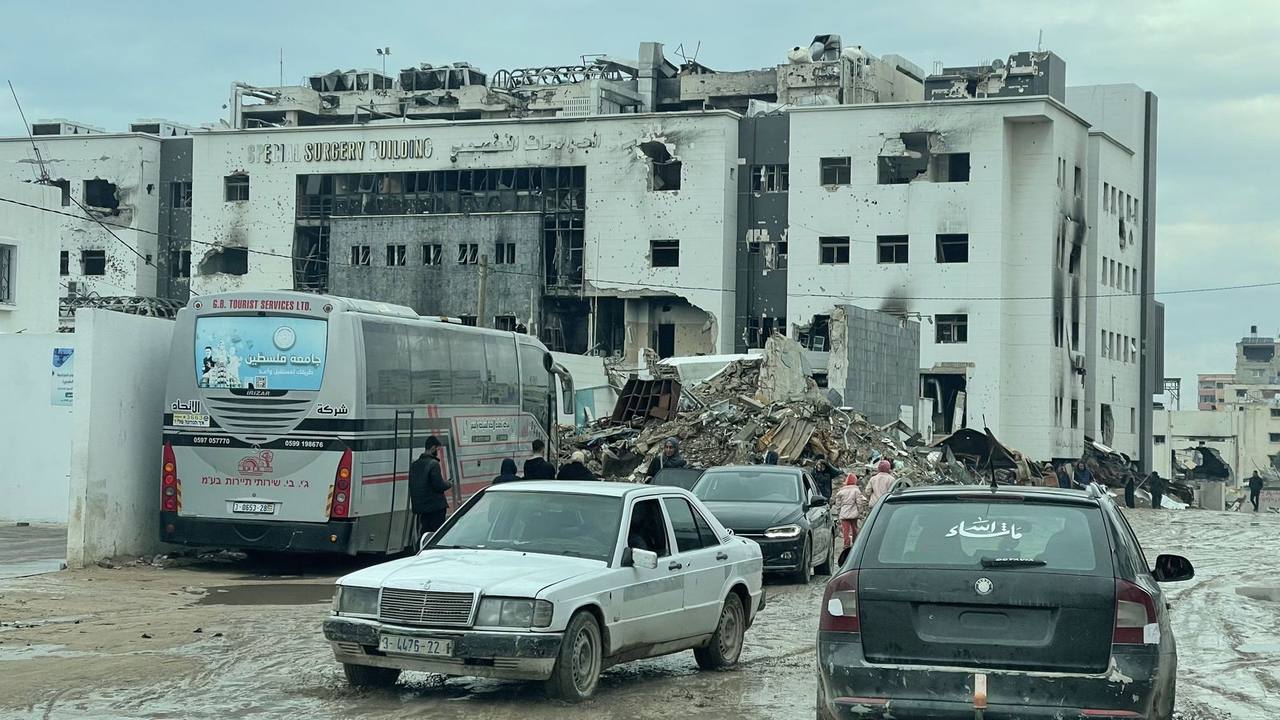
Gaza death toll 74,000 — the milestone Gaza's Health Ministry announced on Saturday, September 26, reporting 74,016 Palestinians killed and 175,068 wounded since October 7, 2023. The grim landmark arrived not during the heaviest fighting of the war, but nearly a year into a U.S.-brokered ceasefire that was supposed to have stopped the killing. The truce took effect on October 10, 2025. Eleven and a half months later, Israeli forces still control more than half of the Gaza Strip, Hamas has not disarmed, no new Palestinian government has been formed, and reconstruction has not begun.
The Associated Press, reporting the ministry's announcement, noted that the ministry's records are viewed as generally reliable by U.N. agencies and international organizations. The tally does not distinguish between civilians and militants, and women and children account for roughly half of those killed — a proportion that has held through the war's phases.
What the new tally says — and what it doesn't
Even the post-ceasefire count is disputed, which says something about how information moves in Gaza. The AP's Saturday reporting, drawing on the ministry's announcement, put the number of Palestinians killed since the ceasefire took effect at 1,145, alongside seven Israeli soldiers killed in the same period. PressTV, citing a ministry post on X, reported a higher post-ceasefire figure — 1,415 killed and 4,953 injured. Both figures come from the same ministry; they differ because the ministry issues rolling tallies that update as hospitals report, and because wire services snapshot them at different hours. The gap is a few hundred in either direction — it does not change the order of magnitude, but it is worth stating plainly rather than smoothing over.
The 48 hours behind the number
The ministry's X post, carried by PressTV, said seven Palestinians were killed and 38 wounded in the 48 hours before Sunday — in Sheikh Radwan and Nuseirat. On Friday, September 25, the Israel Defense Forces said it killed Hamas Nukhba platoon commander Ibrahim Fawzi Ismail Mohsen in Nuseirat and Mohammed Kamel Suleiman Mohsen in Khan Yunis, and said it had earlier killed Hassan Mahmoud Siam — whom Israel accused of holding hostages Dafna Elyakim, Keith and Aviva Siegel, and Amit Soussana — and Adham Sabhi Salim Ziara. The IDF described the strikes as responses to ceasefire violations and said precise munitions were used. As with all military claims in this war, the identities, roles and circumstances are asserted by the IDF and have not been independently verified.
A ceasefire in name only
The terms that were supposed to follow the October 2025 truce have, by the AP's accounting, stalled on nearly every front: Israeli forces control over half of Gaza; Hamas has not disarmed; no new Palestinian government has taken shape; and reconstruction has not begun. Prime Minister Benjamin Netanyahu has said there will be no Israeli withdrawal until Hamas disarms — a condition Hamas has not met. The result is a map that looks less like a postwar settlement and more like a frozen front line, with civilians living in the space between.
Why this matters
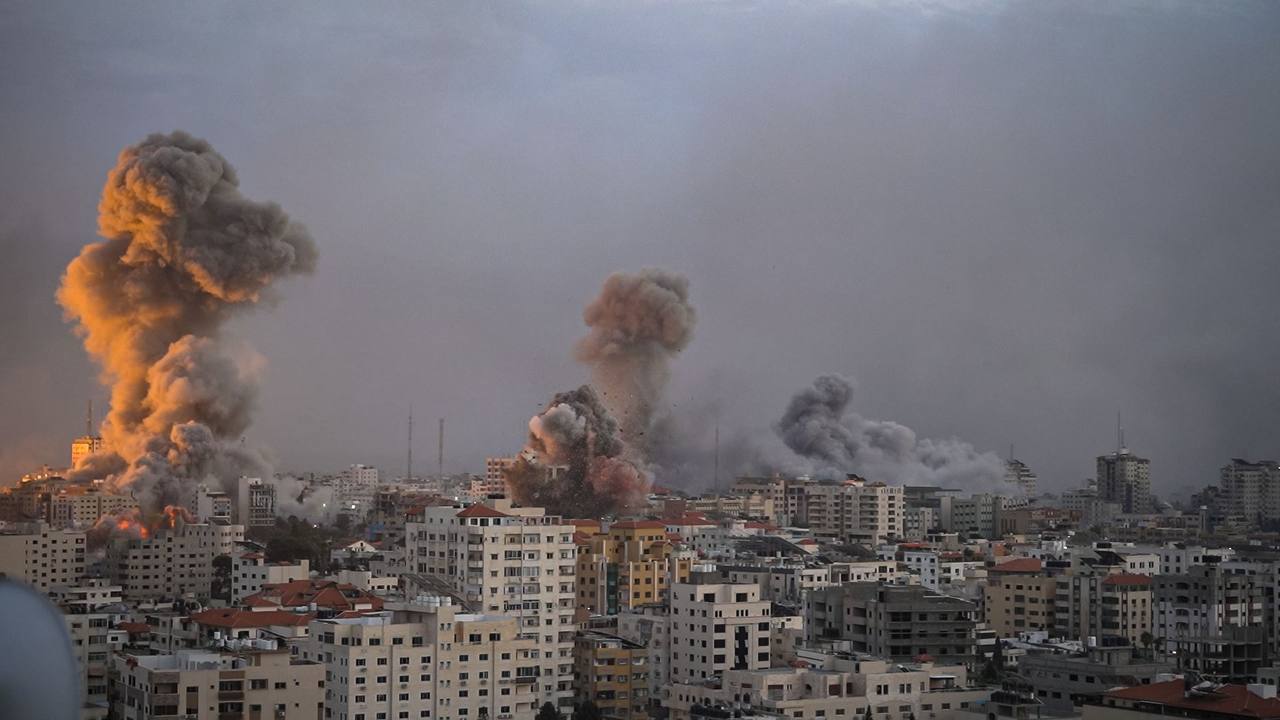
There is something disorienting about a death toll crossing 74,000 during a ceasefire. Ceasefires are supposed to be the moment the counting stops, or at least slows to a trickle. Instead, Gaza's war has settled into a condition that is neither war nor peace: too quiet for the world's front pages, too lethal for the people living under it. The 74,016 figure matters less as a round number than as evidence of what the October 2025 agreement actually bought — a halt to the heaviest fighting, at a cost of roughly three to four Palestinian lives a day since, against about a hundred a day in the war's first two years.
That arithmetic is worth sitting with. At the pre-ceasefire pace, Gaza was losing in a week what it now loses in roughly a month. The truce saved lives at a scale that is hard to argue with. But a ceasefire that still kills people every day, while none of its political terms advance, is not a settlement — it is a holding pattern, and holding patterns have a way of breaking.
The numbers beneath the number
Put 74,016 against Gaza's prewar population of about 2.1 million: roughly 3.5 percent of the population killed. The wounded-to-killed ratio — 175,068 wounded against 74,016 dead, about 2.4 to 1 — is lower than in many modern conflicts, a grim indicator of how destructive the munitions and how constrained the medical care have been. Then the hospitals: Gaza's NGO Network says 26 of 38 hospitals have stopped operating; medicine stocks sit roughly 50 percent below requirements and medical consumables face a 58 percent deficit. About 82 percent of buildings are damaged or destroyed, and some 2,000 structures are at risk of collapse. These are not wartime statistics anymore — they are the baseline conditions of a place where the war's machinery has paused but its consequences compound daily.
Who the stalemate serves — and who it bleeds
Stalemates persist because they serve someone. For Netanyahu, facing Israel's first election since October 7 on October 27 — against former military chief and ex-war cabinet member Gadi Eisenkot — the frozen status quo avoids both the political cost of a full withdrawal and the military cost of renewed large-scale war. Hamas, for its part, retains its one irreducible asset: it has not disarmed, and disarmament is the price of everything else.
Hamas leader Khalil al-Hayya, in a Saturday interview with Al-Araby, said the movement "absolutely refuse[s] to allow the blood, suffering, and cause of the Palestinian people to serve as fuel for Israeli elections." It is a striking admission of how the calendar now shapes the conflict: both sides are reading the same election date and drawing opposite conclusions from it. Hamas has also said it would meet a U.S.-led initiative by surrendering its weapons — an offer Israel views with scepticism, seeing it as a stalling tactic rather than a genuine disarmament plan.
The people who lose from the stalemate are not hard to identify. They are the patients in the hospitals still functioning, the medics working with half the medicine they need, and the children the U.N. children's agency warns about as winter approaches: UNICEF says 11 children died of hypothermia in Gaza last winter, and OCHA warns the risks are rising again. Critics of Israel's approach argue the continued strikes — described by the IDF as responses to threats — make a mockery of the word ceasefire. Critics of Hamas argue that refusing to disarm holds Gaza's civilians hostage to a political position. Both criticisms can be true at once; the stalemate has enough blame to go around, and civilians absorb all of it.
What happens next
Three dates now structure Gaza's near future. The first is October 27, Israel's election — the first since the October 7 attacks, in which Hamas-led militants invaded Israel, killed about 1,200 people, mostly civilians, and took 251 hostage. A Netanyahu victory likely extends the current formula: no withdrawal without disarmament, continued targeted strikes, no reconstruction. An Eisenkot victory could reopen the question, though any Israeli leader will face the same security establishment and the same unmet disarmament condition.
The second is November 28, when the Palestinian Authority is scheduled to hold legislative elections — the first in two decades, and widely doubted. If they happen, they could produce the "new Palestinian government" the ceasefire terms envisioned; if they don't, the governance vacuum persists.
The third date is the least precise and the most dangerous: the first cold nights of winter. Tents, rubble and collapsed buildings do not keep out the cold, and a medical system running at half stock cannot absorb a seasonal surge of respiratory illness and exposure. Reconstruction — the one development that would change the material facts — has not begun, and no financing framework exists. Until one does, Gaza's future is a choice between a bad status quo and something worse. The 74,000 dead are a record of what has already been paid; the living are still paying daily.
Sources
- Associated Press: Palestinian death toll in Gaza war rises above 74,000; ministry tally, ceasefire status, Netanyahu position
- Associated Press (mirror): Gaza death toll above 74,000 since the war began
- Particle News: Gaza death toll topped 74,000 as ceasefire remains fragile
- PressTV: seven Palestinians killed in 48 hours; ministry X post with 1,415 killed / 4,953 injured post-ceasefire tally; OCHA winter warning; UNICEF hypothermia figures; NGO Network hospital and medicine numbers
- New York Post: IDF kills Hamas Nukhba platoon commander Ibrahim Fawzi Ismail Mohsen and Mohammed Kamel Suleiman Mohsen; earlier killings of Hassan Mahmoud Siam and Adham Sabhi Salim Ziara
- The Daily Express: Khalil al-Hayya Al-Araby interview; Hamas refusal to let Palestinian blood "serve as fuel for Israeli elections"; Israel election October 27, 2026; PA legislative election November 28
- Nuclear-News: ~82 percent of Gaza's buildings damaged or destroyed; ~2,000 buildings at risk of collapse
Reporting basis: Palestinian casualty figures are attributed to Gaza's Health Ministry via AP and PressTV reporting; AP describes the ministry's records as generally reliable, though they do not distinguish civilians from militants. IDF strike claims, target identities and the "ceasefire violation" framing are attributed to the Israeli military via the New York Post and have not been independently verified. Hamas positions are attributed to Khalil al-Hayya's Al-Araby interview via The Daily Express. Hospital, winter-risk and building-damage figures are attributed to OCHA, UNICEF, Gaza's NGO Network, and PressTV reporting. The 1,145 vs 1,415 post-ceasefire figures reflect different ministry tallies reported by different outlets at different times.