Hamas money man killed
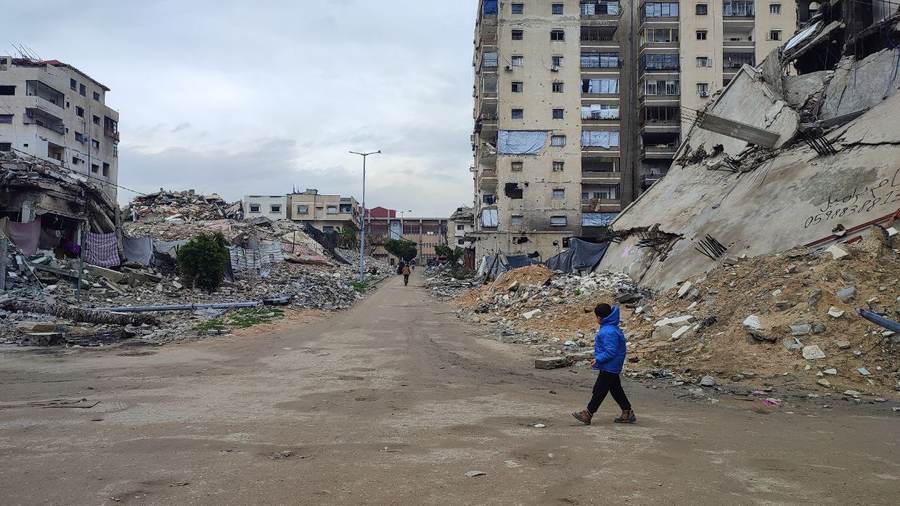
GAZA CITY — An Israeli drone strike killed Shadi Abu Hasira as his vehicle moved through the Al-Sinaa industrial area near the UNRWA building west of Gaza City, according to the Israel Defense Forces and a medical source at Al-Shifa Hospital cited by Anadolu Agency. The military described Abu Hasira as the key money exchanger for Hamas's military wing and head of a network called “Geneva,” which it said converted and transferred tens of millions of Israeli shekels in foreign currency.
The death itself has confirmation from two distinct directions: Israel announced the strike, and a Gaza medical source confirmed Abu Hasira was killed. His exact position, the volume of money attributed to the network and its destination remain IDF characterizations that have not been independently verified. Reports reviewed for this article place the strike around September 27–28, with the Israeli announcement circulating on September 28–29.
Why this matters: the financial front of the war
A commander can sometimes be replaced by the next officer in an established chain. A trusted financier may be harder to replace because the job depends on relationships, discretion, knowledge of counterparties and the ability to move value through a shattered economy. If Abu Hasira performed the role Israel attributes to him, his removal could interrupt more than a single payment route.
Weapons, salaries, transport, communications and the rebuilding of damaged infrastructure all require money. Without reliable funding, rearmament and organizational recovery stall even when personnel remain. That is why attacks on Hamas financial infrastructure can have an effect disproportionate to the public profile of the person targeted. The strategic question is whether the network was genuinely concentrated around Abu Hasira or built with enough redundancy to absorb his loss.
What happened
The confirmed core is limited but important. The IDF said it carried out an aerial strike on a moving vehicle in Al-Sinaa, an industrial area near the UNRWA building west or southwest of Gaza City. An Al-Shifa Hospital source later confirmed Abu Hasira's death to Anadolu. Video reports from Times Now and ILTV relayed the Israeli announcement.
The rest requires attribution. Israel says Abu Hasira headed the Hamas Geneva money exchange network, served the military wing and moved tens of millions of shekels in foreign currency. Public reporting reviewed by Signal Post News does not independently establish his rank, document the transactions or show how the total was calculated. Hamas had not supplied a detailed public account of his financial role in the sources reviewed for this story.
That separation between confirmation and characterization matters. A confirmed death does not automatically validate every intelligence assessment used to explain it. Nor does uncertainty about the precise role erase the fact that a named person was killed in a targeted vehicle strike during a ceasefire.
Background: Hamas's money machine and the ceasefire dispute
How hawala-style exchange finance can move money in Gaza
In a blockaded and heavily damaged economy, cash and foreign currency can move through brokers rather than ordinary bank transfers. Hawala-style exchange finance works through trusted counterparties who settle obligations across locations, sometimes without the same funds physically crossing a border. Such systems also serve civilians and legitimate businesses where banking access is thin, which is why an exchange network cannot be treated as military merely because it operates informally.
Israel's allegation is narrower: that the Geneva network functioned as a conduit for Hamas terror financing in Gaza, converting outside currency and routing value to the military wing. A conduit is not necessarily a vault. Disrupting it may delay payments, expose intermediaries and force riskier methods without eliminating the underlying pool of money.
The October 2025 ceasefire disarmament fight
The ceasefire that took effect in October 2025 reduced the scale of combat but did not resolve who would control Gaza's weapons, security or reconstruction. Israel says Hamas has been rearming in violation of the agreement. Hamas denies trying to rebuild its arsenal or prepare new attacks and accuses Israel of undermining the Gaza deal through continued strikes.
Finance sits at the center of that dispute. Israel can argue that stopping money flows is necessary to enforce disarmament. Hamas can argue that a strike on a vehicle inside Gaza is another breach of the truce. Without an accepted monitoring mechanism, both claims become part of a gray zone in which military action continues beneath a formal ceasefire.
A pattern of Israel targeted killings in Gaza
Abu Hasira's death followed the killing of Izz al-Din Al-Beik, the commander of Hamas's armed wing in northern Gaza, in a separate Gaza City strike the same week. The IDF says it has killed at least 20 Hamas figures in September, combining commanders, alleged participants in the October 7, 2023 attack and financial operatives in a campaign aimed at preventing recovery.
The pattern is examined in Signal Post News's report on the killing of Izz al-Din Al-Beik. The wider ceasefire toll is tracked in our report on Gaza strikes since the October 2025 truce and the Gaza death toll passing 74,000.
The numbers behind the strike
Tens of millions of shekels: That is the scale the IDF attributes to the Geneva network. Depending on the amount meant by “tens” and the exchange rate used, the allegation implies roughly $8 million to $15 million. That dollar conversion is approximate; the military has not published a transaction ledger in the reporting reviewed here.
A conduit, not necessarily a vault: The figure describes value allegedly transferred over time, not cash necessarily held in one place. A broker can move large cumulative sums while retaining only a fraction at any moment, so killing one alleged exchanger does not mean Israel seized or destroyed the same amount.
At least 20 figures this month: Israel says its September strikes have killed 20 or more Hamas figures. That total is an Israeli military count and does not by itself establish the status, role or circumstances of every person included.
More than 1,400 killed since the ceasefire: Reuters reports that more than 1,400 Palestinians have been killed since the October 2025 ceasefire took effect. Gaza health authorities put the cumulative Palestinian death toll since October 2023 above 74,000. Both totals are attributed because wartime access and independent verification remain constrained, and the cumulative count does not distinguish civilian and combatant status in every case.
Who gains, who loses, what's disputed
Israel's case: If Abu Hasira was a central financial operator, the strike may raise the cost and risk of moving money to Hamas's military wing, expose replacement channels and slow rearmament. It also lets Israel argue that the ceasefire cannot shield activity it considers an immediate security threat.
Hamas's denial: Hamas rejects Israel's broader assertion that it is rebuilding its arsenal and says Israeli operations are hollowing out the ceasefire. Its denial does not resolve Abu Hasira's alleged role, just as the IDF announcement does not independently prove the network's scale.
The legal and civilian questions: A moving-vehicle strike can be more discriminating than attacking a residence if surveillance isolates the target, but it can still endanger passengers and bystanders. Under a ceasefire, the questions are not only distinction and proportionality but also what threat justified force at that time and whether less harmful options existed. The public record does not yet provide enough detail to answer those questions definitively.
Does financial decapitation work? Removing a broker can create confusion and mistrust, especially where clandestine networks depend on personal guarantees. Analysts also caution that decentralized movements adapt: routes split, intermediaries change and higher fees compensate participants for risk. The measure of success is therefore not the death itself but whether payments slow, named replacements emerge or operational activity declines.
There is also a civilian-economy ripple effect. Exchange houses and informal brokers move remittances and working cash for families and businesses as well as armed groups. Pressure on one allegedly military channel can push legitimate transactions into scarcer, more expensive and less transparent routes, deepening hardship even when the target selection is accurate.
What happens next
A harder Hamas position: The killing may reinforce demands for guarantees before disarmament and make internal leaders less willing to expose names or financial routes in negotiations.
Pressure produces concessions: If the strike materially constrains access to funds, Hamas could face stronger incentives to accept monitored limits on weapons or financing in exchange for reconstruction access and Israeli withdrawal steps.
The gray zone continues: The most immediate path is continued targeted strikes, denials and retaliatory risk without a formal return to full-scale war. That preserves the ceasefire's diplomatic shell while steadily weakening its meaning on the ground.
The clearest indicators will be operational and financial: whether Israel names a successor, whether another exchange network is identified, whether reconstruction funds begin moving through a monitored channel, and whether Egypt and Qatar can turn the next round of mediation into enforceable sequencing. Watch also for a response from Hamas that addresses Abu Hasira's role rather than only the legality of the strike.
Sources
- Times Now: video report carrying the IDF announcement
- ILTV News Flash, September 29: report on Abu Hasira and the Gaza strike
- Anadolu Agency report: Al-Shifa Hospital source and strike location
- Reuters: Al-Beik killing, September campaign and ceasefire casualty context
Reporting basis: Abu Hasira's death is reported by the IDF and confirmed by a Gaza medical source cited by Anadolu. His alleged financial role, the Geneva network's military purpose and the value moved remain attributed to the IDF and were not independently verified by Signal Post News.