War · Ukraine · Diplomacy
Ukraine peace talks Europe’s five leading backers of Kyiv joined in full on Monday — and within hours the participants were contradicting each other in public about the most basic question of all: who will be in the room when the next round meets Russia. No agreement, no ceasefire and no date for that next round has been agreed.
KYIV, November 16, 2026 — Ukraine held new online talks on Monday with U.S. envoys Steve Witkoff and Jared Kushner and with European representatives on the prospects for ending the war, President Volodymyr Zelenskyy said in his nightly video address. It was the fullest session yet of Ukraine peace talks Europe’s leading backers of Kyiv have joined as a bloc: representatives of France, Germany, Britain, Italy and Poland took part, Zelenskyy said, “in full” — and, in his account, they would be represented the same way in future meetings with Russian negotiators. That last claim is precisely where Monday’s diplomacy broke into the open: by the time the day ended, Washington was talking about progress, Kyiv was warning of major new Russian strikes, and Moscow was flatly denying it had ever agreed to let Europe sit at the table.
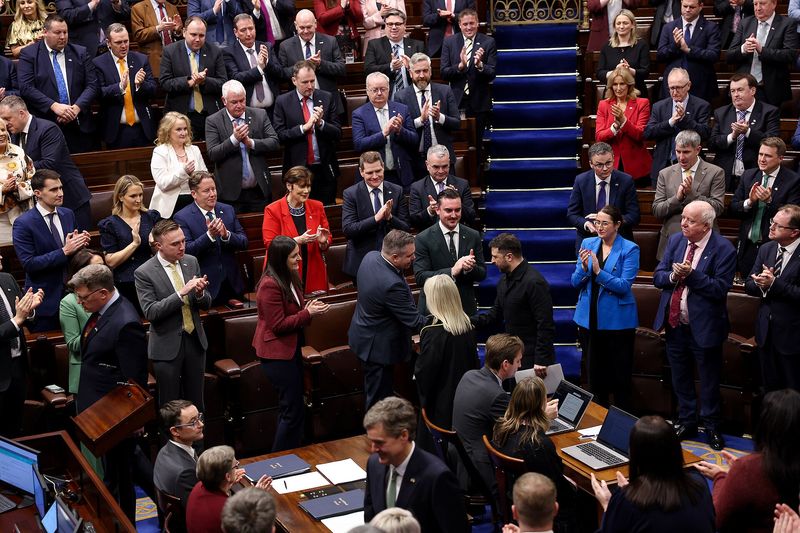
Zelenskyy gave the session a terse review: the discussion, he said, was “not easy” — and he offered no elaboration. He also said all sides had agreed to meet at talks in Berlin with the “Coalition of the Willing” countries that support Ukraine, though no date for that meeting was announced. What Monday produced, in other words, was not a breakthrough. It was a map of the argument the peace process now has to survive: an argument about the shape of the table before anyone has agreed what will be decided at it.
Track it live: Follow the front line, strike reports and territorial changes on the Signal Post News live Ukraine war map
Kushner: “We are making progress”
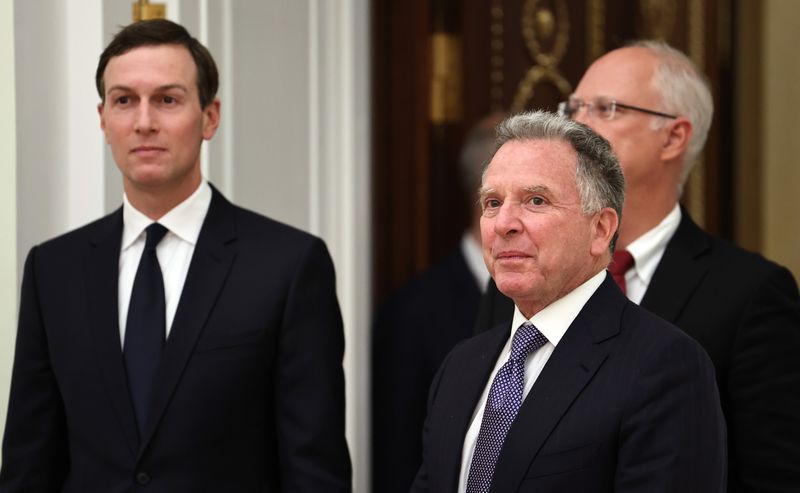
The day’s most optimistic voice belonged to Jared Kushner. In a post on X on Monday, he wrote: “We are making progress, in close coordination with Russia, Ukraine, and Europe, toward an outcome that can end this war, strengthen European security, and create the foundations for lasting peace.” He paired the claim with a caution that deserves equal weight: “Important challenges remain, and a final agreement will require difficult decisions.” Read together, the two sentences describe momentum without a destination — movement its own author concedes has not yet reached the decisions that would make it real.
Kushner also laid out the working method. He said he and Witkoff had spoken earlier with Kremlin aide Yuri Ushakov to discuss next steps, and had held what he called a productive call with Ukrainian and European partners. Most consequentially, the envoys had discussed how to facilitate direct engagement between Europe and Russia. “It is important that both sides hear each other’s concerns and proposals directly,” Kushner wrote. That is the heart of the American position: Europe should not merely be briefed on a settlement negotiated over its head, but should argue its own case to Moscow, face to face. It is also, as Moscow made clear within the same news cycle, a position Russia says it has never accepted.
Moscow’s answer: Europe has not been agreed
Yuri Ushakov, speaking in Moscow on Monday, contradicted the Europe point directly. Russia, he said, has not agreed to European participation in the next round of talks. What has been agreed, in his account, is narrower: a continuation of the process in its existing trilateral format — Russia, Ukraine and the United States — and even then, the date of the next round has not yet been agreed. An expansion of the format, Ushakov said, “has not been agreed with us,” and Europe joining the table would require “a great deal” to happen first — possibly another trilateral round, possibly more.
The gap between the two accounts is the story. Kyiv and Washington describe a process widening to include the continent that would have to underwrite any settlement. Moscow describes one that remains three-sided, undated and unexpanded, with any European role conditional on steps not yet taken. Both cannot be describing the same agreement, because on the central point there is no agreement to describe: no deal, no ceasefire and no date for the next round — only a dispute, now fully public, over who gets to negotiate.
Two warnings, both resting on Kyiv’s intelligence claims
Alongside the diplomacy, Zelenskyy used Monday’s address to issue two warnings — and both need to be handled exactly as he presented them: as claims based on Ukrainian intelligence, attributed to him, and not independently verified. First, Zelenskyy said Ukraine has intelligence that Russia is planning major strikes on Ukrainian targets on Monday evening, overnight and on Tuesday. That is a warning about what Kyiv says its intelligence shows Russia intends to do — not, at the time he spoke, a report of strikes that had happened. Late Monday night, as the development section below records, Kyiv’s mayor reported preliminary indications of strikes on the capital, with the attribution intact.
Second, Zelenskyy said Ukrainian intelligence showed that North Korea was providing new ballistic missiles for Russia and improving its weaponry. That, too, is his intelligence claim, stated here exactly as he stated it; Reuters, reporting his address, did not independently verify it, and neither can we. The claim matters because of what it would mean if it holds — a deepening of the Moscow–Pyongyang supply relationship in the weapons class at the centre of Russia’s strike campaign — but its importance does not convert it into established fact. The attribution is not decoration. It is the difference between reporting and asserting.
Why the fight is now about the table itself
It is tempting to treat the argument over Europe’s seat as procedural — the kind of dispute diplomats settle with a seating plan. It is not. The shape of the table decides the credibility of everything the table might produce. Any settlement will need guarantees: commitments about Ukraine’s security, reconstruction, and what happens if the firing resumes. Those guarantees are only worth what the guarantors can deliver, and the states that would have to deliver most of them — with troops, money, air defences and industrial capacity — are European. A settlement negotiated without Europe in the room would ask European governments to underwrite terms they had no hand in setting. One negotiated with Europe in the room would carry their signatures, and with them a measure of enforceability no communiqué can fake.
That is why Moscow’s veto over format is worth so much to Moscow. Keeping the process trilateral keeps the negotiation centred on the two capitals Russia most wants to deal with — Washington, whose envoys drive the timetable, and Kyiv, whose position Russia hopes American pressure will soften. Admitting five European states changes the arithmetic: more voices, more conditions, and a bloc whose stated position is that Ukraine’s borders and security are European questions, not bilateral ones. Kyiv fights for the wider table for the mirror-image reason: every European chair is a reminder that Ukraine is not negotiating alone, and a complication for any attempt to settle the war over its head. Monday’s contradiction is not a misunderstanding. It is both sides describing the table they intend to win.
How the talks reached this point
Monday’s round did not arrive from nowhere. Russian, Ukrainian and American officials held talks in Abu Dhabi last week — the first such trilateral meeting in nine months — reopening a dormant channel. Kushner and Witkoff then travelled to Moscow, met President Vladimir Putin, and said afterwards that Europe would take part in the next round: the assertion Ushakov spent Monday walking back. Between those stops, the case for a European role was briefed in Dublin, where the Kremlin had already set its own condition for any European presence — the sequence we traced in our report on how the Kremlin set a condition for Europe at the Ukraine peace talks, and Dublin pushed back. The Abu Dhabi round also carried the process’s one concrete humanitarian thread: a prisoner exchange that, as Signal Post News has previously reported, remains agreed in principle. No new figure for any exchange was announced on Monday, and none should be read into Monday’s statements.
The format question has shadowed every step of that itinerary: in Abu Dhabi, whether the three-sided channel could restart at all; in Moscow, what the envoys believed they had secured; in Dublin, the price Europe would be asked to pay for admission. Our earlier analysis of Kushner’s NATO-Russia Council model examined the institutional shape Washington has floated for giving Russia a structured seat in European security discussions — a model that only works if Europe is itself at the table. Monday’s round was supposed to make the widened format real. Instead, it made the disagreement public, on the record, in all three capitals in a single day.
Berlin next — on a date nobody has announced
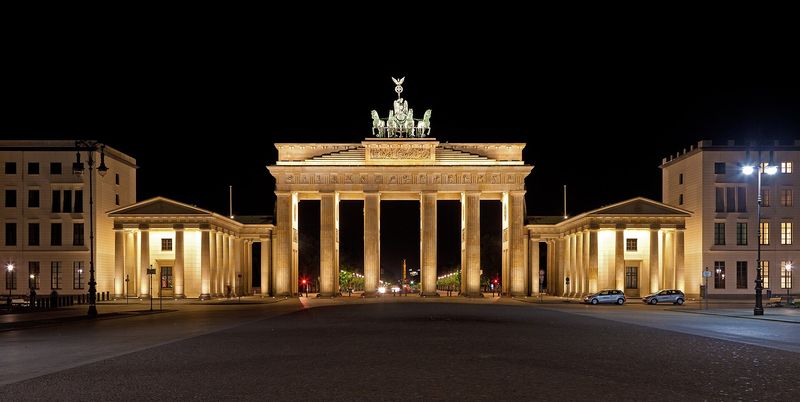
The one forward step Zelenskyy did announce was Berlin. All sides, he said, had agreed to meet in the German capital with the “Coalition of the Willing” — the grouping of countries committed to supporting Ukraine through and beyond any settlement. The meeting matters because the Coalition is where the practical content of a guarantee would be built: which countries contribute what, under whose command, with what triggers. It is Europe organising its side of the argument whether or not Moscow admits Europe to the main table. But discipline about the facts matters here too: Zelenskyy said the meeting was agreed; he did not announce a date for it, and none should be attached to it until someone with the authority to set one does so. A meeting that exists as an intention is a real diplomatic fact. It is not yet an appointment.
What each side takes from Monday
Kyiv: a bloc, visibly assembled
For Ukraine, Monday’s value was optical and structural at once. Five European states sat in the same call, “in full,” and Kyiv could present that as the new baseline: Europe present at the working level, whatever Moscow says about the formal rounds. Ukraine has demonstrated that its own side of the table has widened — and that any American attempt to move fast will have to move with European partners in the frame.
Washington: momentum, carefully worded
For the United States, Kushner’s post supplied the day’s forward motion — language designed to keep a process alive through a news cycle in which the other two capitals supplied a denial and a warning. The envoys gained a working product: a direct Europe–Russia engagement track to propose, and a Berlin meeting to point to. What Washington did not gain was the thing that would convert momentum into news — a date, a format Moscow accepts, or a decision anyone has signed.
Moscow: a veto, exercised early
For Russia, Ushakov’s intervention was the day’s most efficient move. By denying the European expansion before it could harden into an assumption, Moscow kept its preferred format, kept the next round undated, and priced Europe’s admission — “a great deal” first — without conceding anything in exchange. In this process, the power to refuse a format is itself a negotiating asset, and Russia intends to spend it slowly.
The critics: progress without a date is a claim, not a result
The sceptical reading writes itself, and deserves its place. A process can generate productive calls and optimistic posts indefinitely without producing the only outputs that end wars: agreed terms, a ceasefire to hold them, and dates on which delegations actually meet. On Monday, none of those three existed. The distance between “making progress” and a settlement is not a detail of the story. At this stage, it is most of the story.
The numbers in context
Strip Monday back to its countable facts. Five European states — France, Germany, Britain, Italy and Poland — took part, by Kyiv’s account in full. Three parties — Russia, Ukraine and the United States — remain the only format Moscow says is agreed. Nine months separated last week’s Abu Dhabi meeting from the trilateral session before it. Two warnings, both attributed to Ukrainian intelligence, hung over the day. One meeting, in Berlin, was announced without a date. And zero — the number that frames all the others — is the count of agreements, ceasefires or next-round dates Monday produced. Diplomacy is often the art of making zero look like a beginning. Whether Monday was one is what the next steps will decide.
The Warning Materialises: Strikes Hit Kyiv’s Bridges
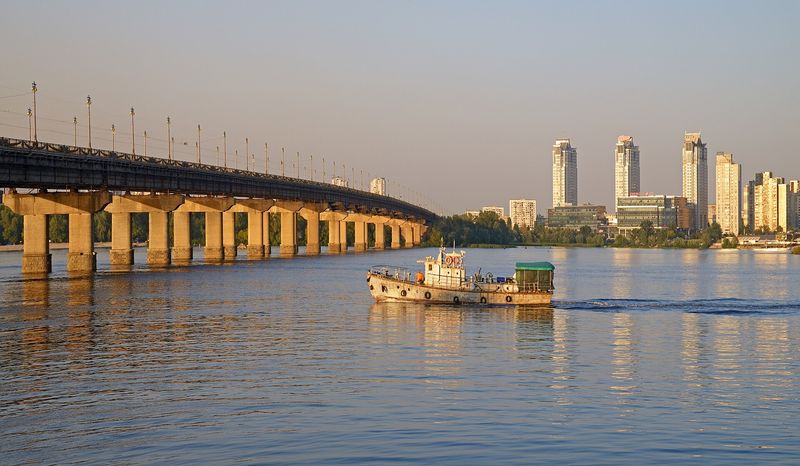
Late on Monday night, the war supplied its own commentary on the talks. Kyiv Mayor Vitali Klitschko reported that Russian strikes had hit the capital, and said that, according to preliminary information, there had been hits on the North and South bridges over the Dnipro River. “According to preliminary information, there have been hits on the North and South bridges in the capital,” Klitschko wrote on Telegram at about 11:45 p.m. Kyiv time, adding that other critical infrastructure had been struck as Moscow sent drones and missiles across other parts of Ukraine. He later reported water and power cuts in parts of the city.
Every element of that report needs its attribution kept in place. The bridge hits are Klitschko’s preliminary report, not a confirmed damage assessment. Reuters witnesses in the capital reported a series of loud explosions as air defence units operated over Kyiv, but Reuters said it could not immediately independently confirm the reports of hits on the bridges. No casualties had been reported at the time of publication. The North and South (Pivdennyi) bridges are among Kyiv’s principal road crossings over the Dnipro, carrying commuter traffic, freight and military supply routes between the capital’s left-bank and right-bank districts — which is why even a preliminary report of hits on both in a single night is serious, and why it is reported here as preliminary until a daylight assessment confirms or revises it.
The timing gave the night an unmistakable edge. Hours earlier, U.S. President Donald Trump, departing the White House on Monday for a visit to Asia, had told reporters that Russian President Vladimir Putin was “backing down” in the war. “Putin is backing down a little bit on Ukraine. He could have been much tougher, frankly,” Trump said, adding that he planned to raise Russia’s war in Ukraine at Thursday’s trilateral meeting with Xi Jinping and Putin in Shenzhen, China. Monday night’s strikes are the immediate counterpoint Kyiv will carry into that meeting: whatever Moscow’s negotiating posture, its strike campaign against the capital’s infrastructure continued on the eve of the summit. The strikes also landed inside the window Zelenskyy had pointed to hours earlier, when he said — as an intelligence claim, attributed to Kyiv — that Russia was planning major strikes for Monday evening, overnight and Tuesday. His earlier November 6 address had named Dnipro bridges among the expected targets, as we reported in our account of how Zelenskyy warned Russia was planning new strikes on bridges and energy. Russian forces have attacked Kyiv’s bridge crossings repeatedly since October 1, including a November 7 ballistic strike that closed the Northern (Pivnichnyi) Bridge in both directions.
What happens next
The immediate test is daylight in Kyiv: the city administration is expected to publish a damage assessment, and the open questions are the extent of any damage to the two crossings, whether traffic is restricted, whether casualties emerge, and whether a second night of strikes — the Tuesday wave Kyiv said, as an intelligence claim, it expected — materialises. The diplomatic tests follow close behind: whether the Berlin meeting acquires a date; whether a trilateral round is scheduled at all, and in what format; and whether Moscow’s price for admitting Europe is ever stated in terms specific enough to negotiate over. Above all, watch the gap between the two sentences that defined Monday — Kushner’s “we are making progress” and Ushakov’s “has not been agreed with us.” The peace process now lives in the space between them.
What do you think — should Europe have a seat at the table as of right, or is Moscow entitled to negotiate the format before the format negotiates the war? Follow Signal Post News for updates from Kyiv, Berlin and Washington, and share your thoughts below.
Sources
Reuters, November 16, 2026 — “Ukraine’s Zelenskiy says new talks on peace prospects held with US, European officials” (reuters.com): Zelenskyy’s nightly address — the online talks with Witkoff, Kushner and European representatives; France, Germany, Britain, Italy and Poland taking part “in full”; the discussion “not easy”; agreement to meet in Berlin with the Coalition of the Willing (no date given); and his attributed intelligence claims on planned major strikes and North Korean ballistic missiles, which Reuters did not independently verify. Reuters, November 16, 2026 — “US envoy Kushner says making progress on Ukraine deal” (reuters.com): Kushner’s post on X; his next-steps discussion with Ushakov; the productive call with Ukrainian and European partners; and the Europe–Russia facilitation discussion. Reuters, November 16, 2026 — “Kremlin aide denies Russia agreed to include Europe in Ukraine peace talks” (reuters.com): Ushakov’s denial; trilateral continuation as what is agreed, with the date itself not yet agreed; and the Abu Dhabi and Moscow context. Reuters, November 16, 2026, reporting from Kyiv: Klitschko’s preliminary report (about 11:45 p.m. Kyiv time) of hits on the North and South bridges and other critical infrastructure, and of later power and water cuts; Reuters witnesses hearing explosions; Reuters unable to immediately independently confirm the bridge hits; no casualties reported; and Trump’s Monday “backing down” remarks. The Independent live blog, November 16, 2026 (19:30, 20:29 and 21:00 entries): independent reporting of the same address and facilitation line. Zelenskyy’s address and Kushner’s post on X are the primary statements underlying this report. Photographs are via Wikimedia Commons, as credited; the Zelenskyy and Kyiv bridge photographs are file photos, captioned as such.