War · Ukraine · Diplomacy
The Europe Ukraine peace talks question got two opposite answers in 24 hours. On Thursday, US envoys said Vladimir Putin had agreed that Europeans would join the next round. On Friday, the Kremlin attached a condition — Europe must first prove its “readiness to contribute” — and EU leaders meeting in Dublin rejected both the condition and Moscow’s attempt to put Europe’s entire security architecture on the table.
Track it live: Ukraine war map
MOSCOW / DUBLIN, November 13, 2026 — The Kremlin said on Friday that Europe must show it is ready to contribute to the Ukraine peace process before Moscow decides whether Europeans may join the negotiations, attaching a public condition to a step that American envoys had presented a day earlier as already agreed. Kremlin spokesman Dmitry Peskov said a decision on talks in an “expanded format” would be possible only “once we understand their genuine intention and readiness to contribute to the peace process,” according to Reuters. European leaders, gathered for a summit in Dublin, dismissed the condition within hours and drew their own red line: Europe’s security structure, they said, is not a subject for negotiation with Russia at all.
The exchange matters because it is the first public test of the newest phase of the peace effort — a shuttle that ran from Abu Dhabi, where Russian, Ukrainian and US officials met this week for the first time in nine months, to Moscow, where envoys Steve Witkoff and Jared Kushner met President Vladimir Putin on Thursday, and then to Dublin, where they briefed Ukrainian President Volodymyr Zelenskyy. What was announced as momentum on Thursday looked, by Friday evening, like a negotiation about the negotiation — over who sits at the table, who chooses them, and what is even allowed to be discussed.
What the Kremlin actually said on Friday
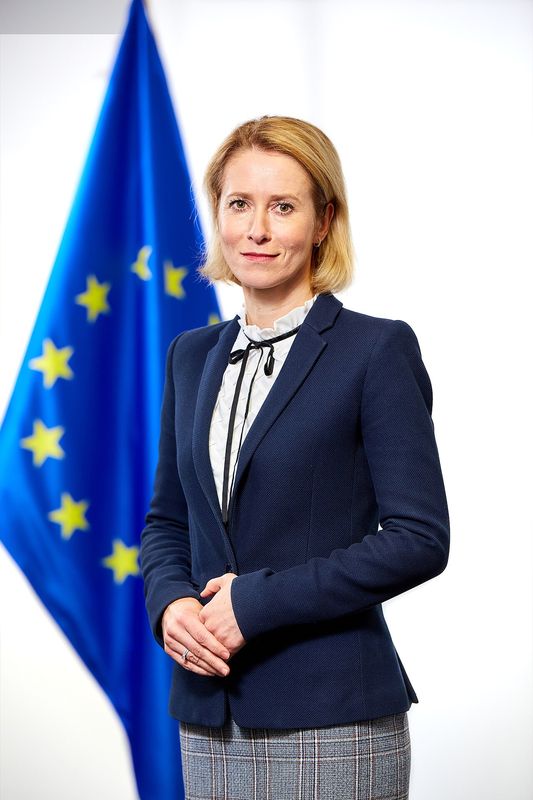
Peskov’s wording was careful, and the care is the story. He did not say Europe is excluded. He said Moscow has not yet committed: no decision on European participation has been taken, and whether one is taken depends on Europe demonstrating intentions the Kremlin itself will judge. He added that Moscow would be open to some form of preliminary contacts with Europe before any participation, but that no concrete discussions on that had taken place. Asked about specific European interlocutors, he declined to engage: on French President Emmanuel Macron as a possible counterpart, he noted that new candidate names appear “every hour” and said Moscow could say nothing specific; on EU foreign policy chief Kaja Kallas representing the EU, he declined to comment at all, Reuters reported.
That is a materially different position from the one the American envoys described on Thursday. US negotiators said Putin had agreed to European participation in the next round. By Friday, the Kremlin’s public line was that participation is conditional, the condition is undefined, and the judge of whether it has been met is Moscow. Both accounts cannot be fully right, and the gap between them — between a private assurance as reported by one side and a public caveat issued by the other — is where this phase of the diplomacy now lives.
Dublin’s answer: ceasefire first, and no architecture talks
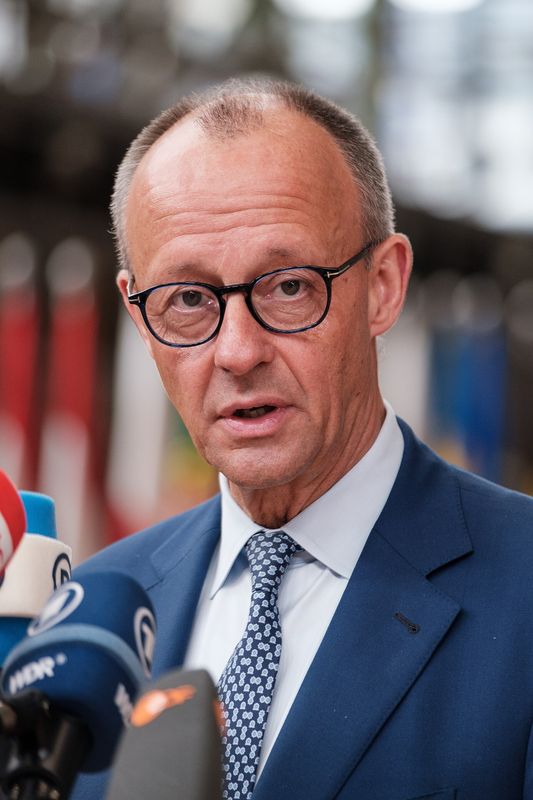
EU leaders meeting in Dublin on Friday rejected the premise that Moscow gets to grade Europe’s sincerity. German Chancellor Friedrich Merz described the Kremlin’s comments as “the same old game” and said Europe and the United States had agreed on a clear message: “There will be no discussions about Ukraine without Ukraine, and no discussions about Europe without Europe. Furthermore, there is no need to talk about European security architecture. We have that already,” he told reporters, according to Reuters.
The architecture point is the deeper fault line. Russian officials, including Foreign Minister Sergei Lavrov this week, have said Moscow wants to negotiate a broad European security framework before tackling the specifics of the war in Ukraine. European leaders treated that sequencing as the trap itself: Kallas said Russian calls for architecture discussions risk diverting attention from the need for a ceasefire, and Latvian Prime Minister Andris Kulbergs called such discussions “a trap” outright. On Thursday, leaders from Poland, the Baltic and Nordic states had already warned against brainstorming Europe’s security architecture with Washington or Moscow, and forty European countries meeting in Dublin signed a declaration that any matter affecting European security should be decided with Europeans involved. The historical echo is explicit in European capitals: before its full-scale invasion in 2022, Russia demanded the withdrawal of NATO forces from countries that joined the alliance after 1997 — a demand NATO rejected — and European officials read the new architecture push as the same file reopened under a peace-talks cover.
Who would represent Europe? The unanswered question
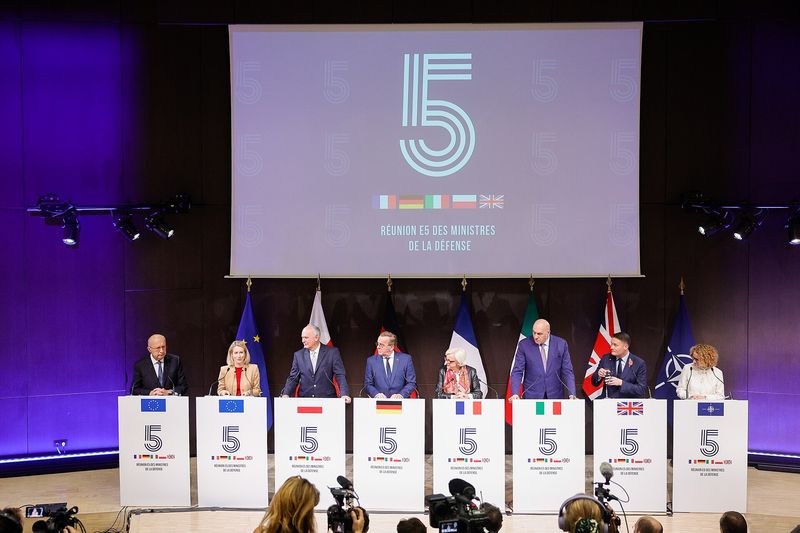
If the Kremlin’s condition was one unanswered question, Dublin left another one open: who, exactly, speaks for Europe? Kallas said on Friday that it was not up to Russia to say who should represent the EU, adding: “They don’t want anybody strong on the other side because they want to push through their maximum demands.” But the summit did not settle on a single individual. Merz pointed to established forms — Kallas as part of the EU’s institutional representation, and the E3 format of France, Germany and Britain, which he called proven and effective — and noted that Italy and Poland are always included. Swedish Prime Minister Ulf Kristersson said Britain, one of Europe’s top three military powers, certainly had to be included, and that the five countries plus the EU institutions would make sense. Representatives of Britain, France, Germany, Italy and the EU were present at this week’s Abu Dhabi talks, where both Moscow and Kyiv cited some progress but no breakthrough on territory.
Why this matters
A seat at the table is not a courtesy in this war; it is leverage over the terms. Europe is Ukraine’s largest financial backer, hosts millions of displaced Ukrainians, and would underwrite much of any reconstruction and any security guarantees that follow a settlement. A negotiation conducted over Europe’s head — between Washington, Moscow and Kyiv — risks producing terms Europe is then asked to fund and enforce without having shaped. That is precisely the fear behind Zelenskyy’s warnings in Dublin this week about a separate US–Russia understanding on European security, covered in our earlier reporting on Zelenskyy’s Yalta warning. Friday’s exchange shows both sides understood the stakes the same way and reached opposite conclusions: Moscow wants Europe’s presence to be a concession it grants; Europe insists its presence is a right it holds.
There is also a harder, more mechanical significance. Russia continues to say it wants a full peace settlement, not a ceasefire, and Putin has shown no sign of moderating territorial demands that include a buffer zone in parts of Ukraine Russia has not formally claimed, while Ukraine refuses to cede Donbas territory it has not lost in fighting. Adding Europe to the format does not close any of those gaps — it widens the table at which they must be closed. And while the diplomats argued over format on Friday, the war itself did not pause: Russian strikes on Zaporizhzhia and Odesa killed three people and injured more than 50, as reported in our coverage of the Zaporizhzhia apartment strike. Every previous round of this diplomacy has run on two clocks — the negotiating clock and the battlefield clock — and the second one has consistently run faster.
What happens next
Three scenarios now branch from Friday’s statements. In the first, the format question resolves quietly: preliminary Russia–Europe contacts of the kind Peskov floated produce a five-plus-institutions European delegation, and the next round convenes with Europe in the room and the argument shifts back to territory and guarantees. In the second, the condition becomes the story: Moscow keeps the “readiness” test undefined, Europe refuses to audition, and the talks stall in the trilateral format that has produced process without breakthrough for nine months. In the third — the one European officials say they are guarding against — the architecture question migrates into the room through the American channel: Kushner said in Moscow on Thursday that he had begun discussions with European partners on the continent’s security architecture, and if that conversation proceeds bilaterally rather than with Europeans present, Dublin’s declaration will be tested in practice, not on paper. No date or venue for a next round has been announced. What Friday established is narrower and more durable than a date: Europe will not accept a Russian veto over its seat, and Russia has not yet accepted that it does not have one.
Sources
Reuters, “Russia says Europeans can join Ukraine peace talks if they show ‘readiness to contribute’” (November 13, 2026); Reuters, “Europe’s security cannot be part of Ukraine peace talks, EU leaders say” (November 13, 2026); Associated Press and Le Monde reporting on the Witkoff–Kushner shuttle and the Dublin briefings (November 12–13, 2026). Statements by Dmitry Peskov, Friedrich Merz, Kaja Kallas, Andris Kulbergs and Ulf Kristersson as reported by Reuters. Claims about private assurances in Moscow are attributed to the US envoys who reported them; the Kremlin has not confirmed them.