War · World · Ukraine · Diplomacy
The Kushner NATO Russia Council proposal is now the clearest statement of how Washington wants the Ukraine endgame organised: two negotiations running in parallel — one on a ceasefire, one on the future security architecture of Europe — modelled on the NATO-Russia Council that seated Moscow alongside the alliance from 2002 until the relationship collapsed. Under the design described by officials familiar with the talks, Russia would take part in shaping that architecture before any ceasefire is reached, a sequencing choice that has already drawn a cautious response from Europe’s foreign-policy chief.
Track it live: Live Ukraine war map and tracker · Live wars tracker
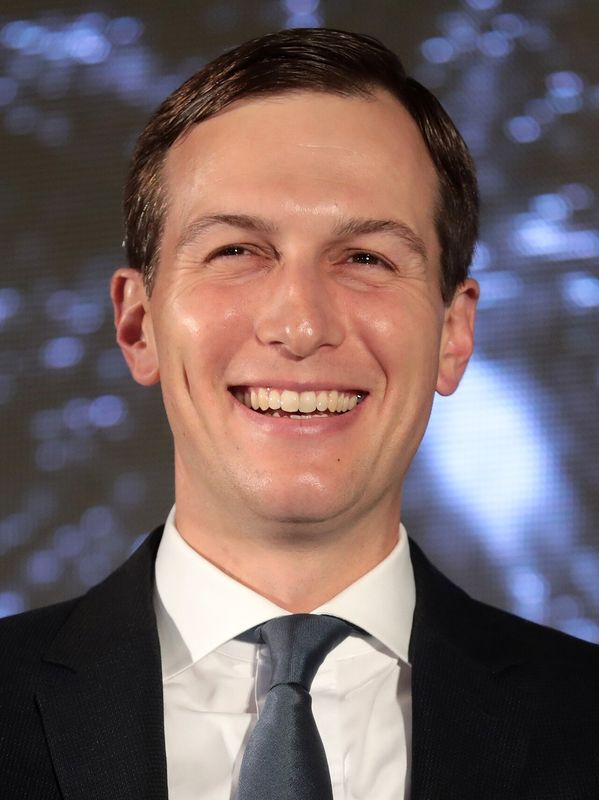
WASHINGTON, November 8, 2026 — US envoy Jared Kushner regards the former NATO-Russia Council as the model for the next phase of Ukraine diplomacy, according to Washington Post columnist David Ignatius, citing an official familiar with the course of the negotiations. The proposal, reported by the Kyiv Post on Sunday, would launch multilateral talks between European nations and Russia on the continent’s post-war security order at the same time as — not after — the effort to stop the fighting in Ukraine. It lands two days before trilateral US-Ukraine-Russia talks open in Abu Dhabi on November 10–11, the next major step in the American-mediated process.
The sequencing is the substance. In Kushner’s design, Russia participates in the discussion of the future European security system even before a ceasefire in Ukraine, and if progress is made in Abu Dhabi, the format would widen to bring European states directly into the room. European officials who spoke to Ignatius take the opposite view of the order of business: in their account, security agreements with Moscow are possible only after a ceasefire is reached. That disagreement — architecture first, or silence first — is now the central argument of the peace process, and it will be tested in Abu Dhabi this week.
The proposal: two tracks, one table, five objectives
Kushner, who set out his thinking in a statement on November 6 and after consultations in Brussels, has described five objectives for the broader dialogue the NATO Russia Council model would support. They are worth stating plainly, because together they describe a standing institution rather than a one-off summit:
- Regular security consultations between Russia and European states, on a continuing basis rather than in response to crises.
- Reliable crisis communications — channels that stay open and are answered when tensions spike.
- Greater military transparency, including the exchange of information on military activities.
- Reciprocal de-escalation — mutual measures to reduce the risk of escalation.
- A long-term stability framework for European security, built on the first four.
Read together, the five objectives are an attempt to rebuild, in new form, the machinery of consultation that existed between NATO and Russia for two decades — machinery whose absence European and American officials have repeatedly cited when near-misses and misread signals have raised the temperature since 2022. Supporters of the approach argue that a ceasefire without such machinery would be a pause, not a settlement: the underlying dispute about Europe’s security order would remain untouched, and with it the risk of a renewed war. That is the case for running the tracks in parallel.
Background: the council that was
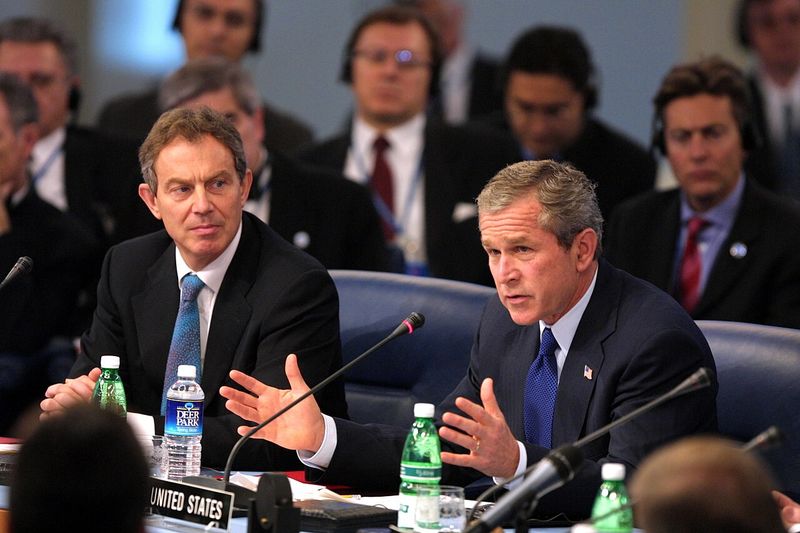
The NATO-Russia Council was established on May 28, 2002, in Rome, as a post-Cold War mechanism for consultation and cooperation between the alliance and Moscow, replacing the earlier joint council with a format in which Russia sat as an equal participant on agreed subjects. For a decade it was a working part of European security: a place where the two sides discussed everything from missile defence to Afghanistan logistics, even as their disagreements deepened.
The collapse came in stages. Practical cooperation was suspended after 2014, following Russia’s annexation of Crimea and the war in eastern Ukraine. The Council continued to meet occasionally at ambassadorial level, but its last meeting took place in January 2022, weeks before Russia’s full-scale invasion of Ukraine closed the channel altogether. No official resumption of the Council has been reported, and the allies have not agreed to one: what Kushner is proposing is a new mechanism modelled on the old one, not a literal revival — a distinction his critics and his supporters both have reason to stress.
The Abu Dhabi meeting: who sits where
The immediate test comes on November 10–11 in Abu Dhabi, where the United States, Ukraine and Russia meet in trilateral format. The US delegation will be led by Kushner and fellow presidential envoy Steve Witkoff. The Kremlin has confirmed that Russia’s delegation will again be led by presidential aide Vladimir Medinsky. Kyiv has finalised its own delegation, which reporting on the talks says includes Presidential Office chief Kyrylo Budanov. Witkoff has indicated the parties intend to discuss security guarantees, de-escalation, humanitarian issues and further steps toward a settlement.

The Abu Dhabi round does not arrive in a vacuum. As Signal Post News reported ahead of the meeting, Moscow has set out its own preconditions on territory and sequencing, and the argument over what must be agreed first has shadowed every round. According to the Washington Post reporting, President Vladimir Putin reacted positively to the idea of broader European security arrangements when Witkoff raised it at their October 21 meeting in St. Petersburg — one reason Washington believes the architecture track can move now rather than later. Moscow’s public position, carried by TASS, continues to pair openness to talks with its stated conditions on the ground.
What each side says
The US envoys present the parallel-track design as pragmatism: the war’s causes, in their telling, include a European security order that neither Moscow nor the alliance’s eastern members accept, and leaving that order undesigned while negotiating a ceasefire would store up the next crisis. Kushner’s November 6 statement said that if progress is made in Abu Dhabi, he expects to move to the broader format with direct European participation.
Europe’s foreign-policy chief, Kaja Kallas, responded cautiously on November 6. Europe, she noted, already has NATO and the European Union as its security structures, and Putin gets no veto over European security. Her intervention captures the objection running through the European consultations Ignatius described: that seating Russia in a design process for Europe’s order before a ceasefire risks rewarding the invasion, and that any architecture negotiated over Ukraine’s head — or over Europe’s — would lack legitimacy with the states expected to live under it. That anxiety has a name in European debate, and Signal Post News has tracked it through the warnings against a latter-day Yalta-style bargain struck between great powers.
Moscow, for its part, has long demanded exactly the conversation Kushner proposes: a European security architecture negotiated with Russia at the table, addressing what the Kremlin calls the indivisibility of security. The Kremlin’s confirmation of Medinsky’s delegation, and Putin’s reported positive reaction in St. Petersburg, suggest the architecture track is the part of the American design Moscow most welcomes — which is itself a reason Kyiv and several European capitals read it carefully.
Kyiv enters Abu Dhabi with its own red lines on territory and guarantees, and its delegation’s composition — led at working level by officials from the Presidential Office and the security establishment — signals a negotiation Ukraine intends to shape rather than witness. Ukrainian officials have consistently held that security arrangements for Ukraine cannot be traded as part of a wider bargain, a position the parallel-track design will be judged against in the days after Abu Dhabi.
Why this matters
The order of agreement is the agreement
Ceasefire-first and architecture-first are not two routes to the same destination. A ceasefire negotiated before any discussion of Europe’s order freezes the front line and leaves every structural question — alliances, force postures, guarantees — to a later negotiation conducted under the shadow of a paused war. An architecture negotiated in parallel gives Moscow influence over that order while its army is still in the field, which is precisely what Kallas’s caution is about. Who benefits depends on which sequence prevails: Washington gains a framework it can present as a durable settlement; Moscow gains standing in a process it has demanded for years; Kyiv and the EU’s eastern members gain only if the parallel track does not become a precondition that delays relief from the fighting.
A defunct council is doing new work
There is also an institutional point. The NATO-Russia Council is remembered in Brussels mostly as a relic — suspended in practice in 2014, last convened in January 2022. Reaching for it as a model signals that the American envoys believe the post-2022 experiment in having no standing channel at all has failed its own test: three years of crisis communication conducted through public statements, intermediaries and near-misses. Whether a council-style body can function while a war it was meant to prevent is still being fought is the open question the Abu Dhabi round begins to answer.
Europe’s seat is the contested seat
Kallas’s formulation — Europe has NATO and the EU; Putin gets no veto — is aimed less at the existence of talks than at their membership and their authority. If the broader format Kushner envisages gives European states a direct role, the EU’s objection narrows to sequencing and terms. If the architecture is instead sketched bilaterally between Washington and Moscow and presented to Europe as a framework, the objection becomes foundational. The difference between those two futures will be visible in who is invited to the round after Abu Dhabi.
What happens next
The calendar is short and concrete. The trilateral talks run November 10–11 in Abu Dhabi, with ceasefire terms, security guarantees, de-escalation and humanitarian issues on the table. Three signals will matter most. First, whether the Abu Dhabi communiqué language treats the ceasefire and the architecture as linked tracks or as separate files. Second, whether a date and a membership list emerge for the broader European format Kushner described — and whether the EU and NATO as institutions, not just individual capitals, are in it. Third, whether Kallas’s caution hardens into a collective European position or softens into conditions. The Kushner NATO Russia Council proposal has given the process a design; Abu Dhabi will show whether the design has buyers.
What do you think — should Russia help design Europe’s security order before a ceasefire, or only after the guns fall silent? Follow Signal Post News for updates from Abu Dhabi, and share your thoughts below.
Sources
Sources: Kyiv Post, “Kushner Proposes Multilateral Europe-Russia Security Talks” (November 8, 2026), reporting Washington Post columnist David Ignatius, citing an official familiar with the negotiations; Ukrainian News via Europe Says, “NATO-Russia Council — Kushner proposes new talks” (November 8, 2026); TASS reporting of the Kremlin’s confirmation of the Russian delegation to the Abu Dhabi talks, led by Vladimir Medinsky; and Signal Post News reporting on Moscow’s Abu Dhabi preconditions. Photos: Wikimedia Commons, as credited in the captions.