russia north korea jet drones
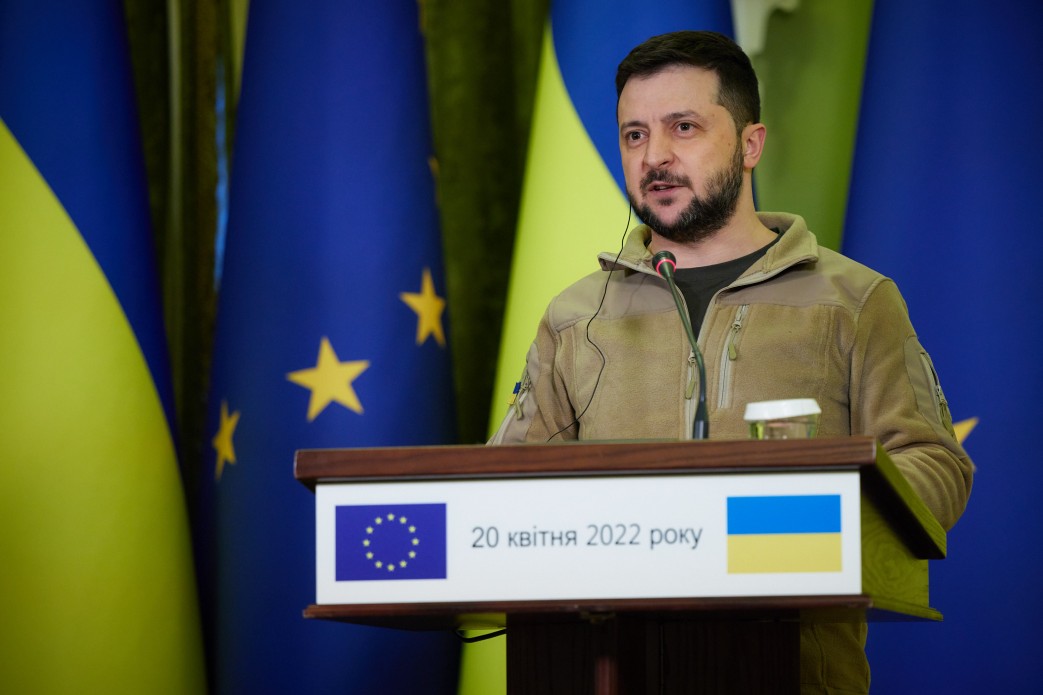
KYIV — The argument over russia north korea jet drones turned on three unusually blunt words at a press conference on Sunday, October 4. Asked whether Russia had passed North Korea technology behind Moscow's latest generation of jet-powered attack drones, Ukrainian President Volodymyr Zelenskyy answered: “Yes, of course.”
He then widened the claim. “They (Russia) are sharing with North Korea all the technologies,” Zelenskyy said. “I don't know about the ballistic and etc, but I think, yes, because North Korea helped them with missiles.” It was a consequential accusation, delivered as a conclusion rather than a tentative suspicion. Yet the distinction that matters most is this: Zelenskyy stated a belief. He did not disclose public evidence showing a design transfer, factory assistance or delivery of jet engines to Pyongyang.
Reuters, which reported the exchange, said the Kremlin was not available to comment on the underlying claims. No Russian or North Korean acknowledgment has been reported, and no independently verified documents, imagery or recovered components were presented at the press conference. That does not make the claim implausible. It does mean responsible analysis must keep the allegation and the proof in separate columns.
Why this matters: a wartime bargain may be changing shape
Russia shared drone technology with North Korea—the strategic meaning if confirmed
The Russia–North Korea relationship has been easiest to understand as a wartime exchange. Pyongyang sends what Moscow urgently consumes: artillery shells, ballistic missiles and personnel. Moscow can offer what Pyongyang has struggled to obtain under decades of sanctions: advanced engineering, operational lessons and access to military technology. If the exchange has reached jet-powered unmanned aircraft, it would show that the bargain is no longer a simple purchase of ammunition. It would be a transfer of capability.
That difference is profound. A shell is expended once. A production process, engine design or guidance package can be reproduced, modified and exported for years. Technology outlasts the battlefield that prompted its transfer. For Moscow, sharing know-how could be a relatively low-cash way to reward a partner supplying immediate battlefield needs. For Pyongyang, it could compress years of experimentation into a much shorter development cycle.
The alarm would register differently in three capitals. Kyiv would see another way Russia's war innovations could multiply beyond Russia. Washington would see a sanctioned military partnership becoming an ecosystem in which two adversaries improve one another. Seoul would see lessons learned over Ukrainian cities potentially reappearing on the Korean Peninsula, where warning time is already measured in minutes.
North Korea Russia military cooperation: from ammunition to experience
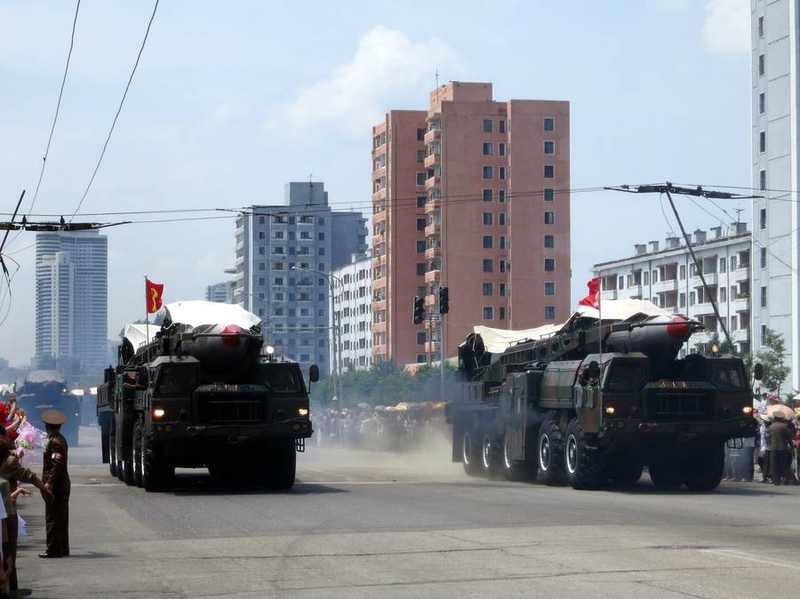
The trajectory has been cumulative. Earlier in the war, North Korea supplied Russia with millions of artillery shells, according to Ukrainian and Western accounts cited by Reuters. That addressed Moscow's need for volume in an artillery-intensive conflict. North Korean ballistic missiles followed and have been used by Russia in attacks on Ukrainian cities. The relationship then gained a human dimension: thousands of North Korean soldiers were sent to Russia, giving them combat experience that classroom training cannot replicate.
Each stage raised the value of the partnership. Ammunition helped sustain fire. Missiles expanded strike options. Personnel gained firsthand knowledge of drones, electronic warfare, dispersed logistics and modern battlefield surveillance. A week before Sunday's press conference, Zelenskyy warned that Moscow was preparing to recruit another 10,000 North Korean military personnel. Signal Post News examined that claim in its report on North Korea's reported 10,000-troop mobilization for Russia.
The sequence matters because it describes escalation by accumulation, not a single dramatic alliance announcement. What began as material support has reportedly moved through missiles and manpower toward the possibility of technical cooperation. That is exactly how a transactional relationship becomes a durable military partnership: every exchange creates a reason for the next one.
The weapon: speed changes the defensive equation
Geran-4 Geran-5 jet drones compress Ukraine's response time
The importance of the alleged transfer lies in the word “jet.” The propeller-driven Shahed-type drones that have become grimly familiar over Ukraine are dangerous because they are cheap enough to launch in large numbers and can force defenders to spend scarce interceptors. But their relatively low speed also leaves time for detection, tracking and engagement by mobile fire teams, helicopters, interceptor drones and other layered defenses.
Jet propulsion changes that arithmetic. A report by 7globe.in, citing the Kyiv Independent, said Russia's Geran-4 can reach roughly 500 kilometers per hour and the Geran-5 about 600 kilometers per hour. Those numbers are not a complete performance specification, and the public record does not establish what exact technology Zelenskyy believes was shared. Still, the speed comparison explains the concern: a target traveling several times faster offers defenders a much shorter engagement window.
Russia has sharply increased its use of jet drones against Ukraine in recent weeks, Reuters reported. Ukrainian officials say they have no effective means of countering them other than combat aircraft. That is an expensive mismatch. Every fighter sortie consumes fuel, maintenance hours and pilot attention. Aircraft are also finite assets that Ukraine needs for air defense, battlefield support and deterrence against manned Russian aviation.
Ukraine jet drone defense is an economics problem, too
Air defense is not only about whether an interceptor can hit a target; it is about whether a country can afford to keep making that exchange every night. Faster drones can outrun some low-cost countermeasures and push defenders upward toward aircraft or more sophisticated missiles. Even when the defender succeeds, the attacker may win part of the economic contest by forcing a response that costs far more than the incoming weapon.
That pressure helps explain Kyiv's investment in its own unmanned systems. Our earlier analysis of Ukraine's $12 billion jet-drone and drone-defense effort showed how quickly the contest is moving from individual platforms to industrial capacity. A transfer to North Korea would spread that contest to another theater and potentially another manufacturing base.
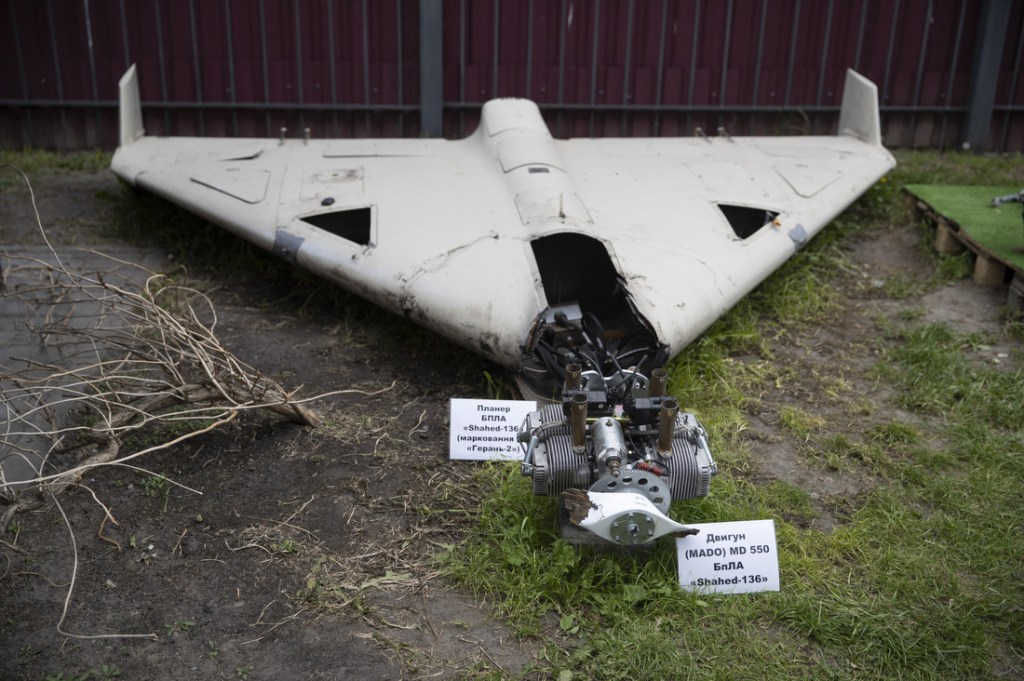
There is also a technical caution. The wreckage pictured below is a propeller-driven Shahed-136, not a Geran-4 or Geran-5 jet drone. It illustrates the established family of one-way attack drones Russia has deployed, not proof of the newer systems or of any transfer to North Korea. Distinguishing what is known from what is inferred is essential in a story built around an intelligence claim.
Who gains, who loses—and what skeptics will ask
A Pyongyang Moscow weapons deal rewards different needs
Moscow's gain is immediate. North Korean ammunition and personnel can reduce pressure on Russian stocks and units. The Kremlin also demonstrates that Western sanctions have not isolated Russia from every source of military support. Pyongyang's gain is potentially more transformative. If it receives mature components, production advice or combat-tested design lessons, it can acquire capabilities that would be costly and slow to develop alone.
The losers are less abstract. Ukrainian cities face an attacker learning how to combine cheap mass with higher speed. South Korean planners must consider whether technology refined against Ukrainian air defenses could be adapted for targets, command posts or infrastructure on the peninsula. Regional stability suffers when the Ukraine war becomes a laboratory whose results are traded elsewhere.
Skeptics should press for evidence. What exactly moved: a complete airframe, an engine, manufacturing tooling, guidance software, test data or simply battlefield observations? When did it move, and where would it be produced? Without answers, “all the technologies” is rhetoric broader than the public record supports. Kyiv also has an understandable political motive to emphasize the threat now: the claim increases pressure on Seoul and Washington to provide more military support and treat the Korean and European security theaters as connected.
Political motive, however, is not disproof. Governments routinely reveal intelligence when disclosure serves policy. The correct response is neither automatic belief nor automatic dismissal. It is to demand corroboration while evaluating the consequences if the warning proves accurate.
North Korea ballistic missiles Russia: the precedent behind the claim
Zelenskyy's logic rests on reciprocity. North Korea helped Russia with missiles, he said, so he believes Russia returned technology. The verified history of missile supply gives the claim a credible strategic frame, but it does not establish this particular transfer. Evidence could emerge through recovered debris, export records, imagery of North Korean facilities, engine signatures or intelligence released by allied governments.
This is where analysis should resist a common wartime shortcut: treating a plausible pattern as confirmation of a specific event. The Moscow–Pyongyang relationship makes technology exchange believable. Only evidence can make it established fact.
The Seoul dimension: one claim, two disputes
Zelenskyy North Korea jet drones lands amid a POW rupture
The timing is combustible because Kyiv and Seoul are already locked in a diplomatic dispute. At the United Nations General Assembly last month, Zelenskyy announced that Ukraine had transferred to South Korea two North Korean prisoners of war captured while fighting for Russia. South Korean President Lee Jae Myung on Friday threatened unspecified measures unless Ukraine acknowledged a confidentiality agreement and apologized.
Zelenskyy's response was equally direct: “South Korea asked us to give them North Korean soldiers. By the way, according to their constitution, they are their citizens ... so we gave them these two guys.” Signal Post News has detailed the South Korea–Ukraine dispute over the North Korean POW transfer.
Now Kyiv is simultaneously telling Seoul that North Korean troops are fighting for Russia, that more may be coming, and that Moscow may be upgrading Pyongyang's drone capability. For South Korea, the nightmare is not merely that North Korea receives another weapon. It is that Pyongyang gains a feedback loop: weapons tested in Europe, soldiers trained in modern combat and technology improved through Russian assistance.
Seoul therefore faces a difficult separation of issues. It can object to Kyiv's handling of the POW transfer while still recognizing that deeper Russia–North Korea cooperation threatens South Korean security. The dispute may complicate coordination precisely when the two governments have more intelligence to exchange.
What happens next
Sanctions, South Korean arms and Russian leverage
One scenario is renewed pressure for United Nations sanctions enforcement. But enforcement depends on states that can monitor shipping, finance and dual-use transfers, while Russia's veto power can block major Security Council action against its own partnership. That pushes more of the practical response toward national export controls, interdictions, intelligence sharing and sanctions coordinated outside the UN.
A second scenario is a shift in South Korean policy toward arming Ukraine. Seoul has substantial defense-industrial capacity but has moved cautiously, balancing legal, political and regional considerations. Evidence that Russian technology is improving North Korean strike systems would strengthen the argument that helping Ukraine is direct Korean security policy, not charity for a distant war. The POW dispute may delay that case, but it does not erase it.
A third scenario is Russian leverage through ambiguity. Moscow can deny a transfer, decline to clarify it, or allow uncertainty to grow. The mere possibility forces Seoul, Kyiv and Washington to spend attention and resources preparing for capabilities North Korea may or may not yet possess. Strategic ambiguity can create costs even without public confirmation.
North Korea troops Russia Ukraine: the indicators to watch
The next useful evidence will not be another sweeping statement. Watch for satellite imagery showing new test ranges, engine stands or production changes at North Korean drone facilities. Watch for debris analysis that links components or design features across Russian and North Korean systems. Watch for customs or shipping records involving jet engines and machine tools. And watch for official Russian or North Korean denials specific enough to be tested, rather than generic dismissals.
Also watch the personnel channel. If the reported plan for another 10,000 North Korean troops advances, the question will be what roles they perform and what knowledge they take home. Combat experience itself is a technology transfer of sorts: operators learn how systems fail under jamming, how units conceal launch sites and how defenders adapt.
Zelenskyy's “Yes, of course” was designed to sound definitive. The evidence available to the public is not. But the broader bargain is visible: shells, missiles and troops have moved toward Russia; concern is rising that expertise is moving toward North Korea. If jet-drone technology is confirmed as part of that exchange, it will mark a threshold—the moment a wartime supply relationship became a pipeline for future military power.
Sources
- Reuters: Ukraine believes Russia shared jet-drone technology with North Korea, Zelenskyy says — reporting by Pavel Polityuk and Felix Hoske, October 4, 2026.
- 7globe.in: Zelenskyy claims Putin shared jet-drone technology with North Korea — including Geran-4 and Geran-5 speed figures attributed to the Kyiv Independent.
Reporting basis: The technology-transfer assertion is President Zelenskyy's stated belief and has not been independently confirmed. Reuters reported that the Kremlin was not available to comment on the underlying claims.