AIR WAR
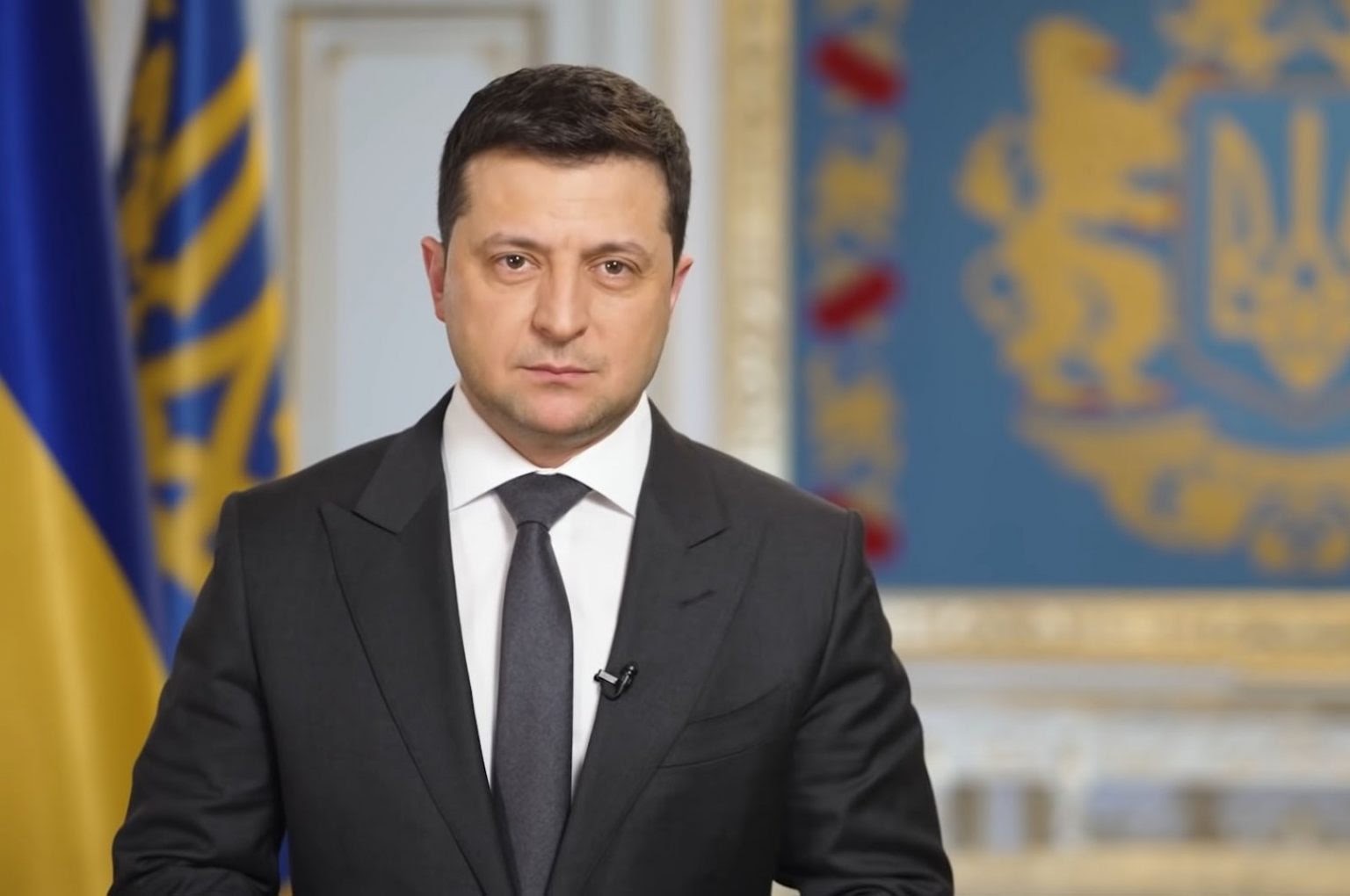
Ukrainian President Volodymyr Zelenskyy said intelligence services obtained internal Russian planning documents showing that Moscow intends to spend about $12 billion next year on jet-powered drones and loitering munitions. He presented the figure in his September 26 evening address as evidence that the Kremlin is preparing for a larger, faster air campaign rather than redirecting resources toward peace.
Russia has not publicly confirmed the $12 billion figure, and Signal Post News could not independently authenticate the documents Zelenskyy described. The number should therefore be read as an intelligence-based Ukrainian claim, not as a disclosed Russian budget line. Even with that caveat, the technologies and industrial expansion already visible around Russia's drone program make the allegation strategically significant.
The claim arrived as Ukraine's General Staff reported 57 Russian airstrikes and 186 guided bombs over the preceding day. Russia also said it had struck a cargo vessel near Odesa; Reuters reported that it could not independently verify that assertion. Together, the claims illustrate two distinct layers of the conflict: a daily exchange of battlefield reports that remains difficult to verify in real time, and a longer industrial contest whose direction is increasingly clear.
Why this matters
A $12 billion program would not simply buy more of the same one-way attack drones. It would point toward an effort to make mass attacks faster, harder to intercept and more damaging to the warehouses, fuel depots, data infrastructure and transport nodes that sustain civilian life and Ukraine's war economy. The central question is whether Russia can turn industrial scale into a persistent breakthrough against defenses that are also adapting.
Ukraine's air-defense problem is economic as well as tactical. An expensive surface-to-air missile used against a relatively cheap drone can stop an immediate strike but lose the cost exchange over time. Jet-powered weapons compress warning times and complicate the use of mobile gun teams and slower interceptors. If Moscow can combine them with ballistic missiles, cruise missiles and decoys, it can force Kyiv to defend more routes with finite crews and ammunition.
The $12 billion document
Zelenskyy said the planning documents cover Russia's proposed 2027 expenditure on jet-powered drones and loitering munitions. Reporting on the address by The Geneva Times and a regional aggregation published by Europe Says carried the same core allegation. Neither report constitutes independent confirmation of the underlying documents.
What the figure does reveal, if genuine, is the scale at which Russian planners expect unmanned strike systems to sit alongside conventional aviation and missiles. The shift would also raise the importance of export controls on machine tools, microelectronics, carbon fiber and small turbojet components. That is why debates over sanctions—including enforcement provisions associated with the Lindsey Graham Act—matter as much as the headline statutory penalties.
The jet-drone generation gap
Propeller-driven Shahed-family drones remain useful because they are relatively cheap, can fly long routes and can be launched in large numbers. Their speed also gives defenders more time to track and engage them. The newer Geran-4 is reported to travel at about 350 kilometers per hour, while the Geran-5 may reach roughly 600 kilometers per hour with a range near 950 kilometers. Those figures are open-source estimates rather than independently verified performance guarantees.
The speed difference is operationally meaningful. A target 300 kilometers away has much less time to receive a warning, move personnel or reposition defenses when the attacker is traveling at jet speed. Faster drones also narrow engagement windows for helicopters, machine-gun teams and interceptor aircraft designed around slower Shaheds. Militarniy has reported that Russia produces nearly 3,000 of the two newest models each month, another figure that warrants caution because wartime production data are inherently opaque.
The warehouse war: ACLED's numbers
The industrial campaign is visible in strike-location data. An AFP analysis using ACLED records counted roughly 100 warehouses or civilian storage facilities hit in the Kyiv region since mid-June, compared with 50 from February 2022 through mid-June 2026. The first 18 days of September brought more bombardment around Kyiv than any complete month except March 2022. A report carried by Times Now World summarized the trend.
The pattern suggests pressure on logistics rather than only on symbolic city-center targets. Warehouses hold food, medical goods, commercial inventories and industrial inputs; destroying them raises costs even when casualties are limited. The same dataset showed that fuel sites struck in the past nine months equaled the total for the war's first four years, while attacks on fuel infrastructure in the Kharkiv region were six times the previous years combined.
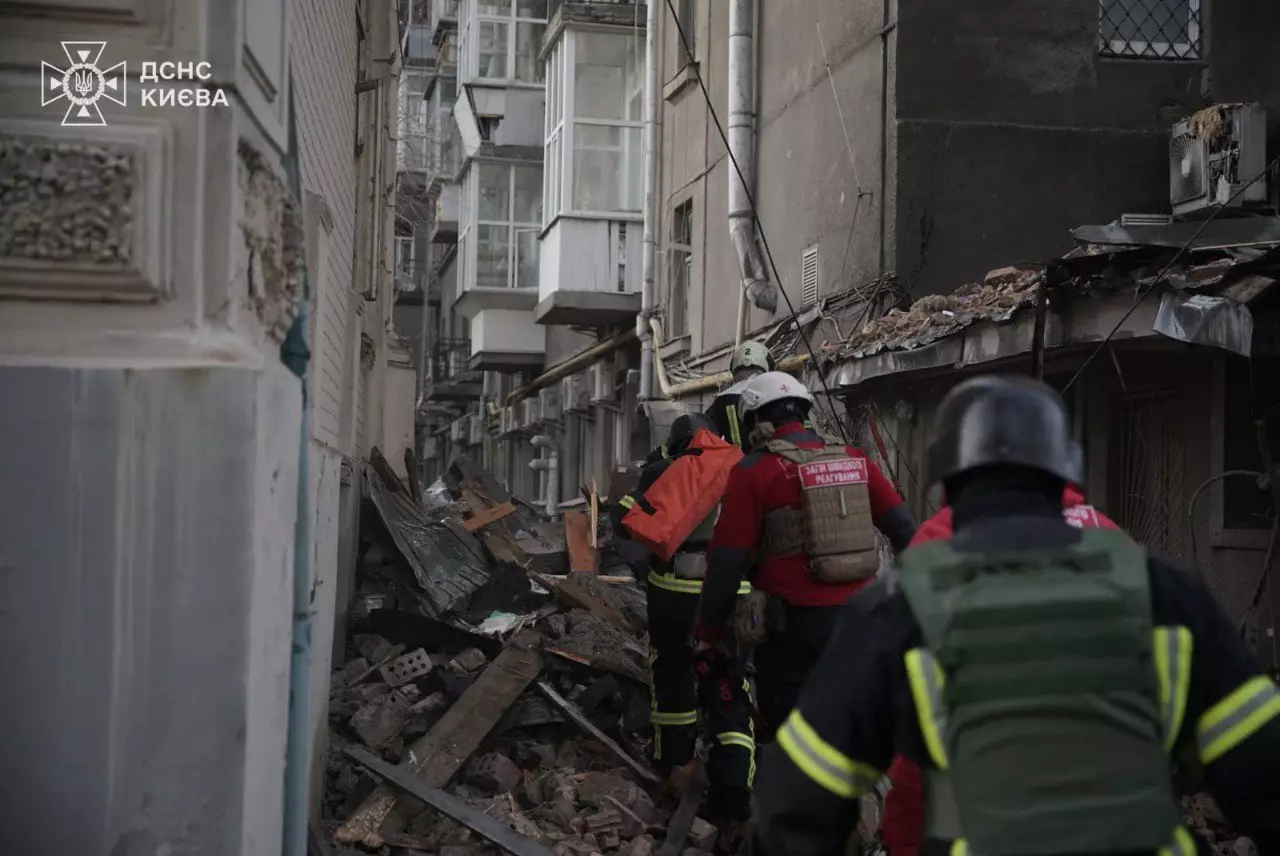
ACLED data records reported events; it does not by itself establish the motive for each strike or identify every weapon. Russian officials often say their forces attack military or dual-use infrastructure, while Ukrainian authorities document repeated damage to civilian sites. The defensible conclusion is narrower: the geographic and temporal concentration of strikes is increasing the burden on logistics and civil protection around major population centers.
55 percent and the counter-race
Zelenskyy said Ukraine currently intercepts about 55 percent of Russian jet drones and had neutralized more than 1,500 Shaheds in September. A Particle News report tied the interception claim to renewed guided-bomb and drone attacks. The percentage is Ukraine's assessment and cannot be independently audited from public data, but it establishes the scale of the gap Kyiv says it must close.
On September 19, Ukraine's Security Service released footage it described as the first successful Ukrainian interceptor-drone kill of a jet-powered Shahed/Geran. Ukraine says 67 companies are working on interceptor systems. One model, the Zorelit v5, is reported to reach 416 kilometers per hour—fast enough on paper to challenge some jet drones, but not the fastest reported Geran-5 profile.
Speed alone does not decide an intercept. Sensors must detect a target, software must produce a track, operators or autonomy must guide the interceptor, and the engagement must occur before the attacker reaches a defended site. Weather, altitude, electronic warfare and launch geometry all matter. The winner will be the side that integrates production, detection and command systems most efficiently, not necessarily the one with the single fastest airframe.
Alabuga: the factory behind the numbers
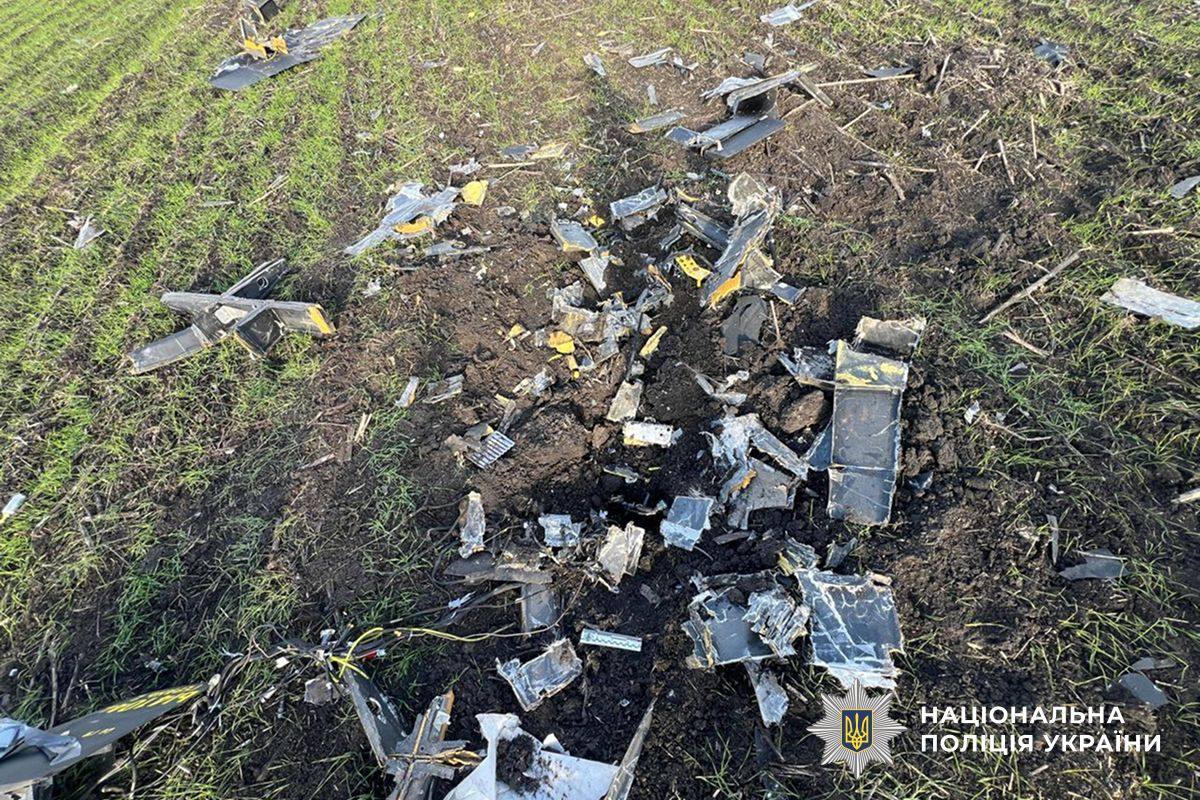
Alabuga, the special economic zone in Russia's Tatarstan region, sits at the center of Moscow's Shahed-derived production effort. Analysis by Dnipro Osint identified about 42,000 square meters of new underground space at the site. Underground construction could protect critical equipment and workers from attack, disperse production stages, or support storage; satellite imagery alone cannot establish exactly how every room will be used.
Separately, Politico cited internal Rosatom documents indicating that expansion of carbon-fiber production could support as many as 28,000 additional strike drones annually by 2029. Carbon fiber matters because it combines strength and low weight, but it is only one link in a chain that also includes engines, navigation, explosives and electronics. The production target therefore signals ambition rather than a guaranteed output.
Still, the direction aligns with what frontline reporting has shown: Moscow is treating one-way attack drones as an industrial capability, not an improvised supplement. Ukraine's earlier Saturday strike report documented how aerial attacks were already combining casualties, infrastructure damage and pressure across several cities. Factory expansion would allow that pressure to continue even when individual launch waves fail.
The diplomacy gap
Russian President Vladimir Putin has said proposals remain “on the table,” while emphasizing that Russia must weigh its own interests. The United States has proposed a technical meeting among Ukraine, Russia and the United States hosted by the United Arab Emirates. That initiative, examined in Signal Post News's report on UAE-hosted trilateral talks, is a process proposal rather than evidence of agreement on territory, security guarantees or sequencing.
President Donald Trump has said he hopes Zelenskyy will “settle” with Putin. The language places public pressure on Kyiv, but the central negotiating problem remains reciprocal credibility. Ukraine points to Russian production plans and continued strikes as evidence that Moscow expects to retain military leverage. Russia argues that its security and territorial demands must be addressed. Neither position resolves how a ceasefire would be monitored or what would happen after a violation.
What happens next
The near-term test will be whether Russia deploys jet-powered drones in larger mixed salvos and whether Ukraine's interception rate rises above the 55 percent Zelenskyy cited. A second test is industrial: whether Alabuga and its suppliers deliver sustained output, and whether sanctions enforcement meaningfully constrains engines, composites and electronics.
Ukraine's response is likely to combine cheaper interceptors, electronic warfare, dispersed air defenses and strikes against production and storage networks. The logic resembles the country's experimentation with ground robots and other unmanned systems; Mick Ryan's analysis of robotic air assaults and Operation Vivaldi describes the wider shift toward integrated unmanned operations. The technology can change quickly, but organizational learning and industrial capacity determine how fast it scales.
For European governments, the risk is broader than Ukraine's monthly interception figures. A Russian production base capable of making faster long-range drones in very large numbers would affect air-defense planning across NATO's eastern flank. For Moscow, the program offers a way to impose costs without relying entirely on scarce cruise and ballistic missiles. For Kyiv, success means driving down the cost per interception while protecting the warehouses, fuel networks and cities that Russia appears increasingly willing to target.
The most responsible reading of Zelenskyy's claim is therefore neither to accept the $12 billion figure uncritically nor to dismiss it because the document is not public. It is an unverified intelligence assertion that fits a visible pattern of factory expansion, new drone models and intensifying strikes. The decisive evidence will come from production rates, launch patterns and the effectiveness of Ukraine's counter-race—not from either side's rhetoric alone.