North Korean troops in Russia
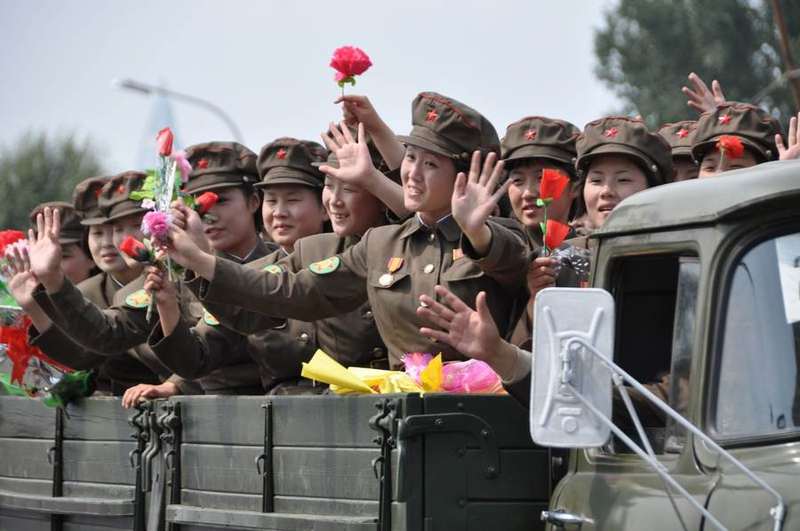
Ukrainian President Volodymyr Zelensky said on Monday that North Korea is preparing to send another 10,000 troops to Russia, on top of the more than 8,000 he says are already on Russian territory — the starkest public accounting yet of Pyongyang’s manpower pipeline into the war.
Citing what he described as new data from Ukraine’s military intelligence agency, the HUR, Zelensky said in his nightly video address that the additional troops were “being selected for training and subsequent deployment to Russia.” He made the remarks as Russia hammered Ukraine with one of the most intense drone barrages of the war — 120 drones in a single day, 90 of them the new jet-powered type that Ukrainian air defenses are struggling to stop.
The claim, reported by Reuters and corroborated by South Korea’s Aju Press from a transcript on the Ukrainian presidential website, has not been independently verified. Neither Moscow nor Pyongyang has responded. But if even roughly accurate, it would mark a major deepening of the transactional military alliance that has quietly become one of the war’s decisive features.
What Zelensky actually said — and what he didn’t prove
Precision matters here, because the announcement was a claim, not a documented fact. Zelensky attributed the figures to HUR reporting, not to satellite imagery or captured documents shown publicly. The core assertions:
- More than 8,000 North Korean troops are currently on Russian territory. Ukrainian and South Korean estimates have put the total dispatched since 2024 at 14,000 to 15,000, most of them deployed around Russia’s Kursk region — which suggests a large share of earlier contingents have been killed, wounded, rotated out, or absorbed into Russian units.
- Another 10,000 are being selected for training and deployment. In August, Zelensky floated a far larger figure — up to 50,000 North Korean soldiers that could eventually be sent — so Monday’s number reads as the near-term tranche of a longer pipeline.
- Moscow is paying in technology. “Production of Shahed-type attack drones has been established in North Korea with Russian technical support,” Zelensky said, describing the barter at the heart of the relationship: bodies for blueprints.
- Russia is mobilizing again at home. Zelensky cited HUR as showing a new wave of Russian mobilization, with recruitment rising “through various methods,” and urged governments whose citizens Russia recruits to act.
Why this matters: the war’s quiet internationalization
Strip away the caveats and the strategic picture is striking. Russia, a country of 140 million people with a standing army and a vast mobilization base, is importing infantry from a hermit kingdom of 26 million — and paying for it with weapons technology. That tells you two things at once about the state of this war.
First, manpower remains Russia’s binding constraint. The Kremlin has spent the war avoiding a second politically toxic general mobilization after the chaotic partial call-up of 2022, relying instead on volunteers lured by enormous signing bonuses, convicts, and foreign recruits. Ten thousand North Koreans will not decide the war — Russia’s force in Ukraine is estimated in the hundreds of thousands — but they plug a specific hole: expendable infantry for grinding assaults, freeing Russian contract soldiers for more skilled roles. It is the same logic that put North Korean troops in the Kursk meat grinder last winter.
Second, the technology transfer runs the wrong way for the West. For decades the fear was that North Korea would sell weapons to rogue actors. Now Russia — a permanent UN Security Council member — is industrializing North Korea’s drone production. A North Korea that can mass-produce Shahed-type loitering munitions is a North Korea with a cheap, proven strike capability aimed squarely at South Korea and Japan, built with Russian engineering help. The war in Ukraine is subsidizing the next crisis in Northeast Asia.
The backstory: from shells to soldiers
The Russia–North Korea military pipeline did not start with troops. It started with artillery. By 2023, Pyongyang was shipping millions of artillery and mortar rounds to Russia, plus ballistic missiles, long-range artillery systems, and multiple-launch rocket systems, according to Ukrainian and independent assessments — shipments that kept Russian guns firing through Western sanctions.
The soldiers came later. North Korean troops were first confirmed fighting for Russia in late 2024, thrown into the battle to retake Russia’s Kursk region after Ukraine’s surprise incursion. They suffered heavy casualties — Western intelligence at the time described them as brave but tactically naive, advancing in dense formations across open ground — and then, for months, seemed to vanish from the front. Ukraine has since captured North Korean prisoners of war, and just last week Zelensky announced that two captured North Korean soldiers had been transferred to South Korea — a disclosure that infuriated Seoul, which said a confidentiality agreement had been breached and formally protested what it called a false denial from Zelensky’s office.
That diplomatic row is worth remembering when weighing Monday’s claims: Zelensky is simultaneously lobbying Seoul for air-defense support — South Korea announced a $100 million aid package for Ukraine in July, pointedly excluding lethal weapons — and publicly pressuring it. Numbers about North Korean troops are not just intelligence; they are leverage.
The 57% problem
Buried in the address was a number that may matter more for Ukraine’s immediate survival than the troop figures: 57%. That, Zelensky said, is Ukraine’s interception rate against Russia’s new jet-powered Shaheds — “much lower than it needs to be.” On Monday alone, Russia fired 120 drones at Ukraine, 90 of them jet-powered.
Do the arithmetic: if 90 jet drones are launched and 43% get through, roughly 39 strike their targets every such day — against data centers, gas stations, medical facilities, and apartment blocks. Ukraine’s air defenses were built for the slow, propeller-driven Shaheds of 2022–2024, which defenders learned to down at rates above 80–90%. The jet-powered variants fly faster and higher, compressing reaction times. Zelensky said new interceptor drones are being tested and rushed to combat units, but “some details still need to be refined.”
Monday’s toll — at least nine killed and more than 80 wounded nationwide, including the daylight strike on Kyiv’s National Academy of Sciences — is the human cost of that technological gap. It is also the context for the troop announcement: Zelensky was making the case, on the war’s hardest day in weeks for Kyiv, that Russia is escalating on every axis at once.
Who gains, who loses
Russia gains disposable infantry without the domestic political cost of another mobilization decree — though Zelensky’s parallel claim of a new mobilization wave suggests the Kremlin wants both. North Korea gains hard currency, combat experience for its officer corps, and — most consequentially — Russian weapons technology, including drone production lines it could never have built alone under sanctions.
Ukraine loses twice: fresh enemy manpower at the front, and a more capable North Korea as a long-term threat to its partners. South Korea faces the sharpest dilemma. Seoul has held the line against sending lethal aid to Kyiv, but each escalation of the Pyongyang–Moscow axis — troops, then drone factories — strengthens the domestic argument that South Korea is arming its own future adversary by staying out. The POW-transfer spat last week showed how brittle the Seoul–Kyiv channel already is.
China watches uncomfortably. Beijing has never welcomed the Russia–North Korea embrace; a more militarily capable, less dependent Pyongyang is harder for China to manage. But China has also refused to condemn it — a silence that speaks to how little leverage anyone believes remains.
Reasons for skepticism
A careful reader should hold three caveats. First, the numbers are single-sourced to Ukrainian intelligence and announced by a wartime leader with every incentive to dramatize the threat — to stiffen Western support and pressure Seoul. Independent confirmation of the 10,000 figure does not yet exist.
Second, the figures don’t quite reconcile. If 14,000–15,000 North Koreans have been sent since 2024 but only 8,000+ remain on Russian soil, the difference implies very heavy casualties, large-scale rotation, or earlier overestimation. All are plausible; none are proven.
Third, announcements are not deployments. “Being selected for training” is the earliest stage of a pipeline that takes months. The troops may arrive; they may arrive in smaller numbers; the announcement itself may be the point — a signal to Seoul and Washington as much as a description of reality.
What happens next
Three scenarios branch from here. In the first, the 10,000 deploy to Kursk, Belgorod, or other Russian border regions — freeing Russian units for the grinding eastern offensive, including the fight around the Donetsk “fortress belt” where Ukraine’s Operation Vivaldi is making gains. That is the pattern of 2024–2025, and the path of least political resistance for Moscow.
In the second, North Korean units appear directly on the Ukrainian front — a far bigger escalation, inviting direct South Korean involvement and shattering what remains of the fiction that this is a bilateral war. In the third, the deployment stalls or shrinks under the weight of logistics, language barriers, and the demonstrated casualty rates — and the announcement is remembered mainly as a pressure tactic.
Whichever path materializes, the deeper trend is set: the war is minting a Russia–North Korea military-industrial partnership that will outlast the fighting in Ukraine. Shahed factories in North Korea do not get unbuilt when a ceasefire is signed. That is the sentence in Zelensky’s address that should worry capitals far beyond Kyiv — from Seoul to Tokyo to Washington. The troops are the headline; the technology transfer is the legacy.
Sources: Reuters; Aju Press (citing the Ukrainian presidential website transcript of the September 28 address); Reuters on the September 28 strikes.