South Korea Ukraine North Korean soldiers dispute
South Korea Ukraine North Korean soldiers disputeLee Jae Myung threatens UkraineSouth Korea demands Ukraine apologyNorth Korean POWs transferred South KoreaUkraine South Korea diplomatic rowSybiha diplomatic misunderstandingZelenskyy North Korean soldiers UNGANorth Korean troops Russia KurskUkraine South Korea relations 2026Korean Peninsula war remarksSouth Korea aid to Ukraine at risk
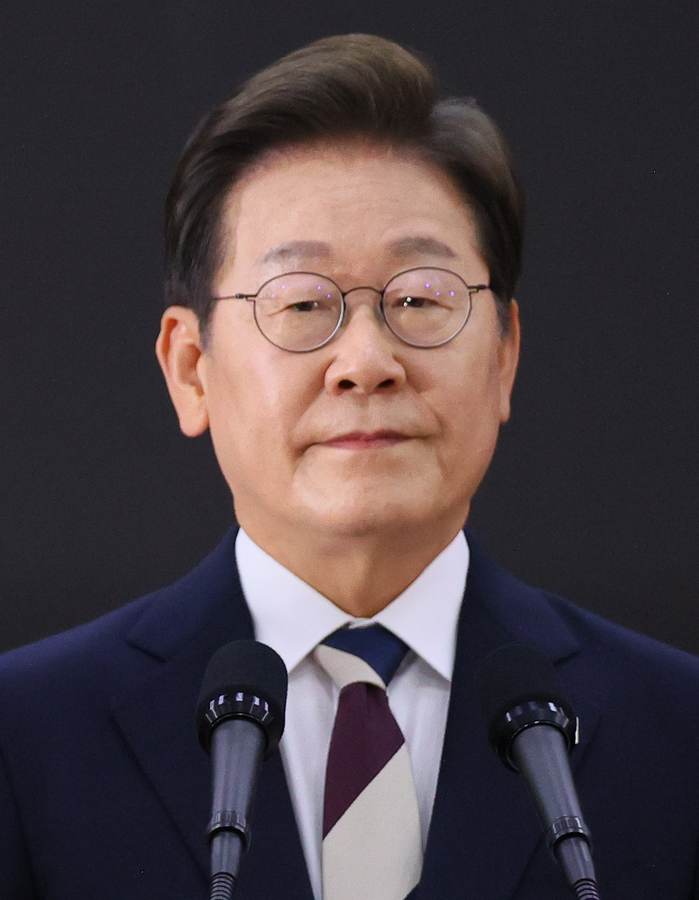
SEOUL — South Korean President Lee Jae Myung threatened unspecified action against Ukraine on Friday unless Kyiv recognizes what Seoul says was a confidentiality agreement governing the transfer of two captured North Korean soldiers and issues a public apology. “If the refusal to acknowledge the facts and issue a public apology continues, we will take additional measures,” Lee wrote on X, according to Reuters.
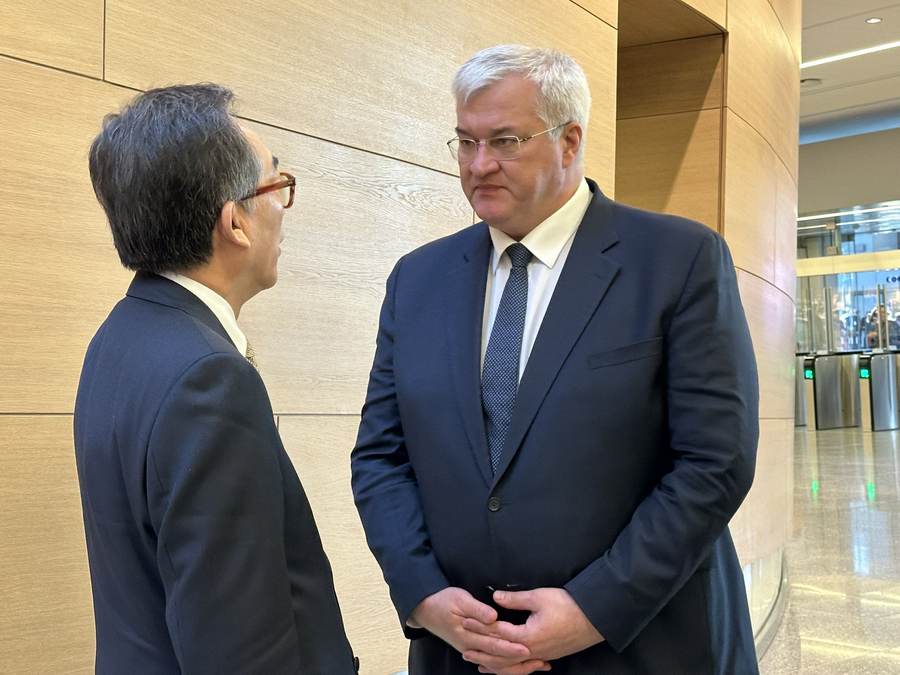
Lee also expressed “grave regret” over Ukrainian remarks that he characterized as warning of an imminent military clash between North and South Korea. In Seoul's telling, those comments crossed a second line: they did not merely expose a sensitive transfer but risked encouraging war on the Korean Peninsula. Kyiv, by contrast, is trying to prevent the dispute from hardening. Foreign Minister Andrii Sybiha called it a “diplomatic misunderstanding” on Thursday and stressed that South Korea remains important to Ukraine.
What happened: a transfer, a UN reveal and a demand for an apology
The row began with an operation both governments had reasons to handle carefully. Ukraine captured the two North Korean soldiers alive in January 2025, the first such prisoners taken since Pyongyang sent troops to support Russia's war. The men later moved to South Korea, a country whose constitution treats the entire Korean Peninsula as its territory and where North Koreans can seek protection and settlement.
Seoul says that transfer was covered by a confidentiality agreement intended to protect the soldiers and their families. The government's complaint is twofold: President Volodymyr Zelenskyy publicly disclosed the transfer at the United Nations General Assembly last week, and Ukrainian officials then denied that a secrecy agreement existed. The first act exposed the operation; the second, from Seoul's perspective, challenged South Korea's account of what the governments had promised each other.
The sequence accelerated quickly. Zelenskyy's UN address converted a closely held bilateral matter into a public symbol of North Korea's role in Russia's war. Seoul responded that disclosure could endanger people connected to the prisoners. Ukrainian commentary about possible conflict on the peninsula then widened the disagreement beyond the POWs. Lee's Friday statement placed a consequence behind the grievance, though he did not name the measures.
Sybiha tried to lower the temperature a day earlier. “I would not like to call this an incident. Let's say, it's a diplomatic misunderstanding,” he told journalists in remarks reported by Reuters after an interview with Ukrainian outlet NV. “For us, South Korea is an important country. And I really hope for momentum, continuation, and concrete results that we are truly achieving with them.” His language was carefully chosen: acknowledge the strain, avoid conceding the disputed facts, and keep cooperation in view.
Why this matters: two partners are arguing over trust, not only two prisoners
The immediate dispute concerns two men, but the strategic question is whether Seoul and Kyiv can trust each other with sensitive wartime information. South Korea has intelligence, diplomatic reach, industrial capacity and reconstruction resources that Ukraine values. Ukraine possesses battlefield evidence about North Korea's deployment that matters acutely to Seoul. Their relationship should be complementary. A public quarrel over an alleged private agreement turns that complementarity into leverage.
Confidentiality is not a ceremonial detail in a prisoner transfer. North Korea maintains extensive control over relatives of citizens abroad, and Seoul says secrecy was designed to protect the soldiers and their families. If that account is correct, the disclosure carried human consequences beyond diplomatic embarrassment. Kyiv's interest, however, was also tangible: showing living North Korean prisoners at the UN strengthened its case that Pyongyang is not a distant supplier but an active participant in Russia's war.
The dispute also lands at an awkward moment for Lee. His administration has been trying to reduce tensions with North Korea while managing domestic political fallout from a recent landmine incident in the Demilitarized Zone. In that setting, Ukrainian statements about an approaching inter-Korean clash are not abstract analysis. Seoul hears them inside a security environment in which a careless public claim can narrow political room for de-escalation.
That does not make either government's account automatically decisive. Reuters reported Seoul's claim that a confidentiality agreement existed and Kyiv's refusal to acknowledge it; the underlying agreement has not been published. The factual core is therefore a dispute between governments, not a document independently examined by the public. Lee's threat is confirmed. The contract he invokes remains undisclosed.
How we got here: North Korean troops in Russia and the January capture
North Korea's entry into the war changed the strategic meaning of every North Korean casualty or prisoner. Pyongyang and Moscow signed a strategic partnership that includes mutual-defense commitments. North Korea then sent an estimated 14,000 troops to assist Russia, with much of the deployment associated with operations in the Kursk region. The two soldiers captured in January 2025 became the first living prisoners publicly identified from that force.
For Ukraine, the captures provided rare direct evidence: soldiers who could be interviewed, identified and placed inside the deployment chain. For South Korea, they were also potential defectors and intelligence sources, but people whose legal status, safety and family exposure demanded restraint. For North Korea, their survival posed a propaganda and security problem. A dead soldier can be folded into a heroic narrative; a living prisoner can speak.
The transfer to South Korea resolved one question — where the men would go — but created another: who controlled the story. Zelenskyy's UNGA reveal asserted Ukraine's authorship of the capture and transfer before a global audience. Seoul's objection says that a successful operation became a security breach at the moment it was turned into a public diplomatic asset.
This is also why the Zelenskyy North Korean soldiers UNGA episode cannot be separated from the wider war. The men are not ordinary bilateral travelers. They are evidence of a military alignment stretching from Pyongyang to Moscow and the Ukrainian battlefield, and their fate touches law, intelligence, propaganda and defection policy at once.
The troop figures: what 14,000 sent, 8,000 remaining and 10,000 training imply
The numbers reported in connection with the dispute demand careful reading. North Korea is estimated to have sent about 14,000 troops to assist Russia. Zelenskyy said this week that more than 8,000 remain in Russia and that 10,000 more are being trained for possible future deployment. These figures are attributed estimates and claims, not a transparent census. Even so, taken together they describe sustained commitment rather than a symbolic expedition.
If more than 8,000 of the original force remain, then at least several thousand are no longer in that category. The public data do not allow a clean division among those killed, wounded, rotated home, reassigned or otherwise removed. Subtracting 8,000 from 14,000 does not produce a casualty count, and presenting it that way would be false precision.
The 10,000 reportedly in training are the more consequential forward indicator. If deployed in full, that pipeline would exceed the number Zelenskyy says currently remains in Russia. The implication is not merely replacement but potential renewal or expansion. Training also requires time, instructors, equipment and coordination with Russian forces; it points to an institutionalized relationship rather than a one-off political gesture.
That is the data-driven center of the story. A disagreement over two prisoners sits inside a personnel system measured in tens of thousands. The prisoners matter precisely because they offer granular evidence about a deployment that both Moscow and Pyongyang have incentives to frame on their own terms.
_(cropped).jpg)
What each side wants from the Ukraine South Korea diplomatic row
Seoul wants acknowledgment before normalization. Lee's formulation makes the demand explicit: recognize the confidentiality agreement, accept that its disclosure was wrong, and apologize publicly. That sequence would vindicate South Korea's account, deter future breaches and reassure officials who may hesitate to share sensitive intelligence with Kyiv. Seoul also wants Ukrainian rhetoric about the Korean Peninsula to stop complicating its own deterrence-and-dialogue strategy.
Kyiv wants de-escalation without a damaging confession. Sybiha's “diplomatic misunderstanding” language offers warmth and continuity but not the admission Lee demanded. Ukraine has reasons to preserve the UN disclosure as legitimate advocacy: proving North Korean battlefield participation helps Kyiv argue that the war's coalition has expanded and that its partners should respond accordingly. A public apology could look like an admission that Zelenskyy mishandled a protected transfer.
The prisoners need protection from both narratives. Their wishes, legal status and family security can disappear when governments turn them into symbols. Seoul's confidentiality argument centers protection; Kyiv's disclosure centers proof of foreign intervention. A durable resolution has to do both: safeguard the men while preserving an accurate public record of North Korea's military role.
Who holds leverage: South Korea aid to Ukraine at risk
Cho Han-bum, a senior fellow at the Korea Institute for National Unification, told Reuters that any additional measures would most likely target the humanitarian, financial and reconstruction assistance South Korea already provides Ukraine. “Ukraine has more to lose than South Korea because it is receiving support from Seoul,” he said.
That assessment identifies the asymmetry without proving what Lee will do. South Korea has not announced an aid freeze, reduction or timetable. “Additional measures” could range from a formal diplomatic protest or downgraded contact to delays or conditions on assistance. Because Lee left the phrase undefined, the threat derives part of its force from uncertainty.
Kyiv's leverage is different. Ukraine is a frontline source of intelligence about North Korean troops, equipment, tactics and casualties. Seoul benefits from access to that evidence, especially as it assesses Pyongyang's combat experience and what returning soldiers could bring home. Ukraine can also shape the international narrative about North Korea's role. The relationship is asymmetrical in aid but reciprocal in information.
Critics in Seoul can argue that partners who disregard secrecy cannot expect privileged cooperation, particularly when lives may be exposed. Critics in Kyiv can answer that excessive secrecy helps Moscow and Pyongyang obscure a major internationalization of the war. Both arguments contain a legitimate interest; the rupture came because the governments failed to agree on which interest controlled the public release.
Three paths forward: apology, aid freeze or escalation
The apology path is the fastest off-ramp. Kyiv could acknowledge that Seoul understood the transfer to be confidential, express regret for the disclosure and avoid litigating the precise wording of the agreement in public. That formula would give Lee a visible concession while allowing Ukraine to say it acted to document North Korean involvement, not to endanger the prisoners. Quiet commitments on future handling could restore working trust.
The aid-freeze path would turn rhetoric into material pressure. Seoul could pause new humanitarian, financial or reconstruction commitments, slow implementation, or tie future support to an apology. Such a step would hurt Ukraine more immediately, as Cho argues, but it would also cost South Korea influence over postwar reconstruction and over Kyiv's handling of North Korean personnel and evidence. Leverage spent is not always leverage retained.
The escalation path would broaden the quarrel. If Kyiv keeps denying an agreement and Seoul expands its criticism to Ukrainian statements about the peninsula, both governments could summon diplomats, issue competing records or suspend senior contacts. That would benefit Moscow and Pyongyang by dividing two governments that share an interest in documenting and constraining North Korean military activity.
The likeliest outcome is a negotiated wording rather than a strategic break. Sybiha has already signaled that Ukraine wants momentum and concrete results with South Korea; Lee has specified the concession he needs. But the gap is real: one side wants an acknowledgment of fact, while the other has so far offered the softer vocabulary of misunderstanding.
What to watch next
First, watch whether Ukraine changes its public language from “misunderstanding” to “regret” or “apology.” Diplomatic vocabulary will reveal whether a compromise is taking shape. Second, watch South Korean ministries for concrete administrative steps affecting aid, reconstruction partnerships or senior-level meetings; Lee's threat remains intentionally nonspecific until an agency acts. Third, watch whether either government publishes or describes the alleged confidentiality terms in more detail.
The two prisoners' status also matters. Any public appearance, legal statement or verified account of their preferences would change the ethical balance of the dispute. Until then, governments and commentators should avoid treating them as props in a contest over credibility.
Finally, the troop pipeline remains the larger strategic clock. If the reported 10,000 personnel in training begin deploying, the dispute will look smaller but become more urgent. Seoul and Kyiv will need each other's information precisely when their trust is weakest. The row over two men is therefore not a side story to the war. It is a test of whether allies facing the same military alignment can manage secrecy, evidence and political credit without turning cooperation into collateral damage.
Sources and reporting notes
- Reuters, October 2, 2026 — Lee's threat, Seoul's account of the confidentiality dispute, his remarks on peninsula tensions and Cho Han-bum's assessment of likely measures.
- Reuters, October 1, 2026 — Sybiha's comments to Ukrainian outlet NV describing a diplomatic misunderstanding and calling South Korea an important partner.
- The Independent report republished by Europe Says, October 2, 2026 — background on the prisoner transfer, the 2025 capture and North Korea's troop deployment.
Reporting cutoff: October 2, 2026 at 12:56 a.m. PDT. Lee's statement, Sybiha's response and the transfer are reported facts. The existence and terms of the alleged confidentiality agreement have not been published; Seoul says it existed, while Kyiv has not acknowledged that account. Assessments of leverage and scenarios are Signal Post News analysis.